Home Blog Page 206

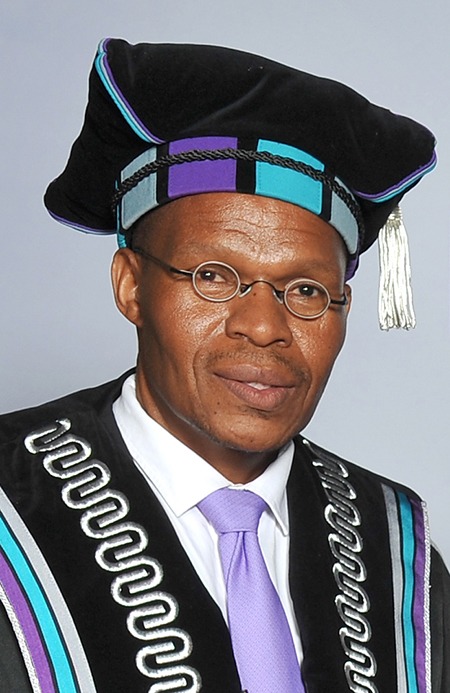
Suspended VUT Vice-Chancellor and principal, Prof Dan Kgwadi, dies “a broken man”

SUSPENDED for not being at work during illness, Vaal University of Technology (VUT) Vice-Chancellor and Principal Prof Dan Kgwadi has died at age 56.

Kgwadi, who told Inside Education that the university was trying to get rid of him for being absent while recovering from illness, died on Sunday.

After joining VUT in February 2022, Prof Kgwadi made it his mission to clean up the university, which has been plagued by corruption and mismanagement claims, resulting in it being placed under administration.

VUT chairperson Professor Mandla Radebe announced in a short statement that Kgwadi had died.

Kgwadi threatened VUT with legal action after he was placed on special leave after he had been off sick for 14 days, of which he spent five in the hospital. Expressing his disappointment at his shoddy treatment, Kgwadi told Inside Education that he received no sympathy from the university during his convalescence.

Kgwadi was instrumental in setting North-West University on a path towards stability and transformation. His posts on social media during his illness and alleged mistreatment at VUT did not hold back on what was happening to him.
Kgwadi planned to take VUT to court to challenge his suspension.

But the man who replaced him at NWU, Professor Bismark Tyobeka, was full of praise for Kgwadi’s “immense contribution” to leaving behind a university that worked extremely well.

INSIDE EDUCATION

University of Fort Hare rocked by second bodyguard death

STAFF REPORTER

A SECOND bodyguard working for vice chancellor, Professor Sakhela Buhlungu, was killed near Alice, Eastern Cape, at the weekend.

The bodyguard was travelling on the R63 when a vehicle collided with his car, killing him instantly. In their probe, the police wants to find out what happened and whether it was deliberate, or accidental.

“The university community is understandably shocked and shattered. Earlier this year, we lost Mr [Mboneli] Vesele, and now we have lost another colleague,” according to UFH spokesperson JP Roodt.

The bodyguard had protected a member of the university’s management executive committee.

“While the death occurs in highly unusual circumstances, as the university clamps down on rampant and systemic corruption over several decades, which run politically and criminally deep, the university will not be drawn to comment or speculate on the death until authorities have concluded investigations or until more information becomes available to us.”

Eastern Cape police spokesperson Brigadier Tembinkosi Kinana said the crash occurred at about 01:20 on Sunday. According to the police, the bodyguard, driving a Mercedes Benz, was en route from Bhisho to Ginsburg with three passengers at about 1:20 am Sunday when his vehicle was allegedly struck by a Nissan NP 300.

The crash is being investigated, and there have been no arrests.

The bodyguard is understood to have been a witness in a police investigation into corruption claims being probed at the university. In April, five people were arrested and appeared in court on charges of murder and attempted murder of university employees.

The five – Bongani Peter, Sicelo Mbulawa, Wanini Khuza, Mthobisi Khanyile and Mthobisi Dlamini-Zondo – are due in court today (4 May) for a bail application.

INSIDE EDUCATION

Big boost for school sports in South Africa

SOUTH African school sports will never be the same again. Schools football for both boys and girls from primary to secondary level has received a major financial injection from the Motsepe Foundation.

Netball has also not been left out and will also be catered for in a whopping total sponsorship of R150 million.

The five-year sponsorship was unveiled in Johannesburg last month. The big financial injection is seen as a way of reviving school sports countrywide.

Unlike in the past, the new sponsorship will also cater for football and netball from the foundation phase up until Grade 12.

The two big sports federations in the country have embraced the new initiative. There will also be a school choral and national music tournament for children who can’t participate in physical sporting activities.

This will be done in conjunction with the Department of Basic Education and the Department of Sport and Recreation.

The big announcement was made by the chief executive of the Motsepe Foundation, Dr Precious Motsepe-Moloi.

“The Motsepe Foundation has donated R150 million for the development and growth of schools football for boys and girls at secondary and primary schools, and also for the promotion of schools African choral music and indigenous music, and for schools’ netball.”

The main focus will be on previously disadvantaged areas that lack the necessary infrastructure.

This will mainly be in rural areas and black townships.

Chairman of the Motsepe Foundation Patrice Motsepe: “Netball is one of the most popular sports in South Africa and hopes that it becomes an Olympic sport in the near future. The aim is to make players to make a living out of netball just like in football. We need to start by paying them well.”

The South African Football Association says the sponsorship will help enhance women’s football in the country, as they bid to host the FIFA Women’s World Cup in 2027.

Currently, there are almost 470 000 female footballers in South Africa, and the aim is to increase that number to at least a million by 2030.

SABC NEWS

As ChatGPT enters the classroom, teachers weigh pros and cons

IN November 2022, OpenAI, an artificial intelligence (AI) research laboratory, launched ChatGPT, a transformative AI program. Since then, ChatGPT and its impacts on education have been the center of heated debate.

A recent survey conducted by Study.com, an online learning platform, shows that 43 percent of educators feel the program will make their jobs more difficult. The others, nearly six in 10 teachers, predict it will make their lives easier. 

On the one hand, many educators fear the program threatens academic integrity, encouraging new methods of cheating and plagiarism. Because of the program’s simplicity, accessibility, and convenience, students have been using it to generate answers to homework and even entire essays, claiming the chatbot’s writing as their own.  

On the other, ChatGPT’s simple design and brainstorming capabilities appeal to educators who see its potential to improve education. These teachers say that, over time, the real impact will not be an increase in cheating, but a revitalization of lesson plans and classroom instruction.  

“I would say go for it,” says Cherie Shields, a high school English teacher in Sandy, Oregon. “The best way to learn anything new is just to jump right in and try it out.”  

HOW CHATGPT WORKS 

The website’s design concept is simple. First, users create an account and log on. Then, they generate a new chat by typing a prompt or instructions into the chat bar. Within seconds, the chatbot generates bodies of text in response. Users then have the ability to instruct ChatGPT to edit, adjust, or regenerate a response.  

The technology is trained to formulate conversational responses based on information it has encountered, using a database to compile, paraphrase and summarize information. 

CHATGPT IN THE CLASSROOM  

Within two months of the program’s launch, 51 percent of K-12 teachers reported using ChatGPT, according to a recent survey by the Walton Family Foundation. Forty percent said they used it at least once a week; 53 percent anticipated increased use this year.   

Shields is one of those teachers. Recently Shields asked ChatGPT to generate ten different project options for her sci-fi unit. Instead of a traditional essay assignment, the program suggested imaginative projects such as creating and explaining a poster of an alien.  

ChatGPT also has the ability to translate assignments into a student’s native language or simplify materials for new language learners. The process is as simple as typing specific instructions into the chat bar. For example, educators could prompt ChatGPT to “translate this reading into Arabic.”  

“With Chat, you can translate all of the supplementary materials into [students’] native language, which makes it far easier for them to complete their assignments,” says Shields.   

The chatbot also can rewrite responses at different reading levels. Shields explains that she sent tenth-grade assignments to ChatGPT, asking the chatbot to restructure the material at a sixth-grade level. Her students were then able to follow along and participate in class with their differentiated material.   

“It’s really easy now to make different types of assignments,” says Shields. 

Similarly, Kim Lepre, a seventh-grade English teacher in California, explains that when used correctly, ChatGPT can simplify and improve educators’ everyday lives. Lepre uses the program to differentiate instruction, generate quizzes and even email parents, saving more time to interact with students.  

Through ChatGPT, Lepre created a new lesson for a unit about the Salem Witch Trials. The program helped her generate an article for her seventh-grade students, plus ten variations of a multiple-choice quiz.  

“It has just taken a load off of the little minute things that I have to do so that I can just focus on teaching the kids,” says Lepre.  

Meanwhile, Donnie Piercey, a fifth-grade teacher in Kentucky, told the Associated Press (AP) that he recently used ChatGPT during a lesson about playwriting, or “Pl-ai Writing.”   

Students came up with characters and a problem to be solved throughout the plot of a short play. Then Piercey submitted those student ideas to the chatbot, instructing it to generate play scripts set in a fifth-grade classroom and to develop surprise endings. ChatGPT generated play scripts which students edited, rehearsed and performed.  

CAUSES FOR CONCERN

If ChatGPT is the future, many educators fear how it will affect their classroom.  

As the ChatGPT website explains, ChatGPT occasionally generates misinformation, untimely and biased responses. The program is only as knowledgeable as the information it has been introduced to and trained with. Even creators acknowledge that the program is not a credible source of factual information and should not be treated as an academic source.  Many teachers worry that ChatGPT will make teaching and learning—particularly writing assignments— more formulaic.

The biggest concern is cheating. More than one-fourth of teachers have caught students using the chatbot to cheat, the Study.com survey found. An influx of ChatGPT generated work has left many educators spending more time checking for AI plagiarism and revamping lesson plans to be “AI-proof”. 

Until the risks to academic integrity and educational quality can be properly understood and evaluated, many large school districts, including Baltimore, Los Angeles, New York City, and Seattle, have banned ChatGPT.

COMBATTING CHEATING  

In January, OpenAI recognized the potential for problematic use of ChatGPT in the classroom. The company introduced an AI text classifier as a tool to help determine whether a piece of writing was created using AI technology.   

Similar technology, such as GPTZero and CopyLeaks AI Content Detector, already has been launched—with many more detection programs in the making. These programs are accessible and readily available. 

“As educators, we haven’t figured out the best way to use artificial intelligence yet,” Donnie Piercey told AP. “But it’s coming, whether we want it to or not.”   

While Piercey’s fifth-grade classroom may be less susceptible to AI plagiarism, Shields’ high school courses have already been generating and turning in AI generated work.   

“We’ve already had a number of students turn AI-generated essays in and they’re so easy to spot,” says Shields. “It’s flawless. Not a single grammatical error. All the sentences are perfect. And when you’re working with students of that age, you know that they don’t write flawlessly like that.”   

If the chatbot is asked to write an essay about a book, it often misquotes the reading, only provides partial quotes or even inserts quotations that do not align with the theme of the essay. 

“Most students don’t even know that they are incorrect or inaccurate, and that’s another way to check to see if they are using AI,” says Shields.

“None of the quotes make sense.” 

Shields suggests students evaluate information generated by ChatGPT.

Addressing the validity of an AI-generated report will build skills in editing and fact-checking. She also believes teachers should reimagine their assignments. 

“My thoughts are we need to kind of move away from the standard five-paragraph essay response and we need to do something a lot more imaginative to get our students to respond,” says Shields, explaining that prompts that require personal narratives and critical reasoning would render AI unhelpful to students.    

Lepre explains the possibility of instructing students to reverse engineer an essay generated by AI by personalizing the essay and adding missing details. She also suggests discussing how the generated content compares to an essay written by a human author.  

“I think we should teach them how to use this tool,” says Lepre. “It’s kind of like handing a kid a calculator… Hand them a TI85 – that’s one thing, but show them how to use it? That’s even more powerful.” 

National education Association

TikTok is adding a third feed just for science and math videos

TikTok is adding a new feed dedicated exclusively to science, tech, engineering, and math content — with additional moderation before videos appear in the feed.

The STEM feed will live next to the two existing feeds, Following and For You, and will surface content for users looking specifically for trending science and technology videos. US users will begin to see the feed in the coming weeks.

Not all science and technology content will land on the STEM feed. TikTok says that, in order to be eligible for the feed, videos will need to pass additional layers of vetting by partner organizations focused on trust and safety efforts.

Common Sense Networks will vet content to make sure it’s appropriate for the feed, and Poynter “will assess the reliability of the information presented,” according to TikTok. The company has previously partnered with Common Sense Networks to screen content for age appropriateness.

The addition of a topic-specific curated feed gives one TikTok community a more visible and permanent placement — users who aren’t typically tapped into STEM content would be able to swipe and dive in.

Though TikTok says the feed will be a place to access reliable, entertaining content, science and health have long been topics where misinformation has festered, especially since the beginning of the pandemic.

TikTok bans false or misleading content about covid and vaccines under its medical misinformation policy. The company didn’t immediately respond to questions about whether covid or vaccine videos would be part of the STEM feed or how videos would be initially selected — and reviewed — for inclusion.

In February, TikTok appeared to be doing a limited test of similar topic-based feeds, including categories like fashion, sports, and gaming. The company says it’s currently testing topic feeds in select markets.

The update comes at a time when TikTok is under heightened scrutiny from lawmakers over user safety and whether the app poses national security risks. Earlier this month, lawmakers introduced a bipartisan bill that would allow the app to be banned, and CEO Shou Zi Chew is scheduled to testify before Congress on March 23rd.

The Verge

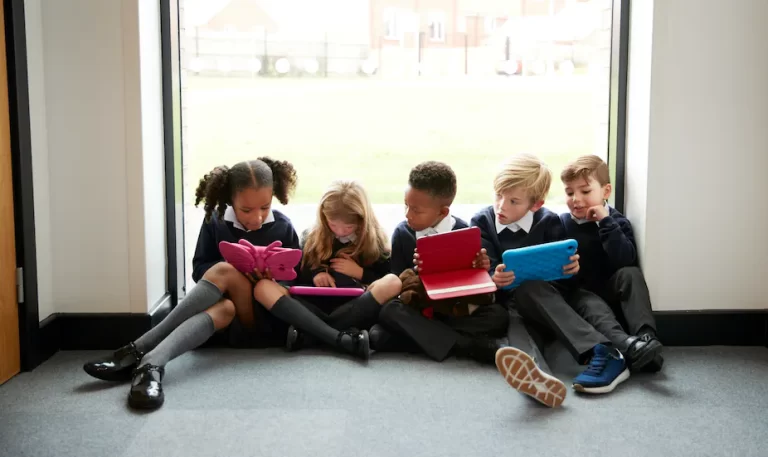
Kids and screen time – an expert offers advice for parents and teachers

CATHERINE DRAPER

HOW much time did your child spend looking at a screen today? The answer likely depends on how old they are, what grade they’re in at school and what rules you have in place at home about screen time. But the reality is that, for children and adolescents growing up as “digital natives”, it is almost impossible to imagine life without screens of some sort.

Devices like cellphones, laptops and tablets have become ubiquitous as tools for entertainment and education in most parts of the world. This has led parents, guardians, teachers and researchers to wonder whether screens are good or bad for children.

The World Health Organization recommends that school-going children (five-17 years) limit their recreational screen time. The recommendation for two- to four-year-olds is not more than one hour of screen time per day (less is better); it suggests that children younger than two should have no screen time. 

Research evidence suggests that children and adolescents were already exceeding these recommendations, and that the COVID-19 pandemic only made this worse. There isn’t yet conclusive evidence about whether screen time is good or bad for children.

But, based on my ongoing research into children’s development – including the role of play, sleep, physical movement and screen time – my view is that there are benefits of educational screen time, but we don’t know enough about the potential harms.

Nevertheless, there are several things parents and teachers can do.

This includes basics such as being aware of how much time children are spending on screens and what their posture is like through, to more complex issues such as what each child’s developmental weaknesses and strengths are. It also involves setting boundaries.

None of this is easy to implement. However it doesn’t mean that they cannot be a healthy goal worth working towards. It is never too late to start, but the earlier you do, the better.

Covering the basics

First, it is essential for parents to be aware about how screen-based activities (educational and recreational) influence their child’s development, as well as their behaviour.

Secondly, remember that all children are different and will therefore respond differently to screen time. So understanding the child and their strengths and weaknesses is key. For example, if a child struggles with managing sensory input – like loud noises, bright lights or certain textures – it may be better for them to avoid recreational screen time.

Thirdly, establish boundaries around screen time. This is key at home and at school.

Fourth, keep tabs on how screen time is stopping children from doing other things that are developmentally beneficial. For example, in the home, a child who is learning mostly on screens at school could be encouraged to spend time after school playing outside, and doing activities that develop fine motor skills.

Screen swiping and typing are poor substitutes for activities that stimulate these skills, like writing, drawing, colouring in, painting, and cutting.

Fifth, in a school environment, are there other activities that provide children and adolescents opportunities to intentionally develop their social and emotional skills that are not getting as much attention when they are working alone on screens?

Sixth, are screens set up in such a way that encourages good posture?

Baby steps

Setting boundaries and striving for a healthy balance of educational and recreational screen time within the broader context of development may seem daunting.

It requires thoughtfully reflecting on the wider impacts of the choices made around screens, and offering a range of opportunities that help to boost chlidren’s chances of growing up to be healthy and well-adjusted adults.

As much as possible, involve children and adolescents in conversations about why a healthy balance of screen time will benefit them. This can help them take ownership of their choices about their health and development – both in the present as well as their future health and well-being.

THE CONVERSATION

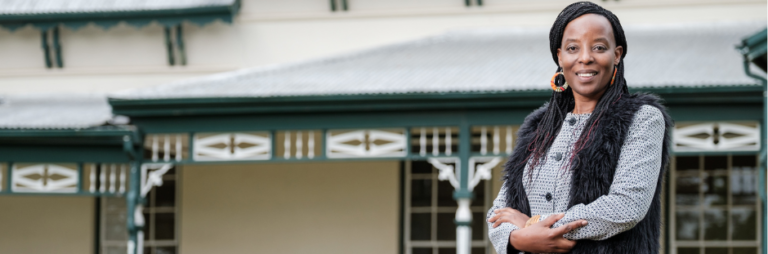
Opinion: Universities are engines of innovation that make a positive impact, says Professor Sibusiso Moyo

SIBUSISO MOYO

WORLD Creativity and Innovation Day is observed annually on 21 April to raise awareness about the importance of creativity and innovation in problem-solving, economic development, societal advancement and driving positive change in the world. 

Whilst there is no one definitive way that one could celebrate this day, I think it is important to acknowledge the role universities, specifically African universities, can play to solve pressing global challenges, improve lives and make a positive impact. Many of the most important breakthroughs have come out of universities. From the development of the internet to the discovery of new vaccines and treatments for diseases or solutions to climate change.

As Deputy Vice-Chancellor for Research, Innovation and Postgraduate Studies at Stellenbosch University, I am fully aware of how important cutting-edge research and innovation, excellent infrastructure and high-quality training are to produce new knowledge needed to solve our environmental and societal problems.

I would argue that universities could be considered to be the engines for innovation and research. Just as an engine converts fuel into energy to make a machine, like a vehicle, move so do universities convert innovative ideas into knowledge and inventions that move society forward and address our societal challenges.

Just like the engine is made up of different components (the head, the block and the oil sump), a university typically has a combination of resources that allows for innovative thinking and research.

These include, among others, talented and motivated researchers and students who are constantly collaborating to generate new ideas and ways of doing things; well-equipped laboratories, libraries and other facilities that can support research and development activities; a network of industry, government and other organisations that can provide the support and funding needed for research and development activities; and a culture driven to do work in service to society whilst striving for excellence.

Research and innovation in Africa

Since I live and work in Africa, I cannot let the opportunity go by to reflect on the importance of research and innovation for the continent and the role that African universities play in this regard.

We need innovative and creative solutions for Africa’s unique challenges related to, among others, water, clean energy, diseases, food security, education and training, land ownership and use, transformation, technology, health and housing. This is where tertiary institutions in South Africa and the rest of the continent, through collaborative partnerships, can make a valuable contribution by using the discoveries and inventions of their scientists to change society for the better.

There are many examples of how universities have done this in the past. One recent example is how our country’s scientists used innovative methods during the Covid-19 pandemic to detect important variants of SARS-CoV-2.

Another one is the new Biomedical Research Institute (BMRI), a cutting-edge biomedical research facility that was officially opened at our Faculty of Medicine and Health Sciences this week.

Here, leading South African and African researchers and students are coming up with creative ways to investigate diseases that have the greatest impact on the country and the rest of the continent. Through innovation, they can translate their discoveries into improving the diagnosis, prevention and treatment of illnesses such as tuberculosis, cardio-metabolic disease, HIV, diabetes and neurological disorders.

If universities want to be locally relevant, but also globally competitive, they will have to be creative in how they help to address societal challenges.

They will have to continuously focus on the unique areas in which they have developed expertise over time and built collaborative networks with knowledge partners. This will help them to remain engines of innovation where creative minds work together beyond disciplinary silos to find solutions to some of the most pressing challenges.

Overall, universities play a crucial role in fostering creativity and innovation through their research, education, collaboration, entrepreneurship, and openness. They provide an environment that encourages exploration, experimentation, and the development of new ideas that can have a significant impact on society.

Just like an engine needs fuel to work, universities need funding to support and enable research activities and to drive innovation in collaboration communities, municipalities, governments and the private and public sectors to the benefit of society as a whole.

*Professor Sibusiso Moyo is the Deputy Vice-Chancellor for Research, Innovation and Postgraduate Studies at Stellenbosch University.

Pacina Retail’s school nutrition tender terminated – KZN Education

PHUTI MOSOMANE

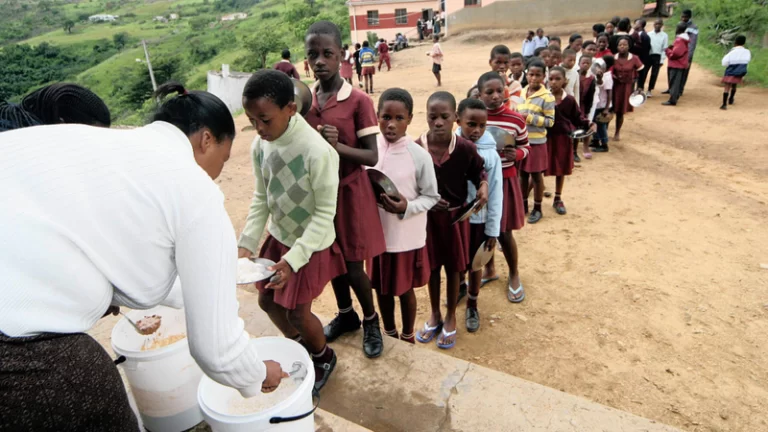
PACINA Retail (Pty) LTD, the service provider for school nutrition in KwaZulu-Natal (KZN), has announced its decision to withdraw from the R2.1 billion tender amid controversy.

The company told KwaZulu-Natal Provincial Government that its withdrawal is contingent upon being reimbursed for all costs incurred thus far.

The KZN Department of Education has been informed of this development.

KZN Education Head of Communications, Muzi Mahlambi, said: “Following the withdrawal, we have issued a circular to schools to indicate that as from the 2nd of May, we will go back to the old method of doing things. Service providers who were awarded particular clusters will be dealing directly with the schools without any middle person.”

The KZN Department of Education has requested schools and service providers to work together over the weekend to ensure that all learners are fed by Tuesday.

This comes after the Special Investigating Unit (SIU) requested more information about the R2.1 billion school nutrition tender, with plans to investigate it.

The ANC in KZN has called for the immediate termination of the contract, urging the department to approach the high court for an urgent termination order.

Trade union SAFTU has also called for the immediate termination of the contract.

The department has been unable to provide a clear explanation for the change in the contract’s operating procedures.

The scandal has prompted Minister of Basic Education, Angie Motshekga, to threaten to terminate the contract.

Insiders reveal that the contracted service provider did not have the capacity to cover every school and district in the province, leaving over 3,500 learners without food.

INSIDE EDUCATION

Chiloane rubbishes DA’s sinkhole allegations at Relebogile Secondary School

PHUTI MOSOMANE

GAUTENG MEC for Education Matome Chiloane has criticized the Democratic Alliance (DA) for making “sensationalist and opportunistic” allegations that he is violating the rights of Relebogile Secondary School learners to access basic education.

This comes after the DA’s Gauteng shadow MEC for Education Khume Ramulifho reported Chiloane to the South African Human Rights Commission (SAHRC) for violating Relebogile Secondary School learners’ right to access basic education.

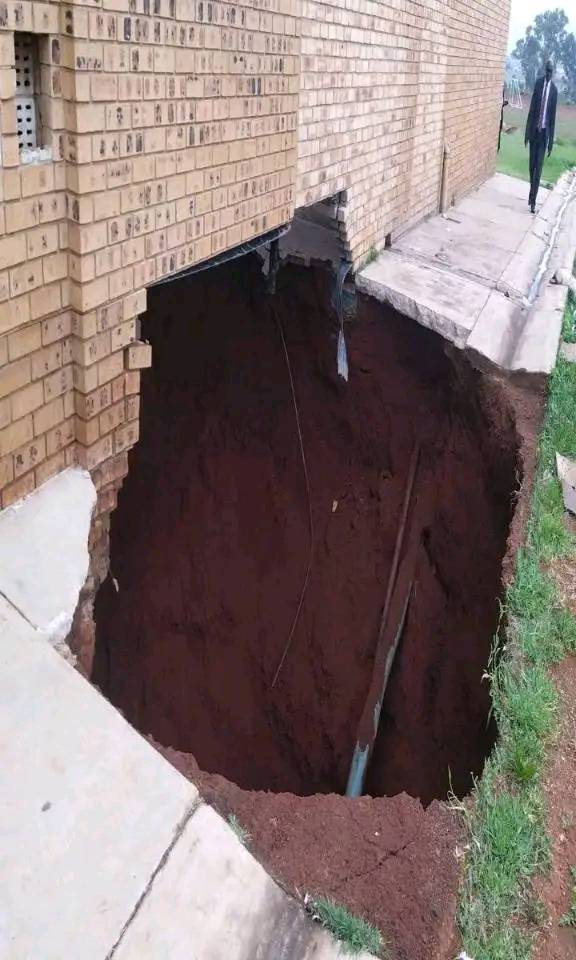
The learners of Relebogile Secondary School have not been attending school since 9 February due to a sinkhole that appeared, which has put their safety at risk, and led to the school being shut down.

But Chiloane has come out guns blazing, saying the allegations by the DA that he is denying the learners their rights to education is a cheap Public Relations (PR) stunt.

“It’s sensationalist and opportunistic response to the unfortunate situation in Khutsong where a massive sinkhole has led to disruptions in learning and teaching at Relebogile Secondary School,” he said.

Ramulifho said the department is aware of the issue, and the DA has on several occasions engaged the MEC; however, he has failed to deliver on his promise to provide alternative accommodation to ensure that learning and teaching resume at this school.

Chiloane said several interventions have been undertaken and learners are attending classes at the nearby schools. 

“Firstly, we would like to dispel an insinuation peddled by the DA that the Gauteng Education Department (GDE) is not doing anything to ensure that the impact of the sinkhole at Relebogile Secondary does not negatively affect the learners longer than necessary,” said Chiloane.

“Since February, when the matter came to our attention, several interventions have been undertaken to minimise the negative impact of the disaster on Relebogile learners. The first step was to, naturally, ensure that we protect the lives of all who use the school by immediately evacuating and stopping classes so that we do not put our learners and officials; lives at risk. Once that was done, we ensured that Relebogile learners were accommodated at a neighbouring school as an interim measure, with their classes taking place between 12h00 and 17h00 daily.”

MEC Chiloane added that the school, working with the district, was also implementing a catch-up programme for learners while waiting for a permanent solution.

At the moment, about 28 mobile classes have been delivered to an identified site to accommodate affected learners. Plans are also afoot to finalise water connectivity so that learners can occupy the mobile units as soon as reasonably possible.

He said further plans are in progress to accommodate all Grade 12 learners at a camp in due course, with the intention to assist them before their final examination.

Ramulifho told Inside Education that Chiloane has not done much since February.

“I think the MEC is out of his depth. This thing broke out on February 09, 2023- the MEC only sent a team on Friday following my visit.  We want him to be proactive. He must get mobile classrooms.

 “I personally called MEC Chiloane when I visited the areas pleading with him to send his team,” said in an interview with Inside Education. 

He said because Khutsong is far removed from the main city centres, the department is relaxed knowing very well chances of media visiting and exposing the problem is limited. 

“While we know that this is not a man-made thing, we expect the MEC to have developed alternative plans by now,” he said.

He urged the MEC to provide an attendant register since February as proof that learners have been attending classes.

On Monday, Chiloane also lambasted Ramulifho for deliberately misinterpreting the Department’s information on the number of dropouts in the province.

“To claim that more than 110 000 children dropped out of our schools last year shows how little Ramulifho understands Gauteng’s complex schooling system. Our data shows that the 110 000 learners he is referring to are learners lost to the system in the last 12 years in total – from 2010 to 2022. Those learners are not in the system for various reasons, including, but not limited to, moving to private schools or out of the province, some failed and migrated to other Countries. We will continue to monitor the situation at the school and ensure that we provide more support, as needed. We call for patience and urge the community to allow us to implement our interventions so that our children do not suffer any further,” he said.

Chiloane requested all stakeholders to refrain from exploiting the natural catastrophe at the expense of Gauteng learners. 

The DA had claimed that parents of 10 learners have already indicated that they will be relocating their children to other provinces. In addition, Ramulifho said he fears that more learners may leave or drop out of school, adding to the over 100 000 dropout rates from 2022.

Khutsong is known for having sinkholes, which become more prevalent after heavy rains.

In February, a large sinkhole emerged at the Relebogile High School affecting the toilets and left holes in certain parts of the building.

INSIDE EDUCATION

Progress made in eradicating pit latrine toilets in SA schools – Motshekga

EDWIN NAIDU

PROGRESS in reducing the number of pit latrines at schools throughout South Africa has been made since 2018, according to Basic Education Minister Angie Motshekga, in response to a question in Parliament.

She said sanitation projects at 2 547 schools had been completed out of the 3 397 on the Sanitation Appropriate for Education (SAFE) list.

Responding to a question from Inkatha Freedom Party Member of Parliament, Siphosethu Lindinkosi Ngcobo on 12 April, the Minister said the remaining 850 schools on the list had been allocated to implementing agents, and the sanitation projects are scheduled to be completed in the current financial year.

Ngcobo asked the Minister what the reasons that her department has not been able to eradicate pit latrines sooner, considering that some of her department’s budget for the eradication of pit latrines has been returned to the National Treasury and the fact that her department will not achieve its target to eradicate pit toilets by 2025.

The question followed the death of four-year-old Langalam Viki, who allegedly drowned in a pit latrine toilet in Vaalbank in Eastern Cape in March. The tragedy highlighted the failure of the Department of Basic Education to get rid of pit latrine toilets, despite adopting the minimum uniform norms and standards for public school infrastructure, which banned them at schools in 2013.

The norms and standards created a legal responsibility for the department and provincial departments to eradicate pit latrines at schools. Over the past decade, there have been many horror stories like that of Viki, including 7-year-old Lister Magongwa, who died in 2013 in Limpopo, 5-year-old Oratilwe Dilwane, who died in 2016 in North West, and 6-year-old Siyamthanda Mtunu, who died in 2017 in the Eastern Cape.

Motshekga said that in 1996, the Department of Education assessed the infrastructure at all public schools.

At the time, it was estimated that about 9 000 schools had no appropriate toilets; and were dependent on basic pit toilets.

She said that as part of the SAFE Initiative launched in 2018, an assessment was conducted to determine the number of schools dependent on basic pit toilets.

At the time, it was estimated that the number of schools dependent on basic pit toilets had reduced to 3898.

She said that several of the 3898 schools were small and unviable and subsequently rationalised and closed,” she said.

Further to the rationalisation and closure of small and unviable schools, Motshekga said the SAFE project focused on 3 397; after-schools were not part of the original list in 2018 but were now included.

Civil society organisations, Equal Education and Amnesty International have consistently raised the issue, highlighting the tardiness of the department in swiftly eradicating pit latrine toilets.

The Democratic Alliance leader John Steenhuisen said last month that Human Rights Day could only be commemorated once every child had access to safe and dignified sanitation at school.

“The drowning of our children in pit toilets goes far beyond a human rights violation; it is a horror that no South African should ever be forced to contemplate,” Steenhuisen said.

According to Motshegka, all pit latrines will be eradicated by 2025.

INSIDE EDUCATION