PROGRESS in reducing the number of pit latrines at schools throughout South Africa has been made since 2018, according to Basic Education Minister Angie Motshekga, in response to a question in Parliament.
She said sanitation projects at 2 547 schools had been completed out of the 3 397 on the Sanitation Appropriate for Education (SAFE) list.
Responding to a question from Inkatha Freedom Party Member of Parliament, Siphosethu Lindinkosi Ngcobo on 12 April, the Minister said the remaining 850 schools on the list had been allocated to implementing agents, and the sanitation projects are scheduled to be completed in the current financial year.
Ngcobo asked the Minister what the reasons that her department has not been able to eradicate pit latrines sooner, considering that some of her department’s budget for the eradication of pit latrines has been returned to the National Treasury and the fact that her department will not achieve its target to eradicate pit toilets by 2025.
The question followed the death of four-year-old Langalam Viki, who allegedly drowned in a pit latrine toilet in Vaalbank in Eastern Cape in March. The tragedy highlighted the failure of the Department of Basic Education to get rid of pit latrine toilets, despite adopting the minimum uniform norms and standards for public school infrastructure, which banned them at schools in 2013.
The norms and standards created a legal responsibility for the department and provincial departments to eradicate pit latrines at schools. Over the past decade, there have been many horror stories like that of Viki, including 7-year-old Lister Magongwa, who died in 2013 in Limpopo, 5-year-old Oratilwe Dilwane, who died in 2016 in North West, and 6-year-old Siyamthanda Mtunu, who died in 2017 in the Eastern Cape.
Motshekga said that in 1996, the Department of Education assessed the infrastructure at all public schools.
At the time, it was estimated that about 9 000 schools had no appropriate toilets; and were dependent on basic pit toilets.
She said that as part of the SAFE Initiative launched in 2018, an assessment was conducted to determine the number of schools dependent on basic pit toilets.
At the time, it was estimated that the number of schools dependent on basic pit toilets had reduced to 3898.
She said that several of the 3898 schools were small and unviable and subsequently rationalised and closed,” she said.
Further to the rationalisation and closure of small and unviable schools, Motshekga said the SAFE project focused on 3 397; after-schools were not part of the original list in 2018 but were now included.
Civil society organisations, Equal Education and Amnesty International have consistently raised the issue, highlighting the tardiness of the department in swiftly eradicating pit latrine toilets.
The Democratic Alliance leader John Steenhuisen said last month that Human Rights Day could only be commemorated once every child had access to safe and dignified sanitation at school.
“The drowning of our children in pit toilets goes far beyond a human rights violation; it is a horror that no South African should ever be forced to contemplate,” Steenhuisen said.
According to Motshegka, all pit latrines will be eradicated by 2025.
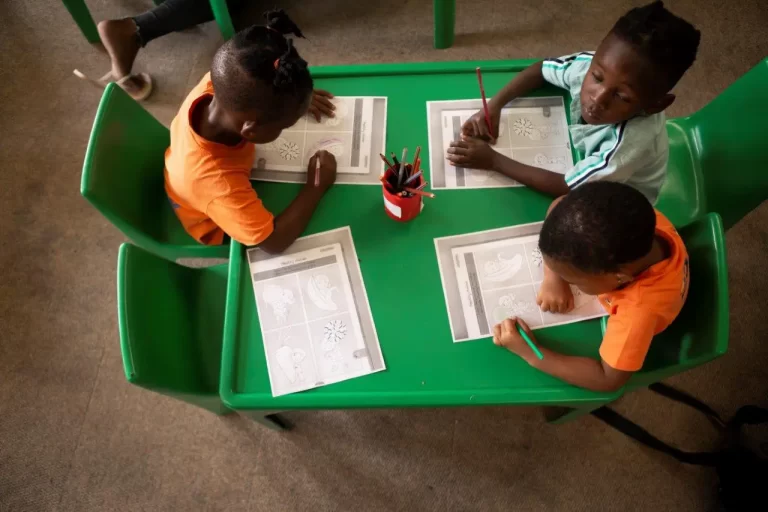
THE BambaLearn App launched by Afrika Tikkun Bambanani (ATB) last week will allow young children to develop their critical thinking and reach their milestones through play. Created by experts and designed for (and loved by) children ages 2-6 years, this app ensures that age-appropriate milestones are reached through rigorous performance monitoring through games.
These include various educational puzzles, story books, numeracy activities, problem-solving games, literacy, shapes, tracing, counting, and letter and number recognition. This app ensures that no child is left behind by enabling stronger learners to work ahead and providing extra revision and repetition for weaker learners.
The goal is to improve and standardise the ECD content in the country’s ECD centres, empowering practitioners to spend more time with the children. The ATB assessment centre ensures that no child or teacher is left behind. ATB provides tracking sheets and termly reports to monitor learner progression, focusing on critical developmental milestones, screening tools to red-flag learners that require intervention, and practitioner tracking and evaluating.
“The period from birth to six years old is the most vital stage of brain development for children, and these informative years represent a crucial window of opportunity for education. The ATB programme is developed to ensure early childhood care and education that is truly inclusive. It is much more than just preparation for Grade 1; ECD is the foundation for emotional well-being and learning throughout life and is one of the best investments a country can make as it promotes holistic development, gender equality and social cohesion,” said the passionate ATB programme CEO, Theresa Michael.
THE spokesperson for the Minister of Higher Education, Science and Innovation, Ishmael Mnisi, declined to comment on a Sunday report highlighting tension over media coverage of the minister.
According to the report, the minister, Blade Nzimande, expressed his frustration with what he sees as attempts to undermine him in the media.
Nzimande complained about being overshadowed by his second-in-command, Deputy Minister Buti Manamela, Director-General Nkosinathi Sishi, deputy director Lucky Masuku, and Mnisi himself when it comes to coverage in the media.
“Our view is that it remains an internal matter,” Mnisi told Inside Politics when asked about the reports.
An audio recording of the exchange was made public on social media, where the Minister can be heard asking whether someone was against him.
“Why? Is there someone with an issue against me in the department? I am never covered by the DHET wall. Never, yet I am the department’s chief spokesperson for both the Department of Science and Technology and the Department of Higher Education. Now I want an explanation here today as to why that is the case,” the minister said.
Nzimande can be heard telling his team that he felt let down by them, and it was creating tension between him and Manamela and Sishi, as this was not the first time it had happened.
Angering him further was the “embarrassing” lack of coverage of him when launching the country’s second computer laboratory.
“Here I am, the chief spokesperson of the department. Now I am not in competition, DG. We should never in the future have any functions competing with the minister’s functions, even with the deputy minister,” he said.
“I said when I start speaking, please go to the DHET wall right at the same time, and who is captured speaking is the DG. I do not have a problem with the DG being covered. But what the wall is doing is interchanging between the DG and the deputy minister. I was not covered on Friday, by the way,“ Nzimande said.
The Minister said it was not the first time he had been overlooked concerning coverage on the department’s wall.
“In many instances, I am speaking there, and the wall is covering the deputy minister. In essence, what the communication team is doing is deliberately causing tension between myself and the deputy minister by doing so,” he said, according to the recording.
On Sunday, Nzimande’s media team issued an advisory, saying that Nzimande will officially open the University of the Western Cape (UWC) Education Faculty precinct and the Unibell Student Accommodation on Monday.
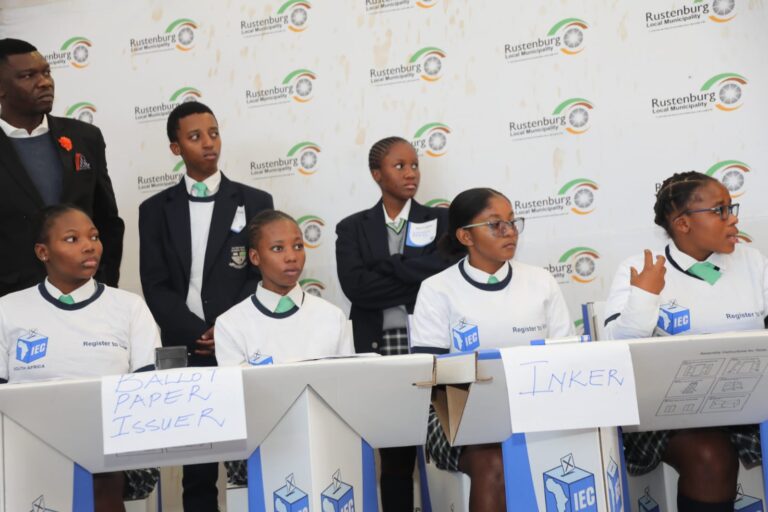
THE Department of Basic Education (DBE) and the Independent Electoral Commission of South Africa (IEC) are making inroads in increasing voter registration figures amongst learners through the Schools Democracy Education Programme.
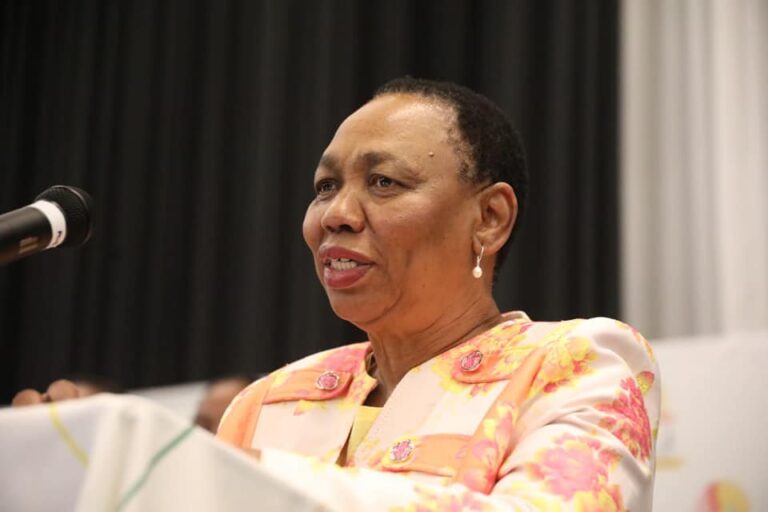
Minister of Basic Education, Mrs Angie Motshekga and IEC Commissioner Judge Dhaya Pillay have launched the 2023 Schools Democracy Month to promote Civic and Democracy Education within the school environment across all nine provinces.
The launch took place at Platinum Village Secondary School in the North West Province on Thursday, 13 April 2023. North West MEC for Education, Ms Viola Motsumi and representatives from various spheres of Government joined Minister Motshegka during the launch.
In her address, Judge Pillay paid attention to the fundamentals of Schools Democracy and Civic Education in the context of the schooling system. According to the IEC, Civic Education is meant to empower young people with critical information to transform communities for the better.
“There has to be a collaborative effort between Government and civil society to maximise the participation of young people in electoral processes, which is one of the most critical mechanisms used to sustain democracy. Young people are future leaders, and their voices should be considered in various spheres of Government. Schools Democracy remains a critical tool to strengthen democracy in communities,” remarked Judge Pillay.
Speaking during the launch, Motshekga said that the celebration of Democracy Month allowed the nation to acknowledge the sacrifices made by various struggle icons in the fight against the apartheid system.
“Their tireless efforts and determination have laid the groundwork for us to continue building a united, non-racial, non-sexist, democratic and prosperous society,” she said.
The Minister also indicated that Government would need to work hard to ensure equality and justice by fostering the rule of law.
“Maintaining the rule of law and fighting corruption cannot be overstated. Corruption robs the poor of basic services and resources they desperately need to improve their lives. We must recommit to the prudent use of public resources, which will go a long way in deepening the rebuilding of our justice institutions.”
The Minister added that the launch of Schools Democracy Month initiatives should offer school communities an opportunity to reflect on the progress made thus far in transforming society.
During Freedom Month, the DBE has chosen to host a series of sector-specific community engagements to commemorate and dub this month as Schools Democracy Month.
The IEC, the Department and PEDs will collaborate to promote electoral democracy literacy to young South Africans in public schools nationwide. Schools Democracy Week, which began yesterday (24 April), runs until 30 April to empower South African youth with the knowledge, skills, and attitudes necessary for active citizenship.
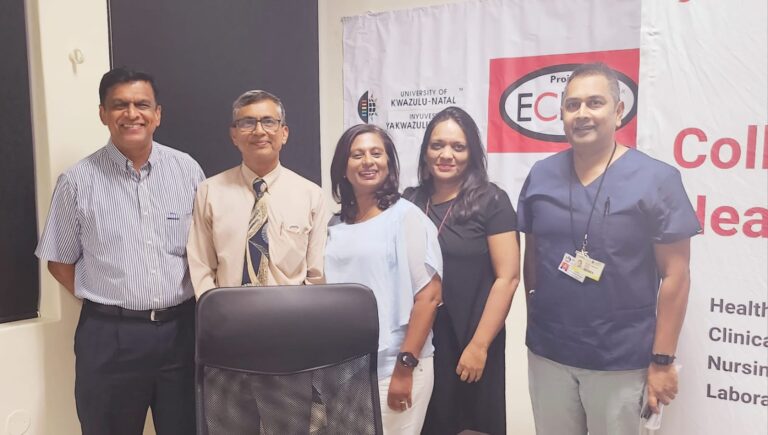
UNIVERSITY of KwaZulu-Natal’s School of Clinical Medicine has partnered with an international outreach project known as the Extension for Community Healthcare Outcomes (ECHO) Institute. Located at the University of New Mexico (Albuquerque, USA) and ECHO India, the project aims to strengthen its reach to healthcare professionals in peripheral hospital sites in KwaZulu-Natal.
Recently, the Adult and Paediatric Nephrology Outreach Programme was launched at UKZN’s Nelson R Mandela School of Medicine.
ECHO Project Manager at UKZN, Dr Serela Ramklass, said: “We are excited to partner with the ECHO Institute and ECHO India that facilitates the link between primary care clinicians at hospitals across the province with specialist faculty from the School of Clinical Medicine.
Collectively, we can improve patients’ health outcomes and quality of life at peripheral sites through shared knowledge on patient assessment and management through mentoring and feedback.”
Team leader for the Adult and Paediatric Nephrology UKZN-ECHO Programme, Associate Professor Rajendra Bhimma, said: “We will focus on nephrology conditions (both in paediatrics and adults) which are most common in our region.
The general discussions will allow all regional and district hospitals to participate. The project will deal with clinical cases presented by doctors either at central or peripheral hospitals and will be followed by a clinicopathological discussion around the case.”
Head of UKZN and Inkosi Albert Luthuli Central Hospital Nephrology, Dr Sudesh Hariparshad, noted how South Africa has one nephrologist for a population of 2.5 million.
“It is important to note that Chronic Kidney Disease (CKD) in its early stages is a silent disease and may only become apparent when more than 50 percent of the function of the kidneys is lost. Therefore, patients must be screened, managed and referred appropriately at primary healthcare levels.”
Academic Leader of Medical Registrars at UKZN and Head of the Clinical Unit of Paediatrics at the King Edward VIII Hospital, Dr Kimesh Naidoo, presented on Glomerulonephritis (GN). Naidoo highlighted a case study of an eleven-year-old patient who presented at a local clinic with ‘coke-like’ or ‘tea-coloured’ urine, a slight headache and no health issues at school.
He was discharged but presented a week later with mild pedal oedema, high blood pressure (BP), and macroscopic haematuria, which was diagnosed as nephritis.
“The need to determine when such cases require referral to specialists and sub-specialist levels of care with most cases of nephritis can be adequately managed at primary health care levels,” said Naidoo.
IN recent months, both the tech press and general media have been full of hype about artificial intelligence (AI), and specifically ChatGPT and rival advanced AI programmes. These promise to produce knowledge in radically new ways that threaten to bypass human agency, while demanding our attention.
There are good reasons to fear AI’s consequences for institutions such as universities, whose main asset is their ability not only to disseminate knowledge, but also to produce new knowledge in the form of research.
But universities can also be a key site of resistance to the imposition of AI across society. Indeed, unless universities take seriously their responsibility to resist the uncontrolled rise of AI, the prospects are bleak for the idea of socially produced knowledge on which they, as institutions, depend.
That AI has a major role to play in science, for example, in sequencing the genetic code of dangerous viruses or finding patterns in vast sets of environmental measurements, is beyond question. What is at issue is whether humanity should allow AI to be pushed at us as if it were a magic solution to all our needs and problems.
AI is a form of media – a technologically based way of mediating our relations with the world – and myth-making about new media is certainly nothing new. But AI is a complex case, because of the hype encoded in its very name and conception. AI, as Evgeny Morozov recently argued, is neither fully artificial nor reliably intelligent.
Transpose this point into the much longer debate about knowledge as a tool of global power since the beginning of historic colonialism just over five centuries ago, and the discourse around AI by business, including the businesses that are universities, takes on another, more disturbing, aspect.
Data colonialism
I approach this question from the perspective of the framework of data colonialism, which I have developed over recent years with Ulises Mejias. There is no space here to outline this theory in detail.
Suffice to say, our core idea is that the drive in recent decades to extract data continuously from everything, including every dimension of social and natural life, is a feature not just of contemporary capitalism, but a new stage in the evolution of colonialism.
Whereas historical colonialism seized land and the resources (human or otherwise) needed to exploit it, the new data colonialism takes life itself, extracting value from it in the form of data that can be sold by, or just stored within, corporations and governments.
That colonialism should, in the 21st century, take on this new form as part of capitalism’s continuing expansion, seems less strange when we remember that capitalism itself first emerged in the 18th century from the profits of historical colonialism’s huge asset grab two centuries earlier.
For sure, the concept of data colonialism remains controversial, but suppose you grant it as a possibility. Then AI and the discourse of Big Data appear in a very different light. They can be seen as an account of knowledge that justifies and legitimates the endless extraction of data from life by business and government – power that is very largely located in key centres in the Global North.
Once again, we are not objecting to the use of AI tools to solve specific problems within clear parameters that are set and monitored by actual social communities. We are objecting to the rhetoric and expansionist practice of offering AI as the solution for everything, a solution whose inevitable precondition is humanity offering up its lives for data extraction.
Indeed, fashionable AI projects like ChatGPT can be understood as directly colonial, because they depend on treating the whole of humanity’s cultural production to date as their free input, as author and artist James Bridle has recently argued.
Universities can fight back
Grant this possibility, and it is clear that universities, which until now have depended on a different human-led model of knowledge, can become important sites of resistance to this next colonial phase of knowledge production.
While Big Tech companies are its beneficiaries, the university culture of face-to-face knowledge production is potentially a big loser from AI, except for members of the coding elite who write and implement AI programmes.
Staying loyal to this possibility of resistance within the university, Ulises Mejias and I, with our Mexican colleague Paola Ricaurte, founded nearly three years ago a network of activists and scholars called Tierra Común. It operates in three languages – English, Spanish and Portuguese – with a special but not exclusive focus on Latin America.
Its goal is to further resistance to data colonialism by supporting community-led practices of resistance based on alternative visions of knowledge production in society.
Although the pandemic interrupted our work, we met physically for the first time in Mexico City in December 2022. Our goal is to build bridges between academic institutions and activist practice, listening closely to activist agendas and frameworks, and sharing our own as freely and openly as possible.
This is not, of course, the first time that universities have opened up their work to wider audiences. We follow in a long tradition of similar work, not least in Latin America by philosophers Paulo Freire, Ivan Illich and others.
But it seems particularly important to renew this tradition at a time when a very different model of information and knowledge – artificial intelligence – is vying for dominance. In this context, for sure, writing in academia’s traditional formats is not enough.
Nick Couldry is professor of media, communications and social theory in the department of media and communications at the London School of Economics and Political Science in the United Kingdom.
THE KwaZulu-Natal Sport, Arts and Culture, has set aside R40.6 million from the Mass Participation Conditional Grant for the implementation of school sport.
Presenting the department’s R1.493 billion 2023-2024 Budget Vote at KZN Legislature in Pietermaritzburg on Thursday, Acting Sport, Arts and Culture MEC, Bongiwe Sithole-Moloi said, an additional R10 million will be allocated through the equitable share.
“The R50.6 million will not be sufficient to sustain the three season (Autumn, Winter and Summer Games) National School Sport Programme and additional resources need to be committed from the Department of Education.”
“The department will focus on information campaigns to increase knowledge and understanding of national symbols among learners at school. The programme includes the roll out of the “I am the flag” campaign,” Sithole-Moloi said.
The MEC also announced that the department has planned to provide 450 schools with sport equipment and attire to conduct school sport activities and encourage learners to participate in intra and inter-school leagues and tournaments.
She said that a total of 160 school sport co-ordinators will be employed on contract, to provide assistance with programmes in schools, clusters and wards.
“Training will be provided to 600 educators and volunteers in coaching, technical officiating and team management. Approximately 26 000 learners are being targeted to compete at the district tournaments,” Sithole-Moloi said.
She added that support will continue to be given to partnerships with the private sector, including Build-It, amongst others, in offering the under 13 football and netball developmental programmes and project with other public enterprises to develop school sport.
“The programme will involve over 1 750 [Under] 13 learners in 12 District Tournaments. Twelve Sport Ambassadors (ex-professionals) will be involved in the programme. Focus will once more be on the provision of competitions to unearth football talent to participate in the CAF (Confederation of African Football) Schools Football Tournaments in Africa,” the MEC explained.
Over R190m allocated for infrastructure development projects
Sithole-Moloi announced that a total budget of R192 million has been set aside for infrastructure development projects. She said that a budget of R16 million has been set aside for the construction of 33 minor sport facilities, including 22 combo courts and play gyms for Early Childhood Development (ECD).
The MECreiterated that the delivery of sport, arts and culture related infrastructure for rural areas remain a focus for the department. This includes the establishment of libraries, community arts centres, sport facilities, small, medium, and micro enterprises (SMMEs), and other arts and culture infrastructure.
She said the department is targeting to complete three facilities in 2023/24 financial year namely, and these include Ofabeni Study Library, KwaMdakane Standard Library, as well as Winston Churchill Theatre.
“The department will continue to fund the construction of five libraries around the province for different municipalities, [including] uMzumbe Library, KwaDlangezwa Library, Endaleni Library, Pomeroy Library, as well as Lubisi Library.
“In addition, the rehabilitation of three Arts Centres and three libraries is planned to commence in 2023/2024 financial year. These are uThungulu, Osizweni and Mbazwana Arts centres. Under Library Services the following three libraries will be renovated [in] Jozini, Ndumo and Wasbank libraries,” Sithole-Moloi highlighted.
Creating job opportunities
Meanwhile, Sithole-Moloi said the department has, over the medium term, planned on creating job opportunities in the sport, and cultural and creative industries sectors.
She announced that a total of R2.0 million has been allocated to the KZN Sport Confederation for the employment of sport ambassadors (legends and ex-professionals) to serve as mentors, talent scouts and coaches at the ward level and to support the school sport and club development programme.
She said 400 jobs have been targeted, and will be created through the Mass Participation Conditional Grant, EPWP Social Sector Incentive Grant and the equitable share.
“Additional jobs as coaches, development officers, administrators will be created by sport federations and other entities that receive financial support through transfer payments,” the MEC said.
SOUTH Australia’s royal commission into early childhood education led by Julia Gillard has released an interim report. The key recommendation is preschool for all three-year-olds (in a move similar to other states). But the report notes one of the critical considerations around this change will be the early education workforce.
SA’s report comes as the Productivity Commission begins a wide-ranging inquiry into early childhood education and care in Australia.
As part of this, the commission is looking at the workforce. We already know there are high rates of turnover and burnout among early childhood educators. This makes it difficult for people to make a sustainable career in the sector. It also makes it harder for services to find staff and for families to find a childcare place for their children. Our new research looks at why early childhood educators are burning out and how we can fix this.
Educator turnover
Like other essential sectors the issue of burnout in early education has become more pressing since the beginning of the pandemic. A 2021 a union survey of 4,000 educators revealed 73% planned to leave the sector within the next three years due to excessive workload, stress, low pay and status, lack of professional development and career progression. It also found 82% “always” or “often” felt rushed when performing key caring tasks in the past month. As of, 2022, educator job advertisements had doubled since the pandemic.
What is burnout?
Burnout is complex and can involve many things, including:
ongoing physical and mental fatigue
low sense of personal achievement
emotional exhaustion
depersonalisation, where you feel separate from your body or true feelings.
Burnout matters, because it harms educators’ wellbeing, the quality of children’s education, leads to educators leaving and then the ability of parents to work (especially women), and businesses to thrive.
Our new study
We wanted to understand what causes educator burnout, with the aim of helping policymakers and governments plan better support for the sector. To do this, we reviewed 39 studies about the drivers of early childhood educator burnout from 13 countries, including Australia. This type of a study – called a “systematic review” – is a powerful way for researchers to provide a full and clear summary of what we know about a topic.
What leads to burnout?
We found educator burnout can be driven by a range of factors. Certain personal circumstances make an educator more likely to experience burnout. For example, those with lower household income, or those with increased family responsibility report higher feelings of burnout. This category includes those who are single, widowed, divorced or separated.
Younger, less experienced educators were particularly vulnerable to depersonalisation. Male educators were more likely to experience burnout than their female colleagues.
Educators said poor mental health (particularly depression and mental distress) played a crucial role in their burnout. More socially connected educators who are supported by friends, family and/or their faith were less likely to experience burnout.
How services treat staff matters
Educators from services where there was little or no focus on wellbeing were more likely to report burnout.
This included services with scarce emotional support strategies – such as being able to debrief with peers, or access counselling or coaching. These services also showed a lack of respect for educators’ work-life balance – such as demanding they do extra unpaid hours or not being flexible about leave for family reasons.
Educators discussed the fatigue caused by “surface acting”, where they had to pretend they were (or were not) experiencing certain emotions to please children, staff and parents. For example, an educator might be feeling exhausted and overwhelmed due to their workload, but they had to pretend to feel energetic and enthusiastic when engaging with children and families.
Poor professional relationships were associated with feelings of stress. This included feeling undermined by parents, teaching children with behavioural challenges, and negative relationships with colleagues and directors.
Funding and status
Our research showed educators experienced stress when they had few resources, but very high expectations to produce “quality” learning environments and experiences for children.
Some work was more likely to cause exhaustion, such as constantly trying to prove to authorities they were providing a “quality” service by collecting data. Inadequate income can push educators to leave their positions. It can also lead to reduced motivation, and increase the number of sick days.
Educators’ feelings of burnout were also linked to a belief they had a low status in society. This was more pronounced if they taught younger children, or if they had been working in the sector a long time. Both groups reported being affected by a lack of professional development and opportunities for promotion.
Educators who taught younger children were more likely to feel like they had a lower status in society. Lina Kivaka/Pexels
How can we reduce burnout?
Our review showed there are some effective ways to improve educators’ wellbeing, prevent burnout and keep them from leaving their jobs.
These include coaching, so educators can get feedback and develop their careers, peer mentoring so they know they are not alone and counselling, so they have an emotional outlet to reflect on their work.
If we want to keep educators in these vital roles we need to actively support them to stay.
(Marg Rogers, Senior Lecturer, Early Childhood Education, University of New England)
The author acknowledges the work of Joanne Ng (lead researcher) and Courtney McNamara for their research on the systematic review.
THE Special Investigating Unit (SIU) has uncovered evidence suggesting that over R5 billion of the National Student Financial Aid Scheme (NSFAS) funds may have been disbursed to students who were not eligible for financial assistance.
During a recent briefing to the Parliament’s Standing Committee on Public Accounts (SCOPA), SIU head Andy Mothibi provided details on how this money had been used to illegally fund students who did not meet the criteria for financial aid.
Preliminary investigations have revealed that approximately 40,000 students across 76 institutions of higher education were awarded financial assistance from the National Student Financial Aid Scheme (NSFAS), despite having a household income that exceeded the maximum threshold of R350,000.
The SIU has the authority to initiate legal action in the High Court or a Special Tribunal, on its behalf, to remedy any wrongdoing uncovered during its investigations involving corruption, fraud, or maladministration.
In accordance with the Special Investigating Units and Special Tribunals Act 74 of 1996, any evidence of criminal activity discovered by the SIU will be referred to the National Prosecuting Authority (NPA) for further action.
During a briefing to the Parliament’s Standing Committee on Public Accounts, officials from the Department of Higher Education and NSFAS provided updates on their investigations into the National Skills Fund and NSFAS.
Higher Education DG Dr Nkosinathi Sishi noted that NSFAS is supporting 26 public universities, 50 colleges, and 9 community education training programs (excluding SETAS).
Sishi revealed that the funding allocated to working-class students has increased significantly from R21 billion in 2018 to R47 billion in the current term.
He also said that the number of students funded by NSFAS has increased from 586,000 in 2018 to 770,000 in 2021, with 80% of university students now receiving NSFAS funding to ensure access to higher education.
NSFAS Chairperson Ernest Khosa praised the transparency of the SIU’s investigations and expressed his satisfaction that the figures presented were in line with expectations.
He noted that the identification of fraudulent beneficiaries and exposure of mafias in student accommodations could help improve the execution of NSFAS’s mandate.
NSFAS CEO Andile Nongogo reported that the institution had received 37 fraud cases during the current financial period, with 14 cases having been finalized, 7 still in progress, and 16 not yet reviewed due to capacity constraints.
While the amount of illegitimate payments reported by NSFAS differed slightly from the SIU’s findings, Nongogo stated that the organization was fully committed to cooperating with the SIU’s investigations.
Members of the committee expressed concern about the recovery of the more than R5 billion in illegitimate payments made by NSFAS and questioned how the institution plans to address the issue.
PAYING tribute to great teachers, including his aunts, encouraging graduates to walk in the footsteps of giants before them, Buti Manamela, the Deputy Minister of Higher Education, Science and Innovation, also threw down the gauntlet to new teaching graduates at the University of Zululand on Tuesday afternoon.
“Teaching is one of the most important professions our country needs. We have a group of young people who will become an army in our classrooms nationwide,” he said during his keynote address at UNIZULU’s Faculty of Education in Kwadlangezwa.
Addressing students at the only comprehensive tertiary educational institution north of the Tugela River on Tuesday, Manamela noted that not all teachers were good ambassadors for their profession; some have committed crimes worse than society can comprehend.
“A few amongst those who practice this profession do go to school under the influence of alcohol; others have sexual relations with the school kids; some even use violence to instil discipline; some do not even bother to ensure that they do their best, or even beyond the call of duty; to teach the kids to the best of their abilities,” he added.
But his message to graduates was crystal clear.
“I want you to be a better type of teacher. The one who understands the children that they teach, their weaknesses and their strengths, what their family background is and who their parents are (if they have any), whether they do have a meal before they come to schools, are being bullied at home or at school which may affect their studies, can they hear or see, and if not is there a way in which we can help them so that this does not affect their studies, you need to contribute into revolutionising teaching.”
The Deputy Minister urged graduates to study further and explore ways of improving education delivery through technology.
“Can we find a better way to deliver lessons in a much more exciting and fun way? Is there a way we can think of education beyond the classroom?”
Mindful of the changing world in which social media platforms like Twitter and TikTok dominate, Manamela said teaching must keep up with the times.
“You are the generation that needs to think beyond the box and get children excited about mathematics, history, languages, science, art and technology. They say in China, using algorithms, some social media is used for learning and teaching beyond the classroom,” Manamela added.
Paying tribute to Nokutela Dube, the founder of Ohlange High School in Inanda, and wife of the first President of the African National Congress, John Dube, Manamela described her as a woman who made education fashionable.
But he urged students not only to emulate her but do better than her.
“Founding a school today may be one of the simplest acts one can achieve. But in 1901, being black and a woman was no small hurdle. But with dedication and commitment, she pushed ahead with her dream of educating the black child,” he told students.
Manamela reminded students of the many great South African leaders who emerged from UNIZULU.
The illustrious list includes Dr Nkosazana Dlamini-Zuma, Judge Sisi Khampepe, Sibongile Khumalo, Dr Mosibudi Mangena, Dr Hlengiwe Mkhize, Judge Mogoeng Mogoeng, and current Minister of Higher Education, Dr Bonginkosi Blade Nzimande.
“However, I do not urge you to be like them. They walked these corridors in the toughest and thickest of our time in history. The adversity that confronted them, the legislated hate that was meted against them, and the narrow path that lay ahead beyond the gates of this university is what shaped them. I urge you to do better than them,” he said.
Acknowledging that the post-school education system has inherent structural problems, Manamela said, however, it is one of the best in the continent and can stand head and shoulder with the best in the world.
“When you leave here, remember that every school in the province should have an educator from here; every court a legal fundi of your Almer Mater, every clinic a nurse, every mine an engineer, every covered inch of this country where there are graduates, you now have the honour of wearing the badge: I went to oNgoye and I graduated,” he said.
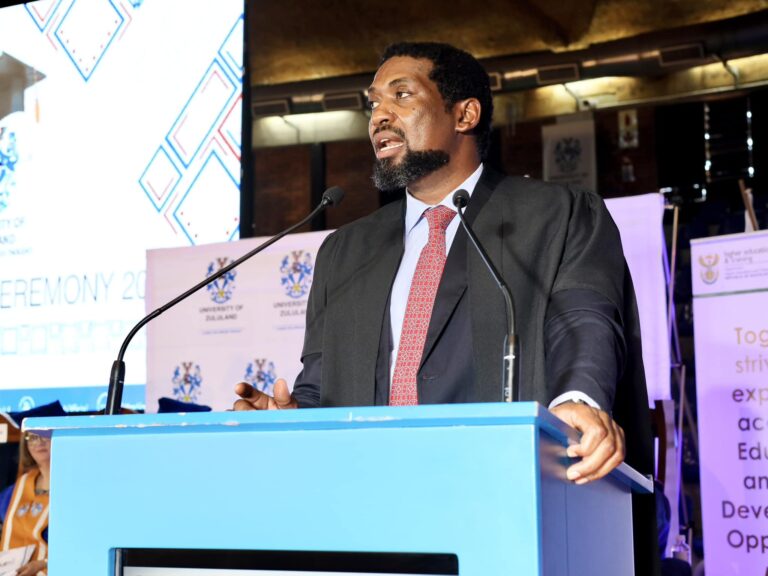
Deputy Minister of Higher Education, Science and Innovation, Mr Buti Manamela arrived at the University Of Zululand Graduation Ceremony being held for the Education Faculty. PHOTO: DHET
According to the Deputy Minister, credit for the success of the UNIZULU graduates belonged to the educators who helped shape them.
“Today, because of the investment of all the teachers in your life, you have crossed the first box of education at a higher level. I was not inspired only by the teachers in school, but the teachers at home played even greater role. Both my aunts and my uncle were trained teachers. Not only were my aunts teachers, but they were both principals.”
“They also went on to study further beyond their teacher diplomas. They are heroes in our family but also in their communities. The teaching profession remains one of the most important and valuable. The extent of the impact and reach that teachers have in society is immense,” he added.
Again, referencing social media, Manamela said TikTok would not only be used for showcasing dancing and singing, important as these are, but should also promote robotics, 3D printing, technological literacy and many other things that will help children evolve into sophisticated beings.
He urged graduates to be the generation responsible for redefining learning and teaching.
Not missing an opportunity to extol the benefits of Technical and vocational education and training (TVET) colleges, Manamela said that during a visit to an institution, he spoke to one of the teachers in the electrical workshop who have been with the college for many years.
“He took me through the various stations he uses to train his students. One of these was the solar installation and maintenance station. He told me this was not part of the curriculum, but the challenges out there have imposed this curriculum on us. So every Saturday, he teaches his electrical students how to run solar energy as a business. In the first week, only two students attended because it was voluntary. Only when these two students started making money did the rest become interested.
“That’s the kind of innovation that I am talking about. I want to take this opportunity to urge you to go and teach at TVET Colleges too. This is one of the growing sectors that need better qualified instructors who understand and respect the trade,” he added.
Concluding his address, Manamela told the new crop of teachers that they must consider working in rural areas, those villages, those outskirts where no one goes, “but where lives and souls also need to be saved”.
“We need a million Nokutela who will brave the unjust laws, the hurdles placed before them, the desire to be self-serving and the urge to use what we have just for our benefit.”
“History does not remember those who danced in their limelight. History reflects those who lit candles for others to see their way. Go out there and make history and a better country.”
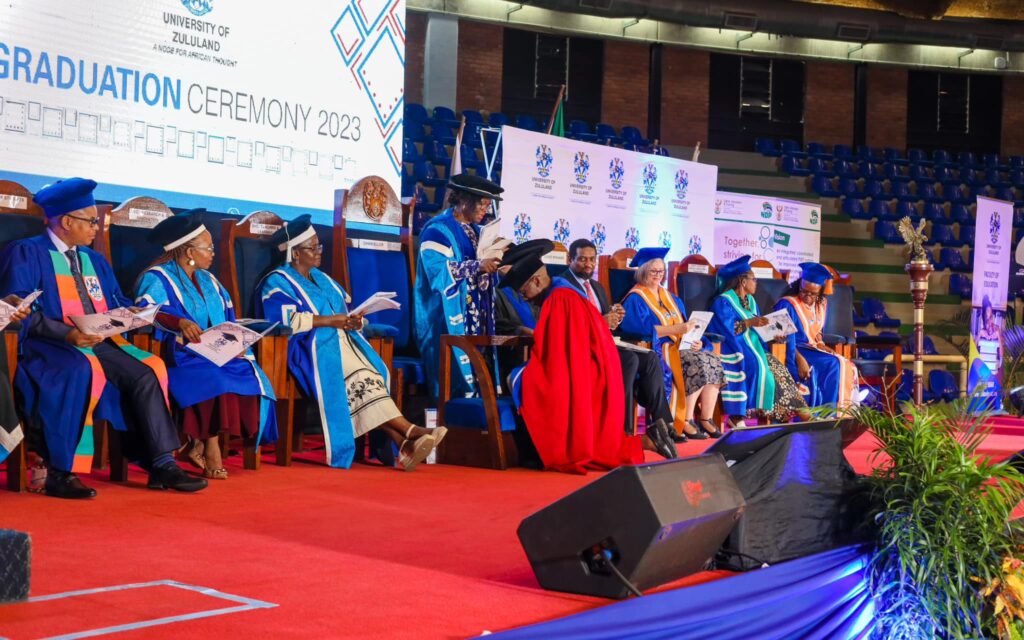
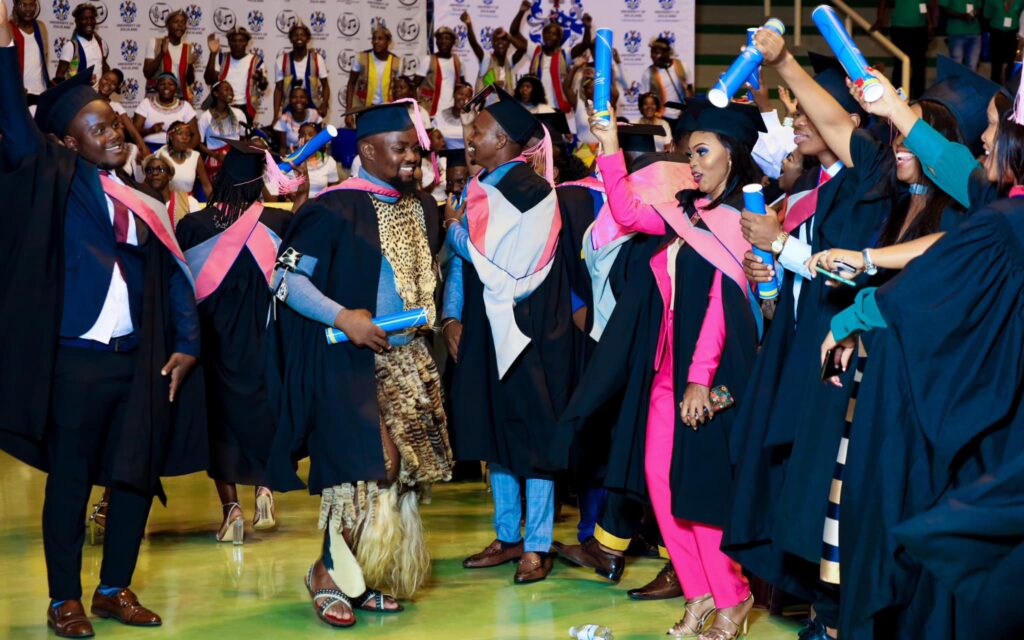
The graduations were in full swing at the University of Zululand. PHOTO: DHET