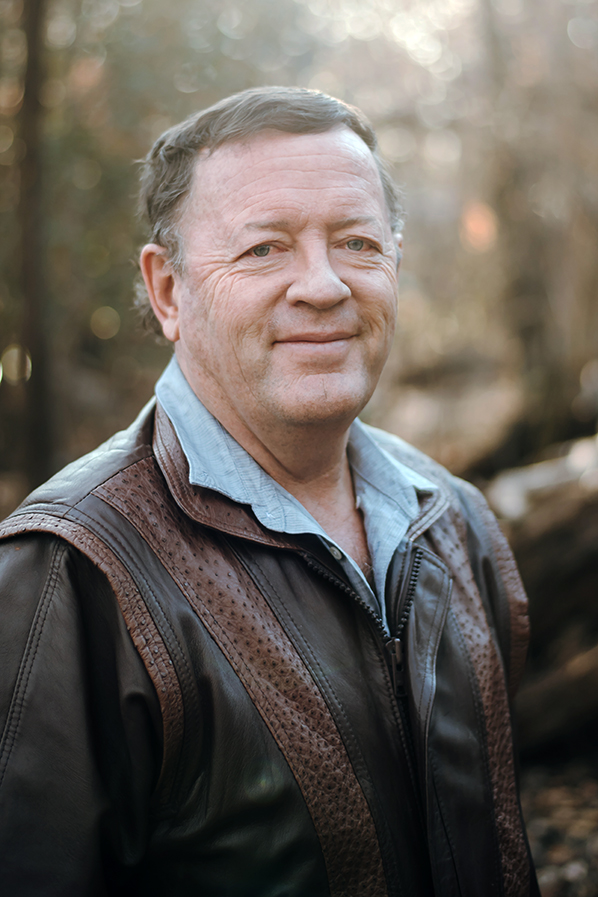
PROFESSOR Louis du Preez, professor of zoology at the Potchefstroom Campus of the North-West University (NWU), was honoured by having a newly discovered Malagasy frog species named after him.
The honour was bestowed by a group of German scientists from the University of Braunschweig, Landesmuseum in Darmstadt, and the Zoological Museum in München, in recognition of Professor du Preez’s substantial contributions to understanding the flatworm parasites of Malagasy anurans.
This lineage of frog species represents the most evolutionarily divergent species of Blommersia known to date.
It means within the genus Blommersia, this new species branch off early and is in fact an old species.
Although it is still regarded as Blommersia, it differs quite a lot from all other species in the genus.
The new species is now formally named and described as Blommersia dupreezi.
“I am grateful to be recognised for the work I did in Madagascar by having a vertebrate animal named after me. This is a huge honour and I am humbled by the gesture,” he says.
Professor du Preez is a renowned National Research Foundation B-rated scientist and is affiliated to the Unit of Environmental Sciences and Development at the NWU.
His role as leader of the African Amphibian Conservation Research Group is highly regarded in scientific circles.
The group’s research focuses on the conservation and well-being of amphibians.
Professor du Preez research focuses on amphibians and their parasites. He has authored seven books – including The Field Guide to Frogs of Southern Africa – as well as 168 peer-reviewed scientific papers.
His contribution to the knowledge field doesn’t stop there, as he, along with Vincent Carruthers, created a smartphone app about the frogs of Southern Africa, which is truly commendable.
Professor du Preez says the best aspect of his work is training and inspiring young scientists. “Seeing their knowledge develop and finding their niche areas is incredibly rewarding for me.”
His job presents a variety of challenges, including the need for travel to remote locations.
He adds that when one is passionate about their work, it can become difficult to separate your career and personal life.
“My family has been remarkably supportive of my work – they’ve joined me in research and turned family trips into learning opportunities. It is thanks to them that I have been able to spend long hours in pursuit of my dreams while still having their support,” he adds.
Professor du Preez encourages aspiring researchers to remember to stay passionate about their work and focus on making positive contributions to the scientific world, rather than striving for personal achievements.
“We all have a duty to improve conditions and increase the chance of survival for every species on Earth – including the frogs, who were one of the first land-dwelling animals and are now among the most threatened vertebrates on our planet,” he adds.
THE KwaZulu-Natal Education MEC, Mbali Frazer, has acknowledged that glitches in the food delivery system to some schools resulted in thousands of pupils starting the first day back at school with empty stomachs.
Fraser expressed regret over the situation and was shocked to discover logistical challenges on the part of the main service provider.
Upon receiving the report on Wednesday, Frazer instructed the top management of the Department to promptly engage with the affected districts and stakeholders to identify the root causes of the challenges and determine their extent.
“This unfortunate situation currently faced by schools, communities and service providers is deeply regretted. The Department and the affected service provider have been working around the clock to resolve these challenges,” she said.
There are 5,400 schools which are beneficiaries of the National School Nutrition Programme (NSNP) in the province.
LEARNERS from various schools in Limpopo marched to the Department of Education to demand urgent action on the eradication of pit toilets.
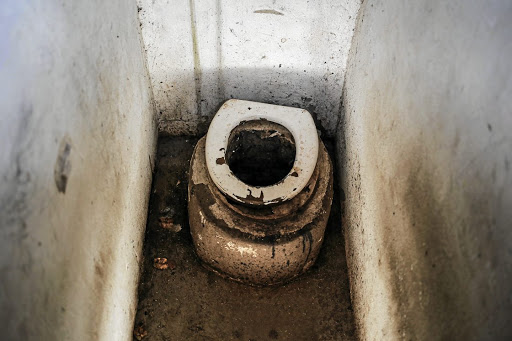
Dozens of learners from affected schools told the department that they’ve had enough of failed promises to bring dignity to schools through the eradication of pit toilets.
Equal Education Limpopo Organiser, Tiny Lebelo, told Inside Education that while they will wait for the department to respond, it is no longer about setting up a new deadline but rather delivering urgent intervention to schools.
“We are eagerly awaiting a response from the department on Friday as they promised. We are hoping the Limpopo Education will address our demands but also give us a timeline of how they will address the missed deadline. I think it’s no longer about them setting another deadline now but rather acting on the missed deadline ensuring that all priority 1 schools have adequate sanitation,” Lebelo said.
“It’s important that the LDOE fixes sanitation backlogs in rural schools because these are schools that have been built by the communities and are in need of dire upgrades. We look forward to actually seeing construction occurring at all priority 1 schools to safeguard the dignity of learners in far remote and neglected areas of our country.”
Lebelo said: “Learners cannot wait any longer for sanitation improvements which are, in the main, human rights issue. Today, we have highlighted the plight of these learners in a manner that shows the urgency of the delivery”.
On behalf of the department and the provincial government, Isaac Malatji, Head of Infrastructure, accepted the Memorandum from the learners.
Spokesperson for the department, Mike Maringa, said the department made a commitment to respond by Friday.
“No comments at this stage as we are still looking at the memorandum and engaging with Various units of the department to see how best to respond to the issues,” Maringa told Inside Education.
Learners in Limpopo protest against pit toilets. PHOTO: SUPPLIED
Priority one schools are schools with illegal plain pit toilets as their only form of sanitation.
Plain pit toilets were completely banned from schools by the Minimum Uniform Norms and Standards for Public School Infrastructure (the school infrastructure law) in 2013 and had to be removed and replaced by 2016.
It has been 10 years since the introduction of the school infrastructure law, and all of the sanitation delivery deadlines (2016 and 2020) have been missed.
In 2017, EE visited 18 schools in Ga-Mashashane in Limpopo’s Capricorn district to determine whether these schools had access to water supply and safe toilets in line with the school infrastructure law.
The results of this investigation are detailed in the report, “Dikolo tša go hloka seriti.” The initial visits were prompted by an outcry from Equalisers (EE high school learner members) about the terrible sanitation conditions at their schools.
“Our findings confirmed learners’ reports about unsafe sanitation conditions at school. We found, among other things, that learners in most of the schools used plain pit toilets as the only sanitation option available, while others were exposed to dangerous or broken enviro-loos and ventilated improved pit toilets,” the reports said.
In February 2020, EE and the Equal Education Law Centre (EELC) revisited 15 of the 18 schools to check progress in access to safe water and toilet facilities in Limpopo schools.
The visits were also motivated by the involvement as amicus curiae (friend of the court) in the Michael Komape court case, where the Polokwane High Court ordered the LDoE and the national department of basic education (DBE) to develop a reasonable plan for replacing all pit toilets in Limpopo schools (the structural order).
Using the information gathered during the 2020 school visits, Equal Education submitted a supplementary affidavit to the court in which it argued that both the national and Limpopo education departments had failed to fulfill their constitutional duty to provide safe infrastructure for learners in Limpopo.
The data gathered on the hygiene and safety conditions that shape the learning experiences of learners at these schools was documented in the second report, “Tšhedimošo mo dikolong tša go hloka seriti.”
In March 2023, 15 schools were visited by Equal Education to monitor the progress of sanitation delivery after the release of two reports highlighting their struggles.
“We found the sanitation conditions in some schools unchanged, while others had gotten worse. It is clear that the LDoE continues to be slow in addressing sanitation backlogs and fulfilling its moral and legal responsibilities to learners,” organisers said.
Learners at Tutwana Primary, Seipone Secondary, and Kgolokgotla Secondary schools are still using illegal plain pit toilets as their only form of sanitation.
The advocacy group said these structures are especially dangerous and inappropriate for younger children at Tutwana Primary School. The use of these illegal structures persists in schools despite several tragic cases of young children losing their lives.
According to the LDoE’s latest progress report, 52 schools categorised under priority one—schools with only inappropriate toilets like plain pits—are still in the planning and design phases of development.
However, based on the department’s revised implementation plan submitted to the High Court in 2021, these schools should have received sanitation upgrades by the end of March 2023.
On Tuesday, protesters said it was urgent that the Limpopo department of education DoE provide schools with adequate, proper, and safe toilet facilities to meet the necessary hygiene and safety standards for a conducive learning environment.
“As long as these illegal pit toilets exist in schools, children’s rights will continue to be violated. We cannot and will not sit back while the LDoE continuously fails to meet the deadlines for school sanitation upgrades. #FixOurSchools #SeritiMoDikolong!” Lebelo said.
Learners in Limpopo protest against pit toilets. PHOTO: SUPPLIED
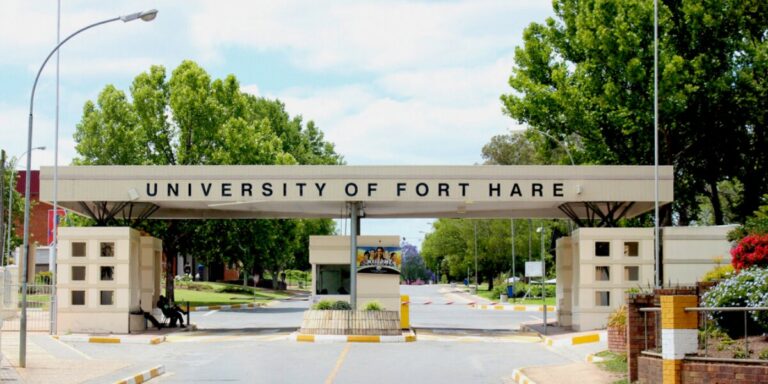
FIVE men have appeared in the Alice Magistrates Court on Tuesday for a number of charges, including murder and attempted murder of employees at the University of Fort Hare.
Three of the five suspects involved in the University of Fort Hare shootings had links with the institution.
Police said one worked with the fleet manager, the other is a former Student Representative Council (SRC) member, and another was brought back to work at the university after retiring.
One of the suspects allegedly ordered a hit on the University of Fort Hare’s fleet manager Petrus Roets last year.
Two of the accused are from KwaZulu-Natal.
Police top brass led by Minister Bheki Cele and National police commissioner, General Fannie Masemola visited Alice in the Eastern Cape following a breakthrough in the police investigations into cases of murder and attempted murder at the Fort Hare university.
The five men facing murder and attempted murder charges will remain in custody until the 4th of May for a formal bail application.
Fort Hare vice-chancellor Prof Buhlungu said he was pleased that President Cyril Ramaphosa prioritised the cases as he promised.
“I am pleased that today we are seeing breakthrough in this case. I think the President for sending police top brass as he promised. We will not rest until those who aided and abet corruption are brought to book,” he said on Tuesday.
On the 6th January, Buhlungu’s protector Mboneli Vesele was gunned down outside his official residence.
Since then, a high level national police task force and intervention teams were deployed to find his killers and also resolve the remaining murder cases linked to corruption in the varsity.
The team reported directly to the national police commissioner.
SEFAKO Makgatho Health Sciences University became the latest among several institutions experiencing student protests last week. Since the 2023 academic year began, unrest has plagued universities and colleges across South Africa. Four students were suspended at Sefako Makgatho as protests turned ugly.
The tension escalated similarly to the challenges across many campuses, resulting from the National Student Financial Aid Scheme (NSFAS) allowances, accommodation capping, limiting space for registration, and infrastructure and security.
The Portfolio Committee on Higher Education, Science and Innovation heard about student unhappiness over NSFAS was delaying the list of funded students, making it harder for poor and middle-class students to register within the set registration window.
These negatively impacted the teaching and learning process, and poor performances in the first term and instability on many campuses could be expected.
The Committee said it was not pleased with the poor communication by NSFAS and Universities South Africa, as it came up with policies without informing the Committee about the reasons behind them.
In the current financial year, the Financial Aid Scheme (NSFAS) budgeted R47 billion to fund 1.1 million students.
According to Dr Marcia Socikwa, Deputy Director-General (DDG): University Education, Department of Higher Education and Training (DHET), the preparations for the 2023 academic year included hosting December 2022 engagements with registrars, Chief Financial Officers (CFOs), as well as NSFAS and developing a monitoring tool based on the experience of previous years.
The Monitoring Tool focused on Registration-related Issues, NSFAS-related Issues, student accommodation, returning student registration, and financial matters. Issues for the 2023 registration period included the late release of NSC results, issues relating to possible fraud, capping of accommodation costs to R45 000, delayed submission of funded lists to universities, and delays in confirming spaces.
This resulted in protests at the University of Witwatersrand, the University of Johannesburg, the University of Kwa-Zulu Natal, the Cape Peninsula University of Technology, Vaal University of Technology, Sol Plaatjie University (SPU), North-West University, the University of Cape Town, and the University of Western Cape.
Sam Zungu, DDG: TVET Branch, DHET, said the disruptions in teaching and learning included the delayed release of results, delayed disbursement of allowances, demand for accommodations, a rape incident of a Tshwane North TVET student in private accommodation, and there are mitigation plans set for the reduction and prevention of further disruptions.
Dr Phethiwe Matutu, Chief Executive Officer (CEO), USAf, said academic classes began at all 26 universities. In most institutions, registration overlapped with attendance of lectures.
Seven universities made provision for late registration for a selected number of students. Several universities had to extend their registration period and the start of the academic year because of the late release of matric results and delays in NSFAS funding. This was because decisions with students’ funding lists arrived late.
Prof Dipiloane Phutsisi, President of, South African Public Colleges Organisation (SAPCO), said 14 colleges experienced student unrest.
SAPCO will work closely with colleges to monitor the situation where there is unrest, and meetings will be held with SA TVET leadership for intervention.
NSFAS management will be continuously engaged to resolve funding issues, and more intervention processes will be implemented.
THE right-hand man of former University of Johannesburg (UJ) vice-chancellor, Professor Tshilidzi Marwala, has quit for an overseas posting in one of New Zealand’s prestigious institutions.
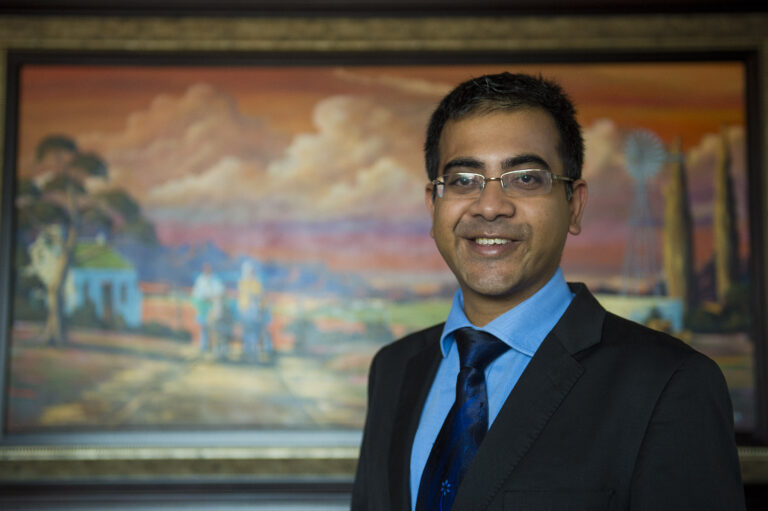
Deputy Vice-Chancellor: Research and Internationalisation at the University of Johannesburg Professor Saurab Sinha will join the 150-year-old University of Canterbury on 1 July.
Marwala, his former boss, joined the United Nations University in Tokyo on 1 March.
Respected academic and author Sinha said in a post on social media that it was an immense privilege serving the UJ over the last decade. Sinha, supported by the U.S. Fulbright program is currently undertaking a research sabbatical at Princeton University.
The University of Canterbury is led since 2019 by Professor Cheryl de la Rey, who was the first – and only – woman vice-chancellor of the University of Pretoria in a century between 2009 and 2018.
Sinha contested the vice-chancellor post at UJ against Professor Letlhokwa George Mpedi, the former Deputy Vice-Chancellor: Academic, UJ, who succeeded Marwala on 1 March.
He becomes the second top executive to leave UJ. Professor Debra Meyer, Executive Dean: Faculty of Science, who also stood against Mpedi, left on 31 March to join the Sol Plaatje University as Deputy Vice-Chancellor: Teaching and Learning.
“Since joining UJ, she has played a vital role in driving the faculty’s strategy to support the University’s objectives. Prof Meyer, we wish you only the very best in your new role and future endeavours,” said Mpedi in a message to staff.
Sinha said: “With the UJ Community and partners, locally and abroad, UJ has continued to grow from strength to strength; the symbiosis of culture, people and strategy is setup for continued research, innovation and internationalisation excellence.”
Sinha, whose latest book, on 6G technology, has just been published, will remain a Visiting Professor at UJ.
Currently in Princeton on a fellowship, Sinha, said: “I’m looking forward to the next journey of learning, change, and contribution. Reporting to the Vice-Chancellor and Principal, University of Canterbury (UC), New Zealand, I’ll provide leadership to UC Engineering (Engineering, Forestry, Mathematics and Statistics, Product Design). I look forward to being part of the senior leadership team, UC and Christchurch/Canterbury Community.”
In 2023, UC celebrates 150 years – a significant milestone – furthering engagement with people for education, research and impact.
With my departure, there is an exciting opportunity for the next leader – to serve as UJ’s Deputy Vice-Chancellor: Research and Internationalisation,” he said.
Candidates can Apply: http://jobs.uj.ac.za
The University of the Western Cape is also looking for a new vice-chancellor following the announcement by incumbent Professor Tyrone Pretorius, who also worked under Prof De la Rey when she was at the University of Pretoria, announced he was leaving.
Professor Pretorius is an alumnus of the University of the Western Cape (UWC) and was appointed as the seventh Rector and Vice-Chancellor of the institution in 2015. Researcher Professor José Frantz is currently acting vice-chancellor.
EQUAL Education (EE) learner members will march to the Limpopo Department of Education (LDoE) offices in Polokwane today (Tuesday) to demand urgent sanitation relief for all “priority one” schools.
Priority one schools are schools with “illegal plain pit toilets as their only form of sanitation”.
Plain pit toilets were banned from schools with the introduction of the Minimum Uniform Norms and Standards for Public School Infrastructure (the school infrastructure law) in 2013, and had to be removed and replaced by 2016″.
It has been 10 years since the introduction of the school infrastructure law, and all of the sanitation delivery deadlines (2016 and 2020) have been missed, the organisers said.
Based on plans the LDoE submitted to the court in 2021 priority one schools should have received sanitation upgrades by March 2023.
“This deadline has also been missed. It is urgent that the LDoE provide these schools with adequate, proper, and safe toilet facilities to meet the necessary hygiene and safety standards for a conducive learning environment,” Equal Education said.
“As long as these illegal pit toilets exist in schools, children’s rights will continue to be violated. We cannot and will not sit back while the LDoE continuously fails to meet the deadlines for school sanitation upgrades,” it added.
Equal Education organiser Tiny Lebelo told Inside Education that the government has a constitutional obligation to provide schools that are safe and ensure that they are conducive for learning.
“The importance of this march is that there is a constant neglect especially from provinces where they are largely rural.”
“We cannot have a school that was built in the 70’s by the community still standing now without proper sanitation upgrades nor infrastructural upgrades. We cannot go another day with another primary school having pit latrines as their form of sanitation without government intervention,” she said, adding that it seems the government has “no political will to eradicate pit latrines in schools but we cannot constantly wait for the private sector to be the saviour.”
She said the march will be used as an important reminder to the department of education of its constitutional obligation.
“Meeting the department outside their offices on the streets where the problems are, and not in their boardrooms or in press briefings is an important highlight of Tuesday’s march. We are meeting at the frontlines where the real struggle for the restoration of the dignity of the black child is,” she added.
EE members in Limpopo will be marching to the LDoE offices in Polokwane to demand:
Urgent sanitation relief for priority one schools such as Tutwana Primary School and Seipone Secondary School Immediate provision of mobile toilets to these schools as a short-term interim intervention based on their implementation plan, while the department works swiftly in providing permanent proper toilets, and,
Urgent sanitation relief for priority one schools such as Tutwana Primary School and Seipone Secondary School.
The march takes place on Tuesday, 11 April 2023 at 9 am.
THE University of Cape Town (UCT) has retained its excellence in the education of professional accountants through the South African Institute of Chartered Accountants (SAICA) Initial Test of Competence (ITC) results announced on Friday, 31 March 2023.
This came at the end of a week of celebrating excellence at the university’s graduation ceremonies.
The ITC, written in January 2023, aims to assess candidates’ technical knowledge and is the first of two professional examinations prospective Chartered Accountants (CAs) must pass to register with SAICA.
The pass rate in this exam for the UCT Post Graduate Diploma in Accounting (PGDA) students is 97% – a notable improvement from 89% in January 2022 – with the pass rate for the UCT first-attempt candidates at 100% and 78% for repeat candidates. Of 183 UCT students who wrote, 178 passed (including repeats).
Head of the UCT College of Accounting, Associate Professor Ilse Lubbe, lauded the performance of the university’s students, noting that these outstanding results were attained against the backdrop of challenging circumstances.
“We are extremely proud of the performance of our UCT students in the ITC exam. The students displayed immense tenacity, given the impact of COVID-19 during their undergraduate and part of their postgraduate studies.”
The national pass rate for the January 2023 ITC is 75% (2022: 59%).
The national pass rate for first- attempt candidates is 93%, and 44% for repeat candidates. Of the first-attempt candidates, African candidates achieved a 91% pass rate, with the UCT African first-attempt candidates being 100% and an overall 96% for UCT African candidates, including repeats. This demonstrates UCT’s consistency in the success rate of its African candidates in line with Vision 2030’s pillars of excellence and transformation.
Five UCT PGDA students achieved the commendable feat of being on the SAICA Honours Roll, which consists of candidates who demonstrated exceptional performance and showed remarkable insight in this strenuous exam. The five UCT candidates are MaJeff Mphahlele, Jade Honey, Caroline Koen, Leila Chin and Eloise Wilton.
Mphahlele and Evan Walker (who completed the PGDA at the University of Pretoria) are academic trainees in the College of Accounting in 2023.
Professor Suki Goodman, Dean of Commerce, congratulated all UCT academic trainees for passing the ITC and commended academic staff members for their integral role in this tremendous attainment.
The College of Accounting offers the UCT Board course for candidates preparing for the ITC. In preparation for the first sitting of the ITC in January 2023, 976 candidates registered for the UCT Board course.
These candidates represent most universities in South Africa (residential and distance learning).
The UCT Board course has prepared ITC candidates for this strenuous examination for over 10 years.
The College of Accounting is working closely with SAICA to provide additional support to repeat candidates, and applications to enrol in the UCT Board course for June 2023 are now open.
Candidates can visit the College of Accounting website for more information and to register.
THE National Bank of Angola’s Governor, José de Lima Massano, met with the executive directors and discussed the country’s achievements in changing financial regulatory systems and processes as well as stabilizing the exchange rate. The visit took place between March 6 and 10.
The Chamber of Commerce, BFA (Bank of Fomento Angola), Standard Bank, Industrial Association of Angola, the association of agro-livestock producers, Angola Development Bank, and the Association of the Bank in Angola hosted a meeting where the directors also met private sector players in the agricultural sector.
They met with the team from the bank’s local office and listened to presentations on the macroeconomic and fiscal situation of the nation as well as the activities of the Bank there.
The delegation was led by Gerard Bussier, the executive director for Mauritius, who discussed the significance of the Bank’s support for the field of science and technology education.
The directors observed the effects of the transformational education project firsthand while on a visit to CAZENGA Secondary School number 3114 in Luanda.
Over 800 students have received scholarships as a result of the project, including 610 scholarships for girls studying science, technology, engineering, and mathematics (STEM). Additionally, the project has funded state-of-the-art biology, physics, and chemistry laboratories for the school.
The directors’ attendance at the groundbreaking ceremony for the planned Science and Technology Park of Luanda, which the Bank will finance as part of the Science and Technology Development Project, was another highlight of their trip.
The Ministry of Higher Education, Science, Technology, and Innovation (MESCTI) is in charge of carrying out the Project for the Development of Science and Technology (PDCT).
The ceremony, which highlighted the stages of construction and its effects on Angolan society, was presided over by Maria do Rosário Bragança, Minister of Higher Education, Science, Technology, and Innovation of Angola.
The park’s construction is anticipated to take 30 months.
THERE has been a constant stream of reviews into teacher education in Australia. The most recent was finalised in February 2022. Led by former federal education department secretary Lisa Paul, the review recommended an “ambitious reform agenda” to attract “high quality” students and ensure teacher education was “evidence-based and practical”.
The Paul review recommended “strengthening the link” between performance and funding of teaching degrees.
The expert panel was, in part, borne out of the Paul review as well as national concerns about teacher shortages. A key issue raised at a federal government roundtable on teacher shortages in August 2022 was the need to “ensure graduating teachers are better prepared for the classroom”.
What does the 2023 discussion paper say?
The discussion paper seeks advice on four key areas:
how to strengthen undergraduate and postgraduate “initial teacher education” programs to deliver “confident, effective, classroom-ready graduates”
linking the funding of graduate outcomes with the funding for higher education providers
improving professional experience placements in teaching degrees
helping more mid-career entrants into postgraduate teaching degrees.
Each section of the discussion paper is relatively comprehensive, with useful case studies and a set of discussion questions.
However, the four areas are considered in isolation from one another and without due regard for how they interrelate. Also missing from the review is an appreciation of how initial teacher education degrees are one part of a teacher’s professional learning journey.
All the elements of reform are placed at risk when the sum of the parts don’t equal a whole.
We need a reality check
There is significant ongoing concern about teacher shortages and the number of graduates from teaching degrees. As Scott said on Thursday, “teaching is a tough job and it is increasingly demanding”. Education Minister Jason Clare has also highlighted the need to “increase [course] completion rates and deliver more classroom-ready graduates”.
At the same time, the Paul review found graduate teachers felt underprepared to teach reading, support diverse learners, manage challenging behaviour, work in regional settings, and engage with parents/carers. It’s important to remember these are all exceedingly complex aspects of classroom teaching – even for seasoned teachers and accomplished school leaders.
We need to have realistic expectations about what initial study can provide to graduate teachers. It can teach fundamental theories and provide professional experience, but teachers will need to keep adapting their skills and expanding their knowledge once they are in the classroom.
What works in one context with one set of participants may be less effective in another context because of another set of underlying factors.
This is why tailored induction programs and ongoing mentorship every time an early career teacher starts at a new school is crucial.
Unfortunately, workplace induction programs are usually only offered to teachers in full-time permanent jobs, and rarely to the army of graduate teachers who change schools on a regular basis because they are working as temporary or contract staff.
Entry requirements should not shut out aspiring teachers
The discussion paper focuses on increasing the numbers of First Nations students, as well as those from regional and remote communities, and low socio-economic backgrounds who become teachers – and rightly so. These groups of people are underrepresented in teaching degrees and each hold great potential to make significant contributions to the profession and to the lives of children and the community.
We need to be realistic about the number of prerequisites for education degrees.
The Australian Institute for Teaching and School Leadership develops accreditation standards for teacher education programs. State-based regulators, such as the Queensland College of Teachers, can also add their own requirements.
Meeting all these components add extra burdens to aspiring teachers, and there is no evidence to suggest additional entry requirements directly impact graduate teaching quality. For example, in Queensland, aspiring teachers must have successfully completed Year 12 English, mathematics and science before they can start a primary teacher education degree.
This is an issue given the primary teacher workforce is predominantly female, yet boys outnumber girls in Year 12 physics and advanced maths. This means many aspiring teachers need to do an extra science course before they start their primary teacher education degree.
What about linking funding to performance?
The discussion paper canvasses linking government funding for teaching degrees to a set of performance measures such as higher education providers’ capacity to attract high quality candidates from a range of backgrounds, retain those students until graduation, student satisfaction and their employment outcomes.
It suggests publicly reporting data about these measures and providing financial incentives.
We need to be very careful about any changes here and any unintended consequences such as disincentivising higher education providers from offering teacher education degrees.
Given there is a worldwide shortage of teachers, now is not the time to suggest a punitive response to matters of quality in initial teacher education, or to provide a multi-tier funding structure. Rather, we need more understanding of the funding and resources required to support preservice teachers to be the best they can be before they enter the classroom.
(Beryl Exley, Professor, Griffith Institute for Educational Research, Griffith University, Griffith University)