Home Blog Page 210

Motshekga closes out first term on a road show in the Free State

0

STAFF REPORTER

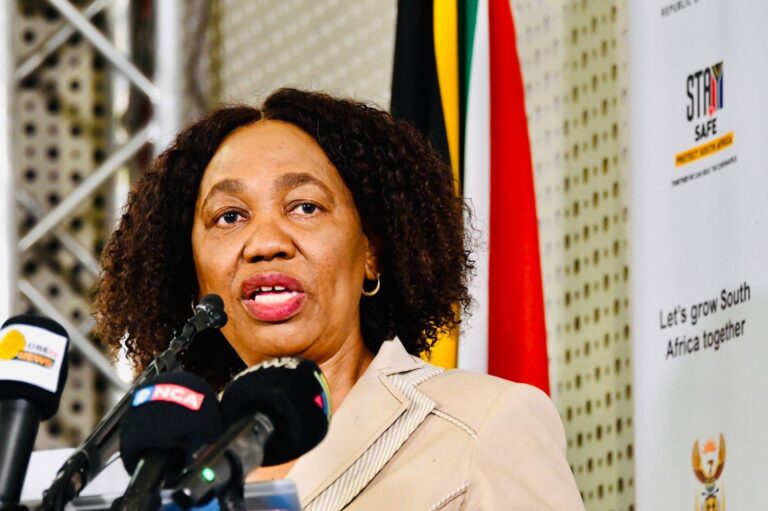
MINISTER of Basic Education has expressed her heartfelt appreciation to principals and teachers for their unwavering commitment to ensuring that all learners are allowed to receive a quality basic education.

“Our teachers, principals, and education managers, such as district directors, have shown remarkable resilience and determination in dealing head-on with daily challenges on the ground,” she said.

The Minister said she would also like to give a special shout-out to the parents, schooling communities, and caregivers who have supported learners following the devastations of families due to the COVID-19 pandemic.

“This term has been a resounding success, with all schooling days being utilised for learning and teaching, except in unique circumstances where there were disruptive service delivery protests,” she added.

“As we move forward, let us continue to work together to improve the quality of basic education in our country. Let us work to ensure that all learners, regardless of their background or socio-economic status, are given an opportunity to receive a quality basic education that will empower them to realise their dreams and contribute to the growth of our nation.”

INSIDE EDUCATION

Departments of Sports, Basic Education aim to build talent at grassroots level

0

STAFF REPORTER

THE Department of Sport Arts and Culture (DSAC) and the Department of Basic Education (DBE) have partnered in spearheading the National School Sports Championships since its inception in 2012.

The National School Sport Championships (NSSC) which is the bedrock of sport development, remains the premier event in the South Africa school sport calendar. Ministers of both Departments entered into an agreement endorsing that schools were the incubators for sport development and talent identification.

The National School Sport Championships remains the natural stimulant of the rollout of the school sport league programme where children are provided with access to participate in an organized sport programme that has a product born out of the institutional and legislative frameworks as endorsed at the 2011 Sports Indaba.

School sport operational structures were established in March 2012 at National and Provincial levels with the objective of coordinating and rolling out of the schools’ sport program. 

The primary aim of the school sport programme is to ensure that each one of South Africa’s schools (i.e.) primary and high schools, are afforded an opportunity to participate in at least one sporting code.

The programme further seeks to address all the barriers of entry that are currently inhibiting broad based participation in school sport through the provision of the requisite support material, personnel, and competition opportunities.

This time around and as part of this programme, the high Schools National School Sports Championships with primary focus on Athletics will be taking place at Germiston Athletics Stadium from 02 – 05 April 2023 placing focus on the following: Junior (ASA U/20), Youth (ASA U/18), Sub-Youth (ASA U/16), Primary Youth and L.S.E.N. = Learners with Special Educational Needs – (DEAF & MID).

Learners will also be participating in the following activities (i.e.) Long Jump, Triple Jump, High Jump, Pole Vault, Shot Put, Discus, Javelin, Hammer throw and track and field competing in 100m – 3000m, Relays and hurdles.

INSIDE EDUCATION

Government is failing South Africans on basic human rights

THE South African government is failing South Africans on several basic human rights. According to the Amnesty International Report 2022/23, new conflicts, heavy-handed oppression from authorities, economic crises, and discrimination against women, children, and LGBTI people have been prevalent worldwide in the last 12 months.

South Africa has seen a major increase in gender-based violence, with 989 women killed between July and September. Sexual offences (11%) and rape (10%) also grew in the timeframe.

Although South Africa adopted a National Strategic Plan on Gender-Based Violence and Femicide in 2019, a national council is still yet to be established. Moreover, a review of the first year since the plan’s adoption showed that 55% of targets had not been met.

The DNA backlog – crucial for gender-based violence cases – also remained high.

Despite nearly 99 cases of rapes by police officers being reported to the Independent Police Investigative Directorate (IPID), only 64 cases were recommended for prosecution, raising concerns over police accountability.

In terms of sexual and reproductive rights, South Africa continues to have a large number of early pregnancies.

Over 90,000 girls between the ages of 10 and 19 gave birth between April 2021 and May 2022.

Amnesty International said that a lack of access to reproductive health services, shortage of contraceptives, inadequate sex education, poverty and gender-based violence are all responsible for the rise in early pregnancies.

In addition, the right to education is plagued by dangerous and inadequate infrastructure.

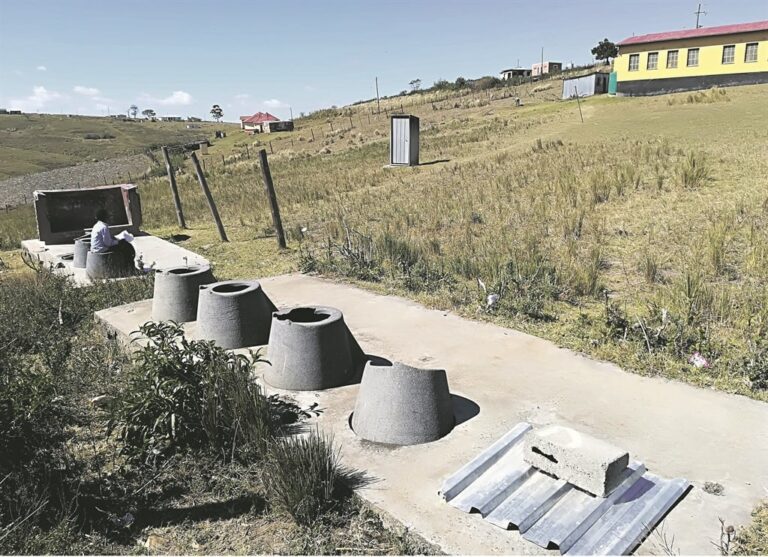
The Department of Basic Education’s 2021/22 annual report said that nearly 3,000 schools in the country still used pit latrines, which violates the rights to health, dignity, safety and life.

The situation has since worsened, with the minister of education, Angie Motshekga saying that over 3,330 schools currently have pit latrines.

As reported by EWN, the department said that it would eliminate pit latrines from schools by 2025, however, it has missed several previous deadlines to do so.

In terms of the right to water and sanitation, Amnesty International said that the government made no systematic efforts to ensure that people had access to water after widespread floods in KZN and the Eastern Cape in 2022.

Although the rainfall in KZN was exacerbated by climate change, Amnesty International said that the local government’s poor spatial planning and maintenance worsened the situation.

Moreover, the severe water shortages in the Nelson Mandela Bay Metropolitan Municipality have been worsened by the failure of local authorities to fix leaks that caused the city to lose 29% of its water.

The effects of the flooding in KZN also affected the right to housing for many South Africans, with over 8,000 houses destroyed and over 13,000 damaged. The European Civil Protection and Humanitarian Aid Operations said that 40,000 people were left without homes.

Residents had been moved to the flood-prone area of Isipingo from Durban City in 2009, ahead of the 2010 World Cup. Although the government promised to find alternative housing within six months, this remains unrealised.

In addition, excessive use of force by the police remains an issue in South Africa.

The IPID’s 2021/22 annual report recorded over 3,000 cases of assault, over 700 discharges of an official firearm, and over 200 deaths in police custody.

The reported deaths as a result of police action also grew to 410, an increase from 353 the previous year.

Finally, Amnesty International said that South Africa lacks legislation to hold government and businesses accountable for climate commitments.

Although the Climate Change Bill was tabled in parliament, there are concerns that the bill in its current form does not go far enough to address the urgent imperatives of the climate crisis.

South Africa adopted a new Nationally Determined Contribution (NDC) in 2021, aiming to reduce emissions with a 12-32% target range reduction. However, this figure falls short of the figure required to keep the rise of global temperatures below 1.5 celsius.

Although President Cyril Ramaphosa Just Energy Transition Investment Plan at COP26, mining-affected communities in Mumpalagna have rejected the bill due to a lack of consultation.

Business Tech

Free State toddler Onkutlwile Pholo dies in pit toilet

PHUTI MOSOMANE

EMERGENCY Medical Services have confirmed the death of  Onkutlwile Pholo who tragically drowned in a pit toilet in Odendaalsrus in the Free State.

Upon arrival at the scene, the EMS spokesperson, Sipho Towa, confirmed that the child had already passed away.

The EMS team then promptly handed over the scene to the law enforcement agencies.

According to SA Police Services (SAPS) provincial police spokesperson Captain Stephen Thakeng, the toddler was with her sister when they went to the back of the shack at the time of the incident.

It was later discovered that the yard was unfenced and there was an uncovered hole leading to the pit toilet.

The police determined that the child fell into the hole and drowned in the water and rubble inside.

According to Thakeng, “Onkutlwile Pholo, a one-year and eight-month-old boy, fell into the pit toilet and drowned. We are currently investigating the incident as an inquest, and the child’s next of kin have been informed.

SAPS divers were called to the scene to retrieve the body from the pit toilet, and a case has been registered for further investigation.”

Meanwhile, the Democratic Alliance (DA) has extended heartfelt condolences to the Pholo family.

“No child should suffer such a fate. The DA has repeatedly raised concerns about the use of pit toilets in all provinces, but the replies show that little to no progress is being made to eradicate these undignified structures.”

“In response to similar incidents in schools, the DA is launching a 2-point plan to eliminate school pit toilets across South Africa to prevent any other family from experiencing the tragic indignity endured by the Pholo family. We will work with civil society organizations, public advocacy groups, and NGOs in the education sector to achieve these goals,” DA provincial leader Dr Roy Jankielsohn said. 

He said until all South Africans have access to basic necessities like housing, sanitation, and food security, “we will never be truly free.”

Last month, a four-year-old child Langalam Viki drowned inside a school pit latrine toilet in Lady Frere in the Cacadu district in the Eastern Cape.

There are over 1,000 schools in the Eastern Cape that are still using pit latrines.

INSIDE EDUCATION 

Seasoned media professionals joins K and K Media Group

K and K Media has announced the appointment of senior journalists Tabelo Timse as Special Projects Editor, Deshnee Subramany as Editor-at-Large, as well as Busisiwe Kunene as Sales Manager of the company’s flagship publications – Inside
Education, Inside Politics and Inside Metros – with effect from April.
  

Timse is an award-winning investigative journalist at amaBhungane Centre for Investigative Journalism, where she worked on the #Guptaleaks. She also exposed local government corruption and fuel theft syndicates, among other investigations.  

She was at amaBhungane for 10 years after covering the SADC region for Agence France-Presse (AFP) for two years.

A Journalism Master’s degree graduate from Nelson Mandela University, Timse began her career as a TV reporter and radio current affairs producer at the SABC. She then went on to work at The Herald and Weekend Post newspapers in Port Elizabeth as a general reporter. 

In 2018, Timse won the Vodacom Journalist of the Year Politics Category, for her work on two whistle-blowers who tried to expose corruption linked to the Guptas’ Estina dairy project in Vrede, Free State.

Also in 2018 she was part of the team that won the Taco Kuiper Investigative Journalism Award for their work on the Gupta Leaks.

In 2021, Timse was awarded the French-German Prize for Human Rights and the Rule of Law as recognition of her tireless efforts and the work of amaBhungane to advance the cause of the rule of law, social justice, and the strengthening of participatory governance in South Africa. She also conducts media and journalism training programmes at places such as the Thomson Reuters Foundation (London) and The Institute for the Advancement of Journalism (IAJ). 

The new Editor-at-Large- Subramany has been in the media industry for over 15 years, specialising in digital media. She has headed award-winning digital teams throughout her career.

Subramany cut her teeth in the digital space at Primedia Broadcasting’s Eyewitness News before she moved on to the Mail & Guardian, working at first as a sub-editor and later as day editor for its digital platform, mg.co.za. 

She has joined numerous newsrooms in various companies, such as Business Day at Arena Holdings, HuffPost at Media24 (news editor), and she was digital lead at investigative journalism organisation amaBhungane.

She most recently returned to Eyewitness News as digital editor of the brand, where she was responsible for maintaining the website’s strong presence among competitors. 

Subramany has also worked in TV, producing and building audiences for The Big Debate on SABC, as well as eNCA’s primetime shows. 

Kunene has been in the media industry for 16 years having started as a direct sales representative at Media24 for City Press and Rapport. She moved to TNA Media before she joined Mail & Guardian as a sales executive. 

An opportunity to spread her wings into the radio space arose and she joined MSG Group Sales as sales executive to be then promoted as a Sales Manager for Government Portfolio.

Before joining K and K Media, she was with Motswako Media Sales where she was Sales Executive for YOU FM. 

Her experience has led her to manage campaigns mostly in the public sector portfolio handling National, Provincial and local government including state owned entities.

Matuma Letsoalo, executive chairperson and founder of K and K Media Group, said: “The three new appointees brings a wealth of experience from various journalism disciplines, including multiple digital products. They each have a track record of building strong teams and excellent systems. We are excited to have Tabelo, Deshnee and Busisiwe as part of the team to help solidify Inside Education [both print and digital], Inside Politics and Inside Metros as premium brands for education, politics, business and local news in the country. Last month, K and K Media Group announced the appointment of veteran journalist Edwin Naidu as Editor-in-Chief of Inside Education Quarterly Print Publication, that is distributed to over 24 800 schools across the country, all universities and TVET colleges.”

INSIDE EDUCATION

More strikes planned as teachers reject pay offer

0

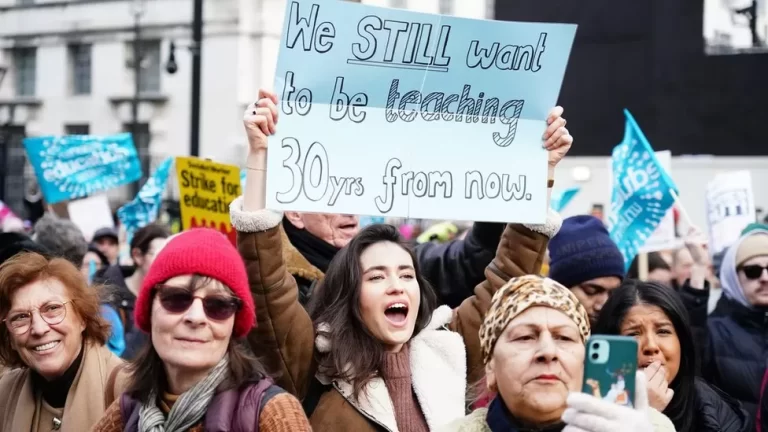
Teachers in England will strike on Thursday 27 April and Tuesday 2 May after members of the UK’s largest education union rejected a pay offer.

Teachers were offered a £1,000 one-off payment this year, and a 4.3% rise next year. Starting salaries would also rise to £30,000 from September.

The results of the NEU ballot found that 98% of members were in favour of turning the deal down.

The education secretary said it was “extremely disappointing”.

The National Education Union (NEU) described the offer as “insulting” and said it has “united the profession in its outrage”.

Speaking at the annual conference in Harrogate, Joint General Secretaries Mary Bousted and Kevin Courtney said the offer was “not fully funded” and did not deal with the shortage of teachers in schools.

In a ballot over the government’s pay offer, 191,319 NEU members voted to reject the deal with a 66% turnout.

After hearing the announcement, delegates at the conference chanted “come on Gill, pay the bill”.

Education Secretary Gillian Keegan said the NEU’s decision to reject the pay offer “will simply result in more disruption for children and less money for teachers today”.

“The offer was funded, including major new investment of over half a billion pounds, in addition to the record funding already planned for school budgets,” she said.

Ms Keegan said pay will now be decided by the independent pay review body, which will recommend pay rises for next year. This means the £1,000 payment for this year will not happen.

During a visit to Rochdale, Prime Minister Rishi Sunak said the news of new strike dates was “extremely disappointing” following “a very reasonable pay offer”.

Ms Bousted confirmed plans to support GCSE and A-level students during the upcoming strike days and said head teachers will make sure those pupils are in class for exam preparations.

Following the vote, Ms Bousted called on ministers to “reopen negotiations” on pay.

On Tuesday at the NEU conference, members will vote on three more potential strike days at the end of June and the beginning of July, but this would have to be approved by the NEU executive.

Teacher salaries fell by an average of 11% between 2010 and 2022, after taking inflation into account, according to the Institute for Fiscal Studies. Most state school teachers in England had a 5% rise in 2022.

The government says it is giving schools an extra £2.3bn over the next two years. Most of the pay rise would have come from this money; schools would have received extra funding for the £1,000 one-off payment and 0.5% of the pay increase for next year.

Luke Sibieta, from the Institute for Fiscal Studies, said schools budgets could only absorb “a small amount” of the pay offer and that some schools are already seeing costs growing faster than funding.

The Education Policy Institute (EPI) says there is “only just enough headroom” to cover the current pay offer.

Natalie Perera, the Chief Executive of the EPI, warned that the current funding “does not compensate schools for the additional support they have had to provide for increasingly vulnerable pupils”.

Attending the conference, Sanj Beri, a secondary school science teacher from Nottingham, said the last thing teachers want to do is strike, but that “proper funding for our schools” is needed.

He said his school is struggling to recruit science teachers because people “don’t want to do the job anymore” due to “the amount of stress and workload for the pay you get”.

Katie Cooke, an NEU member from Tunstall in Stoke-on-Trent, took part in the first teacher strike earlier this year, but says she cannot afford to take part in any more as she does not get paid when striking

“As a single parent… I am struggling with the cost of living, with inflation, and feeding my family. Holidays are out of the picture… all the while I’m in a teaching profession at a reasonably high level.”

Reacting to the news of the forthcoming strikes at a park in Harrogate, Lauren Jevins says she understands the teachers’ position but wishes matters could be resolved in a different way, rather than industrial action.

She said taking more time off work to care for her children will mean losing out on money for everyday essentials.

Jacob Matthews is also frustrated at the prospect of more strikes and feels there needs to be a compromise.

“Inflation is nearly 11%, no-one is going to get that kind of pay rise… but I’m a parent, not a teacher and I know it’s not as simple as that”.

Sir Keir Starmer, the Labour leader, said he was disappointed and wants to see everybody “getting around the table and resolving these issues”.

The leader of the Liberal Democrats, Sir Ed Davy, also said the government needs to “get around the table” and negotiate with the teachers’ unions.

Devolved issue

The NEU is not the only union which is involved in pay discussions.

Three other unions have also been involved in intensive talks with the government: the NASUWT, Association of School and College Leaders and school leaders’ union NAHT. They are in the process of balloting members on the current offer from the government.

School leaders’ union, the NAHT, is also asking whether members would take industrial action if the pay offer is rejected. NAHT members voted in favour of strike action in January – but turnout was 42%, below the legal requirement of 50%.

Mary Bousted and Kevin Courtney, from the NEU, also questioned why teachers in England were “worth less” that those in Scotland and Wales. Education is a devolved matter, meaning decisions are made by the separate governments.

In Scotland, the dispute has been resolved after teachers accepted a 7% rise for 2022/23, which will be backdated to April. They have also accepted a 5% rise in April 2023, and a 2% rise in January 2024.

In Wales, the NEU, have agreed on an increased pay offer of 8% for 2022/23, which consists of a 6.5% annual pay rise and a one-off lump sum payment, as well as a 5% pay rise for 2023/24.

But Wales’ school leaders’ union, NAHT Cymru, has rejected the offer and says funding arrangements remain a major concern for school leaders. Members are continuing to take action short of strikes – which includes refusing to attend evening meetings and only responding to calls and emails between 09:00 and 15:00 BST.

In Northern Ireland, five teaching unions in will also strike for a full day on Wednesday 26 April.

Additional reporting by Nathan Standley and Rahib Khan.

Nzimande launches 2023 tertiary institutions youth campaign

EDWIN NAIDU

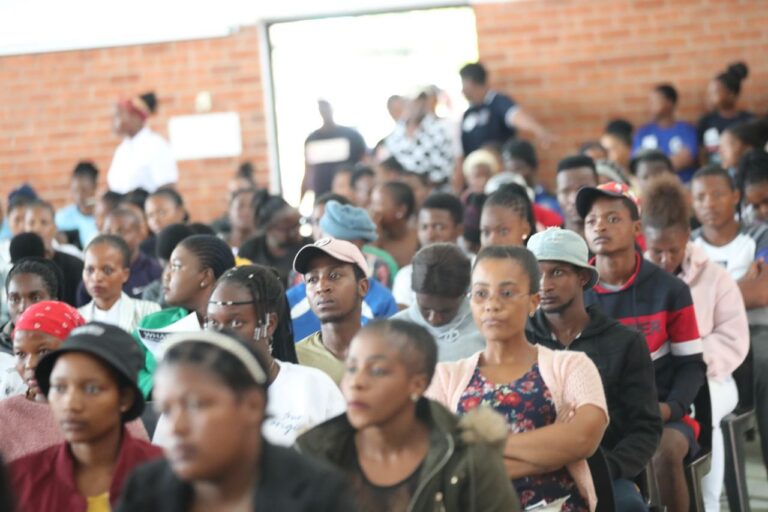
MINISTER of Higher Education, Science and Innovation, Dr Blade Nzimande, launched the 2023 Tertiary Institutions Youth Campaign at uMfolozi TVET College, Eshowe campus in KwaZulu-Natal on Friday.

This provincial launch follows the national launch, which was held at Rhodes University, in the Eastern Cape on 7 March 2023.

The objectives of the campaign are to:
 Promote a civic culture of ongoing engagements and exchange of ideas within
institutions of higher learning through targeted CDE programmes;
 Engage students’ views about electoral democracy and impact of participation
thereof through debates;
 Promote Online Voter Registration to students within institutions of higher learning across the Republic;
 Conduct on-campus voter registration using the Voter Management Device
and;
 Empower the students’ electorate with information to participate meaningfully
in democratic & electoral processes.

Nzimande said the department wants to improve the capacity of the Post-School Education and Training (PSET) system to meet the skills needs and development of the country.

The Department has oversight over four main categories of PSET institutions, namely: public and private Higher Education Institutions (HEIs); Technical and Vocational Education and Training (TVET) colleges, Community Education and Training (CET) colleges and private colleges.

“The reality is that young people need to take a stand and constructively engage on socio-political issues. No country can succeed if it does not invest in the future of young people to become tomorrow’s leaders,” he said.

As part of a commitment to expand access to higher education for students from poor and working-class backgrounds, the number of students funded by NSFAS increased from 580,000 in 2018 to 770,000 in 2021. For the current financial year, NSFAS has approved the provisional funding of a record of 1,083,055 students. The budget is projected to be around R47.6 billion.

Nzimande thanked the Electoral Commission of South Africa for involving all post-school education and training institutions in launching this Annual Tertiary Institutions Civic and Democracy Education (CDE) Youth Campaign at uMfolozi TVET College.

INSIDE EDUCATION

The science of beach water amid sewage pollution

EDWIN NAIDU

A WEBSITE launched under the leadership of University of KwaZulu Natal’s Environmental Fluid Mechanics Lab (EFML) Co-Director, Dr Justin Pringle, can provide real-time guidance to beachgoers in Durban regarding the safety of water at popular beaches for swimming.

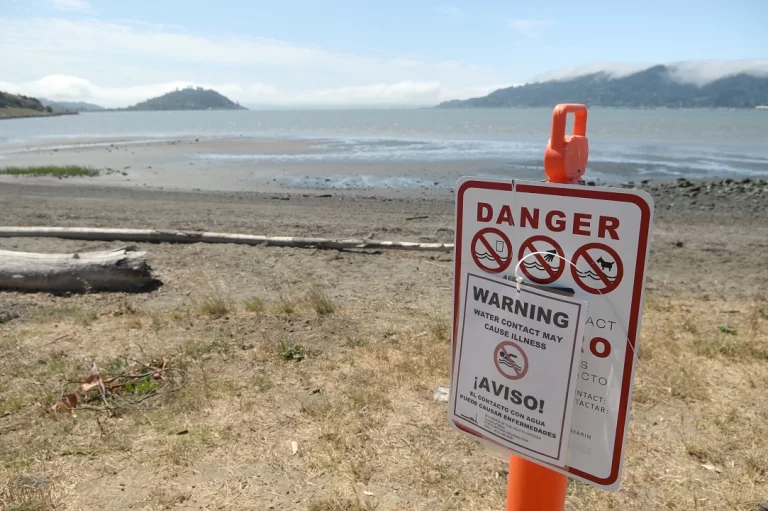
This comes after the increase in sewage pollution along the coastline, with Durban’s beaches often demonstrating critically high levels of Escherichia coli (E. coli), a harmless bacteria found in the guts of healthy people and animals that indicates the presence of faecal matter in the water.

While E. coli decays rapidly in a marine environment, making it a less-than-ideal indicator, harmful pathogens from sewage pollution may still be present and threaten human and aquatic health, causing diseases including cholera, dysentery, typhoid fever, and more.

In response to these challenges and in the interest of providing scientific information to the public, Pringle launched Woz’Olwandle, meaning “come to the sea” in isiZulu. Based on a tool developed for Los Angeles beaches in the United States (US), the Beach Report Card, the Woz’Olwandle website features information synthesised by a fluid dynamics computer model that was developed by UKZN’s Professor Derek Stretch (who heads up the EFML with Pringle) and alumnus Mr Dave Mardon, now an Associate at Water Environment Ltd in the United Kingdom, in the early 2000s.

This model was repurposed to process several data and estimate the concentrations of E. coli at six central Durban beaches over 24 hours, using a key of three “smiley” icons in green, orange, or red to indicate whether conditions are “good”, “acceptable”, or “poor”.

The website is hosted on a US server to prevent outages caused by ongoing load-shedding in South Africa.

Pringle hopes that the tool will not only provide the most up-to-date information for people to use in deciding if and where to swim but also spark discussion about the problem of sewage pollution and potential solutions. Real-time information is important because other information provided on water quality takes time to gather, analyse, and release, often making it out of date by the time users receive it.

The Woz’Olwandle website has already attracted attention for its efforts with 3 500 visits over the past month, from South Africa, the United States of America, the United Kingdom, China, Australia, and Germany.

INSIDE EDUCATION

Opinion| The forgotten story of school State capture – Bernstein

ANN BERNSTEIN

IN February 2023, a Soweto school governing body treasurer lamented: “We’re dealing with gangsters in the education department; they’re out to loot schools … We’re calling for help from law enforcement or the Special Investigating Unit.”

In case anyone thinks this was an isolated incident, the 2022 Corruption Watch report, Sound the Alarm, confirmed that education was one of the top three areas in which complaints of corruption were reported by the public the other two were policing and state – owned enterprises.

The most common education complaints were misappropriation of resources 45%, maladministration 17%, abuse of authority victimisation of whistleblowers 15%, “sextortion”, bribery for jobs and flouting recruitment processes 12%, and procurement irregularities 11%.

Public awareness of these issues goes back nearly a decade. In April 2014, City Press journalists revealed that a jobs-for-cash racket was being run by members of the SA Democratic Teachers’ Union Sadtu , the largest of its kind in the country. Principal and deputy principal positions were routinely sold for between R30 000 and R45 000 in KwaZulu-Natal, while investigations of similar transgressions were under way in Limpopo and North – West.

PAYING OFFICIALS

Sitting principals, the reporters revealed, had been ousted from their posts, under threat of their lives, and replaced by candidates who admitted having secured their positions by paying Sadtu officials.

These officials would then coerce sometimes violently members of school governing bodies SGBs to select their preferred candidates. Alternatively, Sadtu members would collaborate in getting favoured individuals on to SGBs to ensure that those who had paid for positions obtained them. There were also accounts of kidnapping and, in one instance, murder.

Despite initially downplaying reports of the scandal, Basic Education Minister Angie Motshekga eventually took decisive action by appointing a task team to investigate the allegations. Professor John Volmink, then chairperson of Umalusi, the national school certification and accreditation body, was appointed to head the ministerial task team (MTT).

The MTT interviewed district managers, teachers and union officials around the country. Forensic members of the team, drawn from auditing firm Deloitte and the department of justice, followed up on specific allegations.

On February 29 2016, the team submitted its 285page report to the minister, who released it publicly on May 21 that year, following sustained pressure from the media, civil society and parents.

Criminal practices identified by the MTT ranged from petty corruption to murder. The rot was so extensive that a top North-West education official reportedly declared that his department had “so many cases of wrongdoing that if he asked the SA Police Service SAPS to follow them up, it would amount to closing down the department”.

CORRUPT PROCUREMENT

The Gauteng department of education reported that it was aware of corrupt procurement and recruitment processes, including maladministration by SGBs when selecting and appointing teachers to top positions.

Investigators noted that malpractice had become so normalised that people were living and working in a climate of fear, and that there was a “culture of silence” regarding wrongdoing.

In addition to pervasive corruption, the MTT identified cadre deployment as a major barrier to the effective functioning of the education system. Cadre deployment would later be recognised and defined by the report of the Judicial Commission of Inquiry into Allegations of State Capture as the unlawful and unconstitutional practice of appointing loyal “cadres to strategic positions in the state and state employment”.

The authors of the MTT report expressed grave concerns about the “enormous power and influence by a union which seeks to entrench itself repeatedly and inexorably”. It ultimately found that Sadtu was “in de facto charge of the management, administration and priorities of education” in “six and possibly more of the nine provinces”.

Stop and read that again. Its implications are shocking. Sadtu’s control reduces accountability and ultimately misdirects the focus of the entire bureaucracy. Loyalty based appointments have a doubly negative effect: they bring people into the bureaucracy who may not be able to do the job, creating a set of incentives and an institutional culture in which appropriate, capable people are overlooked and become despondent.

Sadtu’s capture of the education system is a key reason for South Africa’s dismal academic performance. When our pupils take international tests, we are ranked as either last or among the bottom three countries.

While other countries test grade 4s, we test grade 5s. When they test grade 8s, we test grade 9s. The deficiency has a knock-on effect that can only be closed by upgrading the quality of teachers instructing our children.

The MTT made several important recommendations to address corruption and state capture.

These included adopting a zero tolerance stance on corruption, identifying and reporting corrupt individuals to the SAPS for criminal prosecution, protecting whistleblowers from possible reprisals by creating a specialised division in the department, professionalising the bureaucracy by preventing managers from belonging to the same unions as the teachers they supervised, removing the power of SGBs to recommend appointments and renegotiating the observer status unions enjoyed in hiring and promotion processes.

It is now nine years since the jobs-for-cash story broke in City Press and nearly seven years since the release of the MTT report. Volmink told the Centre for Development and Enterprise CDE in September 2019 and again in February 2023 that, as far as he was aware, not a single recommendation from the report had been implemented and not a single individual implicated in wrongdoing had been prosecuted.

This was echoed by education experts Dr Nic Spaull and department of basic education researcher Dr Stephen Taylor in July 2022.

Rooting out corruption and ending cadre deployment are the first steps in a process of systemwide education reforms. Sadtu aligned officials who benefit from the status quo must be stopped from blocking attempts to implement such reforms, or they will fail.

CONFLICT OF INTEREST

This is not an argument against unions in the education sector. Teachers are entitled to form unions, as are officials and managers and teachers is obvious. It is also true that many committed and capable individual teachers are members of Sadtu.

What needs to be tackled urgently is the capture of the education system by Sadtu at the expense of both teachers and pupils.

President Cyril Ramaphosa has made anticorruption efforts a priority of his tenure. The graft and state capture exposed in the education sector are as devastating as they are in the rest of government.

The groundwork has already been laid by the MTT report. It is time for all of us senior government leaders, civil society, political parties, business, parents and the public at large to openly acknowledge the reality of state capture and corruption in education, and push for measures that will end it. We cannot allow another generation of pupils in our schools to be condemned to an appalling education.

South Africa urgently needs education reform that addresses the root causes of systemic dysfunction.

Written by Ann Bernstein, head of the CDE. This article is based on The Silent Crisis: Time to Fix SA’s Schools, a new series of five CDE reports.

Science strategy aims to tackle societal challenges

EDWIN NAIDU

CABINET has approved the final version of the STI Decadal Plan, and implementation is already underway, focusing mainly on tackling grand societal challenges and addressing priorities, such as climate change and environmental sustainability, according to Department of Science and Innovation Director-General Dr Phil Mjwara.

The plan aims to address:

  • – Societal grand challenges: Climate change and environmental sustainability; future- proof education and skills; and the future of society.
    – STI priorities: Modernising sectors of the economy (manufacturing, agriculture and mining); new sources of growth (the digital and circular economies); health innovation; energy innovation; innovation-enabled capable state; and innovation in support of social progress.

Mjwara told the Portfolio Committee on Higher Education, Science and Technology last Friday that the National Development Plan sees human capital development as central to addressing South Africa’s unemployment, poverty and inequality challenges.

Transformation was pivotal to the plan. To this end, he said A Department of Science and Innovation task team had been established to co-create a robust, evidence-based transformation agenda for the next ten years.

Furthermore, he said the team would seek to identify reforms and actions to be implemented by the DSI and its entities over the 2020-2025 cycle to enhance transformation outcomes.

INSIDE EDUCATION