Home Blog Page 215

School to pay $1M after boy who ate teacher’s snack died

0

A Nebraska school district has agreed to pay $1 million to the family of an eighth grader who died after eating a granola bar given to him by a teacher.

The Papillion La Vista school board will vote on the wrongful death settlement with the parents of Jagger Shaw, 14, at its meeting Monday night.

Few details about what happened last May are included in court documents because the settlement was reached through a probate court process and not a civil lawsuit.

Jagger’s parents declined to comment to the Omaha World-Herald about the settlement. But his father, Thomas Shaw, said in a Facebook post Jagger’s teacher at Liberty Middle School offered him a granola bar after he asked to go to the office for a snack.

“The teacher said you can have one of my granola bars, so Jagger took it and got halfway through eating it and felt like he was starting to have an allergic reaction,” Tom Shaw wrote.

He did not describe Jagger’s allergy in the post nor say if the school was aware of that allergy.

Shaw said Jagger went to the school nurse’s office where he was first given the allergy medication, Benadryl. That didn’t help, so the nurse gave Jagger an epinephrine shot with an EpiPen. He was taken by ambulance to a hospital where he died May 7.

The Shaw family’s attorney did not respond Monday to a phone message requesting details of the settlement.

The school district’s liability insurer will pay the settlement.

AP

Pit latrine death of school learner once again puts infrastructure failure in the spotlight

EDWIN NAIDU

ALMOST three decades after democracy, South Africa prepares to celebrate Human Rights Day on 21 March. But the death of another child, who allegedly fell in a pit latrine in the Eastern Cape last week, has highlighted the failure of the government to provide adequate sanitation for learners.

The four-year-old child was found dead in the pit latrine toilet in a primary school in Glen Grey on Tuesday.

The Eastern Cape Education department claimed in a media report that the child had used a toilet not meant for her age group.

While it raises questions over the supervision of minors at schools, the tragedy brought into sharp focus the actions of the Department of Basic Education in eradicating pit latrine toilets at schools.

In 2013, legislation was passed compelling government departments to ensure that by November 2016, all schools have access to water, sanitation and electricity; all pit latrines were replaced with safe and adequate sanitation; and schools built from mud and asbestos were replaced.

But two separate studies published by Amnesty International – the first released in 2020 and the second in 2021 – reveal that the government has failed to meet these targets. Reports of children falling into pit latrines with fatal consequences have been published nationwide since the publication of these reports.

The 2021 report, entitled Broken and Unequal The State of Education in South Africa, describes the country’s education system as one of the most unequal school systems in the world.

However, the death of another learner in a pit latrine brings to the fore the issue of infrastructure provision and the failure of the Department of Basic Education to tackle this challenge for the past decade.

In 2018, according to government statistics, the number of schools with pit latrines was 3 898, broken down as follows: 1 598 in the Eastern Cape, 156 in the Free State, 1365 in KwaZulu-Natal, 507 in Limpopo, 127 in Mpumalanga, 145 in the North West with zero in Gauteng, Northern Cape and Western Cape.

According to the statistics for 2018, out of 23,471 public schools, 19% had illegal pit latrines for sanitation, with another 37 schools had no sanitation facilities at all; 86% had no laboratory, 77% had no library, 72% had no internet access, and 42% had no sports facilities. Two hundred thirty-nine schools lacked any electricity.

The Amnesty International Report says these shortcomings breach the government’s international human rights obligations and its Minimum Norms and Standards for educational facilities.

As the government continues to miss its upgrading targets, Amnesty International’s research in Gauteng and Eastern Cape found numerous examples of schools with poor infrastructure and lacking basic facilities.

These issues impact the enjoyment of the right to education and pupils’ other rights, such as water, sanitation, privacy and dignity, as highlighted by their testimonies.

One of the critical infrastructure issues is poor sanitation which impacts a range of rights, including Education, water and sanitation, health, privacy and dignity. Amnesty International researchers found numerous examples of poorly maintained, broken or unsanitary toilets, including pit latrines.

Even though a critical requirement of the 2013 Minimum Norms and Standards is, that plain pit latrines are eradicated.

By the beginning of 2019, nearly 4,000 schools were still using pit latrines, 117 of which were single pits covered with a wooden or concrete slab with a drop hole with a structure around it for shelter and privacy. These largely continue in schools serving poorer black communities in rural areas, particularly in the Eastern Cape and KZN.

Despite some limited improvements, the infrastructure condition in many schools still needs to improve, and delays in infrastructure improvements remain a significant obstacle to realising the right to education for millions of learners.

Beyond the survey data, issues of particular concern that Amnesty International witnessed or was told about during field research included: dangerous sanitation infrastructure, continued use of pit toilets, lack of sufficient toilets for the number of pupils in line with the learner-to-toilet ratio of the Minimum Norms and Standards for School Infrastructure of 1:30.

Additionally, the lack of adequate sanitation can cause embarrassment and shame among pupils impacting their rights to privacy and dignity: many toilet cubicles without locks, and 9% of the pit latrines did not have pit covers, allowing pests to infiltrate and spread contamination, only 18% of the pupils consulted thought the toilets were sufficiently private; and only 35% of schools had basins for handwashing, and only half of the basins were functioning.

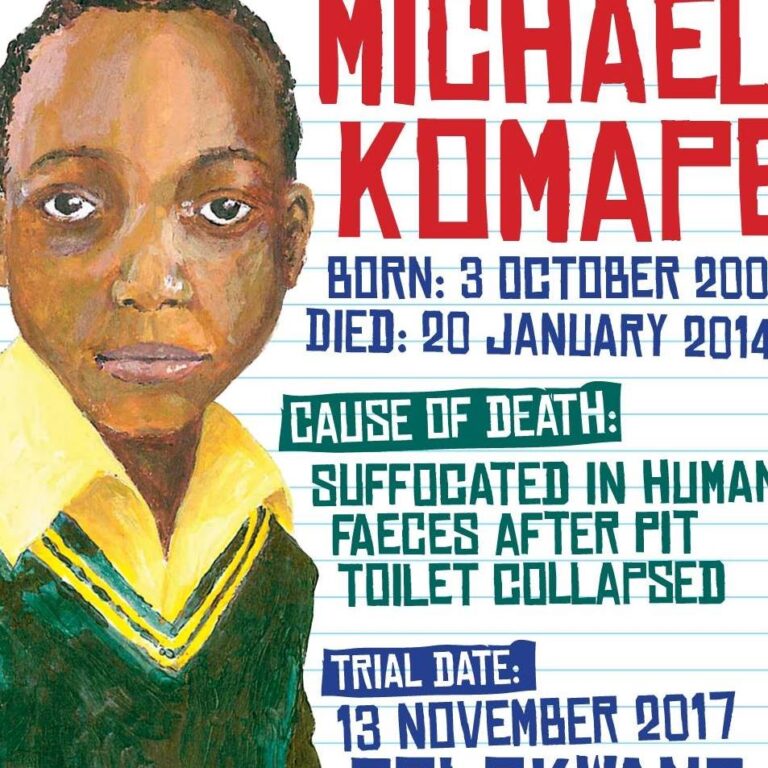
Most seriously, pit latrines have caused the death of learners. Following two recent tragic cases of Michael Komape and Lumka Mketwa, who fell into and drowned in dilapidated school pit toilets President Ramaphosa in March 2018, ordered the Minister of Basic Education Angie Motshekga to conduct a full audit of school facilities with unsafe structures, including sanitation within one month and to present a plan within three months to rectify the challenges as an interim emergency measure before rolling out proper infrastructure.

In December 2019, the Appeals Court awarded Michael Komape’s family R1 million in damages to be paid by the DBE for emotional shock.

In another case before the Limpopo High Court in Polokwane, the Limpopo Education Department indicated that, as of July 2018, 1,658 schools had sanitation needs, with 1,489 of them having pit toilets on site, comprising 17,144 seats. The Limpopo Education Department added that, with its current budget, it would take an estimated 14 years to replace all pit toilets in the province’s public schools.

The government’s evidence shows that it continues to fail to meet the 2013 targets, with thousands of schools still impacted. According to the DBE’s own National Education Infrastructure Management System (NEIMS) report published in January 2018, there were still 37 schools lacking any sanitation facilities.

Despite the 2013 Minimum Norms and Standards requiring that plain pit latrines are eradicated, they continue to be widespread. Indeed, the NEIMS January 2018 report stated that up to 8,702 out of a total of 23,471 (37%), schools were still using them.

In April 2018, the DBE itself confirmed that there were 3,532 pit toilets in schools across the country, and about R7.8 billion (US$ 542 million) was needed to address the sanitation backlog.252

A subsequent audit put the figure at 3,898 for schools where pit toilets were the only form of sanitation and another 3,040 where they remained alongside other forms of sanitation.

In another interview, according to the Amnesty International report, the DBE Minister stated: “We have to re-prioritize the infrastructure budget of R7 billion (US$ 487 million) per annum to deal with sanitation problems. For instance, Limpopo province alone needs about R3 billion (US$ 209 million) to deal with sanitation problems. However, our infrastructure budget has been cut by R3.5 billion (US$ 243 million).”

Asked to comment on the pit latrine death of the pupil in the Eastern Cape, DBE spokesperson Elijah Mhlanga said Minister Motshekga would be hosting a media conference on Tuesday to address a range of issues around school infrastructure.

INSIDE EDUCATION

Warning over country’s R16.5 billion student debt crisis

EDWIN NAIDU

SOUTH Africa’s R16.5 billion student debt crisis will continue to escalate with the renewed threat of shutdowns and violence at tertiary institutions, warn senior education experts Enver Motala and Salim Vally.

Both academics argue that the recent protests at the University of Witwatersrand, the University of Cape Town, the University of KwaZulu Natal and the Durban University of Technology, among other tertiary institutions, have arisen from various issues.

These include registration fees, the restrictive admission policies affected by student debt, accommodation and housing, food and hunger, transport and other necessities in a learning environment.

“Even more fundamentally, they concern the much-vaunted claims about the ‘transformation’ of universities and the relationship between the university and society. Once again, we see the possibility of more shutdowns and violence signalled using ‘security’ guards and pepper spray, interdicts and condemnations and the inevitable resistance that this will bring from students,” said Motala and Vally.

Motala is a research associate of the Centre for Education Rights and Transformation at the University of Johannesburg, and Vally is a professor at UJ’s Education Faculty.

Motala and Vally said that the current round of protests was entirely predictable, a view they shared during the 2015 #feesmustfall uprising by students in protest against the increase in student fees when they warned that the promise of “free education” would come back to haunt the government.

“That’s because leaders fail to understand what’s at stake in the demands for genuinely free quality education for all. University administrators expected the government student Funding Agency – the National Students Financial Aid Scheme – to solve the affordability problem. But the scheme, which the organisation monitoring tax abuse has noted, has spent more than R166-million on office rental space despite cutting back on subsidies for student accommodation,” they said.

According to Motala and Vally, NSFAS will not resolve the fundamental question students continue to place before the nation.

“And no amount of goodwill and the charitable work of individuals, philanthropies, SRCs and agencies trying to fill the gap will resolve it sustainably either. At the end of 2021, student debt had increased to R16.5-billion and will continue to spiral upwards at the present rate.”

Instead, Motala and Vally suggest that the effect of the proposed profit-generating loan scheme will deepen the pockets of billionaires (and the institutions they control) and increase the indebtedness of the poor and marginalised.

“All this confirms again that those in power have learnt very little from the past and will continue to cling to the capricious hope that somehow the problem will go away. Yet the underlying reasons for the student’s struggles are no less than a continuation of the same fundamental causes provoking the same consequences. They are a combination of the austerity policies of the government, to which university executives have acquiesced, the ill-fated logic of university corporatisation and the absence of any sense of democratic accountability to the wider public of the university, especially, but not only to the communities of the most marginalised in our society.”

Motala and Vally warned against the grudging and opportunistic application of the fee ‘exemption’ applying to some students only on the false assumption that it would be regressive to apply ‘free education’ universally.

“We set out the arguments why this was bound to fail.”

“Now even policy-makers proclaim that they are concerned about the fate of the ‘missing middle’, that cohort of students are not being supported by the student aid – exactly what we had warned would be an inevitable consequence of government’s prevarications. For the great majority of students, the present situation engenders numerous insecurities and traumas, a consequence of not knowing what will happen next, the often-thwarted attempt to complete university studies to get a job to repay debt, including a host of other socio-psychological effects on students, and indeed on their teachers and supervisors.”

Motala and Vally said that the failure to appreciate the implications of ignoring the compelling case for free quality education for all as set out in our and other submissions to the Heher Commission would only deepen the subjugation and marginalisation of those communities most vulnerable to the laws of the market privileging (once again) only the socio-political elite while entrenching unequal relations between rich and poor.

“Austerity is possibly the most powerful instrument in the hands of such elites who are turning societies into rich picking grounds for the appropriation (and expropriation) of the public good through the cruel and unthinking logic of the power of global elites including financial institutions who benefit from the interest paid on student loans.”

They warn that university leaders, who ought to have seen these consequences from at least the protests of 2015, appear to be blinded by their roles as managers of the process of knowledge corporatisation.

“Universities should not renege on their responsibility to submit to the validating criteria of the public good – that is, the right of citizens in a democratic society to demand that those in power are open to democratic public accountability. For universities, given their much-proclaimed role in the defence of intellectual freedom, it demands a critical orientation to the power of fiat. It requires their commitment to public knowledge production and education untrammelled by the disfigurement of the corporate injunction. It demands the acceptance and promotion of a wider,
more enduring and conscientious commitment to public accountability.”

On Thursday, days after tension flared on campus, the University of the Witwatersrand said in a statement that the Vice-Chancellor and Principal and members of management met with the current members of the Students’ Representative Council. Both parties agreed to de-escalate the situation and continue with engagements to resolve matters.

“We will continue with talks as we try to find a way forward.”

INSIDE EDUCATION

Nelson Mandela University teams up with Alumni-in-Action to support survivors of Gender-Based- Violence

0

INSIDE EDUCATION REPORTER

NELSON Mandela University has partnered with Alumni-in-Action (A-i-A), an initiative whose mission is to enable access to advanced mental health support for student survivors of Gender-Based-Violence (GBV).

This is through the organisation’s funding to allow survivors to have up to eight therapy sessions.
This chapter of A-i-A was launched on 8 March during a webinar.

A-i-A was co-founded by Zellah Fuphe, a University of Cape Town (UCT) alumnus and Sanda Nyoka, a current UCT student. It initially launched in partnership with UCT in August 2021.

Having witnessed the devastation of the murder of a young female UCT student in 2019, Fuphe and Nyoka felt compelled to advocate for an end to the negative impact of GBV by personally funding the project.

Fuphe said: “I believe in the power of education and its positive impact on society. Empowering tertiary students who otherwise may not be able to access services after trauma may hinder the completion of their studies. Helping these students is an important part of shaping a progressive society.”

The initiative with UCT has supported 27 student survivors to date, with 177 sessions booked with psychologists. Fuphe added that it was significant that the launch took place on 8 March, which is International Women’s Day, because GBV affects women from all walks of life.

A-i-A chose to partner with Nelson Mandela University for three years because of its progressive and innovative approach to supporting survivors of GBV. This includes its use of technology to monitor and identify GBV hotspots.

“A-i-A@Mandela is a partnership based on shared values and a strong commitment to put survivors first and bring care, hope and compassion to them,” said Fuphe.

She added that while A-i-A has provided the initial funding for A-i-A@Mandela to the tune of R150 000 for each of the three years, additional funding will enable the provision of support to more student survivors of GBV.

“We are grateful that Barloworld has heeded our call to action and generously pledged R250 000 towards A-i-A@Mandela. The donation is no surprise to A-i-A, as it further demonstrates Barloworld’s commitment to transformation and the equitable representation and inclusion of women in our society.”

Nelson Mandela University Vice-Chancellor Prof Sibongile Muthwa said the University “advocates for the equality and right of all to work and learn in a safe environment, free of gender-based harm and violations. The Alumni-in-Action project will enhance the programmes we have on campus that create awareness of Gender-Based Violence and those that support survivors.”

Prof Muthwa explained that the University’s Statement of Commitment is to have an inclusive institutional culture, which denounces all forms of behaviour in conflict with its values.

“To this end, Mandela University, as an engaged institution with a renewed commitment to actively fighting this ongoing GBV pandemic on our campuses, continues the work towards ensuring a safer and inclusive environment for all across the gender spectrum.”

Prof Andre Keet, Deputy Vice-Chancellor of Engagement and Transformation at Mandela University, said: “We welcome this partnership with Alumni-in-Action. Collaboration and partnerships are needed to solve our society’s challenges.”

In addition, Emthonjeni Student Wellness and Student Health Services have developed a joint online case management system for recording GBV data to avoid duplication in reporting.

Analysis of the factors contributing to the GBV incidents reported to the Transformation Office has enabled the
University to provide integrated interventions to raise awareness and address these causal factors.

“In essence, A-i-A speaks to our values of Ubuntu and Social Justice and Equality. I want to commend the founders of this initiative for their altruism in putting their resources into this project and for taking the time to help others in need. This exemplifies the namesake of our University, Nelson Rolihlahla Mandela, who worked selflessly for social justice and the good of others,” said Prof Keet.

 On Sunday, 12 February 2023, the Eastcape Midlands TVET College Students Busiwe Notyawe, Sesethu Dweba and Asanda Ngubo were murdered whilst socialising in a public entertainment venue.

According to preliminary investigations, the students were socialising at a sit-in place at Kwazakele when an unknown gunman forced the door of the house open and fired shots at them.

The motive for the killing is still under investigation.

At the time of their unfortunate death, these students were enrolled for N5 Management Assistant and Financial Management at the College’s Heath Park Campus in Qgeberha.

On Tuesday, 21st of February 2023, Lesego Tsindo, a 22-year-old male student at Sydney Maseko Community College, was stabbed to death close to where he lives.

On Thursday, 23rd of February 2023, Thabang Ndlovu, a 19-year-old male student at Aaron Moeti Community College, was also stabbed to death. Community members and fellow students found him lying on the sports ground near the Aaroo Moeti Community.

On Thursday, 23rd February 2023, three University of Fort Hare female students were mugged and assaulted on their way to the university’s Alice campus. One of the students was killed, and the other student was raped.

This gruesome incident occurred outside the university premises on the Tyhume river bridge that connects the town of Alice with the university campus.

Minister of Higher Education and Training, Science and Innovation Dr Blade Nzimande urged law
enforcement agencies to investigate all the circumstances that might have led to the death of these
students.

“We must recognise that our Post School Education and Training (PSET) sector is a microcosm of our greater society. This is demonstrated in the manifestation and many instances of reproduction of social pathologies on our campuses, such as rape, and violent murders, mostly against women,” said Minister Nzimande.

The Minister further encourage all the Vice Chancellors (VC) and TVET College Principals to continue to engage with the Department of Higher Education and Training on all security-related issues to enable the Department to engage with the Cabinet Security Cluster, particularly on security concerns that have an impact on the institution’s ability to perform their duties.

INSIDE EDUCATION

Student runs to raise funds for awareness of green ecology

0

INSIDE EDUCATION REPORTER

SAMKELO Nzama, a third-year Bachelor of Arts student at the University of KwaZulu-Natal (UKZN), embarked on a solo run on 5 March from Johannesburg to KwaMaphumulo, outside Durban.

The run, which ends on 20 March, spans 16 days, with an average of 42km per day and a total of 672km.

The aim is to raise funds for Nzama to start a non-profit organisation to promote agriculture and keep his hometown of KwaMaphumulo ecologically green.

Nzama is also the deputy chairperson of UKZN’s Athlete Club.

“Running is my life, and I believe that by doing this run, I can transform the lives of community members,” he said.

“KwaMaphumulo or Kranskop is a rural area known for sugarcane harvesting. People in the area depend on agriculture for a living. I am saddened that the waste in our communities kills our livestock and crops. People are unaware of how to manage waste ecologically, and eventually, it washes into our rivers. Tin cans lying around often injure cattle and donkeys. Plastic and paper are eaten by livestock, causing sickness or death,” Nzama said.

To donate, contact Nzama via email at nzamasamkelo@gmail.com or WhatsApp/Call: 060 955 1400.

UCT and the University of Bristol announce two initiatives

0

INSIDE EDUCATION REPORTER

THE University of Cape Town (UCT) and the University of Bristol (UoB) have launched two exciting initiatives – the UCT-UoB professorship programme and a fellowship programme for early career researchers. 
 
UCT has a long and rich history of collaboration with various partners across the educational, societal and governmental spheres – nationally and internationally.

The launch of the two initiatives with UoB is part of a partnership that has grown into one of the most important and rewarding for each university. 
 
Acting Vice-Chancellor Professor Sue Harrison said: “Our longstanding relationship with the University of Bristol has its genesis in our common membership of the Worldwide University Alliance, strengthened by our co-leadership of the World Universities Network (WUN) Global Africa Group.

This thriving bilateral relationship launched the Research Beyond Borders initiative in July 2019: a cohort of eight cotutelle PhD researchers working between the two universities in the fields of public health and poverty.” 
 
Harrison said one of the elements that have underpinned the partnership is a common set of strategic values and a shared commitment to social justice. These are embedded in a new initiative announced this week following the UCT Vice-Chancellor’s Open Lecture by UoB VC Professor Evelyn Welch.
 
The first strand of this new initiative is the UCT–UoB Professorship Programme. Each university will award a professorship to three researchers for three years. These researchers will have the opportunity to spend up to six months a year at the partner university, working within one of three themes that the two universities have jointly identified.
 
The first of the three themes is “Hidden histories”. In this theme, UCT and the UoB will encourage selected researchers to explore the production of critical histories that make visible the often invisible and challenge the historical narratives of the powerful.

The second theme, “Climate change impacts and opportunities for health”, will offer selected researchers the opportunity to explore how climate change impacts health and to identify solutions that can reduce the impact of climate change on health and improve health outcomes, including at the city scale.
 
The third theme, “Environmental and social sustainability”, will encourage the exploration of a broad range of fields in which UCT and the UoB have complementary strengths, including (but not limited to) poverty and inequality, educational access, energy use and conservation, wastewater and water quality, as well as biodiversity and natural resources.
 
The second strand of the initiative is the UCT–UoB Fellowship Programme. Both universities believe in the importance of supporting their early career researchers to build their international experience and profile and take advantage of each institution’s possibilities.

Three early- to mid-career researchers from each institution will spend a maximum of three months a year, over two years, at the partner university. The fellows may focus on any research area, not restricted to the three themes specified as part of the professorship programme. 
 
“These professors and fellows will be expected to co-publish and engage in joint activities such as lecturing. We also believe that, over time, this will lead to the co-supervision of postgraduate researchers and collaborative grant applications.
 
“We value this opportunity to collaborate with a Northern-based partner who is thoroughly committed to the importance of African-led research, both in Africa and globally. The opportunities embedded in this initiative will enrich the participants, strengthen the partnership between our two institutions, and enable the birth of exciting new research projects and the continuance and growth of existing ones,” concluded Harrison.

INSIDE EDUCATION

UCT appoints Professor Daya Reddy as interim Vice-Chancellor

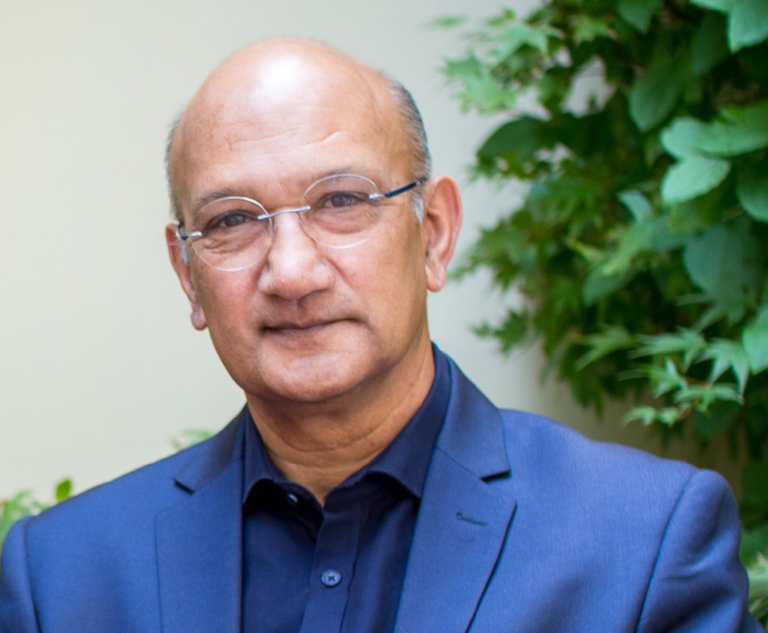
THE University of Cape Town (UCT) Council has announced the appointment of Emeritus Professor Daya Reddy as interim Vice-Chancellor. 

This decision was made at a special Council meeting on 6 March 2023 following consultation with Senate on 2 March, and after seeking the advice of the Institutional Forum on 3 March.

UCT Chair of Council Babalwa Ngonyama said: “Professor Reddy will officially assume duty from Tuesday, 14 March 2023. He will hold this position until a new Vice-Chancellor is appointed.”

Professor Reddy has spent almost his entire academic career at UCT. At his retirement in 2020 he held the South African Research Chair in Computational Mechanics. He enjoys considerable recognition nationally and internationally as a researcher and has received multiple awards in recognition of his scholarly work. He is the author or co-author of over 200 publications and has supervised over 70 doctoral and master’s students to graduation. 

Professor Reddy has served in various management and leadership positions at UCT: as a head of department, as dean of the Faculty of Science for seven years, and from 1999 to 2021 as director of the Centre for Research in Computational and Applied Mechanics.

He served on three occasions as an acting deputy vice-chancellor, over these periods covering collectively a wide range of portfolios. He also served three terms on Council as a member elected by the Senate. Over and above his duties at UCT, he also has extensive governance and leadership experience nationally and internationally.

“We thank Professor Reddy for availing himself for this role and we warmly welcome him back to UCT. I am sure we will all offer him our support during his interim tenure,” concluded Ngonyama.

INSIDE EDUCATION

Mahikeng residents oppose alcohol in schools

PHUTI MOSOMANE

THE high rate of substance abuse in South Africa was cited as the main reason for the strong objection to the provisions of clause 8 of the Basic Education Laws Amendment Bill which regulates the possession, consumption or sale of alcohol on school premises.

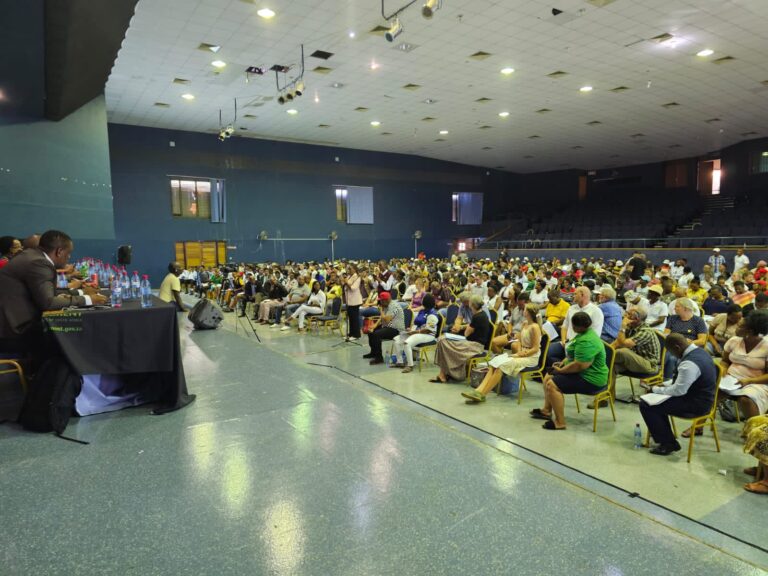
These were the views the residents of greater Ngaka Modiri Molema District Municipality shared with the Portfolio Committee on Basic Education during the public hearings on the Bill at the Mmabatho Civic Centre in Mahikeng.

The hearings were the second of three hearings in the province which form part of the nationwide public participation process on the Bill.

The promotion of public participation is an obligation on Parliament in line with Section 59 (1) of the Constitution, which compels public involvement in the legislative-making process of the National Assembly. This ensures that laws are reflective of the views and wishes of the people and enhance participatory democracy.

A considerable number of participants highlighted that the presence of alcohol on school premises will send a wrong message to leaners especially when schools are already challenged by taverns and shebeens that sell liquor closer to schools.

While the majority of those against this clause supported the Bill for its broader objectives, they said this clause should be reconsidered.

Other participants argued that those who opposed the clause misconstrued its intention, in sharing their understanding of the clause, they said its intention is to regulate the consumption of alcohol on school premises in the event of school property being rented.

The regulation of home schooling in the Bill also provoked opposing views in Mahikeng. Those who opposed it expressed concerns that the Bill seeks to regulate an environment relatively unknown to the department.

According to residents, the Bill is unimplementable in the sense that the department is unable to hire enough educators, yet the Bill promises that assessors will monitor the implementation and progress of a home schooled child.

Also, they argued that the overregulation of the environment such as the requirement for annual assessment will create an additional financial burden on parents. They called for the complete removal of clause 37 and the drafting of a researched and well thought out Bill on the home schooling environment.

Those who supported the retention of clause 37 in the Bill, emphasised that regular schools are regulated and clause 37 will ensure standardisation and control over the home-schooling environment.

Another contentious point was the determination of language and admission policy at schools with some participants raising a concern that the Bill centralises power in the office of the head of department. The concern centred around the view that the School Governing Bodies (SGBs) are the appropriate and legitimate structures to make such determination due to their proximity to schools. Those against the clause advocated for the department to only intervene in cases where there is clear evidence that the SGB is unduly using the Bill to exclude learners.

Those who supported the clause said it is necessary to stimulate transformation and ensure standardisation across all public schools. Also, there was a fear that not adopting the clause will allow the perpetuation of the legacy of apartheid in the basic education system that continues to disadvantage and marginalise the majority of learners.

Chairperson of the committee Bongiwe Mbinqo-Gigaba said there was an agreement on the clause proposing compulsory attendance of school from Grade R as that will ensure qualitative preparation of learners to enable them to cope well at school throughout their basic schooling trajectory.

Mbinqo-Gigaba said the committee considers the public hearings successful thus far given “the high level of contributions it received from participants. The committee had projected about 300 participants, but ended up with over 700 participants.

“In all the hearings held thus far we have received great numbers and quality inputs and this points to the burning desire to ensure a quality education system for the children of this country. All the inputs made will be taken into consideration when the committee deliberates on the submissions,” said Mbinqo-Gigaba.

On Sunday, the committee held last hearings on the Bill in the North West Province in Vryburg. In line with the intention to enable broader access to the work of the committee and to enable extensive consultation as much as possible, the committee has resolved to hold its public hearings in the afternoons and on weekends. The public hearings are open to every individual and organisation wishing to make their submission.

INSIDE EDUCATION 

Teachers change lives – but what makes a great teacher?

ZAYD WAGHID

EXCELLENT teachers can change our lives. Researchers have shown that good teachers encourage us to think critically, reflect and learn across disciplines. These are all skills that can set us up for life.

I have had the privilege of being taught by a few brilliant teachers in my life, and I have also observed teaching excellence at the numerous schools I have visited over the years as an education academic.

Those who stand out are devoted, imaginative, motivated and motivating, and eager to overcome challenging conditions to make a positive difference in the lives of young people.

Teachers are expected to teach, but great teachers also have a wealth of knowledge and experience and are eager to learn from their learners.

They bring their cultural capital – what they have learned and experienced – to engagements with learners, colleagues and the community. In turn, they are altered by their connections with others and can positively affect those with whom they engage.

But what is it that makes a great teacher? Here are five key lessons I have learned that I believe are crucial for excellent teaching.

1. Find your teaching philosophy

Every great teacher knows that coming up with a teaching philosophy is important and it’s unique to each person. It is what your teaching is based on and is usually made up of central ideas, beliefs, values, and goals.

For instance, a teaching philosophy could be influenced by the Brazilian philosopher of education Paulo Freire’s approach. This is based on the idea that students should not be perceived as passive recipients of knowledge as if they were empty vessels. Instead, they should be seen as part of the knowledge-making process.

2. Be the student

I have spent much time researching and experimenting with different methods to connect with my students in class. It’s important for a teacher to put themselves in a student’s position.

A teacher may declare, for instance, that a student is being disruptive in class. It is essential to attempt to discover why the student is behaving that way.

I often discuss the necessity of defamiliarisation: the method of looking at something familiar in an unusual manner through a different lens. I have also found that having students draw pictures of their lives or watch interesting films in class that put them in new situations helps me understand their situations — particularly when I ask them to connect the stories of these films to their situations.

3. Cultivate a classroom community

Classroom community nurtures academic and emotional growth by providing a cooperative, supportive environment. Research shows that to build a community in the classroom, one needs to develop three types of presences: teaching (promoting a supportive, engaging learning environment), social (the capacity of learners and teachers to communicate meaningfully and collaboratively), and cognitive (how much students can build meaning and knowledge through critical thinking and reflection).

A great teacher knows that to make students think critically and do their work well they must first establish a strong social presence, building relationships with students that allow them to facilitate discussions and co-create knowledge with their classes.

For example, they might adopt a process of rotation, allowing all learners the opportunity to facilitate group discussions using social networking platforms like Facebook or FlipGrid. This is also great for bringing often quiet learners together for meaningful conversations where they are given the chance to talk and be heard.

4. Let students choose the technology

Although exceptional teachers are efficient at integrating digital tools with instructional techniques and subject matter, it’s also crucial that students be offered a variety of tools to choose from, giving them more freedom and choice in their learning. This is one way of disrupting teaching and learning practices: knowing when to give up control over things like the choice of technology.

This could mean using a low-tech teaching tool like Plickers in the classroom to test students’ knowledge using Plicker cards, or gamification software like Kahoot. Learners who prefer to play games in class or take quizzes from home could choose Kahoot.

Plickers is a valuable tool for those who want to be more formally tested in class because it lets teachers quickly and easily see if a student understands subject matter so they can adjust their teaching accordingly. It is also an intelligent way to engage students in active learning and boost class participation.

5. Get feedback: even great teachers can be better

Your students are the best judges of how well you teach.

So, it is essential to have ways for them to give you feedback on how you are performing. A great teacher should be authentic about what they do and acknowledge what worked and what did not, as well as what needs to happen for improvement.

There is no such thing as a perfect teacher because even the best teachers make mistakes.

But there must be a way to unlearn bad habits and learn new ways to do things. As a teacher it’s easy to ensure that the curriculum is complete by mainly engaging in direct instruction and leaving too little space for debates in class.

I have often showed trainee teachers a free online tool for planning lessons called Learning Designer, developed by the University College London.

It provides a step-by-step plan for creating learning activities and tests that align with specific learning objectives and outcomes. It’s based on British education scholar Dianna Laurillard’s six ways of learning.

This has helped my students to think more deeply about whether their lessons use a good mix of different teaching methods.

(Zayd Waghid, Associate professor, Cape Peninsula University of Technology)

THE CONVERSATION

ChatGPT is the push higher education needs to rethink assessment

THE COVID-19 pandemic was a shock to higher education systems everywhere. But while some changes, like moving lectures online, were relatively easy to make, assessment posed a much bigger challenge. Assessment can take many forms, from essays to exams to experiments and more.

Many institutions and individual academics essentially outsourced the assessment process to software. They increased their use of programs like Turnitin to check for matched wording in students’ assignments. And for closed-book, timed tests they used tools such as Proctorio, which monitor a student’s computer or phone while they write exams.

But universities did not seize this chance to reflect on what higher education is for and how assessment might be used to enhance its achievement. Instead they doubled down on the status quo, breathing a sigh of relief once isolation and lockdown orders were revoked and things could return to “normal”.

The advent of ChatGPT and similar chatbots provides another opportunity for the sector to reflect on why and how it assesses – and what higher education is for.

ChatGPT is a chatbot technology, powered by artificial intelligence (AI), that enables users to have natural, human-like conversations with a computer. It uses advanced language processing techniques to understand user input and provide natural, contextual responses.

With ChatGPT, users can converse with a computer in a way that feels like talking to a real person. It scrapes information from a large database mined from the internet and uses this to create a unique response to a prompt.

So, for instance, it can write an essay on any topic – “the advantages of breastfeeding” or “the social complexity of the refugee crisis in Europe”. It can also be trained to provide context-specific essays.

We are academics from South Africa, Australia, the UK and the US, working in fields related to education, ways of learning and teaching, and academic practice. We believe ChatGPT could be a powerful impetus to shift from understanding assessment as the assurance of an educational “product” to assessment as learning.

Used properly, it could be a valuable way to teach students about critical thinking, writing and the broader role of artificial intelligence tools like chatbots in the world today.

Threat or opportunity?

The advent of ChatGPT has prompted a variety of reactions from universities all over the world. In the UK, for instance, the reaction towards ChatGPT and higher education has veered from the hyperbolic – will AI ruin universities? – to the more measured, such as considering what students think of the technology.

If the purpose of higher education is that students memorise and summarise a body of knowledge, and that this is then certified via assessment, then ChatGPT is an existential threat. The market value of credentials is directly threatened if universities can no longer confidently assert that the texts assessed by academics have indeed been produced by their students.

But if the purpose of higher education is to nurture a transformative relationship to a particular body of knowledge that enables students to see the world – and their place in it – in new ways, then assessment takes on a vastly different meaning.

Used well, ChatGPT and similar tools can show students the wonders and responsibilities of acquiring and building powerful knowledge. It can assist rather than being seen in opposition to their learning.

Here are four ways this might happen.

Four potential applications

1. Students can reflect on articles produced by ChatGPT which have fabricated references and distorted information and then deliberate on the potential consequences of this in an era of fake news.

2. Students can be set assignments that require them to compare ChatGPT’s answers to ones they have developed and ascertain whether they know the material and how it might be represented differently.

3. ChatGPT can be used to support essay writing and to help foster a sense of mastery and autonomy. Students can analyse ChatGPT responses to note how the software has drawn from multiple sources and to identify flaws in the ChatGPT responses which would need their attention.

4. Students can be encouraged to consider the extent to which their use of ChatGPT has enabled or constrained their access to powerful knowledge. This is a chance to critically reflect on where and how the use of AI is taking place in society and their potential future professions.

There is already a multitude of ideas available online about how ChatGPT can be used to create prompts for assignments. Lecturers and students can explore these to see how they might be adapted for their own learning and teaching needs.

None of these ideas will be simple to implement. Academics will need support from their institutions in considering what such technological developments mean for their disciplines. And, we’d argue, that support must help academics to move beyond seeking ways to trick the software or to monitor students.

Innovation and inclusion

Society and the higher education sector squandered the opportunity that COVID presented to reflect on what higher education was for and how assessment might be used to enhance learning.

Rather than signalling the end of higher education, ChatGPT has instead presented the sector, and society more broadly, with another opportunity. This is a chance to develop innovative and inclusive teaching, learning, and assessment aligned to such understandings.

AUTHORS|

  1. (Sioux McKenna, Director of Centre for Postgraduate Studies, Rhodes University & Visiting Research Professor in Center for International Higher Education, Boston College, Rhodes University; Dan Dixon Adjunct Lecturer, University of Sydney;
  2. Daniel Oppenheimer Professor of Decision Science and Psychology, Carnegie Mellon University; Margaret Blackie, Associate Professor, Rhodes University; Sam Illingworth Associate Professor, Edinburgh Napier University)

THE CONVERSATION