Home Blog Page 224

These are the South African universities with the best employment outcomes

DATA from Quacquarelli Symonds (QS) scored universities worldwide based on graduate employability – showing that the University of Cape Town (UCT) has the best employment outcome in South Africa.

Attending university is a big decision for many people, as it often requires a significant investment of time and money. However, while there are several reasons why individuals choose to pursue higher education, the main reason is to increase their chances of finding a well-paid job.

QS is a British company specialising in the analysis of higher education institutions around the world. It said that it appreciates that for many students, a successful career is a primary goal of their university education.

This is the primary motivation for the creation of the Employment Outcomes indicator.

“QS have designed the Employment Outcomes indicator to reflect the ability of institutions to ensure a high level of employability for their graduates while also nurturing future leaders who go on to make an impact in their respective fields,” it said.

Rankings

This year’s QS World University Rankings include almost 1,500 institutions worldwide. The rankings compare institutions on various criteria, from academic and employer reputation to employment outcomes.

According to QS, the employment outcomes indicator combines two metrics, widely known from their QS Graduate Employability Rankings:

  • Graduate Employment Rate; and
  • Alumni Impact

The employment outcome indicator ranks the institutions based on these metrics and gives the universities a score out of 100.

According to QS, seven South African institutions ranked in the top 1000, with the University of Cape Town (UCT) having the best employment outcome with a score of 92.8.

The University of Witwatersrand (WITS) is second, and the University of Pretoria is third, scoring 89.2 and 56, respectively.

Regarding world rankings, the QS World University Rankings 2023 showed UCT on top as the best university in South Africa, ranking 237. In contrast, the University of Johannesburg (UJ), WITS, and Stellenbosch University ranked 412, 428, and 454, respectively.

The table below shows the employment outcomes score of all seven South African universities evaluated in the top 1000.

QS World RankingUniversityEmployment outcome score
237University of Cape Town92.8
428University of Witwatersrand89.2
591-600University of Pretoria56.0
454Stellenbosch University53.8
801-1000Rhodes University50.0
801-1000University of Kwa-Zulu Natal43.9
412University of Johannesburg38.9

Methodology

Regarding the evaluation metrics, the Graduate Employment Rate is defined as the percentage of graduates who go on to paid work within 15 months of finishing their degree, said QS.

“We consider any mode of employment (full-time or part-time), even if unknown. We do not consider graduates who are on voluntary or unpaid work, continuing further study, or unavailable for work due to military service, disability, travel, or caring needs,” it added.

The analytics company noted that they source its data from the respective universities and third-party providers, such as Higher Education South Africa (HESA), and calculate the scores based on the difference between each institution’s rate and the country’s average.

The alumni impact indicator shows which institutions are producing impactful graduates in all walks of life, from performing arts to finance, medicine, and politics, said QS.

“To produce this list, we use a combination of over 40 externally published lists, such as the ‘100 most influential Africans’ and our own in-house sourced information. We also look at where the alumnus went to school, which degree they completed and in which subject, and their age,” it added.

The indicators are balanced against student numbers to ensure that larger and smaller institutions are proportionately evaluated.

Business Tech

ChatGPT in Classrooms: What to Know

ASK ChatGPT to write a five-paragraph essay on the symbolism of “The Great Gatsby”and it will produce a response within seconds. Plug in an algebra equation and it can solve it almost instantly and even explain its process.

That’s not all. The capabilities of the artificial intelligence chatbot tool, launched in November 2022 by San Francisco-based startup OpenAI, are vast. It can fix spelling and grammar errors, give feedback on writing, write poems and songs, create lesson plans for teachers and much more. It does it all in human-sounding text and with high efficiency.

Though ChatGPT is still in its infancy and limited in some ways, it has the attention of school administrators, teachers, parents and students, and its presence has garnered mixed responses, experts say. It’s brought ethical questions about how AI fits in education, and the potential for plagiarism and cheating is cause enough for some to shun the website altogether.

New York City Public Schools, the largest school district in the U.S., announced in early January 2023 that it was banning ChatGPT across all district devices and networks. Other big city districts like Seattle, Baltimore and Los Angeles have also blocked access to the app, and more may soon follow.

Some, however, say they’re excited about its potential to advance learning for some students and become a valuable tool in education. Those teachers are envisioning ways to adapt their teaching to incorporate it in their lessons, experts say.

“It’s been quite fascinating to see the education field react faster than I think I’ve ever seen them react to a new technology,” says Torrey Trust, associate professor of learning technology at the University of Massachusetts—Amherst.

As schools across the U.S. decide whether ChatGPT has a place in the classroom, here’s what parents and students should know.

What Is Different About ChatGPT?

As society has evolved technologically, so has education. Computers, cellphones, calculators and the internet have found a place in the classroom. Spellcheck and grammar-checking websites are also widely accepted tools, as are more advanced technologies like speech-to-text software and voice AI like Siri, Google Voice and Amazon Alexa.

So what makes ChatGPT different? Why is it generating such polarizing responses?

“From what I can tell, ChatGPT seems to be one of the most advanced natural language processing tools out there to date,” Trust says. “There’s something with this tool, with the simplicity of the user interface design, that anyone can log on and try it out. When you insert a prompt, what it comes back with is so close to what another human might say.”

ChatGPT is a “large language model,” which means it’s able to generate readable text on demand in a wide range of styles and for a variety of purposes. It can perform those tasks with noticeably more accuracy and coherence than previous models, experts say. Plus, ChatGPT is designed to be user-friendly, and it’s free.

Trust says ChatGPT has made AI visible in a way other technologies haven’t. Its capabilities have left some in awe while others, she says, feel “panicked” by its potential ramifications.

AI is present “through streaming recommendations, facial recognition to get into your phone or notifications and apps,” she says. “It’s around us, but it’s not something I think people think about on a daily basis. Something about this tool is like, ‘Oh my goodness, it’s so closely mapping to what humans might respond with or say. Is this cause for panic or concern?’”

Concerns About ChatGPT

One of the main concerns that educators have is that students might exploit ChatGPT’s capabilities to cheat on assignments – using the app to produce research papers and essays instead of doing the work themselves.

Edward Tian, a student at Princeton University in New Jersey, recently developed an app called GPTZero that he said in a tweet “can quickly and efficiently detect whether an essay is ChatGPT or human written.”

Trust says there was “a huge sigh of relief” by some in her education circles when this app, and other plagairism checkers, became available. Some teachers had ditched technology altogether and gone back to paper assignments and assessments, says Shana Ramin, a technology integration specialist with Oakland Schools in Michigan.

ChatGPT has its limitations as well, and educators fear that too much reliance on it could lead to more problems. For instance, Trust says she’s seen it solve math problems incorrectly as well as completely make up citations for a research paper, though visually it looked legitimate.

“I think with anything, it’s important to understand that it’s a new tool and you can’t just rely on it 100%,” Ramin says.

There are also concerns about privacy and data collection, as ChatGPT collects information like a user’s IP address, user interactions and the country where they’re located, Trust says.

The Children’s Online Privacy Protection Act of 1998, which was designed to protect the privacy of children under the age of 13, prohibits apps from collecting this kind of data on children. ChatGPT’s Terms of Use states that users should be 18 years or older, but it doesn’t verify the age of its users.

Trust says K-12 educators should not ask students to use the tool for educational purposes because of privacy concerns. “I don’t even know if I would get parent permission, because technically it’s not to be used by anyone under 18,” Trust says, adding: “Is that stopping anyone? Absolutely not.”

She says the best practice would be adults creating an account and using it alongside their students or children.

How Teachers and Students Are Using ChatGPT

Trust says her hope is for teachers to adapt their practices to ChatGPT rather than just focus on catching students cheating. For example, experts say they’ve heard of some teachers giving ChatGPT a prompt and analyzing its response with students as a practice in editing and critical thinking.

Ramin says it can be used to pare down difficult passages for lower reading levels, one of many ways the tool can help English language learners or students with learning disabilities. It can also provide sentence starters or help generate ideas for students who struggle to do so on their own.

“When we think about tools like this, often it’s just like, how can the standard student use it?” Trust says. “But we often forget about how beneficial tools like this can be for students with disabilities in helping their thinking, learning and executive functioning.”

Some teachers are also using it to make their jobs easier, says Matt Miller, an educational technology writer and speaker and author of “Ditch That Textbook.”

Some are using ChatGPT to help generate ideas for lesson plans and class activities, or plug in their students’ writing to get recommendations and edits, he says. Miller says teachers are “so absolutely strapped for time” that using ChatGPT for certain functions can help them do their jobs better and more efficiently.

“I’m still of the opinion that if we can take some of the monotony out of the hands of teachers, it frees them up to do what they were made to do as teachers,” he says. “Build relationships with students one on one, develop curriculum, come up with creative teaching ideas – all of that stuff that the grind doesn’t let them do and beats them down for.”

Ramin says teachers and students should see ChatGPT as a helpful tool, much like a calculator might be in math class, but it “cannot do a teacher’s job.” It’s there to help teachers reach their learning objectives. Whether it’s ChatGPT or another technology down the road, she says, AI isn’t going away and, if anything, is likely to be more of a part of classrooms.

“It’s definitely scary. I understand the desire to panic,” she says. Her department met and discussed whether it was something they needed to consider banning in the district, she says.

“But the more than I play around with it, the more I see the potential and I see the benefits. There’s definitely the potential for misuse, but I think that’s all the more reason why we need to be aware of it and understand it.”

US NEWS

South Africa: New digital learning platform launched across ADvTECH schools

0

IN a first for the country, South Africa’s leading private education provider, ADvTECH, will this month start rolling out a unique, locally developed personalised learning digital platform across its schools.

ADvLEARN is a customised platform for ADvTECH Schools that provides personalised learning paths using adaptive technology to deliver data-driven insights and learning analytics. Students will therefore have a unique learning experience while constantly improving their understanding in core areas.

“We are very excited to have partnered with MathU to bring this groundbreaking digital learning platform to our Grade 7 to 12 students, a move which will further cement our reputation as a leader in education in the country, in line with our vision to stay at the forefront of global technological innovation and emerging best practices,” says Desiree Hugo, Academic Head at ADvTECH’s Schools Division.

ADvTECH Schools Division will initially use ADvLEARN to enhance learning in Mathematics (Grade 7 to 12), Physical Sciences (Grade 10 to 12) and Mathematical Literacy (Grade 10 to 12).

The pedagogy applied in ADvLEARN seeks to find the gaps in students’ learning, and then fill these gaps to ensure they improve their understanding in core areas. Through adaptive learning technology, the system supports both students who want to progress faster as well as students requiring reinforcement of key concepts.

MathU is a software as a service (SaaS) company based in Pretoria, specialising in artificial intelligence and software engineering. The team at MathU has developed an innovative software solution that uses state-of-the-art engineering principles to map, monitor, and assess student progress. The platform has been adapted to cater to the specific needs of schools and universities, and the company was founded by engineers and scientists who are passionate about improving mathematics and science education. MathU provides solutions to schools and universities looking to enhance their educational offerings and better support their students.

“In addition to enhancing student learning, ADvLEARN will also give teachers the ability to instantly allocate relevant student work and homework to student devices, immediately access student performance and achievement data, as well as easily view and identify concepts needing reteaching and review,” says Hugo.

“We are truly excited about taking education another step into the future in 2023, and look forward to seeing how this strategic partnership cements and accelerates STEM learning for our students.”

ITNEWS

Combating crime through sport

0

A sports day focused on reducing crime was hosted by Sports Against Crime South Africa (Sacsa) in conjunction with the Secure Rite Security and local neighbourhood watches at Gordon High School, Western Cape, last weekend.

According to Sacsa president Vincent Daniels, the event focused on learners and giving them something to do that will inevitably draw them away from taking part in crime or become a statistic.

Doreen Finger, a resident of Lourencia Park, says many youths of the area are drawn into crime and drugs.

This is why the organisers decided to host a mini-run and six of the learners from the area who attended did a loop of the athletics field. Afterwards the young athletes each received a certificate for completing the run.

“This is why we try and organise events such as these because we try to fight crime with sports,” he said. “We have to thank the school’s principal Lizette Visser who availed the school grounds for us.”

Daniels reiterated the importance of an event like this, especially because crime has become so prevalent in schools.

Distrikspos

Supporting the African education community to achieve its goals through EdTech 

0

The COVID-19 pandemic greatly affected the way that education is conceived and delivered worldwide. As institutions in South Africa adapt to the new learning environment and consider implications for students, faculty, and staff, technology plays a critical role in enabling successful outcomes both today and in the future.  

That’s why OneConnect and Anthology have partnered to support the South African education community and help more students and institutions achieve their goals. With a holistic approach to education technology that’s focused on delivering dynamic, data-informed experiences, OneConnect and Anthology are breaking down silos and connecting critical systems to open up a world of new possibilities for learning.  

Blending Data with Experiences 

A learner doesn’t exist inside one system alone, and neither does an institution. By bringing together data and insights across core solutions, the right technology can help educators develop a deeper understanding of students to deliver more personalised experiences tailored to meet the needs of each learner.

This also helps institutions drive operational efficiencies and meet objectives around critical areas like enrolment, retention, and engagement.  

And learners are hungry for more personalised experiences. According to a global survey recently fielded by Anthology, 66% of learners agree that their university views them as individuals with unique needs and preferences, but most learners express a desire for even greater personalisation.

For example, 70% would like to receive more reminders of deadlines and other key information, such as a notification about an outstanding bill or when to register for classes, as they would be more likely to complete the task on time or if prompted. And 71% would like to receive recommendations about which courses to take and when to do so during their academic career. 

More personalised experiences can also provide the support needed to keep students on track toward achieving their goals. Survey results indicate 40% of students strongly agree that they would like to receive more support from their university to be successful. Aligning that support to the areas in which students feel they need it is critical. More tailored financial aid and career-focused support top the list. 

Higher education leaders are nearly unanimous in their perspective on the potential impact that blending data and experiences could make. 94% globally agree that a holistic view of learner data pulled across multiple systems would benefit their team and help more students achieve their goals. The same percentage of higher education leaders are also actively looking for new opportunities to aggregate and analyse learner data to drive more insights. 

“By considering student feedback and investing in technology resources to deliver more personalisation across everything from course delivery options to career services, higher education leaders can position their university to provide an experience that meets the needs of today’s learners—and those of tomorrow,” said Jim Milton, Chairman and CEO, Anthology.  

“We believe that education technology solutions allow students in rural and remote areas access to the same quality of education as a child attending the best private school in the city. Furthermore, that student can interact with peers across the country and the continent; be exposed to new ideas and new opportunities, benefitting from the diversity and richness of their engagements. Our aim is to also help education institutions see that they can grow their businesses beyond brick and mortar and do so quickly – breaking down “walls” to reach students beyond their physical geography, through sophisticated solutions that make administration and teaching seamless,” said Rogers Sithole, MD of OneConnect Education. 

Learners want and expect technology to be more prevalent in their higher education experience and university leaders are keenly aware of opportunities to adjust course delivery and enhance technology. In fact, according to the same global survey, 60% believe their institution lacks some of the appropriate digital learning tools to help learners succeed. Perhaps more importantly, 17% of global leaders believe that the technology resources provided by their university do not match up with learner needs in a way that adequately supports their studies. But those same leaders clearly recognise a shifting landscape, with nearly 60% confident that more classes will be available online in the next five years. 

Institutions recognise the urgent need for new education technology as well as aligning their current tools to the changing landscape of digital learning. To that end, 45% of higher education leaders have maintained the same technology but significantly changed the way administrators, faculty, and students rely on digital resources, likely due to shifts associated with the pandemic.  

The good news is that universities are on the right track according to learners’ expectations of how technology is incorporated into their experience.

For example, 73% of students globally prefer to submit assignments in an online portal, and 70% indicate they often or always submit assignments this way. 70% of students also prefer to receive instructor feedback on assignments through an online platform, and 66% of students indicate they often or always receive feedback this way. As universities continue along the path to fully supporting learners, more investment in technology is necessary. University leaders are cognisant of this need, and more than half are considering additional investments. 

CNBCA

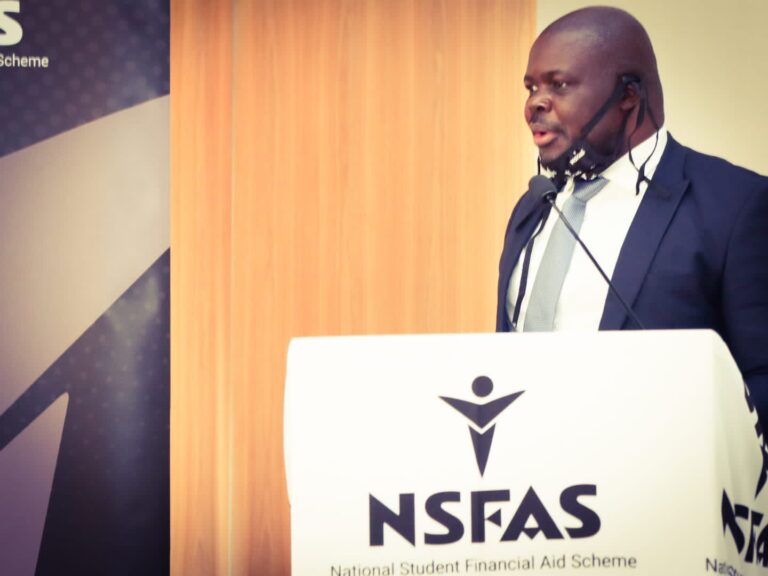
Policy changes to address disparities between NSFAS beneficiaries

THE National Student Financial Aid Scheme (NSFAS) has introduced certain policy changes for the 2023 academic year to progressively address existing disparities between Technical Vocational Education and Training (TVET) colleges and university beneficiaries’ bursary packages.

Announcing NSFAS 2023 funding eligibility and criteria during a media briefing held in Pretoria on Tuesday, NSFAS board chairperson, Ernest Khosa, said TVET college students studying occupational programmes can only be funded for the cost of tuition for the duration of the qualification.

“TVET college students,who are registered on an occupational qualification, may qualify for allowances only if in simulated training, and students registered on an occupational qualification, who have an employment contract, do not qualify for NSFAS allowances.

“TVET college graduates will be funded for a university undergraduate qualification regardless of the benefit that they would have derived from the application of the N+ rule at a TVET college level (on condition they did not exceed the TVET N+ rule),” Khosa explained.

“N” is the minimum number of years allocated to complete a qualification and the +1 refers to the extra year that a student may need to complete the qualification.

On academic eligibility, Khosa announced that as of 2023, first-time entering students must achieve a course credit pass rate of 50%, while continuing university students must achieve a progressive course credit pass rate of 55%, and returning university students must meet ongoing academic eligibility requirements in order to remain funded by NSFAS.

“The N+ rule for distance university students will be reviewed as of 2024, and academic progression criteria will increase from 55% to 60% over time. On allowances, our board directed the executive management to introduce processes that enable the entity to reduce the risk of abuse of its funds,” Khosa said.

Khosa said the payment of allowances will be made directly by NSFAS into the students’ NSFAS bank account and NSFAS funded students are required to complete the NSFAS direct payment on-boarding process to prepare for the payment of allowances into their account.

“Through direct payment, NSFAS beneficiaries will receive their allowances for food, personal care, transport etc., through a NSFAS bank account; and after being registered on the system, students will receive virtual and/or physical cards they will use to transact.

“Additionally, students will be able to make online transactions such as EFT, prepaid purchases, receive from and transfer money to other existing banks, just as with a normal bank account, and other benefits include access to value-added services, ATM cash withdrawals, as well as at retail stores,” Khosa explained.

To ensure that all NSFAS students are on board, Khosa said the scheme has assigned NSFAS teams to institutions, and its service partners will join them when visiting all institutions from February 2023 to assist with on-boarding and query handling.

“Currently, the focus of the NSFAS teams is to encourage university students to on-board the new system in the meantime, as we prepare for university implementation later in the year. I would like to request that the SRCs, together with the student unions responsible for both our TVET colleges and universities, work together with the teams to make this process seamless,” Khosa said.

SA NEWS

South Africa’s dysfunctional universities: the consequences of corrupt decisions

JONATHAN JANSEN

What happens when those responsible for managing universities cannot trust each other to act with integrity? In a nutshell, as I discuss in my new book, Corrupted: A study of chronic dysfunction in South African universities, dysfunction is the consequence.

This is the situation playing out in some South African universities – sometimes with fatal results. In early January 2023, a protection officer who was guarding Fort Hare University vice-chancellor Professor Sakhela Buhlungu was shot dead in an apparent assassination attempt. The shooting has been linked to ongoing investigations into corruption at the university.

This appears to be just one example of how eroded trust has led to conflict among university managers that’s spilled into the public domain.

The principal conclusion I reach in my book is that chronic dysfunction in a sample of South African universities can be explained by two intertwined factors. One is institutional capacity. This is the expert ability to lead, manage and administer universities. The other is institutional integrity – the steering academic values that buffer universities against instability. Where both capacity and integrity are weak, dysfunction is inevitable.

Integrity matters

Individual integrity involves a person acting honestly and doing the right thing. It means consistency in the values that connect words and actions. An institution with integrity has been described as: an organisation that defines and acts within a strong code of ethical conduct and positive values.

It doesn’t tolerate deviance from the code by its employees or partners.

Universities with high levels of institutional integrity vigorously pursue their core mandate. This is rooted in a strong sense of academic values. It is the glue that holds functional universities together and focuses their operations. Those academic values also steady an institution in turbulent times.

It doesn’t tolerate deviance from the code by its employees or partners.

Universities with high levels of institutional integrity vigorously pursue their core mandate. This is rooted in a strong sense of academic values. It is the glue that holds functional universities together and focuses their operations. Those academic values also steady an institution in turbulent times.

Such values centre on high-quality teaching, higher learning and cutting-edge research. Together these values advance social and human development. They are prominent on management’s weekly meetings agendas, on senate’s term meetings and on council’s quarterly meetings. Everything revolves around the academic project.

The case of student protests

One of the most important functions of academic values is to hold the institution together in times of challenge. For instance, how does an institution react when the integrity of the academic degree is at risk because of a prolonged shutdown?

In 2015 and 2016, students embarked on historic protests at campuses across South Africa. They demanded free and decolonised higher education. The press for free higher education arose because degree studies were becoming more expensive. This excluded more and more people from university. The decolonisation movement at formerly white universities protested that the curriculum was too European, the professors too white, and the institutional culture too alienating.

In response to the disruptions, the better-resourced, formerly white universities quickly transitioned to emergency remote teaching to ensure that the academic year was not lost. This highlights the importance of academic values to those institutions.

By contrast, in 2021, after a dysfunctional university specialising in the health sciences was shut down by routine protests for months on end, the students received their degrees as if nothing had happened.

The academic project was seriously compromised. But there was little institutional concern about the integrity of the degrees.

It is quite possible to see a structure or an organisation and to misrecognise it as an institution of higher learning. It would be easy to be fooled by the symbolic functions – like graduation – and administrative routines – such as registration – of university life and mistake these for a university. As I have argued elsewhere, a university ceases to exist when the intellectual project no longer defines its identity, infuses its curriculum, energises its scholars, and inspires its students.

When integrity is undermined

The crisis of dysfunctional institutions commonly arises when universities make compromised decisions on everything from tenders for infrastructure to appointments of key personnel. Such decisions compound foundational weaknesses and increase the risk of systemic failure. This is how institutional dysfunction begins and is sustained: through the breaching of institutional integrity.

The institutional integrity of vulnerable institutions is weakened, for example, through the decisions it makes about personnel appointments and promotions. Critical skill sets are compromised by populating crucial positions in administration with friends and family members. In one instance, as I document in the book, a whistle-blower at a serially dysfunctional university gave the new administrator “a list of all the family members appointed by the vice-chancellor”. Action was promised. None was taken.

The integrity of the academy is undermined even more when people who would not enjoy such elevation at an established university are promoted to senior academic positions in the name of equity.

And the governance of an institution is placed at serious risk through the appointment to council of junior members who have never governed anything in their lives. A university council is the most senior body responsible for governance. It should consist of senior people from professional fields with the experience to govern a higher education institution.

Tackling the crisis

There is no shortcut to restoring the institutional integrity of a chronically dysfunctional university.

It requires the appointment of smaller, professional councils without political interference. It demands competent leaders who are not beholden to political parties or factions. These leaders must hold strong convictions about the importance of academic values in the gradual rebuilding of a university.

This is an edited excerpt from the book, Corrupted: A study of chronic dysfunction in South African universities (Wits University Press, 2023).

THE CONVERSATION

Education MEC Mbali Frazer hails uThukela District’s 2022 Matric Top Achievers

THE MEC for Education in Kwa-Zulu Natal, Mbali Frazer, has hailed the 2022 matric top achievers from uThukela for flying the district’s flag high.

She was speaking during the 2022 Matric Excellence Awards ceremony hosted by the Okhahlamba Local Municipality, in Bergville.

Speakers at the event reflected on the journey of educators, learners and all stakeholders who played a role in improving the results for the 2022 academic year. 

“The outcome of 2022 National Senior Certificate (NSC) examination was also as a result of the great support our learners received from their educators and parents,” said Frazer.

Frazer also expressed her concerns with some schools which have been continuously underperforming in the NSC examinations.

She told a packed hall that necessary interventions will be implemented in these schools to help them to improve their pass rate. 

“These will include providing academic support and resources for relevant learning areas. We will also be strengthening accountability in the affected schools because we want those responsible to know that poor performance will never be tolerated,” said Frazer. 

Frazer further encouraged all the learners who obtained their matric certificates to further their studies. She cautioned them about distractions saying when they get to institutions of higher learning, they must always remember the reason why they went there in the first place.  

The event concluded with awards being handed to former learners for their oustanding performance in various catergories.

 The event tool place at the Okhahlamba Sports Complex. 

INSIDE EDUCATION 

Changes coming for science, engineering and technology subjects in South Africa – Nzimande

MINISTER of Higher Education and Training Blade Nzimande says that South Africa’s universities and Technical Vocational Education and Training (TVET) colleges are ready for the wave of new students entering the system in 2023.

Universities are currently in the process of registering new students, with the overall total enrolments within the public university sector for the 2023 academic year projected to provide over 1.1 million placements.

Notably, Nzimande commended the number of enrolments in critical skill qualifications this year.

In the 2023 academic year, first-time entering enrolments have been projected at 208,299 nationally. Of these, 69,000 enrolments will be within scarce skills areas and have been projected as follows:

  • Engineering: 17,085
  • Life and Physical Science: 17,584
  • Animal Sciences: 985
  • Veterinary Sciences: 209
  • Human Health: 10,418
  • Teacher Education: 22,788

Nzimande said that this was a great achievement from the class of 2022, as a considerable portion of the spaces within scarce skills areas requires a National Senior Certificate (NSC) Mathematics mark of at least 60%.

The national maths mark has become a sore sticking point in the education sector. Nzimande said that in a bid to get even more enrolments in the mathematics, science and technology education (MSTE) sector, his department, along with the Department of Science and Innovation, has developed collaborations with Provincial Departments of Education to support subjects in this field.

This echoes plans laid out by the Department of Basic Education in 2022, where the department outlined strategies to improve participation and performance in MST subjects.

Based on the 2021 matric results, the department noted that only 13.3% of matriculants passed mathematics with the requisite 60% to enter many of these fields. Similar patterns were seen across science, engineering and technology-focused subjects.

It said that the fields are rife with low participation from learners and teachers alike, with low-quality passes and underperformance in maths and science subjects on all levels.

The department is looking to implement what it calls “high impact interventions” to remedy the situation, the least of which is pushing and boosting 4IR-focused subjects like robotics and coding into the curriculum.

Notably, some key strategies the department is looking at is setting up MST directorates and institutes on both a national and provincial level. It is also continuously reviewing the MST curriculum, it said, and “responding to the skills required for 4IR”.

“In this respect, significant developments have been made in the development of a Mathematics Framework which is directed at introducing a balanced and a multi-dimensional approach for the teaching of mathematics in South Africa and which paves the way for creativity, innovation, problem-solving and conceptual understanding in a dynamic classroom setting,” the department said.

This also feeds into new subjects being explored and introduced to the curriculum related to STEM fields.

Some of these include Ocean and Marine Engineering, Aerospace Engineering, Coding and Robotics, Biomedical Engineering, Earth and Space Sciences, Earth and Human Sciences and Entrepreneurship.

The department said it will continue to use the National Senior Certificate, Annual National Assessments (grade 3, 6 and 9 For MST Subjects) and International Assessments and Monitoring Tools, including TIMSS and SACMEQ, to monitor the quality of MST subjects in the country.

For teachers, new support programmes are being developed, along with training manuals, to better equip teachers to take charge and teach MST subjects with confidence.

Coordination programmes and partnership programmes with China and Kenya are also on the agenda for early 2023 to support MST training and education.

Business Tech

Reprieve For Zimbabwean Learners Denied School Registration In South Africa

0

THE South African government says it will not oppose a court application by representatives of children of Zimbabwe Exemption Permit (ZEP) holders who are in school.

Some schools in South Africa were preventing the learners from registering due to the uncertain legal status of their parents.

Last week, the ZEP Holders Association (ZEPHA) filed an urgent application in the Pretoria High Court claiming that children of ZEP holders, who had grown up and attended school in SA, were being denied registration at a number of schools in SA.

Cited as respondents were the ministers and departments of basic education and home affairs, as well as Rand Park High School in Johannesburg, one of several schools that has reportedly refused registration to children of ZEP holders. Said ZEPHA in a statement: After an exchange of correspondence with the schools and the government, it became apparent that the affected children cannot acquire a study permit, which is a requirement for registration, because their parents are ZEP holders, and the ZEP was terminated on 31 December 2021.

The state attorney informed ZEPHA’s legal team on Friday that it would not oppose the urgent application, and had instructed Rand Park High School to enroll one of the students denied registration.

The state attorney asked that the matter be removed from the court roll, but ZEPHA has refused.

ZEPHA said it wants the court to make an order that provides blanket protection for all affected students.

Advocate Simba Chitando, who is representing ZEPHA in this case, said:

“We’re obviously happy that the government has wisely decided not to oppose this application in court.”

Our instructions are to proceed for an order of court that will assist all affected ZEP children, and not just a few.

Unfortunately, there is widespread xenophobia in South Africa, even in the administrative bodies of academic institutions, coupled with confusion as to the legality of registering students without a study permit, for no fault on the part of the affected children, which is a matter that can only be resolved for the benefit of the public by a binding court order.

The decision by the SA government not to oppose the urgent application is seen as a major victory for the rights of ZEP holders in SA.

Moneyweb