Home Blog Page 225

All systems go for 2023 academic year at University of Zululand – Mkhatshwa

FOLLOWING a visit to the University of Zululand, the Portfolio Committee on Higher Education, Science and Innovation says it is pleased with the institution’s readiness for the 2023 academic year.  

The committee is currently conducting oversight visits to institutions in KwaZulu-Natal on governance and management-related matters, as well as teaching and learning, and expanding access to education and training.

During an oversight visit at the main institution’s campus in KwaDlangezwa, the committee expressed its satisfaction that all governance structures – including the university Council, the Student Representative Council (SRC) and the Institutional Forum- agreed that it is all systems go for the academic year.

Committee Chairperson, Nompendulo Mkhatshwa, said the university has a fully constituted SRC, which will ensure that the voices of the students be included in decision-making by the university.

The committee commended the university for its effective online application and registration processes, as well as efforts to extend the registration period if and when necessary.

The university said it will allow walk-in registrations due to the challenges students face when coming from rural areas.

The committee commended the university’s commitment to pay students who are confirmed by the National Students Financial Aid Scheme (NSFAS) to be eligible for funding, living allowances while waiting for NSFAS to pay the university the upfront payment.

“We are of the view that this is a progressive step to ensure that students can be able to pay residence fees to private providers, have meals and transport fare to come to the institution,” Mkhatshwa said.

The committee had a tour of the site for the new two student residences, each with a capacity for 1 500 beds, which are under construction, as well as three older residences that were decommissioned for refurbishment.

All the projects are expected to be ready and handed over to the university by October or November 2023.

It also observed that the university is building a new engineering facility to expand the engineering programmes offering.

The committee further applauded the university for developing a safety and security app for students to report if they have safety concerns. The SRC said the app has helped many students receive prompt intervention.

The week-long oversight visit programme included a visit to Technical Vocational Education and Training (TVET) colleges, universities and science, technology and innovation initiatives under the Department of Science and Innovation.

SA NEWS

Free online courses could be a path to higher education in African countries but awareness is low

MPHOENTLE PULENG MODISE

SUB-Saharan Africa is one of the largest regions in the world and has the lowest rates of participation in higher education anywhere in the world. The World Bank reported in 2020 that only 9.4% of the region’s tertiary education age group is enrolled. The global average ratio is 38%.

Education is a key catalyst of economic emancipation. Open and distance education was specifically designed for this purpose: to make higher education accessible to everyone, everywhere. Since it’s not limited to one campus or physical space, this approach empowers students to take full responsibility for their studies, to learn anywhere and at any time. Importantly, this happens with a higher education institution’s support and guidance.

One of the programmes commonly offered by such universities in other parts of the world is the Massive Open Online Course (MOOC). These are free, easily accessible and completely online courses with no entry requirements. In some developing countries outside Africa, such as the Philippines, Thailand and India, MOOCs are already being credited at the national level for entry into formal university education. This increases access to higher education.

MOOCs are relatively new in Africa; they have become more common in the past five or ten years. On paper they are ideal for many African contexts. Egyptian education researcher Ghada Refaat El Said writes that MOOCs can effectively alleviate.

But how exactly are MOOCs being used by African universities? Are any countries’ education systems effectively using MOOCs to widen higher education access? To find out, we analysed existing peer-reviewed research published between 2013 and 2020.

We found that not many African countries perceive MOOCs as tools for boosting higher education access. Where these courses are offered, they are usually supplementary or designed merely to give students extra tuition support. And there’s not much awareness of MOOCs among school teachers and learners, who then miss out on this potential alternative path into higher education.

What we found

We searched the Sabinet, Scopus and Web of Science databases for papers by African authors about MOOCs. This produced 99 papers. Our study was based on the 15 that were most relevant to our inclusion and exclusion criteria and that specifically addressed African issues around MOOCs.

A key finding was that MOOCs are mostly used as a self-learning element to support formal qualifications within African universities. In some cases, MOOCs involve face-to-face tuition and support for university students. However, this practice allows only a limited number of learners to access higher education. For the most part, it caters only to those who are already in the system.

The literature review also shows that most people from African countries taking these courses already possess some level of higher education. So, again, the existing education access divide is not addressed.

Some of the studies we reviewed found that many learners and teachers at high school level didn’t even know what MOOCs were because they had no access to digital spaces.

The literature suggests that a few countries in Africa – among them Nigeria, Egypt and South Africa – seem to have at least acknowledged the role that MOOCs might play in broadening higher education access. But this has not yet been translated into national policy.

Examples from elsewhere

We found that MOOCs are already being used as part of mainstream credit-bearing courses in some institutions in the Philippines, Thailand and India. That means completing a MOOC can count towards access to a university degree. It helps make the degree more affordable.

Another finding related to how MOOCs in some developing countries are being successfully packaged with recognition of prior learning programmes. This is a process through which informal learning can, with strict measurements and mediation, be certified – as the South African Qualifications Authority describes it – “against the requirements for credit, access, inclusion or advancement in the formal education and training system, or workplace”.

It is clear from these and other findings in our study that African governments, policy makers and education sectors could learn a great deal from other developing countries.

Going forward

Higher education institutions in African countries must initiate dialogue with governments and accreditation bodies on how MOOCs can be used innovatively to widen access to higher education.

Governments that aspire to widen access to higher education through MOOCs need to raise the awareness of every stakeholder, including school communities, educationists in higher education, policy makers and government stakeholders. It’s another way to provide African students with quality and relevant education.

Mphoentle Puleng Modise, University of South Africa.

THE CONVERSATION

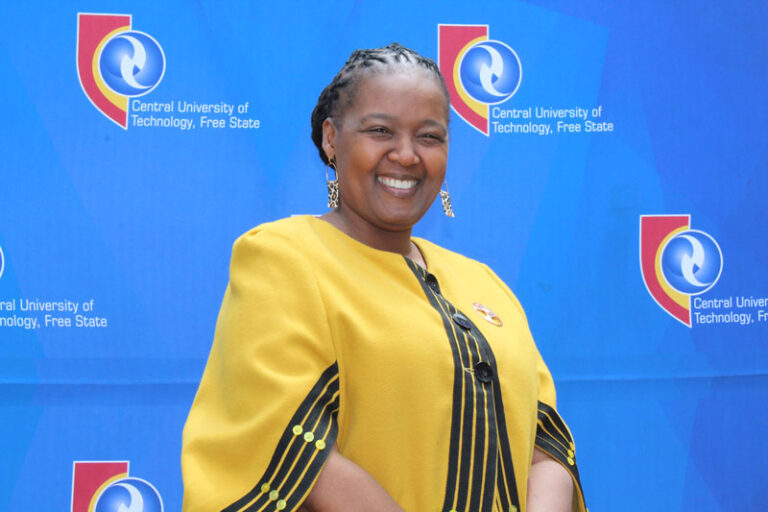
Opinion: The beginning of a new dawn at CUT, says new vice-chancellor Professor Pamela Dube

PROFESSOR PAMELA DUBE

WORDS cannot express how it feels to be welcomed by the institution in this way. Since the announcement of my appointment as the next Vice-Chancellor and Principal at the Central University of Technology, I have received good wishes in the form of emails, SMSs and WhatsApp messages from many people and colleagues from CUT and the whole sector. This official welcome event is now the cherry on top of these heartwarming, kind gestures shown to me. 

Thank you also for your presence here today, members of the media; this partnership in informing about and showcasing the good that our post-school education sector is doing. Not long ago we were collectively showcasing the achievements of the matriculants and the Free State as the lead province in achievements by the matriculants! 

Today I look at my coming here at CUT as the beginning of a new dawn, a new journey. And as we begin this journey jointly as a collective of the CUT community, I want to thank the Chair of the Council, Cllr Matthew Rantso, the Members of the Council and the university stakeholders for their confidence and trust in me to drive the university vision to 2030, and I share the excitement for the opportunity for CUT of having its first woman vice-chancellor and principal. 

These are laudable efforts in our transformation journey as an institution and in the sector. I wish to acknowledge everyone who was part of the process. 

I have been around the campuses several times already, listening and getting to know everyone. In time, I will get around the campuses quickly, as my goal is to continue to hear from the university community – even our cleaners’ security, and messengers — their stories and what CUT means to them.  To Professor Aldfred Ngowi, who has been the acting vice-chancellor, thank you for your leadership over the past two years and enormous contribution to CUT under challenging circumstances. Congratulations to the executive team on the many accomplishments on behalf of the university.  

For a new leader in an institution of this achievement, big questions will always be asked:  What is your value proposition?  What is on the table that will make a difference?

How will you advance the mission of CUT?

How are you going to lead to 2030?

And what’s your vision?

Well, today, there is nothing yet to share. I am listening and learning currently through my engagements with stakeholders. As I look around our campuses, there are many pockets of excellence in our niche areas.

Indeed, I will apply my skills and abilities to build on the institutional values and achievements of this remarkable institution.  More will also come in the next three weeks toward my inauguration on 17 February.

I can tell you that I will be part of our university community each day — striving to impact the campus and our community positively. And I will work tirelessly with the senior leadership and everyone to advance our mission and ensure that our students and staff have every opportunity to succeed through our support. 

Through this leadership change, we have a huge opportunity to refine and reassert our identity and our ambition to be the leading University of Technology in Africa. We have an opportunity to profile our quality academic offerings, research and innovation, and our great achievements in engaged scholarship and the impact of our work on the communities and the future generations who are our students now, and whose graduate attributes will always prepare them to be responsive and responsible global citizens. 

And this we will do with renewed efforts and commitment and notwithstanding the current challenges, which our sector has the ability and skills to address; the energy crisis, dwindling funding, the slow pace of transformation, governance and ethical leadership challenges among others.

As I indicated, I will not say much at the moment, but I look forward to engaging with you and in particular our key partners in the province, from our other post-school education partners, to business, industry and government level,  and the CUT university community — on these and numerous pertinent matters that should keep us awake at night as important roleplayers across sectors in this country. 

Many thanks again for taking time to come to this welcome event.

CUT

UJ student-athlete Tshwanelo Aabobe aiming for Olympic Games

0

THE 2022 Sportsman of the Year nominee for the University of Johannesburg (UJ) Sports Awards, Tshwanelo Aabobe, aspires to participate in the 2024 Olympic Games in Paris, France.

Having experienced a difficult year of injuries and contracting COVID-19 that took him out for two months, Aabobe remains resolute in competing at the highest level.

In 2022, he won the 2022 Central Gauteng Championships in the long jump and took gold and silver medals at the 2022 University Sport South Africa (USSA) championships in high and long jumps.

He came short in the CAA Senior African Athletics Championships in Mauritius, finishing in 4th position in the men’s high jump when he represented Botswana.

Aabobe started his athletics journey in 2007. He competed for the first time in the 2009 Confederation of School Sport Association of Southern Africa Championship (COSSASA) games Under17 championships, finishing 4th place.

The COSSASA games are part of the schools programme for the Southern African Development Communities (SADC) in countries like Botswana, South Africa, Lesotho, Malawi, Zimbabwe, Malawi, Mauritius, Angola, and Zambia. They include the Under 13, 15 and 17 girls and boys who participate in different sporting codes.

He grew up in various parts of Botswana, spending most of his life in Tlokweng, a village on the outskirts of the capital city Gaborone. He was part of Jwaneng Athletics from 2010 to 2014 before joining the University of Botswana Athletics in 2015 and later the UJ Athletics in 2019.

“It means a lot to be part of UJ Athletics. We are a very huge and tight family here. The support we have for each other keeps us extra motivated to work even harder,” says Aabobe.

He is a student at UJ, enrolled in Advanced Diploma in Transport Management, and a triple, high and long jumper. Winning a bronze medal at the 2011 African Junior Championships is, he says, his career highlight.

Currently, Aabobe is planning ahead; “My aspirations are to be included in the 2023 World Championships squad and qualify for the 2024 Olympic Games.”

Yiba.co.za

New report on diversity trends in STEM workforce and education

TODAY, the National Center for Science and Engineering Statistics, or NCSES—part of the U.S. National Science Foundation—released Diversity and STEM: Women, Minorities, and Persons with Disabilities 2023, the federal government’s latest and most complete analysis of diversity trends in STEM employment and education.

“Diversity is America’s unique advantage in science and technology,” said NSF Director Sethuraman Panchanathan. “Our global leadership depends upon diversity, leveraging different backgrounds, experiences, and points of view to bring unique insights to problem solving and discovery. The Diversity and STEM report provides objective, reliable data on where our nation has made progress towards access and equity in STEM education and careers, as well as where we must do more.”

The new report shows more women, as well as Black, Hispanic, American Indian, and Alaska Native people collectively, worked in STEM jobs over the past decade, diversifying that workforce, and are earning more degrees in science and engineering fields at all levels compared to previous years.

However, those groups—as well as people with disabilities—broadly remain underrepresented in science, technology, engineering and mathematics when compared to their overall distribution in the U.S. population, reflecting the larger equity challenges our nation faces.

In addition to bringing a wide range of ideas, creativity and skills to bear on innovation and discovery, equal access to the STEM workforce is important because those jobs are associated with higher wages and lower unemployment rates—regardless of sex, race, ethnicity or disability status.

Formerly called Women, Minorities, and Persons with Disabilities in Science and Engineering, the Diversity and STEM report is the first in this series to look beyond careers that require a bachelor’s degree, an educational milestone that reflects only half of the STEM workforce.

“A highlight of this year’s edition of Diversity and STEM is the use of a broader definition of ‘STEM work’, providing a better understanding of STEM representation by different demographic groups,” said NCSES Director Emilda B. Rivers. “For the first time, we count in STEM statistics all groups whose work requires a high level of technical knowledge, regardless of their degree.”

The report suggests women and Hispanics in particular have made significant progress over the past decade, both in terms of increased representation in the STEM workforce and in their participation in higher education. However, those broad patterns are not universal across all STEM occupations and fields of study.

For example, women make up much smaller proportions of the college-educated workforce in the computer and mathematical sciences, biological sciences, physical sciences and engineering compared to the social sciences. Separately, underrepresented minorities make up a third of the workforce in STEM jobs that typically do not require a college degree for entry. However, those jobs tend to have the lowest salaries and highest unemployment in STEM.

About 3% of the STEM workforce are people with disabilities. Although the number of STEM workers with at least one disability increased since 2011, their representation in the STEM workforce has remained unchanged from a decade ago.

NSF first started publishing data on underrepresented groups in STEM in 1977. In 1980, Congress mandated this report be produced every two years, and the report began incorporating people with disabilities in 1994. Today, the STEM workforce includes 12.3 million women (35% of the STEM workforce), 8.3 million members of underrepresented minority groups (24%), and 1 million people with disabilities (3%).

Among the report’s findings:

  • Women earned half of science and engineering bachelor’s degrees (50%) and associates degrees (49%). Women represented about one-third of the STEM workforce (35%), and their wages were consistently lower than men’s.
  • Women, as well as Hispanic and Black students, continued to pursue advanced degrees in science and engineering fields in increasing numbers during the COVID-19 pandemic.
  • Collectively, Hispanic, Black, American Indian, and Alaska Native people made up 31% of the U.S. population, but 24% of the STEM workforce in 2021. They were more likely to work in STEM occupations that require technical skills or certification than in those that require a bachelor’s degree or higher education.
  • Hispanic, Black, American Indian, and Alaska Native STEM workers have lower median earnings than white or Asian STEM workers. Hispanic students have made significant advances in earning associate’s degrees in science and engineering fields.
  • The total number of those degrees awarded to Hispanic students tripled between 2011 and 2020, bringing their share of associate’s degrees awarded in science and engineering fields to 32%. Nearly two-thirds (63%) of Hispanics in STEM are in jobs that do not require a four-year degree, making up nearly one-fourth of those workers (24%).
  • Unemployment rates in 2021 for STEM workers who were Black (6.6%) and Hispanic (5.7%) were higher than for white (2.9%) and Asian (2.3%) workers.
  • Bachelor’s degrees in science and engineering fields earned by American Indian and Alaska Native students declined between 2011 and 2020, both in number and as a proportion of all degrees awarded.
  • – Among workers with at least one disability, 21% worked in STEM occupations in 2021, and 3% of the STEM workforce were people with disabilities.
  • – Among science and engineering doctorate recipients in 2021, 11% reported having at least one disability.

Parly Basic Education Committee assesses KZN schools

The Portfolio Committee on Basic Education is visiting KwaZulu-Natal this week to assess readiness of schools to roll-out the 2023 academic year.

The visits form part of Parliament’s constitutional responsibility to oversee the work of the executive and follow the money Parliament appropriates, to ascertain the impact on the lives of South Africans.

“The ability of the system to roll-out the academic year is dependent on adequate preparedness, the availability of Learning and Teaching Support Materials, adequacy and availability of learner Transport, effectiveness of governance structures such as school governing bodies at schools, adequate support by district and circuit offices. We will assess those multiplicity of issues to ascertain readiness,” said Bongiwe Mbinqo-Gigaba, the Chairperson of the committee.

The oversight visit programme follows the announcement of the 2022 National Senior Certificate results which saw KwaZulu-Natal achieve 83% matric pass rate.

The committee will also use the opportunity to assess the results, find areas where there is potential for improvement to ensure further progress by the system.

“But improvements at National Senior Certificate level are based on a functioning system at lower levels. Also, the inculcation of coding and robotics into the curriculum is necessary to produce a cohort that is needed by an evolving economy,” Mbinqo-Gigaba emphasised.

Education MEC Mbali Fraser said her department will this year provide greater support to schools that did not perform well in the 2022 academic year.

”We will also be providing the necessary support to the schools that performed below 40% and they will have to appear before the provincial accountability committee.”

”A special intervention plan for Umzinyathi District will be developed and implemented so that it can join sister districts in the 80% bracket,” KZN MEC for education Mbali Fraser told Inside Education.

The visits to the province would include an interaction with the Provincial Department of Education including district officials, associations of school governing bodies, and organised labour.

The committee will also conduct in-loco site visits to schools where members will hold meetings with school management teams and relevant stakeholders in order to learn first-hand the state of schooling and to discuss the challenges faced by schools with a view to support them in finding solutions.

The committee will visit three educational districts in the province namely: Zululand, Harry Gwala and King Cetshwayo.


Details of the visit (Day 1) 
Date: Monday, 30 January 2023
Schools to be visited: Visits to School in Zululand Education District

  • 08:30 – 10:00 Phumanyova Technical High School
  • 10:30 – 12:00 Manzezulu ECD Centre
  • 12:30 – 14:00 kwaMame Full Service School
  • 14:30 – 16:00 Zamimpilo Special School

INSIDE EDUCATION

Children and teens aren’t doing enough physical activity – new study sounds a health warning

PHYSICAL inactivity is the fourth leading cause of death worldwide. It’s also associated with chronic illness and disability. Recent research estimates that the world could see close to half a billion new cases of major chronic diseases by 2030 if people don’t get more active. Regular physical activity helps to prevent and manage many chronic diseases. Popular ways to be physically active include walking, cycling, and playing sports.

The World Health Organization (WHO) recommends that children and adolescents (5-17 years old) get an average of at least 60 minutes per day of moderate to vigorous intensity physical activity. This should incorporate vigorous aerobic activities, as well as those that strengthen muscle and bone, at least three days a week.

It’s also recommended that children spend no more than two hours a day on recreational screen time. These recommendations aim to improve children’s physical and mental health, as well as cognitive outcomes.

Before the COVID-19 pandemic, physical activity among children and adolescents was already below the recommended levels. In 2016, 81% of adolescents around the world aged 11-17 were considered physically inactive. Girls were less active than boys.

The pandemic has made matters worse. Physical inactivity in children and adolescents has become a global public health priority. It is now included in global action plans.

For example, using 2016 as baseline, the WHO through its Global Action Plan on Physical Activity targeted a 15 percentage point reduction in prevalence of physical inactivity among adolescents by 2030. This call to action also implored other international organisations and governments to help track progress in physical activity promotion among children and adolescents.

In response to this global physical inactivity crisis, the international call to action, and the need to systematically collect comparable data, the Active Healthy Kids Global Alliance recently published a major study, the first to provide a comprehensive assessment of physical activity among children and adolescents. Published in October 2022, the study included data that were collected before and during the COVID-19 pandemic. We were among the 682 experts who assessed 10 common physical activity indicators for children and adolescents around the world.

Our study shows physical activity among children and adolescents has not gotten better. About one-third of children and adolescents globally were sufficiently physically active while a little over one-third met the recreational screen time recommendation for better health and well being. These findings indicate that a significant proportion of children and adolescent who do not meet recommended physical activity guidelines are at an increased risk of negative outcomes as well as developing related chronic diseases at a much earlier age.

COVID effect

Most of the experts involved in our study agree that the childhood physical inactivity crisis is an ongoing public health challenge and the COVID-19 pandemic appears to have made it worse. When surveyed, more than 90% of the experts reported that COVID-19 had a negative impact on children’s sedentary behaviours, organised sport and physical activity. Our findings are supported by numerous studies.

Lockdowns imposed at the height of the COVID-19 pandemic led to school shutdowns and closures of public parks, which hampered children’s levels of physical activity. Research suggests that children’s moderate-to-vigorous physical activity decreased by 17 minutes per day during the pandemic. That represents a reduction of almost one-third of the recommended daily activity. Another global study representing 187 countries showed a collective 27.3% decrease in the daily step counts of individuals after 30 days of COVID-19 related restrictions.

Our study

Four African countries participated in our study –Botswana, Ethiopia, South Africa and Zimbabwe.

The grading ranged from as high as A+ (large majority, 94%-100% of children and adolescents achieving recommended levels) to as low as F (less than 20% achieving recommended levels).

Children and adolescents from the four African countries were marginally more physically active than children from the rest of the world. They received C- (47%–53% of them met recommendations) for overall physical activity compared to the D (27%–33% met recommendations) for the rest of the world. More children and adolescents from the African countries used active transport (B-; 60%–66%), were less sedentary (C-; 40%–46%) and were more physically fit (C+; 54%–59%), compared to the rest of the world (C-, D+ and C-) respectively.

An important success story from this global comparison of grades is that despite the lack of infrastructure, average grades for individual behaviours were generally better for the African countries. This could be reflecting necessity, rather than choice. For example, children might be forced to walk to school because there’s no affordable transport. Nonetheless it shows that it is still possible to promote healthy lifestyles even when resources are limited.

Factors such as having supportive family and friends, safer communities, positive school environments and adequate resources are often associated with better participation in physical activity. Average grades for these sources of influence were generally lower for the four African countries than those of the rest of the world. These findings demonstrate the challenges related to community safety, a general lack of infrastructure, and funding to support healthy behaviours for children and adolescents in African countries.

Overall, there wasn’t enough data to accurately grade all the indicators for the African countries. Botswana was the only country for which we were able to assign grades for each of the 10 common indicators. The other three countries had at least one incomplete grade each. Lack of representative data is a common and often recurring problem in many low- and middle-income countries. It also means that our findings must be interpreted with caution. For example, we can’t say with certainty that these findings are representative of all the children and adolescents from these four countries or the region as a whole.

Way forward

In many parts of Africa, the prevalence of infectious and other diseases justifiably demands attention and resources. These needs can out compete the messages about physical inactivity, whose negative impact may be silent but still detrimental to population health.

We need to persistently advocate for policies and practices, anchored in the African context, and promote equitable opportunities for children to engage in physical activity. These can include active school recesses and extracurricular programmes. Countries need to ensure access to safe, free public spaces, green spaces, playgrounds and sporting facilities. Finally, researchers and public health practitioners must track the progress towards meeting the WHO’s targets.

THE CONVERSATION

TVET registrations decrease, female applicants dominate

THERE were fewer registrations for Ministerial-approved programmes at technical and vocational education and training (TVET) colleges for the 2023 academic year, at 497 032, than there were in 2022, when there were 508 000.

This is worrying, given the National Development Plan (NDP) target to ensure 2.5-million TVET registrations by 2030, Higher Education, Science and Technology Minister Dr Blade Nzimande said on January 24.

“Our TVET colleges planned headcount enrolment for 2023 is 497 032 for the Ministerial-approved programmes, with an additional 59 383 headcount enrolment for programmes that are funded through other funding sources, thus bringing the total planned TVET enrolment for the academic year 2023 to 556 415,” he stated.

Additionally, the 508 000 enrolments into Ministerial-funded programmes at TVET colleges in the 2022 academic year was itself lower than the enrolments funded by the State and TVET colleges in the 2021 academic year.

Further, the total number of candidates, at 133 442, who wrote the November 2022 National Vocational Certificate Level 2 to 4 examinations, decreased by 4 909, or 3.7%, compared with the 2021 figure.

“This is a matter of concern to the department, as our country needs much greater throughput from this crucial sector,” he emphasised.

Encouragingly, the TVET report indicated that 72.1% of the candidates who wrote the November 2022 exams were female, and 27.9% were male.

“This illustrates that our work is helping to affirm the place of women in our post-school education and training sector, but we are concerned about what seems to be an ongoing decline in male participation in the programme.

“This particular decline [in male participation] requires our attention, and addressing it will form part of efforts that we are launching this year,” said Nzimande.

“We are working hard with our plans to ensure that we accelerate the growth of our TVET sector. We will use the inadequate resources we have available and explore creative and innovative ways to accelerate the growth of the TVET sector.

“However, we can proudly report that the image of TVET colleges is changing in the country and they are no longer considered second choices. Many of the TVET courses are offered only at these colleges and most of our TVET colleges are full to the brim every year,” he boasted.

Meanwhile, the DHET is standardising TVET registration and admission processes, which will also include standardisation of the processes of issuing of certificates.

“This standardisation process will also help us to migrate from manual to online registration processes in all our TVET colleges. Significantly, this has led to growth in student numbers on several colleges that have embraced the use of technology in their enrolment processes, and has reduced the number of walk-ins at these colleges,” added Nzimande.

The rural Limpopo province is the leading province in terms of online registration for TVET colleges, he noted.

“This is something we must build on in other provinces, as many of our youth have access to smart phones [with which to complete online registration processes].”

Further, ten TVET colleges will also be introducing a new programme in robotics in the current academic year.

“This is part of our curriculum transformation strategy for the TVET sector in ensuring that our colleges remain responsive to the needs of a changing economy,” he highlighted.

SKILLS DEVELOPMENT PROGRAMMES
The National Skills Fund (NSF) will fund 107 000 workplace-based learning opportunities in 2023, including learnerships in various sectors of the economy. This will be increased to 110 500 workplace-based learning opportunities from April 1.

These opportunities will mainly be aimed at benefitting young people between the ages of 15 to 24, and the 2022 matriculants will greatly benefit from this, Nzimande said.

The department’s current target on skills programmes in various sectors of the economy is to have 149 000 beneficiaries.

For artisanal trades, the target is 23 000 beneficiaries. The department remains on track in terms of funding artisanal development programmes, and the NSF will continue to fund them, he added.

These programmes will make use of accredited skills development providers. The NSF will post new requests for proposal from qualifying skills development providers to carry out and support the placement of learners for work integrated learning, in particular targeting the not in employment, education or training group, he added.

Further, the skills development funding efforts will release an estimated R3-billion from the NSF to support beneficiaries in agricultural, digital and information technology programmes and skills in small business development. These investments exclude the DHET’s investment in artisan development and other support skills development programmes.

“Central to the NSF skills development funding programme in the 2023/24 financial year will be the acceleration of skills development funding through massification in agricultural, digital and information technology programmes and skills in small business development and entrepreneurship, in partnership with other government departments,” Nzimande said.

All these skills development programmes will be coordinated through the District Development Model.

Meanwhile, community colleges will introduce digital literacy programmes through a partnership with the National Electronic Media Institute of South Africa for community college lecturers.

“We will also be progressively introducing skills, occupational learnerships and nonformal programmes at community colleges through funding support from the NSF and sector education and training authorities,” Nzimande said.

The aim is to change the focus of community colleges from the formerly adult-only-focused education courses to include skills development programmes for people who left school early or who did not finish their schooling to enable them to acquire new skills or improve their capabilities in particular skills, he noted.

These will be in addition to the senior matric and second-chance offerings at these colleges, provided in partnership with the Department of Basic Education, to people who failed matric or want to improve their scores in specific subjects.

UNIVERSITY ENROLMENTS
Enrolments at public universities for the 2023 academic year were projected at 1.1-million, which is 41 545 higher than the prior year, with 655 427 female and 412 428 male students.

“This indicates that our university sector is steadily growing,” said Nzimande.

Importantly, 208 299 first-time enrolments were projected, of which 69 069 will be within scarce-skills areas, including 17 085 in engineering, 17 584 in life and physical sciences, 985 in animal sciences, 209 in veterinary sciences, 10 418 in human health and 22 788 in teacher education courses.

“I must applaud our universities for their achievement in exceeding the targets for the veterinary science, animal sciences and teacher education areas,” he noted.

However, most of the courses in the scarce-skills areas require a matric mathematics pass rate of at least 60%, and some require a minimum 60% pass rate in mathematics and science.

“We do not have nearly enough in every cohort of matriculants that achieve a 60% minimum pass rate in mathematics and science.

“Therefore, the Department of Science and Innovation has developed collaborations with provincial departments of education to support mathematics, science and technology education, aimed at ensuring that we increase the number of learners passing Grade 12 mathematics, science and technology,” he said.

Additionally, to ensure the entire public sector university system is developed, the DHET is intensifying the implementation of the university capacity development programme to improve student success and the quality of teaching, learning and research to support curriculum renewal in all universities.

The DHET has begun to consider the use of blended learning models as an alternative to accommodate more students.

Nzimande has commissioned the Council on Higher Education to conduct a study on blended learning, which will aim to increase learning and teaching through physical and online distance means.

“This mode of delivery will enable more access to higher education. This may assist with achieving the NDP goal of 1.6-million enrolments in our universities by 2030,” he noted. 

Engineering News

Increasing learner access to technical, vocational subjects critical: Ramaphosa

PHUTI MOSOMANE

PRESIDENT Cyril Ramaphosa told delegates at the annual Basic Education Lekgotla held in Sandton that the Three-Streams Model is critical if the country is to seriously adapt and thrive in the new world of work. 

Ramaphosa delivered a keynote address at the 2023 Basic Education Sector Lekgotla at the Sandton Convention Centre on Thursday under the theme: “Equipping Learners with Knowledge and Skills for a Changing World in the Context of COVID-19”.

The Three-Streams Model, considered a silver bullet to the dearth of skills in South Africa, offers the Technical Vocational and Technical Occupational pathways added to the academic pathway.

The curriculum shift towards the Three Stream Model owes its birth to the 2011 National Development Plan (NDP) policy’s call for differentiated pathways in the basic education sector.

Ramaphosa said the skills that South Africa needs, the jobs that can grow the economy, and most importantly, the avenues for entrepreneurship that are so sorely needed, can best be achieved by increasing learner access to Technical and Vocational subjects. 

”I am pleased to hear about the progress that we are making in institutionalising the three-stream model. I understand that various Technical Vocational specialisations have already been introduced in more than 550 schools, and a growing number of schools are piloting the subjects in the Technical Occupational stream,” Ramaphosa said. 

Some of the subjects include Agriculture, Maritime and Nautical Science, Electrical, Civil and Mechanical Technologies, among others. 

”These are all vocations our economy sorely needs. They are the kind of vocations that we need to promote and develop if we are to tackle unemployment,” he added. 

The high numbers of unemployed young people is, he said, something no country can afford, but it is even worse if they are also not in education or training. 

Ramaphosa said inclusive growth and shared prosperity can only be achieved when more people are working. 

If the economy is not creating enough jobs at scale to support the growing numbers of unemployed, Ramaphosa said the country must come up with creative thinking and innovatively. 

”We have to look beyond issues of labour absorption alone, and into what are the best ways to open up new pathways for employment and self-employment. This starts with developing skills for a modern and dynamic workforce through basic education,” he said.  

He said the greater the scope of basic education streams, the better learners’ prospects are for securing employment and for self-employment after school. 

”By way of example, we will all be aware of the national effort to transition our economy along a low-carbon, climate change resilient pathway, and our move towards cleaner sources of energy,” Ramaphosa said. 

Powering a clean energy revolution and pursuing sustainable development requires artisans, mechanics, green equipment manufacturers and operators, waste entrepreneurs, technicians, sustainable farming practitioners and a host of others. 

He told delegates that never has the imperative been greater for the country to forge ahead with curricula that are responsive to the changing needs of economy and society.

The learning losses from the COVID-19 pandemic period will take some time to recoup, Ramaphosa encouraged the department to forge ahead with the comprehensive curriculum recovery plan. 

‘’Basic education is the foundation of a nation’s development, progress and prosperity,’’ he said, adding that through the Sanitation Appropriate for Education programme, known as SAFE, the government has so far been able to construct 50,000 sanitation facilities at 2,388 schools. 

A further 15,000 appropriate toilets were constructed at 1,047 schools as part of the Accelerated Schools Infrastructure Delivery Initiative (ASIDI). 

All remaining SAFE sanitation projects at approximately 1,000 schools are scheduled for completion in the next financial year. 

He said despite the impact of lockdowns, school closures, learning disruption, curriculum trimming, rotational timetables and numerous hurdles, the 2022 matric learners excelled recording an 80.1% pass rate.  

This year’s results, particularly in the performance of learners from poorer schools, show the deepening impact of education spending and the social wage more broadly.

INSIDE EDUCATION

Matric learners encouraged to consider TVET colleges

KWAZULU-NATAL Premier, Nomusa Dube-Ncube, has encouraged learners to consider Technical Vocational Education and Training Colleges (TVET) as their alternative to university education.

Speaking during the announcement of KwaZulu-Natal’s matric results held in Durban on Friday, Premier Dube-Ncube noted that one of the reasons why government adopted the three-stream model in the education system was to accommodate some leaners who have skills but may find it hard to be accepted in universities.

“We are therefore encouraging leaners to also make use of the opportunity provided by TVET colleges. We have seen in the past few years a trend where industry and business is absorbing more graduates from TVETS as opposed to universities,” Dube-Ncube said.

Dube-Ncube commended the province’s Matric Class of 2022 for surpassing all expectations by achieving an 83% pass rate, exceeding the 80% pass rate benchmark set by the province.

“Last year, the floods pummelled KwaZulu-Natal causing damage to infrastructure and disrupted education. This resulted in 824 learners in eThekwini being placed among the displaced in 135 mass care centres, and later being moved into Temporary Residential Units (TRUs).

“Out of this number, at least 36 were in matric in 2022, and four had special needs. Despite these challenges, our resilience showed up. We ensured that these learners were given a fair chance and were not prejudiced by the impact of the flood disaster,” Dube-Ncube said.

The Premier said the 2022 results reflect an improvement in all the districts with Umkhanyakude being the most improved district and no school received a 0% pass rate in the province.

This follows the rollout of the Ten-Point Improvement Plan championed by provincial Education Department.

“These objectives were meant to guide all the interventions for the improvement of the performance of the matric class of 2022. The province undertook to improve performance in Mathematics and Physical Science and sought improvement in the total number of distinction passes in 2022 [and] progress was achieved in all these areas.

“Attention to special schools has also resulted in significant achievement overall. The province has worked hard to improve education of learners with learning barriers,” the Premier said.

She said the Department of Education will come up with a decisive intervention strategy to deal with the situation in the 11 schools that performed below 30%.

“We note that they were 22 in 2021 and now have reduced to 11. The Education Department must conduct an evaluation and introduce an academic improvement plan with immediate effect.

“The Executive Council will receive the report with school by school analysis and will assist with relevant interventions,” Dube-Ncube said.

The Premier also expressed her excitement about the increase in the number of Bachelor passes, as well as an improvement in the pass rate of township and rural schools that achieved 100% pass rate from 145 in 2021 to 212 in 2022.

“We are excited about the increase in the number of Bachelor passes from 37% in 2021 to 42.5% in 2022, which marks a 5.4% improvement. The province is also pleased that girl learners performed well.

“Girl learners obtained an overall pass percentage of 83.6% while the boy learners obtained 82.3%. We will continue to intervene to ensure that female learners have equal opportunities of success like male learners,” Dube-Ncube said.

Embracing the future and 4IR

The Premier also encouraged learners to take advantage of digitisation, robotics and the Fourth Industrial Revolution (4IR).

She said the provincial government is paying attention to subjects including Coding, Mathematics and Physical Science.

“The province also recently launched the Mobile Digital Analytics Skills Laboratory to ensure that young people are exposed to the Fourth Industrial Revolution. We have taken a decision as the Provincial Government that we must assess the viability of schools with a low enrolment rate.

“Our view is that some of them could be converted into Vocational Skills Centers to address among others the shortage of technical skills for the country. These include among others Artisan, Plumbers, Electricians, Construction and Carpentry,” the Premier said. 

SA NEWS