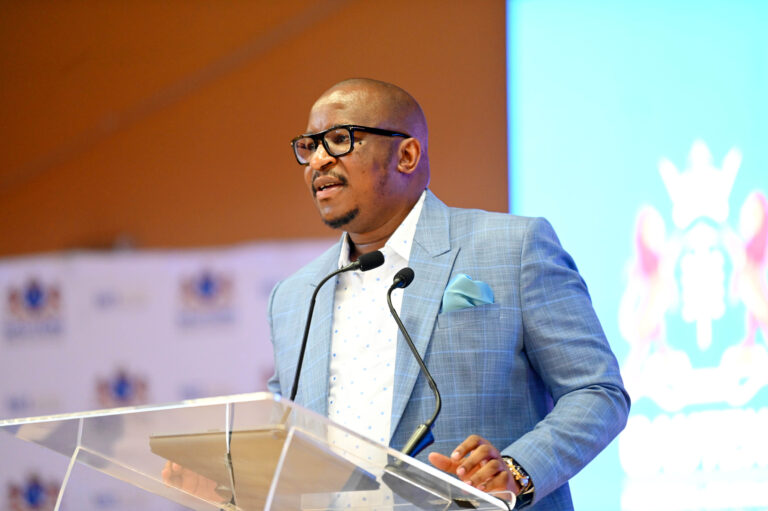
GAUTENG MEC for Education Matome Chiloane has expressed ‘shock and disbelief’ after a Grade 11 girl learner from the Protea Glen Secondary School in Soweto died during a horror car accident on Monday.
“We are dismayed by the news of a tragic incident which has taken the life of one of our learners. We wish to extend our sincerest condolences to the learner’s family for their loss. We also wish those learners who were injured by the accident a speedy recovery,” said Chiloane.
The accident occurred on Monday morning on the R599 Randfontein Road in Protea Glen, Soweto, when the driver of a private scholar transport, a Toyota Condor, which was transporting 14 learners from the Protea Glen Secondary School, lost control of the car and overturned.
“It is alleged that the scholar transport driver lost control of the vehicle after the car ahead was seen to be taking a turn but decided to continue [straight]. This caused the scholar transport to overturn,” Gauteng Department of Education spokesperson, Steve Mabona, told reporters on Monday.
“Unfortunately, this accident resulted in the death of a Grade 11 girl learner. Of the other learners who were onboard, three were in a critical condition while 10 sustained injuries. All these learners were transported to different medical facilities.”
Mabona said the GDE earlier dispatched a Psycho-Social Support Team to the scene of the accident where the team members met and offered counselling to the family of the deceased learner and other ‘traumatized’ learners.
“They [Psycho-Social Support Team] extended their support to the family and managed to schedule counselling sessions with them before proceeding to different schools to further assist those who have been left traumatised by the incident,” Mabona added.
DATA from the latest Background Report for the 2030 Reading Panel has found that most children entering grade 2 do not know the alphabet, while 82% of fourth graders cannot read for meaning – among other disturbing results.
According to GroundUp, the report found that nothing short of a sustained countrywide overhaul of the education system could lead to the ultimate goal of all children over the age of ten being able to read for meaning by 2030.
The 2030 Reading Panel is a group of leaders and researchers convened by former Deputy President Phumzile Mlambo-Ngcuka that looks to guide education in South Africa.
Extrapolating from Western Cape data, the report estimated that the share of grade 4 children that cannot read for meaning has increased to at least 82%, from 78% recorded in 2016.
The report found that about 60% of children have not learned most of the letters of the alphabet by the end of grade one, citing data from the Department of Basic Education (DBE) Early Grade Reading Study (EGRS), which has followed children from over 200 schools for more than seven years in the North West province.
By the end of Grade 2, over 30% still don’t know all the alphabet letters. The report also found that these children are “perpetually behind and in ‘catch-up’ mode, although they never actually catch up”.
Little is being done in the country to ensure that literacy is prioritised, the researchers said.
Nationally, the DBE is not giving the reading for meaning crisis-specific attention, said GroundUp.
Despite claims to the contrary from the DBE, the report found that there is no National Reading Plan and that the most recent “National Reading Strategy” was published in 2008.
In the 2022 Education Budget Vote, the budget specifically allocated for reading is R11 million to the Early Grade Reading Assessment. This targets 18 schools. The DBE only managed to reach nine schools, it reported.
Teacher shortage
Adding to the problems is the fact that South Africa faces a looming teacher crisis.
Half of all teachers are above the age of 50 and are set to retire soon, affecting teaching and learning in South Africa, the researchers noted.
According to the latest data, since 2016, universities have increased teacher supply, but provinces have not increased hiring, leading to larger class sizes.
Paul Esterhuizen, the chief executive of education NGO School Days, said that the department of education is not hiring an adequate number of teachers to replace the workforce.
He added that government needs to make it far more attractive for younger people – one way of doing so is by revising the occupation’s salary.
The report said that: “Despite younger teachers having lower salaries than older teachers, the retirement wave is unlikely to lead to large cost-savings on salaries due to a change in 2019 where teachers earn 1.5% more per year instead of the previous 1% more per year.”
“In early 2022, it was expected that replacing older (more expensive) teachers with younger (less expensive) teachers would lead to an overall cost-saving. This is no longer the case.
“Modelling at the end of 2022 shows that the average 2.9% decline in the cost of senior teachers is completely offset by the overall increase for teachers as a whole of 1.8%,” noted the report.
WITH the New Mexico legislative session in full swing, there is a lot of talk going around regarding how to improve our educational outcomes. There are a variety of bills – House Bills 130 and 194 to name two – seeking to address this, but for the most part, they are assuming that simply adding more time – minutes, hours or days – to the school year will lead to the hoped-for results.
Instead, why not implement what teachers know will improve student learning and put money into these areas that will have a direct, measurable and positive effect on the students and families of New Mexico? Last month, I was at the Roundhouse twice and could see there is much effort going into the writing of these bills. In conversations with my fellow teachers, though, we quickly came up with many alternative solutions. If even just a few of them are undertaken, we will see results. I am asking for money to be put into these areas, rather than simply adding time:
• Reduce classroom sizes. Small class size has been proven to be the most successful way to address learning challenges and for overall student success.
• Bring back K-5 Plus that is voluntary so that teachers who want to teach during the summer can, and those who prefer not to aren’t forced to. Many parents have mentioned they will simply not bring their students those last two weeks if we just add more days to the school year.
• Allow for individual districts to continue to offer enticing summer month-long camps in a variety of subject/interest areas such as STEAM. Also continue the Newcomers Program as an enriching opportunity.
• Create a “Parent Academy” at some/all schools to help parents better support their students.
• Create community partnerships with existing kids’ camps to offer opportunities to those receiving special education services. This would allow them to access experiences they would not otherwise be able to offer and challenge the community to find creative ways for kids of a variety of abilities to participate.
• Provide more educational assistants in classrooms to allow teachers to provide more individualized support during regular class times, assist in classroom management, and be able to act as substitutes when teachers need to be absent so other teachers and administrators can do their own jobs instead of getting pulled into classes to sub, and pay these EAs a livable wage for their important work.
• Have in-service days built into the schedule where teachers can attend relevant professional development, have opportunities to visit other schools and talk with colleagues from around the district.
• Provide teachers with subs so they can observe in other schools/classrooms, thus gaining valuable insights and ideas to apply in their classrooms.
• Continue to offer affordable, quality child care to families throughout New Mexico.
• Address the need for legislation on excessive absences; currently students are promoted no matter how many absences they have.
Teachers have rarely had a voice in addressing educational issues. This needs to change.
Jennifer Warren teaches first grade at Nina Otero Community School in Santa Fe.
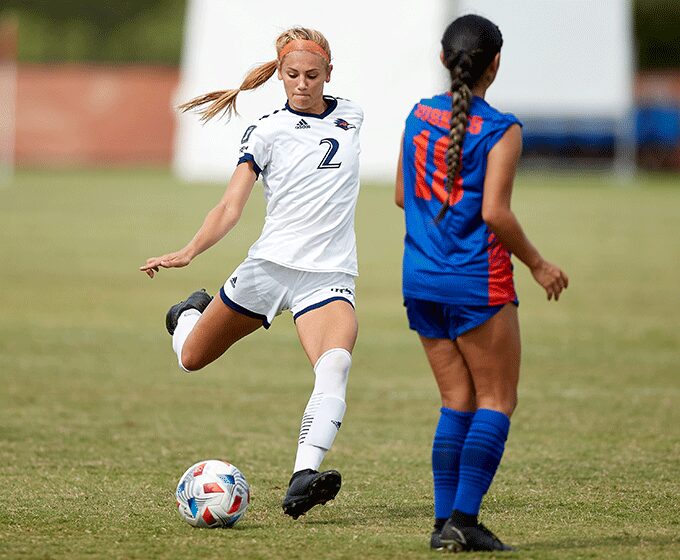
UTSA kinesiology major Kendall Kloza was born and raised in San Antonio in an athletic family. Her mother retired from a 30-year career teaching dance and her father serves as the head football coach at Robert E. Lee High School. From gymnastics and dance to volleyball and basketball, Kloza has been involved in sports from the moment she took her first steps. Today, she is one of the top soccer players at UTSA and a competitive Valero Alamo Bowl Community Partners Scholarship recipient.
Originally a student-athlete at a university in Virginia, Kloza felt something was missing. During a visit to UTSA, she fell in love with the community and the positive team culture in the athletics department—a missing part of her experience on the East Coast—and decided to transfer and move back to San Antonio. Now in her fourth year as a Roadrunner, Kloza’s supportive coaches and teammates continue affirming that she made the right decision when she returned home to Texas.
“All of the coaches here have made me the player that I am today and the person I am today, and I mean that whole heartedly. I am so glad I chose to come back to San Antonio for UTSA,” Kloza said.
Highly involved in campus life, Kloza has been a recruiting assistant for Roadrunners Football for the past two years. In this role, she accompanies prospective student-athletes on campus tours to answer any questions they have and spends time with their families downtown to make their visits to the city more comfortable and comprehensive.
She also leads the university’s Fellowship of Christian Athletes, where she attends weekly leadership meetings and conducts Bible studies in community meetings with other members on the soccer team.
Her extracurricular activities and excellent athletic and academic performance earned her the Valero Bowl Community Partners Scholarship, which is allowing her to continue working hard without the burden of financial stress.
“My scholarship has given me so much peace of mind. First of all, to receive a scholarship at a Division I university really acknowledges all of the hard work I’ve put in over the years. It also shows me that I’ll be taken care of while getting a full UTSA college experience without financial stress,” Kloza said.
Kloza is dedicated to helping people grow in their fitness, personal and spiritual goals and plans to continue on this path after graduating this fall. She spent this past summer interning at a family-owned gym in San Antonio, LivingStone Athletics, where she enjoyed coaching CrossFit. Her experience opened her eyes to the idea of professional coaching and the possibility of opening up her own gym after receiving her degree.
“I really want to say thank you to those that invest in us students. I hope they realize how much scholarships help us and how much easier they make the lives of all student-athletes. Their support opens up doors of endless opportunities.”
GLOBAL chemicals and energy company Sasol and independent statutory body the National Research Foundation (NRF) have established and awarded four jointly-funded South African research chairs.
A competitive call was launched during 2022 for two chairs that considered the critical areas of research investment in energy and power systems modelling, and green hydrogen.
Informed by the “excellence” of the proposals submitted, it was agreed that two additional chairs would be funded.
This total joint investment of more than R40-million over the next five years is expected to significantly increase the capacity and capability of South Africa in just energy transitions.
In addition, and considering the specialist areas of skills necessary, six fellowships have been awarded as part of the bespoke joint Postdoctoral Innovation Fellowships Programme.
These awards are expected to stimulate and accelerate joint academia-industry research in clean and sustainable energy and contribute to South Africa’s transition towards sustainable clean energy.
AWARDS
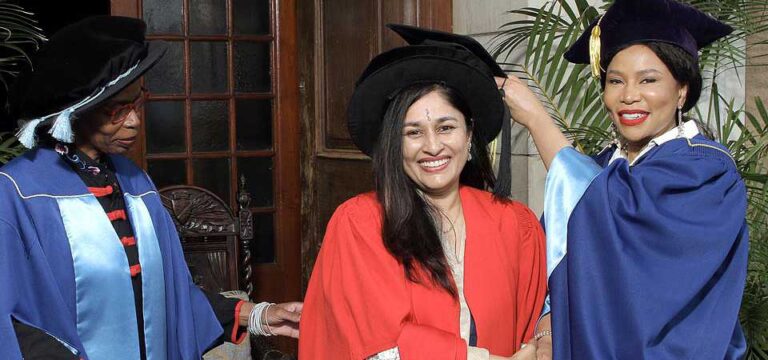
Two Sasol-NRF Research Chairs in Energy and Power Systems Modelling have been awarded to Professor Ramesh Bansal from the University of Pretoria (UP) and Professor Sunetra Chowdhury from the University of Cape Town (UCT).
Two Sasol-NRF Research Chairs in Green Hydrogen have been awarded to Professor Tien-Chien Jen from the University of Johannesburg (UJ) and Professor Prathieka Naidoo from Stellenbosch University.
Meanwhile, six postdoctoral innovation programme fellowships have been awarded and focus on research in the areas of green hydrogen, energy storage, waste utilisation towards a circular economy, in-situ characterisation of catalysts, and Fischer-Tropsch catalysis for power-to-liquids applications.
The successful applicants are from UJ, UP, UCT, the University of the Witwatersrand, the Durban University of Technology and North-West University. The two-year fellowships will include dedicated research time at Sasol’s research facilities in Sasolburg.
The growing partnership between Sasol and the NRF is posited to play a key role in the acceleration of the co-creation of knowledge for impact and skills development, and to address the critical energy challenges, showcasing the value of effective partnership within the innovation ecosystem.
These programmes are said to further advance the strong partnership among Sasol, the Sasol Foundation and the NRF that has supported 400 students and researchers from academic and research performing institutions in South Africa.
THE Commission for Gender Equality (CGE) is to visit schools throughout the country, to monitor and ensure equitable access to education for children of all social classes.
CGE commissioners and staff will visit a sample of eight schools and four Early Childhood Development Centres (ECD) in the Free State, Gauteng, Mpumalanga and Western Cape provinces to monitor learning conditions and ensure free access to education.
The monitoring campaign, which kicks off this month and continues in March, will put a special focus on the following issues:
• School nutrition programmes. • Learner populations in classrooms. • Availability and quality of learning/teaching resources. • School hygiene sanitation and female learners’ menstrual health • Educator knowledge and awareness of the Policy Framework for the Prevention and Management of Learner Pregnancy Management of pregnancies and sexual abuse. • Promotion of dignity and provisions for learners with disabilities.
In line with accountability and transparency, the CGE will engage with the Department of Basic Education (DBE), Provincial Departments of Education and the Portfolio Committee on Education in Parliament about the findings and recommendations.
The Commission for Gender Equality will also hold a media launch to share its findings and recommendations with key stakeholders and interested parties in the education sector.
THE daily headlines from South Africa are largely gloomy. The country’s government seems unable to address a years-long electricity crisis that is steadily worsening. Unemployment is high. Food prices are climbing.
But there are pockets of excellence – like stories of social entrepreneurship, an approach that uses business principles to create positive social and environmental impact. It involves identifying social problems using entrepreneurial principles to develop, fund, and implement solutions.
Though entrepreneurship of any kind is not easy, it can instil incredible tenacity in the face of adversity. There are lessons here. For the past seven years I’ve sought to help trainee teachers harness those lessons by introducing them to the concept of social entrepreneurship.
To do so, I start with “Who Cares?”, a documentary by Brazilian filmmaker Mara Mourão. It’s about social entrepreneurs from seven countries who discover new and innovative ways to solve some of society’s most pressing matters. They do so while working with few resources and catering to fundamental human needs that governments, particularly in the global south, cannot provide.
I use this film in my classes to assist future teachers in understanding how global problems influence countries and to encourage students to think critically and imaginatively about ways to help lessen inequality in their communities.
This is critical for teachers. Many of the students who graduate from our programme will go on to work in disadvantaged communities where social entrepreneurship could create real change. It could also give pupils a chance to explore how they might pursue social entrepreneurship as a career.
How it started
The major aim of existing school and university curricula is to prepare students for higher education and to acquire a degree and subsequently work for a company. The emphasis is on improving people’s own lives rather than thinking about how to assist the communities in which they reside. By teaching my students about social entrepreneurship, I offer them a practical way to enact social justice. This is the notion that everyone should have equal rights and opportunities in society’s social, economic, and political spheres.
In 2016, I set out to study whether a group of 43 future teachers could grasp and apply the concept of social entrepreneurship. I was drawn to social entrepreneurship education because it often incorporates hands-on, experiential learning, which may be more interesting and beneficial for students than traditional classroom instruction. This was appealing: it would allow me to see the effect of my teaching on real-world issues.
Mourão’s 2013 documentary delves into the lives of social entrepreneurs such as Nobel Prize winner Muhammad Yunus of Bangladesh, as well as others from Brazil, Peru, Tanzania, Canada, Germany, Switzerland and the United States, whose socially beneficial ventures have significantly and positively affected certain communities.
Prior to seeing the documentary, hardly any of the students understood what social entrepreneurship was. Some students saw a clear connection between it and corporate social responsibility. The latter, though, is more concerned with the financial and social aims of increasing a company’s competitiveness than with improving people’s lives.
Subsequent cohorts of trainee teachers have also not initially grasped the concept of social entrepreneurship. The rigid South African school curriculum appears to be the root cause of this conceptual gap. Most young people are not given the chance at school to think critically and creatively, and the curriculum doesn’t offer enough opportunities for students to learn about or implement social entrepreneurship.
Towards establishing a community
The film, both for the initial cohort whose reactions I documented in a research paper, and for those who have followed, seemed to spark the students’ curiosity. It also showed them that seemingly small projects can count as entrepreneurship. Creating a vegetable garden at school is a way to teach learners the necessary skills and knowledge to be self-sufficient and aware of economic and environmental sustainability.
But what would this look like in practice?
To find out, the 2016 cohort and I identified a historically underprivileged high school in Cape Town where we hoped to help develop various sorts of social innovation and entrepreneurship.
Then we discovered that the school was already involved in a community engagement project through an annual market day. The proceeds were used to host an annual awareness campaign aimed at recognising, appreciating, and honouring the contributions of elderly South African citizens in the community.
Rather than starting something new, the trainee teachers worked with pupils taking part in the market day to help build their social ventures. This involved applying what they learned from “Who Cares?” to develop business plans.
And they learned about another important aspect of social entrepreneurship: listening to communities rather than assuming they know how to solve existing problems. Communities can enlighten universities about what needs to happen, what is already being done, and what collaboration might look like, as seen in the example of the school above.
(Zayd Waghid, Associate professor, Cape Peninsula University of Technology)
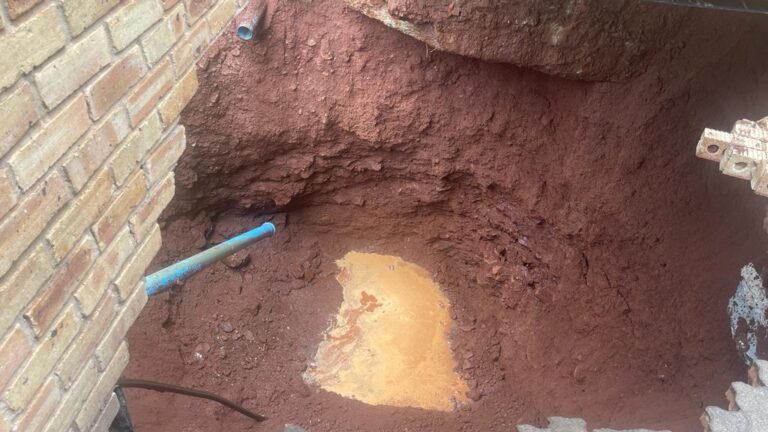
Gauteng Department of Education urged to urgently send engineers to Relebogile High School in Khutsong, where a large sinkhole has emerged, said DA Gauteng Shadow MEC for Education Khume Ramulifho.
The sinkhole at the Relebogile High School in the West Rand has affected the toilets and left holes in certain parts of the building.
”The DA is urging the department to send engineers to assess whether it is safe for our learners and teachers to continue using the school. This must also include the disaster management team to ensure that all necessary precautions are put in place,” Ramulifho said.
Ramulifho said should it be found that it is unsafe to use the school or parts of the school, the department must urgently ensure that learners and teachers are relocated to a safe place where learning and teaching can take place without any further interruption.
Khutsong is known for having sinkholes, which become more prevalent after heavy rains.
”The DA will be following up with the department on this issue. All our learners deserve to be taught in a safe environment that is conducive to learning and teaching,” Ramulifho added.
In 2011, a study by the department of education in Gauteng revealed that 153 schools were in high-risk dolomitic areas. A total of 500 schools in the province were built on dolomite.
In the Gauteng province in general, about 38 people have lost their lives so far as a result of sink holes.
K and K Media Group has announced the appointment of seasoned journalist Edwin Naidu as editor of the company’s flagship publication- Inside Education, with effect from February 2023.
Naidu is an experienced communicator in financial services and worked with some of South Africa’s best-known media publications. He replaces Veteran journalist Phindile Xaba, who lost her battle with cancer in May last year.
A former editor of the Teacher Newspaper, previously owned by the Mail & Guardian, Naidu has written extensively on education since 1992, for different publications including the Sunday Independent, Mail & Guardian and University World News.
A former night news editor of the Star newspaper, Naidu has a media degree in journalism and media studies from Wits University and has been on scholarships to Oxford and World Press Institute in the US.
He has written extensively on transformation, gender, climate change, and energy happenings on the continent, including contributing to two books: Nelson Mandela Opus (the world’s largest book on Mandela) and 100 The Mandela Years.
In 2018, Naidu won the Mandy Roussow award for Great Idea in the Media Monitoring Africa lsu Elihle Awards. He also won 3rd prize for his three-part article highlighting the issue of malnutrition and its impact on children in South Africa and Africa.
Naidu is a finalist in the UN Women Gender Journalism Awards for a report in the Sunday Independent in 2021.
He is a past winner of the South African National Energy Award for best reporting, recipient of print story Gender education media awards, winner in the economics category: Gender Education Media Awards (2006), Second Runner in Higher Education Awards 2005, and a winner of the International Federation of Journalists’ Tolerance Prize for Peace, among other journalism accolades.
“Edwin Naidu is a respected and credible writer and voice on education in South Africa. We are proud to have him on board and look forward to his steward as we strive to make Inside Education an authoritative voice within the education space,” said Matuma Letsoalo, the executive chairman and founder of K and K Media, which owns Inside Education.
K and K Media also owns shares in the Teacher newspaper and two other digital publications- Inside Politics and Inside Metros.
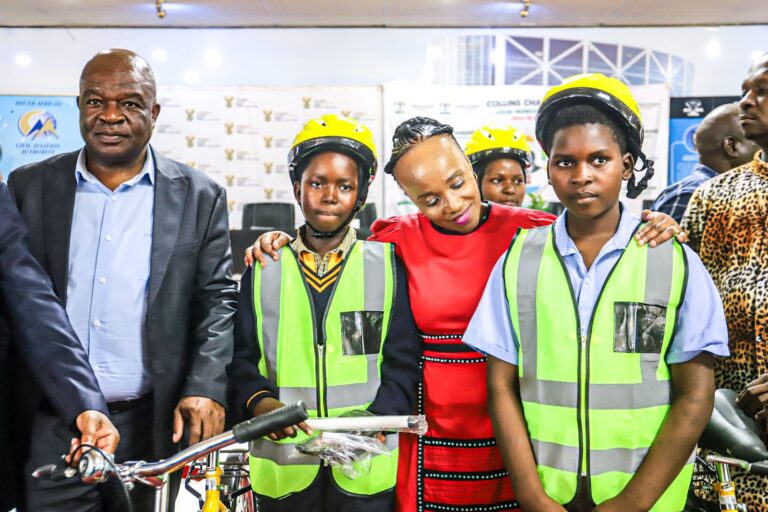
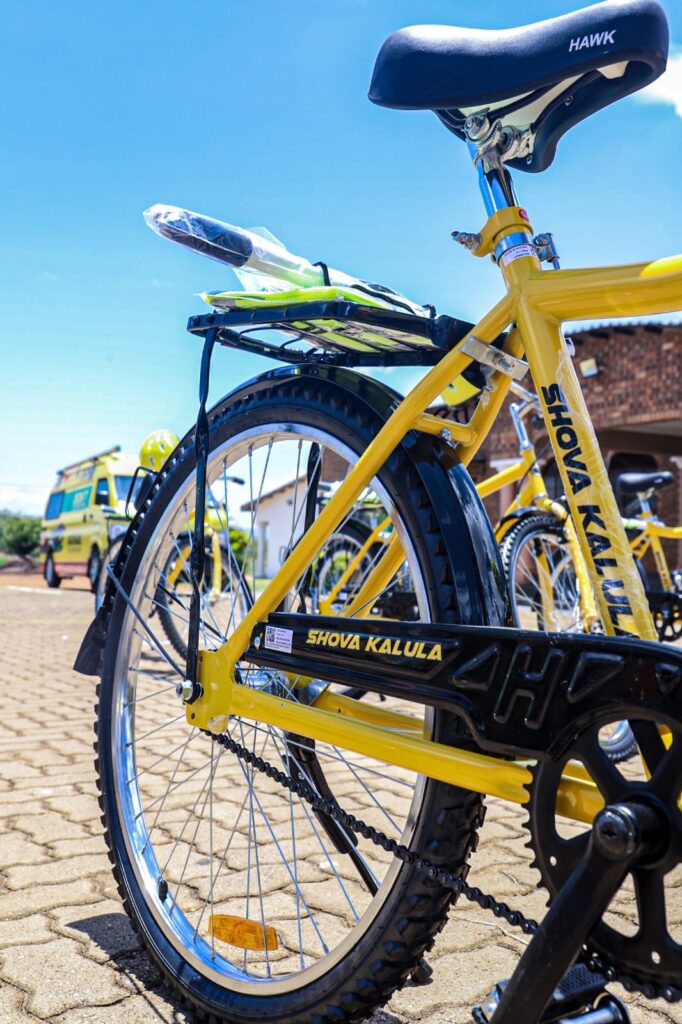
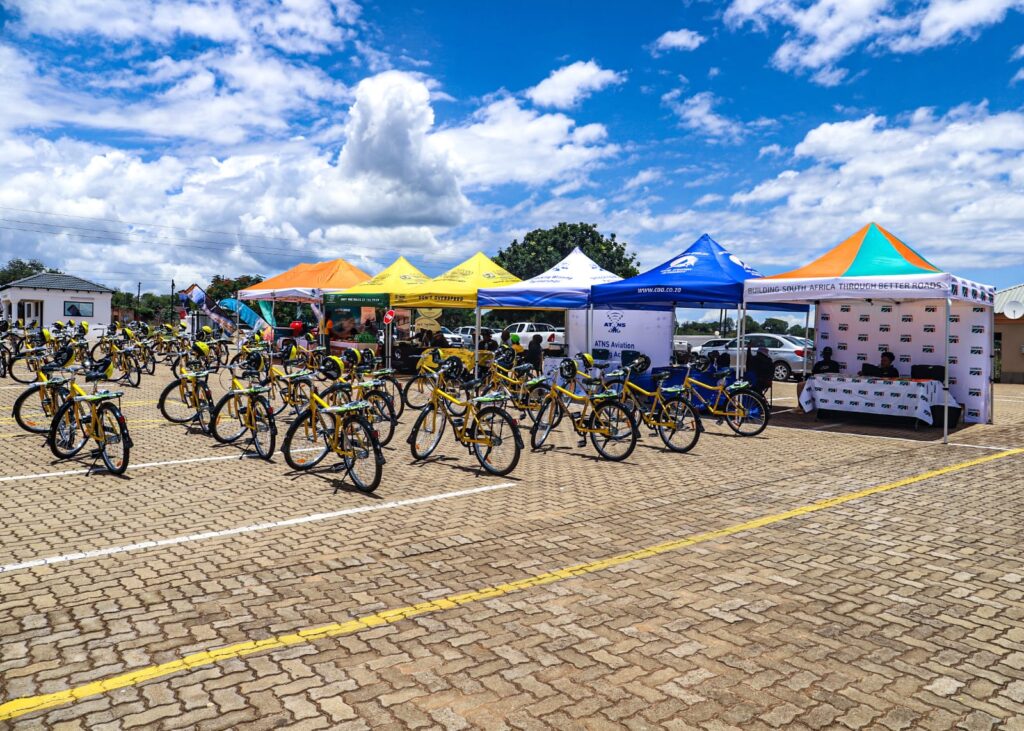
DEPUTY Minister of Transport Sindisiwe Chikunga has handed over 257 bicycles to deserving learners at the Shirelele and Hlalukweni Secondary Schoolsin Limpopo.
The event was part of a back-to-school campaign with the Limpopo Department of Education held at the Collins Chabane Local Municipality in Vhembe District on Monday.
The national Department of Transport has been providing low-cost mobility solutions to learners, through the Shova Kalula Bicycle programme since 2001.
The goal to provide one million bicycles to learners countrywide, who walk a distance of 3 kilometers or more to school.
Chikunga said in the current financial year, Limpopo province has a total of 69 005 learners that need transport.
”There are 257 learners in two schools that have been verified to receive bicycles in Shirelele Secondary School (107) and Hlalukweni Secondary School (150) today,” Chikunga told parents and learners.
The number of schools that have been identified in the Vhembe District is six (6), in four (4) municipalities.
The names of the schools included Shirelele Secondary School in Collins Chabane Local Municipality, Hlalukweni Secondary School in Collins Chabane Local Municipality, Maruluwe Secondary School in Musina Local Municipality, Mulenga Secondary Schools in Makhado Local Municipality and Rambuda Secondary School in Thulamela Local Municipality.
Chikunga implored all the beneficiaries to practice all that they have been taught during the safety induction and training as it is intended to empower them to stay safe on roads.
”We urge you to also put to good use the road safety kits that you have received such as your helmet and reflector vests,” Chikunga added.
She said encouraged learners and their families who are living in poverty to never give up despite challenges experienced everyday including the absence of transport money, the full school uniform and shoes.
”Please continue learning without barriers and we are here to give you your dignity back. So that you can walk tall towards your dreams,” Chikunga said.
She urged teachers to not only open the doors of learning for children, but to provide the conditions in which they can learn: ‘An enabling and safe environment between a teacher and a learner, you are the parents to these children. Teach them and protect them as you would to your own child. I wish you all the recipients a happy ride and to you all I wish you happy returns, may this be a good year for us all.”
Under non-motorized transport, the Department of transport has a bicycle distribution programme called Shova Kalula. The Shova Kalula Programme compliments the learner transport programme by focusing on learners who walk less than 5 km and walk more than 3 km to schools.
”I hope that they have imparted to you some important life-saving education on the rules of riding a bicycle on the road and that you will practice what you have learned from them. As part of being responsible road users, it is important that as we handover the bicycles to you, you are able to understand basic road safety education; and have the capability to ride a bicycle,” Chikunga told learner.
The Shova Kalula bicycle programme is an initiative of the Department of Transport.
The Department has so far distributed over 100 000 bicycles to learners in all provinces since the inception of the project.
The objective of the programme is to promote cycling and provide for a low-cost mobility solution, which shall enhance rural accessibility and urban mobility to enable the poor communities to participate in socio- economic opportunities, including schooling.
Travel times of learners to schools are significantly reduced which has positive effect in the academic performance and school attendance.
The Shova Kalula National Bicycle project was introduced as a pilot project in 2001 in order to improve mobility and access to basic needs.
The programme aims to alleviate transport pressure on poor households and ensure access to public transport.
The National Department of Transport and provincial departments are implementing the project and the National Department is responsible for the overall performance and coordination of the project, procurement and delivery of bicycles at the national level.
On the other hand, provinces are also required to procure and distribute bicycles to support the project, identify beneficiaries in consultation with the Department of Basic Education and assist with cycling safety education awareness at selected schools.
The project aims to support the Department’s National Learner Transport Policy, Rural Transport Strategy and the promotion of Non-Motorised Transport to access basic services and opportunities.
Provincial Departments of Transport and Education undertake the identification and selection of beneficiaries for bicycles in accordance with the following approved criteria in which learners must:
Walk more than three (3) kilometres as a single trip to the school; Be between Grade 3 and Grade 12; Be able to understand basic road safety education; and Have the capability to ride a bicycle.
In the province of Limpopo, the programme is managed and implemented by the Department of Education in collaboration with the provincial Department of Transport.
The policy provides for the provision of learner transport through motorized (buses/taxis) and non-motorized transport (bicycles and walking).
This is meant to ensure that the department complements the existing learner transport programme in provinces, as there are learners who still walk more than 5km to schools.
She said while the department understands the importance of easing mobility through this programme, ”we are aware that much must still be done to ensure the safety of riders to and from schools.”
Road Safety Education, Awareness and Training will be provided to the beneficiaries of the bicycles to ensure that learners have a full understanding of the road safety issues when riding the bicycles.
The Provincial Department of Transport in collaboration with the National Department of Transport has and will continue conducting the training. Dignitaries included executive mayor of Vhembe District Municipality Nengunda Dowelani, executive mayor of Collins Chabane Local Municipality Shadrack Maluleke, and some traditional leaders present.
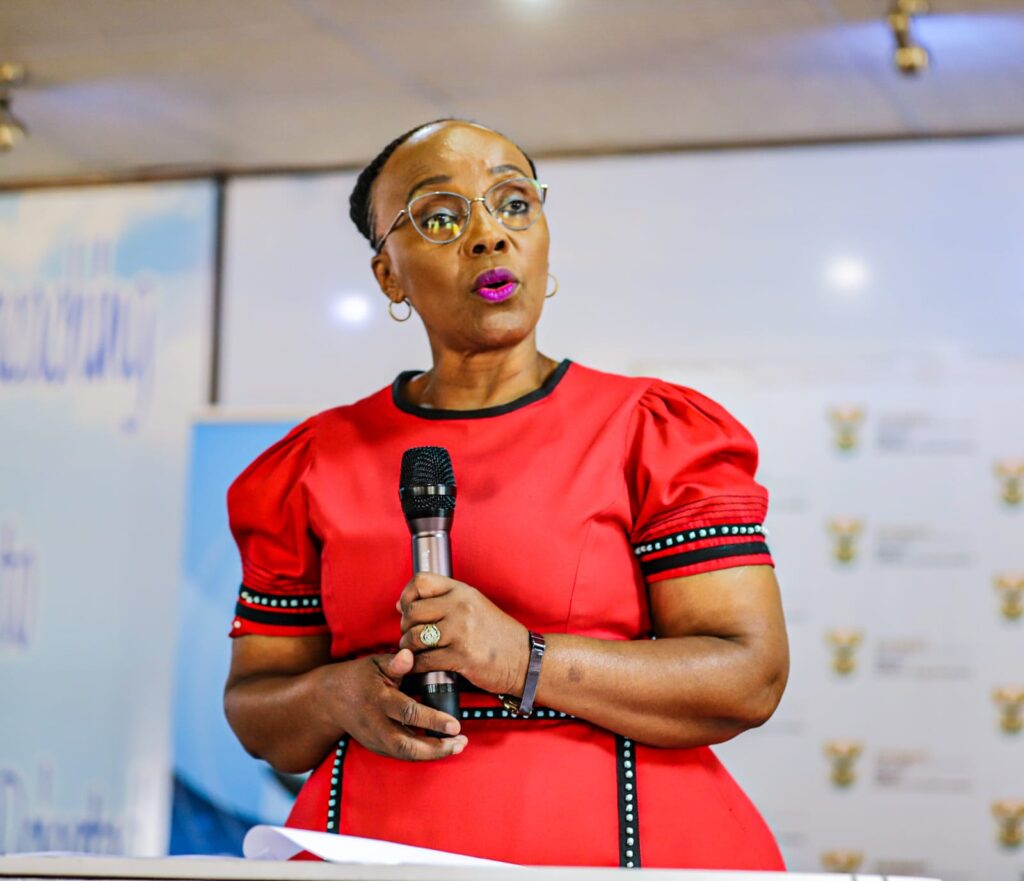
Transport deputy minister Sindiswa Chikunga. PHOTO: SUPPLIED