Home Blog Page 230

Gauteng Education places more Grade 1 and 8 learners

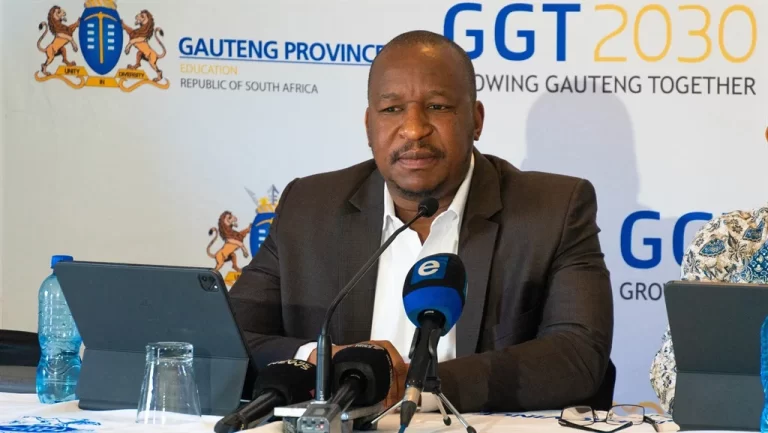
The Gauteng Education MEC Matome Chiloane says his department has a total of 571 Grade 1 and Grade 8 learners – whose parents and guardians submitted complete applications on the Online Admissions system – remain to be placed. This translates to 97 Grade 1 learners and 474 Grade 8 learners who departmental officials are working towards placing.

On Tuesday, Chiloane reveled that 1 394 have not been placed.

This simply means that the 2023 Online Admissions system has facilitated the placement of over 291 574 Grade 1 and Grade 8 learners (Grade 1: 139 367 and Grade 8: 152 207) to date, spokesperson Steve Mabona said.

Accordingly, the department said, placement challenges within identified high-pressure areas – where certain schools received a much higher number of applications than the number of learners they can accommodate – are being attended to through a variety of interventions which will ensure that all learners are placed.

In order to alleviate capacity pressure, the GDE is building satellite schools in high-pressure areas. These are schools which are an extension of certain high-pressure schools, but are built on a different site or geographical area not far from the main school. 

In Johannesburg West, the department says it has already built a satellite school for Florida High School, meaning that we will continue to place learners at that school.

The same applies for Tshwane West, where two satellite schools are currently under construction, Theresapark Primary School No. 2 and Theresapark Secondary School.

In Ekurhuleni, especially in Kempton Park, high-pressure schools will use specialist rooms for teaching, and these have helped significantly to increase capacity. 

Olifantsfontein Primary School will be assisted with the delivery of more mobile classrooms to accommodate all unplaced learners at that school. 

Parents who seek to apply for inner grades outside of Grade 1 and Grade 8 are encouraged to visit their nearest GDE District Office after our 10 Day Headcount on 24 January 2023.

“This will put our Districts in a better position to give parents the necessary assistance they need for placement as available spaces at schools would have been determined at that stage,” Chiloane said.

In addition, the GDE has commissioned principals at schools to develop catch-up programmes to accommodate learners who were unplaced during the start of the 2023 academic year.

“Our team is working around the clock to ensure that all learners are placed. We appeal with all parents and guardians to allow these processes to take place as they will result in the successful placement of their children. We profusely apologise for the inconvenience caused and we extend our best wishes to all learners and teachers for the 2023 academic year,” said MEC Chiloane.

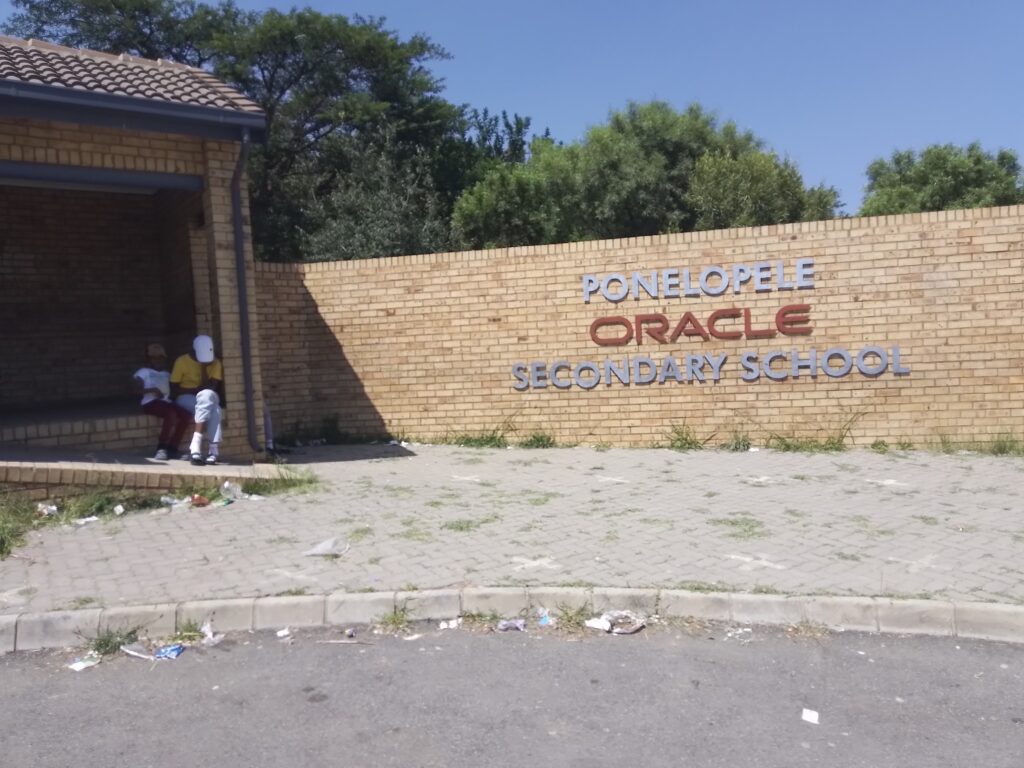
READ: Angry parents urge MEC to intervene amid a standoff with principal of Ponelopele Oracle Secondary School in Midrand

INSIDE EDUCATION

Gender equality in STEM can support a sustainable economy. Here’s how

EBRU OZDEMIR

WE live in a rapidly changing world where vast technological advancements are announced almost daily. The so-called fourth industrial revolution is characterised by extraordinary technology and a digital transition.

There is a rapid merging of the physical, digital and biological worlds. While this is a time of great opportunity and excitement for the future, we must ensure that we are moving forward in an integrated and inclusive way. Women must be at the forefront of this revolution and an emphasis on equality is necessary for success of this revolution.

As we take steps towards our future, it is clear our economy is set to be dominated by STEM industries at the heart of technology advancements, such as engineering and computer science. Moreover, these industries are projected to foster the fastest growth and highest paid jobs of the future. Research has found that a typical STEM worker already earns over double the amount of a non-STEM worker, and this trend is only set to continue.

Closing the gender gap

Therefore, as we move forward with STEM industries leading the way, we must ensure that women and girls are no longer a minority, but instead widely represented at all levels. Eliminating stereotypical prejudices in engineering and supporting young girls who wish to study and work in STEM fields is more urgent than ever before. In the EU, there remains a substantial gender gap as only around 19% of ICT specialists and one-third of STEM graduates are women.

Globally, it is estimated that only 20% of engineering graduates are women, and women of colour still comprise less than 2% of all engineering professionals. The lack of representation spans across all levels, but women are particularly underrepresented in leadership: in technology women comprise about 24% of leadership roles and in infrastructure it is as low as 16%. These statistics are just not good enough and we must seize the momentum of the technological revolution to also revolutionise women’s positions in STEM.

STEM role models for women

To encourage the next generation of women to enter into STEM fields, they must be presented with role models who they can look up to for inspiration and they must be provided with all the tools needed to succeed in their chosen endeavours. Women are no less capable than men in science, technology, engineering, or maths but external factors are leading to women being excluded and a reinforced gender gap.

Influences such as gender stereotypes held by families or communities on the competence of girls in STEM, a lack of role models, and cultural factors all contribute to a reduced number of women gaining a STEM education or work. It is therefore important that when supporting girls into STEM we don’t just focus on the students themselves but consider their environment, culture, and background.

STEM education programmes for women

This is the exact aim of Global Engineer Girls (GEG), which has just recently launched in Kosovo and North Macedonia. The GEG is helping to tackle the tide of inaction, inequality, and stigma. It’s a global project, now operating in four countries, that educates, enables and empowers women to explore careers in STEM. While the programme focuses on supporting girls to obtain a STEM education, as well as career mentoring, GEG also works to tackle bias among girls’ families and communities. Without tackling bias and removing stigma surrounding women in STEM, progress will be slow.

There are numerous programmes like GEG that are doing vital work to make significant changes. GirlHype is another such an organization that aims to empower girls and youth in ICT in South Africa. Similarly, Girls Who Code, are working to close the gender gap in entry-level tech jobs by 2030 in the US, Canada, UK and India. Initiatives such as these are essential to empowering girls into STEM and ending gendered bias in the industry.

What more can be done to promote STEM?

Meanwhile, employers in STEM businesses should strive to attract and retain women to increase diversity. While this offers other women and girls essential role models to demonstrate that STEM subjects are inclusive and attainable, it also has wider benefits. Diversity of people brings with it diversity of thought and experience which are critical to innovation, creativity, good decision-making and ultimately profitability. Research shows that diverse teams are better at making decisions 87% of the time and diverse workforces of a company are 70% more likely to capture more markets which in turn drives profits.

Progress on women in STEM thus far has been slow and has not achieved nearly enough. Now is the chance to capitalise upon this technological revolution and drive forward our societies together, leaving no one behind. The world needs greater commitment and action on gender equality targets. The brilliant work of organizations like GEG or Girls Who Code are conducting ground-breaking work, but these initiatives cannot change the world alone. We must invest in and promote gender equality in business, government, legislation and culture for a sustainable, inclusive and future-proof economy.

WEFFORUM

Angry parents urge MEC to intervene amid a standoff with principal of Ponelopele Oracle Secondary School in Midrand

PHUTI MOSOMANE

THE first day of the 2023 academic year for grade 8 learners in Ponelopele Oracle Secondary school, in Midrand Gauteng were characterised by tensions between school principal and some parents. 

The school has capacity to enrol 900 with only 24 classrooms which takes in between 35 to 40 learners but has already enrolled 1484 learners admitted in the school. 

Through the Online Admissions system, the school has accepted 209 new Grade 8 learners, and the Department of Basic Education through the district has transferred additional 136 learners who have applied on time and met all requirements. 

On the first day of schools reopening on Wednesday, there were no signs of mobile classrooms or a plan in place by the school to cater the 136 learners who received SMS notifications last year December that they have been “successfully placed through transfer”. 

The principal of the school addressed angry parents who went to school on Monday and were told to return on Wednesday for updates on learners who were transferred by the department. 

But on Wednesday, parents were frustrated because there was new information except that the school now has a bigger number of learners who were told to come to the school. 

“My experience has been a nightmare since Monday. I registered my child last year and I got an SMS that said my child was accepted into the school. To my surprise on Monday when I got here I was told she is not accepted but placed through a transfer. I have siblings, and I was told to go to the police station to certify documents which I did,” a parent Comfort Makhadi, reveled to Inside Education.

Makhadi said as a parent, she is upset because the principal instead of giving feedback he told them that there is no space and only today he was going to call the department of education. 

“The principal said to us, being placed through transfer means there is no space in the school, but I have already bought the uniform and stationery because the SMS said my child has been successfully placed through parent transfer,” she said, adding that this is the only school she was offered despite applying to multiple schools. 

Makhadi said she applied on time and is hopeful that the department of education will assist the school in making more spaces available. 

Another parent Jabulani Mbese told Inside Education that he came to the school as soon as he received an SMS last confirming placement to verify and I was told that my child was placed through transfer. 

Mbese: “I was told to bring a school report and go buy a uniform which I did. I was disappointed when I heard the principal saying that he will not take learners placed through transfer. How possible is it that the district would transfer our kids to his school, and he is telling us he can’t take them?” 

Mbese urged the department to change the system because every year parents go through the same challenges. 

Roots of confusion 

Some parents are saying the online system has always worked, the issue lies in the messaging from the auto generated ”offer status”.

The school has taken in learners whose parents received a message that said ”accepted as final” and not those who received a message that said ”your learner has been placed through parent transfer”. 

In simple terms, “the ‘offer status’ that said ‘accepted as final’ meant that the placements were made within the school capacity, and those placed through ‘parent transfer’ represents a decision of the department irrespective of whether there is a space or not- hence there are problems,” one educator who preferred not to be name tells me. 

During the COVID-19 period, the school enrolled 1449 learners because the rotational system made it possible to accommodate more. 

MEC Matome Chiloane said townships are the backbone of the public education system in the Gauteng province but the growing number of overcrowded classes means educators will not be able to give each student equal attention. 

SADTU secretariat officer Xolani Fakude said the trade union has been getting reports about the Online admission system. 

“We are getting reports of admission challenges especially in provinces where an online system is used. The intention may have been good in terms of increasing accessibility. However, the very same method is beginning to be an inhibitor of sorts. We are receiving reports of learners who have not been placed,” Fakude said. 

The teacher unions said they want to see teaching and learning on the first day of schooling but there are “overcrowded classrooms and mobile classrooms that must still be put in some schools in Gauteng.” 

Fakude urged the department of education in Gauteng to have a resource plan in place in an effort to solve growing challenges of infrastructure. 

Department of education has not responded to questions by the time of publishing this article.

INSIDE EDUCATION

Department to pay UIF benefits to former Assistant Teachers

THE Unemployment Insurance Fund (UIF), an entity of the Department of Employment and Labour, has finally resumed processing and paying UIF benefits to former teaching and general assistants in the KwaZulu-Natal Province.                           

The campaign started in the Amajuba District Municipality area in November 2022 where the Fund disbursed R7,7 million to 1746 former Educator Assistants and General Assistants. 

“The campaign subsequently proceeded to eThekwini in December 2022 where the Fund paid out R28,8 million to 6204 beneficiaries. To date, R36,5 million has been paid out to 7950 clients,” the department of labour said. 

As of 9 January until 20 January 2023, the fund will be processing and paying out claims in the Zululand District Municipality area as follows:

  • 9-10 January 2023: Nuwe Republiek Primary School Vryheid.
  • 11-12 January 2023: Masibumbane High School in Ulundi.
  • 13,16 & 17 January 2023: Bhekuzulu High School in Nongoma.
  • 18-19 January 2023: Pongola Akademie.
  • 20 January 2023: Paulpietersburg Primary School.

Beneficiaries were urged to bring along their Identity or valid Passport Documents, a fully charged Smartphone with data, and proof of account (banking details).

The former Educator Assistants were employed as part of the Presidential Youth Employment Initiative (PYEI), which was implemented as the Basic Education Employment Initiative (BEEI) across all nine provinces to reduce youth unemployment in the country.

When their contracts ended, the former employees qualified to claim unemployment insurance benefits from the UIF. 

Due to the large volume of claims anticipated and to prevent long queues at Labour Centres, the UIF team in KwaZulu-Natal says it has met with the Provincial Department of Education in Amajuba and agreed on a consolidated approach. 

“This included the Department availing venues while the fund confirms the compliance of the former workers in terms of their employment history, declarations, and contributions,” it said.

The department said it will also be rolling out the project to other parts of the province and will announce dates and details in due course through its social media platforms and the media.

-INSIDE EDUCATION 

Supreme Court seeks US government view on charter school’s skirt requirement

The U.S. Supreme Court asked President Joe Biden’s administration to weigh in on whether the justices should decide whether a publicly funded charter school in North Carolina may have violated the rights of female students – deemed “fragile vessels” by the school’s founder – by requiring girls to wear skirts.

The justices are considering whether to hear an appeal by Charter Day School, located in the southeastern North Carolina town of Leland and operated by a private educational management company, of a lower court’s ruling that found that the dress code ran afoul of the U.S. Constitution’s 14th Amendment guarantee of equal protection under the law.

The court, which has a 6-3 conservative majority, asked U.S. Solicitor General Elizabeth Prelogar to file a brief expressing the Biden administration’s view on the litigation and whether the Supreme Court should take up the matter.

Aaron Streett, a lawyer for the school, called the Supreme Court’s decision to seek the solicitor general’s input rather than reject its appeal a “positive sign” that “indicates that the court views this as an important case that may merit further review.”

Three female students, represented by the American Civil Liberties Union, filed a lawsuit that accused the school of violating their civil rights. The U.S. Justice Department earlier in the litigation filed a brief agreeing with the ACLU argument that the 14th Amendment applies to the school, which is state-chartered but privately run.

“Girls at Charter Day School have the same constitutional rights as their peers at other public schools – including the freedom to wear pants,” Ria Tabacco Mar, director of the ACLU’s Women’s Rights Project, said in a statement.

Charter Day School, which enrolls students from kindergarten through eighth grade, emphasizes “traditional values” and has implemented a dress code that its founder, businessman Baker Mitchell, has said would “preserve chivalry” and ensure that girls are treated “courteously and more gently than boys.”

Mitchell, as explained in the lower court’s ruling, viewed chivalry as “a code of conduct” under which women are “regarded as a fragile vessel that men are supposed to take care of and honor.”

Charter schools are publicly funded but operated separately from school boards run by local governments. They usually are independently run as stand-alone entities but also can be managed by for-profit companies or nonprofit organizations running multiple schools, as in this case.

The school’s lawyers said the 2022 ruling by the Richmond, Virginia-based 4th U.S. Circuit Court of Appeals posed an “existential threat” to a conservative-backed movement to increase alternatives for parents who want their children to receive public education by expanding the numbers of charter schools.

Charter Day School argued that the 14th Amendment does not apply to it because it is a private entity, not a “state actor” like public schools operated directly by North Carolina school districts. The 4th Circuit on a 10-6 vote decided that it was a “state actor” because North Carolina delegated to the school its duty to provide free, universal education to students.

The plaintiffs argued that the dress code not only violated the 14th Amendment but also subjected them to discrimination and denial of the full benefits of their education in violation of the civil rights law Title IX, which bars sex discrimination in education. The 4th Circuit agreed regarding the 14th Amendment but did not resolve the Title IX issue.

“Courts may not subjugate the constitutional rights of these public-school children to the facade of school choice,” wrote U.S. Circuit Judge Barbara Milano Keenan in a decision joined by her fellow Democratic appointees on the 4th Circuit.

The six dissenting votes on the 4th Circuit came from Republican-appointed judges including Judge J. Harvie Wilkinson, who said the school’s “chivalric approach should neither be legally banished from the educational system, nor should it be legally imposed.”

-REUTERS

#BacktoSchool2023: Motsekga, Lesufi to visit various Gauteng schools on Wednesday

PHUTI MOSOMANE 

BASIC Education Minister Angie Motshekga and Premier of Gauteng Panyaza Lesufi are expected to visit several schools in Gauteng to assess the state of readiness as learners return to the classroom for the 2023 academic programme.

“The minister will monitor schools in Gauteng as inland schools begin the 2023 academic year,” the national Department of Basic Education said in a statement on Tuesday.

Motshekga is expected to visit Cosmo City Primary School in Diepsloot, north of Johannesburg.

She will also pay a visit to Cosmo City Secondary School, Diepsloot Primary School as well as Sunrise Secondary School in the area.

Gauteng Premier, together with MEC for Education Matome Chiloane will lead also the school reopening programme to mark the start of the 2023 academic year. 

Lesufi and Chiloane will activate the Back-to-School campaign and officiate the handover of Mapenane Secondary School in Ga-Rankuwa, City of Tshwane. 

Both will also visit Omphile Community Creche in Garankuwa Zone 2, north of Pretoria.

The Office of the Premier has also revealed that other Members of the Executive Council (MECs) will participate in oversight visits at several schools across the province to observe the first day of teaching and learning and conduct oversight visits to Early Childhood Development Centres (ECDs) to gauge their preparedness.  

  • – MEC for Community Safety Faith Mazibuko will visit Masibambane Day Care and Silver Oaks Secondary School in Eldorado Park
  • – MEC for Finance Jacob Mamabolo will visit Tsakane ECD and Asser Maloka Secondary School in Nigel
  • – MEC for Health and Wellness Nomantu Nkomo-Ralehoko visits Laban Motlhabi Comprehensive in Springs
  • – MEC for Social Development and Social Development, Agriculture, Rural Mbali Hlophe will visit Katleho-Impumelelo Secondary School in Midvaal
  • – MEC for Economic Development, Environment, Agriculture & Rural Development Tasneem Motara will visit Soshanguve South Secondary School and MpheThuto ECD. 

Schools in the Free State, Gauteng, Mpumalanga  and North West provinces are also set to open for the new academic year on Wednesday.

INSIDE EDUCATION

1 394 Grade 1 and Grade 8 learners still to be placed in various Gauteng schools: Chiloane 

PHUTI MOSOMANE

GAUTENG Department of Education MEC Matome Chiloane says that just over a thousand learners in both Grade 1 and Grade 8 were still due to be placed in various schools across the province. 

“A total of 292 145 learners have applied, so far the department has managed to place 290 751, and 1 394 have not been placed, we have successfully placed 99.52% of the learners,” Chiloane said on Tuesday while addressing a media briefing on placements.

Of the total number of learners still to be placed, 236 have applied for Grade 1 and 1 158 for Grade 8. This translates into 0.48% of the total number of learners with no school. 

The GDE procured a total of 419 mobiles to address pressure of unplaced applications across the province.

The procurement of self-built classrooms is also used to increase placement capacity. 

“We continue to encourage schools to be part of the self-built programme. In high-pressure areas we are establishing satellite schools. There is a concerted effort to work with the sister departments to acquire more land to increase the number of schools in high pressure areas,” Chiloane said. 

In Ekurhuleni North District, 236 Grade 1 applicants remain unplaced in Olifantsfontein.

Chiloane said the school will receive three additional mobile units to increase the school capacity.

More mobile units will be accommodated on the grounds of a local church to accommodate the remaining unplaced Grade 1 applicants. 

Meanwhile, 501 Grade 8 applicants remain unplaced in the Kempton Park Area.

The schools will confirm the available spaces for further placement once applicants report to schools on day 1.

The department has requested the schools to use specialist rooms to accommodate learners.

In Tshwane West District, 223 Grade 8 applicants around Akasia/Theresa Park remain unplaced. The department is in the process of building a satellite high school to accommodate the remaining unplaced applicants. 

For Johannesburg West District there are 434 Grade 8 applicants still remaining to be placed in Roodepoort.

The MEC said the department is negotiating to occupy facilities used by Robinhood College in Maraisburg.

“But 10 Classrooms not in use will be cleaned with minor renovations done before the end of January 2023,” he said. 

On Tuesday, Chiloane further revealed that the department received 8 375 late applications since 20 December 2022.

From the total, 5 739 applied for Grade 1, and 2 636 for Grade 8. 

“Parents must know that those who applied late will be placed at any available school automatically,” he added.  

The deadline for late application is 31 January 2023, and catchup programs will be implemented at affected schools. 

 INSIDE EDUCATION 

Ramaphosa promises action after UFH vice-chancellor’s ‘assassination attempt’

PHUTI MOSOMANE

PRESIDENT Cyril Ramaphosa says government will intervene at the University of Fort Hare following what has been described as ‘a planned assassination attempt’ on UFH Vice-Chancellor, Professor Sakhela Buhlungu.

“This is a concerning matter, taking place at the back of ongoing investigation by the SIU which shows there is much more happening at that University. We are going to involve the ministers of police and higher education to see what interventions we are going to deploy,” said Ramaphosa on Monday. 

Buhlungu’s bodyguard, Mboneli Vesele, was killed on Friday night when shots were fired at the Vice-Chancellor’s car outside his Alice campus residence in the Eastern Cape.

Buhlungu escaped unharmed, and has since been moved to a safer location, according to the university spokesperson JP Roodt.

“The vice-chancellor is unharmed, survived a planned assassination attempt and is at a safe location,” Roodt said. 

The university said Buhlungu will not be intimidated from doing his job and to fight corruption at Fort Hare. 

Meanwhile, Universities South Africa (USAF) said it was shocked by the murder of UFH Vice-Chancellor’s security aide and driver.

“The Board of Directors of Universities South Africa (USAf) expresses its shock at the murder of the University of Fort Hare (UFH) Vice-Chancellor’s security aide and driver, Mr Mboneli Vesele – in what the University has reported as an assassination attempt on UFH’s Vice-Chancellor and Principal, Professor Sakhela Buhlungu,” it said.

The driver had just dropped off Buhlungu at his university residence at Dikeni (formerly Alice) when the car he was driving was showered with bullets.

The vehicle used to commit the murder, which is reportedly a stolen, was later found abandoned just outside the town of Dikeni. 

According to the university, this was the second attempt on Professor Buhlungu’s life after his home was fired at in March.

Shortly thereafter, the home of another senior UFH official was also fired at – all of these as the Special Investigations Unit (SIU) was beginning to investigate various counts of corruption at Fort Hare, reportedly related to cleaning and gardening tenders and fraudulent issuing of qualifications. 

“As Vice-Chancellors, we are deeply saddened by this particular development, which took place within the premises of a University Campus. Reports which indicate that this might have been an attempt on the life of our colleague, Professor Buhlungu, are hugely shocking,” USAf’s Chairperson, Professor Sibongile Muthwa, said.

 “We condemn in the strongest possible terms the violence being meted out repeatedly on the senior management at Fort Hare, and at others in several of our campuses in recent years.”

“Our hearts go out to Professor Buhlungu, his executive management team and the University community. Our condolences also go to the family, friends and colleagues of Mr Mboneli Vesele, whose life was taken in this manner,” Muthwa said. 

In May 2022,the university’s Fleet manager Petrus Roets was gunned down in his vehicle after the completion of his testimony in a disciplinary hearing against his colleague.

“The attempted assassination of the Fort Hare University Vice-Chancellor must be condemned at the highest level; his security detail did not survive. This is what happens when you take a stand against corruption,”  Free State University Professor Jonathan Jansen said. 

Higher Education, Science and Innovation Minister Blade Nzimande has condemned the murder of Vesele.

“I outrightly condemn this barbaric murder of Mr Vesele and the attempt on the life of Professor Buhlungu. This attack is not only an attack on the University of Fort Hare but also an attack on the entire Post School Education and Training sector.”

“I also encourage all the Vice Chancellors (VC) and TVET College Principals to engage with my Department on all security related issues to enable us to engage with the Cabinet Security Cluster, particularly on security concerns that have an impact on the institutions’ ability to perform their duties,” Nzimande said.

The department is providing psycho-social support to Vesele’s family and university staff.

INSIDE EDUCATION

Opinion: Is Umalusi using its legislative mandate to make decisions in the best interest of learners during standardization?

PANYAZA LESUFI

IT is that time of the year wherein the nation and the public are anticipating the much-awaited release of the Matric Results. As we all know, these results will be the academic outcome of the cohort which has been considered to have experienced the impact of one of the most devastating pandemics in human history, COVID-19.

We will recall that many education systems in the world came to a halt during that difficult time, but ours – which was perceived by many to be fragile – soldiered on and continued to deliver quality education. Learner numbers have increased from about 12 million to 13 million over the past three years, which became even more prevalent for grade 12, deeming it impossible for learners to have been deprived of education at that time.

In implementing the resolution of the ANC on Examinations Council for South Africa’s basic education system, the Minister could – from this year onwards – begin with the inclusion of matric results from all assessment bodies, including Independent Examination Board (IEB) and South African Comprehensive Assessment Institute (SACAI) instead of these small and elite assessment bodies engaging in the exclusive release of their own results.

This would assert the Minister’s powers as the ultimate authority in South Africa’s basic education system.

Considering this prospect, we now have the benefit of hindsight on how Umalusi’s decisions were made during the standardization of matric results for the 2020 and 2021 cohorts. I am on record to have demonstrated how Umalusi lost the opportunity to prove their value, relevance and effectiveness to ordinary South Africans in terms of the Class of 2020. The decisions for the Class of 2021 were much more favourable than the Class of 2020, which was much more deserving than the Class of 2021 given the conditions they had to write their exams in.

We are now waiting with bated breath for a decision from Umalusi and the results of the Class of 2022, who – as previously indicated – suffered the most brunt from COVID-19. In addition to a pandemic-struck environment, load shedding also compounded the challenges of the Class of 2022.

To top it off, the error in the Mathematics Paper 2 further complicated the situation for this Class. Many experts weighed in on this matter, including psychologists, on the possible impact of this error to the performance of learners.

We can only hope that this time around when Umalusi’s decisions and the results of the Class of 2022 become public, it will be an indication that Umalusi has finally made decisions that are in the very best interest of our learners.

We have also seen that small assessment bodies, such as IEB and SACAI, received favourable decisions in 2020 compared to the Department of Basic Education (DBE). We will again thoroughly compare these side by side once they become available.

Gauteng Premier, Panyaza Lesufi, is an education activist and writes in his personal capacity.

Release of matric results on track

The Department of Basic Education says it is on track to release the Matric 2022 results on 20 January.

The Class of 2022 sat for their final school examinations from October 31 to December 7 last year.

The department explained that results for the matric class of 2022 are currently being processed.

“When the results are released, we urge [learners] to collect their results at the centre where [they] sat for the 2022 National Senior Certificate examinations,” the department said.

For learners who will return to school this year, the academic year will kick off on Wednesday for learners attending school in Gauteng, Free State, Limpopo, Mpumalanga and the North West.

In the coastal cluster – Eastern Cape, KwaZulu-Natal, Northern Cape and Western Cape – learners will have their first day of school on 18 January.

Meanwhile, Higher Education, Science and Innovation, Minister Blade Nzimande, has condemned the murder of Mboneli Vesele who was a bodyguard of University of Fort Hare Vice Chancellor Professor Sakhele Buhlungu.

This after an alleged attempted assassination of the vice chancellor on Friday.

“I outrightly condemn this barbaric murder of Mr Vesele and the attempt on the life of Professor Buhlungu. This attack is not only an attack on the University of Fort Hare but also an attack on the entire Post School Education and Training sector.

“I also encourage all the Vice Chancellors (VC) and TVET College Principals to engage with my Department on all security related issues to enable us to engage with the Cabinet Security Cluster, particularly on security concerns that have an impact on the institutions’ ability to perform their duties,” Nzimande said.

The department is providing psycho-social support to Vesele’s family and university staff. – SAnews.gov.za