Home Blog Page 231

Second Chance Matric Programme registration closure approaching

Registration for the Department of Basic Education’s Second Chance Matric Programme will close on 8 February 2023.

The programme is aimed at those who have not met the requirements to pass the National Senior Certificate (NSC) or the extended Senior Certificate (SC) examinations.

The programme is also open to those who want to improve their results.

In reply to questions regarding the programme in the National Council of Provinces in October last year, Minister Angie Motshekga revealed that at least 400 000 learners have been assisted through the programme to “achieve their subject passes towards their NSC or SC qualification”.

“The programme plays an important role in retaining learners beyond the formal schooling programme. Learners who are disappointed by their failure or poor performance at the end of their schooling career, are able to continue with their studies at their own pace.

“They are able to register for one, two or more subjects, and write the examinations either in May/June or October/November. The face-to-face centres keep learners motivated, as they prepare for their examinations. Learners migrate within provinces, seeking job opportunities and the SCMP allows learners to continue with their studies, irrespective of the province they have relocated to,” she said.

Subjects that learners can register for include:

  • Accounting
  • Agricultural Science
  • Business Studies
  • Economics
  • English First Additional Language
  • Geography
  • History
  • Mathematics
  • Mathematic Literacy
  • Physical Sciences
  • Life Sciences

“The programme offers face-to-face support, online support and a wide range of learning support materials. The programme facilitates the development of learning and teaching support materials (LTSMs) that is based on diagnostic reports, so as to ensure that the support materials focus on common areas of poor performance emanating from previous examinations.

“The LTSMs are government-owned, printed and distributed to learners at no cost to the learner,” Motshekga said.

To register for the programme online go to www.eservices.gov.za or visit any Department of Basic Education office with an ID document and statement of results.

Community Education and Training

Those who are older and/or those who have not had the opportunity to complete matric due to various reasons and those who do not qualify for higher education can register at Community Education and Training (CET) colleges across the country.

According to the Department of Higher Education, Science and Innovation website, the colleges are supported by some 200 community learning centres.

“These colleges…target post-school youth and adults who wish to raise the base for further learning, improve their skills for employability and/or progression to opportunities in the TVET colleges and university education.

“In essence, community education and training…offer(s) programmes that contribute to improving community cohesion and social capital, and responsive to the geographic and sectoral needs and challenges,” the department said.

The colleges offer training and academic learning opportunities, including the General Education and Training Certificate for adults (GETC), courses in computer literacy and applied agriculture.

In his budget speech last year, Minister Blade Nzimande said at least R200 million has been committed to support CET colleges which are critical to closing South Africa’s skills gap.

“In addition to academic skills and occupational programmes already on offer, CET colleges will offer two new accredited programmes which are Entrepreneurship and Digital Skills programmes.

“Nine Hundred CET college lecturers will be trained in accredited training programmes. We will also accredit 35 pilot community learning centres, which will be an addition to the 15 community learning centres accredited in 2021/22,” he said.

More information on CETs can be obtained on the department’s website. – SAnews.gov.za

Ramaphosa punts new tech for economic growth, jobs drive

PRESIDENT Cyril Ramaphosa is betting on new technologies for South Africa’s economic development and employment creation, calling for concerted effort in driving the fourth industrial revolution (4IR).

The president made the call in Bloemfontein when he delivered the annual African National Congress’ (ANC) statement.

The ANC January 8 statement sets the ruling party’s agenda for the year ahead, and is delivered by party president on behalf of the national executive committee.

In his statement, Ramaphosa revealed the ruling party’s top priorities for 2023, ranging from dealing with Eskom’s power cuts to advancing new technologies as a catalyst for economic development.

The president punted 4IR as an enabler of economic growth and job creation, saying: “Rapid technological change, including the fourth-industrial-revolution, is changing economies and societies.”

He continued: “New digital technologies such as artificial intelligence, big data and machine learning can provide a platform for economic growth and development that can expand job creation and self-employment, improve production processes and enhance delivery of public services such as health care, education and community safety.

“The ANC should join progressive forces across the globe who are working to ensure the digital revolution is not appropriated by elites to reproduce and sustain social inequality – no one must be left behind.”

Further, president Ramaphosa addressed the contentious issue of power cuts, saying the ruling party is commited to resolve the energy crisis and end loadshedding.

“The insecurity of electricity supply continues to be one of the greatest impediments to economic recovery and disrupts the lives of all South Africans,” he said.

To this end, the president said the government should turn to green energy and “should secure additional power in the short term by leveraging surplus capacity from existing generators and procuring additional power on an emergency basis.”

He added: “We will continue implementing the Integrated Resource Plan 2019 which includes the procurement of over 18 000 MW of new generation capacity.

“This includes ensuring investment resources mobilised through the Just Energy Transition Investment Plan are used to speedily upgrade Eskom’s transition network to facilitate entry of new generation capacity.”

On the green economy, Ramaphosa said: “South Africa will develop the productive capacity to participate in global green energy value chains. The ANC recognises important work in the Hydrogen Roadmap and directs government to implement further supportive policy measures and actions to enable South Africa to become a green hydrogen centre.

“There are important new opportunities in developing rare earth and platinum group minerals for green manufacturing.

“The ANC directs government to expand incentives to the electric vehicle manufacturing industry to accelerate the transition from the internal combustion engine in our country’s manufacturing sector.”

itWEB

Kids and money: five ways to start the conversation

BOMIKAZI ZEKA and ABDUL LATIF ALHASSAN

WHEN it comes to teaching young children about the world, parents may feel that some topics – like politics and religion – are too tough to broach. Money is another. Parents may not feel like they know how to approach the subject, or worry that they don’t set a good financial example for their kids.

But money talk shouldn’t be avoided. Talking about it is the first stepping stone towards financial knowledge and, ultimately, to financial independence. Holding off the conversations for too long can leave your children in the lurch later in life. For instance, in South Africa, only 42% of adults are financially literate. In Ghana the figure is 32% and in Nigeria it’s 26%. This means a large number of adults in these countries do not know or understand financial concepts.

This highlights the importance of starting the money talk conversation early to ensure individuals possess the knowledge, skills and confidence to successfully manage their finances.

Perhaps your child receives an allowance and you feel this is enough to familiarise them with the concept of saving or about the value of money. But studies have found that an allowance is most beneficial when it’s paired with guidance on savings and budgeting.

Children learn through numerous sources of influence, including school, friends and the media. But the greatest influence of their financial socialisation – that is, the values, knowledge, attitudes and behaviours that promote financial well-being – are their parents or primary caregivers. The earlier you start the conversation the better; the majority of children between the ages of 11 and 17 lack confidence in managing money.

If you’ve wondered how you can teach your children about savings and budgeting, here are five ideas to explore for children aged 10 and above.

Setting goals

Setting financial goals is an important part of learning how to manage money because it requires you to prioritise your financial needs. It also requires systems. Studies have shown that people perform better when they have written down what they need to do.

There are several free and printable online goal charts that kids can use to either tick off or colour in how much they’ve accumulated in the kitty. Goal charts or clear jars are particularly helpful for children who are visual learners as they get to “see their savings grow” over time. And just like ticking off a to-do list, it’s satisfying to measure progress and have proof that you’ve worked towards achieving your goals.

Savings

The motivation to accumulate savings becomes stronger when it’s coupled with a financial goal. As adults, we understand the need to save for a rainy day, but this concept may be foreign to a child. Instead, consider teaching the importance of saving in relation to an event a child can understand and relate to, such as a birthday or Christmas Day.

This not only gives children an incentive to save towards something they are interested in. It also teaches them financial discipline (not to dip into the kitty prematurely) and delayed gratification (they can access the money in the kitty now but will miss the opportunity to have more money available from it in future).

Savings aren’t always driven by the need to spend. It’s also important to teach kids to save for the sake of it, because we never know what tomorrow will bring and this lesson may be better understood and appreciated as a child’s financial knowledge matures.

Saving vs investment

For older children, or at an age-appropriate level (research suggests this is between the ages of 12 and 17), the conversation on savings can be elevated to introduce the concept of investing.

While saving refers to the accumulation of funds by intentionally spending less, investing is the purchasing of an asset that provides income from the asset itself. Engaging with children about knowing when to save versus when to invest can instil an important financial lesson they will benefit from in future.

Budgeting

The concept of budgeting can be taught in a child-friendly way. Take, for example, an upcoming birthday party: you can use straws (or anything similar) to illustrate that all the straws represent the total budget for the birthday party. The idea is to teach children how to work within the confines of the budget. Create a list of what is needed for the party and allow the child to allocate the straws according to the items on the list. This can be a teachable moment to show that allocating too much for one item will come at the expense of something else. If you consider it appropriate, actual money can be used in place of the straws.

You can play with this until you’ve both come to an agreement on the budget (also bearing in mind that the entire budget does not have to be spent, and what is unspent can form part of their savings). After the party, look back at the budget to reflect on what the child has learnt about the process, including their likes and dislikes. This also teaches that even a fun event involves planning and responsible spending.

Helping others

Children are often taught the importance of sharing. This lesson can extend into the realm of financial education. Money is not just a resource for spending or buying things – it can also be used to help others. By donating or contributing towards a cause that a child cares about, they’ll learn to be financially generous and empathise with those who do not have the same privileges they have.

THE CONVERSATION

Nigeria failed to qualify for the World Cup 2022 – blame their disdain for football school structures and development

Isiaka Oladele Oladipo

Nigeria’s national men’s football team was absent from this year’s World Cup in Qatar. It is only the second time since its first appearance in the tournament in 1994 that the Super Eagles failed to qualify. Sports scientist and FIFA physical fitness instructor Isiaka Oladele Oladipo explains why the team missed out and what it must do to qualify for the 2026 World Cup.

Why didn’t Nigeria qualify for the 2022 World Cup?

It was not a day’s failure. It started a while before we played the last qualifying game with Ghana.

When we drew the first leg in Ghana 0-0, we knew that we must win in Nigeria. But we lost and, with the away goal rules, we lost out. We didn’t take the away goals rules very seriously. We need to educate ourselves better on those rules. If the players are not aware of these sorts of rules, Nigeria should forget about qualifying for World Cups.

Nigeria recently got a new national sports industrial policy. One chapter is about sports and education, which will help players and coaches become better educated about the rules.

Education more broadly is an issue too. There isn’t enough emphasis on school sports. Some parents will scold their children for playing sport, saying this distracts them from their schooling. And many of even the country’s most renowned schools don’t have good sports arenas.

If we don’t have an environment that is conducive for children to play and exercise, then the future will not be rosy for our football. For a new player to get to play in the World Cup he must have put in place a minimum of 10 years’ practice. This is also true for the Olympics: you need 10 years’ training to win a medal. Some players in the current World Cup are 19; that means they have been playing football in conducive environments from age nine. Those are the things we need to think about.

There aren’t any Nigerian referees at the World Cup either. Why is this so?

This is a huge question – and it’s not new. No Nigerian referee has officiated at the World Cup. In 2014 Peter Egan Edibi was shortlisted for the World Cup in Brazil as an assistant referee but was not on the final list.

At this World Cup, there are six referees, 10 assistant referees and two video assistant referees from Africa, but no Nigerian. I studied this issue in my PhD in 2000. I discovered that sports managers in Nigeria think they can play politics to have a slot in such appointments. They don’t believe in scientific preparation for referees to reach such status.

These issues are still relevant today.

During my time as a referee, we were inspired by two great FIFA referees, Linus Mba and Bolaji Okubule. In 1983, Okubule became the first Nigerian referee at a FIFA tournament when he was picked for the FIFA Youth Championship (now FIFA U-20 World Cup) in Mexico. We saw the way they moved on the field and this instilled passion in us for football officiating. But these days we have referees who are attracted by money or just to enter the field or stadium free of charge.

As a FIFA physical fitness instructor, I’ve come across referees without passion and you see it in their low level of concentration. Football is a dynamic game with the rules changing every day. When our referees do not keep up with those rules, it is tough to select them. And the less time you get on international stages, the less likely you are to be identified for future tournaments.

We need to prepare our referees very well and developmental programmes at different age levels must be set out for such roles. Materials, equipment and modern facilities must also be in place. We are lagging behind in those areas.

What are the implications of Nigeria missing out?

Many business owners in Qatar planned for Nigerian fans during the World Cup. I’ve been to Qatar in the past and I worked a little bit in one of their best stadiums, Aspire Dome, and many there are disappointed that we are not there. So we lost opportunities to showcase our culture there. I know that many travel agents too had travel packages for fans to go to Qatar. Those business opportunities have been lost too.

We have also dropped in FIFA rankings and that could affect us in future games as we might get difficult games. We are also missing out on the money countries at the World Cup will get and our football will feel that. Even for those of us in academia, many of us plan to go into research concerning that competition, but since we are not there as a country, it’s a setback in how we conduct such research.

What should Nigeria do to qualify for the 2026 World Cup hosted by Canada, Mexico and the US?

To get to the World Cup, you have to train for at least 10 years consistently. That means we should be preparing for the World Cup that is coming up in 10 years’ time.

Let us identify those areas where we are having problems and tackle them. Let us see how our new sports policy can help us in working towards that goal. Let us have a developmental programme at each grade. Let us focus more on development of research centres in our universities, especially sports development.

It is bad that some constituencies, like school sports, were removed from the composition of Nigeria Football Federation. Nigeria School Sports Federation manages sports at primary and post-primary schools in the country. They are no longer part of the football federation.

Nigeria’s football structures need to link up with schools, from primary education to secondary education to higher institutions, and build diverse support. This will help the country to develop good players and intelligent coaches.

Isiaka Oladele Oladipo, Professor of Sports and Exercise Physiology, University of Ibadan

THE CONVERSATION

Five space exploration missions to look out for in 2023

GARETH DORRIAN and IAN WHITAKER

IT’S been an eventful year for space exploration, with successes including the completion of Nasa’s Artemis 1 mission (finally), the inauguration of the James Webb Space Telescope, and the completion of China’s Tiangong space station. 2023 is set to be another busy year.

Here are five of the most exciting missions to watch out for.

1. Jupiter Icy Moons Explorer

In April, the European Space Agency (Esa) is set to launch the Jupiter Icy Moons Explorer (Juice), in what will be Europe’s first dedicated robotic mission to Jupiter. Juice is due to reach the planet in July 2031 after performing an incredible flight path through the Solar System. The mission will enter into orbit around Jupiter and perform numerous flybys of its large icy moons: Europa, Ganymede and Callisto.

After four years of moon flybys, Juice will then enter into orbit around Ganymede, the largest moon in the Solar System – becoming the first spacecraft ever to reach orbit around the moon of another planet. The icy moons of Jupiter are interesting as they are all believed to host oceans of liquid water beneath their frozen surfaces. Europa, in particular, is regarded as one of the most likely abodes in the Solar System for extra-terrestrial life.

Juice will be equipped with ten scientific instruments including ice-penetrating radar to study the internal oceans. This use of radar is a practical first step in mapping the sub-surface oceans, paving the way for more exotic future missions involving submersible vehicles – some of which have already been put forward. The launch window runs from April 5 to April 25.

2. SpaceX Starship

Although no date has been announced by aerospace company SpaceX at the time of writing, the first orbital test flight of the super-heavy Starship spacecraft is highly anticipated to occur in early 2023. Starship will be the largest spacecraft capable of carrying humans from Earth to destinations in space (the International Space Station is larger, but it was assembled in space). It will be the most powerful launch vehicle ever to fly, capable of lifting 100 tonnes of cargo to low Earth orbit.

Starship is the collective name for a two-component system consisting of the Starship spacecraft (which carries the crew and cargo) and the Super Heavy rocket. The rocket component will lift Starship to some 65km altitude before separating and returning to Earth in a controlled landing. The upper Starship component will then use its own engines to push itself the rest of the way to orbit.

Several short test flights of the Starship portion of the system have been made with varying degrees of success. But the upcoming flight will be the first time the whole system will be used to reach space as one. This first orbital flight was originally scheduled to launch in September 2022, but has been delayed several times.

3. dearMoon

The long-awaited dearMoon project, which will take members of the public on a six-day trip around the Moon and back, is due for launch on Starship and was originally planned for 2023. The exact date will depend on the successful test of Starship, but has been on the books since 2018. It will be the first true deep space tourism launch.

Financed by business entrepreneur Yusaku Maezawa, a competition was set up to select eight members of the public (and an unknown number of crew) to join Maezawa on the trip – all completely paid for. The winners and criteria used have not been disclosed, although it is suspected the guests may be established or aspiring artists.

This mission will mark a big change in the way we think about space, as previously only astronauts picked using incredibly stringent criteria have been able to go into deep space (note: we are not counting brief 10-minute jaunts up to 100 km). A full trip of several days poses extreme risks, both in terms of health and engineering.

The success or failure of the dearMoon mission could affect whether deep space tourism becomes the next big thing, or it is relegated back to being a pipe-dream.

4. Asteroid explorer returns to Earth

The Origins Spectral Interpretation Resource Identification Security – Regolith Explorer, mercifully more commonly known as OSIRIS-REx, is a Nasa mission to near-Earth asteroid Bennu. A key goal of this robotic mission was to acquire samples of Bennu and return them to Earth for analysis.

OSIRIS-REx is now fast returning to Earth with up to a kilogram of precious asteroid samples stored aboard. If all goes well, the capsule will detach from the spacecraft, enter the Earth’s atmosphere and parachute to a soft landing in the deserts of Utah on September 24. Asteroid sample return has only been achieved once before, by the Japanese Space Agency’s Hayabusa 2 mission in 2020.

Bennu is an approximately diamond-shaped world just half a kilometre in size, but has many interesting characteristics. It is believed to have broken off from a much larger asteroid in the first 10 million years of the Solar System. Some of the minerals detected within it have been altered by water, implying that Bennu’s ancient parent body possessed liquid water.

It also has an abundance of precious metals, including gold and platinum. Finally, Bennu is classed as a potentially hazardous object with a (very) small possibility of Earth impact in the next century.

5. India’s private space launch

While SpaceX is the most prominent private space launch company, there are many others developing their own series of launchers around the world. Skyroot Aerospace, which successfully launched its Vikram-S rocket in November 2022, is soon to become the first private Indian company to launch a satellite.

The rocket itself reached 90km in altitude, a distance that would need to be improved upon to get a constellation of satellites into orbit. Skyroot’s first satellite launch is planned for 2023, with a goal of undercutting the cost of private space launch rivals by producing its 3D-printed rockets in a matter of days. If successful, this could also provide a route for cheaper launches of scientific missions, enabling a faster rate of research.

Clearly, interest in the space sector remains high. With many bold advances and launches due in 2023, we are entering a new phase akin to the “Golden era” of space launches in the 1960s and ’70s.

THE CONVERSATION

A slow shift to accept men in female-dominated early education

0

GROWING up without a father, Eastern Cape education expert Obakeng Kagola recognised the importance of male role models in early childhood and has dedicated his career to creating equitable space for them in the Early Childhood Development (ECD) sector.

Kagola, a lecturer in early childhood education (ECD) in Nelson Mandela University’s education faculty, aims to disrupt the impression that the sector is predominantly for women educators, but is still battling that stereotype after a decade working in it.

When he first started studying, says Kagola, he had to continually justify why he could teach young children, despite being male. 

“The (question) of my gender always popped up. (When) I was a lecturer at a TVET college in Mafikeng, one module covered nutrition from birth to six years. I was told that I couldn’t teach that, as I was male.”

Kagola convinced his peers otherwise, and then his classrooms. “I taught a class of 35 students – mostly rural women in their thirties – who were rigid in their thinking about ECD being women’s work.”

Doggedly determined to specialise in the field, he became a member of the national marking team which taught ECD practitioners, or Educare.

Kagola understands the importance of a role model. His grandmother nurtured him, as well as eight other children, in their modest dwelling in Wolmaranstad in the North-West. Early education, he says, can help fill the gap when a role model is missing at home. 

He wants society to rethink the positioning of men (by creating) alternative realities of what it is to be a man. His aim is to make a contribution: “I can be a role model. Many children grow up without a father. So did I.”

In a 2012 academic paper, Kagola and co-author Mathabo Khau showed how visual representations could be used to change perceptions of male teachers in the Foundation Phase in the Nelson Mandela metropole.

The study, ‘Using Collages to Change School Governing Body Perceptions of Male Foundation Phase Teachers’, recommended that participatory visual methodologies be used in “courageous conversations” with communities, exploring the construction of “caring masculinities” and involvement of men in care professions.

“The effort to recruit and retain male Foundation Phase teachers is a global phenomenon,” Kagola says. In Ireland, Australia and New Zealand, strategies include bursaries and awareness campaigns to bring more male teachers into early childhood education. 

Despite initiatives to recruit men to teach Foundation Phase, there has been no significant improvement in South Africa, he says. The sector is still female dominated, with only 22.7 per cent being male, according to a 2015 survey. 

For Kagola, the privilege of watching a child grow in education is profound. 

“In January, a child could not hold a pen or read a sentence, but by the end of the semester, they could take care of themselves.”

He also applies a holistic approach to teaching. For example, he points out, slower learners may have been negatively affected by family dynamics so, rather than labelling them, more care should be taken to define the root of the problem.

True teachers, regardless of gender, are vital in the early stages of education, he believes. “Society needs to rethink the concept of work. There are male Foundation Phase teachers in the system who are thriving – and they are not planning on leaving.”

Nelson Mandela University: Supplied

Gibela’s IT, computer science bursary applications open

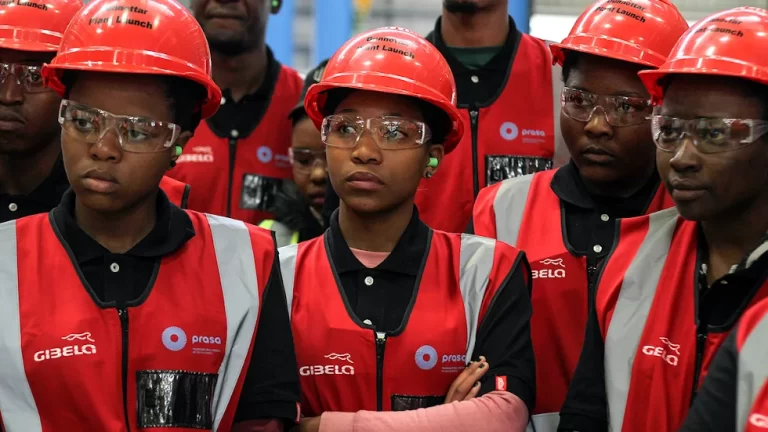
TRAIN manufacturer Gibela Rail Consortium is offering 150 bursaries to students looking to further their studies in engineering, computer science, and logistics, among others.

In a statement, Gibela says applications are available for both universities and technical and vocational educationand training (TVET) institutions.

The Gibela 2023 bursaries include full tuition, a book allowance, accommodation and meals, states the company, adding that they are granted for one year and are renewable on an annual basis based on academic performance.

To qualify, bursary applicants must be South African citizens with a South African barcoded ID, enrolled or intending to enrol at a local TVET institution, enrolled or intending to enrol at a South African university or university of technology, demonstrate potential for academic success, as well as in need of financial assistance.

According to the statement, bursaries for study at a university or university of technology are available in electrical, electronic, mechanical, metallurgical, and industrial engineering; computer science and information technology; accounting; and supply chain and logistics management.

The prerequisites for a university or university of technology Gibela bursary includes a matric with level six for mathematics, physical science and accounting, and level five for English.

Additionally, written proof of acceptance for admission to a South African university or university of technology, and proof of income from a parent or guardian.

To study at a TVET institution, bursaries are available in professions such as boilermakers, electricians, mechanics, welders, millwrights, pattern-makers, vehicle-builders, plumbers, control and instrumentation technicians, and fitters and turners.

The prerequisites for a Gibela bursary at a TVET institution includes a matric with mathematics and science, and English at level four, written proof of acceptance for admission to a South African TVET institution, and proof of income from a parent or guardian.

Candidates can apply by sending a short CV, a certified copy of their academic records and a certified copy of their South African ID to gibelabursaries@communityrail.co.za or fax the application to 086 246 2666.

The bursary applications close on 15 February 2023.

Staff Reporter

Sri Lanka crisis: Parents forced to pick which child can go to school

0

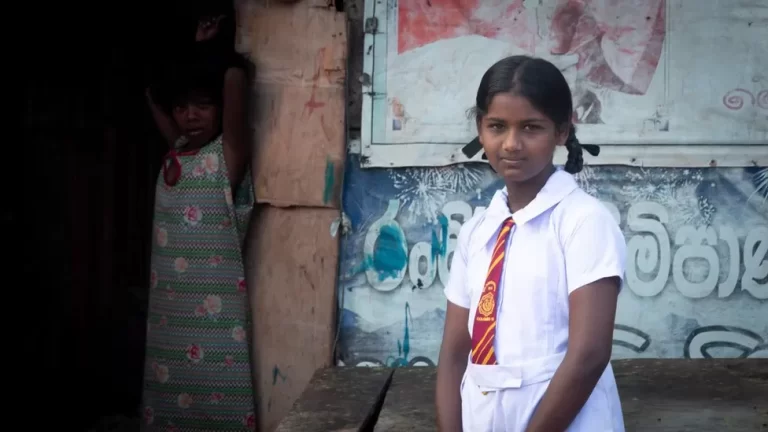
Ten-year-old Malki is too excited to stay in bed.

She’s up an hour before her two sisters and two brothers so that she can scrape some bright red gloss off her fingernails.

Today is her first day back at school and she wants to be spotless.

But her siblings must stay at home – her family can only afford to send her.

Six months ago, Sri Lanka was in the eye of the storm for its worst economic crisis since independence.

While calm has largely returned to the island nation, the full impact of mass unemployment and dramatic price rises is now visible among many families.

Every parent’s nightmare

Malki’s mother Priyanthika has had to pause her children’s schooling so they can earn money by selling fireworks.

Food prices in Sri Lanka reached record levels when inflation hit an all-time high of almost 95%.

Some days, no-one in Malki’s family eats.

While school is free in Sri Lanka, meals are not provided. When you add in the cost of uniforms and transport, education is a luxury Priyanthika can no longer afford.

She says she needs about 400 rupees per day ($1.09, 90p) for each child if they are to return to school.

Sitting in her one-bedroom home on the bed everyone shares, she wipes the tears from her face.

“All these kids used to go to school every day. I don’t have the money to send them now,” she says.

Malki can go to school because her shoes and uniform still fit.

But her younger sister Dulanjalee lies in bed crying, upset that today is not her turn.

“My darling, don’t cry,” says Priyanthika. “I’ll try and take you tomorrow.”

A shattered education

As the sun rises, children who are going to class hurry along dirt roads in white cotton uniforms, jumping on the back of motorcycles or piling into tuk-tuks.

Across town, Prakrama Weerasinghe sighs wearily.

He is the principal of Colombo’s Kotahena Central Secondary College and sees the economic distress every day.

“When the school day begins, when we have the morning assembly, children tend to faint from hunger,” he says.

The government says they have started distributing rice to schools but several schools contacted by the BBC say they have received no help.

Mr Weerasinghe says student attendance fell as low as 40% before he was forced to ask teachers to bring in extra food to keep students returning to class.

Joseph Stalin is General Secretary of the Ceylon Teachers Union.

He believes the government is wilfully unaware of the increasing numbers of families giving up on education because of the cost.

“Our teachers are the ones who see the empty lunch boxes,” he says. “The real victims of this economic crisis are the children.”

“[The government] are not looking for an answer to this issue. It’s been seen and identified by UNICEF and others, rather than the Sri Lankan government.”

UNICEF say it will get harder for people to feed themselves in the months ahead, with inflation in the cost of basic goods like rice continuing to cripple families.

It’s expected more children across the country will be forced to stop attending class.

The last hope?

With the government seemingly unable to manage the situation, charities have had to step in.

Samata Sarana is a Christian charity which has been helping Colombo’s poorest for three decades.

Today, its food hall is packed with hungry students from schools across the capital.

While the charity can help around 200 children daily, it is clear it’s struggling to meet demand.

“They give us food, buses to go home, they give us everything so now we can study,” says five-year-old Manoj as he waits in line for lunch with a group of friends.

When Malki returns home from her first day back at school, she tells her mother how much she enjoyed seeing her friends again.

But she also tells her mother she needs a new workbook and says her teachers are asking for extra money to buy materials for a school project.

Money that the family does not have.

“If we manage to find today’s meal, we go on to worry about how to find something to eat tomorrow,” says Priyanthika.

“That has become our life.”

BBC

Study Finds Teen Suicides Declined With Online Learning

0

ONLINE schooling may have reduced suicide rates in LGBTQ+ teenagers in Dane County during the height of the COVID-19 pandemic, according to a study from UW-Madison’s School of Education, possibly because the school environment for some teens was harmful.

But suicide rates for LGBTQ+ teens are still two to three times higher than their cisgender and straight peers.

“I don’t want any other parent to ever, ever, ever feel like this,” said Dia Caulkins, whose child Graciella-Sawyer Caulkins-Feltz died by suicide in November.

Graciella-Sawyer, who was non-binary, was only 14 when they died. They loved the colors pink and yellow, and unicorns. They had just picked up photography, snapping photos of flowers, sunsets and ice cream. They cared about animals and had just started piano lessons.

They were also extremely kind and compassionate, almost to a fault, Caulkins said.

“They didn’t do this to hurt us, they did this because they couldn’t see a way out,” she said. “And we have to be doing more so that they have a place where they fit, where they’re accepted.”

World events such as the war in Ukraine and George Floyd’s death deeply affected Graciella-Sawyer. They stopped to talk with people experiencing homelessness, volunteered in the community and checked in on their siblings often. They were nice to everyone, even to those who were unkind to them.

“Their capacity for love, except for themselves, was amazing,” Caulkins said.

“I think we need to be doing more,” she said.

UW doctoral student Erin Gill and assistant professor Mollie McQuillan, who authored the study, said finding solutions is particularly important as anti-LGBTQ+ rhetoric increases, especially surrounding youth and schools — from lawsuits over school districts’ gender identity policies and discourse in the 2022 gubernatorial race to efforts to repeal sex education curriculum and challenges to children’s Pride displays in libraries.

“Our study highlights that we need additional organizational supports and reforms for queer and trans kids who are getting pushed out of school and aren’t safe in school,” McQuillan said.

At the start of the pandemic , there were “two stories” about how LGBTQ+ youth were fairing, Gill said.

“We were hearing that some kids were really thriving not being in school anymore because they were out of harmful school environments,” she said. “But we’d also been hearing this other story where youth were really struggling at home, whether they were in a harmful home environment or they lacked the supports they had in school.”

THE STUDY

Those divergent experiences are borne out in the UW study, in which McQuillan and Gill compared results from the Dane County Youth Assessment from 2018 and 2021.

The assessment is a survey given to students every three years, asking them about different behaviors and risk factors, such as drug use and bullying.

Gill and McQuillan’s study found that LGBTQ+ youth reported “significantly fewer” attempts of suicide in 2021 than in 2018, but greater anxiety.

Specifically, in 2021, nearly 39 percent of gay or lesbian high schoolers reported seriously contemplating or having attempted suicide, compared with nearly 42 percent in 2018.

That rate was nearly 47 percent for bisexual students in 2021, compared with nearly 51 percent in 2018.

And for students questioning their sexual identity, the rate was just more than 35 percent in 2021 and just above 38 percent in 2018.

Corresponding rates for straight students, however, were much lower: 14 percent of them in 2021 and 17 percent in 2018.

Meanwhile, anxiety in high schoolers rose from nearly 30 percent in 2018 to more than 32 percent in 2021.

McQuillan said environmental factors may help explain why anxiety increased in students while suicidal thoughts may have decreased.

Anxiety is thought to be linked to a home environment and additional pandemic-related stressors families were facing, while other supports in school and the community were cut off, McQuillan said.

But suicide is thought to be linked more to peer victimization, or bullying.

“So, victimization doesn’t explain all of this increase in suicidality among queer and trans kids, but it explains some of it. And when kids were out of school and experiencing potentially less victimization, we saw that link of suicidality and not anxiety,” McQuillan said.

Caulkins wonders if students whose mental health improved during online schooling already had friends and peer support. “If you don’t have any friends, that’s a very lonely place to be at 12 and 13.”

For Graciella-Sawyer, “the pandemic was terrible,” their mom said.

“It wasn’t like life was easy for them before that, but it was like they were treading water okay,” Caulkins said. “And as the pandemic went on, they got lonelier and sadder.”

Once in-person learning returned, Graciella-Sawyer tried to make friends by joining clubs and staying involved. But some kids bullied them verbally, and some even took photos of them and threatened to post them online.

“We as adults, we as the grown-ups, have to teach kids that their words matter and they stick with kids who are lonely and sad and isolated,” Caulkins said. “As parents, we have a responsibility to make sure that our kids know they are not OK.”

What she hopes to see: More community building in schools, to expose students to different backgrounds and identities, and better mental health services.

The process to get counseling for Graciella-Sawyer was slow, and now as Caulkins is trying to find counseling for her other children as they grieve, the waitlist is months long.

Gill said the study reinforces the importance of bolstering and multiplying ways to support LGBTQ+ youth. And McQuillan said there should be more support to “disrupt” bullying that’s likely happening again now that kids are back in schools.

“I’m really inspired by LGBTQ youth who have been standing up to this political pressure,” Gill added. She said that while students may be struggling because of the increased rhetoric, there is also an increase in peers and LGBTQ+ youth “championing” one another.

McQuillan and Gill hope to expand their study next by looking at statewide data.

As for Graciella-Sawyer, they were giving to the last: Their organs were donated.

“And all moms love their kids, of course, but really, Sawyer really wanted to make the world a better place, and they should have been here to do that as an adult,” Caulkins said. “They would have devoted their life to making it better.”

govtech.com

Teacher crisis in South Africa – government responds

THE Department of Basic Education (DBE) says there should be no concerns over a predicted teacher shortage in the coming years.

Recent research from Stellenbosch University’s Research on Socioeconomic Policy Unit (RESEP) shows that close to half (49%) of teachers employed by the DBE are 50 years or older and will be forced to retire in the coming decade.

According to Paul Esterhuizen, chief executive of education NGO School-Days, the department is not hiring an adequate number of teachers to replace those expected to be leaving the workforce, and school budgets are constrained, so they don’t have the capacity to hire new teachers.

The government also needs to make teaching more attractive for young people, with more livable salaries, Esterhuizen said.

RESEP’s research found that the average government teacher earned R42,688 per month in salary and benefits over the course of 2019.

According to Irene Pampall, a researcher at RESEP, many teachers believe they earn less than R42,000; however, they overlook added benefits.

Salaries are determined by level of qualification and experience. Pampall said that a teacher with a matric and four years of university education could expect to earn roughly R23,686 every month

A shortage of skilled teachers can lead to a number of problems, including overcrowded classrooms and a lack of individual attention for students – exacerbating fractures within an already stumbling education system.

Spokesperson for the department, Elijah Mhlanga, told SABC News that the research from Stellenbosch is not accurate and that there is actually an oversupply of new teachers.

He added that new teachers are emerging en masse, and it is a trend that is set to continue.

Mhlanga said, in contrast to these findings, that based on the profiles of the people that are employed by the government, measures have been put in place since 2007 to mitigate the ageing workforce.

He conceded that the department requires more funding to expand schools further and reduce class sizes, however.

“We don’t need more teachers, we need more funding,” he said.

However, RESEP’s research is not the only source sounding alarms over teachers in South Africa.

In July 2022, Julian Hewitt, the CEO of educator bursary programme, the Jake Gerwell Fellowship, said the department of education’s payroll shows that the country is expected to run out of skilled teachers, calling it a looming crisis”.

The industry also faces the issue of a poor uptake in teaching, with it not being a career of choice, he said.

Statistics relating to higher education, put forward by the education facility Mancosa, also found that the supply of teachers is not meeting demand.

“More teachers are leaving than entering the profession. Currently, the country’s initial teacher institutions graduate 15,000 new teachers per year. This is below the 25,000 mark required to maintain an effective teacher-pupil ratio,” said professor Magnate Ntombela, principal of Mancosa.

Business Tech