Home Blog Page 232

Teacher crisis in South Africa โ€“ government responds

THE Department of Basic Education (DBE) says there should be no concerns over a predicted teacher shortage in the coming years.

Recent research from Stellenbosch Universityโ€™s Research on Socioeconomic Policy Unit (RESEP) shows that close to half (49%) of teachers employed by the DBE are 50 years or older and will be forced to retire in the coming decade.

According to Paul Esterhuizen, chief executive of education NGOย School-Days,ย the department is not hiring an adequate number of teachers to replace those expected to be leaving the workforce, and school budgets are constrained, so they donโ€™t have the capacity to hire new teachers.

The government also needs to make teaching more attractive for young people, with more livable salaries, Esterhuizen said.

RESEPโ€™s research found that the average government teacher earnedย R42,688 per monthย in salary and benefits over the course of 2019.

According to Irene Pampall, a researcher at RESEP, many teachers believe they earn less than R42,000; however, they overlook added benefits.

Salaries are determined by level of qualification and experience. Pampall said that a teacher with a matric and four years of university education could expect to earn roughly R23,686 every month

A shortage of skilled teachers can lead to a number of problems, including overcrowded classrooms and a lack of individual attention for students โ€“ exacerbating fractures within an already stumbling education system.

Spokesperson for the department, Elijah Mhlanga, toldย SABC Newsย that the research from Stellenbosch is not accurate and that there is actually an oversupply of new teachers.

He added that new teachers are emerging en masse, and it is a trend that is set to continue.

Mhlanga said, in contrast to these findings, that based on the profiles of the people that are employed by the government, measures have been put in place since 2007 to mitigate the ageing workforce.

He conceded that the department requires more funding to expand schools further and reduce class sizes, however.

โ€œWe donโ€™t need more teachers, we need more funding,โ€ he said.

However, RESEPโ€™s research is not the only source sounding alarms over teachers in South Africa.

In July 2022, Julian Hewitt, the CEO of educator bursary programme, the Jake Gerwell Fellowship, said the department of educationโ€™s payroll shows that the country isย expected to run out of skilled teachers,ย calling itย โ€œa looming crisisโ€.

The industry also faces the issue of a poor uptake in teaching, with it not being a career of choice, he said.

Statistics relating to higher education, put forward by the education facility Mancosa, also found that the supply of teachers is not meeting demand.

โ€œMore teachers are leaving than entering the profession. Currently, the countryโ€™s initial teacher institutions graduate 15,000 new teachers per year. This is below the 25,000 mark required to maintain an effective teacher-pupil ratio,โ€ said professor Magnate Ntombela, principal of Mancosa.

Business Tech

From STEM to STEAM: Education responding to the need of the times

Dr CS Shivanandaย 

There is a huge difference between what the world needed 20 years ago and what it requires today. For instance, 20 years ago, we had a more environmentally balanced planet, so the demand for climate professionals was not high in the market.ย 

But the scene has now changed with the rise of environmental pollution, thus opening up new avenues to be explored. It means that the world now needs professionals with expertise related to climate and oceanography. 

Similarly, there have been drastic changes in many other sectors, creating opportunities for a varied range of professionals and posing a necessity for the education system to correspond to this necessity accordingly. 

The process of imparting education should always be an evolving one, not static. The world is changing with every passing day and so, educators will have to rethink the ways they perceive the process of teaching and rejig the curriculum in accordance with the market demands and trends.

By doing so, graduates and learners with adequate knowledge about the world, changing scenarios, market trends, and necessary skills can be produced. In this connection, curriculum and educational approach have vital roles to play. 

Even some years ago, educators and employers were putting emphasis on STEM education. With the rise of the demand for other kinds of professionals like innovators and thinkers along with engineers and those from science backgrounds, STEAM education is gathering steam in the mainstream education system.  

To simplify, STEAM stands for Science, Technology, Engineering, the Arts and Mathematics. This is an educational approach that underscores the necessity of considering science, technology, engineering, the arts and mathematics as access points for pulling off the multi-faceted task of imparting knowledge and inspiring the habit of inquiry, dialogue, and critical thinking among learners.

Owing to the diversity, this approach offers the scope of developing multifaceted skills. More and more educational institutions are adopting it to ensure a sound and well-equipped development for students. 

Inquiry, collaboration, and process-based learning are the core things that differentiate STEAM approach from other ones. We are going through a time when learning within textbooks, memorising lessons and copying them on exam sheets will not work.  

Rather, the world as well as the educational scenario is changing, making it all the more essential for schools and educators to resort to innovative approaches to learning and inculcating skills into students. 

STEAM serves this purpose as it inspires learners to explore beyond their textbooks and focus more on collaborative learning based on the instinctive human tendency of curious pursuits. 

The outcome is that the students following STEAM approach feel encouraged and motivated to engage in experiential learning and easily find their feet while solving any problem through creative process and thinking. 

This bunch of students will go on to become innovators with out-of-the-box thought processes, educators with a third-eye view and problem-solvers who can think on their feet. 

Owing to these kinds of benefits, the STEAM approach is making its way into the curriculum. As the modern world and job market require not only graduates with high grades, but also individuals and leaders who are ready to take on the responsibility and deal with any problem with confidence, and possess a good number of soft skills necessary to thrive in a competitive world, it has become pertinent for schools to incorporate elements of STEAM education into their curriculum. 

Many schools like the DPS STS School Dhaka are well into it. Taking into account the growing importance of this approach, they recently organised a STEAM carnival at the school’s senior campus to inspire inquisitiveness among students and create an opportunity for them to exhibit their knowledge and innovation in the fields of science, technology, engineering, arts, and mathematics. 

Educators feel that this kind of arrangement comes very handy in preparing the students for future challenges and providing them an outlet to express their creativity and innovative ideas. 

Meanwhile, DPS STS School Dhaka’s Robotics and AI Club has also recently collaborated with STEMROBO Technologies Pvt Ltd for inspiring innovation, creativity and learning among its students. 

Most importantly, this approach helps the schools to focus more on four Cs (creativity, critical thinking, communication, collaboration), which are now prerequisite qualities for students if they want to make their names in their respective fields of interest. 

These are skills that keep an individual ahead of others in this ever-evolving world where the focus has shifted to additional skills and someone’s ability of critical thinking along with her/his knowledge and acuity.  

In short, this is an approach that empowers students, inculcates leadership qualities in them and makes them all the more prepared for the future world that will be heavily reliant on digital transformation. 

It is time that schools also recognise this fact and start equipping their students accordingly. Putting a concentrated focus on STEAM education could be the first step in this regard.ย 

Dr Shivananda CSย is the principal of DPS STS School Dhaka

SA condemns scheduled executions of students in Myanmar

THE South African Government is deeply concerned about the scheduled executions of seven students at Dagon University by the military in Myanmar.ย 

In a statement on Wednesday, the South African Government urged the Myanmar military authorities to uphold their international obligations to promote and protect human rights, including the protection of the right to life. 

โ€œWe call for the release of all those detained in relation to the exercise of their rights to freedom of expression, association and peaceful assembly.

โ€œThe scheduled executions continue to threaten the already remote possibility of a sustainable political dialogue agreed to in 2021 in the Five-Point Consensus between ASEAN and the military,โ€ DIRCO said in a statement.

The seven students were sentenced by a military court for their alleged involvement in a shooting in April that killed a former military officer.

They are among more than 130 people put on death row since the military seized power in a coup last year, according to the United Nations.

South Africa further calls on the military and all parties involved to negotiate a peaceful resolution of their differences and bring about reconciliation in Myanmar.

โ€œSouth Africa will continue supporting the United Nations and its respective agencies, as well as regional mechanisms such as ASEAN in their mediation efforts, to sustain the democratic transition of Myanmar which can ensure equality, dignity, human rights, and the full inclusion of all in its national development towards lasting peace and stability and sustained development to the benefit of the people of Myanmar,โ€ the statement read.

SA News

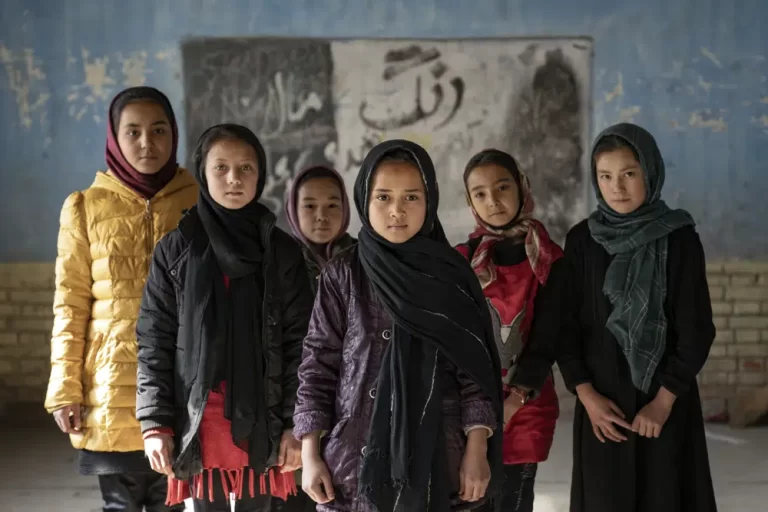
Taliban minister defends ban on womenโ€™s university studies

0

THE minister of higher education in the Taliban government on Thursday defended his decision to ban women from universities โ€” a decree that had triggered a global backlash.

Discussing the matter for the first time in public, Nida Mohammad Nadim said the ban issued earlier this week was necessary to prevent the mixing of genders in universities and because he believes some subjects being taught violated the principles of Islam. He said the ban was in place until further notice.

In an interview with Afghan television, Nadim pushed back against the widespread international condemnation, including from Muslim-majority countries such as Saudi Arabia, Turkey and Qatar. Nadim said that foreigners should stop interfering in Afghanistanโ€™s internal affairs.

Earlier on Thursday, the foreign ministers of the G-7 group of states urged the Taliban to rescind the ban, warning that โ€œgender persecution may amount to a crime against humanity.โ€ The ministers warned after a virtual meeting that โ€œTaliban policies designed to erase women from public life will have consequences for how our countries engage with the Taliban.โ€ The G-7 group includes Canada, France, Germany, Italy, Japan, the United Kingdom, the United States and the European Union.

A former provincial governor, police chief and military commander, Nadim was appointed minister in October by the supreme Taliban leader and previously pledged to stamp out secular schooling. Nadim opposes female education, saying it is against Islamic and Afghan values.

Other reasons he gave for the university ban were womenโ€™s failure to observe a dress code and the study of certain subjects and courses.

โ€œWe told girls to have proper hijab but they didnโ€™t and they wore dresses like they are going to a wedding ceremony,โ€ he said. โ€œGirls were studying agriculture and engineering, but this didnโ€™t match Afghan culture. Girls should learn, but not in areas that go against Islam and Afghan honor.โ€

He added that work was underway to fix these issues and universities would reopen for women once they were resolved. The Taliban made similar promises about high school access for girls, saying classes would resume for them once โ€œtechnical issuesโ€ around uniforms and transport were sorted out, but girls remain shut out of classrooms.

The Taliban tried to fix what he claimed were problems they inherited from the previous administration since their takeover last year. He alleged that people were not following rules and that this justified the university ban.

In Afghanistan, there has been some domestic opposition to the university ban, including from several cricket players. Cricket is a hugely popular sport in the country, and players have hundreds of thousands of followers on social media.

Another show of support for female university students came at Nangarhar Medical University. Local media reported that male students walked out in solidarity and refused to sit for exams until womenโ€™s university access was reinstated.

Despite initially promising a more moderate rule respecting rights for women and minorities, the Taliban have widely implemented their interpretation of Islamic law, or Sharia, since they seized power in August 2021.

They have banned girls from middle school and high school, barred women from most fields of employment and ordered them to wear head-to-toe clothing in public. Women are also banned from parks and gyms. At the same time Afghan society, while largely traditional, has increasingly embraced the education of girls and women over the past two decades.

U.S. Secretary of State Antony Blinken, speaking to reporters in Washington on Thursday, echoed international opposition to the Taliban decision to ban women from university studies. He said the Taliban will not obtain much- needed improved relations with the world if they โ€œcontinue on this course.โ€

โ€œWhat theyโ€™ve done is to try to sentence Afghan women and girls to a dark future without opportunity,โ€ he said. โ€œAnd the bottom line is that no country is going to be able to succeed, much less thrive, if it denies half its population the opportunity to contribute. And to be clear, and weโ€™re engaged with other countries on this right now. There is going to be a cost.โ€

Turkish Foreign Minister Mevlut Cavusoglu said Thursday that the ban was โ€œneither Islamic nor humane.โ€ Speaking at a joint news conference with his Yemeni counterpart, he called on the Taliban to reverse their decision.

โ€œWhat harm is there in womenโ€™s education? What harm does it do to Afghanistan?โ€ Cavusoglu said. โ€œIs there an Islamic explanation? On the contrary, our religion, Islam, is not against education, on the contrary, it encourages education and science.โ€

Saudi Arabia, which until 2019 enforced sweeping restrictions on womenโ€™s travel, employment and other crucial aspects of their daily lives, including driving, also urged the Taliban to change course.

The Saudi foreign ministry expressed โ€œastonishment and regretโ€ at Afghan women being denied a university education. In a statement late Wednesday, the ministry said the decision was โ€œastonishing in all Islamic countries.โ€

Previously, Qatar, which has engaged with the Taliban authorities, also condemned the decision.

In the capital of Kabul, about two dozen women marched in the streets Thursday, chanting in Dari for freedom and equality. โ€œAll or none. Donโ€™t be afraid. We are together,โ€ they chanted.

In video obtained by The Associated Press, one woman said Taliban security forces used violence to disperse the group.

โ€œThe girls were beaten and whipped,โ€ she said. โ€œThey also brought military women with them, whipping the girls. We ran away, some girls were arrested. I donโ€™t know what will happen.โ€

Girls have been banned from school beyond the sixth grade since the Talibanโ€™s return.

In northeastern Takhar province, teenage girls said the Taliban on Thursday forced them out of a private education training center and told them they no longer had the right to study. One student, 15-year-old Zuhal, said the girls were beaten.

Another, 19-year-old Maryam, said while crying: โ€œThis training center was our hope. What can these girls do? They were full of hope and coming here to learn. It is really a pity. (The Taliban) have taken all our hopes. They closed schools, universities, and the training center, which was very small.โ€

AP

Big changes for schools in South Africa โ€“ these are the laws being accepted and rejected

THE portfolio committee on basic education has summarised the feedback processed so far in relation to proposed changes to South Africaโ€™s school laws.

In a presentation this week (6 December), the committee summarised the main points of approval and objection related to the Basic Education Laws Amendment Bill (BELA), which aims to make a host of changes to schools in South Africa.

Broadly, the laws propose big changes to the compulsory starting age for children in South Africa while clarifying and formalising aspects of home education and financial administration of schools in the country.

The bill also contains highly controversial proposals, such as giving the government the final say over language policies at schools, as well as allowing schools to sell alcohol at after-hours, non-school related activities.

According to the portfolio committee, of the 18,000 written submissions made on the bill, only 7,700 have been processed so far, with the reading and verification of submissions still ongoing.

Tellingly, from a sample of 500 submissions made, the overwhelming majority โ€“ 76% โ€“ were against the bill. The committee noted, however, that this is a โ€œmoving targetโ€ and a clearer picture will emerge once all the submissions have been processed.

Meanwhile, the committee held public hearings between 8 and 29 November, where 31 presentations from stakeholders in the education sector made their views known.

Coverage of these presentations revealed a mixed bag of responses, with most groups and institutions expressing disapproval of the changes overall โ€“ though support was shown for some specifics.

According to the committee, from the feedback garnered so far, the proposed laws can be split into three categories: supported, objected and partially accepted.

The main views on the laws are summarised below:


Supported

  • Compulsory Grade-R: Comments generally supported the change in law to make Grade R compulsory in South Africa, with school attendance starting at age 6. However, concerns were raised about schoolsโ€™ capacity โ€“ in terms of infrastructure and educators โ€“ to admit these learners, noting backlogs already impeding the plan.
  • Abolishing corporal punishment: Most views supported positive discipline instead of corporal punishment.
  • Merging schools: Comments supported merging schools where conditions are met for such to take place โ€“ but public participation must be part of the process and parents and learners must be consulted.
  • Blocking educators from doing business with the state: This change is generally supported.

Objected

  • Giving heads of department final say on admissions: Comments objected to giving heads of department the final say in learner admissions, saying it is in conflict with the South African Schools Act and the spirit of the Constitution.
  • Giving heads of department control over critical decisions: Stakeholders believe the government is trying to take control and organisational powers away from school governing bodies โ€“ although they admit there are instances where schools need government intervention.
  • Giving heads of department control over language policy: This was overwhelmingly rejected, with comments saying this should remain within control of the school governing body.
  • Alcohol sales at schools: Stakeholders rejected having alcohol sales in a child-friendly environment, and the laws cannot guarantee that the ills associated with alcohol use โ€“ violence, conflict and drunk driving โ€“ would be managed effectively.
  • Disclosure of financial interests: Having School Governing Bodies and their families disclose their financial interests is an unreasonable invasion of privacy, commentators said.
  • Home education changes: Parents rejected the proposal to register and formalise home education, preferring to run independently. The main argument against the laws is that provincial departments lack the capacity to administrate the process. More research needs to be done.
  • Extended jail time for parents whose children are not in school: Stakeholders argued that sending parents to jail would exacerbate, rather than solve the problem.

Partial

  • Changes for independent schools: Independent schools welcome regulation but felt that quarterly reporting would be too much.
  • Financial records for public schools: There is a need to address the funding model of public schools, but the view is that the department should rather focus on schools that are struggling instead of burdening all 24,000 schools in the country with more admin.
  • Undocumented learners: Stakeholders said that learners should not be discriminated against because they lack documentation, but the solution to the problem lies outside the education department.

Along with the specific changes, feedback from stakeholders showed that more needs to be done with the laws and policy proposals, including redrafting the South African School Act to become a true Education Act, inserting online learning into the bill, and including rural education in the amendments.

โ€œA vast majority of the submissions were against the proposed bill in its entirety,โ€ the committee said. โ€œMost of the submitters have indicated that the proposed amendments have taken away the rights of parents to choose the manner in which their children should be educated.โ€

The committee noted that there were also comments that highlighted a distinct lack of trust in the government.

Public participation in the bill will continue in 2023, with provincial hearings scheduled through to April 2023.

Business Tech

NSFAS opens student accommodation registrations

THE National Student Financial Aid Scheme (NSFAS) has officially openedย a portalย for accommodation providers to register their properties for NSFAS beneficiaries.

Once signed in, accommodation providers will be able to list their properties on the NSFAS database. They simply have to provide names, locations and images.

NSFAS will then contact these providers and send out a โ€œpanel of expertsโ€ to accredit and grade the properties to make sure they are suitable for student living.

Both students and interested accommodation providers can register on this portal. Both parties are required to choose an educational institution, like the University of Johannesburg or the University of Pretoria.

After the accreditation process is completed, the registered accommodation will become available for students who are beneficiaries.

If youโ€™re looking to provide a residence for students, now is the time to register with NSFAS. By the fact that you have to choose an educational institution, no doubt proximity to the university or college will be a factor that is graded.

According toย some usersย on Twitter, the portal seems to not be working past the second page as of the time of writing, seemingly minutes after the portal was launched.

The opening of the portal coincides with the conclusion of the 2022 matric exams. Hundreds of thousands of matriculants will be looking to embark on their journeys into tertiary education, with many seekingย bursary opportunities, including NSFAS.

Prospective studentsย could applyย for educational financial aid through the scheme from September 2022, but like many other bursary options, there are stringent criteria in place.

These include:

  • โ€œYou are SASSA grant recipients or
  • Your combined household income is not more than R350 000 per year or
  • If you are a person living with a disability, your combined household income should not be more than R600 000 per year or
  • If you are a student who began their university studies before 2018 and their household income is not more than R122 000 per year.โ€

NSFAS has also made students aware that scammers are actively pretending to be the aid scheme in order to steal financial information and money.

AGENCY

Universityโ€™s โ€˜dual identityโ€™ a barrier to black women PASS staff advancement

0

HELEN SWINGLER

The low number of black women senior managers within the universityโ€™s professional, administrative and support staff (PASS) reflects an array of challenges to their career advancement. But the starkest is the duality within the institution. Opportunities for black women academics outstrip those for black women PASS staff.

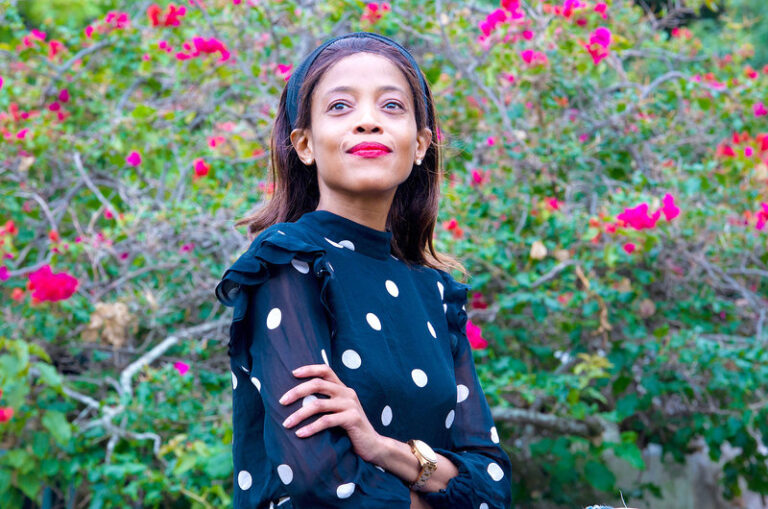
This has emerged from graduand Nombuso Shabalalaโ€™s study towards a Master of Business Administration qualification, specialising in executive management. Nombuso used the University of Cape Town (UCT) as a case study. She is also the head of UCTโ€™s media unit in the Communication and Marketing Department. On the eve of graduating (in absentia) on 14 December, Nombuso shared her findings and recommendations with UCT News.

Helen Swingler (HS): What is the gist of your study?

Nombuso Shabalala (NS): My research investigated the phenomenon of the low numbers of black (African, Indian and Coloured) females in senior management in a South African public university. I conducted the research as a case study to get an in-depth understanding of the factors driving and enabling this phenomenon. I also wanted to understand how and why leadership and management intersects with social constructs such as race, gender and class. My focus was on PASS staff. In identifying participants, I worked with UCTโ€™s Human Resources department, and my participants are drawn from various departments.

HS: What were your findings on the hurdles to black women PASS staff who are managers and keen to progress within the university?

NS: Lack of succession planning and little to no promotion prospects are some of the key findings.  Added to that is the impact of gender and racial microaggressions, and that women of colour within the university feel they must work twice as hard as their white male and female counterparts. Closely linked to this is the pressure to overperform, as either a response to inequality and/or trauma. In addition, the womenโ€™s own cognitive structure โ€“ holding back and not putting themselves out there โ€“ is cited as an impediment to career progression.

Also clear is the huge divide and difference between the staff within the university. The universityโ€™s dual identity in terms of staff composition is seen as both a problem and a barrier in terms of career advancement among black female managers. The prevailing view from the study participants is that administrative support staff are often overlooked and given fewer opportunities than their academic counterparts.

One participant said: โ€œThis university has a dual identity: academics, and administrative and support staff. When we talk about transformation for support staff, these values ring hollow because we are not beneficiaries of that in terms of career development and succession planning. It sets us back.โ€

HS: Were you surprised by any of your research findings?

NS: The one that stood out was the impact of religion. One participant wears a hijab and because of that she felt somehow invisible and had to become louder and more verbose. She felt she had to stand out more, otherwise she would fade into the background. This had a negative impact on her. Essentially, the intersectionality of bias is quite profound in terms of gender and race. But class/background is an issue. And so too is religion. There was an observation about the subtle discrimination among women of colour themselves. Participants felt this was a setback to the fight for gender parity.

HS: You mention that your thesis topic was influenced by your passion for gender justice, your upbringing and professional experience. How did these elements work together?

NS: I was raised by women only, my (late) grandmothers โ€“ both matriarchs and powerful Xhosa women โ€“ instilled and encouraged a deep love for education in me. They both were educated and worked as nurses, so they walked the talk. I always remember them with so much fondness and profound appreciation. Even though they didnโ€™t have much, they never compromised on making sure that I got a good education. My mother and her sisters also raised me. The women in my family remain my role models; they are my definition of strength and tenacity.

Education was always encouraged as a gateway to opportunities and as a powerful empowerment โ€˜vehicleโ€™ for a woman. I literally took that teaching and advice from home, and I continue to run with it, as it has proven true throughout my life. Education has given me access to opportunities, given me options and so much confidence.

Working at the Agenda Feminist Media Project and the Commission on Gender Equality also influenced my topic. There I gained new knowledge about how gender relations can be transformed, and my understanding of gender and gender justice was further sharpened and shaped.

HS: What are the lessons for UCT and other universities?

NS: The study leads to practical recommendations, some relating to policy development and changes to organisational culture, notably regarding zero tolerance for discriminatory behaviour including microaggressions, and a career development programme for black women working as administrative support staff at UCT. The findings further indicate that race and gender issues in higher education institutions need to be given more space and continuing attention.

At policy level, UCT is making efforts to cultivate an environment of diversity and inclusivity. However, beneath the surface, some participants of this study have experienced and continue to experience microaggressions from colleagues.

All those interviewed noted and felt that academic staff get preferential treatment and are seen to be superior to PASS staff. In relation to the research topic, with these differences, there are some fundamental issues that arise with empowering women and black women to progress into senior positions, creating a pipeline that formally enables advancement.

HS: As a black woman PASS staffer in management yourself you kept a journal of your experiences and responses to intervieweesโ€™ stories.

NS: Yes. As part of my data collection, I also used reflective practice or reflexivity. As a researcher, this is where I scrutinised my own values, perceptions, and behaviour, alongside those of the study respondents. That helped a great deal because it allowed me to bring or present my subjective experience. The aim was to understand how much of my โ€œselfโ€ I can bring and incorporate into the study. So, I kept a journal throughout my research. During each interview, I found myself deeply connected to the stories and experiences shared.

I underwent a rollercoaster of emotions through the interviews. I didnโ€™t anticipate this at the start.  Some of the participants cried while detailing their experiences, career journeys and how it feels to be judged and discriminated against due to their race, gender, age โ€“ and even religion! After those interviews, I broke down. I cried because of my own similar experiences. It was trauma I hadnโ€™t dealt with or properly acknowledged.

HS: What would you like to see emerge because of this work?

NS: One recommendation of the study falls into an informal sphere of mutual support between black women and the creation of networking and mentorship practices. This intervention would be hugely beneficial to women, as discovered in the interviews, and underlined by personal experience. A peer mentorship programme, formal or informal, will help to increase confidence and decrease the self-doubt. Life in organisations can be lonely, but this would change by establishing a community of like-minded women supporting each other. Those who have โ€˜made itโ€™ can share how they navigated the space so that other women rising through the ranks can learn from success and mistakes.

HS: It took some grit to balance a full-time job with postgraduate studies. How did you manage?

NS: It was incredibly demanding and stressful. I had a routine, which helped a great deal. During the day it was work and then I would rest for an hour or two. The evenings and early mornings (and weekends) were dedicated to my studies. Iโ€™d squeeze in running, swimming, and some meditation, which would help whenever I became overwhelmed. Not easy at all, but doable with willpower, support from family and friends โ€“ and tons of discipline! My UCT colleagues were also very supportive, really cheering me on and Iโ€™m sincerely grateful for that.

It was particularly challenging for our class, the 2020 cohort. When South Africa went into hard lockdown because of COVID-19, we did the rest of the programme online. This had its own complexities. But the extra support from our GSB lecturers and the support staff made all the difference and got us through!

HS: You were also invited to share your work at a virtual conference hosted by University of Copenhagen. Thatโ€™s a feather in your cap!

NS: UCT is part of the International Research University subcommittee for Gender Equity. As my research is relevant to the area of gender equity, I was also invited to share a snapshot of my research. This yearโ€™s meeting was hosted by the University of Copenhagen. There were presentations by other universities around the world on identifying current and future issues regarding equity and inclusion, particularly in higher education. It was a lovely experience and an eye opener.

UCT NEWS

Unisa shines at the 2022 World Science Forum

0

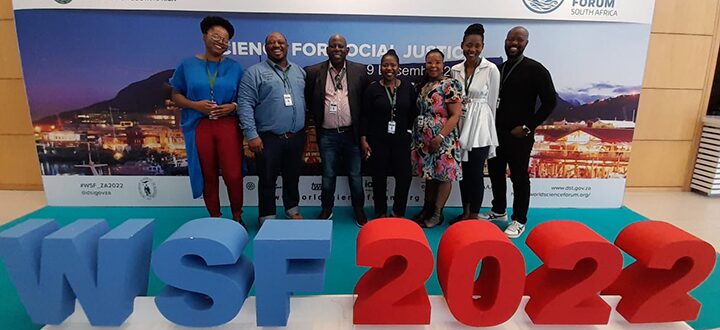
THE first ever World Science Forum (WSF) hosted in South Africa and on African soil was held at the Cape Town International Convention Centre from 6 to 9 December 2022. The Forum brought together science researchers, professionals, multinational organisations, business and community agencies to engage on issues around science diplomacy, collaboration, partnerships and internationalisation, academic development, research, technology, innovation and engaged scholarship. The theme of the forum was Science for Social Justice.

On the first day of the forum, prior to his opening address, President Cyril Ramaphosa, accompanied by Ministers Blaze Nzimande and Naledi Pandor, visited a few of the stalls in the exhibition halls and spent time at the Unisa stall where staff shared details of some of the innovative projects led by academics and students at the university.

In his opening address, Ramaphosa stressed that science needs to contribute towards addressing challenges that are faced by humanity. He urged the forum delegates to consider and respond to five questions pertaining to and linked to the sub-themes of WSF 2022:

  • The role that science should play in protecting and enhancing human dignity and in fighting poverty, unemployment and inequalities (science for social justice).
  • The role that science should play to enable a just climate transition and protecting the vulnerable against the harsh impact of climate change (science for human dignity).
  • The recognition of the contributions of African science as a global resource equal to/contributing to global responses aimed at addressing global challenges (science for Africa and the world). 
  • The role that science should play in advancing multilateralism and global solidarity (science for diplomacy).
  • Transformation of science to make it more open and reflective of the society we want (justice in science).


Some of the Unisans who attended WSF 2022 shared their reflections:

“Of main interest to me was the discussions on science diplomacy as emphasis is placed on international science collaboration highlighting the value of collaborations and multilateralism in forging partnerships and good relations. Science diplomacy calls for nations to unite and collaborate in finding collaborative solutions to the worldโ€™s challenges. I became aware of a number of collaborative programmes I believe Unisa should be participating in and that more effort should be made to get Unisans (staff and students) more involved. But I also became very aware of the glaring silos and competition among us as employees, that at times cause us to miss the bigger picture. Going forward. I am thinking Unisa could adopt these themes to focus our engaged scholarship, research, and teaching and learning over and above what we are catering for, now,” says Siza Magubane, Internationalisation and Partnership Office. 

“WSF 2022 provided a networking environment with science community and African scientists. The forum gave the exposure in new technologies in terms of genomics and opened several collaboration opportunities. We believe that this was a good opportunity to widen Unisaโ€™s visibility across the globe. Academics in the space of science should attend these kinds of events to broaden their knowledge in new space of science,” says Prof Ntanganedzeni Mapholi, Department of Agriculture and Animal Health.

“The World Science Forum was a great event which offered Unisa the opportunity to put its best foot forward. We got the chance to showcase Unisa’s innovation and highlighted the ways in which Unisa is a major player in the innovation space” says Ayanda Noma, Director: Directorate of Innovation, Technology Transfer and Commercialisation. 

“We got to engage with delegates from other countries. Our presence helped in highlighting and gaining visibility for the institution. Focusing on what Unisa offers helped in attracting possible collaborators for future projects. The media coverage we received will assist in extending visibility and for others to know of the services offered by Unisa. Being part of an international event like the WSF offered us the chance to also engage with the president of the country” says Dr Petunia Malatji, Department of Agriculture and Animal Science. 

“WSF 2022 afforded us the opportunity to engage with multiple stakeholders in both the public and the public space. Seeing the myriad projects that many institutions/institutes are busy with was an eye opener โ€“ more so the focus on how science can contribute to social justice. The forum brought together scholars and practitioners from around the globe and highlighted the importance of science academies and the role they play in assisting with how science can and should respond to societal issues. One of the highlights for me was the presence of school, learners some of whom already have scientific innovations in the works. This showed how, as academic institutions, we should be forward thinking and imagining programmes that will accommodate future generation scientists who are already grappling with issues in their immediate environments,” says Prof Puleng Segalo, Chief Albert Luthuli Research Chair.  

We look forward to the possible future collaborations as a result of networks and contacts made at the forum.  

By Prof Puleng Segalo, Albert Luthuli Research Chair

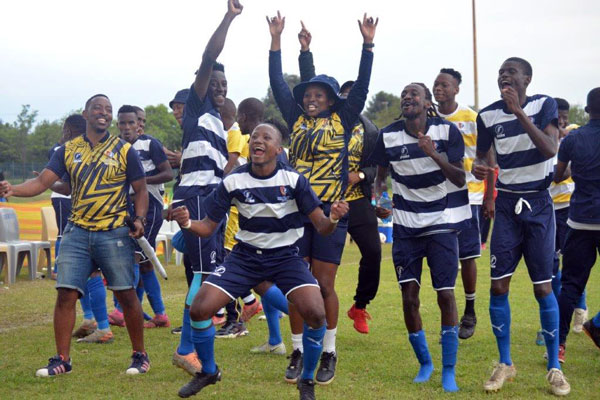
CUT menโ€™s soccer team qualifies for the 2023 varsity football competition

Central University of Technology menโ€™s soccer team qualified for the 2023 Varsity Football Tournament held in Secunda, Mpumalanga, from 05 to 09 December 2023. The team secured a spot in the top 8 after winning 1 – 0 against the University of Venda at the University Sports South Africa (USSA) tournament. 

The annual Varsity Football Tournament is one of the seven sports in the Varsity Sports series. It involves the top football-playing universities in the country, which belong to the University Sports Company. The tournament is run by Varsity Sports South Africa and is endorsed by the South African Football Association and University Sport South Africa.

The CUT ladiesโ€™ soccer team also participated in the tournament but unfortunately did not make it after losing 3 – 4 to the University of KwaZulu Natal.

A big congratulations to the CUT gents for making it this far!

CUT

SA, Italy unite to advance computational research

0

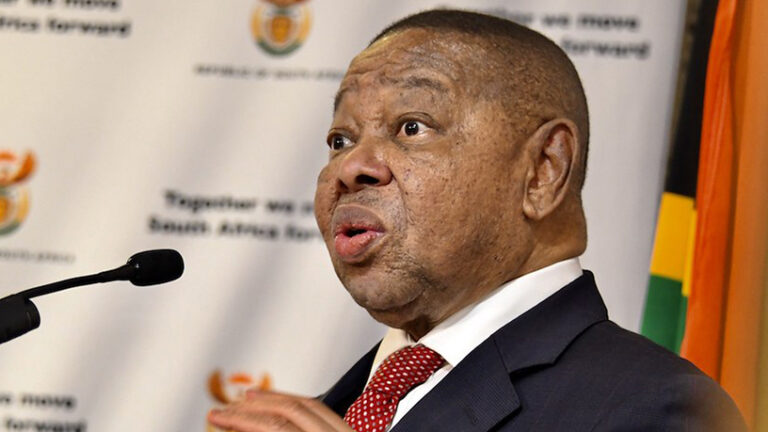
South Africa is looking to advance basic and computational science development in the country, says higher education, science and innovation minister Dr Blade Nzimande.

This, after SAโ€™s National Institute of Theoretical Physics (NITheCS) and Italyโ€™s Abdus Salam International Centre for Theoretical Physics (ICTP) signed a memorandum of understanding (MOU) on the sidelines of the recently-held World Science Forum in Cape Town.

Computational science, also known as scientific computing or scientific computation, is described as the use of computers to understand and solve science and engineering problems.

The Department of Science and Innovation (DSI) says the agreement will see the institutes work together on a range of initiatives, including the development of theoretical and computational research and education in SA, as well as the exchange of scientists and students between the countries.

In a statement, the DSI says professor Francesco Petruccione, director of the NITheCS, signed the agreement together with professor Atish Dabholkar, ICTP director, in the presence of Nzimande.

โ€œThe partnership will not only provide important support for basic science in South Africa, but also serve as a model for future international collaborations in the field,โ€ notes Nzimande.

โ€œICTP recognises the importance of building a solid foundation of basic science for the advancement of technology and innovation,โ€ comments Dabholkar. โ€œICTP is ideally positioned to assist African efforts in scientific computing to address the challenges that are at the core of a sustainable future for humanity.โ€

Dabholkar further notes the agreement is in line with ICTP’s goal to strengthen its programmes in the field of computational sciences through the establishment of an international consortium on scientific computing.

South Africaโ€™s NITheCS provides a platform for research, training and engagement in theoretical physics, astronomy and astrophysics, data science, mathematics, statistics, quantitative finance, bioinformatics and quantitative biology, Earth systems modelling and climate change modelling.

Founded in 1964, the ICTP seeks to drive global efforts to advance scientific expertise in developing countries, and advances international cooperation through science.

Petruccione concludes that the MOU is a step forward in the relationship between ICTP and NITheCS. โ€œIt will have a positive impact on the development of theoretical and computational sciences in South Africa and Africa.โ€

-ITWeb