Home Blog Page 235

University’s ‘dual identity’ a barrier to black women PASS staff advancement

0

HELEN SWINGLER

The low number of black women senior managers within the university’s professional, administrative and support staff (PASS) reflects an array of challenges to their career advancement. But the starkest is the duality within the institution. Opportunities for black women academics outstrip those for black women PASS staff.

This has emerged from graduand Nombuso Shabalala’s study towards a Master of Business Administration qualification, specialising in executive management. Nombuso used the University of Cape Town (UCT) as a case study. She is also the head of UCT’s media unit in the Communication and Marketing Department. On the eve of graduating (in absentia) on 14 December, Nombuso shared her findings and recommendations with UCT News.

Helen Swingler (HS): What is the gist of your study?

Nombuso Shabalala (NS): My research investigated the phenomenon of the low numbers of black (African, Indian and Coloured) females in senior management in a South African public university. I conducted the research as a case study to get an in-depth understanding of the factors driving and enabling this phenomenon. I also wanted to understand how and why leadership and management intersects with social constructs such as race, gender and class. My focus was on PASS staff. In identifying participants, I worked with UCT’s Human Resources department, and my participants are drawn from various departments.

HS: What were your findings on the hurdles to black women PASS staff who are managers and keen to progress within the university?

NS: Lack of succession planning and little to no promotion prospects are some of the key findings.  Added to that is the impact of gender and racial microaggressions, and that women of colour within the university feel they must work twice as hard as their white male and female counterparts. Closely linked to this is the pressure to overperform, as either a response to inequality and/or trauma. In addition, the women’s own cognitive structure – holding back and not putting themselves out there – is cited as an impediment to career progression.

Also clear is the huge divide and difference between the staff within the university. The university’s dual identity in terms of staff composition is seen as both a problem and a barrier in terms of career advancement among black female managers. The prevailing view from the study participants is that administrative support staff are often overlooked and given fewer opportunities than their academic counterparts.

One participant said: “This university has a dual identity: academics, and administrative and support staff. When we talk about transformation for support staff, these values ring hollow because we are not beneficiaries of that in terms of career development and succession planning. It sets us back.”

HS: Were you surprised by any of your research findings?

NS: The one that stood out was the impact of religion. One participant wears a hijab and because of that she felt somehow invisible and had to become louder and more verbose. She felt she had to stand out more, otherwise she would fade into the background. This had a negative impact on her. Essentially, the intersectionality of bias is quite profound in terms of gender and race. But class/background is an issue. And so too is religion. There was an observation about the subtle discrimination among women of colour themselves. Participants felt this was a setback to the fight for gender parity.

HS: You mention that your thesis topic was influenced by your passion for gender justice, your upbringing and professional experience. How did these elements work together?

NS: I was raised by women only, my (late) grandmothers – both matriarchs and powerful Xhosa women – instilled and encouraged a deep love for education in me. They both were educated and worked as nurses, so they walked the talk. I always remember them with so much fondness and profound appreciation. Even though they didn’t have much, they never compromised on making sure that I got a good education. My mother and her sisters also raised me. The women in my family remain my role models; they are my definition of strength and tenacity.

Education was always encouraged as a gateway to opportunities and as a powerful empowerment ‘vehicle’ for a woman. I literally took that teaching and advice from home, and I continue to run with it, as it has proven true throughout my life. Education has given me access to opportunities, given me options and so much confidence.

Working at the Agenda Feminist Media Project and the Commission on Gender Equality also influenced my topic. There I gained new knowledge about how gender relations can be transformed, and my understanding of gender and gender justice was further sharpened and shaped.

HS: What are the lessons for UCT and other universities?

NS: The study leads to practical recommendations, some relating to policy development and changes to organisational culture, notably regarding zero tolerance for discriminatory behaviour including microaggressions, and a career development programme for black women working as administrative support staff at UCT. The findings further indicate that race and gender issues in higher education institutions need to be given more space and continuing attention.

At policy level, UCT is making efforts to cultivate an environment of diversity and inclusivity. However, beneath the surface, some participants of this study have experienced and continue to experience microaggressions from colleagues.

All those interviewed noted and felt that academic staff get preferential treatment and are seen to be superior to PASS staff. In relation to the research topic, with these differences, there are some fundamental issues that arise with empowering women and black women to progress into senior positions, creating a pipeline that formally enables advancement.

HS: As a black woman PASS staffer in management yourself you kept a journal of your experiences and responses to interviewees’ stories.

NS: Yes. As part of my data collection, I also used reflective practice or reflexivity. As a researcher, this is where I scrutinised my own values, perceptions, and behaviour, alongside those of the study respondents. That helped a great deal because it allowed me to bring or present my subjective experience. The aim was to understand how much of my “self” I can bring and incorporate into the study. So, I kept a journal throughout my research. During each interview, I found myself deeply connected to the stories and experiences shared.

I underwent a rollercoaster of emotions through the interviews. I didn’t anticipate this at the start.  Some of the participants cried while detailing their experiences, career journeys and how it feels to be judged and discriminated against due to their race, gender, age – and even religion! After those interviews, I broke down. I cried because of my own similar experiences. It was trauma I hadn’t dealt with or properly acknowledged.

HS: What would you like to see emerge because of this work?

NS: One recommendation of the study falls into an informal sphere of mutual support between black women and the creation of networking and mentorship practices. This intervention would be hugely beneficial to women, as discovered in the interviews, and underlined by personal experience. A peer mentorship programme, formal or informal, will help to increase confidence and decrease the self-doubt. Life in organisations can be lonely, but this would change by establishing a community of like-minded women supporting each other. Those who have ‘made it’ can share how they navigated the space so that other women rising through the ranks can learn from success and mistakes.

HS: It took some grit to balance a full-time job with postgraduate studies. How did you manage?

NS: It was incredibly demanding and stressful. I had a routine, which helped a great deal. During the day it was work and then I would rest for an hour or two. The evenings and early mornings (and weekends) were dedicated to my studies. I’d squeeze in running, swimming, and some meditation, which would help whenever I became overwhelmed. Not easy at all, but doable with willpower, support from family and friends – and tons of discipline! My UCT colleagues were also very supportive, really cheering me on and I’m sincerely grateful for that.

It was particularly challenging for our class, the 2020 cohort. When South Africa went into hard lockdown because of COVID-19, we did the rest of the programme online. This had its own complexities. But the extra support from our GSB lecturers and the support staff made all the difference and got us through!

HS: You were also invited to share your work at a virtual conference hosted by University of Copenhagen. That’s a feather in your cap!

NS: UCT is part of the International Research University subcommittee for Gender Equity. As my research is relevant to the area of gender equity, I was also invited to share a snapshot of my research. This year’s meeting was hosted by the University of Copenhagen. There were presentations by other universities around the world on identifying current and future issues regarding equity and inclusion, particularly in higher education. It was a lovely experience and an eye opener.

UCT NEWS
Unisa shines at the 2022 World Science Forum

0

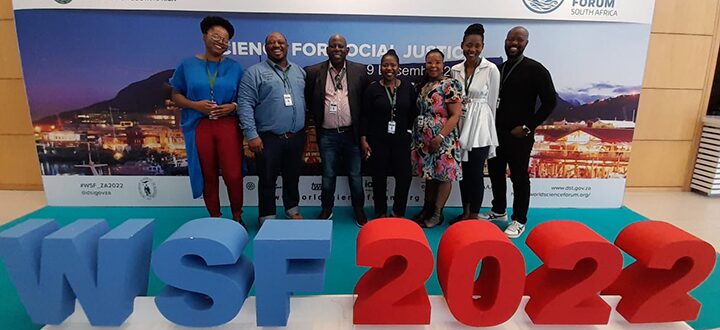
THE first ever World Science Forum (WSF) hosted in South Africa and on African soil was held at the Cape Town International Convention Centre from 6 to 9 December 2022. The Forum brought together science researchers, professionals, multinational organisations, business and community agencies to engage on issues around science diplomacy, collaboration, partnerships and internationalisation, academic development, research, technology, innovation and engaged scholarship. The theme of the forum was Science for Social Justice.

On the first day of the forum, prior to his opening address, President Cyril Ramaphosa, accompanied by Ministers Blaze Nzimande and Naledi Pandor, visited a few of the stalls in the exhibition halls and spent time at the Unisa stall where staff shared details of some of the innovative projects led by academics and students at the university.

In his opening address, Ramaphosa stressed that science needs to contribute towards addressing challenges that are faced by humanity. He urged the forum delegates to consider and respond to five questions pertaining to and linked to the sub-themes of WSF 2022:

  • The role that science should play in protecting and enhancing human dignity and in fighting poverty, unemployment and inequalities (science for social justice).
  • The role that science should play to enable a just climate transition and protecting the vulnerable against the harsh impact of climate change (science for human dignity).
  • The recognition of the contributions of African science as a global resource equal to/contributing to global responses aimed at addressing global challenges (science for Africa and the world). 
  • The role that science should play in advancing multilateralism and global solidarity (science for diplomacy).
  • Transformation of science to make it more open and reflective of the society we want (justice in science).


Some of the Unisans who attended WSF 2022 shared their reflections:

“Of main interest to me was the discussions on science diplomacy as emphasis is placed on international science collaboration highlighting the value of collaborations and multilateralism in forging partnerships and good relations. Science diplomacy calls for nations to unite and collaborate in finding collaborative solutions to the world’s challenges. I became aware of a number of collaborative programmes I believe Unisa should be participating in and that more effort should be made to get Unisans (staff and students) more involved. But I also became very aware of the glaring silos and competition among us as employees, that at times cause us to miss the bigger picture. Going forward. I am thinking Unisa could adopt these themes to focus our engaged scholarship, research, and teaching and learning over and above what we are catering for, now,” says Siza Magubane, Internationalisation and Partnership Office. 

“WSF 2022 provided a networking environment with science community and African scientists. The forum gave the exposure in new technologies in terms of genomics and opened several collaboration opportunities. We believe that this was a good opportunity to widen Unisa’s visibility across the globe. Academics in the space of science should attend these kinds of events to broaden their knowledge in new space of science,” says Prof Ntanganedzeni Mapholi, Department of Agriculture and Animal Health.

“The World Science Forum was a great event which offered Unisa the opportunity to put its best foot forward. We got the chance to showcase Unisa’s innovation and highlighted the ways in which Unisa is a major player in the innovation space” says Ayanda Noma, Director: Directorate of Innovation, Technology Transfer and Commercialisation. 

“We got to engage with delegates from other countries. Our presence helped in highlighting and gaining visibility for the institution. Focusing on what Unisa offers helped in attracting possible collaborators for future projects. The media coverage we received will assist in extending visibility and for others to know of the services offered by Unisa. Being part of an international event like the WSF offered us the chance to also engage with the president of the country” says Dr Petunia Malatji, Department of Agriculture and Animal Science. 

“WSF 2022 afforded us the opportunity to engage with multiple stakeholders in both the public and the public space. Seeing the myriad projects that many institutions/institutes are busy with was an eye opener – more so the focus on how science can contribute to social justice. The forum brought together scholars and practitioners from around the globe and highlighted the importance of science academies and the role they play in assisting with how science can and should respond to societal issues. One of the highlights for me was the presence of school, learners some of whom already have scientific innovations in the works. This showed how, as academic institutions, we should be forward thinking and imagining programmes that will accommodate future generation scientists who are already grappling with issues in their immediate environments,” says Prof Puleng Segalo, Chief Albert Luthuli Research Chair.  

We look forward to the possible future collaborations as a result of networks and contacts made at the forum.  

By Prof Puleng Segalo, Albert Luthuli Research Chair

CUT men’s soccer team qualifies for the 2023 varsity football competition

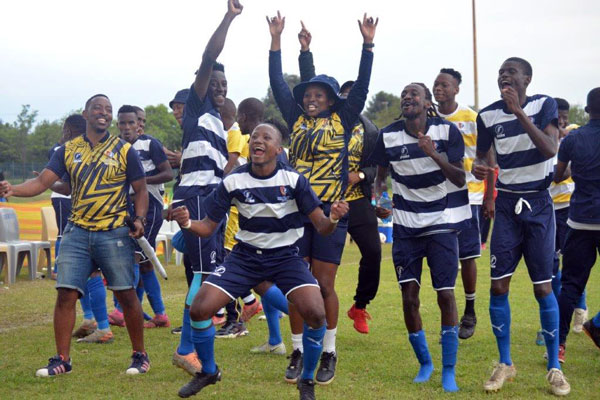
Central University of Technology men’s soccer team qualified for the 2023 Varsity Football Tournament held in Secunda, Mpumalanga, from 05 to 09 December 2023. The team secured a spot in the top 8 after winning 1 – 0 against the University of Venda at the University Sports South Africa (USSA) tournament. 

The annual Varsity Football Tournament is one of the seven sports in the Varsity Sports series. It involves the top football-playing universities in the country, which belong to the University Sports Company. The tournament is run by Varsity Sports South Africa and is endorsed by the South African Football Association and University Sport South Africa.

The CUT ladies’ soccer team also participated in the tournament but unfortunately did not make it after losing 3 – 4 to the University of KwaZulu Natal.

A big congratulations to the CUT gents for making it this far!

CUT

SA, Italy unite to advance computational research

0

South Africa is looking to advance basic and computational science development in the country, says higher education, science and innovation minister Dr Blade Nzimande.

This, after SA’s National Institute of Theoretical Physics (NITheCS) and Italy’s Abdus Salam International Centre for Theoretical Physics (ICTP) signed a memorandum of understanding (MOU) on the sidelines of the recently-held World Science Forum in Cape Town.

Computational science, also known as scientific computing or scientific computation, is described as the use of computers to understand and solve science and engineering problems.

The Department of Science and Innovation (DSI) says the agreement will see the institutes work together on a range of initiatives, including the development of theoretical and computational research and education in SA, as well as the exchange of scientists and students between the countries.

In a statement, the DSI says professor Francesco Petruccione, director of the NITheCS, signed the agreement together with professor Atish Dabholkar, ICTP director, in the presence of Nzimande.

“The partnership will not only provide important support for basic science in South Africa, but also serve as a model for future international collaborations in the field,” notes Nzimande.

“ICTP recognises the importance of building a solid foundation of basic science for the advancement of technology and innovation,” comments Dabholkar. “ICTP is ideally positioned to assist African efforts in scientific computing to address the challenges that are at the core of a sustainable future for humanity.”

Dabholkar further notes the agreement is in line with ICTP’s goal to strengthen its programmes in the field of computational sciences through the establishment of an international consortium on scientific computing.

South Africa’s NITheCS provides a platform for research, training and engagement in theoretical physics, astronomy and astrophysics, data science, mathematics, statistics, quantitative finance, bioinformatics and quantitative biology, Earth systems modelling and climate change modelling.

Founded in 1964, the ICTP seeks to drive global efforts to advance scientific expertise in developing countries, and advances international cooperation through science.

Petruccione concludes that the MOU is a step forward in the relationship between ICTP and NITheCS. “It will have a positive impact on the development of theoretical and computational sciences in South Africa and Africa.”

-ITWeb

Future looks bright for young artisan

0

When the Department of Higher Education and Training (DHET) launched the Decade of the Artisan campaign in 2014, Nelisiwe Duba, who was in high school at the time, could not believe her luck as she immediately saw this as not only her chance to pursue a career in the trades, but to become a successful female artisan entrepreneur.

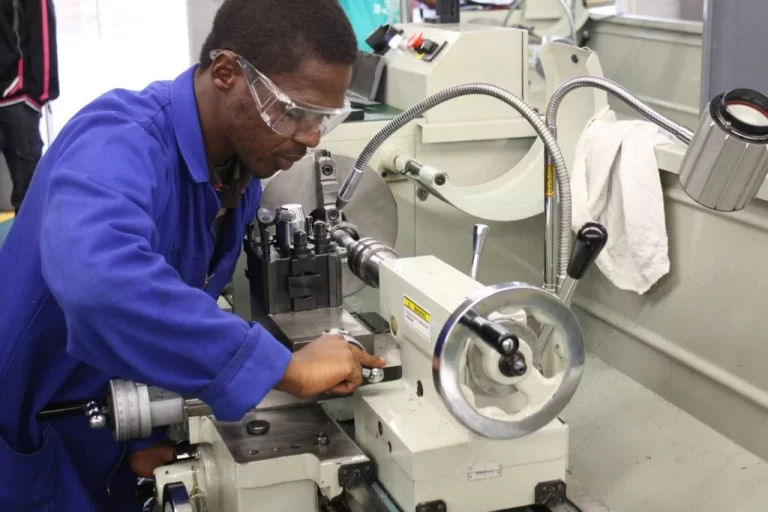
Since childhood, the 24-year-old from Ermelo, Mpumalanga, finds joy in using her own hands to fix and create things. It therefore is not surprising that eight years after the launch of the Decade of the Artisan, Duba is now a qualified artisan after completing a Mechanical Fitting and Turning Course in the Manufacturing and Construction of Components.

The Decade of the Artisan campaign aims to produce 30 000 artisans per year by 2030, as indicated in government’s National Development Plan (NDP) 2030 and the White Paper for Post School Education and Training (PSET).

Duba was among the artisans who were awarded certificates at the Artisans Graduation Ceremony for the Centres of Specialisation (CoS), held in Ekurhuleni on 29 November 2022.

The graduation ceremony, which was addressed by Higher Education and Training Minister, Dr Blade Nzimande, saw over 350 artisans from Technical Vocational Education and Training (TVET) colleges awarded certificates after successfully completed their studies in various fields.

An elated Duba, who enrolled at Sedibeng TVET College in Vereeniging said she decided to pursue an artisanal career because she is a very creative and open-minded individual.

“Fitting and turning is a great fit for someone who has a creative side, hence I chose this field. While in high school, I was doing Mathematics and Physical Science, which helped me to meet the requirements needed at the college.”

Duba believes that artisanal careers can help people, especially the youth, to open their own businesses.

“As artisans, we are people who are highly skilled with our hands. Job opportunities are getting scarce in our country, an artisanal career can help you open your own business and create job opportunities for the youth of South Africa.”

She encouraged young people to consider artisanal careers because “being an artisan allows you to be independent”.

“With funding, you have the skills to start your own thing besides working for someone else. One can do special trades or courses like welding, electrical and plumbing [amongst others],” Duba said.

Now that she has completed her studies, an optimistic Duba says the future looks bright for her.

“I am currently looking for employment, where I can apply the skills I acquired over the three-year period as an apprentice. The goal is to one day open a training centre or have a fitting and turning workshop.

“Also, winning the skills competition that was recently hosted by Japanese International Cooperation Agency (JICA) In Cape Town, where I won a big toolbox, has been eye opening in terms of opening my own workshop.”  

Concern over the number of artisans produced by SA

Addressing the recently held graduation ceremony, Nzimande emphasised the need to drastically increase the number of qualified artisans produced per year in order to realise the country’s National Development Plan (NDP) 2030 target.

Nzimande noted a decline in the total number of learners who entered the artisanal learning programme, with 10 302 learners having entered the programme during the 2020/21 financial year, reflecting a 36.5% (5 916) decline compared with the 2019/20 financial year.

According to the Minister, South Africa needs at least 60% of school leavers to pursue artisanal training to meet the country’s demand for scarce skills. 

The country is currently producing on average 20 000 qualified artisans per year.

“We honestly need to do more to encourage school leavers to pursue technical trades, as the government expands technical and vocational education. This is amongst the reasons there is a continuous need for suitably qualified artisans to sustain industries and support economic growth in South Africa,” the Minister said.

-SA GOV

KZN rolls out 4IR skills and technology development bootcamps

0

IN a bid to empower youth and ensure that they are equipped to participate meaningfully in the digital economy, KwaZulu-Natal Premier Nomusa Dube-Ncube has aggressively embarked on the journey to drive the province as one of the technology hubs of the country.

Dube-Ncube attended the second day of the Fourth Industrial Revolution (4IR) Skills and Technology Development Bootcamp held on Wednesday at the Archie Gumede Conference Centre in Mayville.

The two-day bootcamp saw 280 learners, including eight inmates from Westville Correctional Services Centre, being trained in various skills, including cyber security, data analytics, robotics, coding, broadband and e-sporting.

Since assuming office in August, Dube-Ncube has prioritised the implementation of the Connected Smart Province Project, as part of accelerating the digital revolution and has aggressively embarked on the journey to catapult KwaZulu-Natal as one of the country’s technology hubs.

Speaking to the youth at the bootcamp, the Premier said the provincial government wants to ensure that the province moves at the required pace in terms of implementing the Fourth Industrial Revolution as the new frontier of economic growth and the pillar on which industries of the future will be built.

“Our view remains that if we let the opportunities brought about by the 4IR miss us, we risk putting the future of our next generation into bleakness. This is a reality we can no longer postpone because it will have dire consequences for our development prospects.

“The sky is not the limit for the youth in our province hence we are creating an enabling environment for them to have the skills set and entrepreneurial acumen to be part of the multi-trillion dollar digital economy,” Dube-Ncube said.

She added that the provincial government is now rolling out bootcamps in all the districts where they are fast-tracking skills and technology development in the 4IR space among young people.

“We want the young people gathered here today to help create smart solutions to solve daily challenges such as using smart technology to find missing bodies that were washed away by the floods in April this year,” Dube-Ncube said.

The first 4IR bootcamp, which was held at the Durban Exhibition Centre in November benefitted over 450 young people.

Mobile digital skills lab

Meanwhile, as part of putting the province on the 4IR digital path, the Premier recently opened a Mobile Digital Skills Lab in Pietermaritzburg, which is being used to train young people in Business Intelligence and Data Analytics.

The Premier said the programme will be rolled-out to all the districts in the province.

She said 20 young people are currently on training, with 75 more being recruited for laptop and cellphone repairs, so that they can be empowered to open their own businesses.

Dube-Ncube firmly believes that the Fourth Industrial Revolution must contribute towards growing the provincial economy.

“For this to become a reality, the province is investing in advanced Information Technology systems and infrastructure to benefit all citizens, especially rural and township communities. 

– SA GOV

Wits takes lead in Global Innovative Seismic testing project for new generation exploration

The FUTURE (Fibre optic sensing and UAV-platform techniques for innovative mineral exploration) Project is funded by a consortium of European-South African governmental agencies for the next two years and sees Wits step up as project lead. It pulls together collaborators from the University of Venda, Uppsala University in Sweden, Politecnico di Torino in Italy as well as Geological Survey of Sweden (SGU) and French company Sercel. Stakeholders such as Nordic Iron Ore in Sweden and Gold Fields in South Africa are also partners and benefit from the outcome of the solutions.  

In this latest phase of the project, the global team of 22 researchers and scientists gathered in South Africa to set up an array of 400 wireless sensors for active and passive recording at Gold Fields’ South Deep Mine operations in Westonaria, which is among the world’s deepest gold mines.

The project has been a breakthrough in synchronising a range of seismic testing on a working mine and also to meet the aims of being cost effective and environmentally sensitive in its research footprint.   

Professor Musa Manzi from Wits School of Geosciences, co-ordinator of the FUTURE project, says: “For the first time we’re deploying wireless sensors on the surface as well as sensors in mine tunnels and in boreholes in such a scale. This testing is also all being done in on an active production mine at a depth of about three km, that’s so remarkable. “

“We have continuous recording on surface and we’re testing a prototype GPS-time system developed under the Smart Exploration Project that can be used inside a mine tunnel or GPS-denied environment. So, we are synchronising surface sensors with tunnel sensors and also using fibre optic sensing cables so that we have both passive and active seismic recordings to map the ore body and complex geological structures ahead of the currently mined-out area.”

Manzi says extending the life of mines and achieving sustainable extraction of critical metals at deeper levels are the next direction for modern mining. But he says it will call for greater emphasis on technology and innovation for safer ways to mine, mitigating risks, ensuring less impact on the environment and being able to keep costs down.

Their testing at South Deep mine has made use of a mini mobile seismic vibration machines that causes less damage to the environment but is powerful enough to send vibrations three kilometres underground to be recorded and analysed as sound waves. He adds that having more comprehensive seismic data means better analysis and mapping. In turn, it means more accurate identification of viable ore bodies and being able to mitigate risks associated with deep mining such as mining-induced seismicity.

For Manzi and his European colleagues this project has been 18 months in the making. It successfully merges multiple research targets at this one site in the spirit of deepening scientific understanding, knowledge sharing and skills transfer especially between the cohort of up and coming young scientists from South Africa, Sweden and Italy.

Manzi adds: “One of the key strengths of this project is that we have a lot of young professionals – postdocs, PhD and MSc students. It’s important for them to be exposed to this level of scientific research and also to be able to start creating their networks with other young people from different countries, because in the next five or 10 years they will be developing their own projects and technologies that can enhance the future of sustainable mining and mineral exploration for the next generations.”

Geophysicist Professor Valentina Socco at Politecnico di Torino in Italy is one of lead researchers and partner on the FUTURE project. On this project she has focused on modelling and analysing guided seismic waves in the South Deep mining tunnels. Socco says guided wave records can be processed to generate images that give geophysicists better understanding of the properties of the materials and minerals that lie behind the tunnel walls.

“It means that one can get closer to the target exploiting existing mine infrastructure – like the established tunnels – more effectively,” she says.  

Socco says the research from the FUTURE project has potential to inform how Italian mining can be revived after a downturn for close to a century already. It needs to make a comeback that using cleaner and smarter technologies for exploration.

She adds: “South Africa has a unique geology so it’s a very important opportunity for us to be able to work on a pilot project at the depths of South Deep mine because in Italy, we don’t have such operations.

“With the FUTURE project we can work with colleagues to integrate different approaches to improve our global capability.”

For Professor Alireza Malehmir from Uppsala University in Sweden, he and Manzi have enjoyed years of collaboration, testament to how universities can forge stronger partnerships for shared knowledge building. He and his students under the FUTURE project banner have focused on using fibre optic seismic sensing for collecting big data sets for processing and mathematical modelling.

Malehmir says the data from seismic testing in South Africa has the potential to enhance Sweden’s ability to find mineral resources in hardrock environments and to be able to apply the techniques for “upscaling and for commercial surveys”. Future applications could also include the likes of identifying sites of carbon capture and storage, an essential component in adapting to a world facing a climate emergency. Opportunities are tremendous if realised.”

Malehmir adds that the success of the FUTURE project in this phase of the testing lays stronger foundations for long-term collaborative research that will impact industry positively. But he says the practical experience has had great value in sharpening different skillsets for the students.

“Students taking part in this project have been able to have hands-on learning and to work with modern equipment directly. They’ve also been able to understand and see how data they use are collected. Importantly, they’ve also learnt to develop their managerial skills in managing a big project like this and understanding what it takes to pull together so many different elements.“

“It is a different kind of challenge but it allows them to also think like managers, like entrepreneurs, and to become people who note problems and find solutions,” he says.

The Swedish, Italian and French teams return to the home countries in the middle of December but the next in-the-field phase of the FUTURE project will resume with more active testing in the first quarter of 2023 in South Africa.

-Wits University

Human brain gene improves learning and memory skills of mice, study finds

0

Chinese scientists say they have introduced a human brain gene into mice, which resulted in improved learning and memory skills in behavioural tests.

The study could provide insight into how the brain develops and potentially into treatment for intellectual disability, according to the research team from the State Key Laboratory of Stem Cell and Reproductive Biology at the Chinese Academy of Sciences’ Institute of Zoology in Beijing.

Their findings were published in the peer-reviewed journal Cell Discovery on November 22.

The team, led by Professor Jiao Jianwei, said they had been looking at the connection between human intelligence and the structure of the brain.

They were particularly focused on the cortex – or outer layer – of the brain. It plays an important role in consciousness and is believed to contribute to higher cognitive functioning such as attention, thought, perception and episodic memory.

Its many folds have given humans and many “higher mammals” the intelligence to cope with more complex issues. The wrinkled cortex can contain billions of neurons in a limited cranial space, and these can form large-scale neural circuits that increase intelligence.

Cortical folding is regarded as key to brain development, but the molecular and cellular mechanisms of this process have remained unclear.

Jiao’s team wanted to find out more after their previous research identified the human gene SERPINA3 as a potential candidate associated with cortical expansion.

Using this human gene, they created mice using gene-editing technology. The gene successfully expressed and was translated into protein in the neural cells of the mice.

The researchers found that an overexpression of SERPINA3 protein had increased the number of neural stem cells in the animals’ brains during neural development. According to the paper, single-cell sequencing analysis of the cerebral cortex also indicated better neuron activity.

Behavioural tests – measuring spatial learning and memory – also showed enhanced cognitive skills in the genetically altered mice, with improved working memory and learning ability.

“The result shows the overexpression of SERPINA3 in mice induced cortical development and improved cognitive abilities,” Jiao said in the paper. “Further, SERPINA3 increased the number of neurons.”

The researchers noted that further research was needed but said the results of the study indicated that the human gene was linked to the formation of the cortex folds.

“Our work could provide a better understanding of human cortical folding and cognitive development. It will enrich the understanding of neocortical expansion and provide insights into possible treatments for intellectual disability,” Jiao said in the paper.

“Several questions still need to be further explored. We will provide more direct evidence in neural science to show that the improvement in cognition resulted from cortical folding. And provide a better model that describes the exact neural circuit changes in mice.”

Daily Bulletin

DBE launches probe into matric exam cheating allegations

STAFF REPORTER|

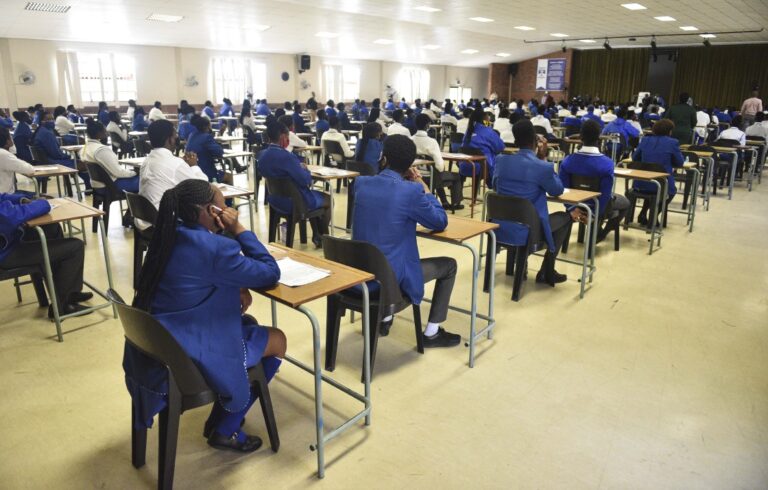
THE Department of Basic Education has launched a probe into allegations of cheating in the recent national senior certificate exams involving more than 1 000 pupils from six provinces.

The allegations were reported to the Department of Basic Education through its WhatsApp hotline.

On Sunday, Department of Basic Education confirmed that it was investigating the allegations and that the director-general Mathanzima Mweli has approved the creation of a task team to investigate the allegations.

Departmental spokesperson Elijah Mhlanga said that the subject identified in the Mpumalanga exam cheating scandal was economics.

Dozens of Mpumalanga learners are alleged to have paid teachers up to R1500 to join WhatsApp groups, where answers were posted on the platform during exam sessions.

It is alleged that in addition to posting answers on the WhatsApp groups, invigilators provided answers to pupils during toilet breaks and even passed notes to them in exam halls.

One of these WhatsApp groups was allegedly called “Road to Varsity” and provided answers to Maths and physical science exam questions.

The whistleblower claimed that over 370 grade 12 students from three Mpumalanga schools were part of the “Road to Varsity” WhatsApp group.

There are also allegations of learners using various cheating methods in Maths Literacy, Economics and English papers in Gauteng, Limpopo, the North West, Eastern Cape and Western Cape.

Mhlanga told the SABC that there could be criminal charges because in recent years the department has been working with the Hawks on matters of irregularities involving exams.

“So, we are exploring all options to make sure that the punishment is severe and serves as a deterrent. If there is a Whatsapp group it means that people are coordinating within that platform. Several things could happen,” said Mhlanga.

“1. They could be asked to rewrite. 2. They could be banned for 1-3 years from writing their exams which means their lives would have to pause because of what they have done. But Umalusi would also make the final decision.”

INSIDE EDUCATION

Gauteng MEC ‘deeply’ concerned about community violence spilling over to schools

WENDY MOTHATA

Community violence often gives rise to subsets of associated violence that impact on schools, according to Gauteng MEC of Education, Matome Chiloane.

Chiloane was speaking at the department’s school safety indaba held in Boksburg on Saturday.

He said that schools in violent communities often exhibit traits of violence.

He said these are schools wherein learners attend with very life-threatening weapons such as knives, pangas and, in some instances, pistols.

“It’s important that as we address the topical matter of school safety, we must not do so devoid of context,” said Chiloane, adding that schools are a microcosm of their communities.

“By implication, a school will always reflect the community in its immediate environs. In a way, what transpires in our communities will, without fail, manifest itself in our schools.”

Chiloane said non-violent communities breed peaceful schools, while “the contrary is also true.”

“Another example is that communities where drugs are easily accessible and substance abuse is rife will invariably have a spillover effect on our schools,” he said.

The MEC said that the Department must find a way to cushion schools from social ills that are troubling the communities.

“It goes without saying that social ills such as violence and substance abuse cannot coexist with a conducive, quality learning and teaching environment.”

“The learner to learner and learner to teacher violence that is now so prevalent because it is usually captured on phones and made to trend on social media must be condemned with all the contempt it deserves. It is for this reason that when dealing with possible solutions to school safety, we will need a collaborative, holistic, and comprehensive approach that involves all stakeholders.”

“These solutions must not just be limited to infrastructure safety, they must also include how we will ensure the safety of our learners, educators, and the entire school community at large.”

As part of the immediate interventions, Chiloane said almost all the no fee schools will have a minimum of four patrollers keeping the schools safe during the imminent holidays.

“In total, we will have 5378 patrollers deployed to our schools, and the visible policing (VISPOL) unit has also been alerted to pay particular attention to the 245 identified hotspots.”

Chiloane used the opportunity to address the backlog of school infrastructure in the province.

“I feel compelled to also share that to address the backlog of school infrastructure in the province, the Department has introduced a Self-Build program. This program enables schools that are competent and able to build additional classrooms to accommodate the needs of the school.”

“Through this program, we will cumulatively upgrade and refurbish 100 schools by the end of this term of office. This program sees the department transfer funds directly to schools, and this fund is then managed by our principals.”

INSIDE EDUCATION