Home Blog Page 235

Matric exams to conclude this week with rewrites of some papers

0

THE writing of the National Senior Certificate (NSC) examinations is set to conclude this week, with rewrite opportunities arising from disruptions in some parts of the country.

The NSC examination will conclude on 8 December 2022 with the Economics Paper 1 written in Gauteng only by 53 learners from Phandimfundo Secondary.

Today marks Day 28 of the 30-day examination, in which 215 of the 222 question papers have already been written.

In a statement on Sunday, the Department of Basic Education (DBE) said that during the writing of the examinations, it received reports requesting that some candidates be granted permission to rewrite examinations in selected subjects.

“Various reasons were provided to substantiate these requests. The DBE assessed the requests from Provincial Education Departments (PEDs) and in instances where valid reasons were presented, which were not of the learners’ doing, the DBE and Umalusi granted permission for rewrite opportunities,” the DBE said.

Rewrite opportunities have been granted in the following selected subjects:

  • Mathematics Paper 2: Mpumalanga Department of Education
  • Mathematical Literacy Paper 1: Eastern Cape Department of Education
  • Mathematical Literacy P2: Mpumalanga Department of Education, Eastern Cape Department of Education and North West Department of Education
  • Economics P1: Gauteng Department of Education
  • English First Additional Language Paper 1: Limpopo Department of Education and Western Cape Department of Education

According to the department, some of the reasons for the missed examinations include:

  • – Candidates who experienced technical glitches during the writing of Computer Applications Technology Paper 1 and Information.
  • – Technology Paper 1 or who, due to load shedding. could not complete the examination.
  • – 53 Economics P1 candidates from Phandimfundo Secondary Gauteng who missed the exam due to the principal’s actions.
  • – 1 127 candidates from seven schools in Witbank, Mpumalanga, who missed exams due to community protest actions.
  • – Two pregnant learners from the Western Cape and Limpopo, who were not allowed to write English P1.
  • – Three learners from the North West, who missed Maths Literacy Paper 2 due to flooding.
  • – Four learners from the Eastern Cape, who missed Maths Literacy P1 and P2 due to the principal’s actions.

The examinations in the selected subjects are scheduled to be written over two days from 7 to 8 December 2022.

“The matter regarding Mathematics Paper 2 has been resolved. Question 5.1 (worth seven marks) in the Mathematics P2 was found to be faulty.

“The question will be excluded from the marking process. The question paper will be marked out of 143 and the mark will be upscaled to 150,” the DBE said.

Marking sessions will commence on 10 December and conclude on 22 December 2022. The department said that all PEDs are on track with their marking preparations.

“Scripts are currently in storage. Scripts will be moved to marking centres from the 7/8 December 2022,” the department said.

SA NEWS

Senior Eastern Cape Education official appear in court for PPE corruption

0

A senior Eastern Cape Education Department official, his wife and a businessman have appeared at the Zwelitsha Magistrate’s Court on charges related to a R4 million Personal Protective Equipment (PPE) tender.

Supply Chain Management chief director, Marius Harmse, his wife Elanore and businessman, Sigqibo Makupula, appearted in the court on charges of fraud, money laundering and corruption. 

They were granted R10 000 bail each.

The arrests come after an investigation by the Special Investigating Unit (SIU) that revealed that Harmse had indirectly received some R328 000 in kickbacks for awarding the tender to Makupula’s company, Kups Trading.

“The SIU probe found that Makupula transferred a sum of R573 000 towards the purchase price of a vehicle, which was to be purchased by Mr and Mrs Harmse to the value of R850 000. Mr Harmse paid the balance of R277 000 to Star Motors, with the view to settle the balance of the purchase price. The vehicle was registered in the name of Mrs Harmse on 3 February 2021,” SIU spokesperson Kaizer Kganyago said.

He explained that the vehicle was then sold months later and Harmse allegedly tried to conceal the proceeds.

“Harmse approached the Sales Manager at Star Motors, Mr Hubbard, during April 2021 to place the said motor vehicle on their pre-owned stand as a consignment unit to try and sell it on Mr Harmse’s behalf. Mr Hubbard agreed . The said motor vehicle was sold on 10 May 2021 and on the instruction of Mr and Mrs Harmse, to the value of R800 000.00.

“The purchase price was paid into Mr and Mrs Harmse’s Standard Bank account in the name of Trentrade 23 (Pty). Furthermore, the SIU investigation revealed that this is where the integration took place, the purchase of the said motor vehicle and it being transferred into the name of Mr Msimango [another Star Motors employee] and not that of Mr or Mrs Harmse shows their intent to hide the proceeds and reintroduce [them] as part of the financial system,” Kganyago said.

SA NEWS

South Africa embarks on university language audits

THE South African Centre for Digital Language Resources (SADiLaR) has officially began rolling out language audits in the country’s higher education institutions—a step towards offering education in more of the country’s myriad languages.

The audits will measure the types of resources available at public universities and identify what is still required to implement the Department of Higher Education and Training’s Language Policy Framework from 2020.

Multilingualism in higher education institutions will mean greater access to learning, student success, social cohesion and transformation, said linguistics professor Langa Khumalo, executive director of SADiLaR and chair of Universities South Africa’s Community of Practice for the Teaching and Learning of African Languages, in a statement.

“The audit will give us a sense of what is available and from there we can begin to develop a strategy to fill in the gaps on the one hand and ensure that we effectively use the resources available across the academy so that no institution gets left behind,” he said.

Addressing the language barrier

South Africa’s language policy framework is designed to develop and strengthen indigenous languages in scholarship, teaching and learning at the higher education level. The country has 11 official languages, but its academic output is dominated by two: English and Afrikaans.

Pilot language audits took place at the University of KwaZulu-Natal and the North-West University ahead of the initiative’s official rollout on 4 November at the University of Mpumalanga. Further audits kicked off at the Vaal University of Technology on 22 November and at the University of South Africa in Pretoria on 28 November. More will follow in due course.

At VUT’s rollout, vice-chancellor and principal Dan Kgwadi said it is time that languages are treated equally in higher education. “All languages are as important as others. It’s imperative to develop languages, not only at the university level but at the societal level as well,” he said.

The audits comprise an institutional questionnaire and discussions with staff, students and workers. Kumalo said the audits were imperative as the implementation of the language framework will require significant resources: “Without these resources and a way for institutions to pool [them] and share strategies and expertise, this framework will be a non-starter.”

Source: ResearchProfessionalNews 

Six priorities to get Kenya’s curriculum back on track or risk excluding many children from education

Kenya’s education curriculum was reformed in 2017 to improve its quality – but now many Kenyans are calling for change again. Public disillusionment with the competency-based curriculum has forced a government review.

Frustrations with the curriculum centre around the complexity of learning activities and its sustainability given the high costs involved in its delivery.

The previous 8-4-4 curriculum, launched in 1985, required eight years of primary schooling and four years each of secondary and tertiary education. Critics were unhappy with its emphasis on rote learning and teacher-centered pedagogical practices. 

They also noted that graduates of the 8-4-4 curriculum were ill-prepared for the workforce. A 2009 government evaluation found the system had limited practical training opportunities and a heavy focus on examinations.

In 2011, the government appointed a task force to review 8-4-4. This review eventually led to the competency-based curriculum, a 2-6-3-3-3 system.

It requires two years of pre-primary education, six years of primary education, three years each of junior secondary and senior secondary school, and a minimum of three years of tertiary education.

The competency-based curriculum emphasises student-centered teaching and practical experiences that better equip learners with 21st-century skills like critical thinking and problem-solving.

As experience from numerous countries shows, education reforms can be messy and rollouts messier. Success requires adequate planning.

In our view as education researchers, the adoption of the competency-based curriculum in Kenya shows glaring gaps in design, planning and execution. At the very basic level, there is a looming question on whether the curriculum is well understood. It is vastly different from 8-4-4, and many stakeholders, including parents and teachers, aren’t clear about how it works and what it requires of them.

Uphill task

A national curriculum provides a framework and guidance on the core knowledge students need to learn in key subjects. It’s a critical driver in teaching and learning. However, it exists within an intricate set of interconnected educational components that require intentional planning and execution to function optimally.

Failure to take multiple aspects into consideration – such as teaching capacity, assessments, transitions and resources – compromises the best intentions and harms a large population of learners.

In Kenya’s case, the competency-based curriculum ship has sailed; scrapping it now would do more harm than good.

Firstly, large financial investments have been made. According to the Kenya Institute of Curriculum Development, the government has spent more than US$1.6 billion on curriculum reform. This includes the money spent on research, assessments and a two-year pilot study.

Secondly, we believe that the competency-based curriculum may potentially improve Kenya’s education system and provide learners with rich learning experiences.

The government has taken the first step in addressing discontent with the curriculum by appointing a task force to address the public’s concerns.

A new academic year begins in January 2023, with the first cohort of 1.3 million learners expected to join junior high school. Kenyans needs clear guidance on this transition. They need to know where junior high schools will be located, for instance, and the costs involved. This will help ease the frustrations caused by current uncertainties.

Based on our research experience on curriculum development, teaching and education systems, we have drawn up a list of six priorities the task force should consider. These include acknowledging that Kenyans’ frustrations with the curriculum change are legitimate, and that to be successful, the system needs adaptations.

What’s wrong?
The competency-based curriculum focuses on the development of competencies across subject areas, with a shift from students demonstrating what they know to demonstrating what they can do.

Some parents are receptive and enthusiastic about these aspects of the new curriculum. For those against it, the complaints have focused on affordability and feasibility.

At face value, practical experiences are relevant and can enrich students’ learning. However, challenges arise when resources are unavailable and parents are required to constantly purchase and improvise resources.

In an already unequal society, this model strains many families, particularly those who live in low-resourced households, outside urban centres, and those in places without access to basic infrastructure like electricity.

The curriculum also demands more parental engagement than 8-4-4 did. Some parents feel unprepared to get involved.

The frustrations with the competency-based curriculum may be magnified because of a familiarity with 8-4-4 – in place for 32 years – and the difficulties that come with change. Yet, concerns about its demands, both financial and skill-based, are legitimate for many parents who see the curriculum as catering only to those with particular skills and those who can afford the time and resources required.

Kenya isn’t the first country in the east African region to launch a competency-based curriculum. Rwanda did it in 2015. Comparing the experiences of these two countries requires caution, given the differences in contexts, education policies, and political and cultural environments. Rwanda, however, faced some challenges similar to Kenya’s, including limited availability of resources and a persistence of old teaching practices.

Next steps
There’s an immediate need for stakeholders, particularly ardent supporters of the curriculum, to lessen the grip on their vision and evaluate where the curriculum rollout in Kenya missed the mark.

Task forces can create change by bringing stakeholders together and forging alliances. But they can also be costly. They have a reputation for under-delivering beyond publishing reports.

The curriculum task force should consider these six priorities.

. Reassure Kenyans that the stakes are high and providing a quality curriculum for learners is the priority. Take steps to rebuild public trust by addressing pressing challenges, such as financial strain accruing from the costs of learning materials. Guide schools on how to address this challenge.

. Provide the public with information that fills knowledge gaps. For instance, teacher training, assessments and transitions.

. Explain how the curriculum works in low-resourced households and schools, among students with special needs, and in settings with large class sizes and high student-teacher ratios.

. Re-evaluate expectations on parents, remove extraneous demands, avoid blaming them and invite them as collaborators.

. Identify the right drivers of change and avoid replicating avoidable mistakes. For instance, prioritise students and set aside the politics and in-fighting among educational agencies and associations.

. Embrace local solutions and creatively use existing resources. Avoid surface-level solutions and remove existing barriers drawing on empirical evidence.

There is value in curriculum reforms and in adapting best practices from different contexts. However, many challenges with the Kenyan curriculum stem from mismatches with the local context, inadequate preparation and foresight.

Ignoring the realities of large populations of learners and parents, and making sweeping assumptions doesn’t make these realities go away.

The task force has a monumental and urgent responsibility to bring Kenyans closer to a resolution.

-TheConversation

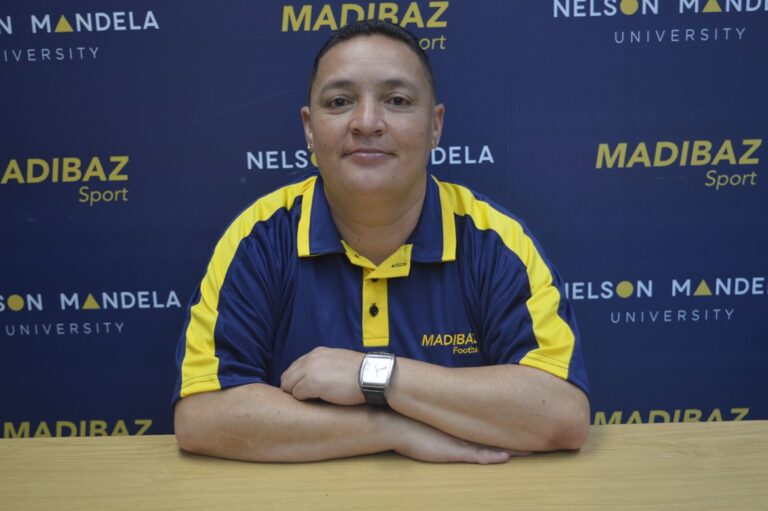
Qualification for Varsity Football the goal for Madibaz

0

THE Madibaz football teams will have qualification for the Varsity Football tournaments squarely in their sights when the University Sport South Africa week takes place in Secunda in Mpumalanga.

They will be among a total of 40 men’s and women’s sides that will be chasing USSA glory from December 5 to 9 while also eyeing entry into the prestigious Varsity Football set-up for 2023.

Madibaz Sport football manager Mark Tommy expected plenty of challenges in the national varsity competition but felt that the men’s team would be motivated to make their mark on the back of their recent strong performances in the local leagues.

While the first team ended the 2021/22 SAB Regional League in third place, they are currently leading the 2022/23 log.

This augured well for coach Elrio van Heerden and his troops as they gunned for a spot in the top eight, according to Tommy.

“That will see them qualify for Varsity Football.”

Although he made their goals for the USSA tournament clear, Tommy acknowledged that it would be a tough passage for both the men and women.

“Varsity Football has been dominated by the inland universities as well as the University of Western Cape,” he said. “These are all institutions who have invested greatly in their football programmes.”

The Madibaz men will be up against the perennially strong Tshwane University of Technology outfit and also face stiff competition from the universities of Pretoria, North-West, Free State, Johannesburg and KwaZulu-Natal.

Tommy said women’s coach Niesie Daniels was buoyant about their prospects after several good performances in the provincial competitions.

They finished runners-up in the coastal group of the inaugural Sasol Provincial League after being promoted from the Regional League following the 2021 season.

But Tommy conceded that the USSAs would be “on a different level” because they would be competing against sides who played in the National First Division – including the University of Western Cape, who are currently lying in second, and top-five teams such as TUT, UJ and UP-Tuks.

The top eight men’s and top four women’s teams will qualify for next season’s Varsity Football tournament.

The Madibaz teams are ranked 11th (men) and 10th respectively for the USSA tournament.

SUPPLED

Jendamark centre at Woodridge College to develop 4IR skills

0


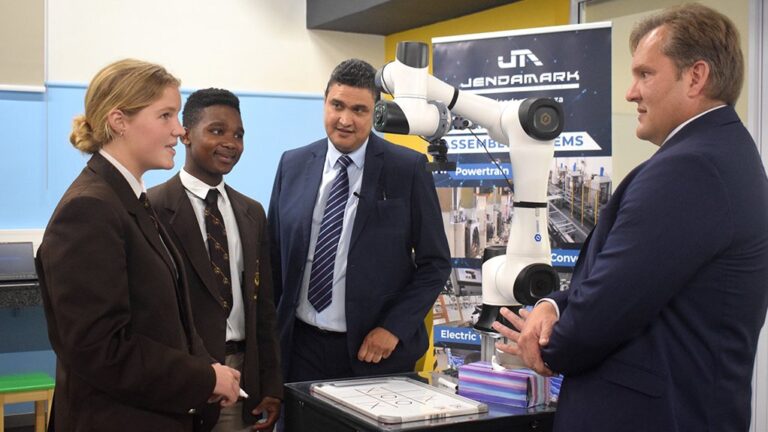
INDUSTRIAL automation company Jendamark Automation has partnered with independent South African school Woodridge College to develop and equip the Woodridge Innovation and Technology Centre that is focused on readying pupils for a world transformed by the Fourth Industrial Revolution (4IR).

The newly opened centre features the latest 4IR technologies and will give pupils hands-on, practical experience in working with collaborative robots, coding and programming, three-dimensional printing and modelling, artificial intelligence, the Internet of Things, drone flying and more.

“Exposing pupils to this type of advanced and integrated technology, which is focused on the 4IR, will give them the skills and the competitive edge when entering university or joining the workforce,” says Woodridge College headmaster Derek Bradley.

The equipment and expertise provided by Jendamark would allow the centre to meet the goals the partners had jointly set. Real-life applications are a critical aspect when teaching children about a subject, he emphasised.

Further, while keeping a curriculum up to date with the rapid revolution of the working world was challenging, a focus on skills development was key to navigating change, says Woodridge deputy head for academics Dr Catherine Logie.

“If one has a curriculum which not only focuses on content but also on skills, then the content becomes a means to an end and pupils are able to adapt and learn as environments change. Having partners outside the fields of education gives teachers the opportunity to learn new things and adapt their lessons.

“A tech centre is not just about coding or robotics but is about having a space which is equipped differently from a standard classroom where pupils and teachers can explore parts of the curriculum. Already the Physical Sciences department is looking at how they can utilise the space and some of the equipment for expanding their practical work on motion. The new centre will generate renewed excitement around learning,” she said.

Additionally, it was exciting for the school to be leading this education revolution and expanding its digital programme offering, notes Woodridge Information Technology (IT) department head Nicholas Kock.

“In addition to our IT, computer-aided translation and computer literacy programmes that we currently offer in our existing computer labs, the new centre allows us to implement 4IR technologies and twenty-first-century skills,” he notes.

These skills included problem-solving, computational thinking, awareness of the social and ethical issues around technology as well as its responsible use.

“Our pupils are extremely fortunate that we have partnered with Jendamark, as this is an organisation that is using the latest technology in their production lines and in their research and development,” he added.

Meanwhile, Jendamark decided to partner with Woodridge College as they shared the view that learning should take place through practical experience, not just classroom theory, Jendamark operations director Siegfried Lokotsch says.

“We have a passion for education and have a long-term vision to provide relevant learning and ed-tech to pupils. While there is a rise in demand from parents for schools to offer robotics and programming, we also realised that they do not really understand what it is all about. Therefore, we are also trying to educate parents and children about the real-world relevance and possibilities of 4IR,” he highlights.

Additionally, if the Woodridge pilot proved to be a success, Jendamark hoped to replicate the model in the future.

Further, in addition to providing on-going technology support and regular equipment upgrades, Jendamark will facilitate tours of its manufacturing plant where it builds and exports high-tech automotive component assembly systems.

Here, pupils will see the real-world, industrial applications of what they are learning in action and be inspired to explore possible career options, such as engineering or software development.

Jendamark’s ODIN technology team will collaborate on the curriculum offered to ensure that it remains relevant to the needs of industry, Lokotsch says.

The initiative is in line with the strategic plan for the school which was commissioned some 18 months ago, says Woodridge Trust chairperson Andrea Puggia.

“Two key strategic goals that emerged from this plan were the need to provide a relevant curriculum that produces innovative problem solvers, and to ensure Woodridge has the infrastructure to meet the strategic needs of the school.

“This project embodies both goals and it is most gratifying to see the strategic plan being integrated into the fabric of the school,” she says. 

Engineering News

Gauteng Education MEC, Matome Chiloane,  calls for patience over Grade 1 and Grade 8  placements

PHUTI MOSOMANE

GAUTENG Education MEC Matome Chiloane has urged parents to be patient as the department was not able to place every learner who applied for Grade 1 or 8 for the 2023 academic year by Wednesday, as earlier agreed. 

As of December 1 this year, the GDE is expected to continue with efforts of placing applicants who were unable to provide the department with their proof of address during the application process.

“It must be noted that, after conducting a thorough analysis on the Online Admissions System, it is unlikely that the remaining number of learners will be placed by end of business today (Wednesday), as purported in our previous communication to the public. As such, we wish to profusely apologise to parents for this inconvenience,” the GDE said in a statement. 

The department said 31 549 (Grade 1: 8 142 and Grade 8: 23 407) remain to be placed. 

It said officials across the province are working tirelessly to ensure that these learners are adequately placed.

Chiloane assured parents that the placement process will continue until all unplaced learners are placed. 

“We wish to assure parents that when the 2023 academic year commences, we are adamant that every Grade 1 and Grade 8 learner in Gauteng will be at a desk with learning material in a class with an educator receiving quality education. As such, we appeal for patience among parents as we embark on the process of finalising the placement of all unplaced learners,” said Chiloane.

He said the biggest challenge to the department is increasing capacity at schools in high pressure areas that have received large volumes of applications which exceed the number of learners a school can accommodate.

“We have therefore decided to increase capacity at all identified high pressure schools by providing mobile units that will be delivered before the commencement of the 2023 academic year,” he said. 

By Wednesday, 30 November 2022, a total of 268 192 Grade 1 and Grade 8 learners, whose parents applied using the GDE Online Admissions System, had been successfully placed. 

A total of 135 465 Grade 1 learners and 132 727 Grade 8 learners have been placed in preparation for the 2023 academic year.

Officials at the department said they have also strengthened the transfer placement system, meaning that some learners who could not be placed at preferred schools due to capacity constraints will be transferred to schools with available space. 

From Thursday, 1 December 2022, the GDE will commence with the process of placing all applicants who were unable to provide their proof of address during the application period.

During this process, all applicants who submitted incomplete documents (proof of residential address) will be offered placement at schools with available space. 

Parents will receive transfer placement offers via SMS, and may also log on to the system to check their placement status. 

“We wish to reiterate that the system will be open from 20 December 2022 until 20 January 2023 for late applications to accommodate parents who were unable to apply. Parents who applied during the application period MUST NOT re-apply during the late application period,” the GDE said. 

It said applications made during the late application period will be placed at schools with available spaces. 

Schools that have reached full capacity will not be available for parents applying during the late application period. 

Late applicants will be allowed to submit only one application, which will result in immediate placement.

Upon submitting a late application, applicants must submit all documents physically at the school they applied to from 9 January 2023 to finalise their placement.

INSIDE EDUCATION

UNISA| How Africa’s biggest university made the final push for online education

0

THE University of South Africa (Unisa) needs almost no introduction as the biggest university on the continent, and a pioneer of distance and online education.

What many may not know is that, prior to the COVID-19 pandemic, Unisa did things in a more traditional way when it came to examinations. Like most universities Unisa required that students physically visit a dedicated exam centre to sit down and write exams with pen and paper.

How this changed when the pandemic hit is an interesting look at how technology in education rapidly evolved over the last few years.

As COVID-19 took root in South Africa in 2020, many students began to wonder what would become of their final assessments for the May / June exam period. Unisa finally made the change in April 2020 following governmental changes to lockdown.

“The extension of the national lockdown declared by President Cyril Ramaphosa has meant that Unisa has had to make some far-reaching decisions regarding the May/June 2020 examination period. The May/June 2020 examination period will continue, but no venue-based examinations will be written during this time. The university will, instead, make use of alternative assessment formats for this examination period,” the university announced at the time.

Announcing such a big change to the way exams were taken, just a month before they were set to start, caused quite the problem for the university and its students. Those who preferred not to partake in the new online exams – either because of lack of access to a computer or internet issues – could instead defer to the October / November 2020 exam period with no penalty to their academic record, or additional monetary costs.

Several problems crept up for this maiden voyage, mostly due to technical issues and load problems as servers were strained, but thousands of students successfully completed their papers and continued with their education as planned. After some delay, results from these exams were published too, completing the first attempt at this system by Unisa.

In September 2020 the continuation of online exams were confirmed by Unisa, which stated that all future examinations would be held in this way. This has continued in the intervening years with the Unisa student portal MyUnisa now featuring a MyExams dedicated section for these assessments.

All of this would have been impossible without advances in personal computing and home internet. Should a pandemic like COVID-19 have appeared even a decade ago it’s unlikely that such a successful endeavour could have been carried out by Unisa. With this success the university even sought to move other in person activities online, such as student orientation.

With these changes Unisa has become even more ingrained in the fundamentals of online and distance education.

Ask any past Unisa student, or any university graduate in general, where the real work is done, the likely answer is on a notebook or more recently a Chromebook. This form factor of portable devices with a screen, physical keyboard and trackpad has proven for decades to be the de facto single answer from taking those first notes in class all the way to writing that final exam.

Notebooks and Chromebooks have become even more uniquely suited to the online exam environment with Unisa and many other institutions requiring that a webcam be turned on and running proctoring software. This software uses a device’s camera and sometimes microphone to make sure that the right student is writing the right exam with no outside help.

Even the South African government recognises the need for these devices as the National Student Financial Aid Scheme (NSFAS) runs the Digital Learning Device Project to assign a portion of student funding for a notebook intended for school use.

While there’s many options for notebooks and Chromebooks, a great option all students should consider is ASUS. The well-known manufacturer has a keen focus on devices for students with its recent Own Tomorrow campaign shining a focus on everything about university life, from a Varsity survival guide, to where to get your device.

The campaign is also great for those who need a new device for school, but may not know what specific components, like a CPU, GPU, and screen technology entail.

Those who already have a grasp of these concepts can shop the ASUS South Africa store right now with a dedicated student subsection available here.

Hypertext

Evaluating TVET principals’ performance agreements critical: Nzimande

Higher Education and Training Minister, Dr Blade Nzimande, has given the department a directive to ensure that the new performance agreements signed by Technical Vocational Education and Training (TVET) college principals are properly monitored and evaluated on an ongoing basis.

This follows Nzimande’s directive that all TVET college principals should sign new performance agreements, which include industry partnerships as one of their key performance indicators.

“I have previously stated on numerous platforms that TVET college management, especially principals, must know that they are not running TVET colleges unless they prioritise building partnerships with industry.

“I want the department to ensure that this is not only implemented but also properly monitored and evaluated on an ongoing basis.

“Holding TVET college principals to account on work placement is informed by the White Paper for Post-School Education and Training, which requires Work Integrated Learning (WIL) to be a central component of the college programmes. 

“The extent to which students are able to get placement in the workplace must be used as an important indicator for assessing the performance of the management of institutions,” Nzimande said.

Speaking at the Artisan Graduation Ceremony of over 350 artisans from Centres of Specialisation (CoS) on Tesday, Nzimande maintained that TVET college principals owe it to the youth and skills development of the country for them to lead in the establishment of “strategic partnerships” with industry.

Nzimande said it is disheartening to visit an industrial area with a TVET college campus in the vicinity, only to find that there is not a single TVET college student or graduate placed in any of the workplaces in the area.

“Let us also incorporate this into the work performance of our regional managers to support the effort of building industry partnerships. I need a report before the end of January 2023 from the department on all the 50 TVET colleges on the industry partnerships that they have.

“Where colleges hardly have any such relationships, I also need an explanation as to why and for a strategy to be developed to realise such. If need be ,please come to my office for any additional help in forging these partnerships,” Nzimande said.

He expressed his appreciation to all employers who have joined the department in Centres of Specialisation in TVET colleges, including those who work with the department to provide workplace exposure and experience to both TVET college students and lecturers.

“We appreciate this partnership greatly and let us work to strengthen it. We also call all other employers, including SMEs [small, medium enterprises], to join in with us in providing workplace experiential opportunities for our youth, in TVET and CET [Community Education and Training] colleges, as well as generally for unemployed youth,” Nzimande said.

The Minister noted that about 3.6 million youth between the ages of 15 – 24 years are in neither education, employment nor training (NEET).

“It will indeed be a travesty of justice and a serious indictment on us, as leaders, if we were to allow our inaction to cause TVET colleges to become a dead-end for students. 

“Our Centres of Specialisation have shown the way and let us now work towards mainstreaming all their experiences and successes into the TVET college system,” Nzimande said.

Congratulating the graduates, Nzimande urged them to remain good ambassadors of the TVET brand and continue to be the “cool artisans of the 21st century”.

“Graduating with a trade is a big step in your life journey. Once you have obtained your trade certificate or red seal as they call it, you form part of the alumni community. 

“The college from which you come must remain your place of pride, and where you can continue to support the work of the college, please do so,” Nzimande said. – SAnews.gov.za

A Grade 12 learner in Limpopo stabbed to death after sneaking out of study camp

PHUTI MOSOMANE

A GRADE 12 learner from Limpopo has been killed at Ben Hlongwane Secondary School in Tshamahansi outside Mokopane on Sunday.

The 20-year-old learner was allegedly killed after sneaking out of the study camp at Ben Hlongwane Secondary School.

He was found with stabbed wounds outside the school premises on Monday.

Limpopo Education MEC Mavhungu Lerule-Ramakhanya said the department was investigating how the learner got out of the school during studies.

“It is disturbing that in just one week we lose two Grade 12 learners under similar circumstances. The idea of affording learners extra lessons at the school premises was meant to keep them focused on their school work in an endeavour to improve the matric result,” said Lerule-Ramakhanya.

“It is a great loss to the family and to us as the department, we have invested so much on these learners and we hope this will be the last incident.”

The incident happened three days after another Grade 12 learner drowned in Sekhukhune after he allegedly got out of the school premises to go and swim at a nearby Olifants River.

His body was retrieved on Saturday afternoon, five kilometres from where he was last seen.

Lerule-Ramakhanya has urged parents, learners and communities to work together to protect the youth and children.

INSIDE EDUCATION