Home Blog Page 238

UNISA| How Africa’s biggest university made the final push for online education

0

THE University of South Africa (Unisa) needs almost no introduction as the biggest university on the continent, and a pioneer of distance and online education.

What many may not know is that, prior to the COVID-19 pandemic, Unisa did things in a more traditional way when it came to examinations. Like most universities Unisa required that students physically visit a dedicated exam centre to sit down and write exams with pen and paper.

How this changed when the pandemic hit is an interesting look at how technology in education rapidly evolved over the last few years.

As COVID-19 took root in South Africa in 2020, many students began to wonder what would become of their final assessments for the May / June exam period. Unisa finally made the change in April 2020 following governmental changes to lockdown.

“The extension of the national lockdown declared by President Cyril Ramaphosa has meant that Unisa has had to make some far-reaching decisions regarding the May/June 2020 examination period. The May/June 2020 examination period will continue, but no venue-based examinations will be written during this time. The university will, instead, make use of alternative assessment formats for this examination period,” the university announced at the time.

Announcing such a big change to the way exams were taken, just a month before they were set to start, caused quite the problem for the university and its students. Those who preferred not to partake in the new online exams – either because of lack of access to a computer or internet issues – could instead defer to the October / November 2020 exam period with no penalty to their academic record, or additional monetary costs.

Several problems crept up for this maiden voyage, mostly due to technical issues and load problems as servers were strained, but thousands of students successfully completed their papers and continued with their education as planned. After some delay, results from these exams were published too, completing the first attempt at this system by Unisa.

In September 2020 the continuation of online exams were confirmed by Unisa, which stated that all future examinations would be held in this way. This has continued in the intervening years with the Unisa student portal MyUnisa now featuring a MyExams dedicated section for these assessments.

All of this would have been impossible without advances in personal computing and home internet. Should a pandemic like COVID-19 have appeared even a decade ago it’s unlikely that such a successful endeavour could have been carried out by Unisa. With this success the university even sought to move other in person activities online, such as student orientation.

With these changes Unisa has become even more ingrained in the fundamentals of online and distance education.

Ask any past Unisa student, or any university graduate in general, where the real work is done, the likely answer is on a notebook or more recently a Chromebook. This form factor of portable devices with a screen, physical keyboard and trackpad has proven for decades to be the de facto single answer from taking those first notes in class all the way to writing that final exam.

Notebooks and Chromebooks have become even more uniquely suited to the online exam environment with Unisa and many other institutions requiring that a webcam be turned on and running proctoring software. This software uses a device’s camera and sometimes microphone to make sure that the right student is writing the right exam with no outside help.

Even the South African government recognises the need for these devices as the National Student Financial Aid Scheme (NSFAS) runs the Digital Learning Device Project to assign a portion of student funding for a notebook intended for school use.

While there’s many options for notebooks and Chromebooks, a great option all students should consider is ASUS. The well-known manufacturer has a keen focus on devices for students with its recent Own Tomorrow campaign shining a focus on everything about university life, from a Varsity survival guide, to where to get your device.

The campaign is also great for those who need a new device for school, but may not know what specific components, like a CPU, GPU, and screen technology entail.

Those who already have a grasp of these concepts can shop the ASUS South Africa store right now with a dedicated student subsection available here.

Hypertext
Evaluating TVET principals’ performance agreements critical: Nzimande

Higher Education and Training Minister, Dr Blade Nzimande, has given the department a directive to ensure that the new performance agreements signed by Technical Vocational Education and Training (TVET) college principals are properly monitored and evaluated on an ongoing basis.

This follows Nzimande’s directive that all TVET college principals should sign new performance agreements, which include industry partnerships as one of their key performance indicators.

“I have previously stated on numerous platforms that TVET college management, especially principals, must know that they are not running TVET colleges unless they prioritise building partnerships with industry.

“I want the department to ensure that this is not only implemented but also properly monitored and evaluated on an ongoing basis.

“Holding TVET college principals to account on work placement is informed by the White Paper for Post-School Education and Training, which requires Work Integrated Learning (WIL) to be a central component of the college programmes. 

“The extent to which students are able to get placement in the workplace must be used as an important indicator for assessing the performance of the management of institutions,” Nzimande said.

Speaking at the Artisan Graduation Ceremony of over 350 artisans from Centres of Specialisation (CoS) on Tesday, Nzimande maintained that TVET college principals owe it to the youth and skills development of the country for them to lead in the establishment of “strategic partnerships” with industry.

Nzimande said it is disheartening to visit an industrial area with a TVET college campus in the vicinity, only to find that there is not a single TVET college student or graduate placed in any of the workplaces in the area.

“Let us also incorporate this into the work performance of our regional managers to support the effort of building industry partnerships. I need a report before the end of January 2023 from the department on all the 50 TVET colleges on the industry partnerships that they have.

“Where colleges hardly have any such relationships, I also need an explanation as to why and for a strategy to be developed to realise such. If need be ,please come to my office for any additional help in forging these partnerships,” Nzimande said.

He expressed his appreciation to all employers who have joined the department in Centres of Specialisation in TVET colleges, including those who work with the department to provide workplace exposure and experience to both TVET college students and lecturers.

“We appreciate this partnership greatly and let us work to strengthen it. We also call all other employers, including SMEs [small, medium enterprises], to join in with us in providing workplace experiential opportunities for our youth, in TVET and CET [Community Education and Training] colleges, as well as generally for unemployed youth,” Nzimande said.

The Minister noted that about 3.6 million youth between the ages of 15 – 24 years are in neither education, employment nor training (NEET).

“It will indeed be a travesty of justice and a serious indictment on us, as leaders, if we were to allow our inaction to cause TVET colleges to become a dead-end for students. 

“Our Centres of Specialisation have shown the way and let us now work towards mainstreaming all their experiences and successes into the TVET college system,” Nzimande said.

Congratulating the graduates, Nzimande urged them to remain good ambassadors of the TVET brand and continue to be the “cool artisans of the 21st century”.

“Graduating with a trade is a big step in your life journey. Once you have obtained your trade certificate or red seal as they call it, you form part of the alumni community. 

“The college from which you come must remain your place of pride, and where you can continue to support the work of the college, please do so,” Nzimande said. – SAnews.gov.za

A Grade 12 learner in Limpopo stabbed to death after sneaking out of study camp

PHUTI MOSOMANE

A GRADE 12 learner from Limpopo has been killed at Ben Hlongwane Secondary School in Tshamahansi outside Mokopane on Sunday.

The 20-year-old learner was allegedly killed after sneaking out of the study camp at Ben Hlongwane Secondary School.

He was found with stabbed wounds outside the school premises on Monday.

Limpopo Education MEC Mavhungu Lerule-Ramakhanya said the department was investigating how the learner got out of the school during studies.

“It is disturbing that in just one week we lose two Grade 12 learners under similar circumstances. The idea of affording learners extra lessons at the school premises was meant to keep them focused on their school work in an endeavour to improve the matric result,” said Lerule-Ramakhanya.

“It is a great loss to the family and to us as the department, we have invested so much on these learners and we hope this will be the last incident.”

The incident happened three days after another Grade 12 learner drowned in Sekhukhune after he allegedly got out of the school premises to go and swim at a nearby Olifants River.

His body was retrieved on Saturday afternoon, five kilometres from where he was last seen.

Lerule-Ramakhanya has urged parents, learners and communities to work together to protect the youth and children.

INSIDE EDUCATION

Nearly 40 million children ‘dangerously’ susceptible to growing measles threat – WHO

0

Measles vaccination coverage has steadily declined since the beginning of the COVID-19 pandemic, the new World Health Organisation (WHO) and United States Centres for Disease Control and Prevention (CDC) reports revealed.

According to the joint publication, a record high of nearly 40 million children missed a measles vaccine dose, of which 25 million children missed their first dose and an additional 14.7 million children skipped their second dose in 2021.

“This decline is a significant setback in global progress towards achieving and maintaining measles elimination and leaves millions of children susceptible to infection.”

In 2021, according to the WHO and CDC, there were an estimated nine million cases and 128 000 deaths from measles worldwide.

Meanwhile, the research found that 22 countries experienced large and disruptive outbreaks.

Declines in vaccine coverage; weakened measles surveillance; continued interruptions and delays in immunisation activities due to COVID-19; as well as persistent large outbreaks in 2022 mean that measles is an imminent threat in every region of the world.

In South Africa, Limpopo recorded 52 cases since the beginning of the measles outbreak.

This comes after the National Institute For Communicable Diseases of South Africa declared a measles outbreak after three cases from two healthcare facilities were reported in the same district in October.

“The paradox of the pandemic is that while vaccines against COVID-19 were developed in record time and deployed in the largest vaccination campaign in history, routine immunisation programmes were badly disrupted, and millions of kids missed out on life-saving vaccinations against deadly diseases like measles,” said WHO Director-General, Dr Tedros Adhanom Ghebreyesus.

“Getting immunisation programmes back on track is critical. Behind every statistic in this report is a child at risk of a preventable disease.”

According to the two organisations, the situation is grave.

Measles is one of the most contagious human viruses but is almost entirely preventable through vaccination.

“Coverage of 95% or greater of two doses of measles-containing vaccine is needed to create herd immunity to protect communities and achieve and maintain measles elimination. The world is well under that, with only 81% of children receiving their first measles-containing vaccine dose, and only 71% of children receiving their second measles-containing vaccine dose.”

These figures, according to the institutions, are the lowest global coverage rates of the first dose of measles vaccination since 2008, although the coverage varies by country.

Meanwhile, no WHO region has achieved and sustained measles elimination.

Since 2016, 10 countries that had previously eliminated measles experienced outbreaks and re-established transmission.

“The record number of children under-immunised and susceptible to measles shows the profound damage immunisation systems have sustained during the COVID-19 pandemic,” said CDC Director, Dr Rochelle Walensky.

Delays increase the risk of measles outbreaks, so the time for public health officials to accelerate vaccination efforts and strengthen surveillance is now.

CDC and WHO urge coordinated and collaborative action from all partners at global, regional, national, and local levels to prioritise efforts to find and immunise all unprotected children, including those who were missed during the last two years.

SA NEWS

Black Panther in the Classroom – How Afrofuturism in a Film Helped Trainee Teachers in South Africa

Zayd Waghid

BACK in 2018 I joined the millions of people who flocked to cinemas worldwide to watch Ryan Coogler’s Black Panther. The story of an ultra modern African society not shaped by colonialism was celebrated by critics and audiences alike as “revolutionary”. It won three Oscars. Now its sequel, Black Panther: Wakanda Forever, is dominating box office returns and delighting critics.

While I enjoyed and was entertained by the first film, I was also struck by its potential as a teaching tool. Its Afrofuturistic approach – using the past to imagine futures that differ from existing historical narratives – could, I thought, be a catalyst for dispelling myths about African history, culture and tradition. It might be a way to help my students – trainee teachers at a South African institution – overcome cognitive injustice. This is the idea that some forms of knowledge are more significant than others.

Eurocentrism, which is based on a biased view of western or European knowledge at the expense of knowledge from the global south, leads to cognitive injustice.

As I’ve explored in my research, students at a university in the global south might experience cognitive injustice when the curriculum is dominated by western thought and knowledge.

Overcoming their own sense of cognitive injustice is a powerful way for educators to enable their students to question and transform society’s unbalanced power relations. This is especially urgent in a South African society troubled by gender-based violence, xenophobia, racism and social inequality.

So I conducted a study in which I examined whether seeing Black Panther influenced future teachers to think differently about their identities and relationships with others. I used the film to introduce them to the concept of Afrofuturism. I found that Black Panther made a significant contribution to the students’ awareness by reinforcing the idea that people should be proud of how they look, and that beauty is not tied to a grand, western or global standard, but is, rather, fluid and different for each person.

By understanding the importance of identity and using teaching methods that are sensitive to different cultures, these teachers will be better able to promote diversity in their future classrooms.

Varying messages

Fifty-two trainee teachers were involved in the study. They were asked to see the film in cinemas and we then discussed what they learned from it.

The students identified with several aspects of Black Panther, often depending on their own place in society.

For instance, some of the female students found the film’s message of gender equality to be the most interesting aspect. These students perceived a connection between the many roles portrayed by the black actresses in the film and their capacity for both physical and emotional expression. They further seemed to have had the insight that a society’s power dynamics may be shaken up when women are given equal status within that society.

Most of the female students held the belief that the way women are treated in their communities or society renders them helpless. However, several of them felt inspired by the film to take a stand against the many forms of discrimination that, in today’s culture, make it difficult for roles to be shared equitably.

Several students felt the systems and structures of many modern African communities demonstrated that the continent was still subject to the policies of globalisation rather than developing its own policies, tailored to its requirements.

Challenging norms

A few other students expressed their views on the importance of challenging political norms, as well as resisting orthodox ways of thinking. They were firmly on the side of decolonisation – pulling entirely away from global north influence, theories and knowledge systems.

Others, though, insisted that it was essential to collaborate with others from across the globe rather than to operate in isolation. They argued that western and European knowledge had value but that African knowledge and policies ought to be at the centre of learning and teaching on the continent.

In my opinion, schools in South Africa are lacking a social justice curriculum that would teach students about the concept of cognitive injustice. Students should constantly be immersed in a welcoming learning environment that acknowledges and appreciates their individuality, while also fostering a feeling of community among their peers. Black Panther’s Afrofuturistic perspective, in my opinion, encourages students to reflect on what makes them unique and to be receptive to discussions on the impact of gender stereotypes and racism on their experiences in the classroom and beyond.

Using Black Panther as a way into exploring Afrofuturism led to decolonial ideas. That, in turn, could alter the students’ future classrooms if they take up these ideas in teaching and learning. Those classrooms would be fairer and more inclusive, giving pupils a chance to speak up and challenge society’s norms, values and attitudes.

Zayd Waghid, Associate professor, Cape Peninsula University of Technology.

THE CONVERSATION

Gauteng places 90% of Grade 1 and 8 learners – Chiloane

WENDY MOTHATA

THE Gauteng Education Department has placed 87.71% of Grade 1 and 8 learners who had applied for admission through the online admissions placement process.

Gauteng Education MEC Matome Chiloane was briefing the media on the progress of 2023 online admissions and learner placement on Sunday at Parktown Boys, in Johannesburg

He said that parents who failed to accept placement offers for their children were delaying the process.

“One of the things that is clogging the system is that we got 5,485 applicants who have received offers but whose parents have not accepted them, and this delays the process. You find that a learner has been offered space in two or three different schools, and until they can accept that offer, the system will cover those spaces as filled.”

Chiloane said so far, 87.71% of applicants had been placed while 12.29% were not yet placed.

“We need parents to assist us by accepting offers in one of the places so they can free up the system and we can continue placing other learners. This has been one of the problems we are facing.”

“We had received 332477 unique applications for both grade 8 and 1 of those 157 697 were grade 1, and 174 780 were for grade 8. We have managed to please 87.7% of those learners so far.”

“Currently we are sitting with 35 897 (12.24%) for both grade 1 and grade 8 pupils awaiting to be placed which is 9 897 for grade 1 and 26 000 for grade 8, and we are still in the process to place them.”

Chiloane assured parents that they should not be worried that their children have not been placed.

“Parents should not be worried that they have not been placed as the time towards the end of the placement period is coming closer.”

The department said that those who will be appealing regarding where their children are placed, they will be considered.

“Those who will be eligible to object are those who will be transferred to schools that they would not have applied for. Those are appeals that will be considered. All objections will be judged on their merit.”

“The merit varies. You’ll find that we’ve placed your child in a school far from you, and there is no scholar transport or any other measure in place for your child to go to that school. Those are some of the merits we’ll be looking at. So they vary, it’s multiple factors…so we’ll be looking at every single objection with its own merit.”

“So with this process, we are looking to avail around 599 additional classrooms for primary schools and 698 additional classrooms for secondary schools. This isn’t only for high pressure schools that you see here, also other schools that might not necessarily be streamlined.”

Meanwhile, the DA in Gauteng is demanding that the Gauteng MEC must ensure that all learners who applied on time are allocated schools before the end of November 2022.

“This will ensure that no learner misses a day of schooling because of the department’s incompetency and failure to place learners on time and within the stipulated deadlines,” said Khume Ramulifho, DA Gauteng Shadow MEC for Education.

“We welcome the opening of late applications which will allow parents and guardians who missed the deadline to submit their children’s applications. However, we don’t believe that the late applications will be processed on time as this department has a reputation for failing learners and, many have been denied months of schooling due to late placements.”

He said however that the DA proposes that only schools that have not yet reached their full capacity must be listed on the selection list to avoid raising hopes and creating pressure on schools that have reached their maximum capacity.

“The MEC should be focusing on resolving placement issues for the learners who applied on time. Thousands of parents and guardians who applied on time are still waiting for SMSs to confirm the placement of their children,” he said.

“Come the 2023 academic year, there should be no learner that is denied access to basic education because the department failed to allocate schools for them. The long wait and uncertainty frustrate parents who still need to buy stationery and uniforms and make transport arrangements for their children.”

INSIDE EDUCATION

Joburg Planetarium gets R75m high-tech facelift

Wits University and mining firm Anglo American have invested R75 million in funding the refurbishment, expansion and digitalisation of the 62-year-old Johannesburg Planetarium.

It will be transformed into a new, future-savvy, multidisciplinary research, training and science facility.

Announced at an event last night, the new Wits Anglo American Digital Dome aims to provide Wits University students, researchers and citizens of Johannesburg with access to a 360-degree visual experience in a digital hub.

They will learn about astronomy and related fields through immersive technology in multi-dimensional, cross-disciplinary worlds.

According to a statement, for the past 62 years, theWits University-based Planetarium has entertained, inspired and educated hundreds of thousands of learners from all over Gauteng and beyond. Visitors were introduced to the night sky, the solar system and the Milky Way galaxy through shows at the theatre.

With the new Wits Anglo American Digital Dome, Wits University says it hopes to continue inspiring people and expand it to other scientific disciplinesthrough the use of digital technology − from climate modelling and artificial intelligence applications, to new avenues in the digital arts.

The project, which will be built in three phases, is expected to officially open to members of the public in 2024.

“We are creating a high-tech 360-degree IMAX-like theatre − just better,” says professor Roger Deane, director of the Wits Centre for Astrophysics and Square Kilometre Array chair in Radio Astronomy at Wits.

“The Digital Dome will provide an incredible theatre experience, but it will also serve a greater purpose – it will assist researchers across all disciplines to visualise data in a profound way.

“Many researchers across various fields feel as if they are drowning in data, which is coupled with the challenge of data-sets becoming more complex and more multi-dimensional.

“A facility like the new Wits Anglo American Digital Dome is a way of honing a more intuitive and immersive understanding of big data, where we will be able to visualise our work, whether it is in teaching anatomy to first-year medicalstudents, visualising the myriad particle showers in the Large Hadron Collider at CERN, exploring the first galaxies in the Universe, or testing new games, built by Wits gaming design students.”

Deane has served as chair of the Digital Dome Working Group, which includes leading artificial intelligence researchers, scientists, digital artists and quantum computing engineers.

The university’s history is inextricably linked with that of the mining industry and the development of the City of Johannesburg for over 100 years.

Together, Wits and Anglo American have provided R75 million to fund the first two stages of the three-stage project, with the Wits University Council committing R20 million and Anglo American providing R55 million.

During the first stage, the existing Planetarium will be refurbished and digitised with a new, state-of-the-art digital projection system, auditorium seating, and a science and technology exploratorium, notes Wits.

The second stage will see a north wing expansion for a new suite of operational offices, an exhibition area, as well as a seminar room and meeting space for Digital Dome show planning and design.

In the third and final stage, which is yet to be funded, a new east wing research-focused building will house open-plan office space for visiting multidisciplinary research teams to interface with in-house data visualisation and Digital Dome show rendering experts.

According to Wits, it will include a creative studio, film and sound production facilities, to enable Wits to develop much of its science engagement digital content on site. This stage will be integrated with the Wits Football Stadium, and will include a media viewing deck and rooftop event space.

Speaking last night, Duncan Wanblad, CEO of Anglo American, said: “For a very long time now, supporting equitable access to education has been a priority for us as a business. As one of Africa’s leading universities, Wits continues to play a vital role in providing access to education, not only to its students but the broader South African public too.”

“The new Wits Anglo American Digital Dome will be a truly world-class and accessible centre that will inspire generations to take an active interest in the science, technology, engineering and mathematics disciplines and the digital arts. I am also delighted that this project tangibly builds on our legacy in Johannesburg by contributing towards the city’s aspirations to become a smart African city.”

ITWEB

16 Days of Activism: Men are the problem, but they should be part of the solution – Ramaphosa

0

CYRIL RAMAPHOSA

IN my address to the second Presidential Summit on Gender-based Violence and Femicide at the beginning of this month, I said that we are a nation at war with itself.

This is borne out by the crime statistics for the last quarter, which were released last week, just ahead of the start of the annual 16 Days of Activism for No Violence against Women and Children.

Between July and September this year, 989 women were murdered, 1,277 were victims of attempted murder and more than 13,000 were victims of serious assault. In just these three months, more than 10,000 rape cases were opened with the South African Police Service (SAPS).

Not even children, our most vulnerable citizens and most deserving of our care and protection, were spared. In the six months to September 2022, over 500 children were killed.

We are in the grip of terrible crimes in which offenders are known to the victims. Women and children are being violated not only by strangers but by people who are known to them – by their fathers, boyfriends and husbands, by colleagues, teachers and even classmates.

However, as a society, we are not powerless to stop these crimes. We can stop gender-based violence.

Over the last few years, there has been a growing mobilisation of all sectors of society to stop the abuse of women and children. There have been some areas of progress.

The latest crime statistics show some of the successes of the criminal justice system in bringing perpetrators to book. In the reporting period, the SAPS Family Violence, Child Protection and Sexual Offences units arrested over 4,000 alleged perpetrators of gender-based violence and 410 alleged rapists were traced and arrested.

More than 17,000 trial-ready GBV cases were processed by teams of the SAPS and the National Prosecuting Authority. The courts are also handing down heavier sentences to perpetrators.

While we should be encouraged that many of the perpetrators are not being allowed to get away with their crimes, our foremost task is to prevent men and boys from becoming abusers in the first place.

Men are the perpetrators of gender-based violence and it is therefore men that need to change. It is men – as husbands and partners, as fathers, colleagues, peers and classmates – who need to consider their own attitudes towards women and girls.

To give meaning to 16 Days of Activism we now need to engage the men of South Africa in a dialogue about their responsibility towards women and toxic masculinity. All of society should be mobilised to organise these men’s dialogues.

The government, non-governmental organisations and the private sector should be encouraged to support such dialogues in every workplace, place of worship, school, college and university, and in every community. Every day various entities devote resources to public engagements, conferences and seminars on various pressing social, economic and political issues of the day. These are forums where this engagement should happen.

Eradicating gender-based violence is no less urgent or important. These crimes affect every aspect of our society, including health and well-being, safety and security, and economic growth and productivity.

In these dialogues, we need to examine our understanding of sexual consent. We must challenge the myth that rape is only considered rape if it involves a stranger, or if the victim responded by screaming for help, fighting back or reporting the matter immediately to the police.

By bringing together men of all races, classes and generations to speak frankly about their understanding of masculinity, we can show how some assumptions and practices that many people consider ‘normal’ are harmful to women and children.

We must change beliefs that men are strong and women are weak, that men have to be in charge, or that men can do as they please with women. Men need to understand that they can and should express their pain and frustrations without inflicting harm on others.

As President, I stand ready to participate in men’s dialogues. I call on Ministers, Premiers, religious, political and community leaders, sports people, artists, celebrities and business people to do the same.

The men of South Africa owe it to the women and children of this country to take up the struggle against gender-based violence.

These men’s dialogues can be platforms for men to challenge each other to become better men, more responsible, more understanding and more caring.

From the desk of the President

UFS mathematician develops new concept to test Ebola waves

0

With a new outbreak of the Ebola Virus Disease (EVD) reported this year in Democratic Republic of the Congo (DRC) – the 14th EVD outbreak in the country – researchers at the University of the Free State (UFS) introduced a new concept that can be used to test whether the spread will have one or several waves. They believe the focus should be to identify the source or the hosts of this virus for it to be a complete eradication.

According to the Centers for Disease Control and Prevention (CDC), the Ministry of Health in the Democratic Republic of the Congo (DRC) declared an outbreak of Ebola in Mbandaka health zone, Equateur Province on April 23, 2022. EVD, formerly known as Ebola haemorrhagic fever, is a severe, often fatal illness affecting humans and other primates. The virus is transmitted to people from wild animals (such as fruit bats, porcupines and non-human primates) and then spreads in the human population through direct contact with the blood, secretions, organs or other bodily fluids of infected people, and with surfaces and materials (e.g. bedding, clothing) contaminated with these fluids, according to the World Health Organisation (WHO).

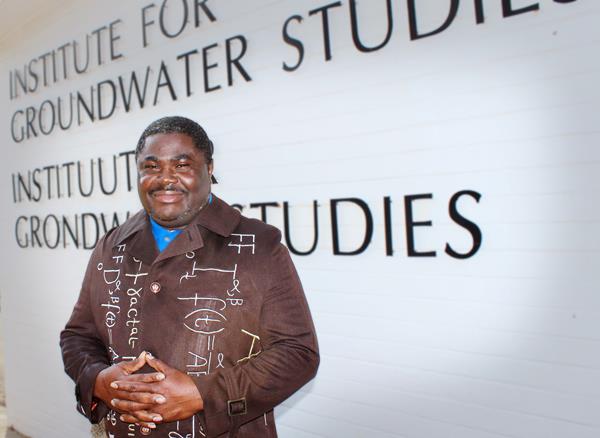
Prof Abdon Atangana, Professor of Applied Mathematics in the Institute for Groundwater Studies (IGS), says existing mathematical models are used to first fit collected data and then predict future events. Predictions help lawmakers to take decisions that will help protect their citizens and their environments. The outbreaks of COVID-19 and other infectious diseases have exposed the weakness of these models as they failed to predict the number of waves and in several instances; they failed to predict accurately day-to-day new infections, daily deaths and recoveries.

Solving the challenges of the current models

In the case of COVID-19 in South Africa, it is predicted that the country had far more infections than what was recorded, which is due to challenges faced by the medical facilities, poverty, inequality, and other factors. With Ebola in the DRC, data recorded are not far from reality due to the nature of the virus and its symptoms. However, the predictions show although some measures have been put in place in DRC and other places where the Ebola virus spread, they will still face some challenges in the future, as the virus will continue to spread but may have less impact.

“To solve the challenges with the current models, we suggested a new methodology. We suggested that each class should be divided into two subclasses (Detected and undetected) and we also suggested that rates of infection, recovery, death and vaccination classes should be a function of time not constant as suggested previously. These rates are obtained from what we called daily indicator functions. For example, an infection rate should be obtained from recorded data with the addition of an uncertain function that represents non-recorded data (Here more work is still to be done to get a better approximation).

“I introduced a new concept called strength number that can be used to test whether the spread will have one or several waves. The strength number is an accelerative force that helps to provide speed changes, thus if this number is less than zero we have deceleration, meaning there will be a decline in the number of infections. If the number is positive, we have acceleration, meaning we will have an increase in numbers. If the number is zero, the current situation will remain the same,” according to Prof Atangana.

To provide better prediction, he continues, reliable data are first fitted with the suggested mathematical model. This helps them to know if their mathematical model is replicating the dynamic process of the spread. The next step is to predict future events, to do this, we create three sub-daily indicator functions (minimum, actual, and maximum). These will lead to three systems, the first system represents the worst-case scenario, the second is the actual scenario, and the last is a best-case scenario.

Virus will continue to spread but with less impact

Using this method, Prof Atangana, a highly cited mathematician for the years 2019-2021, says they were able to predict that, although some measures have been put in place in DRC and other places where the Ebola virus spreads, they will still face some challenges in the future as the virus will continue to spread but may have less impact.

To properly achieve the conversion from observed facts into mathematical formulations and to address these limitations, he had to ask fundamental questions such as what is the rate of infection, what is the strength of the infection, what are the crossover patterns presented by the spread, how can day-to-day new infected numbers be predicted and what differential operator should be used to model a dynamic process followed by the spread?

This approach was tested for several infectious diseases where we present the case of Ebola in Congo and Covid-19 in South Africa. 

Source: UFS

Shut up and cheer! A how-to guide for high school sports enthusiasts

0

Effie James, Richland Source columnist

Sports at the scholastic level is supposed to be the purist form of fun. The games provide a local escape and are the catalyst that brings communities together for a common cause. The pride that comes with being a part of high school sports as a player and a fan is something that can last a lifetime.

Often these events provide memories passed down from generation to generation. Stories of great players and great teams can fill hours of conversation at the local barbershops and family gatherings.

In 1984 I went to my first basketball game; it was the Falcons from Malabar High against the (red & white) Tygers of Mansfield Sr. I was never the same. The players were real people that lived right in my community, some of the players had even gone to the same elementary school that I attended (Newman).

Watching Eric “Bubba” Toddie, Ahmed Kent, Don “Magic” Williams and Andre Feagin play at the original Pete Henry Gym or Lamar Marsh, Dave Minard and others playing football at Arlin Field were the best times of my young life. I didn’t know much about anything at that time, but one thing I knew is that I wanted to do what they were doing. I wanted to play with my friends in big games with the entire community cheering us on.

As time has passed and participation in sports has decreased in so many local school districts, I often wonder why many young people just decide against participation, or what has happened to the purity of the games, the fun and energy that came with watching these young athletes compete?

If you want to know the answer to that question, I invite you to open your social media pages or attend the games with the true intention of supporting your favorite team.

So many games have turned into a legion of armchair analysts and critics to the point where just coming to enjoy the contest is difficult because you’re likely to hear an “expert” in the stands spending the entire game complaining about everything from officiating to coaching and even being critical of the players themselves.

If you really want to be appalled, stop by a youth sports game where 7- through 12 year-olds are out there learning the game and just trying to do their best. Then listen to overbearing coaches yelling and screaming at the kids, parents yelling at the referees and coaches challenging every call made by the official, as if he or she has something to gain from the outcome of a 4th grade basketball or baseball game.

I have had the opportunity to attend many athletic contests throughout Richland County and beyond, and although the environment may be different, the demographics of the community can be unique to certain areas.

There are certain constants that exist: First, everyone wants their team to win. Second, most attendees come to cheer. And finally, there are some that can’t resist openly criticizing everything about the game, coaches, and players.

Lately it seems that the negativity has been ramped up to a higher level, mostly thanks to social media and our hand-held cellular megaphones that have the power to build up or tear down almost every aspect of society, including high school sports.

No question, the number of supportive fans and parents still far outweigh the negativity that can persist within youth sports. Truthfully, those are the heroes that make athletics fun for players. Even with that being true, I wonder why such hostility is even a small part of the prep athletic experience?

Having spent most of my adult life as a high school coach, I realize and understand that certain levels of criticism come with the position and that sometimes the passion of fans gets intensified by the competitive nature of sports, but outward personal attacks on coaches and public criticism of players via social media has reached a level that it has began to effect student participation as well as some coaches motivation to start or stay in youth sports.

Let’s consider this for one moment. You have a high school coach who almost always has a “real” job working 40 hours a week or more, possibly in the school. They spend most of their time off work either preparing for practice and games or other aspects that come with getting their players ready for competition.

Nevermind the hours away from their own family and friends.

“Well, that’s what they get paid for” you say?

Any high school coach will tell you that the stipend they receive equates to pennies an hour based on the work that they put in. In the end, these are women and men who are doing it for the love of the game, the care for students and their desire to make a difference in the lives of young people.

Are some coaches better than others? Could players perform better during competition?

Absolutely! But it is important to realize that although the wins and losses will matter, it’s the experiences that the young people hold on to and will take with them for a lifetime.

As a parent of an athlete, one of my most heartbreaking moments was when my daughter, who was just short of 6-foot tall, decided she did not want to play basketball. This was the sport her father had played and coached for years.

I had pictures of her being at practice as a toddler and shooting hoops as a young girl, so I assumed that when she got to high school, she would immediately take to the courts.

Surprisingly, when she was asked by the basketball coaches if she was going to try out, she declined. When I asked her why she didn’t want to play, she told me that being in the stands at games and listening to some of the fans criticism of players (not to mention her father the coach) gave her extreme anxiety about playing and although I tried to persuade her and let her know all the benefits that come with being a part of a team, she did not want any part of it.

That was a heartbreaker for me, but a peek into how adult behaviors during contest can have a direct impact on student participation.

I have coached and been a part of, or around teams that were very close to winning state championships. The one thing that stands out to me about those great runs was the tremendous community support.

Since I have been out of coaching, I have had the opportunity to attend lots of state championship games as media personnel or a general ticket holder. One thing that is clear; state titles are won by communities, not just teams. When you look at the squads that win those esteemed crowns, they usually have a supportive community that has stood with them through the ups and downs of the season.

In short, I would like to make a plea to all attendees, parents and sports enthusiasts that come to watch young people compete in extra-curricular activities. For the best results and to ultimately get the outcome that you would like, please follow these simple rules when at the games or commenting on the state of youth sports players and coaches on your social media platforms:

#1. When the game starts… CHEER LIKE CRAZY!

#2 If the team is losing or playing poorly… CHEER LIKE CRAZY! to give them added motivation and energy.

#3. If the game or contest is close or tied… CHEER LIKE CRAZY! to show them that you are behind them no matter what.

#4. When the game is over, if your team loses; be there to encourage the players and coaches so they feel empowered to do better next time.

#5 Win or lose, when you get home flood your social media pages with positivity, always considering that the players and others are possibly watching…

#6 And most importantly, when they win… CHEER LIKE CRAZY!!

If you follow these easy steps and still find it difficult to properly release your competitive energy in a positive way, I encourage you to go to your local school’s athletic office and put in an application to be directly involved as a coach or volunteer. One thing I know for certain is that there is always room for coaches that care in all sports and in all communities.

After a short time being involved with the ups and downs that come with coaching, mentoring, and directing young lives, it will almost certainly change your perspective and you will find yourself being more tolerant, supportive and less critical.

Be blessed, not stressed.

richlandsource.com