Home Blog Page 239

Home school warning for South Africa: report

0

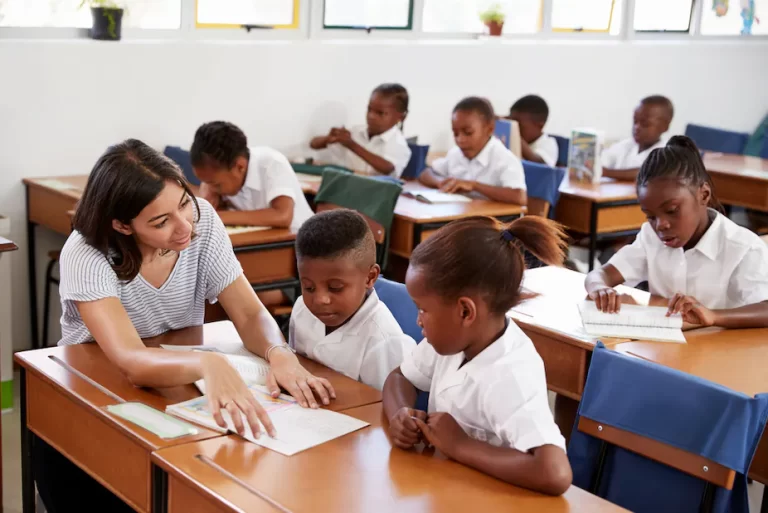
Principals in South Africa have warned that children returning to a traditional school setting after being homeschooled are likely to have to repeat a year.

Citing feedback from several principals, Rapport noted that these children would have to be held back because they are far behind their peers.

This has the result of children ultimately repeating a year of schooling, with the principals noting that they may only graduate from high school at the age of 20.

According to the City Press, virtual schools – which gained popularity during the Covid-19 lockdown – are getting an influx of complaints about the quality of education.

The Department of Basic Education has noted that virtual/online schools are seeing high drop-out rates, while traditional school principals report an influx of children wanting to return to classrooms.

On top of academic challenges, the schools said that returning children also face challenges with the ‘hidden curriculum’ of socialisation and interacting with peers.

The principals said that online and virtual schools are better suited to supportive or complementary roles in education.

Homeschooling under scrutiny

Homeschooling is coming into focus, with the government looking to better regulate the sector through the Basic Education Laws Amendment (BELA) Bill.

The bill is currently with parliament, which is hearing oral submissions on aspects of the bill.

While the proposed laws deal with a host of changes to schools in South Africa – including controversial language changes and proposals to allow the sale of alcohol on school premises – the bill also wants to have more say on how homeschooling operates in the country.

This has led to backlash from the homeschooling sector, however.

Thousands of submissions have been made challenging homeschooling clauses, given that South Africa has seen the emergence of “schools” – online, in-person, and done at home – which deal with private tutoring and assistance to learners.

These are not registered institutions, as the new laws would require, but are providing an alternative education to tens of thousands of learners in the country. These groups became increasingly popular during two years of the Covid-19 pandemic, which left traditional schools in chaos and saw a swell in online and remote learning.

They have also become popular because they offer alternative international curricula, which parents are drawn to, having lost faith in the CAPS system used in traditional schools.

While the education department has made its intentions of regulating the sector clear, submissions over the BELA Bill show that parents and stakeholders believe it overreaches and that it should be up to parents to decide how their children are educated – not the state.

Operators in the sector, meanwhile, warned that the South African Schools Act is not appropriate or equipped to regulate homeschooling in the country and that the department has not conducted the necessary research to make effective changes.

BUSINESS TECH
WSU launch the Samsung Innovation Campus to contribute to SA’s Youth Employment and 4IR Agenda

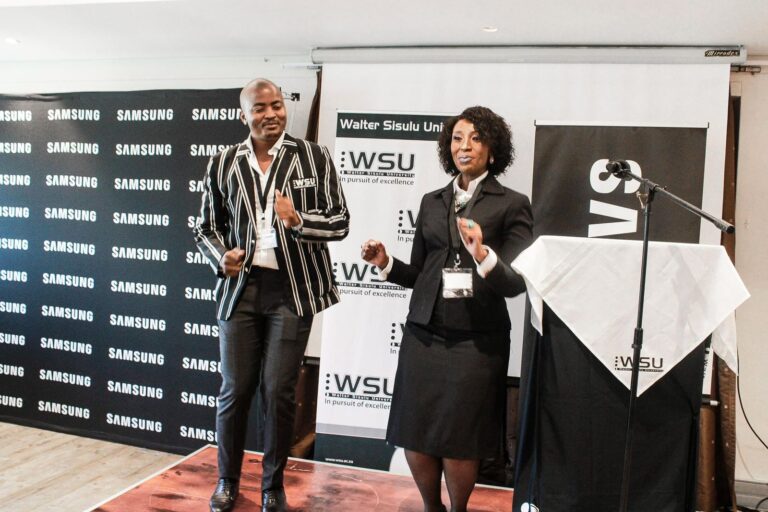
WALTER Sisulu University (WSU) and Samsung South Africa recently launched the WSU-Samsung Innovation Campus in a bid to boost youth employment in the technology sector. WSU and Samsung fostered this twinning agreement through the Centre for Entrepreneurship Rapid Incubator (CfERI) to coach the WSU student community on the Fourth Industrial Revolution (4IR) skills.

Since it is the WSU norm to form partnerships with various organisations, through the Directorate For Short learning programmes (DSLP) – WSU forged to embark on this strategic partnership with Samsung.

Dr Thobekani Lose at WSU says: “This partnership came as a result of various engagements, a sealed deal and a signed Memorandum of Agreement (MOA) between WSU and Samsung. This WSU-Samsung Innovation Campus is one of its kind in South Africa and is a flagship partnership with Samsung to contribute to the national imperative of creating work-ready employable students.”

An initial cohort of 21 students was inducted to kick-start the programme, whose main objective is to target the youth who are within the university and develop their 4IR skills and empower them as future technological entrepreneurs. The WSU-Samsung Innovation Campus will offer basic coding and programming education in the first year of this agreement.

Samsung believes that young people are the leaders of the future. And while the future might be full of challenges and uncertainties, education is what allows youth to realise their full potential and prepare themselves to keep moving forward with confidence.

Well aware of the great importance of education, Samsung works to equip young people with the skills and knowledge they will need to build a better world.

Through its global Samsung Innovation Campus initiative, Samsung is committed to empowering the leaders of tomorrow and equipping them with the tools they will need to realise meaningful change.

Hlubi Shivanda, Director: Business Operations and Innovation and Corporate Affairs at Samsung South Africa says: “As Samsung, we are very firm in our belief that every young person deserves quality education regardless of their background, gender, ability, or personal circumstances. Over the years – through partnerships such as the WSU-Samsung Innovation Campus – we have empowered a countless number of young people to slowly but steadily contribute towards positive change in their societies and the country’s economy at large. This partnership with WSU is therefore no different – our commitment to empowering the youth and contribute to the country’s 4IR and employment goals remains.”

SUPPLIED

Scholar transport: Grade 3 Yusuf Dadoo pupil dies, two critical

Scholar transport accident claims life of a Grade 3 Yusuf Dadoo pupil, two in critical condition

A private scholar transport vehicle carrying primary and secondary school learners was involved in an accident claiming the life of a Grade 3 learner and leaving two learners in critical condition.

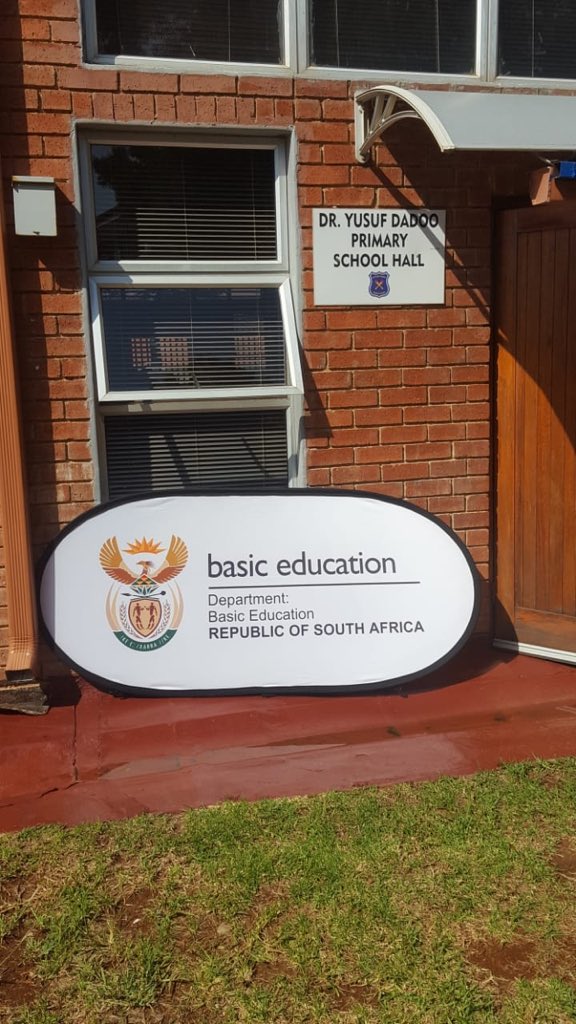
The incident occurred in the morning on Thursday in Azaadville, West Rand. A nine-year old Grade 3 boy learner from Dr. Yusuf Dadoo Primary School suffered severe injuries and was airlifted to a hospital.

Unfortunately, he succumbed to his injuries and passed on while receiving medical attention, the department said. 

Gauteng Education MEC Matome Chiloane said he is saddened about the incident.

“We are saddened by this unfortunate incident which claimed the life of one of our learners. We wish to convey sincerest condolences to the family and the school community. The Department pleads with scholar transport drivers to exercise the utmost vigilance on our roads when transporting our learners, said Chiloane.

There are currently two learners who are in critical condition being treated at a medical facility. 

The department said investigations are underway to determine the cause of the accident. 

Affected schools and families will be receiving trauma support and counselling. 

Learners from Dr. Yusuf Dadoo Primary School and Ahmed Secondary School were onboard, according to the official report.  

-INSIDE EDUCATION

Using Matthew Goniwe’s legacy to improve quality education: Chiloane 

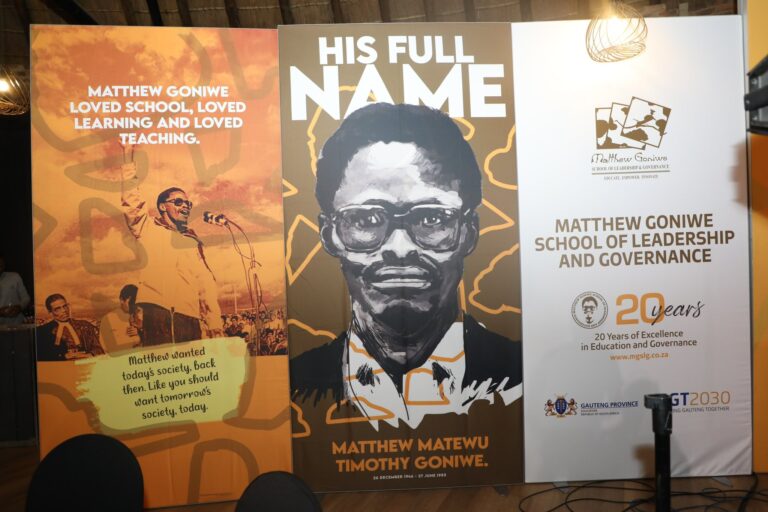
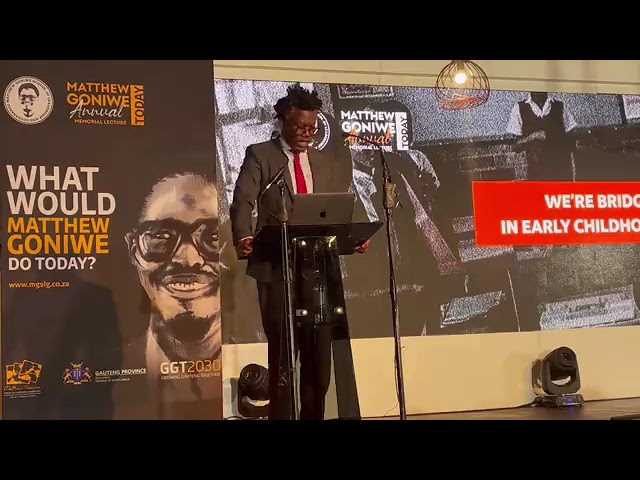
GAUTENG education department will be using anti-Apartheid activist Matthew Goniwe’s legacy to inspire efforts to improve the quality of education to benefit the poor, MEC Matome Chiloane told guests at the annual memorial lecture in Birchwood hotel on Wednesday evening. 

Goniwe dedicated his life to fighting inequalities in the education system. 

“The most fitting honour to his memory and legacy will be a solemn commitment to continue the fight for quality education for all irrespective of where the school may be located in the province,” he said.  

Goniwe was a qualified teacher who believed in quality education for all and as a community leader. 

He went on to establish a feeding scheme, a school choir, a debating society as well as boxing, rugby and soccer clubs to keep the youth in his community actively and productively engaged.

Today, the MEC said Goniwe would be proud to hear the Gauteng success story and progress in improving the quality of education using path breaking initiatives such as the  ‘reorganisation of schools’ programme. 

In the interest of advancing the quality of education for the most marginalised, Chiloane said the department has been able to change the education landscape and accelerate quality learning through the ‘twinning our schools for resource optimization’.

The programme will see the pairing of an under-resourced school (usually located in a township or rural area) with a well-resourced school (usually located in a suburb).  

He told guests that he intends establishing a Section 17 Governing Body that will develop a constitution and plans to improve social cohesion and share resources which will in turn, he said, impact on learner outcomes. 

Section 17 of the South African Schools Act of 1996 gives a member of the executive council the power to determine, for example, that the governance of two or more public schools should be in a single governing body only if it is in the best interest of education.

Using this approach, he said resources are being shared and learner performance is above 90% in both schools. 

Through ‘Schools of Specialisation’, sector specific skills to learners will be provided with the aim to address the skills shortages. The specialty of these schools covers Maths, Science and IT, Commerce and Entrepreneurship, Performing and Creative Arts, Engineering and Sports. 

Chiloane said learners from Soshanguve Technical High School have built a one-of-a-kind solar powered train.

“It is such inventions that will come from such schools that will assist the country as we deal with the effects of the energy crisis and rising fuel costs. Through the Gauteng Townships Informal Settlements and Hostels (TISH) program, we will be establishing most of these schools in our townships,” he said.

The Matthew Goniwe School of Leadership and Governance will play a critical role in ensuring the success of initiatives aimed at improving the quality of education. Through the school’s programmes aimed at ensuring optimal teaching and learning, Chiloane said the school must continue capacitating school leadership and management.

Chiloane applauded Mathew Goniwe school for continuing to educate and empower many teachers, principals and school leadership in general.

Adv Thembeka Ngcukaitobi was the guest speaker at the event. Delegates heard that Matthew Goniwe was no arm-chair revolutionary nor critic but truly immersed in the development of his community, Cradock.

To this day, it remains a befitting decision because the mere mention of his name is a call to action for us all and a reminder of his exemplary life that espoused values such as black excellence, servanthood, humility and ethical leadership. 

The Gauteng education department is celebrating the 20th anniversary Celebrations of the Matthew Goniwe School of Leadership and governance. 

INSIDE EDUCATION

NSFAS banking card will alleviate challenges

WENDY MOTHATA ||

ALL National Student Financial Aid Scheme (NSFAS) beneficiaries at University and TVET colleges will start receiving allowances and transacting via the NSFAS bankcard in 2023 academic year.

The financial aid scheme said the new payment solution will alleviate challenges experienced through the current allowance payment method as well as appropriately cater for the ever-increasing number of beneficiaries and large amounts of funds to be disbursed.

The scheme said that the new payment system is secure and will protect beneficiaries from the increasing number of fraudulent activities that result in allowances not reaching the intended recipients.

The President of the South African Union of Students, Lubabalo Ndzoyiya, has affirmed the students’ full support of the new direct payment system, indicating that it is long overdue.

“We have been long requesting that NSFAS removes the middleman in its processes and offerings to simplify students’ lives. And this is a step in the right direction,” said Ndzoyiya.

NSFAS CEO Andile Nongogo officially introduced the new allowance payment system for NSFAS beneficiaries which will see them get paid through a NSFAS bank account.

“With the current payment system, students are at times confined to certain transactions and purchases; the new system will give them financial freedom, such as withdrawals at ATMs and till points at retail stores as well as access to virtual transactions,” said Nongogo.

Nongogo said that the new system will eliminate the middleman and enable NSFAS to take accountability in cases where payments are not made to beneficiaries on time.

“We are not saying that NSFAS will transform into our ideal scheme overnight, however NSFAS is taking the necessary steps to ensure that the Student-Centered Model is realised,” said Nongogo.

The President of the South African Technical Vocational Education and Training Student Association, Sphiwe Khumalo said that he hopes the new system will be able to empower the students through its alignment with the 4th industrial revolution.

“We will not distance ourselves from this system as it has always been our wish for students to get their allowances directly and that they should be able to transact online, this will eliminate the risks of students losing cash or getting robbed,” said Khumalo.

NSFAS said it is in contact with various retail stores and other state entities to create a platform for students to walk in at their facilities.

“The new payment system is secure and will protect beneficiaries from the increasing number of fraudulent activities that result in allowances not reaching the intended recipients.”

Wits Masters student Andile Nkambule said that the new payment method will be convenient for most of the students.  

“The new payment system will be convenient to most of the students. The good thing about it is that you get allowances directly into the bank account. What is exciting is that you can make online transactions and purchases,” Nkambule said.  

However, University of Johannesburg student Martha Themba said she has read about the new card but still needs clarity on questions she has.

“I tried reading up about it. There are things I don’t understand. With this card it looks like not all students will be eligible to have it.”

-INSIDE EDUCATION

Matric 2022| Exams in Mpumalanga going well despite schools being damaged by storms 

The Mpumalanga Department of Education says that it is satisfied that the ongoing examinations both internally and externally. This is after some schools in the province were affected by heavy floods on Friday.

The Department said that the exams are proceeding without major challenges in all the schools.

“Heavy storms last  Friday evening affected  Ehlanzeni and Gert Sibande Districts.”

The Department extends its appreciation to the members of School Governing Bodies and parents who volunteered their time and services to clear the damaged areas and for cleaning affected  schools.         

The Department said it will monitor developments very closely and will work with the relevant departments and stakeholders for a lasting solution to fix the damaged properties.

Last week, MEC of Education in the province, Bonakele Majuba said the the community protests hindered some of the learners from writing exams. 

“ The community protests here, sadly hindered some learners from realising their goals of writing,” said Majuba.

The Department of Basic Education is yet to make a decision regarding learners who missed the exams due to community protests.

-INSIDE EDUCATION

MEC Chiloane to host Matthew Goniwe Lecture

Gauteng Education MEC Matome Chiloane will host the annual Matthew Goniwe memorial lecture on Wednesday at Birchwood Hotel in Boksburg. 

The department said this year’s lecture will focus on the theme: Bridging the socio-economic inequalities of the past through effective school leadership and governance invariably improving the efficiency and efficacy of our ICT enhanced education system.

The Chairperson of Walter Sisulu University (WSU) council, Advocate Tembeka Ngcukaitobi will deliver the keynote address. 

The lecture will be used to celebrate 20 years of the Matthew Goniwe School of Leadership and Governance (MGSLG) and the education successes achieved over the last past decade. 

Matthew Goniwe, born on 27 December 1947 in Lingelihle Township on the outskirts of Cradock in the Eastern Cape, was a passionate educator and a highly principled idealist activist who was popular among learners and various communities. 

The department said Goniwe’s commitment to education and youth empowerment is a legacy that must be continually celebrated and exemplified. 

The lecture will start at 6.30pm. 

-Inside Education

BELA Bill: Warning over ‘power grab’ at schools in South Africa

TRADE union Solidarity says that new laws proposed under the Basic Education Laws Amendment Bill (BELA bill) are a poorly veiled attempt by the national government to centralise power and control over schools in the country, taking away parents’ say in their children’s education.

The union will present its opinions on the laws to the portfolio committee on basic education on Tuesday (21 November), joining a raft of other interest groups and stakeholders that have made their views known over the last two weeks.

In a statement ahead of the presentation, Solidarity said that if the Amendment Bill becomes law, governing bodies would ultimately forfeit all their powers to the state.

The group said that the bill offers a way for the government to centralise its power over schools and learners while the rights of governing bodies would be undermined and, in some cases, destroyed.

“Clearly, the state’s intention is to centralise the education system. Enactment of this Amendment Bill will have tragic consequences for school communities and the children who get their education at public schools,” it said.

“Solidarity is of the opinion that it is of crucial importance that…the quality of the education learners get remain in the hands of the parents – the people who have a direct and immediate stake in the quality thereof.”

The view that the proposed laws will remove power from the hands of parents and governing bodies and place it within government – open to political interference and abuse – has become a central theme in the pushback against the bill.

The issue was first raised in this manner by the Democratic Alliance (DA), which previously noted that the amendments are effectively politicising education by taking the power out of the hands of the communities and parents who know what is best for their children and putting it in the hands of the government.

Several commentators and presenters before the portfolio committee have expressed similar beliefs, with many calling on the government to focus its efforts on intervening at schools that require it and leaving those that are functioning well alone.

Presenting last week (15 November), the Federation of Associations of Governing Bodies of South African Schools (Fedsas) noted that 80% of school governing bodies in the country are dysfunctional and require intervention.

However, it said that the functional and successful bodies should be allowed to continue as they are, without the interference of the state.

On Monday (21 November), the association added that the BELA Bill was full of shortcomings that have been missed by those not practised in dealing with the governance of schools.

This is especially the case in many of the seemingly minor and technical amendments that could have far-reaching consequences or simply do not do enough to address the needs of the country, it said.

One such aspect is how a school’s capacity is determined, it said.

“The actual implication is the number of learners in a classroom. The bigger picture is that there are still far too few schools in some areas of the country, especially schools that offer quality education. Parents and guardians obviously want to enrol their children in good schools, and these are not always the closest schools.”

The group said that clear guidelines on the determination of a school’s capacity are lacking in the current amendments.

Another shortfall in the amendments relates to conflicts between national and provincial regulations.

“Each provincial education department has a different interpretation of national legislation. Not only is this often clumsy, but in many cases, it goes against the spirit of the South African Schools’ Act and other national regulations,” the group said.

Proposed changes

Broadly, the BELA Bill proposes to amend the South African Schools Act (SASA) and the Employment of Educators Act (EEA) to tackle several issues that have gained prominence in South Africa.

This includes some definitions which are not clear, introducing ways to hold school governing bodies (SGBs) more accountable, and taking control over language policies from SGBs and giving it to the government.

Some of the key amendments that the bill aims to make include:

  • – Making grade R the new compulsory school starting age, as opposed to grade 1, as is currently the case.
  • – Forcing homeschooled learners to be registered for this type of schooling.
  • – Criminalising parents who do not ensure their child or children are in school, with fines or jail time up to 12 months.
  • – Prohibiting educators from conducting business with the state or being a director of public or private companies conducting business with the state.
  • – Abolishing corporal punishment and initiation/hazing practices.
  • – Allowing schools to sell alcohol outside of school hours.
  • – Giving government department heads power over language policies and the curriculums a school must adopt.

Previous submissions to the committee implored lawmakers to drop alcohol sales from the planned changes and pushed back hard against giving the government the power to determine language policies and admission requirements.

The bill is currently being processed by parliament and is at the stage of public consultation. More presentations are expected on Tuesday.

BUSINESS TECH