Home Blog Page 239

Using Matthew Goniwe’s legacy to improve quality education: Chiloane 

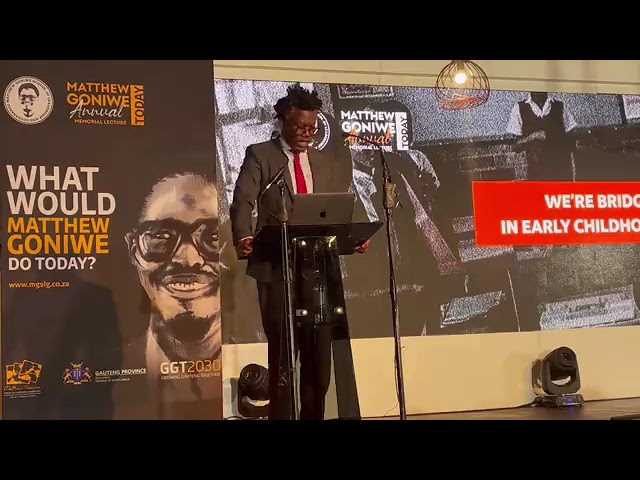
GAUTENG education department will be using anti-Apartheid activist Matthew Goniwe’s legacy to inspire efforts to improve the quality of education to benefit the poor, MEC Matome Chiloane told guests at the annual memorial lecture in Birchwood hotel on Wednesday evening. 

Goniwe dedicated his life to fighting inequalities in the education system. 

“The most fitting honour to his memory and legacy will be a solemn commitment to continue the fight for quality education for all irrespective of where the school may be located in the province,” he said.  

Goniwe was a qualified teacher who believed in quality education for all and as a community leader. 

He went on to establish a feeding scheme, a school choir, a debating society as well as boxing, rugby and soccer clubs to keep the youth in his community actively and productively engaged.

Today, the MEC said Goniwe would be proud to hear the Gauteng success story and progress in improving the quality of education using path breaking initiatives such as the  ‘reorganisation of schools’ programme. 

In the interest of advancing the quality of education for the most marginalised, Chiloane said the department has been able to change the education landscape and accelerate quality learning through the ‘twinning our schools for resource optimization’.

The programme will see the pairing of an under-resourced school (usually located in a township or rural area) with a well-resourced school (usually located in a suburb).  

He told guests that he intends establishing a Section 17 Governing Body that will develop a constitution and plans to improve social cohesion and share resources which will in turn, he said, impact on learner outcomes. 

Section 17 of the South African Schools Act of 1996 gives a member of the executive council the power to determine, for example, that the governance of two or more public schools should be in a single governing body only if it is in the best interest of education.

Using this approach, he said resources are being shared and learner performance is above 90% in both schools. 

Through ‘Schools of Specialisation’, sector specific skills to learners will be provided with the aim to address the skills shortages. The specialty of these schools covers Maths, Science and IT, Commerce and Entrepreneurship, Performing and Creative Arts, Engineering and Sports. 

Chiloane said learners from Soshanguve Technical High School have built a one-of-a-kind solar powered train.

“It is such inventions that will come from such schools that will assist the country as we deal with the effects of the energy crisis and rising fuel costs. Through the Gauteng Townships Informal Settlements and Hostels (TISH) program, we will be establishing most of these schools in our townships,” he said.

The Matthew Goniwe School of Leadership and Governance will play a critical role in ensuring the success of initiatives aimed at improving the quality of education. Through the school’s programmes aimed at ensuring optimal teaching and learning, Chiloane said the school must continue capacitating school leadership and management.

Chiloane applauded Mathew Goniwe school for continuing to educate and empower many teachers, principals and school leadership in general.

Adv Thembeka Ngcukaitobi was the guest speaker at the event. Delegates heard that Matthew Goniwe was no arm-chair revolutionary nor critic but truly immersed in the development of his community, Cradock.

To this day, it remains a befitting decision because the mere mention of his name is a call to action for us all and a reminder of his exemplary life that espoused values such as black excellence, servanthood, humility and ethical leadership. 

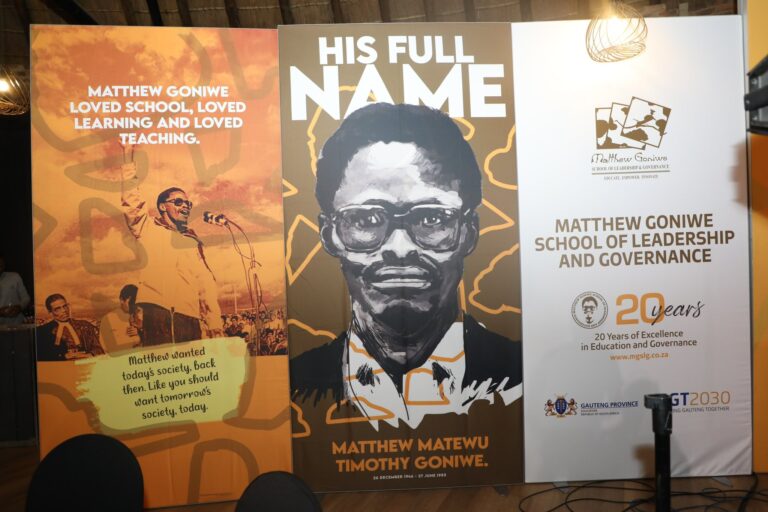
The Gauteng education department is celebrating the 20th anniversary Celebrations of the Matthew Goniwe School of Leadership and governance. 

INSIDE EDUCATION

NSFAS banking card will alleviate challenges

WENDY MOTHATA ||

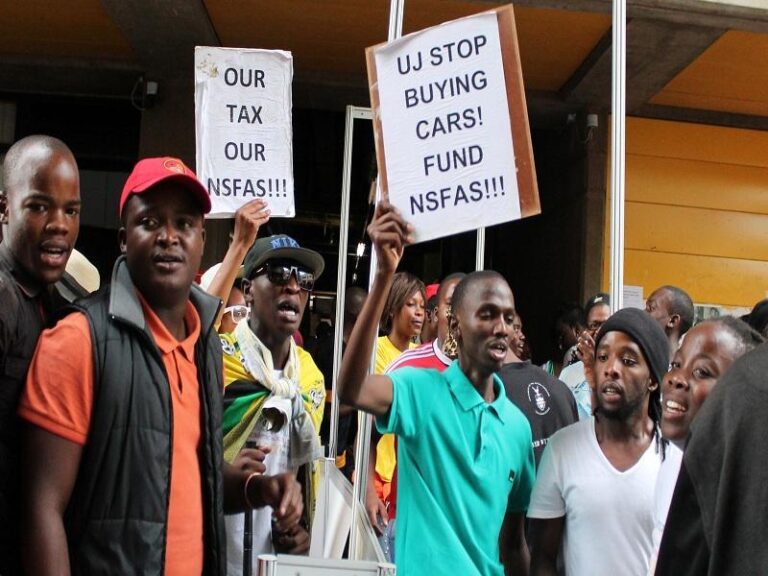
ALL National Student Financial Aid Scheme (NSFAS) beneficiaries at University and TVET colleges will start receiving allowances and transacting via the NSFAS bankcard in 2023 academic year.

The financial aid scheme said the new payment solution will alleviate challenges experienced through the current allowance payment method as well as appropriately cater for the ever-increasing number of beneficiaries and large amounts of funds to be disbursed.

The scheme said that the new payment system is secure and will protect beneficiaries from the increasing number of fraudulent activities that result in allowances not reaching the intended recipients.

The President of the South African Union of Students, Lubabalo Ndzoyiya, has affirmed the students’ full support of the new direct payment system, indicating that it is long overdue.

“We have been long requesting that NSFAS removes the middleman in its processes and offerings to simplify students’ lives. And this is a step in the right direction,” said Ndzoyiya.

NSFAS CEO Andile Nongogo officially introduced the new allowance payment system for NSFAS beneficiaries which will see them get paid through a NSFAS bank account.

“With the current payment system, students are at times confined to certain transactions and purchases; the new system will give them financial freedom, such as withdrawals at ATMs and till points at retail stores as well as access to virtual transactions,” said Nongogo.

Nongogo said that the new system will eliminate the middleman and enable NSFAS to take accountability in cases where payments are not made to beneficiaries on time.

“We are not saying that NSFAS will transform into our ideal scheme overnight, however NSFAS is taking the necessary steps to ensure that the Student-Centered Model is realised,” said Nongogo.

The President of the South African Technical Vocational Education and Training Student Association, Sphiwe Khumalo said that he hopes the new system will be able to empower the students through its alignment with the 4th industrial revolution.

“We will not distance ourselves from this system as it has always been our wish for students to get their allowances directly and that they should be able to transact online, this will eliminate the risks of students losing cash or getting robbed,” said Khumalo.

NSFAS said it is in contact with various retail stores and other state entities to create a platform for students to walk in at their facilities.

“The new payment system is secure and will protect beneficiaries from the increasing number of fraudulent activities that result in allowances not reaching the intended recipients.”

Wits Masters student Andile Nkambule said that the new payment method will be convenient for most of the students.  

“The new payment system will be convenient to most of the students. The good thing about it is that you get allowances directly into the bank account. What is exciting is that you can make online transactions and purchases,” Nkambule said.  

However, University of Johannesburg student Martha Themba said she has read about the new card but still needs clarity on questions she has.

“I tried reading up about it. There are things I don’t understand. With this card it looks like not all students will be eligible to have it.”

-INSIDE EDUCATION

Matric 2022| Exams in Mpumalanga going well despite schools being damaged by storms 

The Mpumalanga Department of Education says that it is satisfied that the ongoing examinations both internally and externally. This is after some schools in the province were affected by heavy floods on Friday.

The Department said that the exams are proceeding without major challenges in all the schools.

“Heavy storms last  Friday evening affected  Ehlanzeni and Gert Sibande Districts.”

The Department extends its appreciation to the members of School Governing Bodies and parents who volunteered their time and services to clear the damaged areas and for cleaning affected  schools.         

The Department said it will monitor developments very closely and will work with the relevant departments and stakeholders for a lasting solution to fix the damaged properties.

Last week, MEC of Education in the province, Bonakele Majuba said the the community protests hindered some of the learners from writing exams. 

“ The community protests here, sadly hindered some learners from realising their goals of writing,” said Majuba.

The Department of Basic Education is yet to make a decision regarding learners who missed the exams due to community protests.

-INSIDE EDUCATION

MEC Chiloane to host Matthew Goniwe Lecture

Gauteng Education MEC Matome Chiloane will host the annual Matthew Goniwe memorial lecture on Wednesday at Birchwood Hotel in Boksburg. 

The department said this year’s lecture will focus on the theme: Bridging the socio-economic inequalities of the past through effective school leadership and governance invariably improving the efficiency and efficacy of our ICT enhanced education system.

The Chairperson of Walter Sisulu University (WSU) council, Advocate Tembeka Ngcukaitobi will deliver the keynote address. 

The lecture will be used to celebrate 20 years of the Matthew Goniwe School of Leadership and Governance (MGSLG) and the education successes achieved over the last past decade. 

Matthew Goniwe, born on 27 December 1947 in Lingelihle Township on the outskirts of Cradock in the Eastern Cape, was a passionate educator and a highly principled idealist activist who was popular among learners and various communities. 

The department said Goniwe’s commitment to education and youth empowerment is a legacy that must be continually celebrated and exemplified. 

The lecture will start at 6.30pm. 

-Inside Education

BELA Bill: Warning over ‘power grab’ at schools in South Africa

TRADE union Solidarity says that new laws proposed under the Basic Education Laws Amendment Bill (BELA bill) are a poorly veiled attempt by the national government to centralise power and control over schools in the country, taking away parents’ say in their children’s education.

The union will present its opinions on the laws to the portfolio committee on basic education on Tuesday (21 November), joining a raft of other interest groups and stakeholders that have made their views known over the last two weeks.

In a statement ahead of the presentation, Solidarity said that if the Amendment Bill becomes law, governing bodies would ultimately forfeit all their powers to the state.

The group said that the bill offers a way for the government to centralise its power over schools and learners while the rights of governing bodies would be undermined and, in some cases, destroyed.

“Clearly, the state’s intention is to centralise the education system. Enactment of this Amendment Bill will have tragic consequences for school communities and the children who get their education at public schools,” it said.

“Solidarity is of the opinion that it is of crucial importance that…the quality of the education learners get remain in the hands of the parents – the people who have a direct and immediate stake in the quality thereof.”

The view that the proposed laws will remove power from the hands of parents and governing bodies and place it within government – open to political interference and abuse – has become a central theme in the pushback against the bill.

The issue was first raised in this manner by the Democratic Alliance (DA), which previously noted that the amendments are effectively politicising education by taking the power out of the hands of the communities and parents who know what is best for their children and putting it in the hands of the government.

Several commentators and presenters before the portfolio committee have expressed similar beliefs, with many calling on the government to focus its efforts on intervening at schools that require it and leaving those that are functioning well alone.

Presenting last week (15 November), the Federation of Associations of Governing Bodies of South African Schools (Fedsas) noted that 80% of school governing bodies in the country are dysfunctional and require intervention.

However, it said that the functional and successful bodies should be allowed to continue as they are, without the interference of the state.

On Monday (21 November), the association added that the BELA Bill was full of shortcomings that have been missed by those not practised in dealing with the governance of schools.

This is especially the case in many of the seemingly minor and technical amendments that could have far-reaching consequences or simply do not do enough to address the needs of the country, it said.

One such aspect is how a school’s capacity is determined, it said.

“The actual implication is the number of learners in a classroom. The bigger picture is that there are still far too few schools in some areas of the country, especially schools that offer quality education. Parents and guardians obviously want to enrol their children in good schools, and these are not always the closest schools.”

The group said that clear guidelines on the determination of a school’s capacity are lacking in the current amendments.

Another shortfall in the amendments relates to conflicts between national and provincial regulations.

“Each provincial education department has a different interpretation of national legislation. Not only is this often clumsy, but in many cases, it goes against the spirit of the South African Schools’ Act and other national regulations,” the group said.

Proposed changes

Broadly, the BELA Bill proposes to amend the South African Schools Act (SASA) and the Employment of Educators Act (EEA) to tackle several issues that have gained prominence in South Africa.

This includes some definitions which are not clear, introducing ways to hold school governing bodies (SGBs) more accountable, and taking control over language policies from SGBs and giving it to the government.

Some of the key amendments that the bill aims to make include:

  • – Making grade R the new compulsory school starting age, as opposed to grade 1, as is currently the case.
  • – Forcing homeschooled learners to be registered for this type of schooling.
  • – Criminalising parents who do not ensure their child or children are in school, with fines or jail time up to 12 months.
  • – Prohibiting educators from conducting business with the state or being a director of public or private companies conducting business with the state.
  • – Abolishing corporal punishment and initiation/hazing practices.
  • – Allowing schools to sell alcohol outside of school hours.
  • – Giving government department heads power over language policies and the curriculums a school must adopt.

Previous submissions to the committee implored lawmakers to drop alcohol sales from the planned changes and pushed back hard against giving the government the power to determine language policies and admission requirements.

The bill is currently being processed by parliament and is at the stage of public consultation. More presentations are expected on Tuesday.

BUSINESS TECH

BELA Bill: Storm brewing over big language changes for schools in South Africa

0

THE Portfolio Committee on Basic Education has continued to listen to oral submissions from public groups around the Basic Education Laws Amendment (BELA) Bill.

The planned laws have been met with wide criticism in the submissions heard so far, with the latest round of commentary continuing to push back against key elements of the bill – including a big change for language policies.

Broadly, the BELA Bill proposes to amend the South African Schools Act (SASA) and the Employment of Educators Act (EEA) to tackle several issues that have gained prominence in South Africa.

This includes some definitions which are not clear, introducing ways to hold school governing bodies (SGBs) more accountable, and taking control over language policies from SGBs and giving it to the government.

Some of the key amendments that the bill aims to make include:

  • – Making grade R the new compulsory school starting age, as opposed to grade 1, as is currently the case.
  • – Forcing homeschooled learners to be registered for this type of schooling.
  • – Criminalising parents who do not ensure their child or children are in school, with fines or jail time up to 12 months.
  • – Holding school governing bodies more accountable for disclosures of financial interests – including those related to their spouses and family members.
  • – Prohibiting educators from conducting business with the state or being a director of public or private companies conducting business with the state.
  • – Abolishing corporal punishment and initiation/hazing practices.
  • – Allowing schools to sell alcohol outside of school hours.
  • – Giving government department heads power over language policies and the curriculums a school must adopt.

Previous submissions to the committee implored lawmakers to leave schools that are performing well alone and to get rid of any attempt to sell alcohol on school grounds.

Concerns have also been raised about extending the government’s powers to interfere with language policies.

The latest round of submissions has echoed many of these sentiments while addressing new challenges.

The committee heard from nine organisations and stakeholders wanting to contribute to the drafting of the legislation.

This includes the Pestalozzi Trust, the Federation of Associations of Governing Bodies of South African Schools (Fedsas), the South African Democratic Teachers Union (Sadtu), Section 27, Cause for Justice, AfriForum and the Congress of South African Trade Unions (Cosatu).

Fedsas, representing school governing bodies, said that about 80% of school governing bodies in the country are dysfunctional and require intervention – however, it said that the functional and successful bodies should be allowed to continue as they are, without the interference of the state.

Other presenters, like Section27, were welcoming of intervention and accountability measures but noted that historically disadvantaged schools face many more obstacles – which aren’t addressed by the amendments.

Section27 also raised the question of corporal punishment, noting that the current definition only extends to physical forms of punishment, excluding non-physical forms of punishment.

This is a concerning omission as cruel and degrading forms of non-physical punishment have been shown to have severe adverse impacts on learners, it said.

Cosatu raised concerns that the bill does not extend compulsory schooling from Grade 9, where it is currently, to Grade 12.

Many learners drop out of school in Grade 9 or when they turn 15, which condemns them to low-paying jobs with few career prospects, the union said.

There were mixed reactions regarding the consumption and/or sale of alcohol on school premises outside school hours. Many felt additional provisions setting the conditions for liquor sales are not enough to prevent learners from accessing liquor in such events.

Language policies under fire

As with previous presentations, the bill’s position on language policies again caused friction.

Through the BELA bill, the government plans to give itself more power around language policies at schools in South Africa – including the main language of instruction.

The additional powers grant the final authority for admission and language policies to provincial heads of department. Currently, school governing bodies have this authority.

It also mandates provincial heads of department to consider the needs of the broader community in considering language policies, and authorises the heads of department to order mergers of schools.

Sadtu recommended that clear provisions regulating language policy be inserted in the bill to facilitate access and uniformity across the system. The teachers’ union felt that provision should be made to unlock stalemates between the heads of department and the governing bodies relating to schools’ language policy.

Sadtu recommended that a clause be inserted that will ensure that governing bodies do not apply the school’s language policy directly in the admission of entry-phase learners.

Afriforum, however, pushed back against language policies being in the bill at all, saying that the amendments contained in the bill pertaining to admission and language policies amounted to a calculated attack on Afrikaans education while offering no relief to the speakers of other indigenous languages.

The proposed changes to the language policies have been heavily criticised, with the Democratic Alliance noting previously that the amendments are effectively politicising education by taking the power out of the hands of the communities and parents who know what is best for their children and putting it in the hands of the government.

Similar arguments were raised by the FW de Klerk Foundation and Die Skole Ondersteuningsentrum, with more opposition expected.

BUSINESS TECH

Students help to propel Zimbabwe, Uganda into space

0

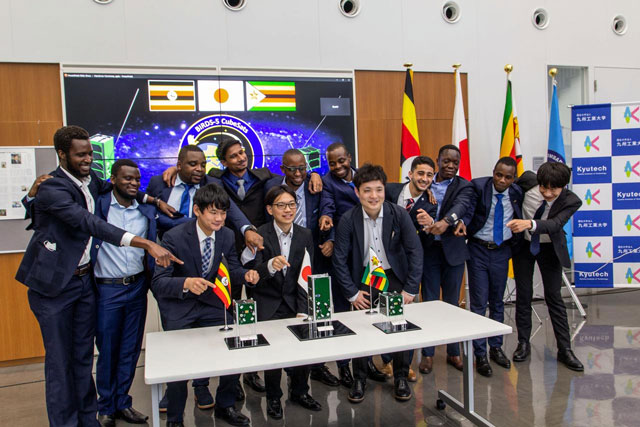
Zimbabwe and Uganda launched satellites into space on 7 November as beneficiaries of the Joint Global Multi-Nation BIRDS Satellite project, BIRDS-5 specifically, which has been a collaborative project involving these countries, the Japan Aerospace Exploration Agency (JAXA) and the Kyushu Institute of Technology (Kyutech).

The project started in 2015 and has included the secondment of a group of students, the bulk of them from Africa, to work with Japanese peers at Kyutech. The students are from Morocco, Sudan, Trinidad and Tobago, Uganda and Zimbabwe.

The BIRDS-5 project provides students from developing nations with limited involvement in space sciences with hands-on experience in satellite development, laying a foundation for similar space technology projects in their home countries that ultimately could lead to sustainable space programmes there.

A developing industry

Students from participating nations enrol in space engineering at the Graduate School of Engineering at Kyutech as masters or doctoral degree students to execute this project.

In an interview with University World News, Chiedza Banda, the president of the Zimbabwean Students for the Exploration and Development of Space (SEDS-Zimbabwe) said that, after this development, Zimbabwe has to prioritise space studies.

“As a nation, this milestone shows that an interest in space is not just pie in the sky for young boys and girls. If you are interested in the stars, rockets and satellites, we can then aim for those careers without fear and knowing we will be pioneers in the Zimbabwean space industry,” she said.

“We have Zimbabweans working in other countries or who would have wanted to work in the space industry but saw no future,” said Banda, who is also the Space Generation Advisory Council National Point of Contact for Zimbabwe.

“So, from here, the country has to work on developing the industry. As you saw during the launch, the cube sat was just a small part of the mission. We need rocket engineering training; we need launching pads and so forth – so we need to grow the industry.”

Banda said another aspect Zimbabwe has to look into is making laws that advance its space interests and creating an economic environment that will boost the private space sector.

“The development means that, as students and young professionals interested in the industry, we can now focus our energy on building careers in Zimbabwe instead of the brain drain that was happening. Then, in terms of Zimbabwe, it’s a step in the right direction as we will have an understanding of what we gain from space – that is, the data obtained can be used for weather forecasting, GPS and satellite imaging as well as telecommunications,” she added.

To buttress Banda’s point on the need for space studies, in an interview with University World News last year, Ruvimbo Samanga, a Zimbabwean space lawyer and policy analyst, said Africa is lagging behind when it comes to space activities and the root cause is a lack of space higher education in many countries on the continent.

She said African nations have not embraced space education, despite the sector’s significant developmental power. In fact, only a handful of countries, South Africa included, offer higher education space studies in a broader context, she added.

“The first African astronaut was from South Africa but, since then, there has not been much movement. The African space industry is really just satellite-based, which is the most primary and basic node of the space industry. There are many nodes of the space industry that can be tapped into,” she said.

Mission completed

In an interview with the state-run The Chronicle newspaper, Higher and Tertiary Education, Innovation, Science and Technology Development Permanent Secretary Professor Fanuel Tagwira said that, due to a lack of adequate space studies in Zimbabwe, the launch of the satellite was made possible after the African country sent three students to Japan for their studies.

“It [the launch] is significant and what is more significant for us is that this particular satellite has been developed by our own people undergoing training at Kyushu Institute of Technology,” Tagwira was quoted as saying.

“We sent three Zimbabweans to Japan to go and learn about satellite technology, one of them at PhD level and two at masters level. Part of their study was to produce a satellite for the country,” he added.

University World News

Tawana Kupe | Reaping the benefits of multilingualism across African universities

Only 25% of African languages are used in secondary education across the continent, and a mere 5% in higher education, writes Tawana Kupe.

Although the African continent has a rich cultural and linguistic diversity with more than 2000 languages, the question of the language of learning and teaching, across every level of education remains a contentious issue. Only 25% of African languages are used in secondary education across the continent, and a mere 5% in higher education (UNESCO, 2010).

Similar trends and challenges exist in South Africa, with language practices in basic and higher education still largely reflecting the colonial and apartheid legacy. This is despite the fact that South Africa is a multilingual country with 11 official languages.

While language equality and equity in education is promoted in the Constitution, in practice, students’ access to curricula and learning tools beyond the mediums of English and Afrikaans remains limited. This is problematic not only because it produces young people who can hardly read and write in their home languages, which exacerbates the stigmatisation of African languages in education, but also because of its impact on poor achievement and dropout rates.

Prominent role

These rates are higher among black students who struggle with writing academic texts and understanding terminology in their fields of study because their home languages are not used in teaching and learning. 

Public universities play an increasingly prominent role in shaping society at large; they are key drivers of change in response to national priorities. This includes societal transformation, redressing historical legacies, and engaging productively with communities, industry, governmental and non-governmental entities and other partners to navigate the manifold headwinds that characterise this age of disruption and uncertainty.

Universities have a critical role to play in embracing multilingualism, and many are doing just that through vocation-specific language courses. Through teaching students specific words and phrases pertinent to their sector, graduates can interact more effectively with the people accessing their services whose first language is not English. Research shows that these courses are successful not only in developing proficient, adaptable professionals who can operate efficiently across multilingual environments but that they also expose graduates to the different backgrounds of the people they will serve. This results in the production of well-rounded, socially conscious citizens. 

Language policies are in place across South African universities and enable vocation-specific courses to be structured in a variety of ways. Language courses can be part of the compulsory, main curricula, or offered as additional modules at both first and second language level.

The University of Cape Town (UCT) pioneered this multilingual approach in 2004 and isiXhosa and Afrikaans have been successfully integrated into the institution’s medical degree, requiring a pass level for graduation.

At Rhodes University, isiXhosa is compulsory for journalism while it is offered as an elective for their Pharmacy degree. A bilingual Humanities degree, with half of the subjects in English and half in Sesotho sa Leboa is on offer at the University of Limpopo, while at the University of KwaZulu-Natal, students must learn isiZulu to graduate, regardless of what they are studying. 

Collaborations

Other important initiatives include collaborations across universities. One such collaboration is between the University of Pretoria (UP) and UCT, which used a grant from the Department of Higher Education and Training to develop an Open Educational Resource Term Bank (OERTB) that can help students in various of ways.

It provides familiarisation with English terms that are often used at university but are not as common in social settings. The resource term bank also provides equivalent terms in Afrikaans, isiZulu, isiXhosa, siSwati, isiNdebele, Sesotho sa Leboa, Setswana, SeSotho, Tshivenda and XiTsonga. It offers terms in English and these languages for a variety of disciplines, from accounting and anthropology to family medicine and literature. This national asset is free for anyone to use and allows for feedback and resources to be added. Current contributors include UP, UCT and Stellenbosch University. 

Some have argued that this emphasis on vocation-specific courses is unnecessary and detracts from core learning in higher education. This has resulted in challenges and delays in implementation, which has created frustration among students.

It is clear that the issue of language should be recognised as a social justice issue. If it is not addressed comprehensively and successfully, and if multilingualism is not viewed as a core skill that students should acquire, the risk of reproducing inequalities through the hegemony of English is very real. 

Transformation

Following a series of engagements held this year, the University of Pretoria, together with Universities South Africa (USAf), will be hosting a Vice-Chancellor’s Language Colloquium in December 2022. The colloquium will be hosted under the leadership of the Community of Practice for the Teaching of African Languages (CoPAL) to facilitate a common understanding and implementation strategy for the new Language Policy Framework for Public Higher Education Institutions. 

The aim of the policy is to contribute to transformation in higher education through enhancing the status and roles of previously marginalised South African languages to foster institutional inclusivity and social cohesion. This is achieved through the development and strengthening of indigenous languages as languages of scholarship, teaching and learning and communication at South African public higher education institutions. The framework provides guidelines for the development, implementation, monitoring and evaluation of institutional language policies.

USAf is an umbrella body representative of the 26 public universities in South Africa. CoPAL is one of USAf’s two discipline-based communities of practice aimed at addressing the challenges identified with African Languages in South Africa’s higher education sector. The previous colloquiums have been successful in providing a platform for robust intellectual engagement around the policy, as well as presenting an opportunity to work together to actively roll out the framework and reap the benefits of multilingualism across our universities.

Prof Tawana Kupe, Vice-Chancellor and Principal of the University of Pretoria.