Home Blog Page 240

Grade 11 learner arrested after allegedly killing fellow classmate at Vlakfontein school

0

A 21-year-old grade 11 learner has been arrested on charges of murder, following the death of a
fellow learner.

According to police spokesperson, Lieutenant Colonel Mavela Masondo, the deceased learner was fatally stabbed during a fight in Vlakfontein, Johannesburg.

“Preliminary information suggests that a group of boys were fighting outside the school premises on Thursday, November 17, 2022, when a 20-year-old learner was stabbed with a sharp object on the upper body. The learner was taken to the nearest medical care centre, where he was certified dead.”

“Police went searching for the suspects and arrested a fellow learner, who has since been charged with murder. The motive for the fight cannot be confirmed at this stage. An investigation is underway,” Masondo said.

The 21-year-old is expected to appear in the Lenasia Magistrate’s Court on a date yet to be announced.

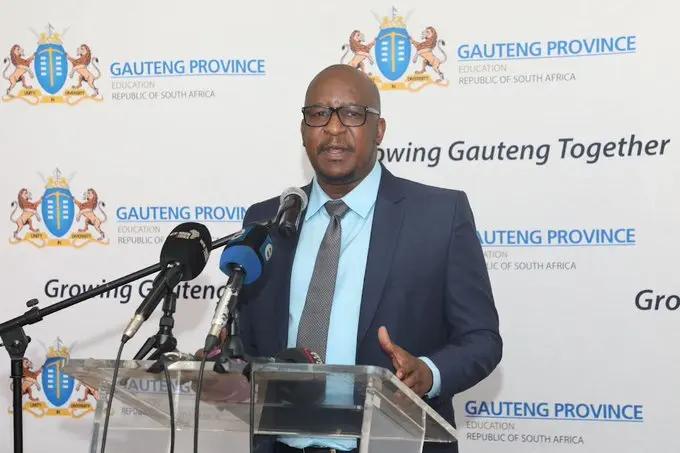
Meanwhile, the Gauteng Education MEC, Matome Chiloane, visited the family of the deceased
on Saturday.

The Gauteng Education Department has appealed to the community not to disrupt schooling and
teaching “as our Grade 12 learners are still in the process of writing their final exams.”

The department’s psychosocial team has been deployed to visit the school to provide the
necessary support and counselling.

“We wish to convey our sincerest condolences to the learner’s family and the school community at large,” the department said.

INSIDE EDUCATION

Norma Plummer back to coach South Africa in spar diamond challenge

0

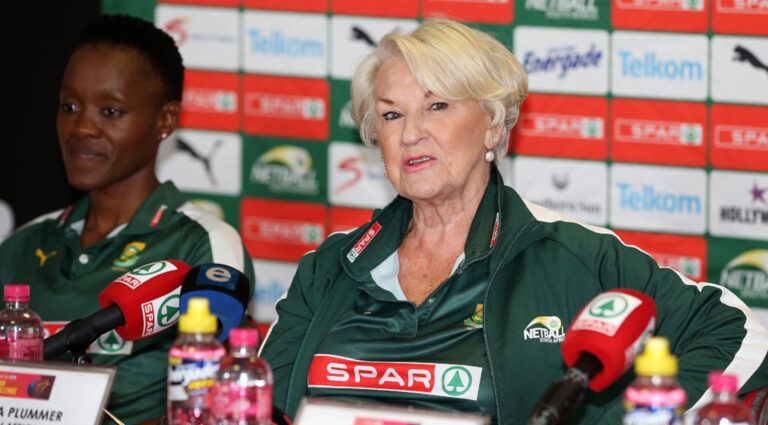
With less than nine months to go before the Netball World Cup (NWC) in Cape Town next year, World Cup winning Australian coach Norma Plummer is once again in charge of the SPAR Proteas for the SPAR Diamond Challenge in Pretoria this week.

Plummer took the SPAR Proteas to the semifinals of the 2019 NWC in Liverpool.

After South Africa’s disappointing performance in the Commonwealth Games in Birmingham earlier this year, where they finished in sixth place, Netball South Africa (NSA) sent out a call to Plummer to take them through to the NWC.

Plummer told media on Monday that she was happy to be back with the team.

“The SPAR Diamond Challenge is an important part of our build-up to the World Cup,” she said.

“I haven’t been with the team for three years, so this gives me an opportunity to assess the new players who have come into the squad and to select a team for the Quad Series in January,” said Plummer.

South Africa will play Scotland, Zimbabwe and the SPAR President’s XII in the SPAR Diamond Challenge at the Pretoria University Sports Centre, Rembrandt Hall. The tournament starts on Tuesday and the final will be played on Saturday.

SPAR Proteas captain Bongi Msomi said the team was delighted to have Plummer back in charge.

“We have huge respect for her,” said Msomi.

“We have just had a very good training camp with her in Potchefstroom. The group is very switched on and we are looking forward to the SPAR Diamond Challenge. It will be a good competition and give us a chance to test ourselves.”

Scottish Thistles coach Tasmin Greenway said Scotland had not been to South Africa since 2014.

“It’s my first proper tour with the team since I took over two years ago, and many of my players have no experience of playing against African teams,” said Greenway.

“The SPAR Diamond Challenge is a wonderful opportunity to expose the players to one of the great netball teams,” she said.

Zimbabwe Gems coach Ropafadzo Matsauki said Zimbabwe was not in the tournament just to make up the numbers,

“We are here to compete,” he said.

“We need as much game time as possible before the World Cup next year.”

The SPAR President’s XII is made up of players just outside selection for the national team. Plummer said it was important to give these players opportunities to play against international teams.

“It is essential to expose players like this to top-class netball so that if they are needed to replace a member of the national team, they won’t be overwhelmed,” said Plummer.

All the matches in the SPAR Diamond Challenge will be televised live on Supersport.

Tickets for the games will be available at the venue – R20 for adults and R10 for school going children.

SUPERSPORT

Ebola: Uganda’s schools were closed for two years during COVID, now they face more closures – something must change

Simone Datzberger and Musenze Junior Brian

CHILDREN in Uganda missed out on more school because of the COVID pandemic than their peers anywhere else in the world. An estimated 15 million pupils in the East African nation did not attend school for 83 weeks – that’s almost two years. Statistical models predict a learning deficit of 2.8 years in Uganda because of the time lost through COVID-related closures.

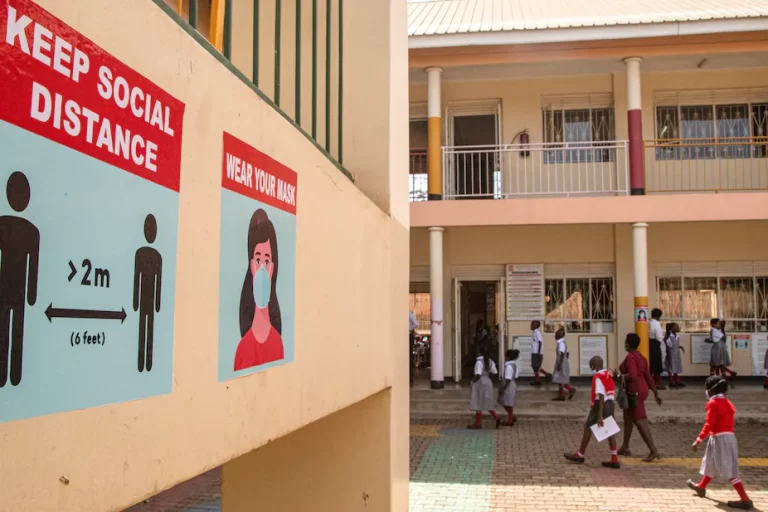
Now the education system has been hit by another public health emergency. In early November the government announced that preschools, primary and secondary schools must close their doors for the year ten days earlier than planned. This is part of its attempt to contain an Ebola outbreak which had, by 16 November, killed 55 people; eight were children.

Of course, it’s crucial for Uganda to try and stop Ebola from spreading. The disease has a far higher fatality rate than COVID. The country’s packed classrooms and poor school infrastructure, such as poor ventilation and sanitation, make students highly vulnerable to infections.

But young Ugandans have already fallen far behind in their learning because of COVID. And, as the effects of climate change worsen, Africa is becoming increasingly vulnerable to health emergencies, including a number of infectious diseases.

That makes it incredibly important for Uganda to find a way to balance the realities of public health emergencies with children’s right to education. This is a particularly pressing issue in low-income contexts where many children struggle to complete their schooling even outside emergency situations.

Kids are already far behind

In a previous study emerging from a larger project called CoVAC(led by Karen Devries, Jenny Parkes and Dipak Naker), we outlined the many harms and losses Ugandan children and youth faced due to the prolonged closure of schools.

When schools finally reopened in January 2022, one in ten students did not report back to school. Some schools had closed for good.

The government tried to support distance learning through TV, radio, newspapers, downloadable curricula or, in some instances, via mobile phones. However, most interventions, in particular those that required access to a mobile phone or computer only benefited urban elites with the means to send their children to expensive private schools.

Almost all of the participants in our study had no or limited access to the resources needed to effectively engage with these materials. Girls in remote areas were especially disadvantaged, as they tended to have less access to mobile phones than boys.

Most of our study participants were not able to continue their schooling via distance learning. They eventually gave up on their education.

Homeschooling became a common practice in wealthier countries. But in Uganda it was a privilege reserved for only a few children from higher socio-economic backgrounds and expensive schools. The majority of Ugandan caregivers have to make an income in any way they can and often lack the time, space and resources to earn with their children at home.

Although schools will be only closed for a relatively short time, losing another ten days of learning may weaken the trust among Ugandans in the functioning of their educational institutions. Many Ugandans struggle to pay for their children’s school fees and will question the real value of education in light of current and potentially more interruptions.

Overhauling current model

Uganda’s education sector needs to be strengthened so that disruptions caused by future health emergencies do not leave children even further behind in their schooling.

This will require an overhaul of how education is governed, implemented and made accessible during emergency situations. Uganda inherited its education system from its former British colonial administration. The appropriation of western and former colonial education systems by countries in sub-Saharan Africa has been questioned and critiqued by many, particularly African scholars.

Schooling, it is argued, was initially used as a tool by former colonisers to “conquer the African mind”. It ignored local culture and context with the intention to sustain colonial administration and nurture exploitative economic structures.

Today, part of the problem with adopting a universal model of schooling is that the many flaws inherent in western-style education are exacerbated in times of crisis. For instance, the model champions a form of schooling that is time and location bound. It does not easily adapt to alternative forms of education that allow for a more flexible mode of learning in the absence of a functioning school.

If adequately resourced and well implemented, alternative modes of learning during school closures can help the most vulnerable children and youth in their educational trajectories and overall well-being. This could be in the form of supporting distance learning in a different manner, such as the potential of outdoors teaching and learning where there is enough space for social distancing. Nearby teachers could be engaged to support locally organised, small learning groups of children in their respective communities.

Another option could be to ensure safe and continuous access to education in a staggered manner under strict hygienic measures. Investments in partnerships with local agencies and community-based organisations could help to facilitate radio, TV or internet-based learning spaces for children and youth with no access to learning technology.

Urgent

Some Ugandans told us that they fear schools will be closed for far longer than initially announced. This happened repeatedly during the COVID pandemic. It is also sadly likely that Ebola will not be the last epidemic the country must manage.

That’s why novel strategies and more resources are urgently needed to finally address deeply rooted social injustices in and outside education that arise before, during and after public health emergencies. Otherwise, children will be continuously at a high risk of dropping out of school, making them vulnerable to child labour or teenage pregnancies.

THE CONVERSATION

LGBTIQ learners at risk in South Africa as conservative Christian groups fight plans for safer schools

0

Haley McEwen and Dennis A. Francis

ADVOCACY groups in South Africa are intensifying their efforts to prevent the country’s education department from creating safer environments for children of diverse gender identities and sexual orientations. Some of the advocacy groups have ties to conservative US Christian groups.

Representing conservative organisations, Freedom of Religion South Africa, the Family Policy Institute, the African Christian Democratic Party and Freedom Front Plus are creating controversy about draft guidelines on sexual orientation and gender identity in public schools. The guidelines have been made public through consultations with communities that began earlier this year.

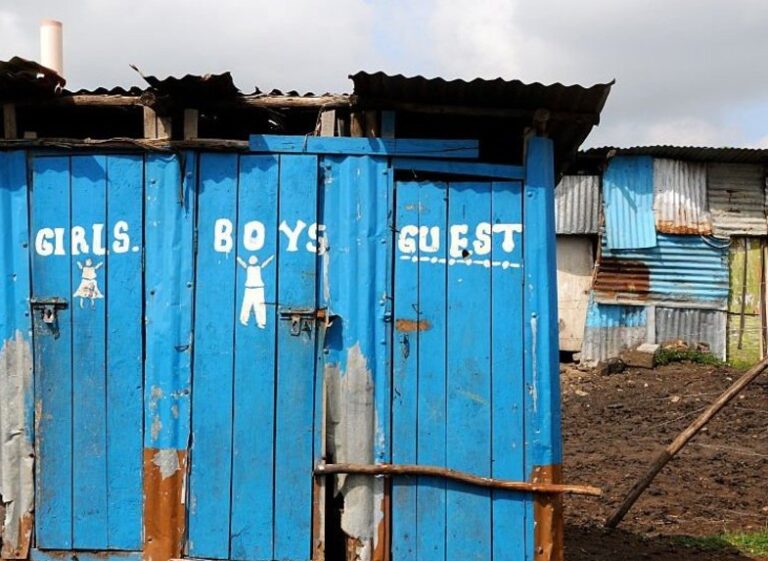
The groups are zeroing in on two elements of the guidelines to stoke panic. These are the provision of unisex toilets, which would not replace existing single-sex toilets, and the elimination of gender pronouns.

Claiming the guidelines are “godless” and “anti-family”, the groups argue that the rights of Christian learners and their families would be violated. The groups claim their opposition is grounded in religious belief, not hatred for LGBTIQ+ people.

But their objections contradict South Africa’s constitutional mandate to create a society free of discrimination.

In a media statement, the education department has expressed its disappointment that the narrow focus on unisex toilets is being used to create controversy. This distracts from the bigger debate about eliminating gender discrimination in all spheres of society.

Homophobia and transphobia on the rise

Researchers and journalists have documented increases in incidents of homophobic and transphobic bullying in the country’s schools in recent years. Some children facing discrimination have tragically taken their own lives.

Disinformation campaigns claim that gender diverse learners pose a threat to cisgender (straight-identifying) female learners. But research shows that it’s queer and transgender individuals who experience extreme levels of anxiety and fear within bathrooms and other school spaces.

The lobby against queer-friendly education

Last year, the African Christian Democratic Party staged a picket against the guidelines. Placards read “Down with the gender identity and sexual orientation guidelines”, “Down with unisex bathrooms” and “God created male and female”.

Freedom of Religion South Africa is now attempting to block the implementation of the guidelines through legal means. The organisation claims they are unconstitutional and violate “parental rights” and “traditional values”.

Claims like this normalise the discrimination that many learners face in schools.

Freedom of Religion South Africa director Michael Swain claims the department is importing “foreign” agendas. His group aims to put religious freedom above the right to equality and dignity. US Christian anti-LGBTIQ+ advocacy groups, such as Alliance Defending Freedom, have tried to do the same.

The Family Policy Institute in South Africa has been working with US “hate group” Family Watch International in a campaign against Comprehensive Sexuality Education in schools. They plan to “reveal harmful content” in the programme and call it “dangerous sexual indoctrination”.

Family Policy Institute founder Errol Naidoo has admitted to having been mentored by the US Christian
right Family Research Council. The council argues that homosexuality is “harmful to society at large” and
should not be protected by policy. Naidoo has also been associated with the World Congress of Families,
a US-led Christian right organisation.

Our research shows that US Christian right organisations have grown their networks in African countries.

They’ve invested millions of dollars in anti-LGBTIQ+ campaigns in Africa and elsewhere. They also provide “mentorship” to set up organisations and campaigns such as Stop CSE.

A global trend

Campaigning against the department’s guidelines for safer learning spaces reflects a broader trend. Far
right actors are using child protection rhetoric to manufacture moral panic. Making it “about children”
enables anti-gender groups to air their prejudice in public. This tactic has also been observed in Europe
and Latin America.

Our research has found that far-right attitudes to LGBTIQ+ people are becoming part of the “normal
view” in basic and higher education. We argue that homophobic and transphobic bullying in these
spaces extends South Africa’s apartheid-era discrimination, which was grounded in Christian ideology.

These narratives claim that LGBTIQ+ learners are “deviant”, “unruly sinners” in need of conversion and
civilising. This creates a climate of fear and hostility in classrooms and communities more broadly.

Research with teachers shows that a lack of guidance from the department on the creation of inclusive
curricula and school environments puts the safety and security of gender diverse and queer learners at
risk. It also undermines the promise of equality in South Africa’s constitution.

As the Global Interfaith Network has demonstrated, Christianity is not an inherently homophobic or
transphobic religion. Those who use religious justifications to promote anti-LGBTIQ+ intolerance do not
represent all Christian communities. The weaponisation of sexuality and gender-based differences in
schools has consequences for all learners whose life opportunities are threatened by the experiences of
discrimination, exclusion and bullying.

THE CONVERSATION

Universities must strive to produce 100,000 PhDs in a decade

0

Universities in Africa must strive to produce about 100,000 PhDs in the next 10 years to yield the research the continent needs for accelerated development.

According to the recommendation, which came from the World Bank, universities should aim to produce a higher number of researchers in response to the need to create jobs and opportunities for the continent’s fast-growing population, as well as the challenges it faces in areas such as climate change, diseases, food security and political instability.

The 100,000 must not be seen as a huge number, considering that China, with a population that is nearly the same as that of Africa, manages to produce that number each year, as does the United States, which has an even lower population, said Professor Barnabas Nawangwe, the vice-chancellor of Uganda’s Makerere University.

What Africa needs, he said, is not to be content with the target set, but to aim, instead, to produce an even higher number of researchers considering the enormous developmental challenges posed by a projected youth explosion in the next 30 years.

“The report we have launched today gives pointers as to why Africa needs more and more PhDs,” said Nawangwe, who is also the chairman of the African Research Universities Alliance, or ARUA, during the launch of member universities’ institutional profiles on 4 November.

ARUA is a network of 16 selected flagship research universities in Africa with a common vision to expand and significantly enhance the quality of research carried out by African researchers. The network has been operational since March 2015, when it was inaugurated in Dakar, Senegal.

Research report

The report, which is being updated with additional information before it will be shared with stakeholders, presents an analysis of Phase II of the Carnegie Corporation-sponsored data benchmarking study of ARUA universities, focusing on the research profiles of the universities, and covers the period 2015-21, including a bibliometric analysis of the research productivity of the universities.

Universities, Nawangwe observed, continued to grapple with the challenge of low funding despite the task ahead of them, a problem he traced to the 1990s when Structural Adjustment Programmes or SAPs, were imposed on Africa by the Bretton Woods institutions.

The SAPs in some cases led to “commercialisation of programmes” as universities sought to survive financial cuts prescribed by the lenders.

“The effects of the cuts have been devastating ever since, and it’s a shame that, despite Africa holding 20% of the world’s population, is only contributing 3% of global knowledge, which is not acceptable,” he said.

Doctorate training in Africa must, however, be seen as much more than mere research productivity, but also a driver of development, said Professor Mamokgethi Phakeng, the vice-chancellor of the University of Cape Town.

In many instances, she noted, it had emerged that universities with a high number of PhD-level academics did not always produce the highest research output.

The institutional profile report, she observed, provided a good opportunity for universities to “know each other”, while offering potential partners a true picture of what the institutions have to offer.

Equity in partnerships

The report, which covered a range of issues, had demonstrated the invaluable importance of investing in long-term relationships between universities, as opposed to merely collaborating on specific projects, said Sir Anton Muscatelli, the vice-chancellor of the United Kingdom’s University of Glasgow.

It also emphasised the importance of equity in research partnerships for the collaborations to be effective and successful, particularly the North-South ones.

“I’m proud of the ARUA universities’ contribution to Gobal South in various partnerships with the University of Glasgow. I’m happy we are providing solutions to some of the challenges that are ahead for Africa,” he added, with reference to past joint work with ARUA’s universities of Dar es Salaam and Nairobi, among others, in tropical diseases research.

Vice-chancellors of the 16 member universities had an opportunity to learn from the report on areas that needed strengthening, information they should share with their respective councils, said Professor Ernest Aryeetey, the ARUA secretary-general.

The report not only offered them an opportunity to know their weaknesses and work on them, he said, but also a chance for doing a comparison for purposes of benchmarking and knowing where they needed to go in the future.

It also proved that the institutions needed to be “engaged with each other and within their region” if they were to become “globally competitive”, he added.

• Stellenbosch University in South Africa has announced that it will award an honorary doctorate to Professor Ernest Aryeetey in December. Aryeetey will be awarded the degree Doctor of Commerce (DCom), honoris causa. He is the former vice-chancellor of the University of Ghana and, in addition to having been instrumental in the establishment of ARUA, he has spearheaded the identification of 13 research areas to facilitate interdisciplinary research collaboration and created 11 ARUA centres of excellence. Aryeetey is also a member of the University World News – Africa board.

University World News

KZN: Robotics and coding programme promotes equal and inclusive learning for rural youth

0

IN support of the World Children’s Day theme: ‘equality and inclusion for every child’, Ashling McCarthy, founder of education non-profit, I Learn To Live- Ngifundela Ukuphila, encourages society to invest in educational opportunities for all children, including youth from rural communities.

I Learn To Live was founded in 2010 to provide education opportunities to school children and youth in rural Zululand. 

“We believe that rural children and youth should be given an opportunity to create a meaningful life, in which they contribute towards their community and society at large,” said McCarthy.

In May 2021, I Learn To Live launched the first Coding and Robotics Club in the rural areas lying between Empangeni and Richards Bay, providing these children with the opportunity to engage in the push towards 4IR and tech-related careers.

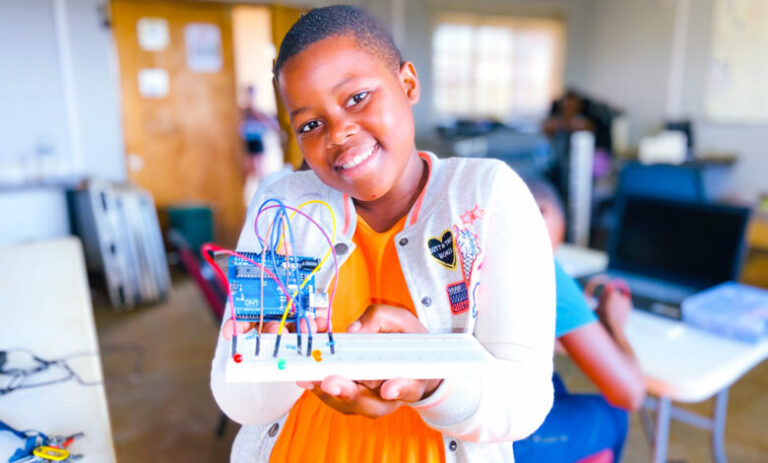
“Ten children from the community were selected to participate in the pilot programme, which took place at the Ngqamuzane Support Centre on Saturdays, where children aged nine to 15 were introduced to Arduino, an open-source electronics platform which uses both software (coding) and hardware (sensor kits). This year, 20 children attend the Saturday classes, which now include music sessions, with children learning the drums, keyboards and sight-reading,” explained McCarthy.

With the success of the pilot, I Learn To Live sought to expand the programme into the community. An ICT resource audit done at primary schools in the neighbouring communities revealed a dire lack of infrastructure to run computer-based programmes.

“Maqhwakazi Primary School had a functional but unused computer lab. In collaboration with the principal and parents of grade five to seven pupils, 60 children were selected to attend an after-school Coding and Robotics Club,” continued McCarthy.

I Learn To Live’s coding and robotics programme is aligned with the KZN Department of Educations’ focus on introducing coding and robotics to children in foundation phase in 2023. It also meets Sustainable Development Goal #4: Ensure inclusive and equitable quality education and promote lifelong learning opportunities for all.

The programme is specifically run as a free afternoon extra-curricular club for interested pupils. I Learn To Live facilitates the sessions, which includes equipment and data.

Arduino online training manuals are tailored for a rural school context, which factors in implementation challenges such as the limited resources and electricity that often runs out. It also takes into consideration that English is not the learners’ first language, so is taught in both English and isiZulu.

“The programme first tackles the basics of computers as most, if not all pupils have no computer experience. Only then are pupils introduced to coding and robotics. Grade five pupils start with block code in the form of Scratch 4 Arduino, which also uses hardware components, while grade six and seven pupils move straight into Arduino, working with sensor kits and coding,” she stated.

I Learn To Live is developing a training programme so that youth studying coding can implement similar coding and robotics clubs in their communities. “In 2023, we will be adding a meal for each child, who attends the programme as most of these children’s last meal was at breakfast time,” confirmed McCarthy.

If you would like more information or would like to support the I Learn To Live coding and robotics programme, contact Phumlani Zungu on 073-337-5226 or Ashling McCarthy on 072-432-0316.

Alternatively, email ash@ilearntolive.co.za or visit www.ilearntolive.co.za

McCarthy encourages citizens to embrace and support the 2022 theme for International Children’s Day, ‘equality and inclusion for every child’ now and into the future.

“The answer to many rural challenges, can be answered by our youth. Our role is to provide them with opportunities, skills, and most importantly, the belief to do so,” she concluded.

RISING SUN

WATCH: MEC Chiloane vows to increase pace of delivery, eyes 14 more schools of specialisation

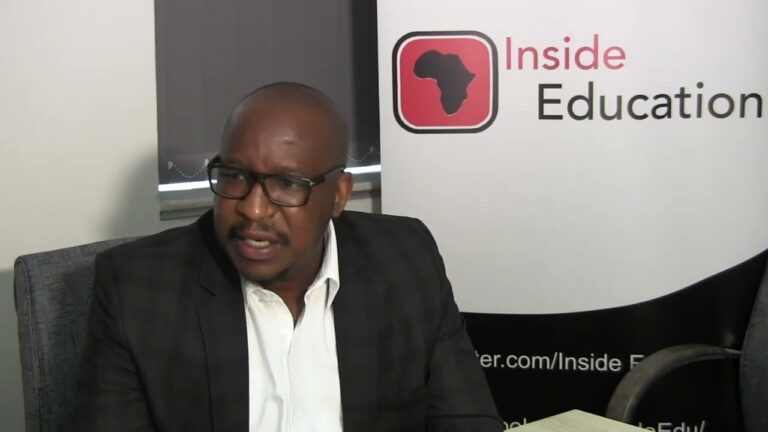
In an exclusive interview with Inside Education, Gauteng Education MEC Matome Choloane said the department will be continuing with “progressive programmes” such as the re-organisation of schools. As part of improving the pace of service delivery, the department will launch 14 additional schools of specialisation in the next 12 months.

‘Premature’: Basic Education Department slams media reports over introduction of unisex toilets in schools

THE Department of Basic Education said on Wednesday that it has noted with disappointment media reports about plans to introduce unisex toilets in public schools.

The department said speculation in the media was based on a leaked document about consultations that are currently underway on the Guidelines for the Socio-educational Inclusion of Diverse Sexual Orientation, Gender Identity, Expression and Sex Characteristics (SOGIESC) in Schools.

“The media reports are based mainly on an initial draft discussion document which has since evolved following consultation before it is published for public comment.”

“This is a matter blown out of proportion, which may have arisen from the consultations that are currently underway on the Guidelines for the Socio-educational Inclusion of Diverse Sexual Orientation, Gender Identity, Expression and Sex Characteristics (SOGIESC) in Schools,” the department said in a statement.

The department said a narrow focus on “unisex toilets” is unfortunate as it misses the bigger debate on the elimination of gender discrimination in all spheres of society.

The document, although still under continued consultation, asks pertinent questions about inclusion of sexually and gender diverse children pertaining to school admission, curriculum, co-curricular programmes, uniforms, and facilities.

“It is not entirely true that the Department is proposing unisex toilets. Instead, the Department is probing about relevant response mechanisms to ensure the constitutional obligation for socio-educational inclusion of sexual minorities, and avoid the currently overwhelming litigation,” said DBE.

DBE said the bigger part of the document is an exploration of how the education system supports schools to create a safe and caring environment so that all children may experience a good living and learning experience without discrimination or prejudice.

“The petitions conducted by some political parties are premature because a formal public engagement process will take place once the current phase of consultations are concluded,” the Department said, appealing for calm as the matter is still being processed in terms of the normal protocols.

The guidelines are still undergoing district consultations as recommended by the Council of Education Ministers and will be published in 2023.

  • Inside Education

Here is what to do if you lost matric certificate or want to combine results

IF your matric certificate is lost or damaged, or if you want to combine your results, you can visit your nearest Department of Education District Office to obtain a replacement matric certificate or combine your results.

Here’s everything you need to know: 

Lost or damaged matric certificate;

If your matric certification is lost or damaged, visit your nearest District Office with the following
documents:
– The original Identity Document (ID) and a certified copy,
– An affidavit stating what happened to your certificate (i.e. stating if your certificate is lost or damaged),
– If it is damaged, bring the original certificate (this is not applicable if it is lost).

Pay the prescribed fee of R153 cash at the District Office.

You may request for the statement of results for a fee of R55 cash at the District Office while waiting for the issue of your replacement certificate.

It takes between four to six weeks for a replacement certificate to be issued (for records on the system).

Statement of results can be obtained immediately.

For records not on the system, it will take longer as records need to be retrieved from the archives and loaded onto the system.

Replacement certificate: change of status or combination of results;

If you wrote your matric in more than one examination sitting and you want to combine your results to qualify for a National Certificate, i.e. Senior Certificate (SC) or National Senior Certificate (NSC), you must apply for Replacement Certificate: change of status.

The department of education does not automatically combine your credits, unless you wrote a supplementary examination.

Visit your nearest District Office with the following documents:
– Your results from all examination sittings,
-The original Identity Document (ID) and a certified copy,
– Pay the prescribed fee of R153 cash at the District Office.

You may request for the statement of results for a fee of R55 cash at the District Office while waiting for the issue of your replacement certificate: change of status.

It takes four to six weeks for a replacement certificate: change of status. The combination statement of results is obtainable immediately.

-INSIDE EDUCATION

SIU recovers R33m NSFAS money from Northlink College  

The Special Investigating Unit (SIU) announced on Tuesday it has recovered R33 million from Northlink College in the Western Cape as part of its National Student Financial Aid Scheme (NSFAS) investigations. 

“The Special Investigating Unit (SIU) has recovered R33 489 884.37 from Northlink College in the Western Cape as part of its National Student Financial Aid Scheme (NSFAS) investigations. This is the first actual recovery of government money since the signing of Proclamation R88 of 2022 on Friday, 26 August 2022,” SIU Head of Stakeholder Relations and Communications, Kaizer Kganyago, said. 

 Northlink College is a technical and vocational education and training (TVET) college that receives NSFAS funding for students who need the financial aid to further their studies. 

Following the announcement of Proclamation R88 of 2022, the college informed the SIU that it received over R33 million from NSFAS that was not allocated to students between 2017 and 2021 and had invested it without authorisation.

The funds are meant to assist struggling students, and not for the college to generate profits. 

The TVET college admitted that the funds should have been returned to the NSFAS, but Northlink College has failed to do so, and instead decided to invest the funds and would return the funds on request from NSFAS. 

“The SIU is currently calculating interest earned from the investment from the commencement date, and such interest would have to be paid into the SIU Trust account,” Kganyago said. 

The SIU is in terms of Proclamation R88 of 2022 authorised by the President to investigate allegations of corruption and maladministration in the affairs of NSFAS, and to recover any financial losses suffered by the State through corruption and negligence. 

The SIU investigation focuses on maladministration at NSFAS regarding two functions of the organisation. 

The first part will look into the management of NSFAS’s finances. The second part will investigate the allocation of loans, bursaries, and any other funding payable to students in terms of the provisions of the National Student Financial Aid Scheme Act, 1999, Act No. 56 of 1999. 

Furthermore, the SIU is also investigating related unauthorised, irregular, or fruitless and wasteful expenditure incurred by the NSFAS or the State, including the causes of maladministration. The SIU is also probing any unlawful or improper conduct by employees or officials of the NSFAS or the service providers in question, their employees or any other person or entity.

The proclamation covers allegations of unlawful and improper conduct that took place between 1 April 2016 and 26 August 2022, the date of the publication of the Proclamation, or before 1 April 2016 and after the date of this Proclamation that are relevant to, connected with, incidental to the matters or involve the same persons, entities or contracts investigated. 

Kganyago said the SIU is empowered to institute civil action in the High Court or a Special Tribunal in its name, to correct any wrongdoing uncovered during both investigations caused by acts of corruption, fraud, or maladministration. 

-PHUTI MOSOMANE