Home Blog Page 241

Cosatu, AfriForum to make oral submissions on Basic Education Amendment Bill 

PHUTI MOSOMANE

The Congress of South African Trade Unions (COSATU), AfriForum, Centre for Child Law, and the SA Institute of Race Relations will be making oral submissions on the Basic Education Laws Amendment (BELA) Bill in Parliament on Tuesday.

The Bill proposes to amend the South African Schools Act of 1996 and the Employment of Educators Act of 1998, so as to align them with developments in the education landscape and to ensure that systems of learning are put in place in a manner that gives effect to the right to basic education enshrined in section 29(1) of the Constitution of the Republic of South Africa, 1996.

Among others, the Bill seeks to amend certain definitions to provide that attendance of Grade R is compulsory, and to provide for system improvements in terms of admission of learners to public schools.

It also provides for financial and public accountability frameworks for governing bodies and provincial departments.

The Bill further provides for additional regulatory powers of the Minister, and enhancing decision making and oversight powers of Heads of Departments and Members of the Executive Councils.

The hearings are hybrid and can be followed on Parliament platforms.

Other entities expected to make presentations at the Portfolio Committee on Basic Education on Tuesday include the Federation of Associations of Governing Bodies of South African Schools (FEDSAS), South African Democratic Teachers Union (SADTU), Section 27, and Cause for Justice.

Last week, Equal Education and the Equal Education Law Centre (EELC), along with other stakeholders, made oral submissions to Parliament’s Education Portfolio Committee.

The bill clarifies the powers of SGBs and provincial education departments, and says SGBs must be consulted before learners are put in school, but also that the government must ensure transformation, efficient and equitable use of limited state resources.

Generally, the Basic Education Laws Amendment Bill makes important changes to key education laws, some are steps in the right direction and some changes are extremely concerning, the Committee heard last week.

Criminalisation is overly harsh and punitive, and it is not in the best interest of children to be left without their caregivers. Equal Education and the Equal Education Law Centre recommended that the government remove all sections of BELA proposing the criminalisation of parents.

Amendments introduce criminal sanctions for caregivers and parents. According to Equal Education, this will not tackle the underlying problems and will mostly impact women, who are often primary caregivers in SA.

According to the bill, certain documents are “required” for admission into school, but there are concerns about learners without any documents who equally have a right to be in school.

In its current form, the bill will allow selling and drinking of alcohol at schools but not during school hours. Although this will be regulated, both Equal Education and other organisations are deeply concerned this will harm learners and that it will not be properly implemented and monitored.

“This must be removed entirely, ” Parliamentary Researcher for Equal Education Jane Borman said.

On the positive side, the amendment provides an opportunity to open up more spaces in schools in overcrowded areas, Borman said they were in support of this.

“We can safeguard mother tongue instruction & ensure the effective & equitable management of resources in the education sector. The amendment provides an opportunity to open up more spaces in schools in overcrowded areas,” Borman added.

BELA bill forces provincial education departments to review school language policies, and consider factors like the needs of the surrounding community. Equal Education believes this is a step toward ensuring language policies are not used as a proxy for racist and exclusionary practices.

It will be interesting to hear what the Institute of Race Relations, and AfriForum say on this matter.

Inside Education will update you on the development in Parliament on Tuesday. Follow us on Twitter @Inside_Edu

Matric exams off to a rocky start with several disruptions

1

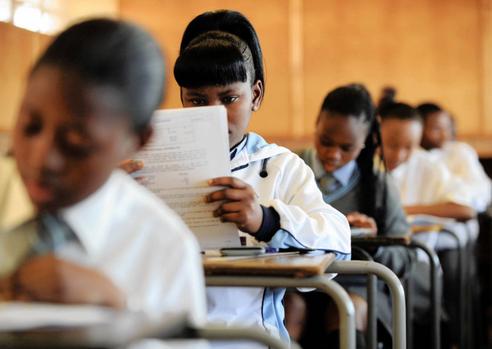
THE Council for Quality Assurance in General and Further Education and Training in South Africa, Umalusi has highlighted several concerns regarding protest action in the Northwest and Mpumalanga which has disrupted matric exams.

The protests resulted in some learners either missing the National Senior Certificate examination or writing it later than initially scheduled.

Department of Basic Education (DBE) spokesperson, Elijah Mhlanga says that the biggest challenged faced during last week’s examinations was in Mpumalanga, Emalahleni where about 1127 candidates were prevented from accessing their exam centres where they were scheduled to write either Mathematics or Math Literacy Paper 2.

Mhlanga explains that candidates from six centres could not reach the exam centre and even the ones who managed to make it to the exam centre could not write because the exam officials who deliver the question papers were denied entry to the township.

“It is a problem and we have appealed to members of the public to refrain from disrupting schools because it causes unnecessary stress and anxiety among their own children,” said Mhlanga.

Another issue was raised in Gauteng, where 53 candidates could not sit for their Economics paper 1 due to alleged communication from school management, instructing learners not to appear for the exam.

The school management also allegedly misdirected the province by stating that there was a protest in the area.

Mhlanga says that the department is investigating the matter and that the district has initiated a disciplinary proceeding against the principal of Phandimfundo Secondary School.

Further questions were raised about an alleged problematic question in the Mathematics Paper 2 exam that was written last Monday, with complaints and reports coming from different parts of the country stating that the error in the paper led to the problem being unsolvable.

In a statement, Umalusi said the standard procedure for dealing with such issues will be taken during the investigation.

According to Umalusi, if the investigation proves that an error was made, depending on the magnitude of the problem, the marks allocated to the question may be excluded from the question paper’s total marks or that alternative responses may be accepted.

“No child is going to be compromised as a result of that question because there are measures in place that covers for situations like that.”

Mhlanga says that although there have been several disruptions, the department anticipated many more challenges, and it is managing the situation fairly.

Additional reporting by Staff Reporters

Clash over new laws for schools in South Africa – including language changes and the sale of alcohol

0

THE portfolio committee on basic education has this week started hearing oral submissions on planned changes for school regulations in South Africa, with presentations pushing back hard against certain provisions in the proposed laws.

The Basic Education Laws Amendment Bill (BELA) is currently being processed by parliament and is at the stage of public consultation. Several groups related to the homeschooling sector and other stakeholders have already submitted written commentary, but the next few weeks have been set aside for oral submissions.

Presenters, including the South African Human Rights Commission (SAHRC) and various legal experts, joined a growing list of organisations opposed to large parts of the regulations this week.

Broadly, the BELA Bill proposes to amend the South African Schools Act (SASA) and the Employment of Educators Act (EEA) to align them with developments in the education landscape and to ensure that systems of learning are put in place in a manner that gives effect to the right to basic education as enshrined in the Constitution.

To accomplish this, some of the key amendments that the Bill aims to make include:

  • – Making grade R the new compulsory school starting age, as opposed to grade 1, as is currently the case.
  • – Forcing homeschooled learners to be registered for this type of schooling
  • – Criminalising parents who do not ensure their child or children are in school, with fines or jail time up to 12 months.
  • – Requiring parents and learners to supply specified documentation when applying.
  • – Holding school governing bodies more accountable for disclosures of financial interests – including those related to their spouses and family members.
  • – Prohibiting educators from conducting business with the state or being a director of public or private companies conducting business with the state.
  • – Abolishing corporal punishment and initiation/hazing practices.

The Bill also includes controversial changes, such as allowing schools to sell alcohol outside of school hours and giving government department heads more power around the language policies and curriculums a school must adopt.

These two changes came under sharp focus this week, along with many others, with oral presentations clashing with the government over the proposals.

Pushback

According to parliament’s committee recap, the following submissions were made:

The ChristianView Network told the committee that the proposals would take more powers away from parents in directing the path of their children’s education. This was a sentiment expressed by many of the written submissions last week. The group proposed that schools that are running well, should be left alone to do so.

A joint presentation from Equal Education (EE) and the Equal Education Law Centre (EELC) pushed back against the criminalisation of parents whose children do not attend school and said this should be removed in its entirety.

According to the groups, criminalisation will not tackle the underlying problems keeping children out of schools and risks leaving children without their caregivers, as the change will most likely impact single mothers and other vulnerable groups.

In general, the SAHRC welcomed most provisions of the Bill but expressed concerns over the required list of documents from learners and parents, which it said would lead to “an exclusionary approach” from schools and serve as a deterrent for parents bringing their undocumented children to school.

Several other presenters also raised this clause as troublesome.

The Commissioner for Children in the Western Cape raised concerns and made recommendations regarding parents’ role in their child’s education, allowing alcohol to be sold on the school property, the principle of non-discrimination, and the understanding of discipline at schools.

The organisation World Changers – which works predominantly with the abuse of alcohol and drugs – urged the committee to remove the clause regarding the consumption of alcohol at schools outside of school hours from the Bill entirely.

The FW de Klerk Foundation raised concerns relating to the extended powers of the Head of Department, the impact on mother tongue education as well as the impact on undocumented learners, while Die Skole Ondersteuningsentrum said Afrikaans schools and language were under attack in the country and in the Bill.

Oral submissions on the bill will continue next week (15 November).

BUSINESS TECH

Watch: More infrastructure capacity for schools: Gauteng MEC

The Gauteng department of Education MEC Matome Chiloane will be giving more capacity to schools including rolling out of mobile classrooms with additional 4 000 new educators. This is in preparation for the 2023 school calendar.

Opinion: Universities can’t solve the higher education ‘permacrisis’ alone, says Marwala

0

TSHILIDZI MARWALA

IN 2020, as the Covid pandemic gained pace, KPMG asked a few key questions. “Traditional universities are approaching a crossroads: do they transform into new kinds of entities? Optimise existing operations to enhance efficiencies and capabilities? Do nothing in the hope that if no rescue appears they will have time to decide what to do later? Or do nothing in the belief that they are invulnerable?” In the South African context, what are the implications of this juncture as we tackle education nuances that remain stark and largely unaddressed? 

The term “permacrisis”, which has been declared word of the year, is defined as an extended period of instability and insecurity.

A permacrisis accurately characterises the state of South Africa’s higher education system.

There are inherent and implicit weaknesses, such as infrastructure deficits; appropriate staffing; modern and reframed curriculums and how they are financed so that universities can improve their performance; legacies of apartheid; and a pervasive and systemic digital divide that hinders progress. The impact of this permacrisis has been profound. Statistics indicate that the attainment of a tertiary qualification in South Africa is the lowest across all Organisation for Economic Co-operation and Development (OECD) and partner countries. 

Higher education in South Africa, with its shattered history, has not been a place of inclusion but rather a sector that is distorted in terms of mirroring the demographic characteristics of the country. As tertiary institutions, we have begun to address this through bridging courses and remedial programmes. Additionally, shifts towards a decolonised curriculum have been pivotal for our approach to education. Yet there is far more to reimagine than the current rhetoric around the future of education. The nexus between transformation and optimisation is the key.

Compounding the precarious state of higher education in South Africa are governance challenges. In 2017, the department of higher education & training found that there were serious challenges with regards to governance, administration and management of some universities that were destabilising and undermining the effective functioning of all the institutions.

According to research conducted by Sitwala Imenda, increased government control over the affairs of higher education institutions, resulting in a sense of diminished academic freedom alongside a growing gap in trust and perceptions between academic staff and administration staff, have led to this issue. There is clearly a need for vigilance and strong accountability from the governing structures of universities.

There is inadequate resourcing of the higher education sector. Despite a marked increase in numbers of students, there has not been a concomitant increase in funding. According to PwC, it is estimated that the cost of delivering university education is around R50bn annually. State contributions declined from 49% in 2000 to 40% by 2012, while the burden on students has increased from 24% to 31%.

Additionally, the National Students Financial Aid Scheme is buckling under the weight of a weak economic performance. Even as access is addressed in some instances, accommodation shortages remain a challenge. The spatial inequalities in our country have necessitated an emphasis on accommodation. Affordable and accessible student housing poses one of the most significant stumbling blocks to expanding access. 

Then, of course, there are the difficulties in eschewing traditional modes of teaching and learning. The pandemic has served as a disruptor and hastened the breadth, speed and scope of the fourth industrial revolution. A changing world necessitates industries that are adaptable. Perhaps one of the greatest challenges we face is student retention. It is estimated that more than 40% of all first-year students in South Africa do not complete their degrees.

According to a government review of the first 25 years of democracy published in 2019, in the 2010 cohort 22% of students achieved a three-year degree within three years, only 39% had completed their degrees by the fourth year, and only 56% of students completed their degree by the sixth year. While this is in part because of financial constraints, academic performance plays a big role.

Through platforms such as Blackboard, we are able to track the performance of our students and delve into the particulars of each case. For example, we can identify if a student is only working on a mobile phone and submitting assignments at night. Based on this, we can implement interventions that address these challenges. The monitoring of academic performance also indicates where we can provide more support for students through teaching assistants and tutors. This allows us to tailor the academic programme, in a sense, to the needs of the individual. However, the vast knowledge gaps that our students face have to be addressed much earlier. 

Higher education needs not only to embrace technology but also to ready students for a changing world of work. One solution that can be posited is the development and fostering of massive open online courses (MOOCs) and micro-credentials. This partly addresses some of the challenges around access to higher education and funding constraints. However, this requires a revisiting of our certification and policy environments.

Universities in Australia, for example, have experimented with offering stackable courses and micro-credentials that enable these big institutions to successfully compete with private online providers from a stronger institutional, professional and academic position. This has allowed students from all walks of life and professional backgrounds to engage in learning that supports their aspirations. There are also institutions in countries such as Brazil that enable indigenous communities to participate in higher education while sharing local knowledge and expertise with formal research communities, strengthening capacity for environmental and agricultural interventions that work.

As we combat these challenges, mental health issues have proved a stumbling block. According to a study conducted by Universities South Africa and funded by the South African Medical Research Council, 20% of students in the university system require mental health support, yet more than 70% of students with mental disorders are not getting help. Free psychological support services units have been an integral component on our campuses. At the University of Johannesburg, for instance, the Centre for Psychological Services and Career Development assists students in various ways, including a walk-in service, individual counselling sessions and a faster emergency response through a 24-hour crisis line. However, it is apparent that there are greater interventions required across the sector.

While this merely provides an overview of some of the starker challenges that the higher education sector faces, it demonstrates that universities cannot solve the myriad challenges alone. As the Public Servants Association astutely phrased it in 2016: “Fixing higher education is a daunting proposition.” Though, I would add, not an impossible task.

Professor Tshilidzi Marwala is the outgoing vice-chancellor and principal of the University of Johannesburg.  From March 1 next year, he will be a UN under-secretary-general and rector of the United Nations University. 

Owethu Ngubane proud of national netball contribution in Fast5 Netball World Series

0

THE University of Johannesburg (UJ) netball player Owethu Ngubane is fresh from participating in the Fast5 Netball World Series that took place in Christchurch Arena, New Zealand from 5 to 6 November 2022.

The South African netball team finished in second place after losing to Australia 34-20 in the final, New Zealand finished in third place. The South Africans played five matches against England, Australia, Jamaica, New Zealand and Uganda excluding the final match.

“I am excited and overwhelmed by the experience. It means a lot to me because of the responsibility I carry as a young national player – it is a dream come true,” says Ngubane.

The netballer from KwaZulu-Natal Province was previously part of the Cheetahs Netball Academy. Prior to the Fast5 Netball Series, she played for the South Africa team in the Confederation of Universities and Colleges Sports Association (CUCSA) Games in Lilongwe, Malawi, between 28 August and 03 September 2022. She is also one of the 24 players who received professional netball contracts by Netball South Africa from 1 April 2022 to December 2023.

“When I started playing netball, I was not sure about the sport. In my primary school, I was one of the taller girls, so, the school coach approached to ask that I join the play netball team. I had a bad start, but I continued to learn and worked harder to get better. I am proud of where I am now,” Ngubane explains.

She is a UJ Road Transport Management student and the senior netball team player.

SUPPLED: UJ

Disaster in the making as South African schools remain unconnected

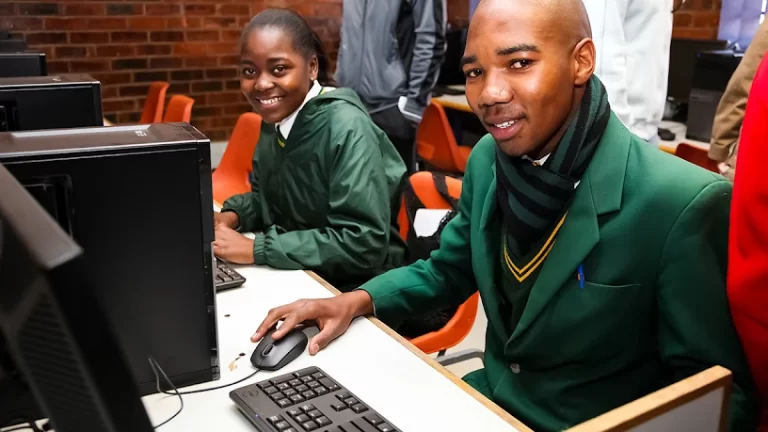
THE majority of South African schools have no internet connection for the purpose of teaching and learning, which ICT industry analysts fear will result in a national crisis due to the resultant unemployable youth.

Speaking to ITWeb about internet penetration trends in SA and the crucial role of good quality connectivity in realising the country’s fourth industrial revolution (4IR) endeavours, Paul Colmer, exco member of the Wireless Access Providers Association (WAPA), expressed concern at the thousands of local schools that remain unconnected.

According to Colmer, more than half of local schools have no internet connection used for e-learning purposes – a number that translates into millions of school pupils being left out of the digital economy, and in turn, missing out on the infinite opportunities presented by digital literacy skills.

“This means they have no life skills and are unemployable in the real world. They cannot form part of the digital economy because we live in the digital world and if someone doesn’t have access to the digital world, they cannot be part of the digital economy,” he explained.

Colmer referenced the National Education Infrastructure Management System report of 2021, which shows that out of 23 258 primary and high schools (including 2 154 independent schools) reported by government in 2022, around 4 695 had internet connectivity for teaching and learning – ie, 20% of schools had internet connections for teachers and learners, while 80% (18 563) did not.

A total of 6 770 schools (29%) were connected to the internet for administration purposes only – with no internet for teaching and learning.

The Independent Communications Authority of South Africa (ICASA) paints an equally dire picture in its ICT sector reportreleased in March.

It notes that the total number of schools connected to the internet, based on universal service obligations imposed by ICASA, was 6 085 (26.1%) as at 2021. This leaves 74% of schools with no internet used for teaching and learning, it says.

Colmer comments: “South Africa has the highest inequality levels in the world. We have a huge gap between the super-rich and the poor. How can the country’s youth go to school and matriculate if they have never seen the internet?

“The issue becomes one of budget constraints and lengthy government processes, which take time to implement, and time is something we may not have, because South Africa hasn’t even completed the third industrial revolution, so how can we concentrate on the 4IR?”

Colmer pins hopes on government’s ambitious South Africa Connect (SA Connect) broadband project and public-private collaborations, which he believes are “a step in the right direction”.

Vandalism cuts connectivity

Responding to ITWeb’s questions on the issue, Department of Basic Education (DBE) spokesperson Elijah Mhlanga says the DBE is led by the Department of Communications and Digital Technologies to collaborate with the telecommunications companies to make internet connectivity available to schools.

Mhlanga notes the figure used by Colmer could be correct; however, he was not in a position to provide the latest statistics on the number of connected schools.

“There are some schools that have been provided with connectivity, only for the infrastructure to be vandalised. That remains a serious challenge at schools.

“The schooling system does need communication because the South African Schools Administration and Management System requires live updates from the schools on all matters.

“It is in the best interest of the system for schools to have internet for teaching purposes and not just for administration,” he said.

Moira de Roche, non-executive director of the Institute of IT Professionals SA and chairperson of the IFIP International Professional Practice Partnership, points out that in 2022, internet connectivity is essential and no longer a “nice to have”.

“Anecdotal evidence suggests the number of unconnected schools is high, particularly among learners in rural communities. It’s not about computer literacy now; it’s about digital literacy. Learners leave school and are not workplace-ready. This is exacerbated in a company that is being or is already digitally transformed.

“I understand that many first year university students don’t have the required computer skills. This holds them back from getting their degrees.”

According to De Roche, the solution should begin with forcing telcos to zero-rate all access to educational materials. Internet access centres should be set up in disadvantaged and rural communities to allow learners to have somewhere to go to access learning materials at no cost.

“Secondly, the school curricula must be built in such a way that technology is integrated into every subject. We must move away from seeing technology as something extra that only privileged learners have access to, to a tool for learning, in the same way as writing implements and paper are or used to be,” she concludes.

ITWEB

Classroom Management: How far should we go with online modes of delivering education in Africa?

Aghogho Akpome

NOT surprisingly, deliberations at a recently concluded teaching and learning conference featured many papers that explored the effects of the COVID-19 pandemic on education across the world, with a particular focus on higher education. As university lecturers and teachers ourselves and as people who not only conduct research into teaching and learning but also teach and train teachers, we are concerned about the impact of COVID-19 on teaching at all levels.

Of course, one of the key effects of the pandemic on teaching at all levels and everywhere is the resort to online modes of delivery – both in synchronous and asynchronous forms – precipitated by the lockdowns that began in early to middle 2020.

There was a desperate need to do something new and different in order for educational activities to continue.

As we were faced with the prospect of a total collapse of the education system, we had to adapt to something that was untested and unprecedented even though we were not sure how successful it was going to be, and how much the available and useable online modes would be able to meet our objectives. It is important to stress this point: we were not sure, but we had to do what we could do because to not do anything would have led to the collapse of the system on our watch. We actually had no choice.

But now, in the final third of 2022, most, if not all, parts of the world are no longer stuck in the desperate circumstances of early 2020 when educational activities could not take place at all. Now, substantial traditional, face-to-face modes of delivery has resumed, even if not completely. Now, we cannot say that our choices are as limited as they were eighteen months or so ago. This means we do now have some choice. We can now better organise and be far more deliberate and calculative of the options before us. And of course, this is where the idea of blended modes of delivery comes in.

Going by the tone of many presentations at the just concluded conference as well as in debates in other forums across South Africa, there seems already to be a determination and an urgency for a speedy, even immediate, transition to online/blended modes of delivery – even while this idea is yet to be clearly defined and understood.

For example, what exactly is meant by blended modes? And to what extent should such a transition involve the replacement of traditional face-to-face methods? One gets the sense from many voices that such a transition is both necessary and compulsory. And, given that the change is considered to be ultimately inevitable, we are apparently being urged to do it urgently! Especially since it is already being done in the so-called ‘developed’ parts of the world.  Surely, we do not want to be left behind? Herein lies my concern. 

This approach to online modes of delivering education seems to be a disturbing re-enactment of a trend in almost every important domain of our modern life as Africans – our propensity of adopting ideas or practices from the so-called developed world without due consideration. Which leads to the question: As we transit to online/blended modes, are we being driven by our interests? By our unique educational, societal and developmental challenges, needs, goals and objectives? Or are we merely responding to the desire to appear ‘up-to-date’ like other countries and regions? Are we still taken in by those spurious claims of universal, one-size-fits-all, notions of, and paths to, ‘progress’ that have already been disproved?   

These questions are not meant to undermine the evident benefits of online modes of delivering education – far from it. Indeed, these advantages are so obvious that discussing them here would be a waste of time. Rather, the questions are about the following: (1) the yet under-explored implications of what is already known about online modes; (2) what is not so obvious, and (3) what is still not known given our limited experience – so far – of wide-scale use of online modes.

Firstly, what we do know without a doubt in much of the so-called developing world so far is that the vast majority of learners and students are hugely disadvantaged by online education due to lack of resources, inadequate infrastructure and poor digital literacy levels. If, and as, we hurry to make online delivery more permanent, have we considered the long-term social and economic implications of leaving most of our students in the lurch? Or do we already have a fool proof plan to cover our resources deficits such that the majority of students can participate optimally? 

Secondly, one of the things that are not so obvious about online delivery is the new regime of dependence that it is creating. This is potentially very problematic given our current interest in decolonising education. Can our institutions and governments afford the costs – economic and political – of subscribing to Teams, Zoom, Blackboard, sustainably in the long term? Do we have local, autonomous and self-reliant alternatives?  We cannot pretend to be ignorant of the fact that the proliferation and universalisation of online modes has huge economic incentives for those who promote and sell the required hardware, software and connectivity, and that such large-scale benefits have historically been at the expense of some others.

Thirdly, what can we really say about online ‘teaching’ and ‘learning’? It seems to me that we have tended to conflate delivery with teaching and learning in these debates. Over the past 18 months or so, we can say that we have a good sense of the extent to which we can deliver content and the amount of content we can deliver via online modes. But to talk about online teaching and online learning is a completely different matter! If we are honest, we will admit that actual teaching and learning online is not (yet) a given. We still do not know the extent to which actual teaching and learning occurs on a mass scale compared to what we already know about traditional face-to-face modes of teaching and learning over centuries. And when we pare it down to different educational levels, different subjects and disciplines, demographics, etc, our ignorance will become even more apparent and alarming.  

With so many questions and so many unknowns, it would be foolhardy to make unequivocal conclusions at this point in time. What is safe, though, is the need for more critical evaluation and careful deliberation. And this has to be informed by a deliberate and conscientious focus on our own unique educational, societal and developmental challenges, needs and objectives in Africa! Whatever we choose to do has to be in demonstration of a commitment to the betterment of the many. We must avoid doing things in the attempt to look good before others and being co-opted unwittingly to serve the ultimate interests of others. 

Aghogho Akpome is a Senior Lecturer in the Department of English at the University of Zululand. He is an NRF rated researcher.

SA forges ahead with Fourth Industrial Revolution strategy

0

HIGHER Education, Science and Innovation Deputy Minister, Buti Manamela, has officially launched a Fourth Industrial Revolution (4IR) micro-laboratory at Goldfields Technical and Vocational Education and Training (TVET) college in Welkom, Free State.

Manamela described the launch of the third 4IR Centre of Excellence in South Africa as the country’s “gateway to create skills development, innovation, and entrepreneurship”.

“There is no question about the fact that 4IR is now upon us. The advent of the 4IR is not just changing the labour market, but the very world we live in and how we function within it.”

The Deputy Minister said all industries are rapidly transforming, while many occupations are becoming obsolete.

“New ones are being born in areas such as artificial intelligence, cloud computing, robotics, 3D printing and advanced wireless technologies.

“We are also seeing how these rapid advances in technology are fundamentally altering the skills requirements for various jobs.”
Citing World Bank data, Manamela said 65% of children entering primary school today would ultimately end up working in completely new jobs that do not exist yet.

“As is evident, the 4IR is all about new solutions and new technologies that can provide new, better, and faster solutions. This is why it is also anticipated that a wide range of occupations will require a higher degree of cognitive abilities, such as creativity, logical reasoning and problem solving, as part of their core skills.”

The Deputy Minister said his department has embraced President Cyril Ramaphosa’s call and the recommendations of the 4IR Commission.

“As a product of these discussions, we agreed to roll out the 4IR concept at TVET colleges in our country. We agreed to sponsor 10 TVET colleges to establish 4IR Centres of Excellence in them.”

As a result, the department has since identified several TVET colleges where these centres will be located. These include Ehlanzeni in Mpumalanga, Ikhala in the Eastern Cape, Lephalale and Vhembe both in Limpopo, Vuselela in the North West, Northern Cape Urban in the Northern Cape, Western College in Gauteng, uMgungundlovu from KwaZulu-Natal, Wes Coast from Western Cape and Goldfields in Free State.

“In rolling our 4IR centres at TVET colleges, we have adopted a multi-pronged approach.”

Industry-Partnered Learning Factories

Meanwhile, the department’s entities — the Council for Scientific and Industrial Research (CSIR) and the Manufacturing, Engineering and Related Services Sector Education and Training Authority (merSETA) — have also collaborated to establish 18 Industry-Partnered Learning Factories (IPLFs).

According to Manamela, two IPLFs in each province, at a cost of about R120 million, will support 4IR skills development, innovation and entrepreneurship.

“These learning factories will also serve as platforms for upskilling and re-skilling of the industry workforce through short courses to support the adoption of advanced technologies.”

Meanwhile, as part of this partnership, 261 students and 51 instructors have been trained, while 10 TVET colleges have been approved to offer a new stream on robotics programme from 2023.

The Deputy Minister announced that the department has also partnered with Intel South Africa to provide information and communications technology (ICT).

“The pilot project was started with Orbit College in the North West to develop a blueprint for the implementation of the project. The project consists of two aspects, which are ICT infrastructure and comprehensive 4IR training at different levels.”
He believes that the academic staff and the students here at Goldfields TVET college will benefit greatly from this investment.

“We are making significant progress in our efforts to ensure that students in the TVET colleges are empowered to respond creatively to the challenges and opportunities of the 4IR.”

SA NEWS