Home Blog Page 242

Disaster in the making as South African schools remain unconnected

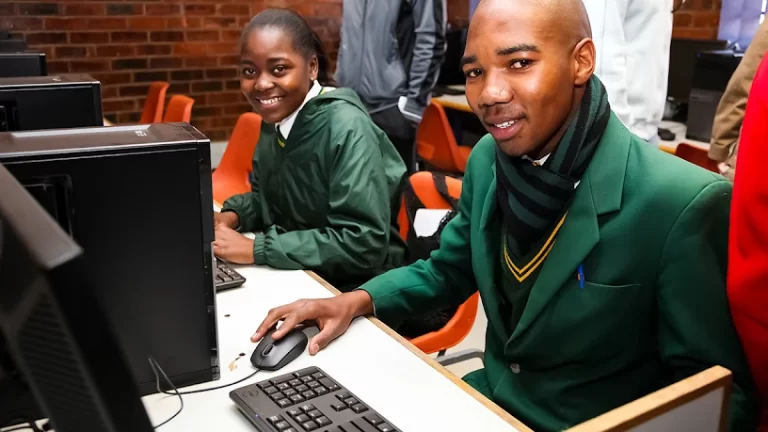
THE majority of South African schools have no internet connection for the purpose of teaching and learning, which ICT industry analysts fear will result in a national crisis due to the resultant unemployable youth.

Speaking to ITWeb about internet penetration trends in SA and the crucial role of good quality connectivity in realising the country’s fourth industrial revolution (4IR) endeavours, Paul Colmer, exco member of the Wireless Access Providers Association (WAPA), expressed concern at the thousands of local schools that remain unconnected.

According to Colmer, more than half of local schools have no internet connection used for e-learning purposes – a number that translates into millions of school pupils being left out of the digital economy, and in turn, missing out on the infinite opportunities presented by digital literacy skills.

“This means they have no life skills and are unemployable in the real world. They cannot form part of the digital economy because we live in the digital world and if someone doesn’t have access to the digital world, they cannot be part of the digital economy,” he explained.

Colmer referenced the National Education Infrastructure Management System report of 2021, which shows that out of 23 258 primary and high schools (including 2 154 independent schools) reported by government in 2022, around 4 695 had internet connectivity for teaching and learning – ie, 20% of schools had internet connections for teachers and learners, while 80% (18 563) did not.

A total of 6 770 schools (29%) were connected to the internet for administration purposes only – with no internet for teaching and learning.

The Independent Communications Authority of South Africa (ICASA) paints an equally dire picture in its ICT sector reportreleased in March.

It notes that the total number of schools connected to the internet, based on universal service obligations imposed by ICASA, was 6 085 (26.1%) as at 2021. This leaves 74% of schools with no internet used for teaching and learning, it says.

Colmer comments: “South Africa has the highest inequality levels in the world. We have a huge gap between the super-rich and the poor. How can the country’s youth go to school and matriculate if they have never seen the internet?

“The issue becomes one of budget constraints and lengthy government processes, which take time to implement, and time is something we may not have, because South Africa hasn’t even completed the third industrial revolution, so how can we concentrate on the 4IR?”

Colmer pins hopes on government’s ambitious South Africa Connect (SA Connect) broadband project and public-private collaborations, which he believes are “a step in the right direction”.

Vandalism cuts connectivity

Responding to ITWeb’s questions on the issue, Department of Basic Education (DBE) spokesperson Elijah Mhlanga says the DBE is led by the Department of Communications and Digital Technologies to collaborate with the telecommunications companies to make internet connectivity available to schools.

Mhlanga notes the figure used by Colmer could be correct; however, he was not in a position to provide the latest statistics on the number of connected schools.

“There are some schools that have been provided with connectivity, only for the infrastructure to be vandalised. That remains a serious challenge at schools.

“The schooling system does need communication because the South African Schools Administration and Management System requires live updates from the schools on all matters.

“It is in the best interest of the system for schools to have internet for teaching purposes and not just for administration,” he said.

Moira de Roche, non-executive director of the Institute of IT Professionals SA and chairperson of the IFIP International Professional Practice Partnership, points out that in 2022, internet connectivity is essential and no longer a “nice to have”.

“Anecdotal evidence suggests the number of unconnected schools is high, particularly among learners in rural communities. It’s not about computer literacy now; it’s about digital literacy. Learners leave school and are not workplace-ready. This is exacerbated in a company that is being or is already digitally transformed.

“I understand that many first year university students don’t have the required computer skills. This holds them back from getting their degrees.”

According to De Roche, the solution should begin with forcing telcos to zero-rate all access to educational materials. Internet access centres should be set up in disadvantaged and rural communities to allow learners to have somewhere to go to access learning materials at no cost.

“Secondly, the school curricula must be built in such a way that technology is integrated into every subject. We must move away from seeing technology as something extra that only privileged learners have access to, to a tool for learning, in the same way as writing implements and paper are or used to be,” she concludes.

ITWEB
Classroom Management: How far should we go with online modes of delivering education in Africa?

Aghogho Akpome

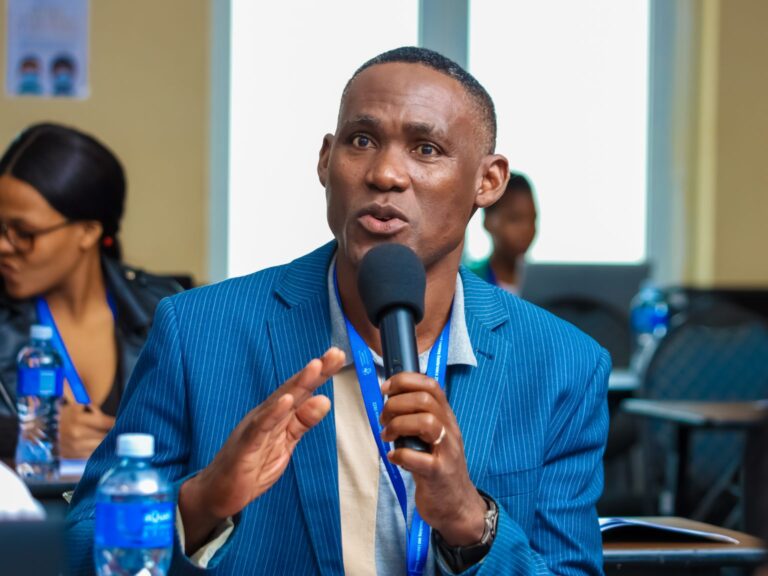
NOT surprisingly, deliberations at a recently concluded teaching and learning conference featured many papers that explored the effects of the COVID-19 pandemic on education across the world, with a particular focus on higher education. As university lecturers and teachers ourselves and as people who not only conduct research into teaching and learning but also teach and train teachers, we are concerned about the impact of COVID-19 on teaching at all levels.

Of course, one of the key effects of the pandemic on teaching at all levels and everywhere is the resort to online modes of delivery – both in synchronous and asynchronous forms – precipitated by the lockdowns that began in early to middle 2020.

There was a desperate need to do something new and different in order for educational activities to continue.

As we were faced with the prospect of a total collapse of the education system, we had to adapt to something that was untested and unprecedented even though we were not sure how successful it was going to be, and how much the available and useable online modes would be able to meet our objectives. It is important to stress this point: we were not sure, but we had to do what we could do because to not do anything would have led to the collapse of the system on our watch. We actually had no choice.

But now, in the final third of 2022, most, if not all, parts of the world are no longer stuck in the desperate circumstances of early 2020 when educational activities could not take place at all. Now, substantial traditional, face-to-face modes of delivery has resumed, even if not completely. Now, we cannot say that our choices are as limited as they were eighteen months or so ago. This means we do now have some choice. We can now better organise and be far more deliberate and calculative of the options before us. And of course, this is where the idea of blended modes of delivery comes in.

Going by the tone of many presentations at the just concluded conference as well as in debates in other forums across South Africa, there seems already to be a determination and an urgency for a speedy, even immediate, transition to online/blended modes of delivery – even while this idea is yet to be clearly defined and understood.

For example, what exactly is meant by blended modes? And to what extent should such a transition involve the replacement of traditional face-to-face methods? One gets the sense from many voices that such a transition is both necessary and compulsory. And, given that the change is considered to be ultimately inevitable, we are apparently being urged to do it urgently! Especially since it is already being done in the so-called ‘developed’ parts of the world.  Surely, we do not want to be left behind? Herein lies my concern. 

This approach to online modes of delivering education seems to be a disturbing re-enactment of a trend in almost every important domain of our modern life as Africans – our propensity of adopting ideas or practices from the so-called developed world without due consideration. Which leads to the question: As we transit to online/blended modes, are we being driven by our interests? By our unique educational, societal and developmental challenges, needs, goals and objectives? Or are we merely responding to the desire to appear ‘up-to-date’ like other countries and regions? Are we still taken in by those spurious claims of universal, one-size-fits-all, notions of, and paths to, ‘progress’ that have already been disproved?   

These questions are not meant to undermine the evident benefits of online modes of delivering education – far from it. Indeed, these advantages are so obvious that discussing them here would be a waste of time. Rather, the questions are about the following: (1) the yet under-explored implications of what is already known about online modes; (2) what is not so obvious, and (3) what is still not known given our limited experience – so far – of wide-scale use of online modes.

Firstly, what we do know without a doubt in much of the so-called developing world so far is that the vast majority of learners and students are hugely disadvantaged by online education due to lack of resources, inadequate infrastructure and poor digital literacy levels. If, and as, we hurry to make online delivery more permanent, have we considered the long-term social and economic implications of leaving most of our students in the lurch? Or do we already have a fool proof plan to cover our resources deficits such that the majority of students can participate optimally? 

Secondly, one of the things that are not so obvious about online delivery is the new regime of dependence that it is creating. This is potentially very problematic given our current interest in decolonising education. Can our institutions and governments afford the costs – economic and political – of subscribing to Teams, Zoom, Blackboard, sustainably in the long term? Do we have local, autonomous and self-reliant alternatives?  We cannot pretend to be ignorant of the fact that the proliferation and universalisation of online modes has huge economic incentives for those who promote and sell the required hardware, software and connectivity, and that such large-scale benefits have historically been at the expense of some others.

Thirdly, what can we really say about online ‘teaching’ and ‘learning’? It seems to me that we have tended to conflate delivery with teaching and learning in these debates. Over the past 18 months or so, we can say that we have a good sense of the extent to which we can deliver content and the amount of content we can deliver via online modes. But to talk about online teaching and online learning is a completely different matter! If we are honest, we will admit that actual teaching and learning online is not (yet) a given. We still do not know the extent to which actual teaching and learning occurs on a mass scale compared to what we already know about traditional face-to-face modes of teaching and learning over centuries. And when we pare it down to different educational levels, different subjects and disciplines, demographics, etc, our ignorance will become even more apparent and alarming.  

With so many questions and so many unknowns, it would be foolhardy to make unequivocal conclusions at this point in time. What is safe, though, is the need for more critical evaluation and careful deliberation. And this has to be informed by a deliberate and conscientious focus on our own unique educational, societal and developmental challenges, needs and objectives in Africa! Whatever we choose to do has to be in demonstration of a commitment to the betterment of the many. We must avoid doing things in the attempt to look good before others and being co-opted unwittingly to serve the ultimate interests of others. 

Aghogho Akpome is a Senior Lecturer in the Department of English at the University of Zululand. He is an NRF rated researcher.

SA forges ahead with Fourth Industrial Revolution strategy

0

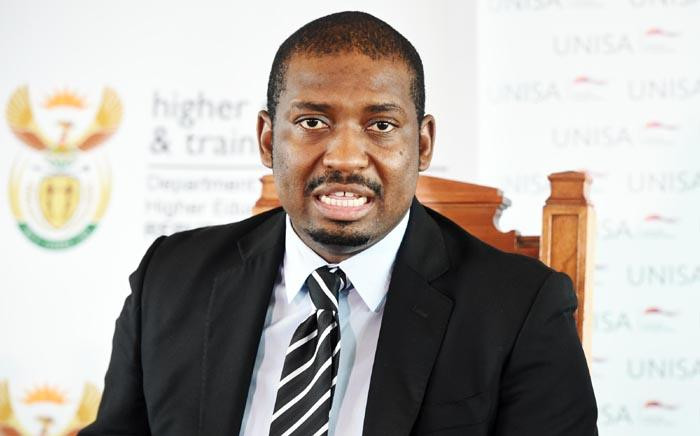
HIGHER Education, Science and Innovation Deputy Minister, Buti Manamela, has officially launched a Fourth Industrial Revolution (4IR) micro-laboratory at Goldfields Technical and Vocational Education and Training (TVET) college in Welkom, Free State.

Manamela described the launch of the third 4IR Centre of Excellence in South Africa as the country’s “gateway to create skills development, innovation, and entrepreneurship”.

“There is no question about the fact that 4IR is now upon us. The advent of the 4IR is not just changing the labour market, but the very world we live in and how we function within it.”

The Deputy Minister said all industries are rapidly transforming, while many occupations are becoming obsolete.

“New ones are being born in areas such as artificial intelligence, cloud computing, robotics, 3D printing and advanced wireless technologies.

“We are also seeing how these rapid advances in technology are fundamentally altering the skills requirements for various jobs.”
Citing World Bank data, Manamela said 65% of children entering primary school today would ultimately end up working in completely new jobs that do not exist yet.

“As is evident, the 4IR is all about new solutions and new technologies that can provide new, better, and faster solutions. This is why it is also anticipated that a wide range of occupations will require a higher degree of cognitive abilities, such as creativity, logical reasoning and problem solving, as part of their core skills.”

The Deputy Minister said his department has embraced President Cyril Ramaphosa’s call and the recommendations of the 4IR Commission.

“As a product of these discussions, we agreed to roll out the 4IR concept at TVET colleges in our country. We agreed to sponsor 10 TVET colleges to establish 4IR Centres of Excellence in them.”

As a result, the department has since identified several TVET colleges where these centres will be located. These include Ehlanzeni in Mpumalanga, Ikhala in the Eastern Cape, Lephalale and Vhembe both in Limpopo, Vuselela in the North West, Northern Cape Urban in the Northern Cape, Western College in Gauteng, uMgungundlovu from KwaZulu-Natal, Wes Coast from Western Cape and Goldfields in Free State.

“In rolling our 4IR centres at TVET colleges, we have adopted a multi-pronged approach.”

Industry-Partnered Learning Factories

Meanwhile, the department’s entities — the Council for Scientific and Industrial Research (CSIR) and the Manufacturing, Engineering and Related Services Sector Education and Training Authority (merSETA) — have also collaborated to establish 18 Industry-Partnered Learning Factories (IPLFs).

According to Manamela, two IPLFs in each province, at a cost of about R120 million, will support 4IR skills development, innovation and entrepreneurship.

“These learning factories will also serve as platforms for upskilling and re-skilling of the industry workforce through short courses to support the adoption of advanced technologies.”

Meanwhile, as part of this partnership, 261 students and 51 instructors have been trained, while 10 TVET colleges have been approved to offer a new stream on robotics programme from 2023.

The Deputy Minister announced that the department has also partnered with Intel South Africa to provide information and communications technology (ICT).

“The pilot project was started with Orbit College in the North West to develop a blueprint for the implementation of the project. The project consists of two aspects, which are ICT infrastructure and comprehensive 4IR training at different levels.”
He believes that the academic staff and the students here at Goldfields TVET college will benefit greatly from this investment.

“We are making significant progress in our efforts to ensure that students in the TVET colleges are empowered to respond creatively to the challenges and opportunities of the 4IR.”

SA NEWS

17 deaf matriculants take their first Sign Language exams in Mpumalanga

0

WENDY MOTHATA

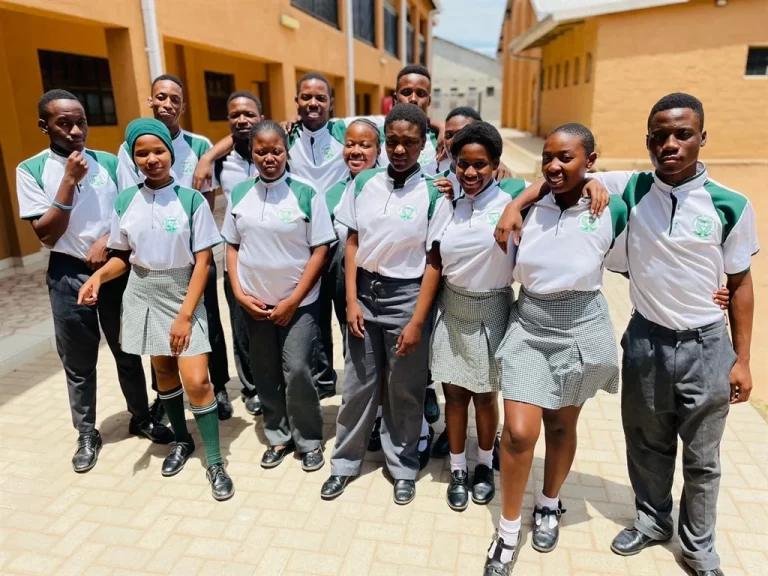
SEVENTEEN Grade 12 pupils from Mpumalanga have made history after writing their first South African Sign Language (SASL) exams last Thursday.

The group is the first cohort from the province to write the sign language exam in Nkomazi, Mpumalanga.

The Department of Education in Mpumalanga said that this was a historic record-breaking feat.

“In a historic and record-breaking feat, 17 deaf learners from Bukhosibetfu Full-Service School in Driekopies, Nkomazi Local Municipality, wrote the SASL Home Language P1 on November 10, 2022,” said the Department.

The Department said that this is the first cohort of deaf learners from the province to write the National Senior Certificate Examination, and so far the department is satisfied with how the examination progressed.

“The SASL was recognised by the Department of Basic Education (DBE) as an official home language in 2014. Sign language was included as a subject for the first time in the 2018 National Senior Certificate exams, in what was described as a major victory for the Deaf community.”

In the Sign Language final examination, learners work in partitioned spaces (cubicles) with computers loaded with the question papers and video-record themselves signing the answers.

The videos are then saved and sent to the public examinations directorate for further handling and submission to the DBE for centralised marking.

The cubicles are designed mainly to prevent unnecessary distractions and clear the recording from capturing other activities except the learners’ responses to the questions.

South African Sign Language is a visual-spatial language with its own distinct linguistic structure that includes syntax, morphology, phonology, and language conventions.

It is not based on any spoken or written language; however, it is a language in its own right.

In keeping with the targets of the Employment Equity Plan, the Mpumalanga Department of Education said it will only prioritise grade 12 learners with disabilities in the 2023 bursary awards.

The Department further urged the learners not to let their guards down but to exert themselves vigorously in their studies until the end of the examination period.

INSIDE EDUCATION

Kiev introduces new restrictions on the Russian language

0

The Kiev City Council voted to remove the Russian language from the Ukrainian capital’s public school curriculum on Thursday, citing national security concerns.

According to the statement on the council’s website, the ban also covers nursery schools.

Vadim Vasilchuk, the chair of the council’s commission on education, said the measure “will prevent an escalation of tensions in society and strengthen the protection of the education space in Kiev from the hybrid activities of the enemy state.”

“Language matters, and, in a time of war, it is an issue of national security,” Vasilchuk added. The legislator said all classes would be taught in Ukrainian, the country’s sole state language.

The move came after Alexey Danilov, the head of Ukraine’s National Security and Defense Council, described the Russian language last month as “an element of enemy propaganda” that “must completely disappear from Ukrainian territory.” 

In August, Ukraine’s Education Ministry said that nearly all works of Russian and Belarusian authors would be removed from literature classes.

Ukrainian activists and officials have also been tearing down monuments to Alexander Pushkin, Russia’s national poet and novelist, who lived in the 19th century. A bronze Pushkin bust was removed from its pedestal in the northern city of Zhitomir on Friday, while a monument in Kiev was taken down last month.

The rights of the sizable Russian-speaking minority have been a highly contentious issue ever since Ukraine gained independence from the Soviet Union in 1991.

The Donetsk and Lugansk regions broke away from Ukraine in 2014, following the coup in Kiev and in the wake of attempts by Ukrainian officials to restrict the use of Russian in public life. They formed the Donetsk (DPR) and Lugansk People’s Republics (LPR).

Ukraine eventually adopted a set of laws that severely limit the use of Russian in public services, media, and education.

Moscow repeatedly accused Ukraine of discriminating against Russian speakers. In the days leading up to the Russian military operation in Ukraine that was launched in February, President Vladimir Putin said that the Ukrainian authorities were conducting policies of “derussification and forced assimilation.” 

The DPR and LPR, together with two other former Ukrainian territories, joined Russia after holding referendums in late September.

  • -RT

NYDA wins Best initiative award 

The National Youth Development Agency won an award for BEST initiative: Public sector at this year’s Feather Awards held at the Market Theatre, Johannesburg.

The NYDA was nominated alongside the Department of Social Development and South African Police Service Sophiatown branch in the Public Sector category.

The agency was represented by executive chairperson Asanda Luwaca and members of the Board of Directors including management. 

“We are excited to win this award as the custodian and advocacy organisation for young people in the country. This award is greatly appreciated as the agency advocates for inclusiveness in our society and we are glad that the LGBQTI+ community believes in our organisation,” Luwaca on Thursday. 

She said it is important for NYDA to have representation in all youth sectors and communities.

“The NYDA will continue to strive to be an Agency that advocates for the support of all young people with no bias towards gender, race, identity, or political affiliation. 

“This award is a step on the journey to ensure that the agency is at the centre of engagement when it comes to youth issues,” she said.

The Feather Awards have been running for the past 14 years in celebration of the LGBTQI+ community.

  • – Inside Education

NRF-funded study opportunities now open for 2023

The National Research Foundation (NRF) announced on Friday the implementation of its Global Knowledge Partnerships (GKP) programme for the 2023 academic year. 

The programme places exceptional Doctoral students, postdoctoral Fellows and Early Career Researchers (ECRs) who are funded by the NRF at a number of international universities and research institutions.

The pool of these partner institutions is spread across various countries including Germany, Austria, the USA, Japan, Singapore, Canada, and several within the African continent.

The programme is premised on the need to accelerate the development of a diverse young researcher cohort into world-renowned experts and a globally competitive workforce through the provision of platforms and pathways that offer opportunities for outstanding young researchers to access international networks, mentorship, global research funding streams, industry partnerships, and research infrastructure.

The programme is being realised through the guiding framework of the GKP programme, an NRF initiative which was implemented in 2020. 

“The Global Knowledge Partnerships programme is one of the NRF’s most prominent initiatives. It is meant to ensure that the NRF achieves its goal to expose students it funds to scientific practices globally. 

“This international exposure for Doctoral students, postdoctoral Fellows and ECRs is an integral component of the NRF’s strategic goal to create an internationally competitive, transformed, and representative researcher cohort. The benefits of such exposure to the researchers and also to South Africa and Africa cannot be understated,” Acting Group Executive: Strategy, Planning and Partnerships, and Executive Director: Strategic Partnerships Dr Aldo Stroebel said. 

Through this GKP programme, the NRF, working in close collaboration with local and international partners in addition to the higher education sector in South Africa, intends to guide and monitor opportunities for outstanding NRF-funded Doctoral students, postdoctoral Fellows and ECRs to spend a significant period, i.e. 3-12 months for Doctoral students and up to 18 months for postdoctoral Fellows and ECRs, abroad at universities, research performing entities, science councils and in industry. 

The eligibility criteria are as follows:

  • The applicant must be a South African citizen or permanent resident (however, this requirement will not be applicable to students funded under the NRF-MINDS scholarship programme);
  • Be a currently NRF-funded Doctoral student or postdoctoral Fellow or ECR;
  • Have a research plan developed for the time abroad which is signed by the South African supervisor and international host supervisor; and
  • Produce evidence of demonstrated leadership abilities or potential guided by the questions/requirements set out in the application form (requirement is for NRF-MINDS programme only).

Applications must be submitted through the international partner’s online portal for specific programmes. With specific programmes, the reviewing and selection of applications will be conducted jointly by the international partner and the NRF. 

Scholarships on offer under the GKP programme are:

  1. PRE-DOCTORAL PROGRAMMES

Fulbright Foreign Student Programme (FFSP) 

The FFSP, in partnership with the NRF, supports the Visiting Student Researchers to undertake non-degree doctoral research training for a maximum period of 12 months at a university in the USA. Applicable research fields include Science, Engineering and Technology (SET), and Social Sciences and Humanities (SSH). The call for applications for this programme is expected to open in January 2023. For more information, visit the FFSP website.

NRF-MINDS Mobility Programme

The Mandela Institute for Development Studies (MINDS), in partnership with the NRF, enables a joint postgraduate scholarship and exchange programme for Africa. Through the exchange programme, NRF-funded students under the NRF-MINDS Scholarship programme may apply for short-term research visits of one to three weeks or three to twelve months at an African-based academic institution. Applicants should submit their applications as per the Scholarship and Fellowship-holders Travel Grant Guidelines 2023.  For more information, the MINDS website.

NRF-Mitacs Mobility Programme 

The NRF and Mitacs have entered into a co-funding partnership in order to make provision for funding, training and networking opportunities for NRF-funded Doctoral students and postdoctoral Fellows. The objective of this partnership is to strengthen international research collaboration between SA and Canadian companies and universities. NRF-funded Doctoral students and postdoctoral Fellows may undertake short-term research visits of between 12 to 24 months at a Canada-based academic institution. For more information, visit the Mitacs website.

The call for applications for the Globalink Research Award – Thematic Call opened in September 2022. Click here to access more information.

NRF-DAAD Mobility Programme 

Students receiving NRF-DAAD in-country Master’s and Doctoral funding may apply for a short-term research fellowship for research training spanning three to six months in Germany. Students who are interested in this opportunity are welcome to contact the DAAD Information Centre throughout the year at daad@wits.ac.za. For more information, visit the DAAD website.

DAAD Research Mobility Grants Programme 

The primary aim of this programme is to promote research projects within the context of doctoral programmes through provision of mobility grants. Excellently qualified doctoral candidates under specified disciplines may apply for funding to advance their research projects at a state or state-recognised institution of higher education in Germany or a non-university research institute, which is carried out in coordination with an academic adviser in Germany. The mobility grant may span up to twelve (12) months, but the actual duration will be decided upon by the selection committee and is dependent on the research project and applicant’s work schedule. Students who are interested in this opportunity are welcome to contact the DAAD Information Centre throughout the year at daad@wits.ac.za. For more information on this programme, visit DAAD website.

Young Scientists Summer Programme (YSSP) 

Through the YSSP, Doctoral students undertaking their research using systems analysis methodology will advance on their research projects under the supervision of an International Institute of Applied Science-linked researcher for the duration of three months (July – August) at IIASA in Vienna, Austria. The call for applications opened in October 2022. For more information, visit IIASA website.

  1. PROGRAMMES FOR POSTDOCTORAL FELLOWS AND EARLY CAREER RESEARCHERS 

Japan Society for the Promotion of Science (JSPS) 

The JSPS hosts annual HOPE meetings wherein the ECRs from selected countries within the Asia-Pacific and Africa regions are afforded an opportunity to engage in interdisciplinary discussions with Nobel laureates and other distinguished scientists pioneering the frontiers of knowledge. Held over a period of one week (annually around March) in Japan, the HOPE meetings also present a great platform for creation of collegial networks with peers from the participating countries. This is treated as closed call and nominations were made in July 2022 for the upcoming meeting in 2023. For more information, please visit the JSPS website.

Global Young Scientists Summit (GYSS) 

The NRF Singapore hosts the annual GYSS with the aim of providing Doctoral students and postdoctoral Fellows an opportunity to interact and learn from Nobel Laureates and world-renowned scientists as they discuss global issues relating to how science and technology can pave the way towards a brighter future. Up to 20 speakers are scheduled to speak over a five day period, with candidates being able to engage in thought-provoking plenary lectures and panel discussions. Candidates may either choose to be a participant or a viewer in the programme which is held over a period of five days. The call for nominations opened in August 2022. For more information, please visit the GYSS website.

NRF-Mitacs Mobility Programme 

NRF-funded postdoctoral Fellows may undertake short-term research visits of between 12 to 24 weeks at a Canada-based academic institution. Postdoc Fellows must be pursuing their research in a field of study linked to one of the Mitacs broad thematic research areas. For more information, please visit the Mitacs website.

The call for applications for the Globalink Research Award – Thematic Call opened in September 2022.

International Centre for Genetic Engineering and Biotechnology (ICGEB) 

South African women postdoctoral Fellows undertaking research in Biotechnology and attached to the ICGEB in Cape Town will have an opportunity to spend between three to six months abroad at the ICGEB laboratories in Trieste, Italy or New Delhi, India. Applicants interested in the South African Women in Biotechnology Programme – International Centre for Genetic Engineering and Biotechnology (SAWBP-ICGEB) should apply under the Freestanding, Innovation and Scarce Skills Postdoctoral Fellowships (indicating ICGEB as the institution of choice) that opens in mid-February 2023. Further information on these short-term research fellowships may be accessed at https://www.icgeb.org/activities/fellowship/.Further details for students and their home universities are contained in the ‘Global Knowledge Partnerships Programme Implementation Framework for 2023 Academic Year’ which is accessible on the NRF website.

  • Inside Education

Killing of Durban Grade 12 learner angers KZN Premier

KwaZulu-Natal Premier Nomusa Dube-Ncube condemned violence in schools and urged learners to solve problems peacefully to show that they value life.

Dube-Ncube visited Mandlenkosi Secondary School in Ntuzuma where a Grade 10 learner was stabbed to death by a fellow pupil at the school premises.  

She expressed shock and outrage at the killing of a Grade 12 learner, who was allegedly stabbed to death by a Grade 10 learner at Mandlenkosi Secondary School in Ntuzuma, north of Durban. 

Dube-Ncube visited the school on Thursday, as part of her matric exams monitoring programme.

The Premier said it is concerning that schools which are centres of knowledge and learning, have now been degenerated into “dens of crime”.

“We came to the school to give support and prayer to the teachers and learners who are writing their examinations, following a very unfortunate and sad incident where a learner lost his life at school. We are really saddened by the incident that happened at a time when learners are supposed to be focusing on their exams, especially the matric class of 2022.

“The KwaZulu-Natal provincial government sends its condolences to the parents of the deceased learner, teachers and fellow learners, who witnessed this tragic incident on the school premises,” Dube-Ncube said.

Psychosocial support is being offered to learners and teachers at the school.

The government will ensure that affected learners and teachers receive counselling. 

“We will also be reaching out to the rest of the community so that we preach to our children to value life.

“Violence is not the solution because any disagreements can be resolved through dialogue. We are approaching the police to ensure that there is visibility during exams and additional police will be deployed to KwaZulu-Natal during the festive season and beyond,” Dube-Ncube said. 

She said a serious dialogue is needed because the happenings are a direct reflection of what is taking place at community level. 

– Inside Education

Stellenbosch to focus on transformation confidence building

University of  Stellenbosch Deputy Vice-Chancellor for Social Impact, Transformation & Personnel Professor Nico Koopman said the institution will ensure that the work performance of staff members get measured on transformation and confidence building efforts. 

Yesterday, the University said it is studying the findings and recommendations of the Independent Khampepe Commission of Investigation into allegations of racism. 

Khampepe report showed how black and coloured students feel alienated and unwelcomed at the university. 

Koopman said the institution will work on a culture of inclusivity and ensuring co-ownership of the university.  He urged students and staff members to work together and participate in the transformation of the university. 

“This is a top priority. The Council has decided that 25% of the Key Performance Areas (KPAs) of all staff will focus on transformation. A commitment that can be measured,” he said. 

The university has urged all staff and students to participate in the process saying transformation confidence building commitment is something that can be assessed regularly with progress reports produced.

He said overcoming discriminations at the university will be addressed consistently and on a continuous basis.  

This week rector and vice-chancellor Wim de Villiers received the commission’s report.

A probe was launched following incidents of alleged racism at the institution.

Theuns du Toit was expelled from the university in July after a video of him urinating on fellow black student Babalo Ndwayana’s study material went viral in May this year. 

Following weeks of anti-racism protests in June, the University established an independent probe chaired by retired Constitutional Court justice Sisi Khampepe.

“There is also a general complaint from the students that most social traditions in the residences cater only to White, Afrikaans cultural preferences. Some of the witnesses mentioned that they have attempted to address this concern by working with the student leaders to introduce more cultural diversity into residence events.

“Unsurprisingly, language was also raised as a common complaint that the witnesses hear from students. The use of Afrikaans is a minefield in these residences, because many of them were established as “Afrikaans spaces” with “Afrikaans traditions.” This appeals to Afrikaans-speaking students, who then often feel entitled to treat Afrikaans as the common language in the residence. This appears to upset Black students who do not speak Afrikaans, because they understand this to be an exclusionary and arrogant way of behaving,” Khampepe said. 

Meanwhile the DA said it will immediately take Stellenbosch University’s Khampepe report on legal review.

“The report outrageously scapegoats the Afrikaans language for any and all problems at the university. Equating Afrikaans with racism is an insult to an entire community,” it said.

Click here to read the full report.

-Inside Education

Mass public sector strikes in Tasmania

0

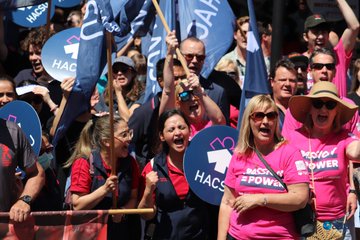
Thousands of public sector workers have rallied across Tasmania for better pay and conditions, flagging further industrial action around Christmas if their concerns aren’t addressed.

State school teachers and support staff, health workers, firefighters, cleaners and child safety officers were among those to walk off the job on Wednesday afternoon.

Premier Jeremy Rockliff labelled the strikes disappointing and disruptive.

He has previously described the state Liberal government’s pay offer of a 3.5 per cent rise in year one followed by three per cent rise in years two and three as final.

The government has also offered workers payments of several thousand dollars.

“Good faith negotiations mean listening and responding … our government has done that at all levels, with three separate wage offers made to public sector unions since September,” Mr Rockliff said.

Some unions claim they have not received a comprehensive offer, while Unions Tasmania secretary Jessica Munday said the proposed deal was not up to scratch.

She said it doesn’t address recruitment, retention and workload problems.

“The premier will need to revise his final offer,” Ms Munday said.

“I really hope that he looks at the depth and breadth of public workers who have turned out across the state.”

Thousands rallied outside parliament house in Hobart and at other major cities, as well as towns and regional centres, in what the union called the biggest strike in years.

Health and Community Services Union state secretary, Tim Jacobson, said the government would face a Christmas of heavy industrial action if the government didn’t properly come to the table.

“This was a shot across the government’s bow. They should now listen (and) put competent negotiators in front of us so we can get these issues solved,” he said. 

United Firefighters Union of Australia representative, Robin O’Brien, said even if members accepted the government’s offer, they would still be the lowest paid in the country.

Australian Education Union Tasmania president David Genford said stressed teachers had been left with no choice but to strike.

There has been a spike in teachers leaving the profession, with 271 permanent state school employees quitting in 2021/22 compared to 182 the previous financial year.

-AAP