Home Blog Page 248

Science champion wants to see more young women in STEM

0

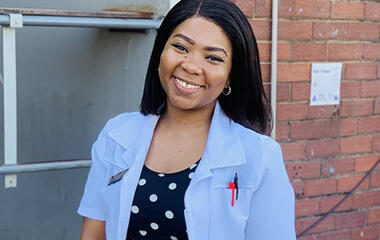
A 25-year-old student from the University of KwaZulu-Natal (UKZN) in South Africa has been channelling her love for science into nearby communities where she is raising awareness about careers for women in science and providing information to girls about fields of study in the sciences.

Currently enrolled for her third science degree, Weliswa Kunene said she was ignorant about the scope of science qualifications and careers when she started studying.

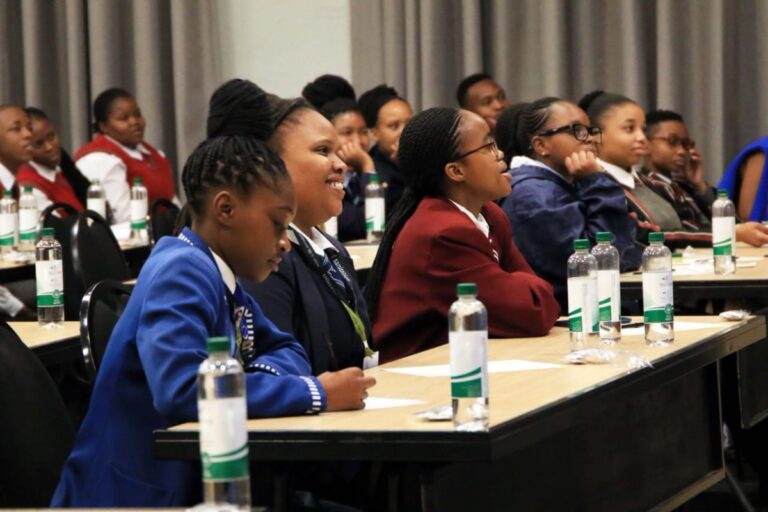
The third-year pharmacy student’s work has been acknowledged by lecturers and high school pupils as she has used the institution’s Mini-Habitable Planet Workshop to raise awareness in local communities about careers for women in science.

The Mini-Habitable Planet Workshop is a community engagement programme that the university established in 2019. It is a platform for various projects targeting high school pupils in Claremont and KwaDabeka, Durban.

With the broad theme of ‘Inspire Township Learners to Pursue Science-related Careers’, activities vary from science club sessions, science practicals, career guidance and educational field trips to motivational talks on mental health and well-being.

Lack of awareness

Kunene said her own experience was what inspired her to raise awareness.

In 2015, she enrolled for a BSc degree in biochemistry and microbiology at UKZN. She graduated in 2018.

The following year, she enrolled for an honours degree in medical microbiology at UKZN and completed the qualification in 2019. In 2020, she began her pharmacy degree.

“I was uninformed about the various careers that existed in science. I completed [my first and second degrees] with good grades because I fell in love with lab work and my research project on HIV drugs and mutations.

“I then applied for a pharmacy degree and enrolled in 2020. It has been the best decision of my academic career,” said Kunene.

Tackling the gender and poverty gaps

Speaking to University World News, Kunene said that the objective of her project is to promote science in schools and offer career guidance while also addressing the gender gap that exists in science.

“Women, as we know, have historically been marginalised and under-represented in many spheres, especially in STEM [science, technology, engineering and mathematics], therefore, our programme encourages more female participation to bridge that gap and empower girls,” she said.

“The main thing is to create awareness of all the male-dominated science careers they could venture into and take up space. We offer a unique and innovative approach in delivering career expos,” said Kunene.

“We invite female professionals and university students in STEM to speak to the pupils about their academic journey with the hope of inspiring and imparting the realities of the working world.”

Kunene said, given stereotypes about science, such as that it is difficult and better suited to those in privileged schools, those involved in the project have identified this as a problem that contributes to the fear of pursing science for many pupils in under-resourced schools.

“We have partnered with the STEC@UKZN science centre to deliver science practicals that are in line with the CAPS curriculum [the public school curriculum in South Africa] to overcome the challenge of traditional classroom learning but no practical experience of the science taught.

“Stereotypes of careers known to be better suited to men or other races – for example, agriculture, software development and engineering – are still a hindrance in achieving gender equality.

“For that reason, our programme involves women who disrupt the status quo by occupying higher-ranking positions in STEM careers. For the girl child growing up in a township with so many social ills, including gender-based violence, it has become everyone’s responsibility to be a `Sister’s Keeper’, and mine is through education,” said Kunene.

Meanwhile, Dr Sibusiso Senzani, a lecturer at the UKZN school of lab medicine and medicinal biology, told University World News that the UKZN Mini-Habitable Planet Workshop is an important project.

He explained: “As someone who comes from a township, I am well aware that, while you are in school you are not fully aware of the opportunities available to you, and you do not really know what you can do with the subjects you are learning. This programme introduces these aspects to these kids to let them know what they can actually do with science.

“It does so, not just by telling them, but showing them examples of people who come from where they come from who can advise them how to get to where they want to go. In addition to this, it breathes a sense of excitement into these students when it comes to science through experimentation and field trips to science centres, ecological and conservation institutions which fosters better learning,” he said.

Environmental focus

Slindile Dlamini, a pupil from Buhlebemfundo Secondary School, said she enjoys attending UKZN Mini-Habitable Planet Workshop programmes, especially when Kunene and her team teach the children about the environment.

“The Mini-Habitable Planet Workshop has taught me and the rest of the Buhlebemfundo environment club to raise awareness on environmental issues,” said Dlamini.

Despite facing challenges during the COVID-19 pandemic, Kunene said they have previously won funds to sponsor the programme through an access bursary scheme and recently won the UKZN Inspiring Impact Challenge.

“Being part of the UKZN Inspiring Impact Challenge alone affirmed that the work we put in is recognised and validated.

“Winning the challenge only ignited a deeper love for servitude and made me realise that I am being entrusted to enrich and empower and make a difference that matters,” said Kunene.

University World News

South Africa’s education system in crisis, says School-Days CEO

The transformation of education begins with teachers. A shortage of quality teachers and the consequent ongoing delivery of poor educational outcomes are just the tip of the iceberg when it comes to the challenges facing basic education in South Africa.

The crisis looks set to worsen in the years ahead given that more than half of the current teacher population is over the age of 55 and will soon be heading for retirement, notes School-Days, a fundraising programme.

We’re neither creating attractive career opportunities for student teachers nor graduating a sufficient number of teachers each year, it said.

Some 15,000 new teachers currently graduate each year, and the need is for 25,000 annually in order to maintain an effective teacher-pupil ratio. However, between 18 000 and 22 000 teachers leave the profession each year, either due to retirement or to switch professions, often in search of more lucrative income.

Of particular concern is the dire shortage of specialist maths, science, technology and African language teachers and an over-supply of teachers in other areas. The shortage of specialist teachers is widely felt, said School-Days.

“Our children don’t fare much better when it comes to reading for meaning with a 2016 literacy study revealing that 78% of grade 4 learners were not able to read for meaning.”

There has been enough talk about how dismal the results are, and this is despite the fact that South Africa’s basic education sector is sufficiently funded, at least comparable to equivalent-sized economies, spending around 6% of GDP on education.

Why, then, do we have such a huge problem?

Paul Esterhuizen, CEO of School-Days, believes it’s time to raise the bar and ensure the education sector starts focusing on attracting higher-quality candidates.

“Recent reports indicate that only one-fifth of Bachelor of Education students achieved more than 50% for maths in matric. Another, albeit older, study found that most grade 3 teachers struggled to achieve 50% in literacy and mathematics assessments designed for grade 6 learners.

“Given these alarming statistics, it should not be any surprise that, as a country, we struggle with poor educational outcomes.”

He said we’re doing the children of South Africa a disservice and that every child deserves access to quality education that positions them to find meaningful work as an adult.

“As a country, we need to be making an urgent and concerted effort to improve education delivery standards because this impacts us all. Poor educational outcomes are a contributing factor to lacklustre GDP growth, which in turn exacerbates unemployment, poverty and inequality.”

Esterhuizen believes businesses may have some of the solutions required to save basic education in South Africa. “There are already a number of encouraging examples of previously poor performing schools that are showing that with the right interventions, learner results improve.

“Consider, for example, advertising and communications group Joe Public United’s ‘One School at a Time’ initiative that has seen considerable success. And the likes of Kagiso Shanduka Trust, the Adopt-a-School Foundation and non-profit Funda Wanda have initiated and delivered on successful partnerships with provincial education departments.”

The School-Days CEO believes it’s time to draw the business sector in to partner with schools and fund whole school development, attract more student teachers as interns at schools and do this on a platform that enables sustainability.

“The end goal has to be to continue to upskill our teachers and keep them in the teaching profession,” he said.

“Given the long-term impact of education on the economy, we need urgent interventions to improve educational outcomes. This will require the political will to implement meaningful reforms, potentially rethinking how education is delivered and moving the focus away from merely covering a prescribed curriculum to encouraging mastery of that curriculum.

“We need to be attracting high-quality candidates to the teaching profession and rethink how we train and support our teachers. We need to find ways to alleviate pressure on over-subscribed schools in the public sector and harness the power of technology to deliver quality education at scale.”

Over-crowded classrooms in many government schools prompt the need for parents to consider private education with independent education providers who have been positioning themselves to bridge the gap in the market for more affordable private schooling.

For many families, however, private education is not affordable.

Esterhuizen established School Days to help families afford school fees. Based on reward and incentive programme principles that assist parents and members of the public to pay school fees, either at their own or at a disadvantaged school, the programme incentivises members to shop with partner merchants to earn Edu-Time Points (ETPs) while still earning their normal retailer loyalty points. ETPs can be donated to a chosen beneficiary or used to pay a child’s school, college or university fees.

Business Tech

Decolonising education in South Africa – a reflection on a learning-teaching approach

IT has been seven years since students in South Africa began protesting in a bid to “Africanise” the country’s university curricula. They viewed what they were learning as too neoliberal – characterised by Western values pushing the marketisation of education. They wanted universities to become more relevant to students in an African country and more connected to their own lives.

The students’ calls propelled “decolonisation” to the forefront of national (and even international) debate. Decolonisation in the university context involves dismantling the institutional practices and policies that uphold white supremacist, Western values. Since then there have been various initiatives at most of the country’s 26 public universities designed to change what students learn and how.

Every academic has their own opinion and their own approach. Mine, as a university educator who lectures future teachers, has been to adopt a teaching-learning approach called defamiliarisation.

The idea of defamiliarisation was coined by Russian literary theorist Viktor Shklovsky. It is a process of looking at things differently through art, poetry, or film so that you don’t see them automatically; Shklovsky said that you could look at something you know several times without really analysing it.

I have researched and used defamiliarisation in my teaching since 2015, finding it a good place to contribute towards disrupting the sort of neoliberal curriculum student protesters opposed. If a curriculum doesn’t consider the humanistic side of learning, the system and institution can treat students as a form of human capital. That ultimately changes education from a public good to a commodity.

By approaching my classes using defamiliarisation, I have been able to help students think beyond the usual stories about history. Crucially, they have been put in charge of their learning. In this way, education is shored up as a public good.

A space to speak openly

So, what does defamiliarisation look like in practise? One example is an activity a colleague and I designed: we asked a group of students, as part of a lesson, to draw how they saw themselves and how they felt about being taught in English at the university. While English is widely spoken in South Africa, most of our students speak isiXhosa as their first language.

Even though the question was about the university, many of the students’ drawn answers were about society and their communities in reference to the university. These examples showed that, for these students, the community and the university are not separate. The question seemed to bring up deeper issues that neither the students nor I were aware of at the time.

For example, one of the students I talked to about her drawing creatively explained how her feelings were connected to her beliefs, culture, and context pertaining to the dominant and gendered power relations in her community, and at the school she had attended.

She drew two portraits of herself: on the left, a false representation at the school she attended, depicting the aesthetic beauty and success that came with being able to speak English fluently and with excellent grades; on the right, a portrait of her dormant natural beauty that held on to her culture and true identity.

Her drawing showed how she saw herself and how she thought the rest of society saw her. Her drawing showed her race, language, culture, gender, and a false representation of who she was in her school environment.

The student said that in her community, people often asked her about her race because she spoke in a dialect that she may have picked up at a former Model C (whites only during apartheid) school, and that was often associated with “white culture” in her community.

The defamiliarisation approach allowed this student to make her peers and me aware of her socio-cultural context and, more importantly, the challenges and subtleties of her identity and how she felt about them. By doing this activity, she, like many of her peers, could talk about herself creatively and effectively.

This approach developed students’ openness, compassion, sympathy and responsibility.

You could say that defamiliarisation gave the students the freedom to become their own narrators. It also allowed them to understand what their peers were going through and show compassion for them around instances of marginalisation in society. This, in my opinion, is crucial for aspiring educators to fully comprehend the range of experiences and viewpoints held by learners from a variety of socioeconomic backgrounds.

Educators benefit, too

I believe this kind of teaching was valuable and essential to assist students in developing the knowledge, skills, attitudes, and behaviours needed for critical global citizenship. It allowed them to communicate openly about victimisation and unjust treatment in South Africa.

Even though in some instances it made them feel uncomfortable, defamiliarisation was met with mostly favourable reactions from students. It helped them to open up about the challenges in their own lives. And I still use the approach today, mostly through the medium of film. For instance, I showed the movie Krotoa to a different class. It examines the impact of Dutch colonisation on the culture and identity of the indigenous Khoi people of the Cape in the 17th century.

Defamiliarisation helps educators, too. I have reflected on my role as a university lecturer and, frankly, to question aspects of my teaching that seem dominant and obvious to my students but are just habitual to me. Learning about my students’ real-life experiences and sentiments helped me empathise with them and value their individuality. It helped us to connect in a meaningful way as equals.

Using this approach is a way for academics to return to the basics. That’s crucial if universities are to offer a curriculum that centres students’ needs as the primary focus of learning.

THE CONVERSATION

Nzimande disputes report on hiding forensic investigation on National Skills Fund

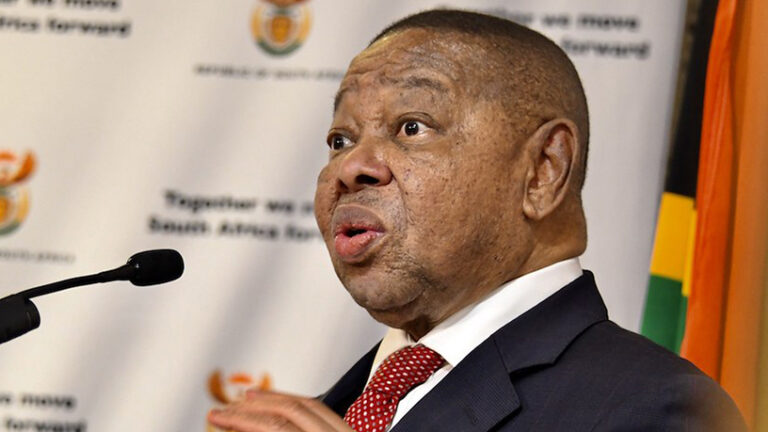
HIGHER Education, Science and Innovation Minister, Dr Blade Nzimande, has disputed a Sunday newspaper report claiming he requested Parliament keep a Forensic Investigation Report on the National Skills Fund’s (NSF) under wraps.

“I never wanted to keep this report under wraps, but all that I requested was for the Standing Committee on Public Account (SCOPA) to treat this report in terms of rule 189 of the National Assembly, especially sub-rule (1) (c) read with sub rule (4) (a) until all processes before the law enforcement agencies and internal departmental disciplinary processes are concluded,” Nzimande said.

He had appointed a forensic investigation company to conduct a full-scale forensic investigation into the financial affairs of the NSF after amounts of just under R5 billion could not be properly accounted for over two financial years.

The Minister also appointed a Ministerial Task Team (MTT) to conduct a strategic review of the NSF, its general operations and its efficiency and relevance with regards to the national skills priorities of the country.

Nzimande said both these appointments were meant to ensure the NSF accounts for the resources allocated to it and deal with instances of maladministration and corruption at the NSF.

“Both the reports were submitted to me, and we have begun in earnest the process of implementing the recommendations of both these reports,” the Minister said.

The Department of Higher Education and Training also opened a case at the Pretoria Central Police Station on 3 October 2022.

“Now that a police case has been opened and legal processes are underway, all the implicated individuals inside and outside the department, including companies who might have benefited irregularly on the resources of the National Skills Funding, will face the full might of the law,” Nzimande said.

He added that the department has already commenced engaging the Hawks and other law enforcement agencies, including initiating internal departmental disciplinary processes to ensure that this process in concluded speedily.

“This is the reason we requested SCOPA to treat this report as confidential until these processes are finalised and the relevant people informed, in terms of due process. I however must indicate that as a department we respect the SCOPA decision not to accede to our request.

“I have nothing to hide, but I have a duty, on my part, to follow due process in implementing the recommendations of the forensic investigation. We will implement these recommendations to the letter,” Nzimande said.
SA NEWS

HIGHER Education, Science and Innovation Minister, Dr Blade Nzimande, has disputed a Sunday newspaper report claiming he requested Parliament keep a Forensic Investigation Report on the National Skills Fund’s (NSF) under wraps.

“I never wanted to keep this report under wraps, but all that I requested was for the Standing Committee on Public Account (SCOPA) to treat this report in terms of rule 189 of the National Assembly, especially sub-rule (1) (c) read with sub rule (4) (a) until all processes before the law enforcement agencies and internal departmental disciplinary processes are concluded,” Nzimande said.

He had appointed a forensic investigation company to conduct a full-scale forensic investigation into the financial affairs of the NSF after amounts of just under R5 billion could not be properly accounted for over two financial years.

The Minister also appointed a Ministerial Task Team (MTT) to conduct a strategic review of the NSF, its general operations and its efficiency and relevance with regards to the national skills priorities of the country.

Nzimande said both these appointments were meant to ensure the NSF accounts for the resources allocated to it and deal with instances of maladministration and corruption at the NSF.

“Both the reports were submitted to me, and we have begun in earnest the process of implementing the recommendations of both these reports,” the Minister said.

The Department of Higher Education and Training also opened a case at the Pretoria Central Police Station on 3 October 2022.

“Now that a police case has been opened and legal processes are underway, all the implicated individuals inside and outside the department, including companies who might have benefited irregularly on the resources of the National Skills Funding, will face the full might of the law,” Nzimande said.

He added that the department has already commenced engaging the Hawks and other law enforcement agencies, including initiating internal departmental disciplinary processes to ensure that this process in concluded speedily.

“This is the reason we requested SCOPA to treat this report as confidential until these processes are finalised and the relevant people informed, in terms of due process. I however must indicate that as a department we respect the SCOPA decision not to accede to our request.

“I have nothing to hide, but I have a duty, on my part, to follow due process in implementing the recommendations of the forensic investigation. We will implement these recommendations to the letter,” Nzimande said.
SA NEWS

HIGHER Education, Science and Innovation Minister, Dr Blade Nzimande, has disputed a Sunday newspaper report claiming he requested Parliament keep a Forensic Investigation Report on the National Skills Fund’s (NSF) under wraps.

“I never wanted to keep this report under wraps, but all that I requested was for the Standing Committee on Public Account (SCOPA) to treat this report in terms of rule 189 of the National Assembly, especially sub-rule (1) (c) read with sub rule (4) (a) until all processes before the law enforcement agencies and internal departmental disciplinary processes are concluded,” Nzimande said.

He had appointed a forensic investigation company to conduct a full-scale forensic investigation into the financial affairs of the NSF after amounts of just under R5 billion could not be properly accounted for over two financial years.

The Minister also appointed a Ministerial Task Team (MTT) to conduct a strategic review of the NSF, its general operations and its efficiency and relevance with regards to the national skills priorities of the country.

Nzimande said both these appointments were meant to ensure the NSF accounts for the resources allocated to it and deal with instances of maladministration and corruption at the NSF.

“Both the reports were submitted to me, and we have begun in earnest the process of implementing the recommendations of both these reports,” the Minister said.

The Department of Higher Education and Training also opened a case at the Pretoria Central Police Station on 3 October 2022.

“Now that a police case has been opened and legal processes are underway, all the implicated individuals inside and outside the department, including companies who might have benefited irregularly on the resources of the National Skills Funding, will face the full might of the law,” Nzimande said.

He added that the department has already commenced engaging the Hawks and other law enforcement agencies, including initiating internal departmental disciplinary processes to ensure that this process in concluded speedily.

“This is the reason we requested SCOPA to treat this report as confidential until these processes are finalised and the relevant people informed, in terms of due process. I however must indicate that as a department we respect the SCOPA decision not to accede to our request.

“I have nothing to hide, but I have a duty, on my part, to follow due process in implementing the recommendations of the forensic investigation. We will implement these recommendations to the letter,” Nzimande said.

SA NEWS

UCT governance crisis| Council chairperson Babalwa Ngonyama calls for an independent external investigation

UCT council chairperson Babalwa Ngonyama has called for an independent investigation into the governance crisis at the university.

This comes after a meeting of the University Senate in late September, a Special Council meeting on Thursday and a statement issued on Friday by concerned members of the UCT Council.

In their statement, the 13 members of council said they were distancing themselves from a “flawed” and irregular process at a special meeting where a motion into an independent investigation by a retired judge was blocked.

However, in a meda statement released on Saturday evening, Ngonyama said she would ask the council to reconsider its decision.

The university has been in the spotlight over the past two weeks over claims that Ngonyama and the campus’ vice-chancellor professor Mamokgethi Phakeng misrepresented the reasons why UCT’s deputy vice-chancellor professor Lis Lang left the institution.

Lang departed from the university in March.

Lange has been described by academic commentator Jonathan Jansen as “one of the best deputy vice-chancellors this country has ever had”.

Her departure was widely felt to be a major loss to UCT.

Earlier this month, the council resolved to launch an internal probe into the matter. However, Ngonyama has since called for an external investigation led by a retired judge.

UCT spokesperson Elijah Moholola said: “There will be an ordinary sitting of council on Saturday (15 October) that has always been scheduled as a normal meeting. In that meeting, we expect the chair council will officially table this call, then council will deliberate on it and apply their minds and decide whether they want to resolve [and] adopt that as a formal resolution of council.”

Moholola said the investigating panel’s terms of reference must still be formulated.

“First, we have to go through the council meeting and council agreeing to head this call by the chair to go the independent route,” said Moholola.

INSDE EDUCATION

Sadtu breaks ranks with other COSATU affiliates, says it will accept government’s 3% wage increase

WENDY MOTHATA

THE South African Democratic Teachers’ Union (Sadtu) has indicated that it’s willing to accept the government’s offer of a 3% wage increase in the public service wage talks. Sadtu said it will not join the public servants’ strike action and it will make an announcement on Monday on the matter when it concludes its national council meeting.

This despite a deadlock with other unions over wage negotiations with the government.

Last week, Sadtu president Magope Maphila said most members were in support of the revised offer of 3% tabled recently at the Public Service Co-ordinating Bargaining Council (PSCBC) by the department of public service and administration.
Sadtu has a membership of about 260,000.

Despite the prevailing difficult fiscal position, the government believes the 3% salary increase offer to
public servants is ‘generous’.

This is the view of the Acting Minister of Public Service and Administration (DPSA), Thulas Nxesi, and Finance Minister, Enoch Godongwana.

The unions demanded a 10% wage increase when negotiations began in May but trimmed the figure down to 6.5% to match the headline inflation rate the Reserve Bank has forecast for 2022.

The government presented a revised and improved offer on the baseline of 2% plus the non-pensionable cash gratuity, amounting to an average of 4.5% of the R20.5 billion that is on the budget.

“The 2% amounted to an additional R8.9 billion over and above the budgeted of R20.5 billion, costing the government a total of R29.5 billion. Labour revised their demand to 6.5% across-the-board baseline increase, plus the non-pensionable cash gratuity,” Godongwana said.

“The employer further indicated that any further increase, above the 2% on the baseline, would require additional funding to be sourced from the Compensation of Employees’ budget and would require the introduction of cost containment measures in the Public Service,” said the Ministers.

While Sadtu has indicated that it may accept the offer, the same proposal has been rejected by other unions, including Nehawu, Denosa, Popcru, and the Public Servants Association.

The unions have since announced their plans to embark on industrial action unless the employer comes up with an improved offer.
Speaking on POWER Perspective on Wednesday, Sadtu spokesperson, Nomusa Cembi, said the majority of their members have accepted the government’s offer.

“Our members have decided to accept with reservation, the deal is nowhere near what we want. It is with heavy hearts that they accepted. Out of nine provinces, there are seven who have accepted and two did not accept. We operate on the process of democratic centralism, so we are going to accept. However, we have not signed.”

Some public service unions are on the verge of calling a national strike amid a wage dispute with the government.

Denosa has advised the members and structures of the union that the negotiations have reached the
dispute level.

“DENOSA and other COSATU unions filed for the joint dispute referral at the Public Service Coordinating Bargaining Council (PSCBC). This application will invoke the conciliation process in PSCBC. This happened after COSATU unions in the public sector reported in a joint meeting held on October 6, 2022, that their members were rejecting the final offer of the employer,” Denosa said.

In the meantime, Denosa indicated that it will embark on a consultation process through its constitutional structures to unpack the current processes taking place at PSCBC and the possible end results.

INSIDE EDUCATION

Early childhood development holds the key to our future – Ramaphosa

CYRIL RAMAPHOSA

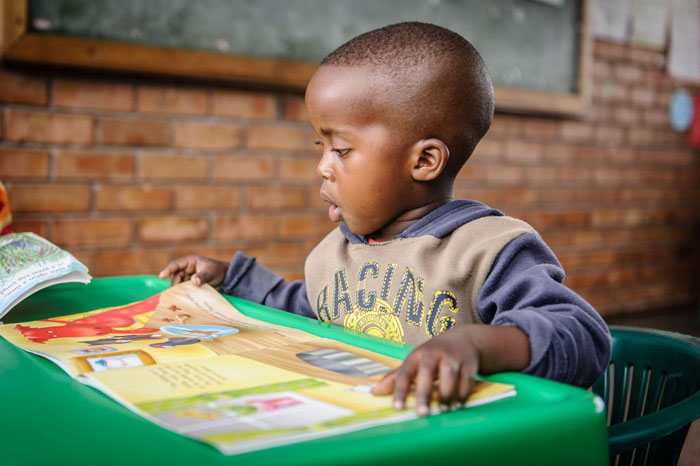
THERE are few presidential activities more fulfilling than spending a morning in the company of small children. Last week, I attended the opening of the Little Flower early childhood development (ECD) centre in Bizana in the Eastern Cape, where I got to spend time with some of the future leaders of our country, reading to them and listening to them.

The centre was recently built by the development organisation Impande South Africa through the support of the Nelson Mandela Foundation.

I was deeply touched by the dedication of the centre’s staff to supporting the community and its children. They told me how in the centre’s earliest days, staff struggled to get paid and yet still came to work. They also told me that even if families are not able to pay the R20 fee for their child, the children are not turned away.

The commitment of the ECD centre staff is so important because early childhood development centres play a pivotal role in our nation’s development.
These centres can be found in every village, town and city in the country. Most were started by women in the community to support parents who need their children to be cared for when they are at work. Many of these centres began as creches and day-care facilities. Many have subsequently grown and expanded to incorporate a basic learning curriculum into their services.

As government, we have taken up the task to improve the standards of care and make resources available for ECD centres to run suitable activities for young children to prepare them for formal education.

In April this year, we completed the move of the ECD function from the Department of Social Development to the Department of Basic Education.

This is to link early childhood development to the formal school curriculum and to provide training, education and development to staff in ECD centres around the country.

Because this foundational learning is key to a child’s success in later years, the Basic Education Laws Amendment Bill that is currently before Parliament proposes that it be compulsory for all children to receive two years of ECD before they enter Grade 1. It is at this stage that children should be taught, learn through play and receive at least one meal a day.

Early childhood development centres don’t just prepare our country’s youngest citizens to succeed in school; they are also an important source of entrepreneurship and job creation. These centres are an important part of the care economy. They sustain livelihoods, especially for women, which contributes to job creation in many communities.

When the COVID-19 pandemic struck, ECD centres were hard hit. Facilities that rely on school fees to keep running were unable to pay their staff and many parents who lost their jobs were unable to keep their children enrolled.

In response, government established the ECD Employment Stimulus Relief Fund to help ECD centres that had lost income as a result of the pandemic and to enable them to recover.

Preparing our youngest citizens with the tools they need to succeed in life is a responsibility we must collectively shoulder. We must continue to do all we can, as government, the private sector and development organisations, to support early childhood development.

With the many valuable services it provides, whether it is educating our children, providing childcare for working parents or creating opportunities for entrepreneurs, ECD makes a huge contribution to the achievement of many of our developmental goals.

Since the care economy is mainly driven by women, such support goes a long way towards helping women, especially in disadvantaged communities, to become financially secure and independent.

The young children in these centres are the next generation of South Africans who must be able to live up to their full potential as responsible, capable and outstanding citizens.

They must be able to pursue their dreams so that we all may achieve our shared dream of a free, prosperous and happy nation.

From the desk of the President

Are High School Sports Worth the Cost?

0

IN many high schools, sports are an integral part of life, sometimes even prioritized above academics. Like every aspect of education, there is a cost to the services that schools provide.

In this article, I’ll specifically examine my hometown, Wolcott, CT, and see how its football budget in terms of coaches’ salaries compares to the amount paid for other services to students. What I have found is that while high school sports, including football, certainly have benefits, these benefits can in no way justify the disproportionate amount of money given to them. 

To start I’d like to recognize the undeniable benefits that high school sports provide children. Some of the pros of high school sports cited are higher grade point averages, an increase in college attendance and even higher test scores.

There are also obvious physical benefits including a lower chance of obesity and reduced healthcare costs. The list of benefits that sports bring to students socially, physically and academically goes on and on. 

And while there are certainly advantages to high school sports, we must also look at the cost — and by cost, I mean the actual dollar amount. As a case study, I specifically examine my hometown’s school budget. Wolcott is a small town in Connecticut located near Waterbury. In its 2018 to 2022 Union Contract, the total combined salary paid to all high school football coaches was $23,358.

Keep in mind that this statistic only includes coaches and doesn’t begin to consider the cost of having an athletic director, a trainer, equipment and so on. If you then look at the stipends given to teachers who run other clubs at the high school, you’d find that if you combine the stipends for the Distributive Education Clubs of America (DECA), Community Service Club, Skills USA, Jazz Band, National Honor Society, Yearbook, Drama, Parliamentarian and Robotics Advisors you’d get a sum of $22,400.

These clubs are a combination of community service, academics and various other groups, all of which combined are seemingly less valuable than the football program, based on the money allotted for coaches/stipends.  

Looking at this from an academic standpoint, there are nine science teachers at Wolcott High School. If each makes the median Connecticut public school teacher salary, roughly $60,000, and considering there were 688 Wolcott High School students in the 2020-2021 school year then roughly $785 is spent per student in science teacher’s salaries.

Considering that 55 players are listed on the Wolcott High School Football Team roster, this means that roughly $425 is spent per football player on coaches’ salaries. This figure is unreasonably close to that of science teachers, especially given one is an important, core academic subject and the other is an extracurricular activity where high school students chase a ball and tackle each other.

It’s important to note that many of these figures are rough considering the data may be projections, national averages, state averages, or not from the exact same year and therefore the reality in Wolcott may differ from the one depicted here. Regardless, this information is enough to paint a clear picture: Football funding is very high compared to a plethora of other meaningful extracurricular activities and compares very closely to that of a core academic subject. 

Clearly looking at the statistics regarding funding for Wolcott High School football’s team, we get a glimpse of society’s priorities based simply on school budgets. Academics and other substantial extracurricular activities are certainly not given the prominence that they should, while football programs are overfunded, even considering the benefits they may provide. High school sports may have value, but they are overly focused on. Yet despite that fact, Wolcott still managed to end their season 3-7 last year. 

Dailycampus

Water And Sanitation Bursaries Awarded To High School Learners

THE Department of Water and Sanitation (DWS) awarded 71 study bursaries to Grade 10 and 11 learners while prize money to schools around South Africa as part of the departments Water and Sanitation Education Programme (WSEP).

Bursaries were awarded to learners to study fields rated in the water and sanitation-related sector, while the prize money will be used by schools to procure water and sanitation related needs for the sustainability of their projects.

“The learners get to study at the university of their choice in the country, in a field of study related to our sector. The comprehensive bursary programme covers full tuition fees, accommodation & food as per university guidance, books and stationery allowance & a monthly stipend” revealed the DWS.

The WSEP initiative aims to address the skills and knowledge shortage in the DWS by challenging Grade 10 to Grade 12 learners to compete and innovative solutions to support the department.

A total of 800 learners have been awarded bursaries to pursue careers in the water and sanitation sector while 3,500 schools have been supported through the programme since its inception.

One competition under the WSEP, the Aqua Enduro action project seeks to identify learners who are passionate and have the determination to pursue careers in the water and sanitation sector.

Nearly 500 schools participated in the programme. Competing schools demonstrated innovative ways to save water and develop sanitation infrastructure.

A further 27 bursaries were awarded for a public speaking competition hosted by the department. Learners debated topics around the state of water and sanitation in the country.

Young scientists want machine learning revolution in Africa

KUDZAI MASHININGA

CAMEROON national Loic Elnathan Tiokou Fangang concluded his master’s degree in mathematical sciences at the African Institute for Mathematical Sciences (AIMS) earlier in 2022 and, as he awaits an opportunity to pursue a PhD in machine learning, he believes the dream of the institute’s founders – of producing the next Einstein – has already been accomplished.

AIMS is a network of six centres of excellence, which are based in South Africa, Senegal, Ghana, Cameroon, Tanzania and Rwanda. Students who join the institute get to work on driving the continent’s STEM (science, technology, engineering and mathematics) agenda.

The founder of AIMS, South African physicist Neil Turok, in 2008 gave a speech in which he declared his wish that the next Einstein would be from Africa.

In an interview with University World News, Fangang said that, each year, AIMS is producing African Einsteins as it invests in its students – and not just by equipping them with mathematical skills.

“Being Einstein is more like a concept [and] values, and that is who we, who attend AIMS, are. ‘Being Einstein’ entails using critical thinking skills, and any other skills, hard and soft ones, to effectively solve real-life problems.”

“We all have different backgrounds and, therefore, different ways to impact. On my own, my challenge is to change the narrative of Africa around technology and go beyond our limitations,” he said.

His studies at AIMS have cleared the path for him to be involved with organisations that work voluntarily to spread machine learning and artificial intelligence (AI) in Africa.

For example, he is an ambassador for Zindi, which hosts the largest community of African data scientists and is working to solve the world’s most pressing challenges using machine learning and AI.

It connects data scientists with organisations.

“I am involved with several organisations across Africa such as AMLD Africa and Zindi, as their ambassador. I’m working in the core team of KmerAI, an association aiming at decentralising machine learning and AI in Cameroon. I’m working towards opening a start-up in order to sensitise and educate people and companies around the fields of AI and data science.”
Fangang said that, for a livelihood, he is providing services to companies through his marketing agency and is actively looking for a PhD opportunity in the scope of machine learning.

And why does he want to do a machine learning PhD?

“I believe that AI and machine learning are going to solve big challenges we have in Africa such as traffic, climate change, and so forth … It’s a must for Africans to be part of the revolution. Having a PhD will give me access to certain opportunities for a bigger impact in Africa,” he added.

Nurturing independent thinkers

Another AIMS alumna, Daphne Machangara, a Zimbabwean, was admitted to AIMS to study for a masters in industrial mathematics from 2017 to 2019.

In an interview with University World News, she said that, at the African institute, professors from across the continent promote independent thinkers and allow students to engage and solve real-world problems, by offering theory and application.

Machangara said everyone is offered a scholarship and there’s diversity of Africa’s best students chosen to represent different countries. When they meet, it’s all about sharing ideas, teamwork and problem-solving.

“Students per centre per intake are manageable numbers; [there are] not very big classes, funded by such foundations as [the] Mastercard [Foundation].

“AIMS is vital because it brings together talented African students who, together, try to tackle problems existing in Africa through the obtained skills from the programme. I think the next Einstein could be from Africa, because of the efforts and projects which students from the programme have engaged in or are engaging in after the programme has ended,” she said.

In terms of her contributions on the continent, Machangara said she is a central committee member of the Deep Learning Indaba and also of its local chapter in Zimbabwe.

The Deep Learning Indaba is an organisation with a mission to strengthen machine learning and AI in Africa towards the goal of ensuring that Africans are not only observers and receivers of ongoing advances in AI, but active shapers and owners of these technological advances.

Annually, the organisation holds a conference it calls The Deep Learning Indaba and, this year, it was held in Tunisia, bringing together more than 300 members of Africa’s artificial intelligence community for a week-long event of teaching, research, exchange and debate around the state of machine learning and artificial intelligence.

Machangara said AIMS scholars are taught to give back to the community in terms of STEM.

“Firstly it’s about giving back to community … by trying to spread data science and strengthen machine learning in Africa. Attending AIMS prepared me so well in this direction, the reasons being that I got to know of the Deep Learning Indaba during AIMS.”

“Additionally, as AIMS scholars, we used to give back to the community weekly, through various activities at schools, hospitals and so on that prepared me well to do voluntary activities like the one I am doing now,” she said.

Machangara said, under the Zimbabwe chapter, they are bringing about networking among individuals and identification of mentors, as well as collaborations through their programmes.

“We have had chats with Data Science Zimbabwe and appreciate the work they also do in the community,” she said.

UNIVERSITY WORLD NEWS