Home Blog Page 249

4IR Centre launched at Mlumati TVET College in Mpumalanga

0

WENDY MOTHATA

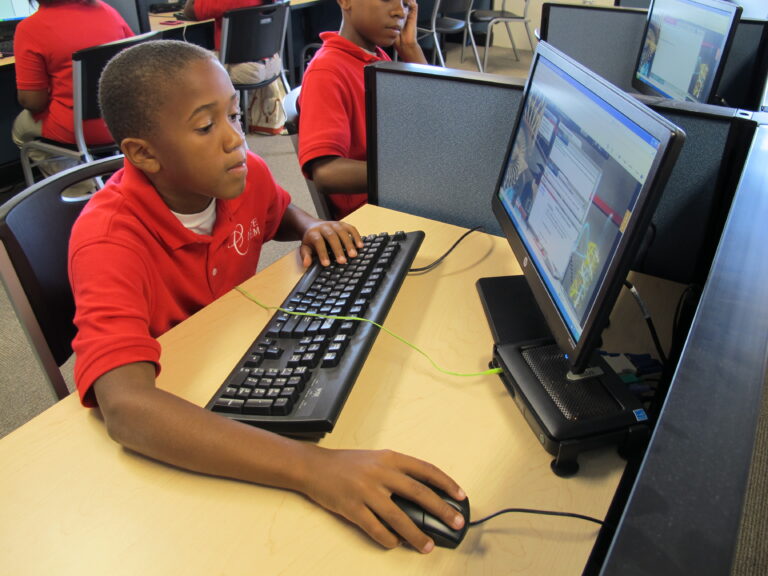
THE Mlumati TVET College has launched their Fourth Industrial Revolution (4IR) centre last week. The launch signals the second launch of the 4IR projects funded by the ETDP SETA for TVET colleges.

Delivering his speech, MEC for Education in Mpumalanga, Bonakele Majuba, said it’s an exciting day for the Department of Educaton, Ehlazeni TVET College and its stakeholders. 

“We urgently need to develop our capabilities in the areas of science, technology, and innovation. We will soon establish a Digital Industrial Revolution Commission, which will include the private sector and civil society, to ensure that our country is in a position to seize the opportunities and manage the challenges of rapid advances in information and communication technology.”

Majuba said the drive towards the digital industrial revolution will be underpinned by the availability of efficient networks.

The MEC said that the Minister of Higher Education and the Department took seriously the line of march from the President and worked collaboratively with the ETDP SETA to roll out the 4IR concept at TVET Colleges in the country.

“This constructive action by the DHET and ETDP SETA has its basis on the conviction that the 4IR represents a fundamental change in the way we live, work and relate to each other. It is inevitable that, as with any revolution, it will effect change in desirable and undesirable ways.”

The MEC said the nature of the labour required is likely to be more skill-intensive, “which could exacerbate the structural unemployment due to skills mismatch prevalent in South Africa.”

The World Bank has estimated that, 65% of children entering primary school today will ultimately end up working in completely new jobs that don’t exist yet.

The same applies to TVET Colleges and universities.

It is anticipated that a wide range of occupations will require a higher degree of cognitive abilities, such as creativity, logical reasoning, and problem solving, as part of their core skills. 

“The 4IR is all about new solutions and new technologies that can provide new, better, and faster solutions,” Majuba said. 

“Consequently, as a department, we support projects such as these between the ETDP SETA and the ten identified colleges. We are confident that Ehlanzeni TVET College will optimally utilize the infrastructure and training of lecturers that this project has delivered for the benefit of our students.”

“We need students that will be able to compete with the best in the world. The Mpumalanga Department of Education, in line with the 4IR, has introduced a pilot project on coding and robotics starting with 17 schools for Grade R-3 and 111 schools for Grade 7. This will be incrementally introduced to other grades until grade 9 in 2024. This centre, therefore, truly resonated with our current plan of action,” MEC said. 

INSIDE EDUCATION

Why elementary and high school students should learn computer programming

AS researchers with combined expertise in teaching computer programming and curriculum development, it’s clear to us that this curriculum is about computer programming, despite the fact that the province only uses the term “coding.” Coding is a most basic aspect of learning programming.

Ontario’s decision is in line with those taken by Nova Scotia and British Columbia, which were the first and only Canadian provinces to make learning computer programming compulsory at the primary and secondary levels in 2015 and 2016 respectively.

In the rest of the world, many governments have also made this change, such as Estonia as early as 2012, the United Kingdom in 2014, and South Korea in 2017.

But what are the arguments put forward to motivate the integration of computer science, and more specifically computer programming, into the school curriculum of students? Research highlights three main arguments on this subject that will be discussed in this article.

The lead author of this story, Hugo, is a researcher at the UNESCO Chair in Curriculum Development and a lecturer in the Department of Didactics in Educational Technology. His thesis project in educational sciences at Université du Québec à Montréal focuses on the impact of learning computer programming on young learners.

Meeting the growing needs of the job market

The evolution of the global job market represents one of the motivations at the heart of the integration of programming in school curricula. This motivation, widely promoted by policy-makers, is essentially linked to the need to train more people with programming skills. Indeed, technological knowledge, particularly in the high-tech sector, has been driving economic growth in North America and elsewhere in the world for over 20 years.

A growing number of jobs require a deep understanding of technology. This number of jobs is actually expected to increase in the coming years considering that data science, artificial intelligence and decentralization technologies (such as blockchain technology, on which cryptocurrencies are based) are becoming increasingly dominant areas of the economic sector.

Teaching coding from an early age could thus be a way to facilitate countries’ immersion and performance in the digital economy.
Some studies also argue that exposing students to computer programming early in the school curriculum could have a positive impact on the identity they develop with respect to this field, considering that there are many stereotypes associated with it (mainly that “computer science is only for boys”). In this respect, arguments that go beyond the economic benefits can be evoked.

Promoting social equity

According to several authors, greater exposure to computer science by teaching young people how to program could also help promote greater social equity in terms of representation and access to technological professions.

On the one hand, computer science skills can indeed provide access to well-paying jobs, which could help provide greater financial stability for marginalized groups who have not had the opportunity to accumulate wealth in recent generations. On the other hand, the increased participation of people from under-represented groups in computing (women, Indigenous people, Black people) could also promote diversity in the field, and ultimately result in an increase in the total number of workers.

In addition, there is a related argument that greater diversity within the workforce would lead to better products, accessible to a greater portion of consumers in the marketplace. Too much homogeneity among workers leads to the design of products and services that cater to a relatively narrow spectrum of individuals and problems, which may reinforce some inequalities.

Researchers advancing this equity argument argue that if early and intentional steps are not taken to foster greater diversity, this could result in a “digital gap” or an opportunity difference between dominant and marginalized groups, much more pronounced in the coming years. All youth learning to program could in this sense represent a measure to decrease this gap and promote greater social equity, which is in line with United Nations’ Goal 4 about inclusivity and equality in education.

Developing learners’ cognitive skills

Finally, the most commonly mentioned argument concerns the role programming would play in developing computational thinking in learners. Defined and popularized in 2006, the concept of computational thinking refers to the skills of “problem solving, system design, and understanding human behaviour based on the fundamental concepts of computer science.”

Several authors argue that the development of such computational thinking would be beneficial for the learners, as it would allow them to develop high-level reasoning skills that can be transferred to other learning, such as problem solving, creativity and abstraction.

For these reasons, computational thinking is often embedded within new programming curricula, such as in England’s curriculum, where it is stated that “high quality computer science education equips students to use computational thinking and creativity to understand and change the world.”

The introduction of programming into the school curriculum could therefore have a benefit for all students, even those who are not destined for a technological career, as they could benefit from computational thinking in their daily lives in a more cross-curricular way.

It is important to note, however, that these beneficial effects for the learner, although widely discussed and increasingly documented, still need to be shown through more research involving comparative and longitudinal aspects. Hugo’s thesis project examines this perspective.

In sum, it appears that Ontario’s decision-makers have seen the potential triple benefit of youth learning computer coding for the future. However, the major challenge now facing the Ontario government is the lack of sufficiently qualified teachers to adequately introduce this complex discipline to students.

Adequate staff training will be a key requirement for successful integration, as demonstrated by a 2014 report about computer programming integration in the U.K. One potential solution could be to integrate programming into the initial university training of future teachers.

THE CONVERSATION

Disturbing hiring trend emerging in South Africa

0

THE number of South African employers reporting they are recruiting ICT skills overseas has increased dramatically in the past year – up from 38% to over 50%.

This is a key finding in the 2022 JCSE-IITPSA ICT Skills Survey – conducted by Wits University’s Joburg Centre for Software Engineering (JCSE) in partnership with the Institute of Information Technology Professionals South Africa (IITPSA), with the support of the Information Technology Association (ITA).

The study’s authors, Adrian Schofield, production consultant at the IITPSA, and professor Barry Dwolatzky, director of the JCSE, highlight the growing trend to recruit foreign skills as “disturbing, given the continuing high levels of unemployment in South Africa”.

With pressures on business margins making employers less willing to wait for graduates to ‘get up to speed’, the number of enterprises saying it had become harder to recruit increased from 20% last year to 35% this year.

Employers recruiting skills overseas say critical skills visas are growing in importance and that changes to the critical skills list and critical skills visa (CSV) criteria have impacted many of them, with 25% saying the list amended in 2022 has made it harder to obtain the skills they need.

The study report notes that many holders of CSVs under the 2014 criteria will now not be able to renew or extend their visas.

Foreign skills markets have also become more attractive for local ICT practitioners, with almost 30% of respondents already working or planning to work remotely and more than 50% saying they are considering doing so.

“We do know that many highly qualified and experienced ICT practitioners are taking their skills overseas, to more stable social environments, to more lucrative economies, and to better futures for their families,” said Dwolatzky.

“This represents a massive drain on our education and training resources, as the return on our investment in these practitioners is gained by the foreign territory.”

MICT sector size in 2022

The Media, Information and Communication Technologies (MICT) sector now comprises 32,985 employers across five sub-sectors, representing a 7% decrease from the 35,569 in the previous financial year with the number of employees increasing to 228,990.

However, more than half of ICT practitioners work in non-MICT sectors, including retail, financial, services, public sector, manufacturing, mining and health, according to the report.

Changing enterprise skills priorities

The 2022 ICT Skills Survey tracked changes in enterprise priorities since 2008. It found that 14 years ago, the top priorities were Business Intelligence/ Knowledge Management, Application Development and Software as a Service, followed by Service Oriented Architecture, Web Development and Mobile Computing.

In the latest study, they include Information Security/Cybersecurity, Big Data/Data Analytics, DevOps, Artificial Intelligence and Internet of Things.

Top 5 hard-to-fill vacancies, slowing demand

The top five occupations reported by the SETA with hard-to-fill vacancies in the MICT sector are:

  • Software Developer (1,435 vacancies);
  • Computer Network and Systems Engineer (1,070 vacancies);
  • ICT Systems Analyst (1,036 vacancies);
  • ICT Security Specialist (270 vacancies); and
  • Developer Programmer (252 vacancies).

The study authors note that these vacancy numbers are lower than they were last year, indicative of “a severe slowing of growth in the sector”.

Schofield said: “The demand for skills generally, and for ICT skills in particular, is subject to a wide range of influences. These include the depressed state of the economy, uncertain political stability, fallout from exposure to crime and corruption and the introduction of new and improved technologies.”

The key drivers of change influencing skills demand and supply across the MICT sector in future include artificial intelligence, cloud computing, big data analytics, 5G and internet of things.

In other sectoral SETAs, the study authors find growing demand for 4IR skills, particularly in areas such as data analytics, artificial intelligence and machine learning, along with developer programmers and cyber security specialists.

The survey also found that the average South African ICT practitioner continues to perform multiple task sets, with only a few identifying their role as “specialist” in nature.

The survey highlighted an urgent and persistent need to raise the game in the education pipeline to close the local ICT skills gaps. It found that among ICT practitioners, only half of ICT graduates are able to find employment immediately after graduating, with around 25% taking 6 months to a year to find work.

“It continues to disappoint us that a significant proportion is still having to wait up to one year to become employed,” Schofield said.

BUSINESS TECH

Columbia University agrees to pay $165 MILLION settlement to 147 patients of pervert gynecologist, Robert Hadden

0

Columbia University and its hospitals announced Friday they had reached a $165-million settlement with 147 patients of a former gynaecologist accused by dozens of women of sexual abuse, including the wife of a onetime US presidential candidate.

The Columbia University Irving Medical Center (CUIMC) said Robert Hadden — who separately pleaded guilty in 2016 to two charges of forcible touching and third-degree sexual abuse — has not worked as a doctor since 2012.

In a plea deal in 2016, Hadden lost his medical license and was registered as the lowest-level sex offender, but did not go to jail.

The agreement announced Friday establishes a compensation fund of $165,081,000 to be distributed to the women, including dozens who sued the doctor and the hospital network when victims came forward to reveal the extent of Hadden’s predatory behavior.

Hadden is currently awaiting trial in federal court on six criminal counts, unsealed in 2020, of taking women across state lines for the purpose of sexual abuse from 1993 to 2012.

“We deeply regret the pain that Robert Hadden’s patients suffered and hope that these resolutions will provide some measure of support for the women he hurt,” CUIMC and New York Presbyterian said in a joint statement.

“All those who came forward should be commended. We are committed to the safety and dignity of every one of our patients and have adopted policies to ensure they are protected and empowered while in our care.”

Among the patients was Evelyn Yang, wife of tech entrepreneur Andrew Yang who ran for president as a Democratic outsider in 2016.

In January 2000, Evelyn Yang told CNN she was assaulted by Hadden in 2012 while seven months pregnant with her first child, and had at first not even told her husband.

“This was a serial predator, and he just picked me as his prey,” she told the network.

The settlement comes after Columbia University announced a $71.5-million deal reached last year between the hospitals and 79 of Hadden’s patients who had been represented by a different lawyer.

Columbia said that over the past decade, CUIMC’s obstetrics and gynecology department has revised existing policies and expanded resources to improve patient safety.

AFP

Ramaphosa concerned about incidents of racism, violence and bullying at SA schools

0

PRESIDENT Cyril Ramaphosa has expressed concern about the increase in incidents of violence, racism, abuse and bullying at South African schools.

Ramaphosa was addressing members of the South African Democratic Teachers Union (Sadtu) on the third day of its National General Council.

Ramaphosa said incidents of violence, abuse and bullying in local schools are a grave concern.

“Incidents of racism are greatly distressing and show that there is still resistance among some people to the gains that this democratic order has achieved,” said Ramaphosa.

“We are concerned about the apparent increase in incidents of violence against teachers and learners, often perpetrated by criminals who come into schools.”

“We need to work together, across society, to ensure that our schools are safe. This means that SGBs, CPFs, communities, local businesses, unions and the police need to work together to ensure that every single school in the country is a place where educators and learners feel secure and safe.”

As the world commemorates World Teachers’ Day, Ramaphosa added that it was important to reflect and celebrate the important role teachers played in the world by advancing human progress overall.

“Teachers are responsible for the development of our country’s most valuable resource – our children,” said Ramaphosa.

“More than any mineral or natural asset, more than any product or industry, the children of this country will shape our future and determine our fortunes. That places a great responsibility on teachers to educate and prepare our children well.”

Ramaphosa added: “As with all the teachers of our country, the members of SADTU carry a great and noble responsibility. It is a responsibility that you continue to perform with pride, dignity and diligence. I wish you a successful and productive National General Council.”

The SADTU NGC is expected to look into the progress made by the union on resolutions taken at its last national congress in 2019, which include, among others, school safety, psychosocial support for teachers who experience serious challenges at schools, and digital learning.

The theme for this year’s NGC is: “Claiming our right to have our human dignity and safety protected and respected in pursuit of a decolonised quality public education”.

INSIDE EDUCATION

Western Cape education department to appoint 500 permanent Grade R teachers

IN anticipation of World Teachers’ Day on Wednesday, the Western Cape Department of Education (WCDE) announced it will offer up to 500 qualified Grade R teachers a permanent post, with service benefits, from 1 January 2023.

According to the department, this forms part of the provincial department’s commitment to expanding access to Grade R and boosting early learning in the Western Cape.

“This is a major step forward and reflects the importance of Grade R as part of the foundation phase, which has been identified as a priority by our department.”

Early learning, according to the department, makes all the difference to a child’s later school grades.

“We must make sure the basics are in place during this phase, if we want to see improved results in later schooling years, particularly matric.”

The department said the employment offer applies to teachers who are already employed at a school in a subsidised Grade R position and meet the required teaching qualification to be appointed as a post-level 1 teacher.

The WCDE announced that the appointment of these teachers will cost about R321 million over the next three years, which is a significant additional investment into Grade R.

“It adds to the steps we have already taken to improve foundation phase outcomes, such as the additional time allocated to reading and maths to reverse learning losses from the COVID-19 pandemic.”

A detailed circular was sent to schools on 27 September 2022, outlining the requirements and process to be followed for the appointments.

According to the department, these teachers will be required to provide their documents for vetting, which must be uploaded to the appointment system by 14 October 2022.

Meanwhile, a qualification process that will pave the way for underqualified Grade R practitioners to obtain the required qualifications for appointment is currently underway.

“This move demonstrates our firm commitment to strengthening early learning in our province, and to supporting our teachers who play such a pivotal role in our children’s lives,” the department said.

“The teachers of the Western Cape are our department’s most valuable asset, and we must do all that we can to support them.”

SA NEWS

Why is World Teachers’ Day celebrated on October 5?

0

WORLD Teachers’ Day, also known as International Teachers’ Day, is celebrated on October 5 every year. This is a day to celebrate, thank and honour teachers for their contributions to their students. On this day, many also come together and organise meetings, conferences and such to identify problems being faced by teachers of the country as well as globally and find solutions to those issues.

Theme of 2022

This year’s theme for World Teachers’ Day is “the transformation of education begins with teachers”.

“Today, on World Teachers’ Day, we celebrate the critical role of teachers in transforming learners’ potential by ensuring they have the tools they need to take responsibility for themselves, for others and for the planet. We call on countries to ensure that teachers are trusted and recognised as knowledge producers, reflective practitioners, and policy partners,” reads a joint message from officials of UNESCO, ILO and Education International.

In 2022, UNESCO will “address the commitments and calls for action made at the Transforming Education Summit, in September 2022, and analyse the implications they have for teachers and teaching,” an official statement from the organisation states.

Origin of World Teachers’ Day

October 5 was proclaimed as World Teachers’ Day by UNESCO in 1994, with the aim of honouring the adoption of UNESCO/ILO Recommendation. This was a part of the intergovernmental conference convened by UNESCO in Paris that recognised the status of teachers in cooperation with the International Labour Organization (ILO).

After the adoption of this recommendation, the United Nations Educational, Scientific and Cultural Organization (UNESCO) declared October 5 to be World Teachers’ Day.

Significance and celebrations 

World Teachers’ Day identifies, celebrates and motivates the accomplishments, contributions and efforts of teachers all around the world on this day. Policymakers and experts around the globe also use this day as an opportunity to identify and resolve issues involving the teaching profession.

To celebrate this day, several schools around the world organise cultural programmes for teachers, or even organise relaxing days for teachers. Some policymakers and education experts organise conferences and meetings to identify problems being faced by teachers around the world and try to brainstorm solutions to these issues. The day can also be used to highlight the importance of quality teachers and guide or motivate future aspirants of this profession.

News Agencies

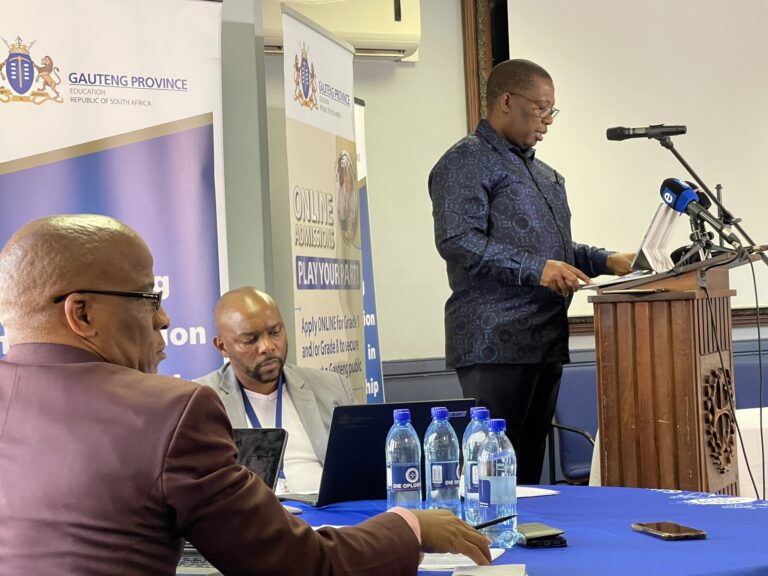
Grade 1 and 8 school placement offers to be sent on Monday, says Lesufi

GAUTENG Education MEC Panyaza Lesufi annonced on Sunday that parents who applied will be receiving placement offers for Grade 1 and 8 pupils from Monday.

Lesufi addressed the media at Hoërskool Menlopark on Sunday on the placement process for the 2023 Grade 1 and 8 Online Admissions in Gauteng.

Lesufi said there will be no need for a parent to access the system to accept an offer because the child would be placed at the mentioned school.

“Tomorrow we are releasing what we call ‘ happy SMS’s’. A happy SMS means as a parent you are going to get an SMS that says amongst the 764 000 people that have applied for spaces in our schools you were fortunate to be placed so tomorrow we are releasing those SMS’s to all parents,” said Lesufi.

“Placement offers will be released to parents via SMS from 3 October 2022 – 30 November 2022. Placement offers must be accepted within 7 days. When schools reach full capacity, applicants will receive placement offers from schools with available space.”

The placement period runs from 4 October until 30 November.

A total of 764 062 applications were submitted and processed for both Grade 1 and 8.

“There will be no need for a parent/guardian to access the system to accept an offer in that regard, because the child would be placed at the mentioned school.”

Lesufi said the department followed a strict criteria to place pupils.

“Parents and guardians are reminded that the placement offers are based on the following criteria considered in order of priority, home address within the school’s feeder zone, sibling(s), previous school, work address within school’s feeder zone, home address within 30km radius, home address beyond 30km radius. Not at a first come first served basis.”

According to the parents, the Gauteng Department of Education’s (GDE’s) online admission system is not allowing new registrations or logging-in, schools are not appearing, the system doesn’t recognise the feeder zones, and there is an inability to select home language and preferred language, to list a few of the issues.

Lesufi said the demand for space in schools is overwhelming, adding that there are over 1,000 additional classes currently being built in the province.

INSIDE EDUCATION

100 years of innovation and inventions: South African vice chancellor reflects on what’s next

ZEBLON VILAKAZI

WE live in a world characterised by inequality, poverty, economic volatility, globalisation, climate change and ambiguity. In my own country, South Africa, residents have to navigate socioeconomic and political instability, power and water cuts, homelessness, unethical governance and mediocre or no service delivery.

It is a far cry from what the country could be if we brought its best talent and resources to bear for the benefit of humanity.

Innovation will be key to any positive changes – and research-intensive universities have a central to play in that innovation. As the University of the Witwatersrand (or Wits, as it’s commonly known) turns 100, my colleagues and I have been thinking a great deal about the inventions and breakthroughs that have emerged from the university in the past 100 years – and what is coming next.

Great innovations have emerged from the work done by Wits researchers that have shifted the dial in sectors ranging from health to computing to quantum and nuclear physics. These rich seams of knowledge continue to inform policy and daily decisions and are the foundation of cutting edge research the institution continues to produce.

100 years of changes

On 1 September 1939, Adolf Hitler invaded Poland. World War 2 was underway. Barely three months later, the first radar set was tested on Wits University’s campus. Britain and its allies were looking for a way to detect enemy aircraft and ships. A group of scientists – among them Sir Basil Schonland, Director of the Bernard Price Institute of Geophysical Research and another Wits engineer, Professor Guerino Bozzoli – came together to harness the power of radio waves.

Almost a century on, the science of sensors has taken several quantum leaps. Professor Andrew Forbes and his team at Wits are encrypting, transmitting, and decoding data quickly and securely through light beams. He has just secured R54 million for the Wits Quantum Initiative which explores theoretical and experimental quantum science and engineering, secure communications, enhanced quantum-inspired imaging, novel nano and quantum-based sensors and devices.

The university has also come a long way on its computing journey. In 1960 it was the first university in South Africa to own an IBM mainframe computer. Today, in partnership with IBM, we’re the first African university to access a quantum computer.

As the Chair of the National Quantum Computing Working Group in South Africa, this is an area where I see immense potential for Africa. Classical computing has served society incredibly well. It gave us the Internet and cashless commerce. It sent humans to the moon, put robots on Mars and smartphones in our pockets.

But many of the world’s biggest mysteries and potentially greatest opportunities remain beyond the grasp of classical computers. To continue the pace of progress, we need to augment the classical approach with a completely new paradigm, one that follows its own set of rules – quantum computing.

This radically new way of performing computer calculations is exponentially faster than any classical computer. It can run new algorithms to solve previously “unsolvable” problems in optimisation, chemistry and machine learning, and its applications are far-reaching – from physics to healthcare.

Innovative healthcare is sorely needed across the African continent. Here, too, Wits has been able to play a vital role in the research, teaching and learning, clinical, social and advocacy spheres. It was the first university to lead COVID-19 vaccination trials in South Africa.

Our researchers also developed technology to improve the accurate testing for tuberculosis. And the Pelebox, an invention to cut down the time that patients spend waiting for medication in hospitals.

Elsewhere in the institution, researchers have connected the brain to the internet, used brainwaves to control a robotic prosthetic hand and developed an affordable 3D printed bionic hand.

Difficult questions

Research intensive universities in South Africa need to ask the difficult questions about their role in a changing society.

How do we serve as a catalyst for social change? How do we best use our intellectual dynamism and work with the public and private sectors to effect positive change? How do we create new, relevant knowledge and translate it into innovation? How do we best develop critical thinkers, innovators, creators and the high-level skills required to advance our economy, and the future world of work?

How do we quantify our social impact and ensure that it is contextually attuned? How do we influence policy change?

These questions are at the heart of the university’s strategy today. And they’re no doubt being considered across the higher education sector as universities work to harness their collective talent and the resources at their disposal to craft a new future and transform society for the benefit of all humanity.

(Zeblon Vilakazi, Vice-Chancellor and Principal, University of the Witwatersrand)

THE CONVERSATION

Matric final exams could suffer should power cuts continue

0

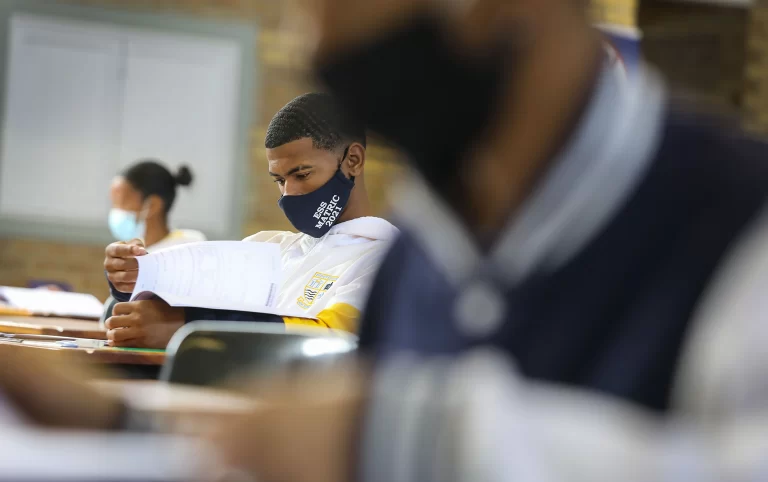
AS matric learners are preparing to write the final examinations of their 12-year schooling career, power cuts continue to have a severe impact on the education sector.

Recently, the KwaZulu-Natal Department of Education paid a visit to a school in the South Coast in the province, as matric learners are preparing to sit for their final examinations which will kick-off on 31 October 2022. 

The department has shared how it has been affected by power cuts, with learners also losing out on a chunk of their academic year. It is said that schools that rely on technology to study are the most affected by loadshedding.

The previous cohort of matriculants were also faced by the same predicament in 2021 and the Education Department foresees that history might repeat itself.

In an interview, Fraser confirmed: The issue of load shedding is going to disturb us a lot, we therefore appeal to Eskom to make sure that these disturbances come to a stop.

An issue of security in the schools has also been revealed, however, the department has assured that it is currently working to make sure that schools become a safe environment to write in.

Learners have been encouraged to do their best despite the challenges that they are faced with. Fraser has confirmed that a total of 174 413 full-time candidates and 23 730 part-time candidates had been registered to write the 2022 National Senior Certificate exams.

The department has encouraged the matric class of 2022 to prepare for their final exam by starting their revision early, organising their timetable and to also vary their revision techniques.

Careersportal