Home Blog Page 250

South African universities need to better support doctoral supervisors

0

PULENG MOTSHOANE

SOUTH Africa’s government has ambitious plans for doctoral education. The country aims to increase its output to 5,000 doctorates annually by 2030. In 2013, the figure stood at 2,051; by 2019 it was up to 3,445. It also wants 75% of all academics employed at universities to hold a PhD by 2030. In 2019, that figure was just 46%.

There are several reasons for the drive to prioritise postgraduate education. One is a response to the rise of the so-called “knowledge economy”: universities want to improve their research output and see doctoral graduates as a good group to help achieve this aim.

One of the key requirements for a university to produce PhD graduates is to address the supervision capacity by developing emerging supervisors.

When embarking on a PhD, candidates make several choices. What is their central research question? What methodology will they use? And, crucially, who will be their supervisor? A supervisor is a university staff member whose role is to guide and support postgraduate students studying towards a master’s or a doctoral degree. At the doctoral level students are allowed to choose their supervisors based on their expertise in the field of research.

But merely holding a PhD or having spent some years in academia doesn’t make someone naturally able to supervise students. Good supervisors need a variety of skills, research experience and publications.

The South African Council on Higher Education recently released a report on its key findings from a review of doctoral education. It states: There is clearly a need for additional supervisory capacity across the national system, and programmes for training supervisors are in place in most universities.

My own PhD research found gaps in the system, including where programmes for training are said to be in place. I investigated how 20 of South Africa’s public universities support emerging supervisors. My study findings revealed that emerging supervisors were often simply thrown into the deep end with no development or support. Where professional development was available, it was often presented by facilitators without supervision experience.

I identified five areas that could be strengthened. These included whether training for supervisors was once-off or ongoing; how supervisors viewed the purpose of higher education – merely to ensure a certain number of PhD graduates or as a way to build knowledge – and whether supervisors were given the space to apply lessons learnt in workshops. I believe that if these steps were taken South Africa’s universities would have a much stronger cohort of supervisors.

Five factors

For my PhD I surveyed 186 participants, both emerging (novice) and experienced supervisors, and interviewed 54 academics from multiple disciplines. Some of their institutions offered once-off workshops for PhD supervisors. Others presented short courses or developed mentoring programmes.

From this data, I identified five factors that determined the success and value of institutions’ development of PhD supervisors.
The first was how supervisors understood the purpose of postgraduate education. Many supervisors were under enormous pressure to “get students through the system”. They felt this undermined their role in nurturing the next generation of researchers who could contribute to the stock of knowledge.

Some reported that incentives paid to supervisors had perverse consequences. In some cases, experienced supervisors were not willing to work alongside and mentor a novice because they didn’t want to share incentives.

Key performance indicators related to postgraduate throughput rates also led to an understanding of supervision as managing their pathway through the system rather than advising students in knowledge creation processes.
The second factor centred on efficiency, which refers here to the government’s desire for high graduate returns on its subsidy investments in doctoral enrolments.

Many of those I interviewed felt like workshops were a tick-box exercise designed to ensure compliance with institutional regulations. They responded either by not attending workshops, by attending without meaningfully engaging. This “absent attendance” means that making workshops or courses compulsory won’t address their inherent problems.

The third factor was the credibility of course designers and facilitators. Emerging supervisors told me they appreciated being introduced to the wealth of literature on issues of teaching and learning with postgraduates. But the facilitators were often employed in administrative posts and on contract: they had little research or postgraduate supervision experience. This dented their credibility in the supervisors’ eyes.

Supervisors’ own agency was another factor. My PhD supervisor, Professor Sioux McKenna, and I have argued elsewhere that some supervision development initiatives operate from the problematic premise that supervisors can be trained to “fix” low retention and poor throughput rates.

Good supervision is a necessary condition for a successful postgraduate journey. But it alone won’t repair these problems. If novice supervisors are sent off to workshops to develop generic skills and little is done to ensure that the department, faculty and university have a research-rich environment and student-focused administrative systems, structural issues will persist.

Emerging supervisors also said they emerged from training enthusiastic about the possibilities or alternative approaches to postgraduate education they’d discussed – only to have their ideas dismissed by colleagues or thwarted by institutional processes.
The fifth factor related to whether training was once-off or part of ongoing development. Despite their concerns, most participants who had attended supervisor development initiatives indicated that they benefited at least in some way from such support. However, where the support was offered as a once-off training, often just a half-day workshop, they felt there was an underlying message: good supervision was simply a matter of implementing a few skills.

Overall, the people I interviewed wanted flexible, collaborative, supportive – and ongoing – opportunities. There were calls for more discipline-specific interventions and collaborative spaces where emerging supervisors could engage with experienced supervisors rather than being instructed in a generic best-practice of “how to supervise”.

If these calls are heeded and institutions develop training into something beyond a tick-box exercise, the pool of capable supervisors in South Africa can be dramatically expanded.

(Puleng Motshoane, Academic Developer, University of Johannesburg)

THE CONVERSATION

Universities South Africa welcomes Dr Phethiwe Matutu as the new Chief Executive Officer

STAFF REPORTER

THE Board of Directors of Universities South Africa (USAf), Professor Sibongile Muthwa, USAf’s Chairperson, has welcomed Dr Phethiwe Matutu as the new Chief Executive Officer, who succeeds Professor Ahmed Bawa.

Bawa has been at the helm since May 2016.

Dr Matutu assumes office with effect from Monday, 3 October 2022.

For the past five years, she was the Group Executive: Strategy, Planning and Partnerships at the National Research Foundation, where she was responsible for strategy, strategic planning and performance monitoring, strategic partnerships, and information and analysis.

For nine years prior to that she had occupied the position of Chief Director: Human Capital and Science Promotion in the former Department of Science and Technology (DST).

A mathematician by discipline, Dr Matutu holds a PhD in Mathematics from the University of Cape Town.
She obtained a Master’s in Science, Mathematics with distinction from Rhodes University, an Honours in Science, Mathematics, from the same institution and a BSc in Mathematics and Chemistry from the former University of Transkei.

She attended the “Insight into King IV” at the Institute of Directors in South Africa to advance her governance capabilities, and her competence in equity, diversity and inclusion has been broadened by obtaining an “Equity and Transformation Facilitator certificate” from Wits University.

She brings with her solid academic and policy-making credentials, having taught mathematics for 16 years until 2008, at no fewer than five of South Africa’s universities and worked in a policy environment for another 14 years.

Her teaching career culminated in a senior lectureship in Rhodes University’s Department of Mathematics in 2004, a position she held until 2008.
At the former Department of Science and Technology, Matutu successfully led the strategy development in research priority areas of Government, science promotion and Human Capital Development, leading to transformative change and maximising of research impact.

Among her notable achievements was the growth of the Human Capital Development budget, particularly, for researchers and post-graduate student support from the National Treasury.

This was a culmination of ongoing direction setting through guiding documents for entities, and evidence-based case building.

At the NRF, Dr Matutu successfully drove the formulation of the macro-organisational strategy, led the conceptualisation of the establishment of a Research and Development Information Platform for Research and Development data for the National System of Innovation (NSI), and had oversight of the management of key strategic partnerships that are instrumental in leveraging knowledge, human, and financial resources from partners.

Dr Matutu has served at various committees and structures.

They include being a Ministerial appointee to the Walter Sisulu University Council until 2011; a Ministerial Task Team member for
the Drafting of the Implementation Plan for the White Paper on Post-School Education and Training in the Department of Higher Education and Training (DHET) from 2016 to 2017, a Ministerial Appointee to the Council for South African Natural Scientific Professions in the former DST, from 2010 to 2017, to name a few instances.

Welcoming the new CEO aboard the USAf ship, Professor Muthwa, who is also the Vice-Chancellor and Principal of Nelson Mandela University, says Dr Matutu is undoubtedly joining an organisation punching above its weight, and is poised to achieve even more by placing students at the centre of all its endeavours.

Referencing the upheavals that have engulfed SA’s universities in the past, such as the #FeesMustFall movement of 2015 and the CoViD-19 pandemic, of late, Professor Muthwa said she looked forward to Dr Matutu steering USAf forward by applying the lessons learnt from these crises and adapting the organisation to the swift changes that universities have had to
undergo.

“As we transition to more stability – with our new CEO at the helm, I, on behalf of the Board, declare
our strong support to ensure you succeed in this role. As you strive to uphold the cause of Higher Education in South Africa, remember to work with us as a collective. What sets USAf apart from other organisations is the senior leadership working as a collective across the higher education ecosystem. Our collective strength lies in relationality.”

In turn, Dr Matutu expressed appreciation to the USAf Board “for trusting me with this responsibility. Recognising the many challenges currently faced by the sector, including the aftermath of CoViD and water and energy security threats, we need to take cognisance of the environment we’re operating in, in taking the sector forward. Thanks to the roadmap and the implementation plan that my predecessor, Professor Ahmed Bawa, has left behind, we have a solid base to work from, in
assessing how we proceed from here.”

“I look forward to being a significant part of this organisation as the Board and staff at the USAf Office
hold my hand in steering this ship into the future.”

INSIDE EDUCATION

High school learners display expertise in water, says DWS

0

IN an attempt to get high school learners to come up with innovative ways to propel the water and sanitation sector, the Department of Water and Sanitation (DWS) is hosting a weeklong Water and Sanitation Education Programme (WSEP) in Boksburg.

The programme, held from 3 – 7 October 2022, is held under a number of competitions, including the Aqua Enduro action project, an initiative aimed at addressing the skills shortage in the scientific and engineering disciplines. It targets Grade 10 – 11 learners.

Aqua Enduro seeks to identify learners who not only have a passion for water and sanitation, but also have the determination and discipline it takes to pursue careers in the water sector.

Department spokesperson, Sputnik Ratau, said other competitive projects will take the form of public speaking, targeting learners from Grade 10 – 11, who are doing Maths and Science. The learners will be given a theme to research and debate amongst themselves.

“Learners from the Intermediate Phase will compete in the Baswa Le Meetse (BLM) action project, which requires them to initiate a water or sanitation project within their school, and use creativity and innovation to artistically sensitise their communities on what they should be doing to actively save water or educate people about proper sanitation in their homes.

“At the end of the competitions on Friday, the department will award the winning schools and learners with bursaries, prize money, certificates and trophies. The bursaries are geared towards studies in water and sanitation-related careers, whilst the prize money will be used by schools to procure water and sanitation related needs for the sustainability of their projects,” Ratau explained.

The Water and Sanitation Education Programme is one of the most successful programmes of the department, which has seen a number of young water and sanitation professionals excel in their expertise within the department and the entire sector.

The programme takes places in various schools across the country and the winning teams will represent their provinces this week at the national adjudication programme.

Ratau said through the programme, the department aims to create more employment opportunities in the country, while also bridging the skills gap that exists in the sector.

So far, a total of 800 learners have been awarded bursaries to pursue careers in the water and sanitation sector, while 3 500 schools have been supported through the programme since its inception.

In 2015, the programme was recognised for its achievement by the United Nations and awarded the “Water for life best practice” Award.

Saxonwold Primary School has a lot to offer

CURRENT and potential suppliers attended the Supplier Catch-up Networking event at Saxonwold Primary School.
The event was hosted at the school’s Innovation Hub on September 22.

Acting principal Muhammad Khan said, “This is a marketing and networking event with an opportunity for us as a school and you as businesses. Today is about building lasting partnerships. So, it’s a mutual benefit. We’re not just going to come and ask for assistance but we also offer different things as well.”

Sharing some background on the school, acting departmental head of the foundation phase, Ayesha Khan said that Grades 1- 7 are multi-cultural and that it’s a quintile five school which means it’s a fee-paying school that depends on fundraising and the school feels.

“We only receive a small amount of money from the Gauteng Department of Education (GDE). 23 of the 38 staff members are paid by the school governing body while 15 are provisioned by the GDE.”

The acting principal said the school aims to ensure a future of innovation, success and prosperity.

He highlighted that the school excels on the sports field with cricket, soccer, commonwealth teams and the girls’ soccer team.

Off the field, learners are awarded academic colours and boast of district achievements as well.

Khan shared that they donate money to charity and identify families in need within the school and help them out.

Head of Innovation, ICT and digital marketing, Frankie Cilliers said the event was about creating long-lasting relationships that are mutually beneficial based on trust and loyalty.

Adding on what the school offers, he said, “We also focus on project-based learning whereby learners come up with solutions to some of the world’s biggest problems. We also focus on future-ready skills as the world is becoming more and more automated. We have google-certified educators. The school has a strong digital footprint which places the school in a position to obtain investment.”

Acting principal Khan said they wanted to grow from where they are and to achieve that, they need partners/sponsors to be on board.


RosebankGazette

Targeted classroom management strategies to quell lab behaviour management issues before they arise

MANAGING behaviour in science lessons can be one of the trickiest things to master as a new teacher. Recommendation 3 from the EEF Improving Behaviour in Schools guidance report looks at the use of classroom management strategies to support good classroom behaviour.

This becomes even more critical when we introduce hazardous substances and procedures into the classroom mix. As I discussed in a recent article on risk assessment, students’ behaviour is one of the most significant hazards during chemistry practical work.

Challenging behaviour, pupil disengagement, bullying and aggression are all aspects of student behaviour that can make practical work high risk. As such, teachers need to have clear strategies close at hand, and students must be trained in how to work in labs. We need to support our students in developing their skills and knowing how to respond when things don’t go as expected.

Central to effective behaviour management is a school culture that students buy into, so they are, ultimately, meeting our expectations. Consistency of reward and sanction helps embed this culture. Whole-school systems help to ensure this consistency, and free up teacher time so they can focus on teaching and learning.

1. Support the right kind of motivation

Whole school rewards systems are an efficient way of reinforcing appropriate behaviour. However, be aware that students catch on to the ‘game’ of the rewards system quickly. Well-behaved, hard-working students can sometimes be under-rewarded by these systems. We can tend to have higher expectations of them, and so it’s harder for them to excel and earn the rewards. And when poorly behaved students have a good lesson, they’re often rewarded for showing improvement. This can lead to a perverse inverse relationship between overall effort and behaviour, and rewards. Essentially, over time, we want our stud

2. Set the example

There are extra expectations on students in practical lessons. The behaviours and norms in a lab will be different to in an English classroom. These additional requirements need to be explicitly articulated and modelled for students. For example, if we expect students to wear eye protection at all times during a chemistry practical, we should be doing the same. Have a clearly defined set of rules as a starting point, such as the CLEAPSS Lab rules poster. In my school, we have these displayed in all labs as a useful touchstone for everyone entering the department.

ents’ locus of motivation to move more towards an intrinsic motivation, and away from external rewards and sanctions.

3. Introduce classroom drills

It’s important to train students in the why and how of appropriate behaviour in the lab. I don’t shy away from the idea that they need to be trained. Drilling classes at the start of the year, or when first meeting a new class, is often critical. Regardless of the year group, we practise the moves required to get ready for practical work (eg move stools under, clear benches and floor, ensure uniform and hair is appropriate, put eye protection on). Positive reinforcement for those getting the moves right works well, and getting the students to peer assess speeds up the compliance. A useful rule of thumb is to highlight four positive behaviours for every one negative.

4. Manage movement

The mass movement of students around the lab is a potential source of poor behaviour. Minimise bottle necks, carefully distribute resources around the lab, and orchestrate when and where students move. Microscale chemistry practicals can help when all equipment and materials can be distributed to groups in a separate tray. Use a visualiser to demonstrate techniques and expected outcomes to prime students before they carry out the practical for themselves. Consider how much you want to achieve in a particular practical. Breaking larger practicals up into smaller tasks over multiple lessons can reduce the chance of students’ working memories getting overloaded, which can lead to disengagement.

5. Ensure equal access

Be cautious about using practical work as a reward, or removing practical work as a punishment. Practical work is a fundamental part of learning chemistry, and all students should have equal access to this part of their education. Sometimes, though, you must pause or completely stop practical work if the students’ behaviour would lead to the risk being too high. At this point, use the external support from department heads and colleagues. Sometimes, having a second member of staff in the room can be helpful. On occasions, you may need to remove a student from the classroom so the majority can carry out the practical work. Follow your department and school rules, and ensure you follow up with the student and tutors/parents afterwards.

SUPPLIED

School for under-resourced communities produces robotics stars

0

TWO robotics teams from a Cape Town school for children from under-resourced communities have won through to South Africa’s national World Robotics Olympiad (WRO) finals.

A record 89 teams and 227 students competed in the WRO Western Cape regional competition in Cape Town, hosted by non-profit school Christel House South Africa, based in the suburb of Ottery.

Christel House offers no-fee scholarships to students from some of the most under-resourced communities in Cape Town and helps to transform their lives through a character-based and career-focused education model. Technology forms the bedrock of the school’s curriculum, with programmes like coding and robotics growing from strength to strength each year.

Two teams from the school won through to the national finals in Gauteng, where winners of each category stood a chance to represent South Africa at the WRO international event in Dortmund, Germany, in November 2022.

First held in 2004, the World Robot Olympiad takes place across 90 countries and brings together young people from all over the world to develop their creativity and problem-solving skills through challenging educational robotics competitions.

The official WRO theme for 2022 is “My Robot My Friend” and focuses on how the combination of robotics and artificial intelligence can improve robot-human interaction by making it safer and more user-friendly. The competition tasks teams to program their robot to do certain tasks while navigating through pre-determined courses. The team that completes the course the quickest and most accurately scores the highest. Teams participate across various skill levels in several categories. This year, the Robo Sports category included doubles tennis for the first time.

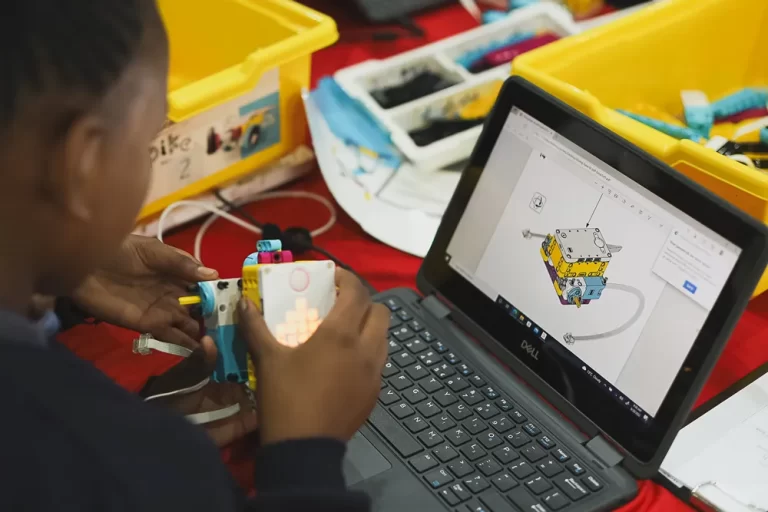
Christel House and the WRO Western Cape committee also hosted a special robotics workshop, which introduced 50 students from under-resourced areas to the world of robotics and coding. The workshop was facilitated with the help of WRO Olympiad winning teams, who guided them in coding and building their own robots for the first time.

Robotics, coding and other ICT programmes form a key part of Christel House SA’s intervention to equip students for the world of work and ensure that they find gainful employment. In line with global technology trends, the school acknowledges that coding will become a basic literacy requirement in the digital age and that understanding the fundamentals of technology will be essential to securing a job in the future.

Funding for robotics equipment, training and competition fees remain a significant barrier for many underprivileged schools across South Africa. With the support of Dell Technologies in South Africa, Christel House SA is committed to widening the impact of its programmes to help more young people bridge the digital divide.

Doug Woolley, general manager of Dell Technologies South Africa, says: “Dell is a leading innovator in fields such as artificial intelligence, and we believe that Christel House’s commitment to equipping South Africa’s youth with the most sought-after skills in the world today plays an essential contributing role in the future of our country.”

Cedric Esterhuizen, WRO Western Cape vice chair and head of the robotics department at Christel House, says: “Through this outreach programme, we managed to expose students to robotics who would otherwise not have had the opportunity. It was tremendous to see all the interaction and the smiles on the students’ faces.

“Robotics offers an opportunity to follow a career path that students haven’t considered before and allows them to make a contribution to an ever-changing technological world.”

Gadget

WeThinkCode looks to place 400 youth in tech jobs

WeThinkCode has partnered with some of South Africa’s most recognisable businesses, to place over 400 students as ICT interns during their work placement period.

The software developer training academy has collaborated with the likes of Momentum Metropolitan, Outsurance, BBD, BCX, FNB, StructureIT, DealX, MediClinic and Old Mutual to launch the Job Placement Drive – a platform that seeks to connect SMEs and corporations with unemployed youth.

The initiative enables the academy to provide a reliable pipeline of tech talent to businesses facing challenges with ICT skills shortages and struggling to access talent from traditional channels.

The annual placement initiative, which starts this month, kicked off with a Partner Expo Week last week, to call on all businesses looking for tech talent to engage with potential candidates.

Each year, WeThinkCode trains hundreds of talented young South Africans to become highly-skilled software developers in a two-year programme.

The course provides digital skills, including fundamental programming knowledge and practical software development experience in Python; software engineering practices, such as unit testing; and test-driven development and exposure to the Java ecosystem and object-oriented design.

According to the organisation, this year, 425 students will go through the matching process to find suitable job placements within South African corporations and SMEs in Johannesburg, Cape Town and Durban.

“We are delighted that so many of our business partners have made repeat recruitments from our student body,” says Nyari Samushonga, CEO of WeThinkCode.

“Their confidence in the quality of our students and the effectiveness of our home-grown curriculum motivates us to go to great lengths to recruit exceptional talent from communities that are not usually associated with software developer pipelines.”

WeThinkCode was launched locally in 2015 and welcomed its first coding students in May 2016.

The academy says it seeks to eliminate the digital skills shortage by developing 100 000 coders in Africa over the next 10 years.

To date, the organisation says over 700 young people have graduated and maintain a 90% permanent placement rate post-graduation.

“The Job Placement Drive is a win-win for both the SMEs, which need additional resources for their digital projects, and the students, who need vital on-the-job experience,” adds Samushonga.

“In the context of South Africa’s current 63.5% youth unemployment rate and the local tech skills shortage, WeThinkCode acts as a bridge between talented young people and the economy.”

For more information on partnering with WeThinkCode and to apply to join the Job Placement Drive, visit the WeThinkCode website.

ITWeb

NSFAS 2023 Application Cycle Opens – Nzimande

0

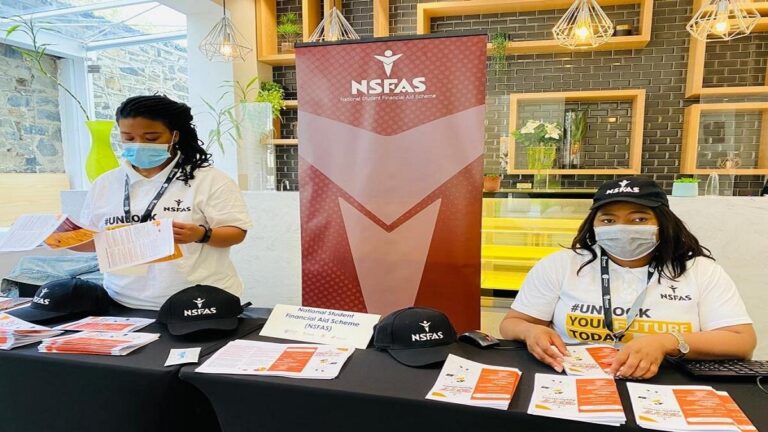
THE National Financial Aid Scheme (NSFAS) 2023 application cycle has opened.

Higher Education, Science and Innovation Minister, Dr Blade Nzimande, made the announcement of Wednesday’s (28 September) opening of the application process at a briefing on Tuesday.

Briefing the media, Nzimande said the scheme resolved to open the application cycle early, as opposed to the previous year, in order to give prospective applicants enough time to submit their applications and supporting documents.

Giving an update report on NSFAS funding for the 2022 academic year, Nzimande said a budget of R43 billion was allocated to the scheme towards the beneficiaries’ tuition fees, including food and travelling allowance, and study material.

He said 985 672 applications were received with approximately 140 636 application unsuccessful.

Of the applications received, 739 526 applications were provisionally funded pending registration from their respective institutions.

“[The] majority of unsuccessful applicants failed to provide sufficient evidence to support their application for funding; exceeded the financial eligibility threshold; already achieved the highest level of qualification that NSFAS funds, exceeded the N+ rule and being non-compliant to the academic pathways of the TVET college sector,” Nzimande explained.

Over 200 000 SASSA beneficiaries received instant approvals

As part of the system’s improvements, Nzimande said NSFAS introduced real-time response to funding applications from applicants who are beneficiaries of South African Social Security Agency (SASSA), and 287 217 of those applicants received instant approvals because “beneficiaries in the SASSA category often receive automatic qualification for funding.”

“Currently, approximately 708 147 applicants are being funded by NSFAS across our 26 public universities and 50 Technical Vocational Education and Training (TVET) colleges. We are also working with the National Treasury to ensure that we align the Post School Education and Training (PSET) calendar with government funding calendar to ensure that NSFAS has reserve funds prior to the reopening of PSET institutions.
In a bid to improve its application system and process to simplify it for prospective applicants, Nzimande said this year, NSFAS has implemented a number of enhancements to the system to ensure a seamless application experience.

He said the NSFAS online application portal was redesigned to be more user friendly and closer to other platforms that prospective applicants are accustomed to such as WhatsApp, Twitter, Facebook, Instagram.

“The application process itself has been simplified and the questions asked are easier to understand by the public. Additionally, applicants can pause the process and continue at a later stage without restarting from scratch, something that was not possible in previous cycles.

“Over and above the enhancements, NSFAS developed additional channels of application to cater for applicants from diverse backgrounds, also keeping in mind that most of the prospective applicants are young people who embrace the digital way of doing things,” Nzimande said.

The new channels include a mobile App, USSD and WhatsApp, where one can apply for NSFAS funding, track application status and cancelling applications amongst other things, which is normally done through the web portal.

Furthermore, to ensure that no applicant is left behind, Nzimande said NSFAS will embark on an outreach campaign, to ensure that individuals who do not have access to technological devices that enable them to apply online are given the necessary resources and support to apply.

How to access NSFAS bursary

You qualify for a NSFAS bursary if you are a South African citizen who plans to study in 2023 or you are already studying at a public university or TVET college and you meet the following requirements:

You are SASSA grant recipients or
Your combined household income is not more than R350 000 per year or
If you are a person living with a disability, your combined household income should not be more than R600 000 per year or
If you are a student who begun their university studies before 2018 and their household income is not more than R122 000 per year.
Visit the NSFAS website at www.nsfas.org.za for more information on the required supporting documents and the application process.

SA NEWS

UJ appoints Professor Letlhokwa George Mpedi as new vice-chancellor and principal

CHARLES MOLELE|

THE University of Johannesburg’s current deputy vice-chancellor, Professor Letlhokwa George Mpedi, has been appointed as the institution’s new Vice-Chancellor and principal, effective from 1 March next year.

He will replace Professor Tshilidzi Marwala, who will be rector of the UN University in Tokyo, Japan.

Announcing Mpedi’s appointment on behalf of the UJ council, chairperson Mike Teke said: “The panel were impressed with his commitment to continuing with the university’s strategic objectives and our values of transformation, social justice, and environmental sustainability.”

“Prof Mpedi has also demonstrated an unwavering and outstanding commitment to continuing our efforts for the university to be recognised as an innovative and rigorous place of learning in the fourth industrial revolution with impactful research. We are delighted to welcome him to lead our ambitious plans.”

Until his appointment as the Deputy Vice-Chancellor: Academic in 2021, Mpedi was the executive dean of the Faculty of Law at UJ. In January 2018, he was elected to the Board of Governors of the International Association of Law Schools (IALS).

In 2017, Mpedi was awarded the Titans: Building Nations, Continental Award for Education and Training: Academic.

Earlier that year, he walked away with both the South African and SADC Regional awards in this sector.

According to the institution, Mpedi holds an Advanced Management and Leadership qualification from the Saïd Business School, University of Oxford (2022), as well as in ‘Leading in Artificial Intelligence: Exploring Technology and Policy Programme, from the John F. Kennedy School of Government at Harvard University, Executive Education (July 2022).

He completed his B Juris degree in 1996 and LLB degree in 1998 at Vista University.

He holds an LLM in Labour Law from the Rand Afrikaans University (now UJ) and an LLD in Mercantile Law from UJ.

He publishes labour law and social security.

Commenting on his appointment, Mpedi said: “I’m delighted and deeply honoured to be taking up the role of vice-chancellor of this great university. Prof Marwala and his predecessor, Prof Ihron Rensburg, have built a strong university, and I see many opportunities to take the institution’s ambitious strategy forward. I am particularly looking forward to working with staff and students to build a truly inspirational and transformative institution where all are included and supported to thrive.”

INSIDE EDUCATION

Massive curriculum shift for schools in South Africa, including new subjects – DBE

0

THE Department of Basic Education says it will introduce as many as 38 new subjects to schools in the next few years, targeting learners in grades 10 to 12 as part of its new ‘three stream’ curriculum.

The department intends for the subjects and the curriculum model to be fully implemented by 2025.

Speaking to NewzroomAfrika on the coming changes, the education department’s chief director for mathematics and science, Seliki Tlhabane, said that the whole aim behind the three-stream model is to help learners get a better education and into jobs.

Under the current system, which the department calls the academic stream, the simple goal is to get learners through matric and into universities or other institutions of higher learning.

He said because of the focus on academics, technical or vocational skills had gained the reputation of being “lesser” than academic pursuits in South Africa, but added that these kinds of jobs delivered real value to society and helped artisans earn a livelihood.

Tlhabane said that the various Technical Vocational Education and Training (TVET) colleges in the country possess the necessary skills and knowledge to educate learners in these fields.

“One of the challenges might point to children who are going into the TVET space – those that society views as children who failed academically. We want to change this perception that TVET colleges and technical high schools are for children who are not intelligent.

“Children who are bright students can still follow these programmes, and once we get the right calibre of students to follow these programmes, we will be able to address this problem.”

Through the programme, the department will add 26 new subjects under the occupational stream and 12 new subjects in the vocational stream that will be offered to learners leaving grade 9 to set them on a path of education and employment.

The new curriculum streams feed into the department’s launch of the General Education Certificate – to be trialled this year (2022), with a full rollout expected by 2024.

The GEC will be granted to grade 9 learners as a transitionary certificate to allow them to pursue occupational and vocational training.

The three-stream model has been trialled in various capacities across the country since 2017 and entered the ordinary school trial phase in 2021.

Some of the occupational subjects that have already been trialled include:

  • Agricultural Studies
  • Beauty and Nail Technology
  • Art and Crafts
  • Ancillary Health Care
  • Office Administration
  • Upholstery
  • Early Childhood Development (ECD)
  • Maintenance
  • Motor Mechanics
  • Food Production
  • Body Works/ Panel Beating and or Spray Painting
  • Needlework
  • Welding
  • Hospitality Studies
  • Sheet metal work
  • Wholesale and Retail
  • Electrical Technology
  • Bricklaying and Plastering
  • Woodworking and Timber
  • Plumbing
  • Hairdressing

Some of the prominent vocational subjects include:

  • Agricultural Studies
  • Art and Design
  • Digital Technology
  • ECD
  • Mechanical Technology
  • Electrical Technology (Digital, Electronics and Electrical)
  • Civil Technology
  • Hairdressing and Beauty
  • Ancillary Health Care
  • Services: Maintenance and Upholstery
  • Consumer Studies
  • Hospitality Studies
  • Wholesale and Retail Studies

Tlhabane said the difference between the occupational stream and the vocational stream is the amount of practical work that learners have to complete.

For academic subjects, practical work is very minimum, he said. With vocational studies, at least 50% of the study time is doing practical work, with 50% being theory.

“When it comes to the occupational stream, about 75% is practical, and 25% is theory,” he said.

The key aspect of the occupational stream is work-based experience, he said, where children in this stream will be attached to a place of work where they will be supervised by professionals and acquire the real world of work experience.

“For vocational studies, just the theory and the practical suffices,” he said. The subjects will be implemented in grade 10 to 12 fully by 2025.

BUSINESS TECH