Home Blog Page 251

Nzimande to officially announce the opening of 2023 NSFAS applications on Tuesday

0

THE Department of Higher Education and Training (DHET) is making preparations to ensure that the National Student Financial Aid Scheme (NSFAS) can allocate student funding to tertiary students for the 2023 academic year.

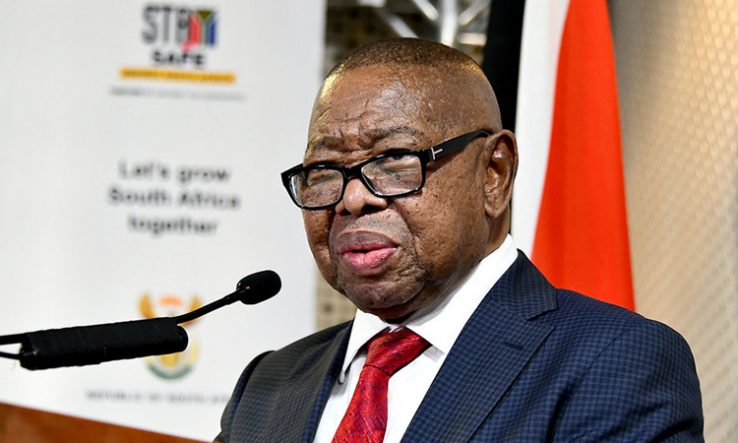
Higher Education Minister, Blade Nzimande will officially announce the opening of 2023 NSFAS applications on Tuesday 27 September 2022 at 16:00. 

The minister will also go through other recent events about the bursary program’s status, including the application procedure, during his media conference. He will also provide an update on NSFAS’s support. 

The minister will also discuss other recent events affecting the bursary scheme’s current status, particularly the application procedure. Additionally, he will provide an update on the assistance that NSFAS has given to students.

To date, there are currently 691,432 students for the 2022 academic year, with 462,983 being female and 227,072 being male students according to NSFAS. 

Following the financial shortage, the Department of Higher Education and Training provided R47,3 billion to NSFAS for the 2022 academic year, covering both TVET colleges and public universities.

The government established NSFAS per the NSFAS Act (Act 56 of 1999) to provide financial aid to disadvantaged students who want to continue and complete their studies at public universities or TVET colleges.

Careersportal

OPINION| How schools have changed in South Africa, according to a headmaster – and what parents need to know

QUINTON PASCOE

Welcome to the Exponential Age, where progress and change are inevitable. Since the time of the First Industrial Revolution when water and steam were used to power mechanised production, we are now in the grips of a digital revolution characterised by a fusion of technologies that is blurring the lines between the physical, digital, and biological spheres.

According to a World Economic Forum report entitled “Catalysing Education 4.0: Investing in the Future of Learning for a Human-Centric Recovery”, the global imperative is for education to be reimagined, focusing on the breadth of skills needed to be successful in the age of the 4IR, and leveraging technological and pedagogical innovation to put learners at the centre of learning.

The vision to prepare students for the economies of tomorrow is referred to as Education 4.0.

How do we as educators roll with the digital punches?

The full changes to our future are difficult to accurately predict, but one thing is clear: from an education perspective, the response to future needs must be interdisciplinary and comprehensive. Educators need to accept that as technology becomes more pervasive, traditional trades disappear and education must be aligned to the change in times.

Shifting from ‘the sage on the stage’ to ‘the guide from the side’

The traditional model, where the focus of the classroom was around the teacher and children were seen as empty vessels needing to be filled with facts and knowledge, has changed to the teaching and learning modality where the teacher is not the focus of the class – but so much more.

The role of the educator must evolve into one of “the guide from the side”, the facilitator of skills development, with a greater focus on higher-order thinking skills such as analysing, synthesis, application of knowledge and problem-solving.

Core to these skills is creativity, which allows for each child to be an active participant in their learning with an expectation to not only be responsible and accountable for their part in the teaching and learning experience but to develop an appetite for being a lifelong learner.

Teachers need to shift their focus onto education 4.0 by cultivating peer-to-peer learning atmospheres with students being able to learn collaboratively and from each other. Teachers must actively model change and the skills desired; we must guide, mentor, cheerlead, and nurture, but more importantly, ignite and inspire possibilities.

Igniting curiosity at the early learning phase

Within the Early Learning School phase. a good place to start is with firm roots in philosophies like the Reggio Emilia Philosophy, which is an innovative and inspiring approach to early childhood education, where each child is seen as strong, capable, and resilient; rich with wonder and knowledge.

This philosophy rides on the coattails of the innate curiosity of children and aims to assist them with understanding their world and who they are in it. The learning experience is full of action learning, sensory experiences, play and discovery learning.

As students move into the Preparatory and College stages in South African private schools, the journey of the IEB curriculum begins. However, it is vital to maintain rich, robust teaching and learning by applying global citizenship skills, technology skills, and problem-based and collaborative learning while focusing on the individual needs of each child.

The focus is not just on completing an academic year or preparing for a matric and university entrance but extends towards preparing students to become globally marketable, where their inherent mindset of a ‘can do’ and ‘will do’ attitude is aligned with their flair towards entrepreneurship with a healthy balanced skill set which will serve them well as they will not only create the future, but creatively reinterpret it.

Responsibility of schools to develop soft skills

It is vital that schools acknowledge that the Fourth Industrial Revolution could not only impact what we do, but also who we are. It will affect our identity and all the issues associated with it: our sense of privacy, our notions of ownership, our consumption patterns, the time we devote to work and leisure, and how we develop our careers, cultivate our skills, meet people, and nurture relationships.

To this end, an educator’s focus must also be on developing the soft skills of each student where their interpersonal skills, personality attributes, and people skills drive them towards a realisation as to how they will impact how they work with other people.

Cognitive flexibility, resilience, originality, initiative, and emotional intelligence together with creative risk-taking, leadership growth, and the art of negotiation are all skills that we actively develop within each student.

Finally, an additional consideration when deciding which skills will be valuable in the future is determining who will be assigning that value. To prepare for this, skills-based teaching and learning should be embedded in various aspects of academic, sports, arts and culture programmes.

  • By Quinton Pascoe, headmaster at Reddam House Waterfall.

Over 179 schools to receive mobile technology suites in 2022-23

0

STAFF REPORTER|

THE Western Cape Education Department (WCED) will be supplying 179 schools with mobile suites of technology this financial year at a cost of R18.5 million.

The use of computers and other forms of technology is crucial for the development of the learners in an economy that is becoming ever more digital.

“Owing to this, it is important for our schools to be equipped with this infrastructure for quality education to be taught,” DA Western Cape Spokesperson on Education Deidré Baartman said.

Currently, there are 1 320 schools that are already equipped with general-use computer laboratories, otherwise known as Slim Labs. There are also 255 schools that are provisioned with subject-specific labs, which cater to Computer Applications Technology (CAT), Engineering Graphics and Design (EGD), and Information Technology (IT).

Every 3-4 years, the subject-specific labs are evaluated to ensure that the technology located at these schools are sufficient to cater for learning. On an annual basis, 80 schools are furnished with the necessary technology for these subjects at a cost of R26 million.

The DA said it will be submitting follow-up questions to ascertain more details regarding this programme and the schools that are benefitting from it.

“These examples show that the WCED is committed to making a difference. We welcome the WCED’s continual efforts to ensure that our learners have a conducive learning environment for growth and skills development,” said Baartman.
 
INSIDE EDUCATION

TUT dethrone UJ to lift third Varsity Football crown

THE Tshwane University have dethroned the University of Johannesburg to lift their third Varsity Football title. 

It was a highly-anticipated final between the two best sides of this year’s Varsity Football tournament and the game which promised fireworks was living up to expectations. 

The first 25 minutes of the match were an evenly contested affair, with TUT creating some half chances following set pieces. 

UJ had a decent attempt in the 27th minute but Philane Masondo’s shot went wide off the target. 

TUT eventually opened the scoring in the 32nd minute, when Kutloano Manamela found the back of the net with a stunning volley. 

However, their lead lasted just one minute as Thanda Madiba found the equaliser from a tight angle after being set up by Thulani Zandamela. 

UJ almost scored their second goal in injury-time of the first half but Tebogo Lekaba cleared the ball off the line. 

TUT then went close in the first minute after half-time but a cross by Hendrick Xaba was blocked by Neo Lebopa. 

Madiba had a decent chance with a free-kick in the 59th minute but his attempt flew over the bar. 

TUT eventually found the winner in the 83rd minute, which came via an own goal by Maselesele Makoti after fine work down the right flank from Tumelo Hope Moeng. 

UJ tried to find another equaliser but it wasn’t to be, leading to wild celebrations of the Red Army.  

Coach Bushy Moloi was seen dancing on the sidelines as his troops lifted their third title after 2016 and 2018. 

Score: UJ 1-2 TUT 

Goals: 32’ 0-1 Kutloano Manamela, 33’ 1-1 Thanda Madiba, 83’ 1-2 Maselesele Makoti (OG) 

Man of the Match: Tshiamo Mahome (TUT) 

UJ starting XI: Lona Richard Banga, Maselesele Makoti, Neo Lebopa, Siphiwe Manana, Thanda Madiba, Sanele Ndlalane, Ndabezinhle Nkosi, Advocate Mokwena, Thulani Zandamela, Gerald Ndlovu, Philane Masondo 

TUT starting XI: Sikhumbuzo Ncube, Sanele Nene, Tebogo Lekaba, Kutloano Manamela, Siphosethu Mkhize, Alan Majo, Andile Yamile, Hendrick Xaba, Tshiamo Mahome, Tumelo Hope Moeng, Tshepiso Mnisi.

Examining the impact of the 4IR on South African cultures

0

With the spread of the Fourth Industrial Revolution (4IR) and the rise of digital online media presence, young people are forgetting their cultural roots and heritage says Dr Beryl Xaba, Senior Lecturer in Unisa’s Department of African Languages.

She elaborates: “They have lost interest in facets such as clan names and fostering close relationships with family members.” She adds: “Young people also embrace speaking and writing in English rather than in their home languages.”

Unpacking the impact of the 4IR on South African cultures, Xaba says: “There are various cultural procedures and traditional practices that are viewed as primitive and not fitting with modern lifestyles, especially among the youth.” She cites an example where young people nowadays are unable to slaughter livestock for cultural ceremonies and rather send them to abattoirs.

Referring to the Zulu Royal Family’s kingdom matter, Xaba explains: “Before the 4IR, family matters were kept in-house, but with the availability of online news and information, such matters are now widely discussed on social media by people who lack the relevant knowledge.”

Xaba points out that to preserve South African languages through the 4IR, more awareness must be created, especially on social media. “Documentaries on streaming sites such as YouTube, Showmax and Netflix would help raise awareness and start conversations,” she says. Xaba continues: “A film like Inxeba on Showmax, may have been controversial, but it generated a lot of discussions and was very informative to young people who may not have been aware of the cultural practices of Xhosa people.”

Xaba advocates for the inclusion of native languages on digital websites, and better translation software devices on social media sites. She argues: “These resources could make these languages more accessible to the younger audience who may not be fluent in them, and give them confidence in using them.”

Xaba believes that a sense of belonging should be instilled in young South Africans so that the love of their customs is nurtured. She concludes: “These customs must be continually practised, archived, and preserved as Africans must embrace their identity and uniqueness.”

SUPPLIED

KZN School Applications Will Close on Friday

0

The KwaZulu-Natal Department of Education opened the 2023 learner admission process on 1 March 2022 and has now urged parents and guardians who have not secured school spaces for their children, to do so before the deadline of 30 September 2022. 

The Department said that they expect that parents should have applied to the minimum of at least three schools for their children, as per the guidance of the department. 

Parents were encouraged to apply to three schools so that they increase the chances for the children to be placed at one school, even if it wasn’t their first choice. 

The deadline of 30 September 2022 is for Grade 1 and Grade 8 learners. The department says that they will only deal with cases beyond the deadline, of learners whose parents applied but could not secure spaces due to various circumstances. 

Late applications will not be attended to according to the department as they say it puts officials under too much pressure. 

“We urge parents and guardians to cooperate with the Department in this regard, with the view of ensuring smooth learners admission for the 2023 Academic Year,” said the MEC for Education in KwaZulu-Natal, Mbali Frazer. 

Application forms can be found at schools that parents and guardians wish to apply to. 

Documents that are needed when making an application include the: 

  • Birth certificate (Note that baptismal certificates will not be regarded as proof of birth date)
  • Immunisation card; and
  • Transfer card or last school report card for learners who have been to school previously.

Additional documents required if one is not a South African citizen are: 

  • Study Permit
  • Temporary or permanent residence permit from the Department of Home Affairs; or
  • Evidence that you have applied for permission to stay in South Africa

The 2023 school year is set to commence on 18 January and end on 13 December for schools in Kwazulu-Natal. These dates could however change as the 2023 school calendar has not yet been finalised. 

Careersportal

STEM education critical for country’s JET – Defy Appliances CEO Mustafa Soylu

0

IN the wake of COP26, decisive action was taken by the South African government to concretise its commitment to the just energy transition (JET) – a move towards a sustainable, low-carbon and equitable energy system – as a national imperative.

On the positive side, major players in the local energy sector have followed suit, joining the fray of South African industry leaders who have demonstrated their support of this mandate, says domestic appliances manufacturer Defy Appliances CEO Mustafa Soylu.

However, he points out that, as the drive towards a more sustainable future accelerates, it is clear that skilled workers within the science, technology, engineering and mathematics (STEM) industries are needed, who are equipped to design, develop, execute and manage renewable energy programmes.

“Our country faces a widening divide in terms of wealth and opportunity. This is a gap that training and education can serve to bridge, particularly in STEM careers that are characterised by their ability to pay a living wage, thus tackling poverty,” he says.

Soylu says that upskilling within this field is of particular relevance within the country’s unique socioeconomic context, with South Africa notoriously having the highest Gini coefficient in the world.

However, Soylu emphasises that there is certainly no ‘quick fix’, and successfully making the transition towards a more sustainable and equitable energy system requires a long-term commitment from all stakeholders.

He highlights Defy’s WE-InTech programme as one such example; offering training, internships and job opportunities to women pursuing careers in the STEM fields.

The initiative is centred around increasing participation in new-generation research and development (R&D), posited to offer a sustainable solution that will contribute to building a more inclusive economy.

In alignment with this plan of action, State-owned utility Eskom also recently announced its decision to invest in upskilling staff to become renewable energy artisans.

Through partnering with the South African Renewable Energy Technology Centre (Saretec) in a memorandum of agreement signed last month, Eskom showcased its intention to upskill technicians and qualifying community members in renewable energy.

Soylu says that this too demonstrates support for the JET strategy, facilitating a shift from Eskom’s current dependency on coal while prioritising labour and job creation.

He expresses his endorsement of this decision by Eskom, claiming that it will “develop a trained and capable workforce that can make strides in building a strong and sustainable local renewable energy sector, providing viable solutions to the ongoing energy crisis”.

Soylu adds that this investment will assist the country in meeting global and local environmental objectives.

“We must ensure that all solutions to the energy crisis are socially responsible as well as sustainable, in that they benefit the individual and community, as well as the broader environment,” Soylu states. 

Engineering News

Matric Exam Integrity To Be Maintained As Loadshedding Returns

0

LOADSHEDDING affects a number of sectors, including the education sector. With matric examinations coming up, there are fears that learners will be negatively impacted.

South African Democratic Teachers’ Union (Sadtu) spokesperson, Nomusa Cembi, said the move towards a digital era in schools will be derailed and those that have begun to embrace it, using electronic smart boards, have been disrupted.

However, the power utility, Eskom, has since apologised for the continued and unfortunate loadshedding.

The Western Cape Education Department (WCED) has called on Eskom and local government partners to assist in making sure that loadshedding does not prevent learners from achieving their best possible results in these exams.

In a statement, WCED Minister David Maynier said: We will do everything within our power to make sure that the integrity of the matric exams in the province is not compromised.

The department has also shared that it does have  contingency measures that will be put in place for every aspect of the examination process to continue, from the printing of papers to the marking of scripts.

Some education experts believe that the results that the learners will achieve in this exam, build on what they will do with their lives after matric.

Careersportal

UP EXPERT OPINION: Boutros Boutros-Ghali: Afro-Arab prophet, pharaoh and pope

0

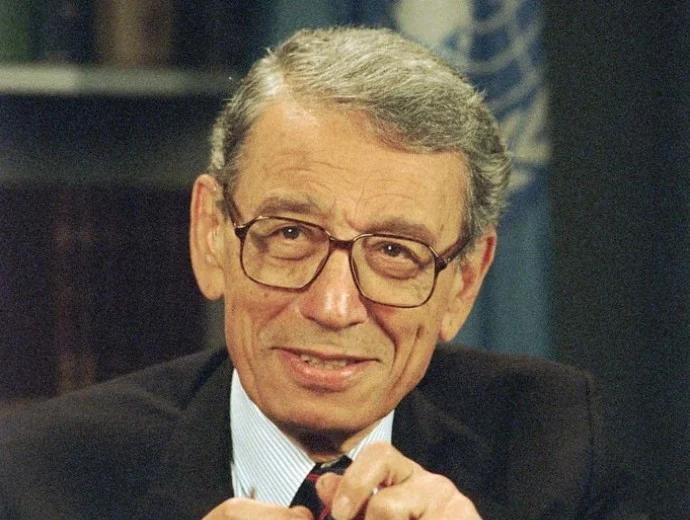
IN HIS REGULAR COLUMEN, Professor Adekeye Adebajo writes about the ongoing legacy and impact of the first African and first Arab United Nation’s Secretary General, Boutros Boutros-Ghali. 

EGYPTIAN scholar-diplomat Boutros Boutros-Ghali, who died in February 2016 as the first African and first Arab UN secretary-general 30 years ago is portrayed in my new short biography, Boutros Boutros-Ghali, as a prophet, pharaoh and pope.

The widely published Egyptian was a renowned professor of international law and international relations at the University of Cairo for 28 years, making him the most intellectually accomplished of the nine UN secretaries-general.

He acted as a peacemaking “prophet”, serving as Egypt’s minister of state for foreign affairs for 14 years and leading negotiations, between 1977 and 1981, that culminated in a peace treaty with Israel, events captured in his 1997 memoir Egypt’s Road To Jerusalem.

As UN secretary-general from 1992-1996 Boutros-Ghali played the role of a stubborn “pharaoh”, often imperiously standing up to powerful members of the 15-member UN Security Council. By 1994 the UN had deployed 75,000 peacekeepers to 17 trouble spots, compared to just 13 missions in the previous four decades.

Boutros-Ghali also pursued the role of a secular “pope on the East River” in leading conceptual debates on development, democratisation and human rights.

A Coptic Christian from a rich and politically connected family, Boutros-Ghali acquired a deep sense of noblesse oblige from his family heritage. His grandfather, Boutros Ghali Pasha, had served as prime minister of Egypt under the British protectorate, before being assassinated by a political extremist in 1910. Two uncles had also served as foreign minister and another as agriculture minister.

Boutros-Ghali, however, was the ultimate outsider: a patrician within a mass of poverty in his country; a Copt within an overwhelmingly Muslim society; and an Arab within an overwhelmingly black African continental population.

As UN secretary-general he clashed with the world body’s most powerful member — the US — earning him the unenviable tag of being the only secretary-general to have been denied a second five-year term. The Egyptian bluntly condemned the double standards of three powerful Western members of the council — the US, Britain and France — in selectively authorising UN interventions in what he described as “rich men’s wars” in Europe’s Balkans, while neglecting Africa’s orphan conflicts.

He chided them for manipulating the UN over Iraq and Libya. He insisted on a veto over air strikes in Bosnia, refused Washington’s demand for a UN deployment in Haiti until troops and time-frames had been agreed, and berated the council for dumping impossible tasks on the world body without providing it with the resources. Boutros-Ghali recorded his tenure in a trenchant 1999 memoir, Unvanquished: A US-UN Saga.

The Egyptian enjoyed peacekeeping successes in Mozambique, Cambodia and El Salvador, which resulted in important conflict management innovations in the post-Cold War era. He suffered spectacular failures in Rwanda, Bosnia, Somalia and Angola. He also achieved some success in promoting norms of international transitional justice, supporting the interests of poor developing countries against the more parochial interests of powerful, richer countries.

Boutros-Ghali often expressed the Southern criticism that the rich North was too focused on security issues to the detriment of socioeconomic development. He thus frequently decried the lack of democratisation on the UN Security Council, and in the World Bank and IMF.

The Egyptian’s greatest legacy will undoubtedly be his 1992 An Agenda for Peace, a framework developed at the end of the Cold War for a new global security architecture, which is still widely used today. It outlined a continuum from conflict prevention to peacemaking to peacekeeping to peacebuilding, while advocating the strengthening of regional peacekeeping bodies to lighten the UN’s burden.

Current Portuguese UN secretary-general António Guterres acknowledged the continuing relevance of Boutros-Ghali’s Agenda on its 30th anniversary, by seeking to shape “a new agenda for peace” as part of his current high-level advisory board on global public goods.

Professor Adekeye Adebajo is professor and senior research fellow at the University of Pretoria’s Centre for the Advancement of Scholarship.

Ramaphosa mourns death of 19 school children, two adults in Pongola crash

WENDY MOTHATA

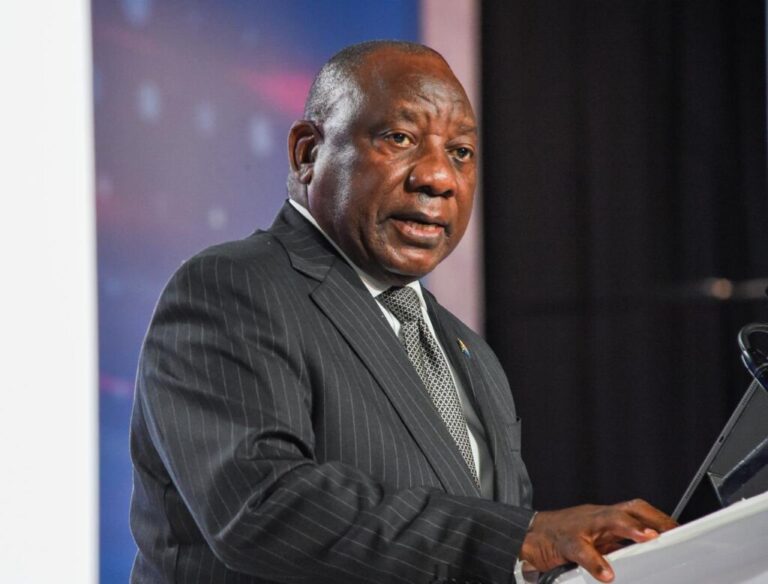
PRESIDENT Cyril Ramaphosa has expressed his deep sadness at the death of 19 learners and two adults in a collision between a bakkie and a truck near Pongola in northern KwaZulu-Natal on Friday.

The learners were allegedly transported on a bakkie when their vehicle collided with a truck.

“This is yet another sad moment for our country, following the substantial loss of young lives in an Eastern Cape tavern recently,” said Ramaphosa.

“We cannot afford to lose such precious lives under any conditions. I hope the investigation into the Pongola incident will shed light on the cause of this tragedy and help us take better care of our children into the future.”

KZN Premier Nomusa Dube-Ncube has meanwhile called on the courts to deliver justice to the victims of the horror crash.

Dube-Ncube described the incident as “painfully sad.”

“This is one of the most tragic accidents in our province in recent times. What is painfully sad is to learn that this accident has taken the lives of so many of our young people whose future and that of their families is now destroyed,” said Dube-Ncube.

“Sadly, it is becoming clearer by the day that increasingly, human factors are playing a major role in road fatalities in our province which is cause for major concern. We commend the SAPS and the community for working together to facilitate the arrest of the driver of the truck that was involved in this fatal accident who had also fled the scene. We therefore call on the Justice, Crime Prevention and Security Cluster to act swiftly and in concert to ensure that justice is delivered for the sake of the victims and
their families.”

Dube-Ncube said that the provincial government will provide all the necessary support to the surviving families to ensure that they are able to bear the impact of the tragedy.

“We also convey our sincere condolences to the families, relatives and friends who have lost their loved ones in this terrible accident. The provincial government will provide all the necessary support to the surviving families to ensure that they are able to bear the impact of this tragedy and when the time comes, to lay the souls of the departed to rest with the appropriate dignity. May their souls rest in peace,” said Dube-Ncube.

The Democratic Alliance (DA) said it was clear that the ANC-led government was failing KZN’s road users.

“The lawlessness and carnage that we are witnessing is proof of this. Yesterday also saw a separate incident involving learners. The only positive is that there were no deaths in this particular instance,” said Francois Rodgers, DA leader in the KZN Legislature.

“Given the growing crisis in our province, the DA expects National Transport Minister, Fikile Mbalula, to intervene and ensure that our roads are safe, properly maintained and that there is increased visible policing.”

Rodgers said the DA will be closely monitoring the outcome of the Pongola crash investigation.

“Both the Minister and his MEC and must be held accountable while the perpetrator must be behind bars sooner rather than later. Justice must be served on behalf of the families,” he said.

INSIDE EDUCATION