Home Blog Page 251

Government rolling out new subjects at schools in South Africa

THE Department of Basic Education is making significant changes to the school curriculum to boost mathematics, science and technology among learners in the country – and is rolling out equipment and software to support new subjects including robotics and coding.

Responding in a written parliamentary Q&A this week, basic education minister Angie Motshekga provided an update on how schools are being supported in this strategy.

One of the key strategies being used, Motshekga said, is leveraging existing STEM programmes at schools.

The department launched the Dinaledi Schools project in 2005, which was subsequently merged with the Mathematics, Science and Technology Conditional Grant following a review by the DBE in 2015.

The strategic goal of the MST Grant is to increase the number of learners taking mathematics, science and technology subjects, improve the success rates in the subjects, and improve teachers’ capabilities, the department said.

“The grant’s purpose is to provide support and resources to schools, teachers and learners in line with the Curriculum Assessment Policy Statements (CAPS) for the improvement of mathematics, science and technology teaching and learning at selected public schools,” Motshekga said.

Notably, the department’s recent push into new subjects like robotics and coding and vocational training has become a significant part of the project.

According to Motshekga, 485 schools have so far been supplied with subject-specific computer hardware and related software for CAPS tech subjects, including coding and robotics pilot schools.

There have also been 1,256 laboratories supplied with apparatus and consumables for mathematics, science and technology subjects, including coding and robotics kits, she said.

In terms of student support, the department noted that 50,000 learners in the country registered to participate in mathematics, science and technology olympiads/fairs/expos and other events, including support through learner camps and additional learning, teaching and support material such as study guides.

There have also been 1,500 teachers attending specific structured training and orientation in subject content and teaching methodologies on CAPS for electrical, civil and mechanical technology, technical mathematics, and technical sciences.

Over 1,000 teachers and subject advisors have attended targeted and structured training in teaching methodologies and subject content either for mathematics, physical, life, natural and agricultural sciences, technology, computer applications technology, information technology, agricultural management and technology subjects, it said.

The department plans to fully implement coding and robotics as new schools subject for Grade R-3 and 7 students in the 2023 academic year.

A pilot curriculum for these subjects was initially introduced at some schools in the third term of the 2021 academic year, it said. It plans to expand these tech-focused subjects to other grades in subsequent years.

The coding and robotics pilot for Grades 4-6 and for Grades 8 was planned for 2022 and will be followed by a Grade 9 pilot in 2023. The full-scale implementation for Grades 4-6 and Grade 8 is planned for 2024, and Grade 9 in 2025, the department said.

Skill shortage

While the department is boosting its support and training for these new technical subjects, experts in the education field have warned that the country is facing a shortage of skilled teachers, mainly because a large percentage of the current workforce is nearing retirement age.

The Department of Basic Education has previously responded to claims of a skills crisis in teaching, saying that the number of new teaching graduates is increasing every year.

“The number of initial teacher education graduates has grown over the last 10 years from an output of about 7,973 in 2010 to 31,799 in 2020,” it said.

The 25,000 graduates mark was reached in 2017, it said, adding that the current enrolment trends point to the upward trajectory in graduation numbers.

The output of graduates is favoured towards the Senior/Further Education and Training Phases (SP/FET) – partly because the two qualification pathways allow for SP/FET to qualify through both the Bachelor of Education (BEd) and Post Graduate Certificate in Education (PGCE) while Foundation Phase (FP) is largely limited to BEd pathway, the department said.

The average teacher attrition rate over is 15,200 a year – largely due to retirement but also because of resignations, ill health and death.

The teacher supply in terms of quantity is reasonably adequate, the department said, at least from the analysis of the situation in public education.

BUSINESS TECH
SIU investigates alleged honours degree fraud and tenders at the University of Fort Hare

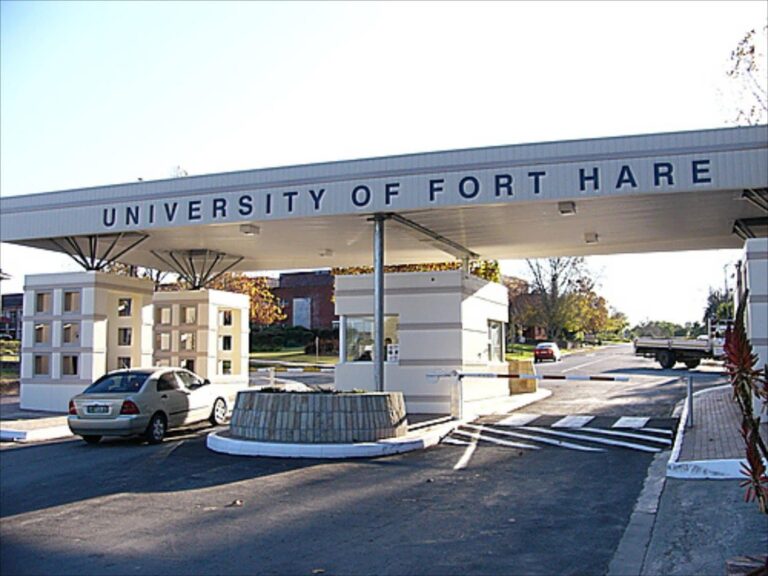
THE Special Investigating Unit (SIU) has launched investigation into awarding of honours degrees at the University of Fort Hare in Alice, Eastern Cape.

SIU spokesperson Kaizer Kganyago confirmed that the unit will probe allegations of maladministration in the awarding of honours degrees, mismanagement of funds and sourcing of public servants for study into various faculty programmes by ‘an individual’ for personal gain at the University of Fort Hare.

Kganyago said the SIU will also launch a probe into four irregular tenders at the University of Fort Hare.

“These include contacts for cleaning and gardening services, the leasing of student accommodation tender, the appointment of service provider for the maintenance and repair of air conditioning systems, and collusion between officials of the University and service providers, in which such officials held direct or indirect interests,” said Kganyago.

“Any unlawful or improper conduct by the officials, employees, service providers, suppliers to the university or any entity will be investigated by the SIU.”

The proclamation by President Cyril Ramaphosa covers allegations of unlawful and improper conduct that took place between 1 November 2012 and 5 August 2022.

Last year, UFH laid criminal charges against Nigerian fugitive Professor Edwin Ijeoma for the alleged irregular admission and registration of two students, including Eastern Cape Premier Oscar Mabuyane.

Mabuyane was excluded from UFH’s master’s programme and deregistered as a student for not meeting the basic requirements.

He threatened to appeal.

The Eastern Cape premier was supervised by Ijeoma, who resigned after he was suspended for allegedly defrauding the university.

The allegations against him included that he irregularly registered axed health MEC Sindiswa Gomba for an honours degree in public administration.

The university also opened cases of theft of money, theft of a university vehicle, and fraud of about R5 million for sketchy and unauthorised academic work and programmes for the Eastern Cape legislature and municipal authorities without the knowledge and consent of the institution.

INSIDE EDUCATION

Women have always trailed men in research output: how COVID made the situation worse

Cyrill Walters, Armand Bam and Patrizio Piraino

THE under-representation of women in research is well documented. Emerging evidence suggests that the COVID-19 pandemic has exacerbated this inequality and disrupted the research enterprise globally.

But none of these studies, mainly from the global north, provide detailed explanations for the scale of this decline.

Our research offers the first comprehensive study to shed light on the complex reasons for the decline in research during the pandemic-enforced lockdown.

We surveyed 2,029 women academics drawn from 26 public universities in South Africa. Other studies have shown that there are heightened expectations that women take on the role of primary care giver in families and sacrifice parts of their careers due to this role. Similarly, women in the academy are expected to fulfil this role in caring for students, taking on greater teaching and learning responsibilities compared to men.

Overall our findings showed that having younger or multiple dependants at various educational stages and the demands of home schooling had a negative impact on the outputs of women academics. Competing roles such as teaching online and caring for students, together with the sharp increase in teaching time, placed a massive burden on female academics. Their research outputs suffered.

Women also acknowledged the lack of emotional support they got as working academics.

What we found

The single most important factor affecting the academic work of female academics appears to be having younger or multiple dependants in the home. Overall, the pandemic has most affected academic work among women with children. Of the respondents in our study, 54% indicated they had children living at home with them.

From our study, it’s evident that the age and educational stage of the children was a significant contributor to the decline in productivity among female academics. The demands of caring for toddlers and the schools’ expectations of homeschooling took their toll. Academic mothers were caught up in the demands of competing roles. These included teaching online, nurturing vulnerable students, comforting anxious children, taking care of toddlers, and finding time to do research and writing.

A key finding in our survey was the sharp increase in the demands on teaching time during lockdown. This took up time that female academics would have spent on research. Academics perform many different roles, including teaching, research, grant-proposal writing, administrative duties, and other tasks depending on their rank and discipline. Our survey showed that the distribution of teaching and research was not at all even.

Our study suggested that the pandemic affected researchers differently according to their disciplines. Those in the “bench sciences”, such as chemistry, biological sciences and biochemistry, were explicit in stating that the closure of laboratories or facilities affected their research productivity. Disciplines that are less lab and equipment-intensive were also affected. But these cases were often related to individual circumstances such as the ability to do fieldwork in particular social science fields.

Most women (75.1%) indicated that doing their academic work (teaching and research) was “somewhat” to “extremely” difficult during the lockdown. About 16% reported that it was easier. In further analysis of participants who indicated that work was easier, it became evident that these perceptions were correlated to the following factors: having children, and their ages; career stages; commuting conditions; and work arrangements prior to lockdown.

Overall, a total of 40.5% of the participants indicated they needed much more – or significantly more – emotional support as working academics to cope with the demands of the job. Several respondents expressed feelings of unending exhaustion. This reduced their ability to focus and to be productive. The feeling of despair and a sense of the unfairness of workload distribution was a key theme that emerged from our data.

The lockdown has had a profound effect on women’s academic productivity – 31.6% reported having made “no progress”. Over a fifth indicated they’d made “some progress” towards completing a significant academic product. This will likely affect the prospects of academics for promotion and advancement.

Career prospects

A large number of women in our study (48.1%) indicated that the lockdown would negatively affect their academic career prospects. This points to the need for institutions to track the effects of the pandemic, and provide support.

Leaders in academic institutions need to be aware that female academic staff view the lockdown as yet another barrier to equity. They also need to consider the effects of the pandemic on career challenges in recruitment and promotion decisions.

A major theme that emerged was how women academics’ role as nurturers played a critical part in the intersecting functions of caring for their students and their families during the pandemic. Our study showed how the emotional, psychological and educational needs of students drew academic women into extensive nurturing roles, beyond caring for their families. This had a negative impact on academic work.

It also showed the workings of the symbiotic relationship of giving care (by women academics) and requiring care (by students) in a pandemic. Furthermore, the study highlighted the precarity of academic women’s work under pandemic conditions.

Going forward

Although the respondents in this study were based in South Africa, it’s evident from this – and prior research – that the pandemic has had an effect on the academic enterprise globally.

The pandemic poses a lasting threat to gender equality in academia. We call on institutional leaders, science councils, academic societies and funding bodies to implement policies to mitigate the career risks that female academics encountered during the enforced lockdown.

It’s not only the introduction of new policies but the attitudes towards those policies that needs attention. Achieving gender equality in the academic enterprise requires institutional commitment, as well as knowledge and competence to achieve organisational change.

THE CONVERSATION

Bilingual education can work in South African schools: here’s how

Robyn Tyler, Brian Ramadiro, Carolyn McKinney and Dr Xolisa Guzula

FROM the fourth year of schooling, the majority of South African schools teach all subjects in English only. The devastating learning consequences of this for children who speak African languages at home have been compellingly captured in the documentary film Sink or Swim. These consequences include lack of conceptual understanding and little identification with the content.

In South Africa there are 12 official languages, including South African sign language. The constitution allows that any of these languages may be used as a medium of instruction in schools. But only English, and in a minority of schools Afrikaans, is used and resourced beyond Grade 3.

Only 9% of the population speak English as a home language and the majority of these speakers are white. This means that the school children who were advantaged during apartheid are still advantaged today. Therefore the Bua-Lit language and literacy collective, of which we are members, has described the language policy in action in South African schools as racist.

Basic Education Minister Angie Motshekga’s announcement in parliament on 9 March 2022 that indigenous African languages will be used as languages of instruction beyond Grade 3 is therefore very heartening. No implementation details have been given yet.

The department’s decision is based on a pilot project in the Eastern Cape province using mother-tongue based bilingual education as a model. The pilot initiated the use of Sesotho and isiXhosa as languages of instruction in Grade 4 in 2012 and in 2020 the maths, physical science and history exam papers were available in Sesotho and isiXhosa as well as English. In 2019 Grade 6 learners involved in the bilingual pilot scored on average 28 percentage points higher in natural science and technology than their English-only counterparts.

The Department of Basic Education’s announcement has had a mixed reception, with commentators debating whether African language medium of instruction can work.

But the bilingual aspect of the Department of Basic Education’s project is getting lost in the debate. And the fact that the majority of South African teachers already teach bilingually is unacknowledged. They do so illicitly, in the form of oral “code-switching” between the African language(s) used by the children and English as the official language of learning and teaching. Decades-long research into code-switching has shown it can be effective in South African classrooms.

But code-switching is not supported by bilingual materials or assessments and is often frowned upon by department officials. This is because of fears that English will be compromised as well as colonial ideas about African languages being irrelevant for use in education.

The new move by the Department of Basic Education is an opportunity to acknowledge, strengthen, and importantly, resource these bilingual practices.

Bilingual education for who?

In South Africa, bilingual education is associated historically with the education of white children. During apartheid, Afrikaans and English were the two official languages, with the goal that all white South Africans would become bilingual in these languages.

Bilingual education was implemented in different ways. It was common to use one language as the medium of instruction and teach the second as a subject. There were also schools that used both Afrikaans and English as languages of instruction for different classes in the same grade.

In “dual medium” schools the teacher used both English and Afrikaans to teach, and learners could choose the language of assessment. Dual medium bilingual schools continue to be highly successful in producing bilingual speakers of English and Afrikaans.

Until now, bilingual education at scale using any of the nine official African languages and English as dual languages of instruction has not been available for children.

Language policy and multilingual teaching

Schools need assistance to develop language policies that support bilingual or multilingual education. One size will most definitely not fit all schools in a richly multilingual and diverse society.

For example, in many schools in the rural Eastern Cape where isiXhosa is dominant, it is feasible to implement a bilingual model using isiXhosa and English. Bilingual teachers can teach using both languages – as they currently do unofficially – and use textbooks written in both.

A school with learners from multiple language backgrounds in a more diverse urban setting like Soweto will need a different approach making use of translanguaging. Translanguaging involves the fluid use of more than one language to communicate. For example, children can be grouped according to their dominant languages when solving a maths problem or translating a poem. Or they can work in mixed language groups to produce multilingual science definitions. The goal is to support deep learning in content subjects as well as to increase competence in all the languages used in the classroom (including English).

Multilingual materials and assessments

A major challenge for learning in South Africa has been the lack of availability of materials in languages other than English and Afrikaans beyond Grade 3. As with classroom methodology, there is a wide range of approaches to learning materials that can support bilingual or multilingual education. For example, bilingual textbooks have been successfully developed in Rwanda.

The same textbook can be available in more than one language. The two languages can be in parallel (all the text is available in two languages) in one textbook. Or a more flexible approach can be used where different aspects of the text, such as glossaries, are available in different languages.

An example of this is iSayensi Yethu (Our Science), which has been developed in English and isiXhosa. Subject-specific dictionaries can also be excellent learning resources, for example one developed at the University of Cape Town and one developed by the Human Sciences Research Council of South Africa.

Final school-leaving exams have been available only in English and Afrikaans, with the exception of the isiXhosa exam pilot in the Eastern Cape in 2020. Bilingual assessments in English and an African language have been trialled and proven to be successful in the Western Cape province and in Zimbabwe. Again, a diversity of approaches is preferable.

Teacher training

Successful implementation depends on preparing teachers for bilingual education. The pioneering bilingual university teacher education programmes at South Africa’s University of Fort Hare and Nelson Mandela University have begun this work, which can be expanded to other universities. Practising teachers will need appropriate materials as well as in-service education that builds on their existing bilingual practices.

Bilingual education is possible for all South Africa’s children. With a multi-pronged approach to implementation as outlined here, bilingual models will contribute to the goal of decolonising the country’s schooling system.

THE CONVERSATION

UCT Online High School to launch matric programme for adults

THE University of Cape Town’s online high school says it will offer an additional curriculum in the form of the Cambridge Assessment International Education, priced at R3,300 per month.

The UCT Online High School ecosystem was designed to service South African learners from a broad range of socioeconomic means.

It offers a CAPS-aligned curriculum, which enables learners in grades 8-11 in any corner of the globe the opportunity to study at a monthly fee of R2,195 per month, making it one of the most affordable private schools in the country. Grade 12 will be offered from 2023.

“Cambridge International is one of the world’s most prestigious international curriculums, recognised by over 2,000 tertiary institutions worldwide, including all major local universities,” UCT said.

The qualification will find its roots in Africa through UCT, with plans to expand to the rest of the continent in time.

“With nearly a million learners in 10,000 schools in 160 countries, a Cambridge International qualification is a powerful global passport to the future. As the most affordable fully accredited Cambridge International school in Africa, UCT Online High School is proud to be able to offer this qualification to learners in South Africa and beyond.

“Starting with South Africa’s closest neighbours, they aim to expand their reach to the rest of the African continent in the near future.”

In addition to the Cambridge International qualification, the UCT Online High School is to launch an adult matric programme, offered fully online, and part-time.

“At any given time, there are about 250,000 people working towards a matric certificate outside the full-time, in-school system. Since an average of 800,000 candidates write matric examinations each year, this means that about a third of the total matric cohort are ‘on the fringe’ or ‘non-traditional’ learners,” UCT said.

“A matric certificate can transform young and old people’s futures alike, by signalling their knowledge and skills to employers, creating pathways to further education, and ultimately improving their chances of finding work, keeping a job, and earning a higher salary.”

UCT launched its Online High School in 2022, becoming the first university in the country and on the continent to extend its services to the secondary schooling market online.

The school is purpose-built to allow South African learners to work towards their National Senior Certificate from anywhere in the
country.

As part of its initial offering, it also launched UCT Online High School’s Free Curriculum, which is a free
online school platform that allows any guardian, learner or educator to access their full CAPS (National
Senior Certificate) curriculum.

The school says it has processed 5,000 CAPS learners do date.

BUSINESS TECH

Western Cape launches new Solar Photovoltaic qualification at TVET Colleges to deal with SA’s energy crisis

WENDY MOTHATA|

THE Western Cape premier Alan Winde and Finance and Economic Opportunities Minister Mireille Wenger have launched a brand new Solar Photovoltaic (SPV) qualification through the premier’s council on skills.

The qualification is aimed, among others, to decisively tackle the country’s energy crisis.

The qualification is being rolled out at several Technical Vocational Education and Training (TVET) colleges, including West Coast College and False Bay College, in the Western Cape.

These institutions – with the help of the Manufacturing, Engineering and Related Services SETA (merSETA) and the South African Renewable Energy Technology Centre (SARETEC) – have developed the training infrastructure needed to teach and equip learners with the necessary SPV skills so they can contribute to push for a green economy and ultimately end mass power cuts.

“It is an appropriate time too for the Premier’s Council on Skills (PCS) to forge ahead with its mandate of promoting skills development, generally and specifically in the field of renewable energy,” said the premier’s spokesperson, Regan Thaw.

Premier Wide was thrilled to have the PCS help launch the innovative and unique Solar Photovoltaic Technician-ICT4APP qualification pilot project.

“The skills we grow today, must make an impact tomorrow. It’s critical to get the province’s skills mix right so as to get the investment mix right, and to get the entrepreneurial skills right,” said Winde.

Among the aims of the project is to help employers make informed decisions regarding hosting a learner and supporting the supply of technical skills in the sector.

“This is the first digital learning experience designed to incorporate the latest online technologies, while also guiding learners through practical training and eventually into the workplace,” said Thaw.

The programme is unique:
• It is based on a repackaged digital teaching and learning pathway;
• Knowledge components are completed online;
• When assessments show a sufficient theoretical grasp, learners are then invited to practical
workshop training;
• Practical skills training takes place at an approved TVET institution equipped with technical
mentorship expertise;
• Once these skills are mastered, learners are then invited to approved workplaces to complete
their training.

There are numerous benefits to taking part in this pilot:

• Learners are “work-ready” before the first workplace assignment; and able to contribute to the
business;
• Learners benefit from high-quality teaching in the latest PV technology infrastructure;
• Learners are paid the same daily stipend through the merSETA-ICT4APP on a weekly basis while
in the workplace. This is not the responsibility of the employer and so reduces administrative overheads
for the employer;
• Employers receive a “hosting stipend”.

The project’s environmentally friendly focus is the fact that it is paperless and entirely digital-based.

Wenger said that solar PV forms part of the Western Cape Government’s drive toward a green economy.

“We have a strong green economy ecosystem; we are working hard to cultivate this. Building energy resilience is a key priority, not only because we need to mitigate the effects of load shedding and the resulting economic damage, but because of the immense potential this sector has to attract investment, grow our regional economy and create jobs,” said Wenger.

“SPV has become a cost-effective, carbon-free, and sustainable form of electricity generation for businesses and households; and so we must ensure that we have in place the right skills pipelines so that the renewable energy sector can thrive in the Western Cape.”

Winde further urged employers to consider joining this pilot project to enhance their businesses and help in overcoming the power crisis, while at the same time offering learners employment and a brighter future.

INSIDE EDUCATION

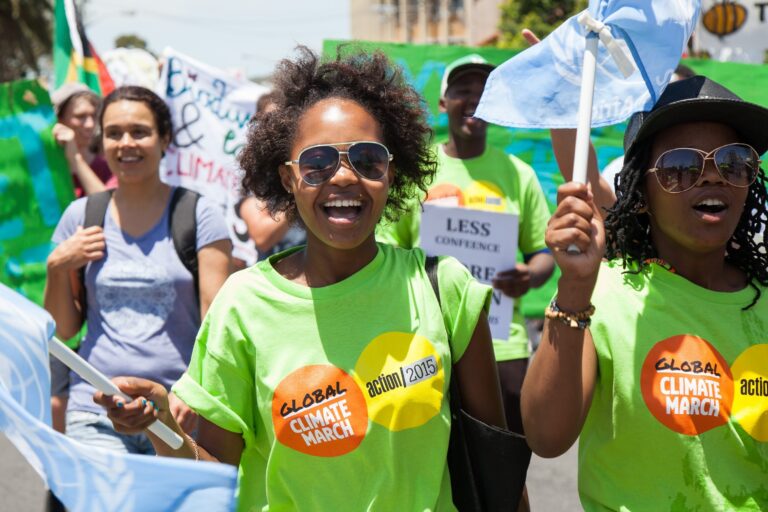
South Africa: Women Challenged to Find Solutions to Climate Change

0

SOUTH African women have been challenged to take part in conversations aimed at finding solutions to mitigate the impact of climate change.

Member of the Presidential Climate Change Commission, Princess Tsakani Nkambule, said women must be at the centre of decision making because they endure the most of the adverse effects of climate change.

“As women, we need to prepare [ourselves] on how we will be impacted by this climate change conditions, [and] how do we adjust our businesses in our environment to respond to the impact of climate change.

“Women in South Africa, especially women in rural areas are vulnerable and at the worst conditions. Women, children and the unemployed form part of society that need to ensure that during transition they are not left behind,” Nkambule said on Friday.

Nkambule was speaking at a webinar on the impact of climate change on women.

The webinar, hosted by the Government Communication and Information System (GCIS) as part of Women’s Month celebrations, provided a conversational space for women to reflect on the unique ways in which they are impacted by climate change, including ways in which different industries can adapt their operations to respond to the effect of climate change.

Nkambule noted that the country is pursuing an energy mix that includes renewables.

“As women where are we? How do we participate in this environment, how do we transform our businesses as we are operating today and move towards the green economy? How do we ensure that in our environment there’s upskilling to allow us to participate in this economy?”

Farmer Thandiwe Mchunu, from Amahlongwa near Umkomaas, on the KwaZulu-Natal south coast, insisted that there is no need to take organic waste to landfills.

Instead, she said, households can use their vegetable peels.

“What we need to do, even at household level, whenever you are in the kitchen peeling that onion, or just eating your banana or orange, do not take the peels to the bin. We are turning food waste into fresh food, we have the skills and strength [and] even support from our communities and families. Ours is to access the market to grow from small scale to big scale farmers,” Mchunu said.

She also admits that while there is plenty of land in rural areas to be used for farming, it is not easy for women to access it.

“Everyone needs to come into [the] economic war and fight to enter the space, whether you are in rural areas or in the township, you need to be able to ask yourself what are you contributing to mitigate climate change,” Mchunu said.

Mchunu, who is currently studying towards a Master’s Degree in Chemical Engineering, also noted that South Africa has many women graduating in engineering, even in the Science, Technology, Engineering, and Mathematics (STEM) areas. She said these are change maker careers that can come up with solutions to address climate change.

Just Energy Transition Framework

Last month, the Presidential Climate Committee (PCC) presented the Just Energy Transition (JET) Framework to President Cyril Ramaphosa, which will serve as a key evidence-based guide for policy making for South Africa’s transition from a carbon intensive economy towards a greener and cleaner economy.

President Ramaphosa said as the framework underscores, combating climate change is not only an environmental imperative, but an economic one as well.

“This framework is an evidence-based document and a victory for evidence-based policymaking. The publication of this framework must now serve as a call to action to each of us to embrace the opportunities presented by a low-carbon, inclusive, climate resilient economy and society,” the President said at the time.

The PCC has held stakeholder engagements, community dialogues and colloquiums in a bid to conduct robust research and analysis and hear views on South Africa’s transition in a bid to leave no one behind.

SA NEWS

DPWI allows high school use of the Sandrift Sport Field

THE Department of Public Works and Infrastructure (DPWI) has concluded an agreement with Noorder Paarl High School for the use of the Sandrift Sports Facility property adjacent to the school.

The school principal and community members had approached the department earlier this year, asking about the use of the property as the school was in need of sporting facilities and the property was not being used.

De Lille noted that, as the custodian of state-owned properties, the department has a mandate to provide land or buildings for use by government departments and through sale, donation or letting out, the department may also enter into agreements with community-based organisations to use properties not being utilised by government for community purposes.

“The Noorder Paarl High School, which is a no fee school with more than 1 000 pupils, has been in dire need of proper sporting facilities for many years. The school contacted the department to enquire about the use of the field and following the finalisation of various due processes within the department, we are delighted that we were able to sign a User Agreement with the school on Friday, 5 August 2022.

“This agreement with the Noorder Paarl High School is in line with my commitment that we must use public land for public good and I am pleased that we were able to conclude this agreement with the school to enable them to have a space for sporting activities,” de Lille said.

She said the school principal and the governing body welcomed this agreement, saying it would greatly assist their work of conducting sports activities with decent facilities.

The Minister said many schools and community organisations do good work in communities and “access to sporting facilities is an important part in the development of young people and the community at large”.

She emphasised that access to facilities and land is one of the key forms of assistance government can give to enable communities to have a sense of belonging and see communities reach their full potential.

“Very often under-resourced communities struggle to hone and develop young sporting talent due to lack of facilities and it is incumbent on us to work with communities to provide available spaces so that communities can efficiently carry out community upliftment and development work.

“Many of our country’s great sporting talents hail from Paarl, like the late Chester Williams had to travel outside Paarl to practice sports, and we must do a lot more to help communities such as providing access to land and services so that they can fulfil their aspirations without any hindrances,” the Minister said.

She said the department’s responsibilities include monitoring the agreement to ensure that operational efficiency of the building is maintained and user complies with terms and conditions of the agreement.

The department has also committed to do renovations to bring the facilities up to standard.

The sporting field has been made available to the Noorder Paarl High School to be used for activities associated with various sporting codes, in compliance with the relevant legislation and the agreement.

“It is my hope that this agreement will allow the school to enhance development of sporting talents and give young people a safe space to participate in sport. Sport is an important part of social development and sport fields often provide children with a safe haven where they can escape the ills in our communities by having a space where they can develop their talents,” de Lille said.

SA NEWS

R140m school for Rustenburg mining community

THE Ministers of Basic Education and Minerals and Energy have officially unveiled a newly built world-class Waterkloof Hills Combined School in the mining community of Rustenburg, North West.

This comes after Royal Bafokeng Platinum (RBPlat) and the North West Department of Education (NWDoE) entered into an agreement in 2019, on an equal financial contribution basis, to construct a much-needed primary and secondary school to the tune of R140 million.

According to the departments, R58 million went to local sub-contractors, while R7.3 million was spent on local suppliers.

The two schools are located within the Waterkloof Hills Estate, RBPlat’s flagship employee housing development that offers employees family housing in a secure lifestyle estate.

Minerals and Energy Minister, Gwede Mantashe, has described the school that prides itself on 32 smart classrooms, a multi-function room and science laboratories, as a state-of-the-art project.

“The infrastructure helps develop children and transform the future of our country,” he said on Friday.

The school will be a new home to 2 155 learners, 1 280 in primary and 875 in secondary school.

Additional school facilities include a 1 100 capacity school hall, 256 parking bays, a security gate, sports fields, libraries, sickrooms and dining halls.

“In the mining industry, we have something called a Social and Labour Plan, a concept of mining companies investing where mining companies operate. It’s a fee they pay for their survival and protection, and not a favour,” he explained.

Mantashe encouraged other mining companies to follow RBPlat’s example, invest in meaningful projects and pay for their “social licence” to communities where they extract minerals.

“We must change the view that all mining companies do is leave big holes in the ground and disappear. What we are dealing with in Krugersdorp is the legacy of mining, where mines leave holes and now have no owners, and we as the department, must seal those holes.”

However, according to Mantashe, it is high time mines do better.

“A project must have an impact on a community. We make that point because we saw a trend where companies were building small community halls and disappear. It doesn’t make an impact,” he stressed.

Meanwhile, the Department of Basic Education said it welcomes the construction of Waterkloof Hills Combined School, as it ensures that the infrastructural improvements are in line with norms and standards.

RBPlat CEO, Steve Phiri, said the schools will not only serve their employees’ children but also those who live in the surrounding communities.

“Our purpose has always been to create economic value that can be shared with all our stakeholders and this project offers a legacy of sustainable benefits, through quality education, for the next generation of leaders in our communities,” said Phiri.

Meanwhile, North West Department of Education MEC, Mmaphefo Matsemela, said she believes that it takes a village to raise a child.

“It means that we cannot succeed alone and without the involvement of all other stakeholders. We are extremely grateful for the RBPlat partnership, which reflects a good example of a successful public-private partnership, which is always encouraged by government,” she said.

SA NEWS

UK work visa for elite graduates is exclusive and based on flawed assumptions

0

ORLA QUINTAN

The UK government’s announcement of a new work visa option aimed at attracting top graduates has elicited some backlash because the list of eligible institutions features no universities from Africa, Latin America or South Asia. The Conversation Africa’s Nontobeko Mtshali asked Orla Quinlan, Director of Internationalisation at Rhodes University in South Africa, to share her thoughts on the implications such visa programmes have for international integration and intercultural efforts in higher education.

What has the UK government announced?

The UK government recently introduced a new “High Potential Individual” short-term work visa. Home Secretary Priti Patel said the intention was put “ability and talent first” – not where people come from.

The conditions of the high potential individual visa allow a stay of two or three years in the UK for graduates holding a master’s degree or a PhD, respectively. This visa can’t be extended, but holders may apply for longer-term visas.

Applicants need to have financial resources to acquire the visa and to sustain themselves while searching for employment. The high potential individual visa doesn’t pertain to international students who are already registered at universities in the UK.

But the visa is restricted to graduates from specific universities featuring in the top 50 places of two international university rankings.

Who is eligible?

The most recent list of eligible universities comprised more than two dozen US universities. Other institutions are in Canada, China, France, Germany, Japan, Singapore and Sweden.

Each of these universities appeared in at least two of the following ranking systems: the Times Higher Education world university rankings, the Academic Ranking of World Universities and the Quacquarelli Symonds world university rankings.

African universities don’t appear in the top 50 of any of these ranking systems. The criteria they use consider aspects like the university’s research output, high achieving academics and alumni, reputation among employers, and international student ratio.

The performance of individual students isn’t a criterion in any of these rankings.

Ranking systems are commercial entities. While deeply flawed, they play an increasing role in shaping opinions about the quality of tertiary education institutions. But many universities that don’t feature in rankings graduate students who excel in their individual performances. The ranking systems are already heavily contested. To only correlate high performing individuals with specific universities is unscientific. Rankings have little to do with individual performance.

If any ranking system has to be used, it’s been suggested that the Impact Rankings produced by Times Higher Education might be more appropriate. This measures universities’ impacts on the 17 UN Sustainable Development Goals. At least, this ranking is more inclusive of global South universities.

What does this tell us about inequality in higher education?

Attending the highly ranked eligible institutions requires the means to pay for fees, accommodation and living costs. For example, almost all the US institutions on the list are private colleges that charge high fees. Many high-performing students from the global South can’t afford to attend. Many brilliant students will, therefore, never be eligible to access the high potential individual visa.

Universities from Latin America, Africa and most of Asia aren’t on the list of eligible universities. It’s not even possible for many universities to meet the specific criteria chosen. This exclusion sends a negative message.

The high potential individual visa shows short-sightedness about the experience, insights and skills that graduates from the global South could bring to the UK. Many individuals demonstrate high achievement outcomes, in spite of operating in under-resourced universities. This is due to their resilience and grit – the strongest predictor of success, according to the studies of American scholar Angel Lee Duckworth.

Should something change?

Countries are entitled to make their own decisions. But some countries are making short-term populist decisions, rather than longer term strategic decisions for the benefit of their own citizens and the world.

The world needs to build relationships for future global collaboration. We need to create, share and disseminate knowledge – a key lesson of the COVID pandemic. Mobility of higher education students needs to continue. These mobile students need prospects in the countries where they study, as one option, to circulate the global pool of talent.

The claim from Priti Patel that this visa “puts ability and talent first – not where someone comes from” doesn’t stand up to scrutiny. The UK is offering an elite visa for well-off graduates from elite institutions to come and stay temporarily in the UK for two to three years.

The call from Rishi Sunak, the UK’s Chancellor of the Exchequer, for students to “take advantage of this incredible opportunity to forge their careers here” is hardly realistic. A visa of this duration is simply not long enough to genuinely forge a career beyond an initial experience.

Any person who has just arrived in a new country still has to acclimatise to the culture, find a job and develop relationships before they can start to contribute.

What are the implications for higher education?

The high potential individual visa isn’t particularly going to affect the mobility of students to, and from Africa’s higher education sectors because it’s a work – not a study – visa. But it’s a troubling manifestation of a changing value system which is increasingly exclusionary, elitist and undermining of diversity.

Higher education in Africa is acutely aware of its local challenges. These include the impact of structural social and economic inequality, environmental degradation and climate change in African countries. We know that we cannot have global peace and security if we don’t improve education and job opportunities for all. That is why African universities are concerned with higher education being relevant and solving real problems by connecting our research, teaching and learning and community engagement and sharing our knowledge with the world.

(Orla Quinlan, Director Internationalisation., Rhodes University)

THE CONVERSATION