Home Blog Page 255

Reading, math scores fell sharply during pandemic, data show

MATH and reading scores for America’s 9-year-olds fell dramatically during the first two years of the pandemic, according to a new federal study — offering an early glimpse of the sheer magnitude of the learning setbacks dealt to the nation’s children.

Reading scores saw their largest decrease in 30 years, while math scores had their first decrease in the history of the testing regimen behind the study, according to the National Center for Education Statistics, a branch of the U.S. Education Department.

The dramatic setbacks, which erased two decades of progress in American test scores, reflect years of upheaval for the country’s education system. Schools shut down for months at a time amid COVID-19 outbreaks. Many children spent a year or more learning from home. Virus outbreaks among staff and students continued the disruption even after kids returned to the classroom.

The declines hit all regions of the country and affected students of most races. But they were most dramatic for the country’s most vulnerable kids. Students of color saw some of the steepest decreases, widening the racial achievement gap.

Much of the nation’s standardized testing didn’t happen during the early days of the pandemic, so the findings released Thursday gave an early look at the impact of pandemic learning disruptions. Broader data is expected to be released later this year as part of the National Assessment of Educational Progress, also known as the Nation’s Report Card.

“These are some of the largest declines we have observed in a single assessment cycle in 50 years of the NAEP program,” said Daniel McGrath, the acting associate commissioner of NCES. “Students in 2022 are performing at a level last seen two decades ago.”

In math, the average score for 9-year-old students fell 7 percentage points between 2020 and 2022, according to the study. The average reading score fell 5 points.

The pandemic’s upheaval especially hurt students of color. Math scores dropped by 5 percentage points for white students, compared with 13 points for Black students and 8 points for Hispanic students. The divide between Black and white students widened by 8 percentage points during the pandemic.

Decreases were more uniform in reading: Scores dropped 6 points for white, Black and Hispanic students.

For Asian American students, Native American students and students of two or more races, there was little change in reading or math between 2020 and 2022, the study found.

The setbacks, especially among underprivileged kids, raised alarms in the education world. Denise Forte, interim CEO of the Education Trust think tank, called it “deeply disturbing.”

“Due to inequitable and unjust school systems, students who are the most underserved continue to struggle academically both before and during the pandemic,” Forte said. “Decision-makers at all levels have not done nearly enough to address the long-standing resource inequities that prohibit Black, Latino and students from low-income backgrounds from reaching their full academic potential.”

A national association of superintendents said the findings are disappointing but not surprising.

Dan Domenech, executive director of AASA, said there’s encouraging evidence that schools are now investing in summer learning, mental health counselors and reading specialist. But experts have questioned whether schools are taking actions that are sweeping enough to address the magnitude of academic losses.

Geographically, all regions saw decreases in math, but declines were slightly worse in the Northeast and Midwest compared with the West and South. Outcomes were similar for reading, except that the West had no measurable difference compared with 2020.

Although it marks a sharp drop since 2020, the average reading score was 7 points higher than it was in 1971, and the average math score was 15 points higher than in 1978, the study found.

Overall, the results paint a “sobering picture” of schooling during the pandemic, said Peggy Carr, commissioner of the NCES.

Federal officials say this is the first nationally representative study to compare student achievement before the pandemic and in 2022, when most students had returned to in-person learning. Testing was completed in early 2020, soon before the World Health Organization declared COVID-19 a pandemic, and in early 2022.

AP

Youth mental health is in crisis. Are schools doing enough?

0

For fourth-grader Leah Rainey, the school day now begins with what her teacher calls an “emotional check-in.”

“It’s great to see you. How are you feeling?” chirps a cheery voice on her laptop screen. It asks her to click an emoji matching her state of mind: Happy. Sad. Worried. Angry. Frustrated. Calm. Silly. Tired.

Depending on the answer, Leah, 9, gets advice from a cartoon avatar on managing her mood and a few more questions: Have you eaten breakfast? Are you hurt or sick? Is everything OK at home? Is someone at school being unkind? Today, Leah chooses “silly,” but says she struggled with sadness during online learning.

At Lakewood Elementary School, all 420 students will start their days the same way this year. The rural Kentucky school is one of thousands across the country using the technology to screen students’ state of mind and alert teachers to anyone struggling.

In some ways, this year’s back-to-school season will restore a degree of pre-pandemic normalcy: Most districts have lifted mask mandates, dropped COVID vaccine requirements and ended rules on social distancing and quarantines.

But many of the pandemic’s longer-lasting impacts remain a troubling reality for schools. Among them: the harmful effects of isolation and remote learning on children’s emotional well-being.

Student mental health reached crisis levels last year, and the pressure on schools to figure out solutions has never been greater. Districts across the country are using federal pandemic money to hire more mental health specialists, rolling out new coping tools and expanding curriculum that prioritizes emotional health.

Still, some parents don’t believe schools should be involved in mental health at all. So-called social-emotional learning, or SEL, has become the latest political flashpoint, with conservatives saying schools use it to promote progressive ideas about race, gender and sexuality, or that a focus on well-being takes attention from academics.

But at schools like Lakewood, educators say helping students manage emotions and stress will benefit them in the classroom and throughout life.

The school, in a farming community an hour’s drive south of Louisville, has used federal money to create “take-a-break” corners in each classroom. Students can rifle through a “self-regulation kit” with tips on deep breathing, squishy stress balls and acupuncture rings, said school counselor Shelly Kerr. The school plans to build a “Reset Room” this fall, part of an emerging national trend to create campus sanctuaries where students can go to decompress and speak with a counselor.

The online student screener Lakewood uses, called Closegap, helps teachers identify shy, quiet kids who might need to talk and would have otherwise gone unnoticed.

Closegap founder Rachel Miller launched the online platform in 2019 with a few schools and saw interest explode after the pandemic hit. This year, she said, more than 3,600 U.S schools will be using the technology, which has free and premium versions.

“We are finally beginning to recognize that school is more than just teaching the kids reading, writing and arithmetic,” said Dan Domenech, executive director of the national School Superintendents Association. Just as free lunch programs are based on the idea that a hungry child can’t learn, more and more schools are embracing the idea that a cluttered or troubled mind cannot focus on schoolwork, he said.

The pandemic magnified the fragility of mental health among American youth, who had been experiencing a rise in depression, anxiety and suicidal thoughts for years, experts say. A recent report issued by the Centers for Disease Control and Prevention found 44% of high school students said they experienced “ persistent feelings of sadness or hopelessness ” during the pandemic, with girls and LGBTQ youth reporting the highest levels of poor mental health and suicide attempts.

If a silver lining exists, the pandemic raised awareness of the crisis and helped de-stigmatize talking about mental health, while also bringing attention to schools’ shortcomings in handling it. President Joe Biden’s administration recently announced over $500 million to expand mental health services in the country’s schools, adding to federal and state money that has poured into schools to cope with pandemic-era needs.

Still, many are skeptical schools’ responses are enough.

“All of these opportunities and resources are temporary,” said junior Claire Chi, who attends State College Area High School in central Pennsylvania. Last year, her school added emergency counseling and therapy dogs, among other supports, but most of that help lasted a day or two, Chi said. And that’s “not really a mental health investment for students.” This year, the school says it has added more counselors and plans mental health training for all 10th graders.

Some critics, including many conservative parents, don’t want to see mental health support in schools in the first place. Asra Nomani, a mom from Fairfax County, Virginia, says schools are using the mental health crisis as a “Trojan horse” to introduce liberal ideas about sexual and racial identity. She also worries schools lack the expertise to deal with student mental illness.

“Social-emotional well-being has become an excuse to intervene in the lives of children in the most intimate of ways that are both dangerous and irresponsible,” Nomani said, “because they’re in the hands of people who are not trained professionals.”

Despite the unprecedented funding, schools are having trouble hiring counselors, mirroring the shortages in other American industries.

Goshen Junior High School in northwest Indiana has been struggling to fill a vacancy of a counselor who left last year, when student anxiety and other behavioral problems were “off the charts,” said Jan Desmarais-Morse, one of two counselors left at the school, with caseloads of 500 students each.

“One person trying to meet the needs of 500 students?” said Desmarais-Morse said. “It’s impossible.”

The American School Counselor Association recommends a ratio of 250 students per school counselor, which few states come close to meeting.

For the 2020-21 school year only two states — New Hampshire and Vermont — achieved that goal, according to an Associated Press analysis of data from the National Center for Education Statistics. Some states face staggeringly high ratios: Arizona averages one counselor to 716 students; in Michigan, 1 to 638; and in Minnesota, 1 to 592.

Also in Indiana, the School City of Hammond won a grant to hire clinical therapists at all 17 of its schools but has not been able to fill most of the new jobs, said Superintendent Scott Miller. “Schools are stealing from other schools. There just aren’t enough workers to go around.” And despite more funding, school salaries can’t compete with private counseling practices, which are also overwhelmed and trying to hire more staff.

Another challenge for schools: identifying struggling children before they’re in emotional crisis. At the Houston Independent School District, one of the largest in the country with 277 schools and nearly 200,000 students, students are asked each morning to hold up fingers showing how they feel. One finger means a child is hurting deeply; five means she or he feels great.

“It’s identifying your brush fires early in the day,” said Sean Ricks, the district’s senior manager of crisis intervention.

Houston teachers now give mindfulness lessons, with ocean sounds played via YouTube, and a Chihuahua named Luci and a cockapoo named Omi have joined the district’s crisis team.

Grant-funding helped Houston build relaxation rooms, known as Thinkeries, at 10 schools last year, costing about $5,000 each. District data show campuses with Thinkeries, which sport bean bag chairs and warmly colored walls, saw a 62% decrease in calls to a crisis line last year, Ricks said. The district is building more this year.

But the rooms themselves are not a panacea. For the calming rooms to work, schools must teach students to recognize they feel angry or frustrated. Then they can use the space to decompress before their emotions erupt, said Kevin Dahill-Fuchel, executive director of Counseling in Schools, a nonprofit that helps schools bolster mental health services.

In the last days of summer vacation, a “Well Space” at University High School in Irvine, California, was getting finishing touches from an artist who painted a mural of a giant moon over mountains. Potted succulents, jute rugs, Buddha-like statuettes and a hanging egg chair brought an un-school-like feel. When school starts this week, the room is to be staffed full-time with a counselor or mental health specialist.

The goal is to normalize the idea of asking for help and give students a place to reset. “If they can re-center and refocus,” said Tammy Blakely, the district’s director of student support services, “they can then, after a short break, go back into their classrooms and be prepared for deeper learning.”

AP

Grade 12 preparatory exams going well in the North West – Matsemela

0

THE North West Department of Education has confirmed that preparatory examinations which started on Monday August 29 2022 are going well, with no incidents reported.

The province has registered 43 485 candidates to sit for preliminaries, including part-time candidates.

So far, seven papers have been written, with the eighth paper being Computer Applications Technology written on Friday afternoon.

The department Spokesperson Elias Malindi said that the department has since prepared learners throughout the year with some subjects complete and others are already on revision program.

“Since the beginning of the academic year, we have assisted our learners with additional supplementary Saturday tutoring for Maths, Physical Science, Life Science, Geography, and Accounting lessons were given to enhance question answering skills,” Malindi said.

Another measure will be holding of spring camps, which is customary to the North West Department of Education to assist learners bridge the content gap in all subjects.

“Our telecommunications forum, Dial-a-tutor, is also available where learners engage with subject advisors on their problematic areas of learning,” said Malindi.

MEC for education in the North West province Mmaphefo Matsemela is pleased with the progress so far.

“I am pleased that despite a hectic start to our academic year in the province where some schools were burnt, we rose above the challenge and continued with our mandate of teaching and learning,” she said.

“Our candidates have been doing well with the papers so far with no incidents reported and we take this time to also thank the community for allowing learners to write while pleading with our community to continue assist us to hold incident free examinations,” Matsemela said.

Matsemela said that most of the schools are done with the syllabus and are administering revision classes.
“We will also run our spring camps to bridge the content gap and apply all other mechanisms to ensure our learners are better prepared,” added Matsemela.

Preparatory examinations will run for a month and conclude on Friday, September 23, 2022.

INSIDE EDUCATION

SA Reserve Bank, Department of Basic Education announce winners of 2022 MPC Schools Challenge

0

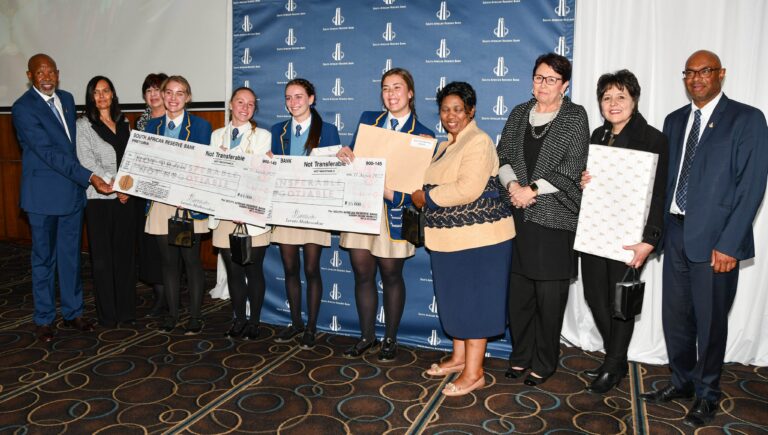
THE South African Reserve Bank, in partnership with the Department of Basic Education, has announced the finalists and winners of the 2022 Monetary Policy Committee (MPC) Schools Challenge.

Marais Viljoen High School in Alberton, Gauteng, was announced as the overall winner.

Each participating learner from the school walked away with R16,000 as well as an iPad for each learner and the educator.

The Horizon High School from Turffontein, Gauteng, took the second spot.

They were followed by Paarl Girls’ High School from the Western Cape.

The SA Reserve Bank and the DBE introduced the MPC Schools Challenge to expose learners to the processes of the MPC in determining the repo rate.

The project offers an exciting opportunity for Grade 12 Economics learners and their teachers to become “members” of the monetary policy Committee for a few weeks.

“We are pleased that 225 schools attended the briefing sessions for learners and teachers, and 102 schools submitted essays that are required to proceed to the next level of the competition. These essays are prepared in the same format as the SARB MPC statement. The statement must reflect global and domestic economic conditions and factors, and reflect the decision of the learners on its Monetary Policy stance,” said SARB Governor Lesetja Kganyago.

He said the quality of their essays and presentations were evidence that the objective of expanding the understanding of monetary policy is being achieved.

“To our learners, remember that nothing of value comes without an effort. Your presence here as finalists bears testimony to your commitment, hard work and dedication. We encourage you to pursue careers in the field of economics and central banking,” he said.

Basic Education Minister Angie Motshekga said the Monetary Policy Committee Schools Challenge demystified the role and functions of the Reserve Bank.

“In other words, the winning team inadvertently become the bank’s ambassadors, explaining the role of the bank and monetary policy to their communities,” she said.

“Thus (they are) assisting in public education about inflation, financial markets and banking, among others. It is also good for our learners as it broadens their career options while planting a seed of the importance of economics and mathematics in everyday life of our country.”

The competition was initially piloted with 70 Gauteng schools in 2012 and has grown to a national competition which includes well over 400 schools and has impacted more than 1,800 students across all nine provinces.

The MPC Schools Challenge was launched in 2012 with 70 schools in Gauteng participating.

To date, it has reached over 3, 200 learners in over 400 schools.

INSIDE EDUCATION

South Africa to set up Artificial Intelligence Institute

0

WENDY MOTHATA|

SOUTH AFRICA (SA) intends to enhance the teaching of robotics and coding in public schools through the establishment of an Artificial Intelligence (AI) Institute.

Minister of Communications and Digital Technologies, Khumbudzo Ntshavheni, said the AI Institute is being established in partnership with institutions of higher learning, in particular the Johannesburg Business School of the University of Johannesburg and the Tshwane University of Technology, which are co-founder institutions together with the Department of Communications and Digital Technologies.

“It is essential that we invest significantly to provide our youth with access to modern training, skill sets and formal education. To achieve this, our Department of Basic Education has introduced robotics and coding as school subjects in primary and high schools,” said Ntshavheni.

“At present, learners in over 1 000 schools are designing and producing robots both for gaming and to complete tasks the learners find tedious for human completion.”

“Next year, learners in these and additional schools that will join this category will compete in a National Robotics Development Challenge,” the Minister said on Thursday during the G20 Digital Economy Ministers Meeting in Bali, Indonesia.

Government’s focus on digital skills includes creating platforms to support and promote the ability of the youth, and small and medium enterprises, in particular start-ups to develop digital content.

“In this regard, South Africa will launch an App Store to be known as DigiTech on the 13 September 2022. We have undertaken to our sister countries within Africa to ensure that content producers from the rest of the Africa can have their Apps enrolled on the DigiTech App Store,” Ntshavheni said.

Bridging the digital divide

With technology changing how people work and live, Ntshavheni said governments have the responsibility to continue to use technology as a primary catalyst for change in the world that should advance accessible public services, inclusive growth, and sustainable development.

She noted that the COVID-19 pandemic exposed the negative impact of the digital divide in human development in particular the poor.

“In South Africa and the majority of the developing world, in particular in Africa, where the poor remained unconnected, the poor were severely marginalised during the COVID-19 pandemic because they were excluded from accessing basic services such as education, health and ability to work,” she said.

“It is for this reason that we prioritised and concluded the licensing of the high demand spectrum and also secured the commitment of our telecommunications regulator to ensure that the Frequency Spectrum licence holders contribute towards the national broadband penetration objectives by connecting key public institutions such as schools, health facilities, and traditional authorities.”

“In addition, this year we will finalise the roadmap towards the deployment of 4G and 5G networks including to rural towns. We continue to work to attain the objectives of our South Africa Connect programme to ensure that we attain universal access to the internet by 2024,” the Minister said.

Government is also extending email addresses to all learners/students in public schools and their parents as part of requirements of basic e-learning.

INSIDE EDUCATION

Cisco’s Women’s Tech Connection expands to Nigeria

0

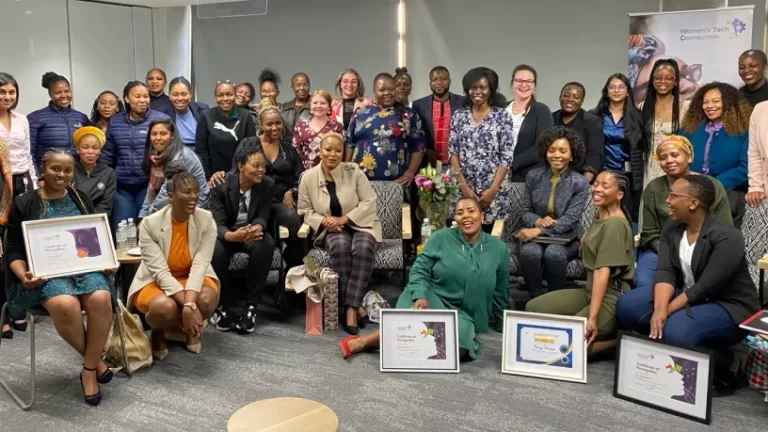
CISCO South Africa has expanded its Women’s Tech Connection(WTC) initiative to Nigeria to encouraging female participation in the science, technology, engineering and mathematics (STEM) fields and provide women with a tech skills training programme.

Established in 2019 and spearheaded by Cisco South Africa, the initiative is part of the IT and networking giant’s global vision to help address the gender gap in the ICT sector by nurturing more women in the sector to become Cisco-certified engineers.

The design of the programme is to encompass a 360-degree professional development approach for aspiring network engineers.

According to Cisco, the goal is to produce women Cisco Certified Internetworking Experts (CCIE) in Africa, a skill-set that has been identified by the national government of SA as a scarce skill on the labour market.

According to the World Economic Forum, women continue to be dramatically under-represented in STEM fields and while female participation in Sub-Saharan Africa’s labour force has reached 61%, women only make up 30% of professionals in the tech industry.

Cisco recently celebrated the graduates of the local WTC initiative as part of its commitment to supporting regional talent and inclusivity.

“Never before has it been more important to spotlight women in the fields of technology and engineering on the African continent. With so much innovative potential being lost through a lack of representation and being positioned to institute real change and provide the necessary resources, Cisco is committed to helping bridge the gender divide in this important sector,” says Smangele Nkosi, GM for South Africa at Cisco.

“The success of WTC has resulted in Cisco expanding the initiative beyond South Africa. It is now active in West Africa. As of 2022, WTC has six chapters located in the South African provinces of Gauteng, Western Cape, Northern Cape, and KwaZulu-Natal. Our current base in West Africa is in Nigeria which is a central hub for us in the west of Africa.”

Certifications offered by the programme include a wide range of networking courses.

In its three-year history, the programme has produced two CCIEs and has built a talent pool of qualified certified engineers that multi-national organisations can hire from, notes Cisco.

WTC, to date, has 108 members, which include eight certified instructors, seven DevNet associates, and 93 participants working towards CCIE, Cisco Certified Network Associates, or Cisco Certified Network Professional certifications.

Elelwani Munzhedzi, co-founding member of WTC adds: “We are helping to put women at the forefront of their industries. Our goal in West Africa is aligned to the South African strategy, aimed at providing the region with technical expertise and resources into that highly competitive labour market. We have applied the same talent growth strategy adopted for the Sub Saharan region.”

ITWEB

Rhodes University honours SA cultural icon Madosini Mpahleni with an Honorary Doctorate

0

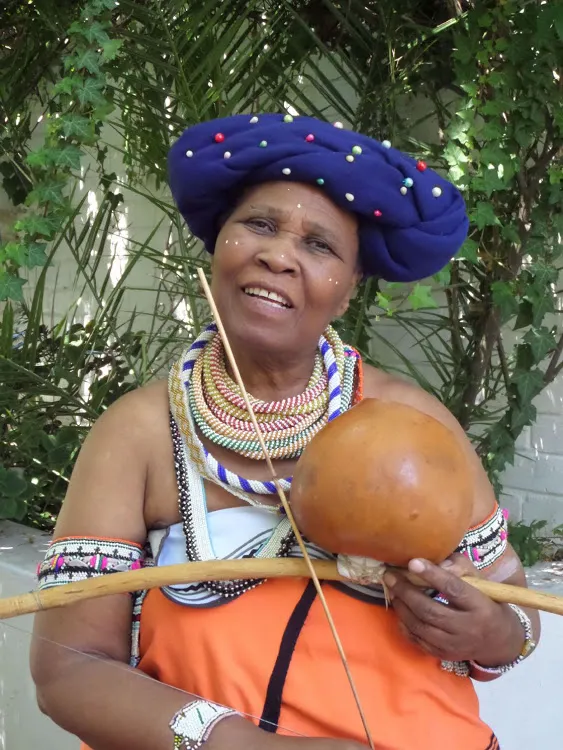
CULTURAL icon, singer, song writer and traditional instrumentalist , Latozi ‘Madosini’ Mpahleni was awarded with the Honorary Doctorate in Music by Rhodes University in recognition of her contribution to the South African cultural landscape and traditional music.

Rhodes University Vice-Chancellor Professor Sizwe Mabizela officially handed over a hood and gown to Dr Mpahleni, in full view of her family and the community at Mkhankatho village in Libode, outside Mthatha.

The robing formed part of a Van Toeka Af Living Legends Recognition event organised by the national Department of Sport, Arts and Culture. The event recognises and acclaims the living legends in the creative and cultural sector.

It is also intended to be a knowledge-sharing platform which offers guidance whilst motivating future generations.

Professor Mabizela and Music and Musicology Head of Department, Dr Boudina McConnachie, officially robed and hooded Dr Madosini.
Mabizela said: “In 2020, we honoured Gogo Madosini with the University’s highest honour, the degree of Doctor of Music (honoris causa). Due to COVID-19 and lockdown restrictions at the time, we could not celebrate this honour in the conventional way we always do. She is a worthy recipient, a formidable woman, a woman of substance, a woman of great dignity and humility and a doyenne of our cultural heritage. Today, we are delighted to have the opportunity to formally robe and hood Gogo Madisini and celebrate her with her family and community. It is no exaggeration that she has singlehandedly kept alive the South African heritage of Xhosa music through her performances and instruments.”

Department of Sport, Arts and Culture Minister Nathi Mthethwa applauded Rhodes University for having honoured Dr Madosini and said: “I have been wondering that with so many universities in our country, why they do not see the need to honour Gogo Madosini while she is still alive. I am happy that Rhodes University saw it fitting to celebrate and honour her.”

Dr Madosini said: “Kangangoba ndinemincili yilento ndiyenzelweyo yi Rhodes University, ungasuke undibone sendikhala. Ndiziva ndingcangcazela, ndiphelelwa nangamandla ngenxa yovuyo olusentliziyweni yam. Bendingubani na mna, iqaba elingazange lawubona umnyango wesikolo? Noba ndingalala kobandayo, intliziyo yam ixolile ngento endiyenzelwe yi Rhodes University.” (The way I am so happy, I could start crying. I am shaking right now because of the joy in my heart. Who am I? An uneducated old woman who has never gone to school. Even if I could die, my heart is at peace after being honoured by Rhodes University in this way.)

Dr Madosini is recognised worldwide for her sustained and exceptional contribution to the Xhosa culture through the preservation and popularising of isiXhosa music bowels: uhadi, umrhubhe and isitolotolo.

“For her many years of distinguished and selfless service to our nation and its culture, it was proper and fitting that Rhodes University should honour Gogo Madosini by bestowing on her its highest honour. Our nation owes her an unpayable debt of gratitude for all that she has done to preserve, share and propagate our rich Xhosa cultural heritage of music. On behalf of our Chancellor, Justice Lex Mpati, our Council, Board of Governors and the entire Rhodes University community, I offer our heartiest congratulations to Gogo Madosi on this well-deserved recognition,” added Professor Mabizela.

Dr Madosini played her instruments accompanied by Rhodes University’s Ethnomusicology PhD student, Thandeka Mfinyongo. The Eastern Cape Member of the Executive Council for Sports, Recreation, Arts and Culture, Nonceba Khontsiwe, was also in attendance together with traditional leaders.

“Gogo Madosini is a great inspiration for our nation. Siyi Yunivesithi sivuyela lento yokuthi sikwazi ukumwonga esaphila. Sine lunda kwaye siyazingca ngo Dr Mpahleni. Wanga uThixo wothando angamgcina, ukuze isizwe sincance kwelo bele lakhe libhonxileyo. Makudede ubumnyama kuvele ukukhanya, kube chosi, kube hele. (As Rhodes University, we are happy that we have honored her while she is still alive. We are greatly proud of Dr Madosini. May God keep sustaining her so that the nation can keep benefiting from her unparalleled knowledge. May darkness be dispelled and light shine),” said Professor Mabizela.

STAFF REPORTER|

KZN Education’s R469 million municipal debt crisis leading to school disconnections – DA

THE KwaZulu-Natal Department of Education (DoE) has accumulated R468 million worth of debt owed to municipalities for services such as water, electricity, sewage and refuse removal from April 2021 to January 2022.

From the R468 million, R445 Million is owed by schools in the province while R23 Million is owed by the department itself.

The Democratic Alliance (DA) in KZN said that it tried to raise the alarm regarding financial mismanagement in teh department.

DA KZN Spokesperson on Education, Dr Imran Keeka said despite warnings of poor management of funds the department returned unused funds to the provincial treasury.

“The DA has consistently raised the issue of the poor management of funds by the DoE. That the province’s municipalities are being crippled as a result of such massive outstanding sums from KZN’s largest government department is shameful,” Keeka said.

“To aggravate the situation, the recent budget close-out report showed that the Department had areas of under-expenditure with the result that funds were returned to provincial treasury. These funds should have been re-directed – according to proper PFMA guidelines. In particular, they could have been used to pay outstanding domestic accounts of the numerous schools that have recently been disconnected,” said Keeka.

 According to the replies, KZN’s worst affected municipalities are|


· Ethekwini – with R372 Million outstanding;
· Msunduzi – R44.3million;
· Umgungundlovu at R15.8 million; and
· Ugu at R7.5 million.

The DA said it visited two schools in Msunduzi where water had been disconnected due to a municipal billing error and faulty procedures.

 “In all of these instances, schools and therefore learners suffer the most while the kleptocrats sit around twiddling thumbs.”

 The DA has now written to the former MEC with recommendations aimed at reducing domestic accounts.

These include;
• Changing ordinary light bulbs to LED’s;
• Installing solar panels where possible;
• Placing water restrictors on taps;
• Identifying and repairing water leaks; and
• Interacting with municipalities to ensure that proper meter readings are taken rather than relying on estimated bills.

INSIDE EDUCATION 

SIU to investigate corruption, maladministration allegations at NSFAS

WENDY MOTHATA|

THE Special Investigating Unit (SIU) has launched an investigation into allegations of corruption and maladministration at the National Student Financial Aid Scheme (NSFAS).

This after President Cyril Ramaphosa signed a proclamation giving the corruption-busting unit authority to probe the NSFAS.

The investigation is expected to cover the period between April 2016 and August this year but may also include any period relevant to the investigation.

SIU spokesperson, Kaizer Kganyago, said the investigation will look into two functions of the organisation.

“The first part will look into the management of NSFAS finances. The second part will investigate the allocation of loans, bursaries and any other funding payable to students in terms of the provisions of the National Student Financial Aid Scheme Act, 1999, Act No. 56 of 1999,” he said.

Kganyago said: “Furthermore, the SIU will also investigate related unauthorized, irregular or fruitless and wasteful expenditure incurred by the NSFAS or the State, including the causes of maladministration.”

He added that the conduct of officials will also come under scrutiny.

“The SIU will also investigate any unlawful or improper conduct by employees or officials of the NSFAS or the service providers in question, their employees or any other person or entity,” he said.

The SIU will also seek to recover any monies lost by the state as a result of any wrongful actions at NSFAS.

“The SIU is empowered to institute civil action in the High Court, or a Special Tribunal in its name, to correct any wrongdoing uncovered during both investigations caused by acts of corruption, fraud or maladministration.”

“In line with the Special Investigating Units and Special Tribunals Act 74 of 1996, the SIU will refer any evidence pointing to criminal conduct it uncovers to the National Prosecuting Authority (NPA) for further action,” Kganyago said.

INSIDE EDUCATION

Department of Basic Education named in government wasteful expenditure list

MINISTER Angie Motshekga’s Department of Basic Education is, according to the Office of the Auditor General (AG), one of the “worst offenders” among government departments when it comes to fruitless and wasteful expenditure.

A briefing to Parliament’s Standing Committee on Appropriations last week by AG Tsakani Maluleke’s office brought to light that 21 of 41 departments at national level “consistently incurred fruitless and wasteful expenditure over the past five years” according to a Parliamentary Communication Services statement.

The Department of Basic Education, according to the Parliamentary statement, is the biggest contributor to the overall R1.52 billion in fruitless and wasteful expenditure over the past five years.

The AG told the committee that some departments had consistently incurred fruitless and wasteful expenditure over the past five years.

“Out of 41 national departments, 21 of them incurred R1.52 billion in fruitless and wasteful expenditure during this time,” it said.

The Auditor-General during the meeting highlighted that the biggest contributors to this large sum are the Departments of Defence at R460.09 million, National Treasury at R339.47 million, Basic Education at R106.85 million and Tourism at R92.59 million.

Most of the wasteful expenditure occurred in procurement, payment and resource management.

The Auditor-General said that 29 percent of national departments are in good financial health, 62 percent are cause for concern and nine percent require urgent intervention.

INSIDE EDUCATION