Home Blog Page 258

DUT student Gugulethu Mngomezulu makes her mark in karate

0

DUT student Gugulethu Mngomezulu (23) from Empangeni, KwaZulu-Natal, has made her mark in Karate.

Mngomezulu joined Karate when she was only seven years old. Her father was a boxer so she was highly motivated by him to take part in sporting events. Being trained by her own father was really a cherry on the top.

“My father was my role model and I have always wanted to continue his legacy and in that way I got introduced to Karate as I wanted to use both my hands and legs,” explained Mngomezulu.

When she joined the DUT Karate Club they sponsored her with everything that she needed including transportation, a sports kit and also accommodation was fully covered by the DUT Sport department which came as a surprise to her because ever since she started to take part in Karate she used to pay for everything but joining the DUT Karate Club was a game changer for her.

Through her hard work and determination of winning and representing the university in all local and provincial tournaments including national competitions. She is making sure that she is always ready for tournaments and receiving trophies and rewards which has made her to stand out from the rest as her diligence was noticed since her first year till present. Being so dedicated also contributed to her being appointed as the Karate coach.

The challenges that she always encountered as a woman in Karate is that it is known to be perceived as a male-dominated sport. Since she is a woman in a sport that is believed to be harsh sometimes as she does not receive enough recognition, is always working ten times harder than males in order for her hard work to be recognised. She indicated that being underestimated is such a big deal as a woman in sport but she is a hard worker, determined and knows how to deal with the pressure that is against her.

“For me nothing is hard to overcome as I was raised by very supportive parents that’s why I am so confident in what I am doing. I don’t care what the world thinks as long as I reach my goals. During my tournaments my parents would come and support me, so facing any type of stigma is not an issue as I just don’t entertain it at all, I just focus on myself and move forward in a humble manner,” she said.

Balance comes with self-control and discipline, so she makes sure that she always prioritises everything that happens in her life and always having a positive mentality even when bad things happen. She is always confident and believes in herself that everything will be done the way it has to be done. It was a very proud moment for her as she saw that her hard work and determination is being recognised, especially as a woman.

Mngomezulu expressed how she felt when she was appointed as a coach.

“I felt amazing and thrilled that I can finally share my skills and everything that I have obtained all these years with other people as well and guide people step by step and create champions as well. It’s been an amazing journey. Seeing my students winning also feels so wonderful and a blessing from God. In 2021 I was also awarded as the best female fighter trophy,” said Mngomezulu.

She encourages beginners who want or just joined Karate, to believe in their own capabilities and be confident in their craft.

“Never start something that you can’t finish and always know that everything takes time. Karate is a process, there is a wonderful and amazing journey that lies before you but you need to be patient, keep pushing and strive for the best,” she said.

Students are welcome to join karate inside the DUT Sport Centre starting from 17:00 till 19:30. The fees for Karate are R100 for DUT students and R300 for outside members.

Plans to build 2 new universities and more TVET colleges in South Africa

A FEASIBILITY study is underway to make way for the new University of Science and Innovation in Ekurhuleni as well as a new crime Detection University in Hammanskraal.

The Minister of Higher Education, Science and Innovation, Blade Nzimande said his department’s plans to build the two new universities are underway following approval from Cabinet.

He said the process of developing a new university is preceded by a feasibility study to ascertain the demand for new institutions in identified areas or areas of interest.

“A feasibility study, funded through the Infrastructure and Efficiency Grant (IEG) to the value of R6 million, is underway to advise on the size and shape of these two institutions,” he said.

The new University of Science and Innovation is expected to focus specifically on science and innovation subjects, including STEM subjects such as:

  • Data Science;
  • Machine-learning;
  • Artificial intelligence;
  • Blockchain;
  • Robotics;
  • Hydrogen-powered technologies such as smart transportation and logistics systems.

The new crime Detection University in Hammanskraal is aimed at crime detection and fighting. It is hoped to improve the quality of general and specialised SAPS investigations.

Earlier this year (April 2022), a steering committee to conduct a feasibility study was established. The department said that the committee consists of representatives from city officials, the South African Police Service (SAPS), The National Research Foundation and major universities.

More colleges and renovations

Nzimande said that with respect to the Technical and Vocational Education and Training (TVET) Colleges, the department is in the process of establishing new colleges or college campuses – similar to that set out for universities.

Nzimande went on to list 16 TVET developments and infrastructure renovations being implemented across the country.

  • Msinga Campus of UMgungundlovu TVET College at Cwaka
  • Greytown Campus of Umgungundlovu TVET College at Greytown
  • Umzimkhulu Campus of Esayidi TVET College at Umzimkhulu
  • Bhambanana Campus of Umfolozi TVET College at Bhambanana
  • Nkandla A Campus of Umfolozi TVET College at Nkandla Town
  • Nkandla B Campus of Umfolozi TVET College at Nkumgamathe
  • Vryheid Engineering Campus of Mthashana TVET College at Vryheid
  • Nongoma Campus of Mthashana TVET College at Nongoma
  • Kwagqikasi Campus of Mthashana TVET College at Nongoma
  • Giyani Campus of Letaba TVET College at Giyani
  • Balfour Campus of Gert Sibande TVET College at Balfour
  • Aliwal North Campus of Ikhala TVET College at Aliwal North
  • Sterkspruit Campus TVET College of Ikhala at Sterkspruit
  • Ngqungqushe Campus of Ingwe TVET College at Lusikisiki
  • Graaff Reneitt Campus of East Cape Midlands at Graaff Reneit

He added that there are also plans to renovate existing facilities in Limpopo which will be annexed to the Tshwane University of Technology should the feasibility studies support the usage of these facilities.

Lack of confidence

Major infrastructure developments for the education sector in South Africa come off the back of low confidence in the country’s tertiary education system.

A recent survey conducted by Professional Provident Society (PPS) found that the majority of students have no confidence in the standard of higher education offered by South African universities when compared internationally.

The survey also found that 25% of studying professionals felt that they were insufficiently prepared for higher education, while 43% of students said that they had been moderately prepared.

BUSINESS TECH

Here’s the planned school calendar for 2025 – and two big changes that should be in effect by then

THE Department of Basic Education has published the proposed school calendar for 2025.

The 2025 school calendar runs from 15 January to 12 December – a total of 200 school days. While the year is expected to have additional school holidays compared to 2024 (27 vs 25), this is still fewer than in prior years.

The 2025 school year also marks the deadline for two big changes for South African schools and learners, with the coding and robotics curriculum expected to be in full swing, and the General Education Certificate anticipated to be fully rolled out.

The department plans to fully implement coding and robotics as new schools subject for Grade R-3 and 7 students in the 2023 academic year.

A pilot curriculum for these subjects was initially introduced at some schools in the third term of the 2021 academic year, it said. It plans to expand these tech-focused subjects to other grades in subsequent years.

The coding and robotics pilot for Grades 4-6 and for Grades 8 was planned for 2022 and will be followed by a Grade 9 pilot in 2023. The full-scale implementation for Grades 4-6 and Grade 8 is planned for 2024, and Grade 9 in 2025, the department said.

General Education Certificate 

The department plans to introduce a Grade 9 General Education Certificate (GEC) which will allow students to have some form of qualification before matric.

“The primary purpose of the certificate will be to facilitate subject choices beyond Grade 9 and articulation between schools and Technical and Vocational Education and Training (TVET) colleges as a low-stakes feature of the school accountability system,” the department said.

In January 2022, the department said it will pilot the new certificate at hundreds of South African schools this year, with plans to roll out the certificate to all schools in the country by the 2024 school year.

Basic Education minister Angie Motshekga said broad consultations around the certificate have already taken place with stakeholders, partners, and experts on the most appropriate model for the GEC, and public comments have been considered in introducing the policy.

Confirmed 2023 and 2024 calendars

The proposed calendar for 2025 follows the department publishing the calendar for 2024 last week.

The 2024 public school calendar starts on 17 January 2024 and ends on 11 December, delivering a total of 203 school days – four more than in 2022 and 2023.

There will also be fewer school holidays in 2024, with the calendar making provision for just 25 days off, compared to 32 days in 2023 and 33 in 2022.

To accomplish this, the 2024 calendar is structured in such a way that the school terms are not interjected by as many public holidays, with schools only losing two days to public holidays – one day each in term two and three. In 2022 and 2023, learners lost eight days to public holidays.

Most public holidays in 2024 will take place during school holidays. The department has had to make these changes to the calendar to make up for teaching losses felt during the Covid-19 pandemic which severely hampered teaching capacity and learner hours.

BUSINESSTECH

A crisis in university governance: Every Vice-Chancellors’ salary, ranked

0

FOLLOWING analysis of Australian Vice-Chancellors’ (VC) pay, the University of Melbourne’s Duncan Maskell tops the list with a mammoth $1.5 million salary, followed by Monash, Flinders and Queensland universities.  

Vice-Chancellors presiding over prestigious Group of Eight (Go8) universities take home some of the most generous pay packages in the country, with the University of Sydney’s Professor Mark Scott and UNSW’s Professor Attila Brungs receiving $1.15 and $1.05 million respectively. Adelaide University’s controversial Professor Peter Hoj also rakes in $1.17 million, joining thirteen other VCs who receive salaries exceeding one million dollars. 

Meanwhile, the ANU’s Professor Brian Schmidt receives a comparatively lower salary standing at $660,943 a year within the group, inclusive of superannuation and excluding housing costs which Schmidt is responsible for paying. Others who share Schmidt’s pay range include Charles Darwin’s Professor Scott Bowman and Wollongong’s Professor Patricia Davidson. 

The lowest paid VC is the specialist University of Divinity’s Professor Peter Sherlock, who took home $260,000. The institution, unlike other universities, is an amalgamation of various Christian denominations’ seminaries. 

Excluding America’s exceptionally wealthy universities, Australia’s VCs command some of the most favourable salaries anywhere in the world, drastically dwarfing their European and British counterparts. One of the UK’s highest-paid VCs, UCL Provost Michael Spence—who used to lead Sydney University—commands $960,000 annually before factoring in rent that exceeded $90,000 in 2021. According to information obtained by Honi through a Freedom of Information request, Spence now resides in London’s posh Bloomsbury Mansion.

The figures also reveal that Australia’s VCs are paid far higher than those occupying the nation’s highest offices, with the majority of VCs’ pay packages dwarfing that of the Prime Minister, who receives just shy of $550,000 a year.

Questions raised over the effectiveness of UCC’s Code 

In 2021, the University Chancellors Council’s (UCC) Australian Universities Vice-Chancellor and Senior Staff Remuneration Code was introduced, encouraging disclosures of VC and university executives’ remuneration. This came on the heels of what has been described as “lavish” pay packages for Australian VCs that saw former Federal Education Minister Alan Tudge call for pay to align with “society’s contemporary expectations and norms”.   

“Reporting of governance and remuneration should be included in the Institution’s Annual Reports,” the code said. 

However, the UCC Code is being perceived as an ineffective measure, with standards of disclosure varying drastically from one university to the next. While universities such as USyd and UniSA disclose a broad pay range, others such as Western Sydney University fully disclose the pay of individual executives short of identifying non-monetary benefits. 

One of the key measures the UCC’s voluntary code uses to benchmark the appropriateness of VCs’ remuneration is the gap between an institution’s median salary compared to its senior executives’. 

“UCC will consider other statements of intent or principle such as the relativity between the median salary for a University and that of its VC and Senior Staff,” the code’s guideline reads. 

However, the guideline places the onus of proposing a “statement of intent or principle” on universities, meaning that university management are, as the voluntary nature of the code implies, not compelled to consider median salary to construct a meaningful boundary from which remuneration may be considered inappropriate by the UCC.  

According to a USyd spokesperson, Scott’s pay, exceeding one million at USyd, “sits within the guidelines outlined in the [Universities Chancellors Council’s] voluntary code”. 

Yet analysis by the NTEU’s Ian Dobson in 2018 found that USyd’s median salary stood at Higher Education Worker Level 7 (HEW 7) of $90,160–$98,224. Today, calculations of data from the University’s 2021 Annual Report indicate that its median salary remains the same four years on. This means that Scott’s salary currently exceeds the average USyd professional staff by a staggering tenfold. 

According to public organisation governance expert Dr Rebecca Boden, universities today see themselves primarily as income generators rather than knowledge-building institutions. 

“We found a correlation, albeit I stress correlation, not causation, between these massive pay increases as universities marketised and they move from being a collegial institution to seeing themselves as businesses,” Boden told Honi, referring to research conducted by her and the late Deakin University Professor Julie Rowlands. 

This tectonic shift over the decades from Margaret Thatcher and Bob Hawke’s governments in the UK and Australia, for Boden, came to enable universities to justify exorbitant expenses by citing universities’ monetary contribution to society and institutions’ large size. 

Indeed, the UCC voluntary code’s pay guidelines stipulates that senior executives’ remuneration must be “fair to the individual and the institution”, taking into account “responsibility, accountability, scale and complexity” of the sector’s “30 billion” dollar economic value. 

Lack of controls on remuneration governance and transparency a major issue

Compared to other countries, the pay of Australia’s VCs remains largely shrouded in opacity. This is in contrast to the United Kingdom where, since 1994, universities have been compelled to disclose this information in their annual reports. Aside from the base salary, institutions are required to disclose the relevant VC’s pensions and benefits. No equivalent set of laws exist in Australia to govern the disclosure of salaries nor governance structure. 

Unlike other countries, Australia has relatively lax oversight of VC and executives’ salaries, with no legislated mechanism to compel universities to declare senior management’s payment aside from the press’ routine reporting on the issue every year.  

Compounded in this is the conflict of interest that comes from VCs’ membership of university subcommittees, which presides over their own salary. 

Vice-Chancellors who do not sit in the same committee that determines their remuneration are rare, with Victoria University’s Adam Shoemaker and USQ’s Geraldine MacKenzie not being a member of their institutions’ remunerations committees. In 2017, Bath University’s Glynis Breakwell resigned when England’s university funding council, HEFCE, condemned Breakwell following a sustained campaign by the local University and College Union (UCU) campaign together with student activists.  

For instance, the University of South Australia’s David Lloyd attended all three meetings of UniSA’s Senior Remuneration Committee, and the same applies for other VCs across the country, including former UNSW VC Professor Ian Jacobs and USyd’s Mark Scott. 

In USyd’s case, a university spokesperson confirmed that Scott’s pay is set by the Senate and that the VC has declared a conflict of interest and is not present when his pay is discussed.

However, Boden argues that both arrangements raise serious questions: “Even if they [VCs] are outside the room for when individual discussion of their salary is going on, they set broader strategy and rules surrounding pay,“ Boden said, referring to Scott’s declaration of interest. “Then, their salary almost drops out and automatically gets fixed by the salary strategy.” 

She pointed out that, even if a VC or an executive were conflicted off individual discussions about their pay, the fact that some executives are appointed by the VC means that there is a herd mentality to inflate bonuses and rewards rather than exercise restraint. This comes from her view of the five-year period following Breakwell’s resignation when the UCC’s counterpart in the UK, the Committee of University Chairs (CUC) released its own voluntary code following the Breakwell scandal. 

“The transparency requirements in many ways are a legitimising device for marketisation. My hunch is that it [the CUC voluntary code] hasn’t had any restraining effect [on salaries],” Boden said. “I don’t think these voluntary codes will do anything.”

From her perspective, Australia faces an acute crisis in university governance structure with rampant conflict of interest and a lack of decision-making independent of VCs and their senior executives. 

Sustained student campaigning and Academic Salaries Tribunal needed for genuine, lasting reform

Ultimately, for Boden, the astronomical rise of VCs’ salaries in the past decade represents a critical “market failure”, in the sense that no internal reforms by university executives can attain meaningful transparency and address the widening pay gap. Instead of relying on internal “tinkering” within universities, she says that the government must intervene to curtail VC salaries and restore public trust in higher education. 

Furthermore, she recommends that Australia needs a federally operated “Vice-Chancellors’ Remuneration Tribunal” to oversee VC pay packages, citing Australia’s former Academic Salaries Tribunal, who used to investigate and determine academic salaries, as a model example. 

“I think it [reform] has to come from the government because it has got skin in the game because they fund universities. So this has to be a regulatory matter because the universities are incapable of regulating themselves, a market failure.” 

Ultimately, Boden is certain that it will take sustained pressure and awareness from student, staff and unions such as the UCU or NTEU to push the government to hold VCs accountable and reduce the increasingly significant pay gap. 

“It [Glynis Breakwell’s resignation] was drummed up because of student and staff activism,” said Boden.  

“It needs to be a national campaign where all students and staff have to come together and say: ‘This has to stop’. That would be much more effective because one VC resigning doesn’t solve the problem because you’ve not changed the system.”


KwaZulu-Natal provincial government appoints new provincial MEC for Education

KWAZULU-NATAL has a new MEC for Education – Mbalenhle Cleopatra Frazer. 

Frazer, who replaces Kwazi Mshengu following a cabinet reshuffle last week, is a former teacher and a trade unionist.

She commenced her work last Friday.

The South African Democratic Teachers Union’s (SATDU) in KwaZulu-Natal has welcomed the appointment of Frazer as the new KZN MEC for Education.

“As a teacher herself, the new MEC understands the Department and the needs of schools. SADTU hopes she will embrace unions and other stakeholders and work with them to further stabilise the department and ensure that the environment in schools is truly supportive of quality education delivery,” said SADTU provincial secretary Nomarashiya Caluza.

SATDU thanked Mshengu for the work he has done since his appointment as the MEC for Education in the province.

“His open-door policy allowed all stakeholders to feel free to raise issues with him. This, SADTU believes was based on his understanding that all stakeholders are equally important and central in the delivery of quality public education. Honesty and transparency were his guiding principleswhich enabled him to survive in the department.” Caluza.

SADTU said that Frazer is taking over a stable department.

“By saying the Department is stable does not suggest that there are no challenges. The Department that she is inheriting is facing the effects of budget cuts which is why there are not enough teachers in schools, backlog in infrastructure, safety and security challenges in schools and many other known challenges.”

Caluza urged Frazer to prioritise the province’s Quality Learning and Teaching campaign.

“Prioritise the Quality Learning and Teaching campaign through mobilising all stakeholders and
education loving people to participate in protecting schools. Making schools safe and ensuring that there are no lesson losses.”

Newly appointed KZN Premier Nomusa Dube-Ncube said Frazer will be meeting with organised labour, school principals, school governing bodies and communities.”

The South African Principals Association -KwaZulu Natal, has congratulated also Frazer on her new appointment.

SAPA KZN said “through our collective and professional participation, strive to excel in our task through self-development and interaction as an independent, non-racial and non-aligned Association.”

Mshengu has been the MEC for Education since 2019 said he was grateful for the opportunity given to him by the ANC to serve the people of KZN.

“I have always understood and appreciated that I serve at the behest of my organisation and that it reserves a right to make any decision and at any given moment concerning the position I held on its behalf. Acting in accordance with this appreciation, I have always regarded this assignment not as career but a service,” said Mshengu.

“I wish to sincerely thank all staff members from the Department of Education for being a cornerstone of the victories we scored. Collectively we have steered the education sector in the province to what I verily believe is the right direction,” he said.

INSIDE EDUCATION

Deadline for written submissions on the Basic Education Laws Bill closed on Monday

THE deadline for stakeholders and interested individuals to submit written comments on the Basic Education Laws Amendment (BELA Bill closed on Monday.

This after the Portfolio Committee on Basic Education issued a reminder that gave people an opportunity to comment on the Basic Education Laws Amendment Bill.

Committee Chairperson Bongiwe Mbinqo-Gigaba said the committee received several requests for an extension to the deadline, which was initially set for June 15, 2022.

Mbinqo-Gigaba said that the committee appreciates the public’s input and wants to ensure legislation that speaks to the needs and wants of the sector.

“The committee noted several factors that could have impacted on the public not having sufficient time to comment on the Bill, like it being an examination period. As the committee appreciates public input and wants to ensure legislation that speaks to the needs and wants of the sector, we decided to heed the calls for the extension of the deadline,” said Mbinqo-Gigaba.

BELA was introduced to Parliament on January 10 and seeks to hand control to the department in determining a school’s language policy.

The Bill proposes to amend the South African Schools Act (SASA) of 1996 and the Employment of Educators Act (EEA) of 1998, so as to align them with developments in the education landscape and to ensure that systems of learning are put in place in a manner that gives effect to the right to basic education enshrined in section 29(1) of the Constitution of the Republic of South Africa, 1996.

Amongst other things, the Bill seeks to amend certain definitions, to provide that attendance of Grade R is compulsory and to provide for system improvements in terms of admission of learners to public schools.

It also provides for financial and public accountability frameworks for governing bodies and provincial departments.

The Bill further provides the Minister with additional regulatory powers and enhances the decision-making and oversight powers of heads of departments and those of members of executive councils.

The Bill further proposes technical and substantive adjustments, clarifies certain existing provisions, inserts provisions not provided for in existing legislation and strengthens enforcement mechanisms for offences and penalties.

The committee urges any person or organisation wishing to submit written comments is at liberty to direct submission for attention: Mr Llewellyn Brown, the Committee Secretary, via email: belabill02@parliament.gov.za or online at https://forms.gle/MoC6AdbdQyYPk3Y49 or via WhatsApp: +27 60 550 9848. Mr Llewellyn Brown can be reached on 083 709 8450 for
enquiries.

The Bill is accessible at: https://www.parliament.gov.za/bill/2300398

Written submissions must reach Parliament by no later than 15 August 2022 at 16:00.

In addition to written submissions, kindly indicate if you would like to make oral submissions.

All correspondence should be addressed to Mrs BP Mbinqo-Gigaba, Chairperson: PC on Basic Education and marked for the attention of Mr LA Brown.

The public is urged to provide the name, surname, telephone number, and email address of the person or organisation submitting the comments.

INSIDE EDUCATION

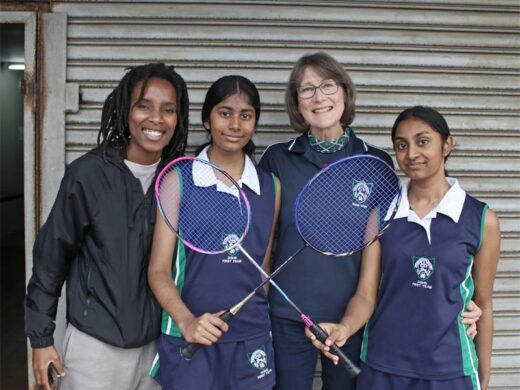
Durban Girls’ High School wins’ national badminton championship

DANICA HANSEN

BADMINTON players from Durban Girls’ High School won the SA High Schools Championships this week.

The finals were held at KZN Badminton Hall in Morningside on Monday, August 8. Matches kicked off on
Saturday, August 6 with some tough competition on the court.

Speaking to Berea Mail, Durban Girls’ High School Badminton coach Gilles Audibert said his team will
represent South Africa in Mauritius at the All Africa Championships.

“This upcoming tournament in Mauritius hosts the best of the best from countries in Africa. We are
hoping to put the funds together to get there,” he said.

Audibert added that this is the first time in Durban Girls’ High School history that a badminton team has
made it to the national finals.

“I am so impressed with my team’s performance. Considering that two of our players just started
playing badminton three years ago, this is a huge achievement. This was the first time we not only made
it to the finals but won,” he said.

Callista Ramowtar, who is on the Durban Girls’ High School team, recently represented South Africa in
the U15 category in an international tournament in Benin.

Several other Berea schools took part in the event, including Durban High School and Durban Girls’
College.

Emelda Botha, junior chairperson for KZN Badminton, and national junior selector for Badminton South
Africa, said there were seven teams participating in the boys’ category and seven teams in the girls’
category.

In the girls’ category, Durban Girls’ High School placed first, followed by Thandi E Sibeco Secondary
School in second place and Alberton Girls’ High School in third position. The Westville Boys’ High School
team placed first in the boys’ category, followed by Jim Fouche School in second place and Durban High
School in third position.

Botha noted a decline in participants following the Covid-19 pandemic.

“The tournament went really well. Lots of fun was had by all, and we hope to see the number of
participants increase going forward. The last time we held this tournament, there were 33 teams. This
year, we had just 14 teams enter,” she said.

The national tournament is held annually in various provinces.

BEREAMAIL

Big shift in schooling in South Africa

ONLINE schools had their fair share of critics among South Africans even prior to the pandemic – a perception that has seemingly changed drastically amid a raft of new affordable options including Curro and UCT Online High School.

Has the momentum for online schooling as a long-term option been maintained post the pandemic?

An analysis of the enrolment data from Teneo Online School claims that learners have switched for the long-term and plan to finish their school experience online. The ‘real school online’ has grown by 10,488% in over five years, from 85 learners when it was founded in 2018 to 9,000 learners currently.

“The data clearly indicates that both parents and learners who initially were not convinced merely needed to see it to believe it. Now that they have seen how convenient yet brilliant quality online school is, they are more open to considering it,” said John Shaw, CEO of Teneo Online School.

A majority (94%) of the sample indicated that online school is better value for money in comparison with traditional, brick-and-mortar schools. For example, those who wish to do an international curriculum, such as Independent Examinations Board (IEB), often need to fork out more money for a private school.

“There is also no need to spend money on school uniforms or transport costs – if you have access to a digital device and high-speed internet, you are good to go,” said Shaw.

Teneo operates on a mostly synchronous (live) basis where learners are expected to be live in class in accordance with their timetables – just as they would at a physical school.

However, there are students who benefit from using the asynchronous (recorded) model where they learn using pre-recorded lessons and at their own pace – a great option for those pursuing other interests in the daytime, such as aspiring professional sportsmen.

UCT partnered with the Valenture Institute to launch the UCT Online High School, with admissions opening in July 2021, and classes commencing in January 2022, with in excess of 4,000 students, and fees prices from around R2,095 per month.

Similarly, Curro launched an online-only offering during the back end of the pandemic, attracting in excess of 600 pupils within the first few months of launch and with fees ranging between R3,920 – R4,500 per month.

Homeschooling group Impaq also launched an online school for all grade 7 to 11 learners, commencing in 2022, and expanding to more grades in 2023.

Corporates have also shown eagerness to offer online learning facilities. At the end of October, mobile operator MTN launched its online school, offering a digital curriculum for grades R-12.

The online school, endorsed by the Department of Basic Education, offers additional features like video lessons, assessments and extra-tuition lessons for grade 10 to 12 learners.

It will also focus on areas such as financial skills, entrepreneurship, arts and culture, and career guidance content, with particular attention on critical careers where there are skills shortages in South Africa.

The portal includes an introduction to the early childhood development curriculum and African storytelling, with over 2,000 stories, to equip children with good reading skills and improve confidence, enabling them to learn and read independently.

Ongoing shift 

In South Africa, school closures were announced in March 2020, interrupting the learning of almost 17 million learners from pre-school to secondary school. Close to 2.3 million students enrolled in post-school education and training institutions were affected by the implementation of the strict lockdown rules.

New educational policies and regulations, including the adjustment of the academic timetable, new teaching programmes, mode of delivery, a catch-up of the curriculum, health and safety measures as well as financial relief packages were designed for the education sector.

However, data from Statistics South Africa showed that only 11.7% of schools offered remote learning options nationally. Most schools offered rotational options instead of remote learning, and the urban-rural divide was prominent, as twice as many individuals were given the option of remote learning in urban areas compared to rural areas.

An assessment of households’ readiness for remote learning in 2020 revealed a disparity in access to various resources necessary to participate in remote learning. Most households did not have digital assets such as laptops and tablets at home that would allow learners to learn remotely using digital tools.

While cellphone ownership was high (91.3%) in 2020 among all households with children aged 5–24, computer ownership has remained relatively low (24.7%). Furthermore, seven out of ten (70.5%) children attending Grade 7 did not own mobile phones.

In 2020, close to 7% of households with individuals aged 5–24 had access to the internet at home while most households accessed the internet via smartphones (66.8%).

The workplace and the use of public wifi facilities were the other preferred modes of access to the internet by households with individuals aged 5–24 (15.6 and 13.1% respectively).

In February, basic education minister Angie Motshekga said that the Department of Basic Education is developed a draft framework for the establishment of online private and public schools.

“The framework has been shared with provincial education departments for input and comments before it can be distributed to other stakeholders.”

BUSINESSTECH

Growing numbers of unqualified teachers are being sent into classrooms – this is not the way to ‘fix’ the teacher shortage

EVERY few days there is another report about the teacher shortage across Australia. Last week, we learned one of Melbourne’s biggest schools is considering a return to home learning to cope with staff shortages.

But as we look at the causes and possible solutions, something we are not talking about is the risks around rushing student teachers into classrooms before they are fully trained and ready.

We are academics with a focus on teacher education and leaders of the Network of Academic Directors of Professional Experience. We are alarmed about the growing trend of sending unqualified teachers into classrooms.

Student teachers are teaching

Our colleagues around Australia are regularly telling us about their students being recruited into paid teaching roles with special permissions to teach. This can be as early as their first, second or third year of study.

In New South Wales, university staff tell us between 20% and 30% of their final year (fourth-year) students are employed in teaching roles. Prior to the pandemic, this only occurred in exceptional circumstances.

In Victoria, as of July, the Victorian Institute of Teaching (the teaching regulator) has approved 782 “permission-to-teach” applications for final-year education students. This is a category specifically established at the beginning of 2022 to help support schools with COVID-related workforce shortages.

In Queensland, we are seeing students teaching in classrooms before they have graduated in the hundreds, rather than handfuls. Industry partners are telling us they predict more than 600 “permissions to teach” for student teachers in Queensland in 2022. This is up from 320 in the state in 2021.

Mixing work and study

All states and territories have schemes to allow student teachers into the classroom in a paid (non-studying) role. For example, in Tasmania, when a suitable registered teacher cannot be found, a school can apply to employ a student under a “limited authority to teach”. In the Northern Territory, a similar process allows schools to recruit people to teach in hard-to-fill or specialised teaching roles.

Western Australia has also opened up opportunities for final year students to work part-time in public high schools (with mentoring) and to register in the casual teacher pool.

The state also uses an existing fast-track to put students into the classroom as paid teachers. The Teach for Australia program employs “associates” in a school after six-weeks of intensive training. From this point on, associates balance study in a master of teaching program with employment as a teacher, with support from mentor teachers and Teach for Australia.

WA currently has 175 full-time equivalent staff in public schools, who may be Teach for Australia associates, or working towards a teaching qualification. This is up from 112 in 2020. Taking into account casual and part-time workers, the actual number of students teaching in the system is likely to be higher.

A risky fix

Putting student teachers in the classroom to help deal with the teacher shortage seems logical. But it is a quick and risky fix.

Arguably, education students are already less prepared for the classroom than their pre-pandemic peers. Around the world, student teachers have experienced disrupted study because of the pandemic with shortened, simulated and irregular practical placements.

This is on top of interruptions to their regular coursework, thanks to disruption the pandemic has caused within and beyond their studies.

Additionally, student teachers are entering a stressed and depleted workforce. COVID has added to teachers’ already demanding workloads, made them sick (and therefore absent at times) and seen some reach the end of their tether and leave.

When more experienced staff are stretched, under-prepared teachers cannot be well-supported by those around them.

While all this is happening, it is becoming harder for student teachers to get supervised practical experience as part of their teacher training – there are less teachers to supervise them.

These factors mean student teachers are less prepared than in previous years and are entering workplaces that are demanding more of them.

Graduates will burn out

From an administrative perspective, this situation is placing a huge strain on teacher registration bodies around Australia, who are not structured to assess and process masses of “special authority” applications.

We are alarmed about the potential fallout here. Under-prepared and fast-tracked teachers cannot be well-supported. Nor can they be expected to perform as highly effective graduate teachers when they are drawing on disrupted university preparation and limited placements.

This leaves them vulnerable to burnout and leaving the profession prematurely.

Importantly, these factors are also likely to exacerbate the impact of COVID on children’s learning and development.

The increased needs of many children and young people have increased the complex demands of teaching them. The training of future teachers needs to prepare them for the new realities and requirements of teaching.

This will not improve ‘quality’

The current approach contradicts the federal government’s talk about improving teacher “quality” and we fear universities will be blamed for the outcomes of putting under-prepared graduates into schools.

We need to put our focus back on preparing high-quality teaching graduates – even if this takes more time and resources to get them into the classroom.

Alongside other strategies and responses, employers need to prioritise placements for student teachers. This will allow them to progress through to career entry under conducive conditions. Good preparation is essential for teacher effectiveness and retention.

What we are doing at the moment is equivalent to giving student teachers an umbrella to go out into a raging thunder storm. This is not sensible, justifiable or sustainable.

This approach also has the potential to worsen teacher shortages in the coming years and risks seeing teacher attrition levels like we have never seen before.

THE CONVERSATION

UJ develops new generation of technopreneurs

0

THE University of Johannesburg’s (UJ’s) Technopreneurship Centre has made strides in helping to develop many new-generation technopreneurs.

This was the word from professor Tshilidzi Marwala, vice-chancellor of the UJ and the next rector of the United Nations University.

Marwala was speaking at CNBC Africa’s Future of Education Summit 2022 during a discussion titled: “Advancing transformation in the education sector”.

Speaking to CNBC Africa’s Fifi Peters in a one-on-one setting, Marwala highlighted the importance of converging entrepreneurship and technology in one space, to ensure today’s entrepreneurs contribute to the digital economy, while creating job opportunities and develop future-fit business solutions which respond to real world problems.

Referencing the UJs Technopreneurship Centre, he noted the centre has seen much success in creating scores of digital entrepreneurs.

“Entrepreneurship is the future… we don’t just train people to go and seek jobs, but we also train people to go and industrialise our society,” Marwala explained.

“There are a number of things that make this possible through the centre. Firstly, it’s the knowledge base – to enable student entrepreneurs to have access to a network of high-level industry experts.

“Secondly, it is access to mechanisms that can commercialise the ideas and concepts these students have – where they can get their patents registered with lawyers and advisors.”

Thirdly, the centre has a space that was created in collaboration with Accenture, to help students develop and test prototypes, he added.

In May 2018, the UJ School of Consumer Intelligence and Information Systems and the Department of Applied Information Systems collaborated to launch the state-of-the-art Technopreneurship Centre, billed as the first of its kind at UJ.

It is an ideation and innovation hub, where industries’ most pressing unresolved challenges can be addressed, researched and solved by UJ students, supported by academics.

According to Marwala, the centre fosters collaboration among students and industry partners with regards to building technologies, by involving students in structuring real-life innovative solutions in the form of intelligent software systems, video games, mobile applications and other forms of technological solutions.

“We have also created a safe space where some of the tools reside – these are tools that are required to create innovative prototypes so that students are able to turn their ideas into products that can make a meaningful difference in society, and serve people and create jobs, while contributing towards the economic expansion of our country.”

As part of UJ’s fourth industrial revolution (4IR) vision, the institution has made it compulsory for all of its more than 50 000 students to take a course in artificial intelligence, he added.

Responding to a question about how higher learning institutions can address SA’s unemployment crisis, he pointed out: “More can be done and more should be done. Universities have a significant role to play in being part of the solution in creating job opportunities – for example, partnering with organisations in order to place students, which is what the UJ is doing.

“Another important element is to ensure the curriculum offered by the universities responds to the changes that are happening around us, in the era of the 4IR.”

ITWEB