Home Blog Page 267

Classroom Management| How a blended mode of learning with help of digitization can help students

BLENDED mode of learning’s footprints can be traced back in mid of nineteen century.

It spread its wings in late 20th Century with Learning Management System and interactive learning experience through sound and Video with extensive usage of CD ROM developing it into First Web based Instruction.

Union between face-to- face and technology-based learning gave new impetus to students’ educational experience.

Pandemic propelled Digitization, Technology based learning seeping rapidly in the Education right from Junior KG to Graduation Level studies.

Leap bound technological development in the form of various User friendly easily accessible Video conferencing platforms facilitated blended learning during pandemic and is even facilitating other sectors also.

The concept of borrowing notes got promoted as sharing of pdfs, homework in notebooks rapidly converted into word document assignments.

This complete online mode soon made students as well as teachers miss their classroom environment but made them wish that technology could become a seamless part of their classroom learning.

Blended Learning assists in making this wish of an explorative digital classroom come true.

Blended Learning is the methodology of using digital learning tools along with the traditional face to face classroom teaching.

But then the question arises whether such digitization just of using pdfs instead of books or having files uploaded in LMS instead of workbooks submitted in staffroom, proves to be Blended learning?

Of course not.

Blended Learning has the potential to transform the entire teaching and learning process into a fruitful, engaging, and collaborative learning environment.

It is more about allowing students to control how they learn thus enabling them to gain personalized learning experiences.

The combination of in-person teaching techniques, teacher-led online modules, and self-paced learning forms the core of the Blended Learning strategy.

The teaching units developed under this umbrella focuses on:

* Creating micro lessons for helping students grasp content easily.
* Perform in between checks for understanding and design assessment that will align with the learning goals to be achieved.
* Collaborate with peer students to assimilate different perspectives
* Explore scenarios and connect the student’s understanding with them

Nowadays it is quite feasible to build student centric study materials with the help of modern multimedia tools.

Developing interactive lessons using ICT can really bring in an excitement among students to learn new skills. The teacher is now in the role of Facilitator rather than just a knowledge provider.

Advantages of Blended Learning:

Blended learning helps students to get a customized education as the teachers can assess their performance in multiple ways and can provide e-materials accordingly to help students grasp the subject matter according to their learning style.
Digital technology is helping to create interesting e-lessons involving gamification which explain concepts effectively to different learning styles of learners.
The blended mode of learning offers more time for student-teacher interaction as the online dissemination of study materials saves times of classroom teaching hours. This time can be utilized for student centric in-class activities.

Students learn at their own pace. The slow learners can go through online resources at their own speed for concept understanding which they would have found challenging to do so in regular classrooms.

The advanced learners get a chance to explore a lot more via content rich study materials. Currently it is possible to create a nourishing academic environment with the usage of different types of e-resources.

Collaboration with peers is one of the major differences that is seen during blended learning. When the students are trained to use the online tools effectively, they can communicate and collaborate with each other in a better way, even surpassing the geographical and time constraints.

They get time to interact with teachers and their classmates, thus gathering different perspectives leading towards deeper understanding.

Students discuss their ideas, experiment while working in teams and most importantly, they can do so within their campus or remotely, even with other student communities.

Multi language support with translated versions of e-resources is helping students to learn from teachers across the globe.

Knowledge now flows over the language hurdles and has spread across with help digitization.

Special e-content is developed for hearing and visually impaired learners with the help of which their teachers can make their classroom activities quite engaging.

Teachers have a greater responsibility to blend the online education with experiential and activity-based learning. It must be realized that Blended learning is not just a mix of our teaching and technology.

Merely replacing blackboards with presentations or a classroom lecture with an online video streaming does not become a blended mode of teaching.

The in-person learning, and online factors must work together to design enhanced experiential learning environments.

The digital education initiatives launched by the Indian government are providing online education across the country.

Teachers can take advantage of these initiatives for a blended mode of teaching. Several portal hosts MOOCs which can be accessed by all citizens for quality education.

Various portals provide engaging learning resources in multiple languages. Virtual Labs enables the undergraduate and postgraduate students to remotely access the virtual labs for their practicals.

The Open Educational Resources (OER) materials have opened the doors of learning to everyone willing to educate themselves.

Blended learning aims to develop a student-centered model of education.

With technology progressing rapidly, digitization and blended learning will create a promising definition of education and enrich students’ learning experience.

SUPPLIED| TOI
COVID left South African pupils far behind in Maths and language skills

JAAMIA GALANT & URSULA HOADLEY

LEARNING to read, write, count and calculate forms the basis for all other learning in school and beyond. Pupils start to learn these basic skills in the first three years of schooling. Their learning continues throughout their time in school as the content becomes more complex.

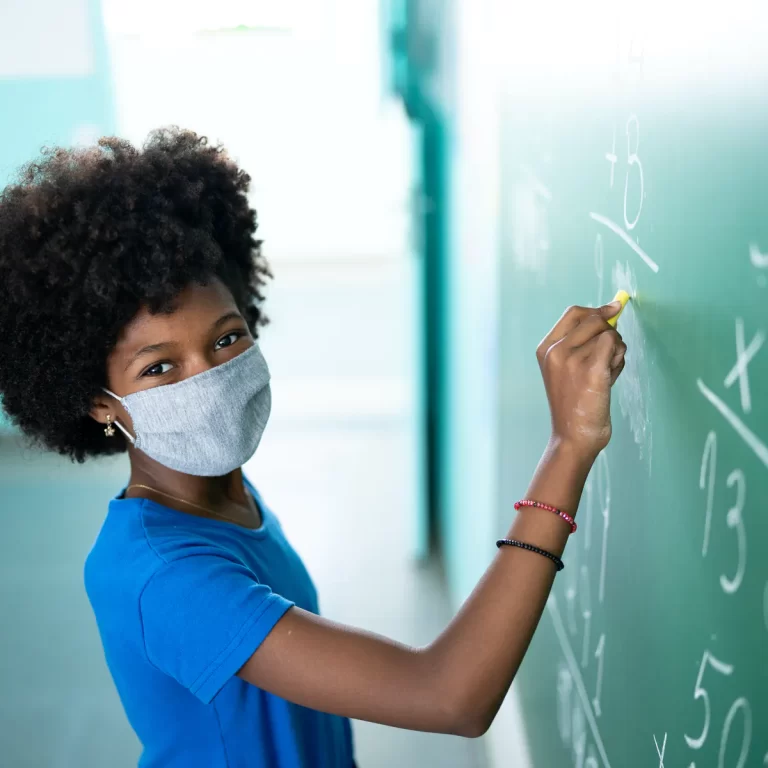
In 2020 and 2021, learners across South Africa missed at least a quarter of a school year due to COVID-related lockdowns and rotational timetabling. Many learners lost much more school time.

Given these disruptions, how much learning was lost across the schooling system? The systemic tests carried out by the country’s Western Cape province provided an ideal opportunity to find out.

Each year the Western Cape Education Department tests learners in mathematics and language at the grade 3, 6 and 9 levels.

A team of researchers from Stellenbosch University and the University of Cape Town compared learner performance on the mathematics and language tests in 2019 with that of 2021 on a range of mathematical and reading and writing competencies.

The study is the largest of its kind in South Africa. It investigated the performance of about 80,000 learners, aged between nine and 15 years, in each of the three grades, across both poor and rich schools in the Western Cape province.

The size and range of the sample makes it likely that the results will generally hold for South Africa as a whole and for learners in all grades.

A conservative estimate from the results is that learners have fallen 40% to 70% of a school year behind earlier cohorts in language learning and much more – 95% to 106% of a school year – in maths.

The greater losses in maths are consistent with international findings. This possibly stems from the more specialised nature of the subject and greater need for it to be formally taught, face to face.

Learning is a cumulative process and in language and maths this is especially critical as each year of learning sets up the building blocks for the next year of learning.

If children lose out on learning essential knowledge and skills for reading and writing they will struggle in all subjects where they have to read, interpret texts and express their understanding in writing.

Similarly, maths has its own specialised language and concepts that build progressively over grades. If learners lose out on basic concepts and skills, their later learning will compromised as mathematical problems and contexts become more complex.

Learning losses

Our study found that the greatest losses on the language test were at the grade 6 level. This is probably linked to learners being exposed less to the language of teaching and learning in the two previous years. Most South African learners are taught in their home language in the foundation phase (grades 1-3). From grade 4 onwards, they are taught in English for all subjects (except their home language). The pandemic has made this difficult language transition even more difficult.

We analysed language results in relation to reading comprehension, writing and vocabulary.

Although there is cause for concern across the three areas, learners performed particularly poorly in writing tasks at the grade 3 and grade 6 levels. Declines in vocabulary knowledge were particularly acute at the grade 6 level.

This could partly be attributed to a lack of exposure to print material and vocabulary instruction.

It would be worse for those learners who had changed to a different language of instruction in grade 4.

In mathematics, learning losses were severe across all three grades. The results illustrate how learning losses in this subject are compounded as learners move up the grades, resulting in the poorest performances at grade 9 level.

In “Number, Operations and Relationships”, the most fundamental content area, the average mark for grade 3 learners dropped from 57% in 2019 to 48% in 2021.

Learners are struggling with routine addition and subtraction problems and simple fractions. They also struggle with simple word sums.

Learning losses in “Number, Operations and Relationships” were apparent in grades 6 and 9 as well, and evidently led to poor performance in other areas, most notably in “Measurement”, where basic number knowledge is applied.

In grade 9, the biggest proportion of the curriculum is spent on “Patterns, Functions and Algebra”.
Yet average marks for this area dropped below 40% for grade 9 learners in the 2021 test. Grade 9 learners are struggling to grasp basic principles of algebraic language.

Curriculum areas to prioritise

It is clear that schools need to allocate more time for language and mathematics. Where feasible, time allocations for other subjects could be reduced or non-core subjects suspended or integrated into other subjects.

Existing timetables could be used more efficiently. Suspending tests and homework in other subjects would free up time to focus on language and maths.

These curriculum areas should be prioritised:
Reading, writing, number and measurement in the foundation phase English first additional language in the intermediate phase (children aged 9 to 12 years), especially writing and vocabulary.
In the senior phase (ages 13 to 15), proficiency in routine operations with whole numbers, fractions and basic algebra.
For at least the next three years, priority should be given to mastering the skills and concepts that are necessary for progression in learning. “Stand alone” topics in social science for example can be left for later grades.

Going forward

Teachers need assistance with diagnostic tests – not only administering them but also analysing the results and planning on the basis of outcomes.

They also need support in providing opportunities for learners to catch up previous grades’ content.

The Presidential Youth Employment Initiative allows for young “educator assistants” to help teachers in classrooms. Phase 3 of the initiative began in April 2022.

These assistants should now focus on assisting individual children with mathematics and language.
Their sole task could be to work through the previous year’s Department of Basic Education Rainbow Workbooks developed for each grade.

This would provide learners with one-on-one tuition to catch up to required levels of competence in language and mathematics.

(Jaamia Galant, Researcher University of Cape Town)
(Ursula Hoadley, Professor, University of Cape Town)

THE CONVERSATION

He dropped out of school to learn robotics. Now he’s teaching STEM across Ghana

JONATHAN Kennedy Sowah says wherever he goes, he’s always looking for a problem to solve.

His latest mission is to help transform Ghana’s approach to STEM — science, technology, engineering and mathematics — and he believes he’s found a solution.

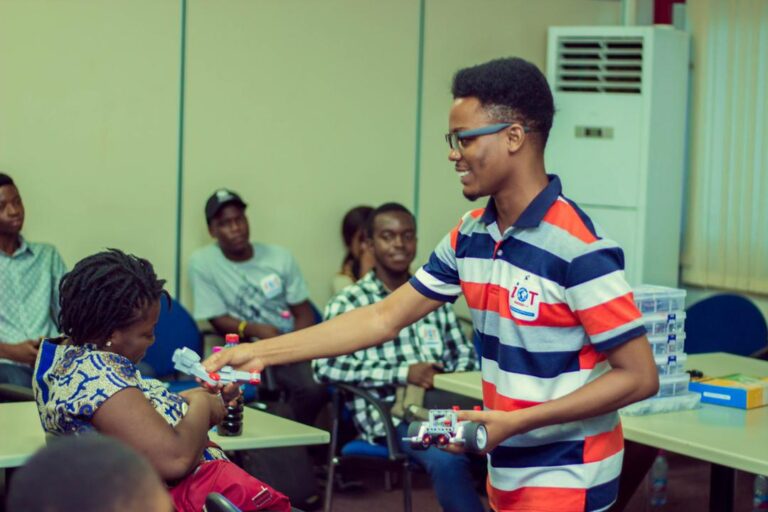
His company, InovTech STEM Center, travels to schools across Ghana to teach students and teachers the ins and outs of STEM through robotics education.

“Computing [and coding] should be like a basic language — every child should learn,” Sowah, 23, says.

InovTech STEM Center offers lessons in web design, app development and 3D modeling and printing, among other skills.

Workshops empower students to flex their creative muscles and find ways to apply the lessons they learn in the classroom to the tech field.

Jonathan Kennedy Sowah, founder of InovTech STEM Center, teaches students at the the Teshie Anglican School in Ghana how to program a robot.

“Now they know the relevance of what they’re learning in class. They know that if I’m able to learn geometry, this is what I can do with a robot,” he says.

Digital skills are critical to learn as there is a growing demand for tech jobs throughout sub-Saharan Africa. A 2019 study by the International Finance Corporation estimated about 230 million jobs across the region will require digital skills by 2030 — and more than nine million of those jobs will be in Ghana.

Like many entrepreneurs, Sowah’s path to success was a bit unconventional. The Ghanaian was born and raised in the coastal township of Teshie, close to the capital Accra, where he spent most days working at his grandmother’s provisions store.

He says he was interested in information technology (IT) from a young age, but he grew frustrated with how it was being taught in school. So, at 13 years old, Sowah decided to drop out and get a job at a local internet café.

“I knew I could do so much better, and I was so restricted,” he recalls.

Once he had free access to the internet, he says he spent his spare time surfing the web to watch robotics tutorials, adding, “I was always researching, I was learning new things.”

The self-taught computer scientist eventually went back to school and enrolled in Labone Senior High School with dreams of becoming a neurosurgeon.

But once again, Sowah says he was disappointed with a lack of emphasis on IT. This time, he took it upon himself to start a creative technology club called CREATECH.
“We started learning. We started teaching ourselves as well. And then we started going for robotics competitions,” Sowah says.

He credits his geography teacher for pushing him to turn CREATECH into the InovTech STEM Center.

Today, the company is reaching students and teachers throughout the country.

It works closely with the Ghana Educational Service to buy robotics kits and work with schools. But Sowah tells CNN many rural areas still face significant challenges to education.

“You go to these places, and they don’t have computers,” he says. “It’s up to us to learn it as the privileged ones and then go and teach the underprivileged ones.”

In recent years, Ghana’s Ministry of Education began implementing new policies to transform the country into a “learning nation,” including an Education Strategic Plan that outlines ways to improve the quality of teaching STEM across all educational levels by 2030.

The ministry says it wants to achieve an enrollment ratio of 60:40 in favor of STEM subjects over humanities.

In January, it also announced plans to build 20 STEM centers and 10 STEM senior high schools across the country. It says the projects are in various stages of completion and some are expected to be operational this year.

In addition to improving access to resources, Sowah is determined to help close the gender gap in STEM.

According to UNICEF, girls are consistently underrepresented among top performers in STEM subjects and lack digital skills compared to their male peers.

It found only 7% of girls in Ghana have digital skills compared to 16% of boys.

InovTech STEM Center empowers young women through its “STEM for Her” outreach program and also launched a “Girl Power Workshop” last year.

“We wanted to introduce girls to the exciting part of robotics, for them to meet those people that are already in the industry doing robotic or tech-related careers, and then mentor them, teach them and then guide them,” Sowah says, adding he believes the government can do more to support the advancement of STEM.

Sowah asks the government and other international organizations to invest in STEM across Africa, particularly in Ghana, “because what we are doing, we are doing for our country.”

“My dream for Ghana is a Ghana [where] every student [has] access to education … no matter where they are,” he adds.
“A Ghana [where] every teacher is skilled … [and] has the right to resources to train the students, to inspire them and empower them.”

CNN

UJ’s top athletes included in Team SA squad headed to the Commonwealth Games in Birmingham

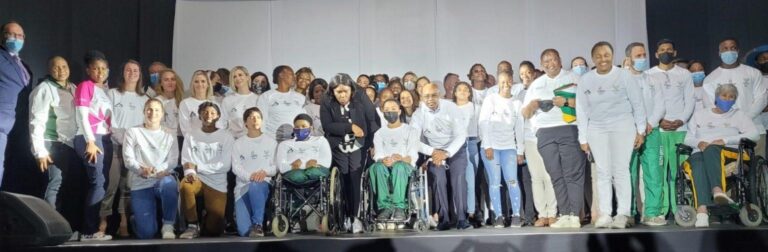
SIX University of Johannesburg (UJ) student-athletes and Netball Club manager and coach, Bongiwe Msomi, were named as part of Team South Africa’s athletes headed to the 2022 Commonwealth Games in Birmingham. The South African Sports Confederation and Olympic Committee (SASCOC) made the announcement on Wednesday, 08 June 2022, just 50 days before the Games begin.

UJ students Yane van der Merwe (para-athlete), Caitlin Rooskrantz (gymnastics), Kristen Paton (hockey), Boitumelo Mahloko (netball), Bongiwe Msomi (netball), Monique Reyneke (netball), Michelle Moganedi (wheelchair basketball) and alumnus Ronald Brown (rugby 7s) where among the players announced as part of Team SA.

“We are very proud of our club members and wish them well,” said Lezanne Bruwer, Manager: UJ Sport for Students with Disabilities (SSD).

The 2022 Commonwealth Games will be feature different sporting codes such as netball, 7s rugby, boxing, cycling, table tennis, gymnastics, weightlifting, lawn bowl and para-lawn bowls, among other sports.

The Team SA announcement comes a day after Netball SA announced 24 players that, for the first time in the history of netball in South Africa, were offered professional contracts starting 0n 1 April 2022 to December 2023. Msomi, Mahloko and Reyneke were among the contracted players. Msomi is the SPAR Proteas captain and has represented the country on numerous occasions and was also appointed the World Netball Official Athlete Ambassador for the African Region ahead of the 2023 Netball World Cup.

UJ Sportswoman of the year and Master of Health Science, Chiropractic student and intern, Paton, was recently announced as part of the SA senior women’s hockey team that will participate in the 2022 FIH Women’s World Cup in July. Paton was part of the SA Women’s Hockey team that participated in the 2020 Tokyo Olympic Games and the 2022 AFCON Hockey Tournament in Ghana in January this year.

Brown is the UJ Sportsman of the year and plays for the SA rugby 7’s team.

Moganedi is no stranger to representing SA; she has previously donned the national colors at the recent Wheelchair Basketball Federation (IWBF) Afro World Championship qualifiers in January 2022. In March 2022, Moganedi was also selected as part of the IWBF Players Commission and will be participating in 3×3 wheelchair basketball.

Sport Science honours student and para-athlete in the UJ SSD Club, van der Merwe will represent South Africa in Javelin.

Rooskrantz is a first year BCom Marketing Management UJ student who won gold at the 2022 FIG Artistic Gymnastic World Cup in March 2022 at Egypt.

“Anybody who brings a medal will be awarded, anybody who breaks a record will be awarded double. Enjoy Birmingham, but remember you must do the best that you can, and I want you to bring those medals. From the 37 that the team before you brought, you are bringing 37 times two,” said Nocawe Mafu, Deputy Minister of Sports, Recreation, Arts and Culture.

SUPPLIED

Only 4% of students that start grade 1 in South Africa end up with degrees: Nzimande

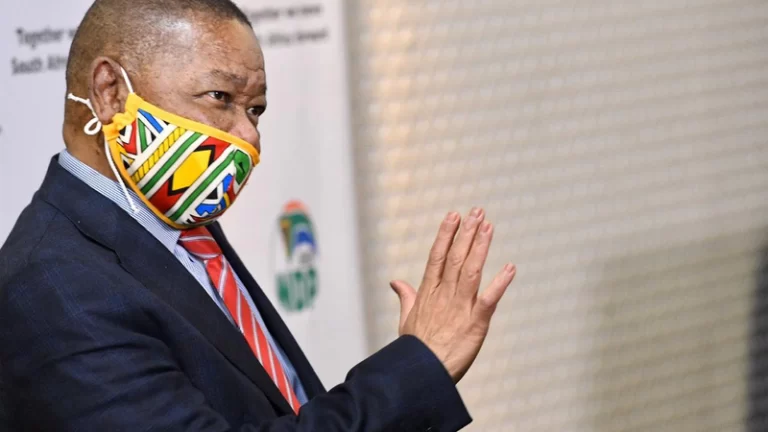
HIGHER Education, Science And Innovation minister Blade Nzimande says the country needs to produce more graduate students if it is to meet its workforce needs.

Speaking at a fuel meeting on Thursday (9 June), Nzimande cited the country’s current graduate statistics and how few students ultimately make it through SouthAfrica’s school system.

“One of the challenges that we need to confront head-on, is the number of students who enter our university system, as a proportion of those who started Grade 1. Out of 100 students, only 12 access our university system, and only six complete – four with a degree.

“This clearly indicates that there are many young people who are lost through the system. We, therefore, need to cater for these students for us to expand our post-school opportunities.”

Nzimande added that the government has made a significant effort to open the education system to more students, with the majority of current university students receiving some form of fiduciary support.

“I must indicate that through government funding, we are already funding a substantial number of learners in our institutions.  Out of 1,110,361 university enrolments, 76.6% and out of 508,445 TVET college enrolments, 98% are funded through the National Student Financial Aid Scheme (NSFAS).”

Growing problem 

South Africa’s education outcome could be further exacerbated in the coming years a new study by Stellenbosch University shows.

The study shows most learners in South African schools missed at least three-quarters of a school year over the course of 2020 and 2021, due to the Covid-19 pandemic, lockdowns, school closures and rotational timetables that were introduced to maintain social distancing in classrooms.

These lost school days are known to have affected learning, but lack of data has thus far limited attempts at measuring learning losses. The only two studies measuring learning loss thus far were limited to fairly small samples of learners in relatively poor schools, to reading and only to the lower grades.

The Stellenbosch University study considers a much larger sample, virtually all public schools in the Western Cape, across Grades 3, 6 and 9 in both Language and Mathematics, comparing 2021 performance with that in 2019.

By investigating performance in the Western Cape Systemic Tests that are written in Grades 3, 6, and 9 in both Language and Mathematics, the study was also able to compare the performance of the same schools on the same questions in 2021 to performance in 2019.

Some of the key findings of the study include:

  • Low average marks were evident already in 2019 for Grade 3 Language (42.7%) and Grade 9 Maths (37.7%), despite many multiple-choice questions.
  • Conservatively estimated, learners have fallen 40% to 70% of a school year behind earlier cohorts in Language and much more, 95% to 106% of a school year in Mathematics.
  • In most tests, girls significantly outperform boys. In Grade 9, boys experienced greater learning losses, wiping out the pro-boy advantage in Mathematics.

“The findings are indeed extremely concerning – losses in mathematics tend to be the largest, even when using a relatively conservative measure (assuming that a year’s learning is as much as 40% of a standard deviation in primary and 30% in secondary schools, the losses indicate that learners in 2021 had fallen more than a year of learning behind learners in the same grade in 2019,” the researchers said.

“In language, losses are smaller, around three-quarters of a year equivalent in terms of learning.”

The researchers added that two policy areas require special attention:

  • The first is to find more time for Mathematics, to overcome the deficit that has accumulated during the Covid years. For instance, Grade 9 learners in 2021 are performing more than a year behind Grade 9 learners two years earlier, so they must catch up a full year before they write matric.
  • This requires that they progress more than four years in the three years before they write matric.
  • In Language, the big challenge is to ensure that reading has been mastered in the Foundation Phase, while at the same time giving urgent attention to ease the language transition.
  • Weak reading skills and English vocabulary can inhibit all further learning for the majority of learners who have to make this language transition.

BUSINESS TECH

Wits University calls for the immediate reinstatement of Dr Tim De Maayer

WITS University says it is appalled to learn of the suspension of Dr Tim De Maayer, a paediatric gastroenterologist based at the Rahima Moosa Mother and Child Hospital, and who is also a joint appointee of the University of the Witwatersrand.

Dr De Maayer was served with a precautionary suspension for having spoken out against the conditions in the Hospital.

In a statement, Wits University called for the unconditional and immediate lifting of his suspension by the Gauteng Department of Health.

“This is a ludicrous situation – instead of resolving the issues raised by the doctor at the coalface, the Department has chosen to shoot the messenger,” said Professor Shabir Madhi, Dean of the Faculty of Health Sciences.

“It is not like our healthcare professionals have not raised these issues multiple times through the correct channels, but nothing has happened. How much louder can our doctors and clinicians on the ground speak?”

“These actions are against the spirit of the agreement between Wits and the Department with regard to the management of our joint staff,” added Madhi.

The university has been in contact with the Gauteng Department of Health since the suspension was announced and are optimistic that it will be rescinded.

Failing the lifting of the suspension, the university said it will embark on a public protest in support of Dr De Maayer.

Gauteng Health MEC Nomathemba Mokgethi said that she had been made aware of the precautionary suspension.

“The Gauteng department of health once again acknowledges the issues previously raised by Dr De Maayer. The department concedes that there are challenges within the health system in the province and in the country in general, which require multifaceted interventions. The department remains committed to tackling these challenges while continuing to render services to millions of patients annually,” she said.

INSIDE EDUCATION

UJ ranks second on the continent and in South Africa

THE latest QS World University Rankings have boosted the University of Johannesburg’s (UJ’s) standing in South Africa and on the African continent.

According to the latest figures, UJ now ranks second in South Africa and in Africa, climbing up one position.

UJ Vice-Chancellor and Principal Professor Tshilidzi Marwala said the achievement was “tremendous” as UJ went up against 2 462 academic institutions.

Globally, UJ ranks 412, up from 434 last year. It also ranked 94.3 in the International Research Network and 88.1 in the International Faculty Ratio category.

The QS World University Rankings account for global academic and employer reputation, research output, quality of research, internationalisation, teaching and learning.

“The latest global rankings reaffirm the fact that our academic programmes remain on par with international standards, as we continue with our mission to position UJ as the international university of choice, anchored in Africa and dynamically shaping the future. These rankings are a wonderful tribute to the sustained work by our staff and students as we continue to forge ahead and scale new heights,” Marwala said.

SUPPLIED|

TVET college principals called to promote work placement

HIGHER Education and Training Minister, Dr Blade Nzimande, has warned that any college principal who does not promote work placement has no place in Technical Vocational Education and Training (TVET) college system.

Nzimande was speaking at the WorldSkills South Africa (WSZA) National Competition opening ceremony held at the Inkosi Albert Luthuli International Convention Centre in KwaZulu-Natal on Monday.

Nzimande said in line with the department’s expansion plans in the TVET sector, the colleges should implement “quality industry driven curriculum”, by engaging employers with the purpose of strengthening and improving the curriculum, so that students can be directed on the right path.

“We have now also incorporated into our plans that all college principals must have in their performance agreements with the department the issue of work placement and partnership with industry. Any college principal who does not promote work placement has no place in our TVET college system!

“As we near the end of what has been a successful Decade of the Artisan Programme and the 10th Anniversary of the White Paper for Post School Education and Training (November 2013 to November 2023), we need to escalate artisan training and deepen partnership with employers and industry,” Nzimande said.

The WSZA National Competition, which kicks off on 7 – 10 June 2022, is an important mechanism to promote artisan skills as a viable career choice, as well as to open up potential partnerships with industry.

The national competition, supported by regional competitions, provides a critical platform from which the country is able to assess the levels of apprenticeship and artisan training, in addition to advocating for the uptake of artisan careers as careers of first choice.

Nzimande said through the WorldSkills competition, they want to help the youth to change their lives, and the fortunes of their communities, and help develop our country.

“Our skills competitions measure excellence, celebrate champions and encourage hundreds of thousands of young people to turn their passions into a profession or occupation, and change the trajectory of their families and society at large for the better,” Nzimande said.

He added that the WorldSkills South Africa National Competition will offer the participants huge benefits and opportunities.

Finding new innovation methods as dictated by 4IR

Nzimande said the competition is more than “winning and taking the prize home”, but it is about the improvement of South Africa’s vocational skills, coupled with finding new innovation methods, as dictated by the 4th Industrial Revolution in order to grow the economy and create more jobs.

“We joined this competition just under 10 years ago because we wanted to judge our own skills and knowledge gains the best in the world. This will allow us to know exactly the nature and scale of the challenge we face and what needs to be done to produce truly excellent and competent artisans.

“Much as we aim to win, but we must also learn from our failures! Through this competition and the WorldSkills International Competition, we want to create opportunities for learners to become the very best version of themselves possible,” Nzimande said.

R200 million to fund skills programmes

Meanwhile, Nzimande announced that the department has taken a decision to fund skills programmes offered by former Adult Education Centres, now known as Community Education Training (CET) colleges, to the tune of R200 million.

He said the department is also reviewing its five-year enrolment plan for CET colleges, and develop a sustainable funding model for the sector.

Furthermore, in helping drawing more young people into the economy, he said government has, under the Presidential Youth Employment Intervention, initiated various youth development and empowerment initiatives to support young people.

“These range from formal education and training; learnerships and internships as well as support for youth entrepreneurship. Our initiatives provide the necessary support for young people to take on their challenges and succeed.

“I therefore urge all the students to look out for these opportunities, especially the Workplace-Based Learning opportunities, as presented through our Sector Education and Training Authorities (SETAs) in partnership with the private sector,” Nzimande said.

SA NEWS

Billions Needed To Eliminate Overcrowded Classrooms

OVERCROWDED classrooms continue to hinder the ability of children to learn in schools around South Africa. The issue of overcrowded classrooms has resulted in a Gauteng school being closed for days as concerned parents demanded answers.

Concerned parents of learners attending Finetown Secondary School in Gauteng shut down the school. The school, which was built in 2010, initially only accommodated learners in Grade 8 and 9. However, as years passed more classrooms were added.

The school has no brick and mortar classrooms and only makes use of mobile/container classrooms to accommodate learners.

Questions have since been raised in parliament as to what the Department of Basic Education (DBE) is doing to address the issues of overcrowding in classrooms. The DBE explained that challenges of overcrowding are common in schools serving informal settlements due to non-stop immigration to such areas which cannot be planned for. 

It is estimated that R5 billion will be required to add around 16 000 classrooms to address overcrowding in South African schools. This includes Finetown Secondary School.

The DBE says funding is currently unavailable to the sector due to budget constraints as the country focuses on rebuilding flood-ravaged areas of KwaZulu-Natal, Eastern Cape and North West.

The Gauteng Education Department (GDE) has allocated R1.7 billion or 2.9% of its annual budget to infrastructure development in the province.

Gauteng currently has 38 schools that are still on rotational learning, mainly due to overcrowding and the decision to return all learners taking effect in the middle of the current academic year. Gauteng Education MEC Payanza Lesufi said a decision was taken by the department to eliminate rotational learning and increase learning time for Grade 12 learners in the province.

Lesufi said the department’s position remains clear and allows our children to attend school while infrastructure is being developed.

“We are, indeed, aware of the campaign and protest and many people complaining about overcrowding in our schools. In Gauteng, we have taken a conscious decision that every learner that is supposed to be at school must be in our classrooms regardless of the size of our classrooms. We will never turn a learner back on the basis that our classrooms are full. We will tackle the issues of overcrowding while learners are within the classroom learning rather than staying at home doing nothing”, explained Lesufi.

SKILLSPORTAL

Teachers’ stress isn’t just an individual thing – it’s about their schools too

REBECCA J. COLLIE and CAROLINE F. MANSFIELD

STRESS is common among teachers, and recent reports suggest it’s getting worse. We need to understand the sources of this stress to improve support for teachers. Growing teacher shortages in Australia underscore the need for this support.

It is also important to identify whether there are patterns of stress experienced by individuals and groups of teachers within a school. This knowledge will tell us whether support for teachers should be targeted individually or to a teaching staff more broadly.

Our study involving 3,117 teachers at 225 Australian schools shows sources of stress do vary among individual teachers. At the same time, the school environment – workloads, student behaviour and expectations of teachers – appears important. At some schools the stress experiences of individuals mirror those of the teaching staff more broadly.

So managing stress is not just the responsibility of individual teachers. Schools have an important role to play in developing a workplace that helps to minimise their teachers’ stress.

What are the sources of teachers’ stress?

In our study, published in Teaching and Teacher Education, we examined three common sources of stress at work to see how these affect well-being among individual teachers and across a whole school teaching staff.

These three sources of stress are:

  • workload stress – teachers’ sense they have too much lesson preparation, instruction or marking work in the time available to them
  • student behaviour stress – teachers’ sense that student behaviour is overly disruptive or aggressive
  • expectation stress – teachers’ sense that professional/registration bodies and parents are placing very high or unrealistic expectations on them.

We first examined how the three sources of stress co-occur among teachers to identify teacher stress profiles. That is, we wanted to see if there are distinct types of teachers who experience similar patterns across the three sources. For example, are there teachers with low or high levels of all three sources of stress, and are there teachers who have mixed levels of the sources of stress?

Next, we wanted to ascertain whether different types of schools are identifiable as being more or less stressful based on the make-up of their teacher stress profiles. That is, we set out to identify different school profiles.

Once we had identified teacher and school profiles, we examined whether the different profiles were linked with work strain and work commitment. Work strain refers to the adverse outcomes of stressful work – such as feeling highly stressed and reduced mental or physical health. Work commitment refers to teachers’ attachment to their profession.

Ideally, teachers experience low strain at work, but high commitment.

What teacher profiles did we find?

Our analysis used data from the OECD Teaching and Learning International Survey (TALIS) 2018. We identified five teacher profiles:

  • low-burden profile (7% of teachers in our sample) displaying very low levels of all three stressors
  • mixed-burden-workload profile (15%) displaying below-average workload stress, very low student behaviour stress and low expectation stress
  • mixed-burden-behaviour profile (19%) displaying low workload stress, below-average student behaviour stress and low expectation stress
  • average-burden profile (41%) displaying slightly above-average levels of all three stressors
  • high-burden profile (18%) displaying high workload stress and very high student behaviour and expectation stress.
  • Looking at links between profiles and outcomes, the low-burden profile and the two mixed-burden profiles generally displayed the lowest work strain and highest work commitment.

What school profiles did we find?

We then examined how these teacher profiles are distributed in schools. We identified three school profiles:

  • workload-oriented-climate profile (17% of schools in our sample) composed mostly of teacher profiles with high workload stress, but also a sizeable proportion displaying lower stress
  • behaviour-oriented-climate profile (23%) composed mostly of teacher profiles with high student behaviour stress, but also a sizeable proportion displaying lower stress
  • higher-pressure-climate profile (60%) composed mostly of teacher profiles with above-average to high levels of all three sources of stress.

Teachers who collectively displayed the highest levels of work strain tended to work in higher-pressure-climate schools. Levels of work commitment were also lowest among teachers in those schools.

What does this mean for teachers and schools?

One notable finding was the differentiation between workload stress and student behaviour stress in two teacher profiles and two school profiles. Some teachers and schools were higher in student behaviour stress. Others were higher in workload stress. And other profiles had similar levels of all types of stress.

These results suggest sources of stress at work are not necessarily specific to the individual, but reflect a broader school climate as well. So, teachers’ stress isn’t just an individual issue – some schools are more stressful places to work.

In practice, it is important that teachers have their own strategies to manage stress. At the same time, our findings suggest schools and educational systems should be aware of teachers’ collective experiences of stress and provide school-wide supports.

To reduce workload stress, research suggests supportive mentors are helpful. It’s also helpful to develop professional learning communities to share the loads of lesson preparation and marking moderation.

Reducing workload across the school is also critical. Decreasing teachers’ face-to-face teaching time and administrative tasks have been suggested as ways to do this.

Providing professional learning opportunities to develop teachers’ classroom management skills might help reduce student behaviour stress.

A positive learning climate at school is also important. When students feel supported and are more engaged in their learning, they are less likely to be disruptive. In particular, research suggests it is important that all students feel cared for, have opportunities to succeed in their learning, and are given a say in content and tasks in the classroom.

Finally, research suggests school leaders can help reduce expectation stress by seeking out teachers’ perspectives and conveying their trust in them as professionals. Likewise, positive school-home partnerships can help ensure teachers, school leaders, students and parents are aligned in their goals.

(Caroline F. Mansfield, Executive Dean, Faculty of Education, Philosophy and Theology, University of Notre Dame Australia)
(Rebecca J. Collie Scientia Associate Professor of Educational Psychology, UNSW Sydney)

THE CONVERSATION