Home Blog Page 267

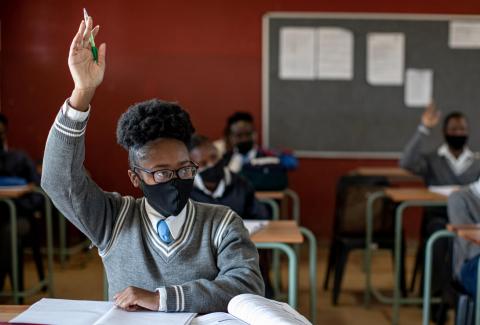
Motshekga welcomes scrapping of face masks for pupils, teachers and staff

WENDY MOTHATA

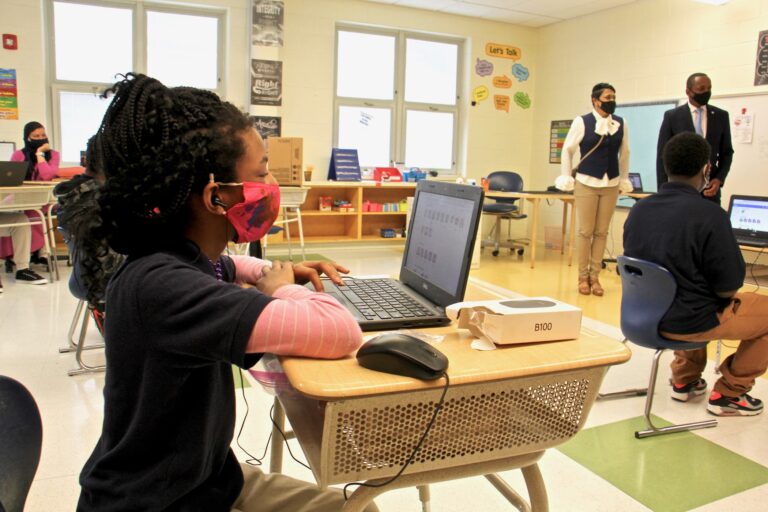
THE Department of Basic Education has announced that the wearing of face masks by learners, staff and teachers at school or in the classroom is no longer required.

This comes after Health Minister, Joe Phaahla, published the amendments of regulations in the Government Gazette on Wednesday.
As of Wednesday, South Africans are no longer required to wear masks indoors and in public areas.

“The Department of Health published Regulations on 22 June 2022 repealing amongst others, the wearing of face masks when entering and when being inside an indoor public place,” said Elijah Mhlanga, spokesperson for the Department of Basic Education.

Mhlanga said that the wearing of face masks in schools is currently optional for both learners and educators.

“The Department of Basic Education aligns itself and welcomes this new development. The wearing of face masks in schools is optional for learners and educators,” said Mhlanga.

Angie Motshekga, the Minister of Basic Education, said she supports the repealing of mask mandate for learners.

Motshekga said that learners and staff who wish to continue to wear a face mask in schools will be allowed to exercise this option.

“In line with this decision to repeal the regulations, wearing of face masks by learners in classrooms, and indoor gatherings is no longer a requirement. Those learners and staff who wish to continue to wear face a mask in schools will be allowed to exercise this option,” said Motshekga.

In March 2020, South Africa’s government ordered a hard lockdown to limit the transmission of COVID.

Schools and universities were closed. As elsewhere in the world, schools had to shift rapidly to replace in-person teaching with various forms of technology based, remote and distance education.

That shift exacerbated existing inequalities: poorer communities often struggle to access fast, reliable and affordable internet.

INSIDE EDUCATION

Germiston athlete, Divine Mavungu, reaches for the stars

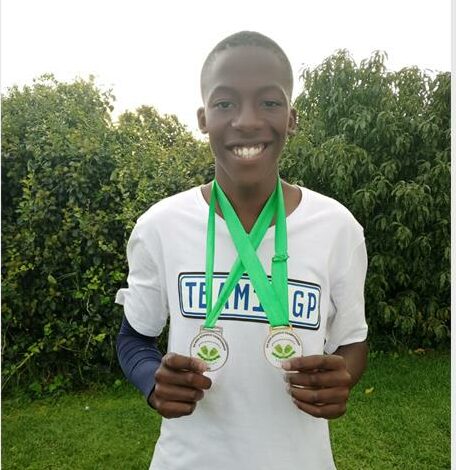
DIVINE Mavungu (14) of Hoërskool Alberton has huge sports ambitions and the future is bright for this young athlete.

This Grade Nine learner was awarded a gold and silver medal at the South Africa Schools Athletics earlier this year, which was an incredible honour for him.

“It was an amazing dream come true and I couldn’t believe my eyes,” Divine remarked.

Divine represented his school this year at the SA Schools Athletics where he came sixth in the 200m, sixth in the 100m and received a gold and a silver medal for his relay performance.

He recorded his personal best time, which was 10.91, at the provincials this year. He was also awarded his SA colours.

“Clocking my personal goals and representing my school at such a massive event is a most pleasurable feeling.”

Divine started athletics in Grade Three at Colin Mann Primary School.

“I made it to the provincials where I claimed fourth place. I qualified for the SAs, but I could not compete that year as I was too young.” His highlights include competing at the district and provincials every year since Grade Three. He qualified for SAs four times in his athletic career.

Covid-19 made it hard for him as there were no school athletics events.

He is also a member of the Boksburg Athletics Club and he competed at a provincial competition this year where he received first place and qualified to go through to the SAs but due to unforeseen circumstances, he could not compete.

It is one of his goals to compete in the Junior Olympics one day.

“I train six days a week for the whole year,” said Divine. He said he feels like he does not have enough hours in a day to do what he wants to do.

“I take my school work very seriously and that is why I always make sure that there is a balance between my academics and my athletics.”

When he gets the chance, he will focus on his school work to make sure that he knows what is going on and that he doesn’t fall behind.
Athletics is part of Divine Mavungu’s life.

“Running and exercising is what I do best. It is my happy place and where I can escape reality,” he said.
Divine said being an athlete is hard work as you don’t just train for the athletic season, but you train throughout the year to stay fit.
“I train a lot and I do need to watch what I eat and drink,” he said.

Short distances and relay are what Divine is passionate about.

Older athletes inspire him because he finds it fascinating to see how they train and compete.

“Athletes are fueled by non-believers. They possess the ability to overcome adversity like no other. Where others see fear, they see the symbolism of what they want and go for it.”

Divine was born in Germiston and grew up in Elsburg with his two brothers. He is the middle child.

In 2011 he moved with his family to Lambton where they are currently staying. When he is not busy training or catching up on school work he enjoys making gifts.

“I like being creative and making stuff. I also like inventing new things.”

He also enjoys watching TV and listening to music. When he grows up, he wants a career in the sports industry.

Something people don’t know about him is that he is frightened of birds, cockroaches and dogs.

“I also want to take this opportunity to say thank you God for blessing me with this talent. Thank you to my parents, my friends, my school and my coach, Lindie du Plessis for supporting and believing in me,” he concluded.

SUPPLIED|

Stadio Holdings, the private company taking on South Africa’s biggest universities

STADIO, the JSE-listed investment holdings company with investments in three private higher education institutions, has set its sights on creating an alternative to the University of South Africa, the largest university system in the country, with in excess of 400,000 students.

Larger universities including the likes of Stellenbosch University, UCT, Wits, and North-West University range between 30,000 and 70,000 students.

Stadio started as a subsidiary of Curro Holdings, but was unbundled in 2017, and listed separately on the Johannesburg exchange.

In 2013, Curro acquired Embury, a registered private higher education institution, which offers accredited teacher education qualifications. This was Curro’s first acquisition in the post-school education environment.

It has since acquired further prestigious registered higher education institutions, namely AFDA, Milpark Education, LISOF, Prestige Academy and Southern Business School, as well as the business of CA Connect. AFDA and Milpark Education operate independently, and the other institutions were consolidated with Stadio to form one Stadio Higher Education institution.

In a note on Wednesday (22 June), Stadio chief executive officer, Chris Vorster said the group is set to enter a growth phase with its eye firmly on widening access to quality education. It currently boasts 9 schools, over 50 accredited programmes and both on and off-campus options.

Stadio, with its current three investments in Stadio Higher Education, Milpark Education, and AFDA, has, from 2016 to 2020, focused on establishing and positioning the business.

Vorster said that in 2022, the group is still focused on the consolidation phase of the business and is positioning to implement its growth strategy, aiming for sustainable growth in profit of more than 20% in the long-term, with minimal capital requirements, whilst investigating the possibility of new markets, and further refining its systems and processes to enable continued innovation and efficiencies.

Addressing shareholders in a virtual AGM, Vorster, said that the foundation for this growth phase has been laid and is visible in the first semester with student numbers up by 11% to 38,414  at the end of May 2022 in comparison to 30 June 2021, with distance learning numbers increasing by 15%.

These figures exclude students enrolled in short-learning programmes, Stadio said.

“Of particular significance, is that new students increased by 16% relative to June 2021 with contact learning students growing by 2% to 2,355 and distance learning by 19% to 11,137 students.

“This is a good illustration of our strategy for growth, by taking new programmes to new sites. In general, new student growth provides Stadio with a good pipeline of roll-over students for the next few years,” Vorster said.

Stadio is on track to achieve its target of 56,000 students by 2026, with an 8% annual growth rate required to achieve this. “The ultimate goal is to provide top-class education to 100,000 plus students over time with a minimum of 80% distance learning students and a maximum of 20% contact learning students,” Vorster said.

“Stadio is well-positioned to achieve these goals with its overall strategy underpinned further by its purpose of widening access to education, taking cognizance of the world of work and student centredness,” he said.

The group’s latest campus in Centurion opened its first phase in 2022 at a build cost of R200 million.

Fees vary greatly, depending on the course, type of learning, location, advancement, and year of study.

Children’s mental health and the digital world: how to get the balance right

RACHANA DESAI

TECHNOLOGY has increasingly blurred the boundaries between the physical and digital worlds. This has led to dramatic shifts in daily life and changed the way children and adolescents live, socialise, move around and learn.

Never before has this been so evident than at the onset of the COVID pandemic and the subsequent exponential rise in technology and internet use. Global estimates suggest that one in three internet users is a child.

Digital technology exposes children to information, social connection, education, online support groups and professional help. Yet, children engaging in the digital world are also exposed to a range of threats.

These include inappropriate content (violent or sexual), undesirable contact with strangers and online bullying and victimisation.

The South African Child Gauge is an annual publication that aims to report on and monitor the situation of children in South Africa, in particular the realisation of their rights. This year, the theme of the report focuses on child and adolescent mental health.

Lately, there’s been increasing public debate and concern that digital technologies may contribute to mental health problems such as depression, self-harm and suicide among adolescents and children.

To contribute to the collective understanding of the experiences and consequences of growing up in a digital world, our chapter in the Child Gauge report aims to interrogate the impact of digital worlds on children’s mental health. We also want to provide recommendations for policy and practice.

How South African children use digital technology

South Africa has approximately 38 million internet users (1.5 million households).
Children most often go online on smartphones, using mobile data at home, and the level of online engagement increases as children become older.

Mobile phone plans in South Africa also provide free or cheaper access to social media platforms, resulting in social media use being much more prevalent than any other online activity, driving the content that children engage with online.
The relationship between digital technology and mental health is complex.

Understanding the impact of the digital environment on children’s mental health requires a balanced consideration of not only the potential risks, but also the benefits of the online world.

Not all exposure to online threats leads to harm. For example, participation in a public Facebook group could put a child at risk of sexual grooming, because adults sometimes pose as children.

But, this won’t necessarily lead to harm if a child is able to prevent, foresee and manage the attempted harassment.

Adolescents struggling with offline mental health problems may be more likely than others to seek out negative content online.

This may amplify their existing mental health issues and may result in self harm. But social media may also be a source of mental health information, support and professional help.

It’s therefore useful to consider how to foster the (digital) resilience of children so that they understand what risks they are likely to encounter at different ages and know when they are at risk. It’s also important that they know what to do and how to recover from adverse experiences.

Keeping children safe online

Realising the benefits of technology for children’s mental health and well-being, while restricting exposure to online threats, requires a holistic approach.

This includes recognising the role that parents and caregivers, educators, government regulators, tech companies, and children themselves have to play in promoting children’s mental health and well-being in all aspects of children’s online engagement.

Parents often think that banning social media and the internet will keep their children safe, but that’s not the case. Banning internet use may result in children being socially excluded or prevent them from accessing mental health services or information.

While parental controls and surveillance tech have their place, it’s the internal safeguards like empathy, resilience and values that are more powerful and serve children throughout their lives, whether online or offline.

Parents need to start an open dialogue with their children. This will build rapport and allow children to open up about their social media use.

Parents should model good citizenship (social literacy, community engagement, accountability, respecting others’ rights and perspectives) and healthy digital habits for their children as well.

The technology industry has a huge part to play in designing products with the best interests of the child in mind.
The privacy of young users’ personal data needs to be protected and their right to freedom of expression needs to be preserved. Systems need to be put in place to address violations of children’s rights when they occur.

School policies, regulations and guidelines should aim to balance the protection of children with their rights to privacy and to use technology in a way that’s appropriate to their age. Such policies should promote positive use of digital technologies, while taking steps to restrict access to harmful content.

Training for educators is also needed so that they can identify children who exhibit symptoms of trauma or distress as a result of online harm and can refer them to psycho-social support services. Finally, and most importantly, children need access to information, education and training to support the development of their own digital literacy skills.

They must feel confident to seek help when needed and know that it will be provided.

Dr Rachana Desai is a contributor of the South African Child Gauge 2021/2022. This annual report on the status of South Africa’s children is published by the Children’s Institute, University of Cape Town in partnership with the DSI-NRF Centre of Excellence in Human Development, University of the Witwatersrand; UNICEF South Africa; the Standard Bank Tutuwa Community Foundation and The LEGO Foundation.

THE CONVERSATION

NSFAS 2022 funding reaches 691 432 students

THE National Student Financial Aid Scheme (NSFAS) will in the 2022 financial year spend R47.3 billion in funding the tertiary education of 691 432 students.

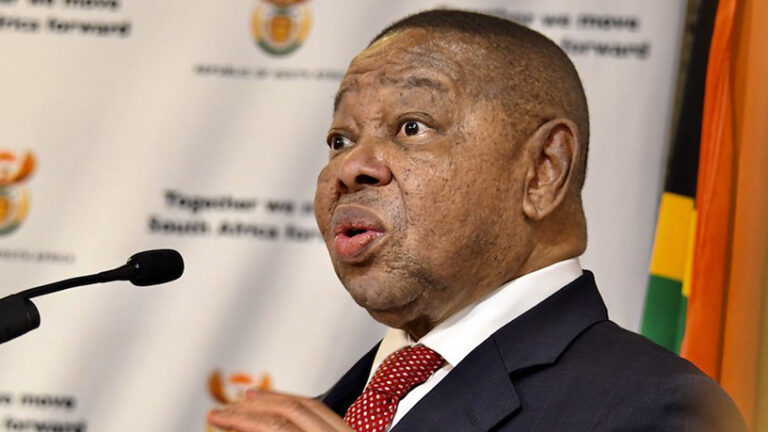
This was on Friday revealed by Higher Education, Science and Innovation Minister, Blade Nzimande, during a press briefing.

Of the approved applicants, 462 983 were female and 227 072 being male.  

Addressing reporters, the Minister said: “There has been a new intake of 240 790 SASSA students… and we will continue to support 1 770 students with disabilities who receive quite a comprehensive set of allowances from the NSFAS Fund”.

Of this allocation, he said, 362 482 was for ccontinuing students and 136 460 for new students.

He said that students registering in multiple institutions continue to be a challenge.

“We have found that 2 481 students have registered in more than one institution and NSFAS has received registration claims from more than a single institution,” he said.

To rectify this problem, students are required to deregister in institutions that they are not studying at and submit evidence to NSFAS so that funds can be released to the correct institution. 

Another big challenge identified, he said, was with regards to funding conditions not met, students following incorrect academic pathways, registering on non-aligned qualifications. He said this was the case with even new students who were registered on qualifications that were being phased-out.

“The above requires all institutions and all students to strictly adhere to the approved NSFAS Eligibility Criteria and Conditions for Financial Aid funding without deviations. NSFAS will continue to work with institutions to ensure resolution to the anomalies in the system,” she said.  

TVET CollegeStudent Funding

For 2022 TVET college bursaries, he said NSFAS projected a 10% growth in student numbers across all TVET academic cycles to an estimated 395 000 students. In this regard, NSFAS made provisional funding for 380 000 TVET College students. 

To date, he said NSFAS received registration data for close to 200 000 students. This is at about 52% of expected and provisionally funded students in colleges, he said.

“In seeking to close the gap and understand the issues at College level, NSFAS deployed its staff in May to assist TVET colleges to submit registration data according to NSFAS requirements.

“This intervention assisted in the improvement of data quality submitted by the TVET Colleges. However, this intervention is not sustainable as NSFAS does not have enough capacity to adequately support TVET colleges at various campuses in this particular way in the long-term,” he said.

The Minister said there was a need to capacitate TVET college staff on NSFAS processes.  In the regard, he said NSFAS had committed to support colleges with a contribution of R500 000 per college in the short-term period to appoint financial aid officers.

The main issue affecting the processing of students in TVET colleges, like universities, is the problem of multiple registration status and students following incorrect academic pathways.

“There were 4 287 unprocessed students not processed for payment by NSFAS because of these exceptions.  NSFAS has started a reconciliation and data sharing exercise with institutions for the resolution of these identified exceptions,” he said.

The Minister said this issue would be sustainably resolved through “systems integration between NSFAS and institutions”.

“I am informed that already there is on-going work to resolve this issue,” he said.

Nzimande said the NSFAS Board recently proposed new policy reforms to improve the efficiency of the scheme. He said had considered and agreed to these, saying the changes had proven to be positive in improving service delivery.

NSFAS administrative, student accommodation and other related challenges

After being inundated by student complaints on accommodation and being evicted by landlords, he said from next year, NFSAS would take a proactive role in NSFAS funded student accommodation in order to ensure value for money. This included standardizing the cost and quality by grading student accommodation, thus paying a standard rate based on the grading of each type of accommodation.

He said: “Through numerous engagements with students, student leadership bodies, educational institutions, and accommodation providers, it is clear that student accommodation remains a major challenge to resolve. This is the case in both private accommodation and institution owned-accommodation”.

He said there were insufficient beds to accommodate students, while some institutions did not have sufficient quantities and quality of own accommodation.

“The building of more infrastructure for student accommodation remains a priority for government, and I intend to accelerate such construction, including through partnerships with the private sector,” he said.

Further announcements will be made in this regard later this year.

This included pilots to test various strategies and plans to significantly increase the number of student beds for both university and TVET college students.

SA NEWS

UCT vice-chancellor, Mamokgethi Phakeng, appointed IARU chair

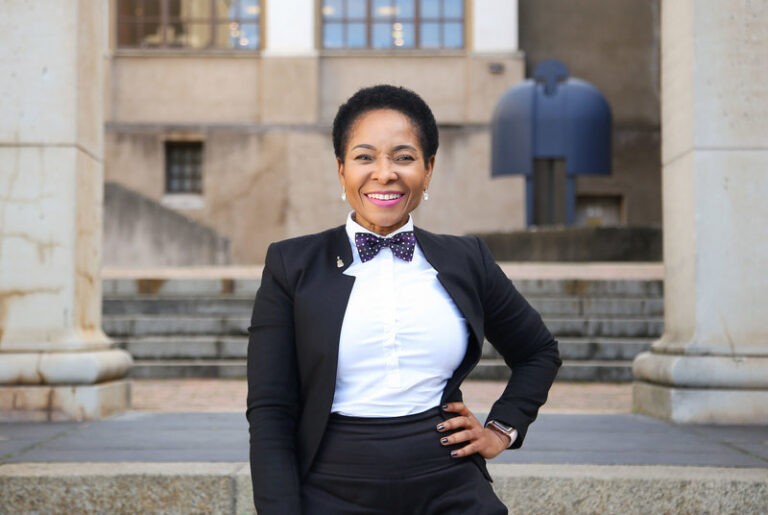
UNIVERSITY of Cape Town (UCT) Vice-Chancellor Professor Mamokgethi Phakeng has been elected as International Alliance of Research Universities (IARU) chairperson, marking the first time in the organisation’s history that it has been led by an African.

IARU, which was established in 2006, is a network of 11 international research-intensive universities from Australia, Switzerland, Singapore, China, the US, the UK, Denmark, Japan and South Africa.

The network is comprised of Australian National University, Eidgenössische Technische Hochschule Zurich, National University of Singapore, Peking University, University of California – Berkeley, University of Cambridge, UCT, University of Copenhagen, University of Oxford, University of Tokyo and Yale University.

The purpose of IARU is to promote institutional joint working on various levels of the member universities, such as inter-university networking, institutional learning and staff development.

Its projects cover a range of topics, including equal opportunities, technology transfer, technology-enhanced learning, research administration, libraries and open access.

Phakeng was elected at the recent IARU Presidents’ meeting, which took place at Cambridge University in the UK. She will succeed University of Cambridge Vice-Chancellor Professor Stephen J Toope as IARU chair at the end of this year.

“Our world is facing extraordinary challenges, and universities have a key role to play in sustaining and strengthening the global connections necessary to meet the moment. Since joining in 2016, UCT has made a significant contribution to all aspects of the alliance,” Toope said on June 20.

Phakeng will serve a two-year term from 2023 to 2025, during which the IARU secretariat will be located at UCT.
“Higher education has a critical role to play in this time of global inequality, rising nationalism and the planetary threat of climate change. UCT values deeply the close relationships within the alliance that generate the trust and insights to play a part in tackling these challenges together,” she said.

IARU has a global reach across a relatively small membership, which allows unprecedented peer-to-peer networking and sharing.
Its activities range widely from working groups focused on vital aspects of running a leading research university – including equal opportunities, cybersecurity, libraries and open access – to tackling global challenges such as sustainable solutions to climate change.

The alliance also offers opportunities for students to attend joint courses and internships.

The 11 IARU members share similar values, a global vision and a commitment to educating future world leaders. Central to these values is the importance of academic diversity and international collaboration.

ENGINEERING NEWS

Servest assists community school in Mpumalanga with masks and sanitisers

STAFF REPORTER|

THE Servest management company has provided critical support and COVID-19 provisions to learners and teachers at the Grace Christian Private School in Siyabuswa, Mpumalanga.

“Many neighbourhoods have felt the impact of the COVID-19 pandemic and the financial burden that it has imposed on communities. Our school has not been spared,” said Hendrik Mahlangu, the principal and one of the founders of the school.

The Grace Christian Private School opened its doors in 2003 with 32 learners, and has grown to 650 learners, providing education from Grade R to Grade 12.

The running operations for the school are funded by parents paying school fees, donors from the local Christian community, as well as assistance from donations from the United Kingdom (UK).

Mahlangu explains: “The cost of personal protective equipment (PPE) became too big a burden for the school, and the support provided by Servest could not have come at a more opportune time.”

“We were paying a lot on PPEs due to the COVID-19 pandemic, as it is the responsibility of the school to provide PPE to the teachers and learners. This has been an unexpected cost, and we could not include it in the school fees or impose the financial burden on parents who are already financially overburdened.”

He says that then, as if by a miracle, a UK friend of the school put Servest in touch with the school and the company came to the rescue, offering to donate the necessary PPEs.

The provisions included hand sanitisers, masks, and cleaning products to disinfect classrooms.

The donation from Servest is estimated to the value of about R354 691.

“We have been using the supplies from Servest over the past two years, and this has saved the school a lot of money,” says Mahlangu.
Grace Christian Private School says because of the generous donation from Servest and UK donors, it has in turn been able to help two other nearby schools with some surplus masks and sanitisers.

“This has reduced the strain on the educators who were trying to find funds to help protect the children,” said Mahlangu. “Educators from our schools as well as the other two schools in the area can now focus on their primary role of teaching, and not worry about operational things like PPEs. More support of this nature will go a long way for our schools.”

He explains that the school has been able to continue operating during the COVID-19 pandemic thanks to the PPE provided by Servest, as the school was able to make the necessary adjustments to minimise risk of COVID-19. Online teaching and limited live classroom teaching with alternating classes became the order of the day.

Grace Christian Private School is one of only three schools in the Middelburg region that attained a 100% matric pass rate last year. Mahlangu attributes this success to the grace of God, the dedication of teachers and learners, and the support of kind donors like Servest.

INSIDE EDUCATION

Free State and Eastern Cape confirm DStv Schools Netball Nationals finalists

THE Eastern Cape will send six teams to the nationals of the DStv Schools Netball Challenge (DSNC) Nationals that are set for 8-9 August in Johannesburg.

Youth Day saw 16 Botho and Ubuntu schools come together to vie for the top three positions available to progressing to the final stages of the competition.

The group stages saw the schools play against each other before they branched off to play in their different stream.
Despatch High School, Pearson High School and Hoërskool Grens have qualified in the Botho division while kwaZakhele High School, Humansdorp Senior Secondary School and Ngangelizwe Senior Secondary School will play in the Ubuntu stream.

Eastern Cape Schools Netball secretary Satara Ferreira says they are satisfied with how the competition went.

“It was a wonderful day with teams coming all over the Eastern Cape. It was a day marked with players celebrating their talents, celebrating their achievements and just growing as netball players and as people. Thank you to our officials for helping make the day a wonderful success as well as our coaches for preparing their teams. The day was a wonderful success and it was enjoyed by everybody,” says Ferreira.

Free State netball is also sending six schools to the nationals. C&N Sekondêre Meisieskool Oranje in Bloemfontein was the venue where 12 schools competed for a chance to represent the province at the nationals.

Also held over two days, 16 and 17 June, the schools were divided into three pools, two Botho and one Ubuntu with eight and four schools respectively.

Sekondêre Meisieskool Oranje, Hoërskool Sentraal and Bethlehem Hoërskool Voortrekker have qualified in the Botho division while Teto Secondary School, Ikaheng Zakheni Secondary School and Thakameso Comprehensive Secondary School will represent the province in the Ubuntu section.

The schools had to first battle in their respective groups and the top two schools in the Botho pools proceeded to play in the cross semifinals the schools that finished in the top three in the final round moved to the nationals.
While the Ubuntu teams played against each other in a round robin format in their group the teams that finished from first to third progressed to the final round.

SUPERSPORT

Three big changes coming to schools in South Africa, including promotion of mother-tongue teaching and learning

BASIC Education minister Angie Motshekga has announced several changes to national assessments and subjects at the schools in South Africa.

Presenting her department’s budget vote in the National Council of Provinces (NCOP) on Wednesday (15 June), Motshekga announced that Khoi, Nama, San and sign languages will officially be introduced as additional subjects in South Africa’s school curriculum.

The minister also provided further details about the proposed policy shift to promote mother-tongue teaching and learning in schools.

“We increased the number of languages in the sector. We have added additional languages in our list of subjects; they are Khoi, Nama, San as well as African sign languages.

“Had it not been for the disruptions of Covid-19, the introduction of Swahili in our schools would have started. We are still pursuing it and Tanzania and Kenya are willing to assist us to finalise plans to introduce the language in South African schools,” she said.

Language shift

Motshekga also told the house that it was time for South Africa to begin a serious debate on mother-tongue teaching and learning, as currently children only learn in their mother tongue until grade three and then switch to English or Afrikaans as a medium for learning.

“More than 80% of children continue to learn in a language that is not their mother tongue. I think we are the only continent teaching children in a language that is not their home language, and this continues to contribute to under-achievement and poor performance. We must have a policy shift in this area,” she said.

Motshekga gave an example of the Eastern Cape province, which has piloted mother-tongue teaching from grades 4 to 12. “It is showing that learners who have been taught in their mother tongue perform better. Other provinces are on their way and we will report soon about progress in mother-tongue instruction in our schools,” she said.

The minister added that if children have to read with meaning by the age of 10, they should do this in their mother tongue, like every other child in the world, rather than expect them to read with meaning in a language they do not understand.

New certificate 

The minister also announced that the department will be introducing a general education certificate for grade 9. It is being piloted in 268 schools nationally and in 2023 it will be expanded to all districts.

The GEC is intended to formally recognise learners’ achievements at the end of the compulsory phase of schooling. Its primary purpose is to facilitate subject choices beyond Grade 9 and articulation between schools and TVET colleges.

Under the current system, hundreds of students leave the school system each year without a qualification, hindering them from finding jobs, the department said.

While the department has reiterated that this is not an exit point for learners from the school system, the certificate will provide better decision-making for learners, especially those who may shift focus to more technical subjects and trades instead of a singular focus on a college or university education.

BUSINESS TECH

United Kingdom| Thousands of good A-level students won’t get top university offer

0

MORE than 10,000 school leavers who are predicted three Bs in their A-levels this summer have not got a firm offer at any university, as competition for places at top institutions places increases.

Experts say that in recent years school leavers were entering a “buyer’s market” in university places, with applicants standing a good chance of talking their way into a good university even if they missed a grade. But this year, with elite universities fearful of over-recruiting after being forced to take more students than they wanted during the pandemic, and a demographic surge in the number of 18-year-olds, competition has been fierce.

Andrew Hargreaves, founder of Data HE, a consultancy that advises universities on admissions, and a former director at admissions service Ucas, said: “Ucas hasn’t released any official data yet, but I have been told that over 10,000 applicants with predicted grades of BBB are not holding a firm offer at any university. That is really shocking.”

Pupils predicted BBB at A-level are generally regarded as strong university candidates. But with elite Russell Group institutions giving out fewer offers or raising their entry requirements in popular subjects including law, medicine and psychology, Hargreaves said these grades will not have been good enough to net an offer on many top university courses this year. Pupils can apply to five universities, but Hargreaves thinks many BBB students have pitched their choices too high.

“This is a big failure of information and advice,” he said. “We’ve been saying for the past decade that it is a buyer’s market, but the environment has now changed, and Ucas and advisers in schools really need to be stressing that.” Hargreaves said it was fine for students to aim high by applying to “stretching” universities, but they should also have an insurance choice at a university that required lower grades.

He suspects that some 3B students may be “holding out” for clearing in August, hoping they will be able to pick up a last-minute place at a top university. But, he warned: “I think they will be disappointed. I have 12 Russell Group clients and all are telling me they won’t be in clearing.”

Last summer, some selective universities were left scrambling to find bedrooms, seminar space and staff, after thousands of extra students got the high A-level grades they needed to secure their place.

The Ucas chief executive, Clare Marchant, wrote in a blog on Wednesday that the proportion of applications to so-called “higher-tariff” universities resulting in an offer had fallen from 60.5% in 2021 to 55.1% this year.
Prof Colin Riordan, vice-chancellor of Cardiff University, a member of the Russell Group, said: “It’s absolutely clear that this has been a competitive year for applicants. We’ve increased our entry requirements in areas at risk of being oversubscribed.”

He said Cardiff had expanded capacity in some subjects during the pandemic and “we can’t just keep on growing”.
He added: “It is also going to be much more difficult for us this year to help people who miss their offer by a grade, especially in popular subjects.”

Mike Nicholson, deputy head of education services at Cambridge University, said: “Most selective universities have been more cautious as they don’t want to get caught out for a third year in a row.”

Nicholson said that teachers had become used to many universities “saying one thing about what grades they will accept, and then in reality being prepared to drop the grade if they want someone”. He thinks that many don’t realise this has changed at leading universities.

He said: “I don’t blame teachers. They often try to be realistic with students, but ultimately the choice of where to apply rests with applicants who can be influenced by peer or parental views.”

Experts say, though, that disappointed applicants should think hard before deciding to put it all off until next year. Nick Hillman, director of the Higher Education Policy Institute thinktank, said: “If this year’s applicants think they’ve got it tough, next year’s pressure could well be worse, as there will be more 18-year-olds again.”

He added: “Students and parents need to know that there are really good courses throughout the sector, and not just at the most prestigious universities.”

THE GUARDIAN