Home Blog Page 268

The Research and Innovation Strategy Group endorses an action plan drawn from the Higher Education Conference of 2021

MATEBOHO GREEN|

UNIVERSITIES South Africa’s Research and Innovation Strategy Group has endorsed a list of actions and initiatives to focus on in 2022 and beyond, stemming from the recommendations of the 2nd Higher Education Conference of October 2021. At their second meeting for the year on 9 June, members of the Group elected a four-member task team to dissect this list of actions and draw a workable implementation programme.

In the action plan, the most dominant theme is collaboration amongst universities. Recognising the benefit, for institutions and society, of working together to advance research and strengthen innovation, the RISG will advocate greater collaboration between universities nationally, in the region and globally and encourage student and staff mobility across systems for the cross-pollination of ideas and collective resolution of global challenges.

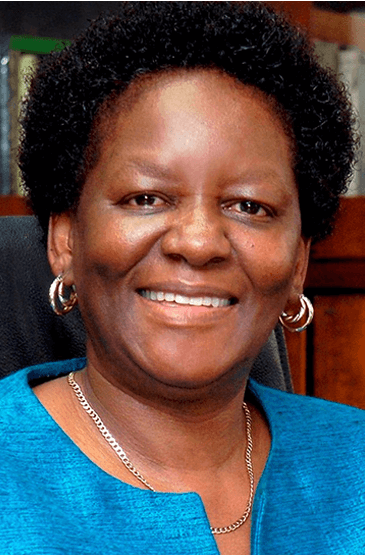
In the context of CoVID-19, the RISG, chaired by Professor Thoko Mayekiso (left), who is also the Vice-Chancellor and Principal of the University of Mpumalanga, will investigate in detail, the pandemic’s impact on research practices within institutions.

This will include identifying best practices and innovations inspired by the pandemic and exploring viable mechanisms to replicate those practices across the system. The issue of research funding also received much attention during the Higher Education Conference. In collaboration with USAf’s Funding Strategy Group, the RISG will explore alternative funding mechanisms available to universities, acknowledging South Africa’s low research funding base, including the funding crisis faced by the National Research Foundation (NRF).

At the Higher Education Conference, delegates acknowledged that research is of little use if its findings and value are not shared publicly for societal understanding. The RISG will examine multiple ways to make research findings more accessible to the public. The Group will also dedicate efforts to entrench the principle of the Engaged University by championing engaged science and scholarship, which requires more meaningful collaboration with society in research during all research processes, such as design, resourcing, implementation and, ultimately, in information sharing on findings and facilitation of mutual appreciation for research benefits.

Alongside championing engaged research, the RISG will invest more effort in promoting research quality across the system. To that end, the Group will review current research incentives to shift their emphasis from research quantity to quality, and ensure a shared appreciation of the changing focus across the system.

Finally, in its Plan of action to embed societal impact in universities’ research endeavours, the RISG will work closely with the NRF to disseminate information and facilitate understanding across the system, of the research impact criteria developed by the NRF. In 2021, the NRF decided to assess new research proposals for their potential societaland knowledge impact as part of the criteria informing research funding decisions.

According to the NRF, impact in those two respects is described as “beneficial change in society or knowledge advancement, brought about as a direct or indirect result of the NRF’s research support interventions, whether planned or unintended, immediate or long-term.”

Stakeholder updates from the sector

The 9 June meeting of the RISG also saw members receiving updates from other stakeholders, on matters of common interest in the higher education sector. From the Department of Science and Innovation (DSI), Mr Bheki Hadebe, Director: High-End Skills, informed the Group that the Department would be winding up stakeholder consultations on the Science, Technology and Innovation (STI) Decadal Plan during the coming months of July, and August. Following the consultations, the Plan would be tabled to the management committee of the Forum of South Africa’s Directors-General (FOSAD) before being presented to Cabinet for final approval. The second convening of the Inter-Ministerial Council (IMC) is planned for November.

Mr Bheki Hadebe also mentioned that the Minister of Higher Education, Science and Innovation had approved the public release of the National PhD Tracer study report. The study traced the mobility, career paths and other attributes of about 16 000 PhD graduates who graduated from South African universities between 2002 and 2018. The study was commissioned by the DSI, project-managed by the Water Research Commission and conducted by the DSI-NRF Centre of Excellence in Scientometrics and Science, Technology and Innovation Policy (ScISTIP) at Stellenbosch University. Mr Hadebe said the DSI was finalising the branding of the report for public release and however committed to making the un-branded report available to RISG members with a caution that they make the necessary acknowledgements in its usage (DSI study, project managed by the WRC and conducted by SciSTIP/CREST).

From the University of the Witwatersrand (WITS), Professor Nithaya Chetty, Dean of Science at the institution, shared information on Wits’ new initiative seeking to nurture entrepreneurial thinking to create more innovative graduates, especially at the doctoral level — while maintaining the highest levels of academic scholarship and critical thinking (more on this in a separate report.)

In addition to the updates above, the RISG members also heard from the Chief Executive Officer of the South African National Library and Information Consortium (SANLiC), Mr Glenn Truran, on the progress made to date in steering South Africa towards Open Access to global academic journals.

From the Southern African Research and Innovation Management Association (SARIMA), the President, Professor Andrew Bailey, explained measures being undertaken by his organisation to professionalise portfolios in research administration for better career pathing in distinct research management areas.

USAf also presented its own updates as Ms Janet van Rhyn, USAf’s Project Manager for Operations and Sector Support, briefed the RISG members on the 5th South Africa-Japanese Universities (SAJU) Forum conference coming up from 28-29 July, that will be hosted as an online event with Japanese counterparts. Dr Linda Meyer, USAf’s Director: Operations and Sector Support, in turn, appraised the members of the R1billion fundraising milestone that is on track to be reached in September 2022 towards student bursaries and historical debt.

Professor Thoko Mayekiso, Chairperson of RISG, expressed her appreciation at all the presentations and congratulated Dr Meyer for her on-going fundraising efforts. The meeting on 9 June was the second of three annual meetings of the RISG. The last meeting for the year will be held in October and will be a joint meeting with the Deputy Vice-Chancellors: Research.

USAF
OPINION| Curriculum transformation of higher education

ADEOYE O. AKINOLA

Post-colonial African states and their universities have refused to be seriously committed to the deconstruction of higher education curricula. South Africa is not an exception.

While successive post-apartheid administrations have tried to implement policies to stem the tide of knowledge dependency and prioritise the transformation agenda, the curriculum of universities continues to reflect western hegemony. From the 1995 National Commission on Higher Education to the 1996 Green Paper on Higher Education Transformation as well as the 1997 White Paper on the transformation of higher education, none have resulted in an effective curriculum reconstruction.

The outcomes-based education upon which the transformation agenda is constructed, focuses on increasing the quality of education, and not necessarily on expanding access to education. It was a goal-driven educational template.

Reinforcing the importance of higher education, the Green Paper notes that higher education equips people with the required knowledge, understanding, skills, and value system to become decisive actors “in a wide range of social roles and to become effective citizens”.

The country has attempted to devise an internally constructed template without success. It is thus important to draw lessons from other African countries. The launch of From Ivory Towers to Ebony Towers: Transforming Humanities Curricula in South Africa, Africa and African-American Studies was organised by the University of Johannesburg’s Institute for PanAfrican Thought and Conversation on June 8 in Pretoria. The book contributes to the discourse on transforming and interrogating western hegemonic structures that persist in higher education in Africa and attempts to shape the perceptions of policymakers.

Twenty-one stakeholders, including experts on curriculum transformation and senior officials of the Department of Higher Education and Training discussed South Africa’s effort to deconstruct universities’ curricula. Knowledge dependency, censorship, and dismissal of African history have been an integral part of the conversation around knowledge production in Africa, where the university curriculum has replicated the Eurocentric templates.

In the 1950s and ’60s, there were struggles against the dismantling of the African curriculum due to the exposure of African students to European universities. African scholars like Kenneth Dike from the Ibadan School of History, and others from the Dar es Salaam School of Political Economy and the Dakar School of Culture, began to advocate for African-driven epistemology.

These schools also adopted historiography, political philosophy, and other African knowledge systems drawn from conventional knowledge. Apart from Africa, India’s integrated, and cross-discipline approach to learning also offered an alternative framework as opposed to the westernisation of knowledge.

Universities in Africa were also caught in the post-colonial African “sympathy” for the universalism of westernisation, as giant transformative efforts of these schools of thought disappeared, while schools of higher learning such as the University of Dar es Salaam, University of Ibadan, and the University of Dakar, continue to reinforce Eurocentric thoughts. This stems from the infamous “black inferiority” conversation, promoted by some scholars to undermine African-generated scholarships.

Apart from Africa’s importation of economic and political systems of the West, the educational template reinforces acute dependency and western hegemony. Books such as Claude Ake’s Social Science as Imperialism try to emphasise the abandonment of the African knowledge system and confront knowledge dependency.

The accelerated infusion of western knowledge and digital technologies into production processes, consciously or unconsciously, enhances the predominant of Eurocentric knowledge production, to the detriment of Africa. Indeed, Africa has become the dumping ground for western knowledge, technology, and values.

Led by the editors of the book, Oluwaseun Tella and Shireen Motala, the meeting questions the use of “indigenous” for the African knowledge system. Unfortunately, many African academics and writers have continued to use such captions for knowledge generated in Africa.

The universities established during colonialism and apartheid were designed as the production hub for regime consolidations and the projection of the western value system. Therefore, based on the existing university curriculum in South Africa and post-colonial African societies, the universities are not African universities but “Universities in Africa”.

It is important for South African universities to enter the global knowledge system on their own terms by setting the agenda and producing knowledge that relates to their context and not the global precedent that has already been established.

The government needs the required political strong will to achieve the transformation agenda.

* Akinola is the Head of Research and Teaching at the University of Johannesburg’s Institute for Pan-African Thought and Conversation.

WhatsApp bot bolsters early childhood development

THE next phase in the development of early learning social franchise SmartStart’s WhatsApp chatbot is to ensure it also provides parental support.

This is according to Ebrahim Vally, chief product officer at Helm, speaking to ITWeb about what’s in the pipeline for the early childhood development (ECD) chatbot.

Formerly Praekelt Consulting, Helm helped SmartStart develop its multilingual WhatsApp chatbot named ‘Funda’, which means to ‘learn’. The chatbot automates a lot of the admin that ECD learning practitioners encounter in their daily activities, giving them time to focus on the more important parts of their work.

This includes the ability to register children using simple-to-follow points via the bot, complete attendance registers at the end of each week, look at lessons, plan activities, as well as access educational resources.

Vally indicates the chatbot was first only for ECD caregivers. However, Helm is looking at different options of offering similar information to parents as well.

“In that time when they’re in a taxi, for example, parents can look at the content, prepare and have ideas about what they’ll need to spend time teaching their child in the evening at home.

“That’s one of the things that hopefully we should be able to launch soon,” Vally notes.

Established in 2015, SmartStart aims to provide quality early learning for children aged three to five. Its franchised programme is delivered through playgroups, day mothers and ECD centres, to improve children’s readiness for learning and school performance.

In addition, it allows franchisees, known as SmartStarters, to run their own SmartStart programmes within their communities.

According to Vally, SmartStart identified there was a gap within the three to five age group, with about one million children with no access to early learning initiatives.

SmartStart approached Helm to find a way to make it easier for franchisees and caregivers to gain access to the content, information and registration.

“They approached us and we came up with the chatbot. The reason we went with WhatsApp was we felt it would be the easiest way to get adoption for the franchisees located in really rural areas and in places where connectivity is an issue.

“Also, when we did our research and user testing, it [WhatsApp] was something that we found was easily acceptable and would be adopted by the franchisees.”

The chatbot aims to save a person time and money spent on transport to upload an attendance register in order to get their stipend, he points out. “Not only that, but we can now offer the collateral and content for the training, the daily activities, etc.”
The content on the chatbot is available in all 11 official South African languages.

“It’s not just translating English into Setswana; there are some changes that needed to be done, in order to really fully get the context of what a specific sentence might say. It’s important to carry the full context of the translation over. We decided to do that in all official languages as a start, especially for the content about the training.”

SmartStart’s WhatsApp chatbot has over 4 000 unique users/practitioners, with a retention rate of 71%, according to the company. It also has 1.54 million automated interactions to assist practitioners.

Currently reaching 103 000 children, SmartStart has a target of reaching one million, which Helm is fully behind, adds Vally.

“We’re trying to work together with SmartStart but the issue we currently face is that there’s a limitation on connectivity and devices. At the moment, the cost of data and connectivity is really high. The introduction of a lower cost device will allow more engagement.

“If we can overcome these barriers, it will make adoption a lot faster and allow us to reach that goal and also increase the amount of franchisees – it will almost double the amount of users on this specific platform,” he concludes.

ITWEB|

Code like a girl| Vodacom gets 700 South African girls coding to narrow the gender digital divide at an early age

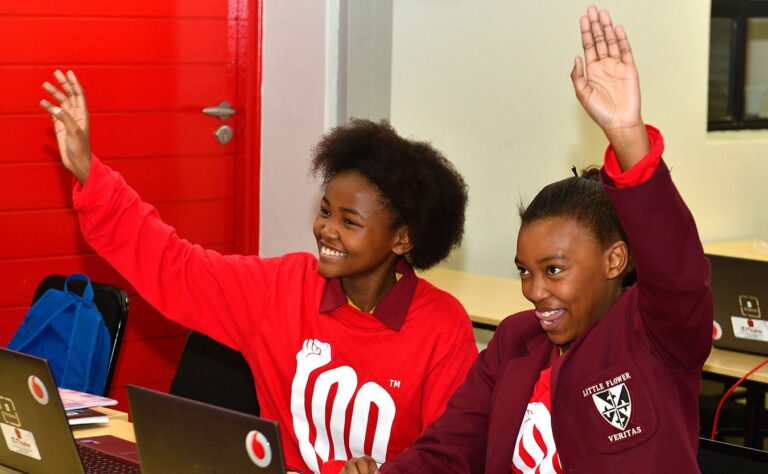
VODACOM has launched a follow-up to its stimulating #CodeLikeAGirl programme that will see 700 girls between the ages of 14 and 18 receive coding training from 27 June – 15 July 2022.

The Vodacom #CodeLikeAGirl programme is aimed at inspiring more girls to explore careers that require coding skills to help them get a start in the Science, Technology, Engineering, and Mathematics (STEM) fields and industries.

Often referred to as the jobs of the future, STEM drives innovation, social wellbeing, inclusive growth, and sustainable development the world over.

Female participation is lagging in STEM fields in most countries. A report by the United Nations Educational, Scientific and Cultural Organisation (Unesco), titled “Cracking the code: Girls’ and women’s education in STEM” indicated only 35% of STEM students in higher education globally are women. Young women also comprise only 25% of students in engineering or information and communication technology (ICT).

Njabulo Mashigo, HR director for Vodacom South Africa, says: “Gender norms, culture and stereotypes are still shaping girls’ choices about their studies and their eventual careers, which is why so few consider STEM and ICT careers. We need to create more opportunities for girls and young women to build confidence in STEM, by empowering them through education and coding skills, so they can become the engineers and innovators of the future. Our vision is to address the underrepresentation of women and girls in STEM education and careers. Through this initiative, we are looking to improve on these numbers, and empower even more women to explore STEM careers.”

Coding is the process of transforming ideas, solutions, and instructions into a language that the computer can understand, using programming languages like Javascript, Java, C/C++, or Python, to act as the translator between humans and machines.

The “Code like a Girl” programme aims to develop not only coding skills but also valuable life skills for girls aged between 14-18 years and encourages them to consider careers in ICT and STEM. It provides authoritative mentors for the girls to inspire them to be passionate about technology and its possibilities.

During the week-long training course, pupils will be exposed to knowledge of computer languages, robotics and development programmes including HTML, CSS, GitHub and Version control, Bootstrap and JavaScript, Basic Computer and Introduction to Coding. They will also be taken on a fun and empowering life skills journey while developing coding, presentation, and communication skills.

At the end of the week, each girl will know how to develop her own website and present her work to the rest of the coding class. The programme was first implemented in South Africa, Mozambique, Tanzania, DRC and Lesotho in 2017. In SA alone, since the programme was launched, Vodacom has trained 2 332 girls. It had its biggest intake in 2021, with over 1 000 pupils from eight provinces taking part. Vodacom aims to train1 500 girls from across all nine provinces in the current financial year. This investment by Vodacom in digital skills training programmes for young women will help to narrow the gender digital divide at an early age in South Africa.

Mashigo says: “Projects such as Vodacom’s #CodeLikeAGirl have the potential to significantly close the gender gap and inspire young girls to pursue STEM careers in the digital era towards which we are transitioning. I believe that we can ultimately change the outlook of the number of women in STEM careers, helping them to shape the future.” 

SUPPLIED

Study: Prompting, Self-Management Yield Better Classroom Results Than Other ADHD Accommodations

  • Prompting students and teaching them self-management strategies reduce disruptive behaviors and increase classroom engagement in adolescents with attention deficit hyperactivity disorder (ADHD or ADD) more effectively than do allowing frequent breaks or fidgets, according to a small study published in the Journal of Attention Disorders.

The study found that redirecting students with ADHD back to a task (prompting) and teaching them strategies to independently regulate their behavior (self-management) decreased disruptive behaviors and task initiation time and increased task engagement more than implementing popular classroom strategies such as breaks or use of sensory items or fidgets.

According to the study’s authors, prompting, taking breaks, and sensory proprioception are widespread accommodations used for students with ADHD. The first two often appear as part of Individualized Education Plans (IEPs). On the other hand, self-management strategies are a frequently recommended intervention that is not typically found in IEPs. The authors noted that research supporting specific practices over others is lacking, and such research could inform IEPs.

The researchers evaluated the efficacy of prompting, teaching self-management, encouraging sensory proprioception, and taking breaks in 15 sixth and seventh graders during 20 sessions, each one lasting 20 minutes.

Students were randomly assigned one of the following four strategies in each session.

  • Prompting condition: Researchers pointed to the task or told a student to continue working if they went off-task for five seconds.
  • Self-management condition: Students checked “yes” on a paper form if they stayed on task for five minutes (indicated by a timer alarm) or “no” if they were off task when they heard the timer ring.
  • Sensory proprioception: Students selected a sensory item (fidget toy, stress ball, etc.) to use throughout the task.
  • Breaks: Students took a five-minute break after working for ten minutes.

Data analysis showed that prompting and self-management strategies delivered the most desirable outcomes in student behavior and engagement, while sensory proprioception resulted in minor or no desired effects.

However, researchers noted that participants were not “fans” of prompting or self-management, viewing the former as “annoying” and the latter as “distracting” (even though it encouraged them to pay attention to their work).

According to the study authors, the effectiveness of self-management aligns with recent research indicating that teaching students with ADHD how to independently manage their behavior is more effective than implementing strategies such as allowing extra time on tasks or distributing a copy of the teacher’s notes.

The findings of this study also build on research supporting prioritizing classroom interventions for students with ADHD above accommodations.

Additudemag

Industry body initiatives boost research, skills building

SINCE the launch of the Cement & Concrete South Africa (CCSA) last year, the organisation has hosted a range of educational and concrete research and development initiatives to promote research, and improve skills and education, in the cement and concrete industry.

The first of these CCSA initiatives is the Young Concrete Researchers and Engineers Technologists Symposium (YCRETS) that promotes research in the local industry.

The YCRETS initiative was initially planned to begin in 2020, but was delayed to early 2021, owing to the Covid-19 pandemic.

YCRETS showcased 24 technical presentations from young concrete researchers, engineers and technologists on July 13 and 14 last year.

“This was a virtual event during which young students and researchers 35 years and under would have an opportunity to interact with academics and discuss their research work. “The presentations were of an excellent standard, and we’re hoping to do another event later this year,” says CCSA business development manager Hanlie Turner.

The initiative also involved academic staff from the University of the Witwatersrand, in Gauteng, forming a scientific committee that analysed and peer reviewed presentations that were submitted.

Turner states that CCSA is also creating a scientific committee in conjunction with the Stellenbosch University to have a YCRETS hybrid event in Stellenbosch, in the Western Cape.

“YCRETS has provided great exposure for young students and researchers. The presentations were published in the online proceedings as well as in our quarterly magazine.”

She adds that YCRETS helps to introduce young students to the industry and enables contractors and cement and concrete companies to identify potential candidates for employment.

YCRETS is also not limited to students at academic institutions, as young technologists from private companies can contribute their own research.

Another CCSA educational initiative is the 19 CONCRETEFiX webinars that have been hosted to date, covering a range of topics.

Turner states that the webinar series was initiated in 2020 – before CCSA was consolidated from multiple industry bodies – particularly amid the onset of Covid-19 and demand for online educational opportunities.

“This year, we’ve planned to do a webinar once a month. The tenth edition of Fulton’s Concrete Technology handbook was published last year, and we are getting the authors of some of the chapters in the handbook to present during these webinars. “This will enable the authors to elaborate and provide more background information on their chapters,” she explains.

Holding these webinars provides an opportunity for people who are not able to attend physical classes to become educated on cement- and concrete-related topics.

She also highlights the 2022 Fulton Awards, held earlier this month, which had 24 submissions this year.

The awards are held every two years for excellence in concrete design and construction, and the winners are chosen as entire teams responsible for producing a submitted constructed structure or development.

The categories include buildings of up to R50-million in value, buildings worth more than R50-million, infrastructure of up to R100-million and infrastructure of more than R100-million, as well as innovation and invention in concrete.

“This isn’t just a judgment based on a written submission – the judges, comprising a materialist specialist, structural engineer and professional architect, would visit and assess projects on site.”

She highlights another benefit to this year’s awards being that CCSA became an international partner of industry body the American Concrete Institute, which also has an awards scheme. The winners of CCSA’s five categories will be entered into the American Concrete Institute Awards.

Further, the CCSA KwaZulu-Natal branch introduced the Careers in Concrete initiative last year to promote diverse career opportunities in the cement and concrete industry.

Owing to the successes of this initiative, Turner says the branch is looking to expand this initiative to other education institutions in the province.

While the initiative was done in partnership with the University of KwaZulu-Natal, the KwaZulu-Natal branch is engaging with the Durban University of Technology on the possibility of partnering with the institution on this initiative.

The CCSA is also examining the possibility of running this initiative with academic institutions in the Western Cape, and Gauteng CCSA branches in the future.

“The challenges of the past year were formidable, but presented opportunities, and opportunities culminated in development. This is exactly what CCSA stands for: a unified body to lead the local industry towards relevance and growth. We are confident that CCSA will grow even further in its second year of establishment,” she concludes.

Engineering News

Police searching for suspects in North West University student’s death

POLICE in the North West are searching for suspects, after the body a 21-year-old student was found in his room at one of the students’ residences at the North West University’s Mahikeng Campus two weeks ago.

Police spokesperson Colonel Amanda Funani says information received, indicates that the victim’s body was found lying on his bed by a friend.

The victim was reportedly last seen last week Friday with his friends.

Funani has called on anyone with information to contact the Mmabatho Police Station.

She says, “The parents became suspicious after failing to reach their son on his cell phone on Saturday and Sunday morning. The university security managed to open the victim’s room and he was found lying dead on his bed. Initially, an inquest docket was registered, but it was changed to murder after a preliminary post-mortem report revealed that the victim died due to head and multiply body injuries.”

The North West University says it will provide support to the investigating team.

It has named the victim as Onkgopotse Kgeletsane.

It says counselling has been provided to fellow students.

Meanwhile, a 39-year- old man has stabbed to death his female partner of the same age at Maelula village outside Louis Trichardt in Limpopo.

Police spokesperson Brigadier Motlafela Mojapelo says the man later hung himself at his parent’s home at the neighbouring Murunwa village.

The body of the deceased woman, Phumudzo Mukhatho, was found with several stab wounds.

The deceased man has been identified as Edson Nematswerani.

Police suspect domestic related dispute as being behind incident.

STAFF REPORTER

South Africa’s epochal 1976 uprisings shouldn’t be reduced to a symbolic ritual

JULIAN BROWN|

ON the morning of Wednesday, 16 June 1976, young students from schools across Soweto set out on a march through the sprawling black township outside Johannesburg. The march was to amplify their opposition to the apartheid government’s new school-language policy that would see Afrikaans replace English as their main medium of instruction in several key subjects.

Before the march began, they were confident. They knew the risks that they faced – “we decided that there should be no placard inciting the police as such, one activist put it afterwards, because “we wanted a peaceful demonstration – it had to be disciplined”. Even so, they were excited, believing that the march would be a carnivalesque event, “a Guy Fawkes thing,” as one put it – an event in which the world would be turned upside down.

Their excitement buoyed them in the early hours of the morning, as thousands of students joined in the march. But this atmosphere did not last.

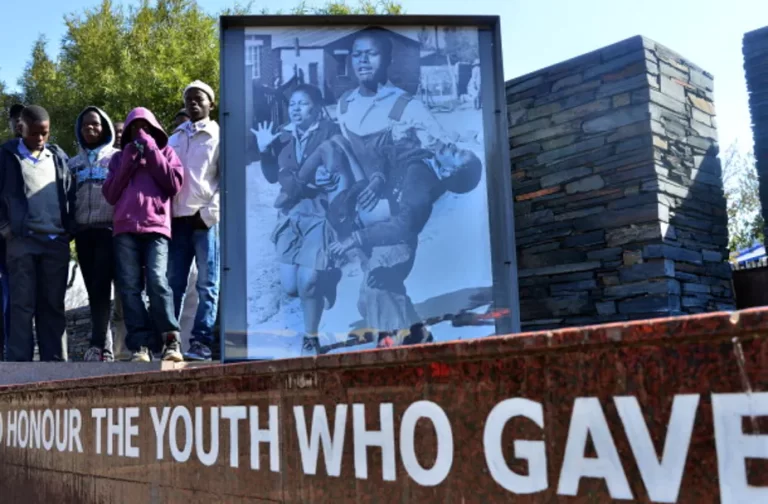
A few hours into the march, heavily-armed members of the South African Police confronted a crowd of students near the Orlando West High School. They fired tear-gas at the students, and then, moments later, fired live ammunition. In the moments that followed, they shot and killed Hector Pieterson an eleven-year old child. As if energised by this death, the police continued to assault and kill students.

In the hours that followed, another 10 people died at the hands of the police. Over the next three days, at least 138 people died. And the deaths did not stop. Throughout the rest of the year, the police and military would patrol Soweto and many other sites of popular resistance, and use whatever force they deemed necessary to suppress dissent, quash protest, and establish order.

These protests reignited the public flame of resistance, and helped re-make the opposition to apartheid. They provided a model and an example for activists to follow into the 1980s.

June 16 in perspective

Today, 46 years later, South Africa commemorates June 16th as National Youth Day.

It is no doubt important to do this, and to remember the sacrifices and struggles of the past. But in commemorating this day, South Africa runs the risk of sacralising these events – of lifting them out of their historical context, stripping them of their political complexities, and remaking them into a mere symbol, something that only needs to be remembered once a year and then forgotten the rest of the time.

In my book, published on the eve of the 40th anniversary of June 16th, The Road to Soweto, I argued that the sacralisation of this singular day has distorted understandings of South Africa’s post-apartheid democracy.

It is now almost trite to suggest that the political order of post-apartheid South Africa was forged in conference rooms and around negotiating tables in the 1990s; that the conversations, debates, and arguments between the representatives of the negotiating parties are what shaped the terms of the country’s political institutions and laws; and that the country constitution is best understood as the product of an elite idealism. All of this is at least partially true.

What is wrong with this vision is that it leaves out the role of ordinary people taking to the streets –- the role of protest, of marches, of popular organisation, dissent, discordance, creativity, and struggle –- in making the post-apartheid democratic order.

It presumes that the state is the beginning and the end of the political order; that democracy is only achievable through representation; and it presumes that “the people” are a political resource to be deployed by elite actors (whether these be politicians or intellectuals, revolutionaries or revanchists) and not a source of political ideas in themselves.

But this is not true.

Making democracy

While democracy may be encouraged and entrenched through institutions and ideas, it is first made through action. The students who marched on 16 June 1976 did more than simply register a political opinion.

They enacted an alternate form of politics. By gathering and marching together, and by acting together they constituted themselves as political agents – as people who already possessed the kind of agency that the apartheid state denied they could ever claim. And by marching side-by-side – regardless of their age and gender, status and authority – they constituted themselves as a democratic force, as a community of equals.

As I’ve argued before, this form of politics is not merely a product of the past, not merely a product of the anti-apartheid struggle. Instead, it has marked – and still marks – popular dissent and democratic organising in South Africa since the end of apartheid.

Over the past two decades, such forms of popular democracy have marked the struggles of Abahlali baseMjondolo, a shack-dwellers movement that organises in informal settlements across South Africa. It has driven the activism of the Treatment Action Campaign, and its grassroots work to force the state to provide anti-retroviral medication. And it has led to labour activists, unions, and other communities achieving significant changes in the platinum mining industry.

The roots of democracy lie in these actions, in these claims to agency and equality. These acts are themselves rooted in a complex pattern of joy and anger – in the desire to turn the world upside-down, and emerge out of specific historical and social contexts. But they can transcend these moments. They can open up a channel, create a model, and instigate a revolution.

In other words: if the events of 16 June 1976 are seen as an ongoing part of the process of constituting democracy in South Africa, then we can see it as part of contemporary political struggles – and not just as an historical event, safely sealed away in the past.

The marches, protests, and pickets that mark contemporary South Africa are the source of a continually-renewing (and, perhaps, continually-mutating) democracy. The institutions of the state may shape the ways in which this democracy develops, but they do not create it. “The people” make politics.

At this moment, as South Africa’s political elites continue to be mired in scandal, as the state bureaucracy struggles to fulfil its functions, and as scholars and activists question the legitimacy of the constitutional settlement, the anniversary of the uprising of 16 June 1976 in an opportunity to think about what post-apartheid democracy can mean.

It does not only mean the forms and institutions that define the democratic state. It must also mean the ongoing acts of ordinary people, the acts that assert and imagine democracy on the streets over and again.

(Julian Brown Associate Professor of Political Studies, University of the Witwatersrand)

THE CONVERSATION

Big language change coming for schools in South Africa

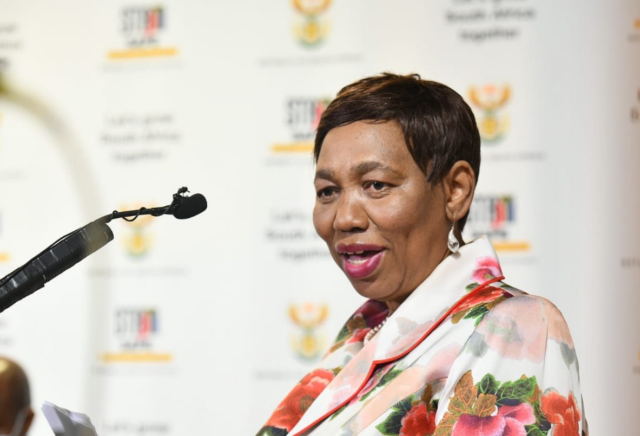
BASIC Education minister Angie Motshekga says her department is developing a new plan to promote the nine previously marginalised languages at schools in South Africa – other than English and Afrikaans.

Responding in a recent written parliamentary Q&A, Motshekga said the plan will see these languages used as ‘languages of learning and teaching’ from Grade 3 and beyond. Languages which will be featured in the programme include:

  • IsiZulu;
  • IsiXhosa;
  • IsiNdebele;
  • Siswati;
  • Sesotho;
  • Setswana;
  • Sepedi;
  • Tshivenda;
  • Xitsonga.

Research worldwide shows that learners learn best through their home languages, Motshekga said.

“The Department of Basic Education, through the Eastern Cape Education’s own initiative, piloted the Mother Tongue Based Bilingual Education wherein IsiXhosa and Sesotho were utilised as languages of learning and teaching for mathematics and science and technology beyond Grade 3,” she said.

“The learnings from the Eastern Cape Mother Tongue Based Bilingual Education pilot taught us to be very prudent in dealing with a programme of this nature.”

Motshekga added that her department was working with the Department of Higher Education, Science and Innovation (DHESI) on teacher production to ensure that there are enough teachers to instruct students across these nine languages in key subjects.

The minister has previously acknowledged that there are issues with moving to a purely mother-tongue-based system, noting that it was likely impossible to have a pure class in Sotho or Xhosa in Gauteng the way similar classes have been held in the Eastern Cape.

She added that in classes teachers use multiple different languages to help children learn and get their point across. However, when it comes to assessments – which are typically done in English – they are once again forced to grapple with a language they did not understand while learning.

“They are no longer being tested on their cognitive development or understanding (of the work). You are now testing their language abilities, which is a problem.

“Government has begun the process of changing this and the next step is to assess them in the language they are taught – so that we are able to assess performance and not language proficiency.”

She added that government would have to use technology and other systems to effectively translate complicated scientific and mathematical concepts into languages that do not necessarily have the same terminology.

BUSINESS TECH

Liberia: President George Weah Promises to Pay the Graduation Fee for 456 graduates of the AME Zion University

0

SMILES could not cease from the faces of the graduates of the African Methodist Episcopal (A.M.E) Zion University as the Liberian President George Weah announced at the 31st Graduation ceremony that he will pay the graduation fee for all 356 graduates.

Each of the 356 graduates was to pay US$450 and with that, the President will have to pay US$160,200 in fulfillment of his promise.

Weah, after giving the keynote address at AME Zion University 31st Convocation program, a faculty of the institution announced that a significant portion of the graduates was still owing graduation fees.

However, being generous, the President sent a message to the faculty who was giving the announcement that he will pay all 356 graduates’ graduation fees.

Weah, according to record, has been the first President to pay all graduation for under-graduate level. The move by the President comes after he paid for all students from the University of Liberia graduate school.

In March 2022, Weah paid the amount of $55,800 to the University of Liberia authorities through the president of the class to cover all the expenses for 124 students who graduated from various disciplines.

Also, speaking earlier, the Liberian President told graduates to work hard, adding that success will not come to the graduates if they rest on what they have achieved.

According to the President, after adequate preparation, success will only come to those who are dedicated and disciplined enough to do the work.

“I want to encourage you to dream and to dream big dreams. But then, I advise you not to make dreams your master but to wake up from the sleep of dreams and go to work to make it happen. Most dreams will not come true without hard work, struggle, and sacrifice,” the Liberian Leader said.

Weah added: “I want you graduates to know that failure is a crucial part of success. Failure teaches you a lesson that you must be willing to learn, and only when you learn that lesson, will you benefit from your failure.”

According to President Weah, in his own career, there were many failures along the way but he was able to triumph over every problem that came his way.

“In the beginning of my soccer career, for example, I was benched many times before I became a regular member of the starting teams. But I used my time on the bench to study the game and the other players, and learn from their mistakes, so that each time I got the opportunity to play, I tried to make sure that I made a positive.”

Weah added: “And you are all aware that in my political career, I ran for President and was defeated twice, but I did not give up. Each time, I took stock of my journey, and I went back to where I had left my dream, and recalibrated, and continued my journey. Eventually, I applied those lessons to develop a winning formula. And here we are today.”

Also, at the event, Weah was honored for what the university terms as his outstanding contributions, and achievements to humanity and society.

“The Board of Trustees of the AME Zion University by recommendation of the Faculty Senate, and president of the AME Zion University, has herewith approved the conferral on you, George Mannah Weah, the Degree of Doctor of Letters (L.H.D.) honoris causa in international Relations,” the University citation quoted.

It is not the first time President has been honored by the university.

The President received his first-ever honorary doctorate degree, 23 years ago from AME Zion University. The degree of Doctor of Humane Letters (Honoris Causa) was conferred upon him in recognition of his efforts, achievements, and humanitarian gestures as a philanthropist and a world-class athlete.

The AME Zion University commenced in 1993 with the founding of the AME Zion School of Business, attached to the AME Zion Academy.

In 1987, the AME Zion Community College was established, offering Associate Degrees in Criminal justice administration and law enforcement, liberal art, and business, as well as Diploma in Trauma Counseling, and its first convocation in May 1989.

In 1996, by an act of the national legislature, the AME Zion University College was established with the Reverend Frederick Umoja, serving as its first president.

FRONTPAGEAFRICA