Home Blog Page 270

Only 4% of students that start grade 1 in South Africa end up with degrees: Nzimande

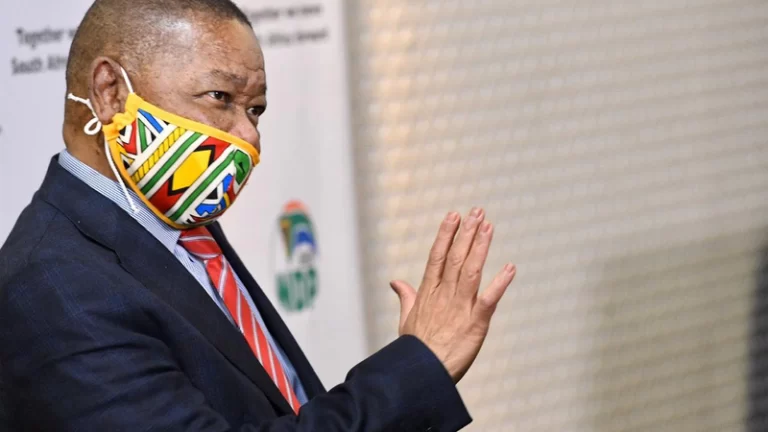
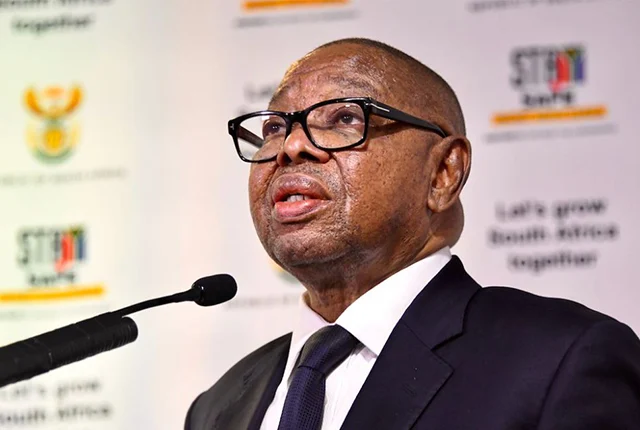
HIGHER Education, Science And Innovation minister Blade Nzimande says the country needs to produce more graduate students if it is to meet its workforce needs.

Speaking at a fuel meeting on Thursday (9 June), Nzimande cited the country’s current graduate statistics and how few students ultimately make it through SouthAfrica’s school system.

“One of the challenges that we need to confront head-on, is the number of students who enter our university system, as a proportion of those who started Grade 1. Out of 100 students, only 12 access our university system, and only six complete – four with a degree.

“This clearly indicates that there are many young people who are lost through the system. We, therefore, need to cater for these students for us to expand our post-school opportunities.”

Nzimande added that the government has made a significant effort to open the education system to more students, with the majority of current university students receiving some form of fiduciary support.

“I must indicate that through government funding, we are already funding a substantial number of learners in our institutions.  Out of 1,110,361 university enrolments, 76.6% and out of 508,445 TVET college enrolments, 98% are funded through the National Student Financial Aid Scheme (NSFAS).”

Growing problem 

South Africa’s education outcome could be further exacerbated in the coming years a new study by Stellenbosch University shows.

The study shows most learners in South African schools missed at least three-quarters of a school year over the course of 2020 and 2021, due to the Covid-19 pandemic, lockdowns, school closures and rotational timetables that were introduced to maintain social distancing in classrooms.

These lost school days are known to have affected learning, but lack of data has thus far limited attempts at measuring learning losses. The only two studies measuring learning loss thus far were limited to fairly small samples of learners in relatively poor schools, to reading and only to the lower grades.

The Stellenbosch University study considers a much larger sample, virtually all public schools in the Western Cape, across Grades 3, 6 and 9 in both Language and Mathematics, comparing 2021 performance with that in 2019.

By investigating performance in the Western Cape Systemic Tests that are written in Grades 3, 6, and 9 in both Language and Mathematics, the study was also able to compare the performance of the same schools on the same questions in 2021 to performance in 2019.

Some of the key findings of the study include:

  • Low average marks were evident already in 2019 for Grade 3 Language (42.7%) and Grade 9 Maths (37.7%), despite many multiple-choice questions.
  • Conservatively estimated, learners have fallen 40% to 70% of a school year behind earlier cohorts in Language and much more, 95% to 106% of a school year in Mathematics.
  • In most tests, girls significantly outperform boys. In Grade 9, boys experienced greater learning losses, wiping out the pro-boy advantage in Mathematics.

“The findings are indeed extremely concerning – losses in mathematics tend to be the largest, even when using a relatively conservative measure (assuming that a year’s learning is as much as 40% of a standard deviation in primary and 30% in secondary schools, the losses indicate that learners in 2021 had fallen more than a year of learning behind learners in the same grade in 2019,” the researchers said.

“In language, losses are smaller, around three-quarters of a year equivalent in terms of learning.”

The researchers added that two policy areas require special attention:

  • The first is to find more time for Mathematics, to overcome the deficit that has accumulated during the Covid years. For instance, Grade 9 learners in 2021 are performing more than a year behind Grade 9 learners two years earlier, so they must catch up a full year before they write matric.
  • This requires that they progress more than four years in the three years before they write matric.
  • In Language, the big challenge is to ensure that reading has been mastered in the Foundation Phase, while at the same time giving urgent attention to ease the language transition.
  • Weak reading skills and English vocabulary can inhibit all further learning for the majority of learners who have to make this language transition.

BUSINESS TECH

Wits University calls for the immediate reinstatement of Dr Tim De Maayer

WITS University says it is appalled to learn of the suspension of Dr Tim De Maayer, a paediatric gastroenterologist based at the Rahima Moosa Mother and Child Hospital, and who is also a joint appointee of the University of the Witwatersrand.

Dr De Maayer was served with a precautionary suspension for having spoken out against the conditions in the Hospital.

In a statement, Wits University called for the unconditional and immediate lifting of his suspension by the Gauteng Department of Health.

“This is a ludicrous situation – instead of resolving the issues raised by the doctor at the coalface, the Department has chosen to shoot the messenger,” said Professor Shabir Madhi, Dean of the Faculty of Health Sciences.

“It is not like our healthcare professionals have not raised these issues multiple times through the correct channels, but nothing has happened. How much louder can our doctors and clinicians on the ground speak?”

“These actions are against the spirit of the agreement between Wits and the Department with regard to the management of our joint staff,” added Madhi.

The university has been in contact with the Gauteng Department of Health since the suspension was announced and are optimistic that it will be rescinded.

Failing the lifting of the suspension, the university said it will embark on a public protest in support of Dr De Maayer.

Gauteng Health MEC Nomathemba Mokgethi said that she had been made aware of the precautionary suspension.

“The Gauteng department of health once again acknowledges the issues previously raised by Dr De Maayer. The department concedes that there are challenges within the health system in the province and in the country in general, which require multifaceted interventions. The department remains committed to tackling these challenges while continuing to render services to millions of patients annually,” she said.

INSIDE EDUCATION

UJ ranks second on the continent and in South Africa

THE latest QS World University Rankings have boosted the University of Johannesburg’s (UJ’s) standing in South Africa and on the African continent.

According to the latest figures, UJ now ranks second in South Africa and in Africa, climbing up one position.

UJ Vice-Chancellor and Principal Professor Tshilidzi Marwala said the achievement was “tremendous” as UJ went up against 2 462 academic institutions.

Globally, UJ ranks 412, up from 434 last year. It also ranked 94.3 in the International Research Network and 88.1 in the International Faculty Ratio category.

The QS World University Rankings account for global academic and employer reputation, research output, quality of research, internationalisation, teaching and learning.

“The latest global rankings reaffirm the fact that our academic programmes remain on par with international standards, as we continue with our mission to position UJ as the international university of choice, anchored in Africa and dynamically shaping the future. These rankings are a wonderful tribute to the sustained work by our staff and students as we continue to forge ahead and scale new heights,” Marwala said.

SUPPLIED|

TVET college principals called to promote work placement

HIGHER Education and Training Minister, Dr Blade Nzimande, has warned that any college principal who does not promote work placement has no place in Technical Vocational Education and Training (TVET) college system.

Nzimande was speaking at the WorldSkills South Africa (WSZA) National Competition opening ceremony held at the Inkosi Albert Luthuli International Convention Centre in KwaZulu-Natal on Monday.

Nzimande said in line with the department’s expansion plans in the TVET sector, the colleges should implement “quality industry driven curriculum”, by engaging employers with the purpose of strengthening and improving the curriculum, so that students can be directed on the right path.

“We have now also incorporated into our plans that all college principals must have in their performance agreements with the department the issue of work placement and partnership with industry. Any college principal who does not promote work placement has no place in our TVET college system!

“As we near the end of what has been a successful Decade of the Artisan Programme and the 10th Anniversary of the White Paper for Post School Education and Training (November 2013 to November 2023), we need to escalate artisan training and deepen partnership with employers and industry,” Nzimande said.

The WSZA National Competition, which kicks off on 7 – 10 June 2022, is an important mechanism to promote artisan skills as a viable career choice, as well as to open up potential partnerships with industry.

The national competition, supported by regional competitions, provides a critical platform from which the country is able to assess the levels of apprenticeship and artisan training, in addition to advocating for the uptake of artisan careers as careers of first choice.

Nzimande said through the WorldSkills competition, they want to help the youth to change their lives, and the fortunes of their communities, and help develop our country.

“Our skills competitions measure excellence, celebrate champions and encourage hundreds of thousands of young people to turn their passions into a profession or occupation, and change the trajectory of their families and society at large for the better,” Nzimande said.

He added that the WorldSkills South Africa National Competition will offer the participants huge benefits and opportunities.

Finding new innovation methods as dictated by 4IR

Nzimande said the competition is more than “winning and taking the prize home”, but it is about the improvement of South Africa’s vocational skills, coupled with finding new innovation methods, as dictated by the 4th Industrial Revolution in order to grow the economy and create more jobs.

“We joined this competition just under 10 years ago because we wanted to judge our own skills and knowledge gains the best in the world. This will allow us to know exactly the nature and scale of the challenge we face and what needs to be done to produce truly excellent and competent artisans.

“Much as we aim to win, but we must also learn from our failures! Through this competition and the WorldSkills International Competition, we want to create opportunities for learners to become the very best version of themselves possible,” Nzimande said.

R200 million to fund skills programmes

Meanwhile, Nzimande announced that the department has taken a decision to fund skills programmes offered by former Adult Education Centres, now known as Community Education Training (CET) colleges, to the tune of R200 million.

He said the department is also reviewing its five-year enrolment plan for CET colleges, and develop a sustainable funding model for the sector.

Furthermore, in helping drawing more young people into the economy, he said government has, under the Presidential Youth Employment Intervention, initiated various youth development and empowerment initiatives to support young people.

“These range from formal education and training; learnerships and internships as well as support for youth entrepreneurship. Our initiatives provide the necessary support for young people to take on their challenges and succeed.

“I therefore urge all the students to look out for these opportunities, especially the Workplace-Based Learning opportunities, as presented through our Sector Education and Training Authorities (SETAs) in partnership with the private sector,” Nzimande said.

SA NEWS

Billions Needed To Eliminate Overcrowded Classrooms

OVERCROWDED classrooms continue to hinder the ability of children to learn in schools around South Africa. The issue of overcrowded classrooms has resulted in a Gauteng school being closed for days as concerned parents demanded answers.

Concerned parents of learners attending Finetown Secondary School in Gauteng shut down the school. The school, which was built in 2010, initially only accommodated learners in Grade 8 and 9. However, as years passed more classrooms were added.

The school has no brick and mortar classrooms and only makes use of mobile/container classrooms to accommodate learners.

Questions have since been raised in parliament as to what the Department of Basic Education (DBE) is doing to address the issues of overcrowding in classrooms. The DBE explained that challenges of overcrowding are common in schools serving informal settlements due to non-stop immigration to such areas which cannot be planned for. 

It is estimated that R5 billion will be required to add around 16 000 classrooms to address overcrowding in South African schools. This includes Finetown Secondary School.

The DBE says funding is currently unavailable to the sector due to budget constraints as the country focuses on rebuilding flood-ravaged areas of KwaZulu-Natal, Eastern Cape and North West.

The Gauteng Education Department (GDE) has allocated R1.7 billion or 2.9% of its annual budget to infrastructure development in the province.

Gauteng currently has 38 schools that are still on rotational learning, mainly due to overcrowding and the decision to return all learners taking effect in the middle of the current academic year. Gauteng Education MEC Payanza Lesufi said a decision was taken by the department to eliminate rotational learning and increase learning time for Grade 12 learners in the province.

Lesufi said the department’s position remains clear and allows our children to attend school while infrastructure is being developed.

“We are, indeed, aware of the campaign and protest and many people complaining about overcrowding in our schools. In Gauteng, we have taken a conscious decision that every learner that is supposed to be at school must be in our classrooms regardless of the size of our classrooms. We will never turn a learner back on the basis that our classrooms are full. We will tackle the issues of overcrowding while learners are within the classroom learning rather than staying at home doing nothing”, explained Lesufi.

SKILLSPORTAL

Teachers’ stress isn’t just an individual thing – it’s about their schools too

REBECCA J. COLLIE and CAROLINE F. MANSFIELD

STRESS is common among teachers, and recent reports suggest it’s getting worse. We need to understand the sources of this stress to improve support for teachers. Growing teacher shortages in Australia underscore the need for this support.

It is also important to identify whether there are patterns of stress experienced by individuals and groups of teachers within a school. This knowledge will tell us whether support for teachers should be targeted individually or to a teaching staff more broadly.

Our study involving 3,117 teachers at 225 Australian schools shows sources of stress do vary among individual teachers. At the same time, the school environment – workloads, student behaviour and expectations of teachers – appears important. At some schools the stress experiences of individuals mirror those of the teaching staff more broadly.

So managing stress is not just the responsibility of individual teachers. Schools have an important role to play in developing a workplace that helps to minimise their teachers’ stress.

What are the sources of teachers’ stress?

In our study, published in Teaching and Teacher Education, we examined three common sources of stress at work to see how these affect well-being among individual teachers and across a whole school teaching staff.

These three sources of stress are:

  • workload stress – teachers’ sense they have too much lesson preparation, instruction or marking work in the time available to them
  • student behaviour stress – teachers’ sense that student behaviour is overly disruptive or aggressive
  • expectation stress – teachers’ sense that professional/registration bodies and parents are placing very high or unrealistic expectations on them.

We first examined how the three sources of stress co-occur among teachers to identify teacher stress profiles. That is, we wanted to see if there are distinct types of teachers who experience similar patterns across the three sources. For example, are there teachers with low or high levels of all three sources of stress, and are there teachers who have mixed levels of the sources of stress?

Next, we wanted to ascertain whether different types of schools are identifiable as being more or less stressful based on the make-up of their teacher stress profiles. That is, we set out to identify different school profiles.

Once we had identified teacher and school profiles, we examined whether the different profiles were linked with work strain and work commitment. Work strain refers to the adverse outcomes of stressful work – such as feeling highly stressed and reduced mental or physical health. Work commitment refers to teachers’ attachment to their profession.

Ideally, teachers experience low strain at work, but high commitment.

What teacher profiles did we find?

Our analysis used data from the OECD Teaching and Learning International Survey (TALIS) 2018. We identified five teacher profiles:

  • low-burden profile (7% of teachers in our sample) displaying very low levels of all three stressors
  • mixed-burden-workload profile (15%) displaying below-average workload stress, very low student behaviour stress and low expectation stress
  • mixed-burden-behaviour profile (19%) displaying low workload stress, below-average student behaviour stress and low expectation stress
  • average-burden profile (41%) displaying slightly above-average levels of all three stressors
  • high-burden profile (18%) displaying high workload stress and very high student behaviour and expectation stress.
  • Looking at links between profiles and outcomes, the low-burden profile and the two mixed-burden profiles generally displayed the lowest work strain and highest work commitment.

What school profiles did we find?

We then examined how these teacher profiles are distributed in schools. We identified three school profiles:

  • workload-oriented-climate profile (17% of schools in our sample) composed mostly of teacher profiles with high workload stress, but also a sizeable proportion displaying lower stress
  • behaviour-oriented-climate profile (23%) composed mostly of teacher profiles with high student behaviour stress, but also a sizeable proportion displaying lower stress
  • higher-pressure-climate profile (60%) composed mostly of teacher profiles with above-average to high levels of all three sources of stress.

Teachers who collectively displayed the highest levels of work strain tended to work in higher-pressure-climate schools. Levels of work commitment were also lowest among teachers in those schools.

What does this mean for teachers and schools?

One notable finding was the differentiation between workload stress and student behaviour stress in two teacher profiles and two school profiles. Some teachers and schools were higher in student behaviour stress. Others were higher in workload stress. And other profiles had similar levels of all types of stress.

These results suggest sources of stress at work are not necessarily specific to the individual, but reflect a broader school climate as well. So, teachers’ stress isn’t just an individual issue – some schools are more stressful places to work.

In practice, it is important that teachers have their own strategies to manage stress. At the same time, our findings suggest schools and educational systems should be aware of teachers’ collective experiences of stress and provide school-wide supports.

To reduce workload stress, research suggests supportive mentors are helpful. It’s also helpful to develop professional learning communities to share the loads of lesson preparation and marking moderation.

Reducing workload across the school is also critical. Decreasing teachers’ face-to-face teaching time and administrative tasks have been suggested as ways to do this.

Providing professional learning opportunities to develop teachers’ classroom management skills might help reduce student behaviour stress.

A positive learning climate at school is also important. When students feel supported and are more engaged in their learning, they are less likely to be disruptive. In particular, research suggests it is important that all students feel cared for, have opportunities to succeed in their learning, and are given a say in content and tasks in the classroom.

Finally, research suggests school leaders can help reduce expectation stress by seeking out teachers’ perspectives and conveying their trust in them as professionals. Likewise, positive school-home partnerships can help ensure teachers, school leaders, students and parents are aligned in their goals.

(Caroline F. Mansfield, Executive Dean, Faculty of Education, Philosophy and Theology, University of Notre Dame Australia)
(Rebecca J. Collie Scientia Associate Professor of Educational Psychology, UNSW Sydney)

THE CONVERSATION

University fee changes planned for South Africa – Nzimande

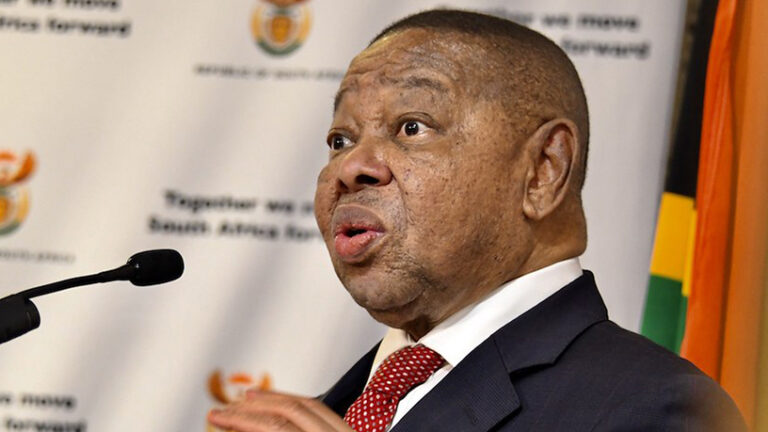
Higher Education, Science and Innovation minister Blade Nzimande says his department is working on a new funding model for university and college students.

Presenting his departmental budget speech on Thursday (2 June), Nzimande said the updated model is to be presented to president Cyril Ramaphosa’s cabinet by July.

“Government has committed and is working upon a comprehensive student funding model for our universities and colleges.

“As part of the development of our comprehensive student funding model, through the ministerial task team on student funding, we are engaging both the public and private components of the financial sector to come up with a funding model to support students in the ‘missing middle’ income bracket and post-graduate students who cannot secure funding from the National Research Foundation.”

This model will incorporate the existing funding available from the state and explore alternative funding sources, he said.

In February, Nzimande announced a CPI-linked increase in tuition fees for 2022, noting that the sector is heavily reliant on tuition and residence fee income for universities to remain operational.

Data shared by Nzimande shows that student debt has grown in the country’s university sector significantly in recent years.

Unaudited data showed that an estimated R6.1 billion was owed by students at the start of the 2021 academic year.

Audited accumulated gross student debt as of the end of December 2020 was R16.5 billion. This amount included students who have exited university, carrying debt.

A survey conducted by the department in 2021 showed that an estimated 56.2% of students with debt owed less than R10,000; 32.9% owed between R10,000 and R50,000, while 10.9% owed more than R50,000. The survey also showed that NSFAS students owed R5.3 billion.

BUSINESS TECH

DA welcomes civil society organisations’ opposition to the controversial Basic Education Laws Amendment Bill, encourages public to do the same

THE Democratic Alliance (DA) has welcomed civil society’s opposition of the government’s Basic Education Laws Amendment (BELA) Bill.

Various civil society groups and the DA , in particular, have criticised the proposed provisions in the bill, calling them a ‘coup’ against school governing bodies.

Thus far, 19 civil society organizations have already sent the Minister of Basic Education, Angie Motshekga, a letter highlighting all the problematic clauses of the BELA Bill.

The DA said the bill seeks to enforce the ANC government’s ‘skewed war on Afrikaans’ without considering the far-reaching implications on quality teaching in other indigenous languages.

The bill, which was first announced in 2017, seeks to provide updated amendments to sections of the South African Schools Act.

This includes stricter rules around student attendance, admissions and language policies.

“The DA has extensively communicated on the problematic aspects of the BELA Bill and the ‘Lesufi clauses’ that will remove school governing bodies’ (SGBs) power to decide language and admissions policies that serves the best interests of their communities,” the party said on Monday.

“As such, the DA will fight the BELA Bill with everything in our power and continue to oppose it in Parliament.”

The party also slammed MEC of Education in Gauteng, Panyaza Lesufi, for backing certain clauses in the bill which it deems ‘racist’.

This after Lesufi said in recent weeks that no schools would be reserved for certain races or for races that speak a certain language.

“The Gauteng MEC of Education, Panyaza Lesufi, and his ANC comrades’ irrational hatred of Afrikaans and all speakers of the language will not only disadvantage them, but also mother tongue education of all indigenous languages and quality education as a whole,” the party said.

“The BELA Bill is another example of the ANC government putting ideology above the well-being of the people they’re meant to serve. And as national government, they’re meant to serve all the citizens of South Africa, irrespective of the language they speak.”

The DA urged the public to submit their concerns in writing to Llewellyn Brown, the secretary of the parliamentary portfolio committee on basic education via email to belabill02@parliament.gov.za or online at https://forms.gle/MoC6AdbdQyYPk3Y49 or via WhatsApp: +27 60 550 9848 by no later than 15 June 2022 at 16:00.

INSIDE EDUCATION

6 big changes proposed for schools in South Africa – including a new timetable

THE Department of Basic Education needs to urgently consider changes to South Africa’s school system to make up for teaching time lost during the Covid-19 pandemic.

This is according to new research by Stellenbosch University, which shows most learners in South African schools missed at least three-quarters of a school year over the course of 2020 and 2021, due to the Covid-19 pandemic, lockdowns, school closures and rotational timetables that were introduced to maintain social distancing in classrooms.

Conservatively estimated, learners have fallen 40% to 70% of a school year behind earlier cohorts in language and much more – 95% to 106% of a school year – in mathematics, the researchers said.

To address these issues, the researchers recommend several interventions:

Extra time

Mathematics deficits due to lost time amount to at least a year of learning in all grades. Extra time is required for Mathematics at all levels to catch up on the year lost.

The researchers added that mathematics and language are gateway subjects, forming the basis for learning in all other subjects.

As such, additional time for catching up on these subjects should be sought. Where feasible, time allocations for other subjects should be reduced or non-core subjects suspended or integrated into other subjects in order to free up time for language and mathematics.

Timetables

Any catch-up programme requires additional time. One way that this can be achieved is to strengthen the use of existing instructional time.

As schools return from the disruptions of the past two years they need to be supported in maintaining regular school days and normal timetables.

Shorter days (for the foundation phase or on Fridays) should not be permitted. Careful regulation of school days during examination times must be undertaken to ensure that terms run their full course and a maximum number of school days are utilized for instruction.

The district and circuit managers have a crucial role to play here, the researchers said.

Less homework and other cutbacks 

Attention to addressing backlogs in reading and number sense in the Foundation Phase is a priority. Teachers must be supported in utilising existing resources and making sure that learners have the opportunity to take reading material home.

In subsequent phases, the overfull curriculum and homework tasks in other subjects should be reduced to allow learners to give more attention to catching up in Mathematics and Language.

In other words, the instructional load of all subjects apart from Mathematics and Language needs to be reduced. This will require discussion and coordination amongst staff in schools across subjects and grades.

Benchmark tests 

Diagnostic assessments of learners’ knowledge to identify gaps should be done by individual teachers.

The government could assist teachers by providing quality benchmark assessments and assistance to teachers in interpreting the results of these tests.

Teaching assistants 

The sole task of the educator assistants should be to work through the previous year’s DBE Rainbow workbook with individual learners.

This will provide, especially struggling, learners with one-on-one instructional and effective support.

Trimming 

The Department of Basic Education needs to attend to the trimming of the curriculum as a matter of urgency.

Certain learning areas/topics should be omitted or consolidated, and others delayed. The focus should be on mastering those skills and concepts that are necessary for progression in learning in subsequent grades.

As an example, in mathematics, definitions of three-dimensional shapes can be left for later grades while core foundational content is mastered.

BUSINESS TECH

Relationship building with home education providers is a priority for the Gauteng Department of Education

THE Gauteng Department of Education (GDE) conducted a meeting with homeschooling and online school providers on the 2nd of June 2022.

This is the first meeting where the GDE reached out to service providers in the home education sector as part of stakeholder engagement and relationship building.

Chriselda Mosibudi-Makhubela, the Director for Independent Schools at the Gauteng Department of Education, expressed the objective of amplifying the voices of learners that are home educated, as well as those of the key stakeholders to work towards turning around the prior views on home education.

South Africa has seen a surge of online schools opening in response to the COVID-19 pandemic.

Some online schools were already established pre-pandemic due to a natural growth in the home education market inherent in the country, whilst others developed in response to the perceived demand in the market for online schooling.

In the US, online schools have been well attended for a few decades already and have seen mature and well-developed online schools emerge as viable and important alternatives for numerous students across the states.

Pre-pandemic there were over 375 000 students between the ages of 6 and 18 attending state-wide full-time online school programmes, a number that has almost doubled for the 2021-2022 school year in the US.

In South Africa, the numbers are not that clear and pre-pandemic estimates of 100 000 homeschoolers have increased dramatically to more than 300 000 according to the Department of Education.

Chriselda Mosibudi-Makhubela has previously indicated that up to 4% of learners can be home educated in South Africa.

The director also expressed that the GDE is very interested in doing research to learn more about home-based education and to improve on assessment and curriculum provision in Gauteng, especially for home education.

With the growth in the interest in home-based education, accelerated by the pandemic, many online schools have emerged.

At the meeting on the 2nd of June it became evident that clearer guidelines and frameworks are required to establish a minimum standard to ensure that all learners get the best possible education from homeschooling providers and online schools.

The different curriculum providers and homeschooling providers present at the meeting had varying levels of maturity of internal processes, curriculum delivery, and assessment structures.

Wingu Academy was encouraged to see that our processes and standards are high and aligned to policy and guidelines available and we are excited to share what we have found to be effective in our approach to online distance learning.

Wingu Academy is formally inviting collaboration with national and local departments of education and wishes to support the core values that Director Chriselda Mosibudi-Makhubela shared at the meeting of “excellence, compliance and relationship building”.

Wingu Academy is optimistic and welcomes the pending regulatory framework to be approved by the end of October 2022, and the opportunity to forge a strong relationship with the GDE.

“At the meeting Wingu Academy extended an offer to support the Gauteng Department of Education with our in-house expertise in curriculum mapping to assist with smoother transitioning of students between International and the CAPS curriculum to make it more accessible for students to transfer between home education and public or independent schools where needed.” explains Ian Strydom, Managing Director of Wingu Academy.

“Wingu Academy has been applying the policy on home education and has simultaneously aligned all internal processes and quality assurance measures with the local and international requirements of traditional independent schools, and are ready to adopt any further recommendations by the Department of Education.”

“The Academy is registered with the South African Comprehensive Assessments Institute (SACAI) as a distance education provider for the CAPS programme it is currently offering, and is a registered Pearson Online Centre for the International British Curriculum.”

“The Academy is also finalising the registration of an independent school in its network awaiting final feedback from the local department of education and as such has comprehensive alignment with the available guidelines from the Department of Basic Education.” Strydom concludes.

BUSINESS TECH