Home Blog Page 271

What school textbooks in South Africa say about the Cold War – and why it matters

LINDA CHISHOLM and DAVID FIG

SOUTH Africa’s stance on Russia’s invasion of Ukraine isn’t that surprising in light of its treatment of the Cold War in the school history curriculum and textbooks. In these it’s reflected as having had a negative impact on Africa.

The Cold War (1945-1990) ranged the United States and its allies against their rival nuclear superpower, the Soviet Union. What textbooks contain is significant for being the officially approved representation of the nation’s history. This “official knowledge” usually embeds social controversies in ways that favour ruling groups.

We recently contributed a chapter to a book about how the Cold War is being handled in history textbooks and classrooms worldwide. We examined selected textbooks for Grade 12 (the final year of senior secondary school) for the officially sanctioned images of the Cold War.

The Russian invasion of Ukraine has once again caused fissures between “the west” and the Soviet Union’s principal successor state, the Russian Federation. The potential nuclear stand-off between them could be termed a new Cold War.

South Africa’s image of its own history as represented in the school curriculum and textbooks suggests that it is unlikely to result in a stance aligned with the west.

Choosing textbooks

Textbooks follow curriculum prescriptions closely but are also mediated by textbook writers’ own readings and understandings. Since 1994, the South African curriculum has been revised four times, including the latest COVID-induced “trimming”. These changes have not substantively altered the section on the Cold War.

After each revision, publishers are invited to submit textbooks for consideration in a national catalogue. Using criteria provided by the Department of Basic Education, teams of evaluators screen textbooks for the catalogue. Based on schools’ choices, provinces make selections from the list of approved textbooks.

We selected two textbooks – Focus History and New Generation History – from those topping the list for most provinces in 2016. We compared these with prominent apartheid-era textbooks.

Textbook representations of the Cold War

Under apartheid, the history curriculum was divided into two sections, international and South African history. Until 1982, the curriculum for international history included France, Germany, Italy, Russia, Japan and the United States, while neglecting the rest of Africa and the global south. From 1982, China, India, Vietnam, Latin America and independent African countries were included.

The Cold War was part of the section on international history. A 2018 study on textbooks’ views of Russia specifically showed that a fear of Communism was embedded in apartheid textbooks.

The post-apartheid curriculum revised this approach. The Cold War frames a section that begins with “Independent Africa” and moves on to “Civil Society Protests” (in the US and the UK) from the 1950s to the 1990s; “Civil Resistance in South Africa in the 1970s and 1980s”; “The Coming of Democracy in South Africa” and “Coming to Terms with the Past”. The section closes with “The End of the Cold War” and “Globalisation to the Present”. It thus integrates African and South African history into world history, within which the Cold War is central.

The curriculum specifies that “blame for the Cold War” be taught and learnt through the presentation of different interpretations and differing points of view.

Nonetheless, there is a new narrative. In both the curriculum and textbooks, the “baddies” are no longer the feared Communists. Instead, the then-superpowers, the US and the Soviet Union, representing different ideologies, are both seen as responsible for the Cold War and for creating spheres of interest and conflict through proxy wars. They are presented as manipulating more vulnerable states through extensive military and financial aid, espionage, propaganda, rivalry over technology, space, sport and nuclear races.

The section on Independent Africa compares the former Belgian Congo as “a tool of the Cold War” with the African socialism of Tanzania. It closes with the way Africa became drawn into the Cold War, using Angola as an example. The Soviet Union, the US, Cuba, China and South Africa were all involved militarily in Angola. The section on the Cold War ends with the West seen as becoming dominant.

The Cold War was a binary conflict between two blocs, but also generated a more independent, neutral position led by the Non-Aligned Movement, a mostly Afro-Asian bloc. The leaders tried to assert themselves as independent of the superpowers. This isn’t dealt with in the curriculum, but is an important dimension.

Although the role of Africa and Africans is more prominent than in apartheid-era textbooks, the current books position Africans as both passive victims of the superpowers and as fighters for freedom, imbued with agency and initiative.

South Africa’s current perspective on the Russia-Ukraine conflict claims to be in line with this as well as its own history of negotiated transition.

The question is how anticipated curriculum revisions will update treatment of the Cold War and contemporary conflicts. Curriculum designers and the writers of textbooks may wish to retain an emphasis on multiple perspectives.

This would enable the small minority of school students who study history to examine all sides of the complexities of the new Cold War so that they can decide on ethical issues for themselves.

(David Fig Honorary Research Associate, University of Cape Town)

(Linda Chisholm Professor of Education, University of Johannesburg)

THE CONVERSATION

How to create a positive whole-school mental health culture

ISSUES with mental health and wellbeing can stifle aspiration and prevent children from achieving their full potential. So creating a positive culture of wellbeing in schools is an imperative, and tackling loneliness and encouraging pupils to share experiences is at the very heart of this.

With good reason, loneliness is the theme of this year’s mental health awareness week. It can strike at any age, and it is inextricably linked to poor mental health.

In our hyperconnected world of social media, messaging apps and online gaming, young people may feel that everyone else is out there making friends, and that makes their loneliness even harder to bear. Add two long years of pandemic disruption (with increased reliance on these technologies), and the result is that children’s sense of isolation has heightened, with devastating effect on their wellbeing. According to NHS Digital, one in six children aged six to 16 in England had a probable mental health condition in 2021, up from one in nine in 2017.

The importance of shared experience

Many children find it difficult to articulate feelings of loneliness, or prefer not to admit to them. Reducing stigma as a barrier is an important reason for schools to encourage conversations about wellbeing.

Regular wellbeing events encourage an open dialogue among pupils, and that can stretch beyond the school gate. Inviting neighbouring schools to take part is an effective way to share the message and to bring pupils together with other young people in their community.

But it can’t be left to standalone activities. Rather than addressing mental health as a separate item on the agenda, embedding discussions about loneliness, anxiety or isolation into the curriculum helps to normalise the theme.

For example, a PSHE lesson on e-safety can open up discussion about how social media can paradoxically make us feel less connected, creating an opportunity for young people to talk openly about their feelings. Likewise, an English lesson about a character in a play can allow a quieter child to talk about loneliness without worrying that they may be giving too much away about themselves.

Taking a lead

But just discussing the issues is not enough, and it’s unreasonable to expect all teachers to be experts in tackling their pupils’ mental health challenges. Nevertheless, more than 400,000 under-18s were referred for specialist mental health support last year alone, and only one-third accessed the help they needed. This leaves school staff picking up the slack.

Appointing a mental health lead to direct children and staff to the support groups or resources they need can help. A senior member of staff tasked with championing wellbeing provides not only a first point of contact for children and staff who need support, but also a bridge to the school’s decision-making body.

And if that dedicated person also oversees pastoral services, they can reinforce a culture of wellbeing across the curriculum and send out a clear message that wellbeing is everyone’s priority.

Pupil voice

And on the topic of decision-making bodies, it is important to accept that the culture shift required to improve wellbeing will need pupils’ buy-in. This ensures we avoid assumptions and don’t dictate what action we think is needed.

Many schools conduct wellbeing surveys, but simply asking pupils what support they need rarely gets to the crux of the matter. Instead, capture your school’s pupil voice by asking questions that enable you to take affirmative action. Asking “at what times during the school week do you feel stressed or lonely?” can direct specific initiatives such as mindfulness sessions or activities in breaktime. The pupils can then advise on what activities they would like.

Younger children respond well to questions like “what makes you a great friend?”. By discussing the results of these questions, children will start to recognise how their actions can build friendships and reduce loneliness for others.

We can alleviate the pain of loneliness for young people by changing the way wellbeing is supported and nurtured. It’ll take longer than a mental health awareness week, but what a truly positive legacy of the pandemic that could be.

SCHOOLSWEEK

Sports| Tuks sprinter Benjamin Richardson keeps on winning South African titles and gives credit to his coach, Paul Gorries

THE 18-year-old Benjamin Richardson (TuksSport High School matriculant, TuksAthletics Academy graduate and now UP-Tuks student-athlete) seems to love nothing more than to medal at ASA National Championships. His tally for this season is three gold medals and a bronze. 

It should be no surprise. Over the last four years, the Tuks sprinter has improved his personal best time over 100 metres by nearly a second. In 2019, it was 10.87s. It is now 10.08s. It means he is faster than Akani Simbine was when he was 18. 

If he can run 0.03s faster, he will qualify for the 2022 World Senior Championships in the USA. He has qualified for the 2022 World Athletics U20 Championships in Colombia.

His progression over 200 metres is equally impressive. In 2020, his personal best time was 21.01s. This season, he clocked a time of 20.67s. 

Still, Richardson is not one to rest on his laurels. One would have expected that he would have been chuffed to run 10.08s at the end of April in Gaborone. But the Tuks athlete has mixed feelings. He has finished second, and that is not on to him. 

“I guess it is a big deal, but it does not make me happy. I knew I could have done better. But I think I have got to accept what I have achieved. Hopefully, soon I will run a faster time.”

Asked what he has to do to gain that hundredth of a second, Richardson said – “I need to work on staying calm. As soon as I get out of the starting blocks and someone is ahead of me, I start to rush things and not think clearly. It is costing me.”

The one thing Richardson has going for him is never giving up. He proved it over the weekend during the USSA Championships in Cape Town. The Tuks athlete was certainly not the fastest out of the starting blocks. It took him 50 metres to draw level, but there was no stopping him once he did so. He so nearly got Tuks to win the 4x100m-relay with his fantastic acceleration. 

Richardson is also the South African Under-20 champion in the 100m and 200m events. During the recent South African Senior Track and Field Championships in Cape Town, he won a bronze medal in the 200 metres. The Tuks athlete credits his success to his coach Paul Gorries.

One can’t help but compare his running style to Usain Bolt’s. Richardson will be the first to admit there is still a lot of hard work to be done before he can be compared to the sprint legend. 

But from a physical perspective, he is on par with Bolt. The Jamaican is 1.95 metres tall and wears size 13 shoes. Richardson is not quite sure how tall he is. He guesses 1.91 metres. He wears a size 12 shoe. 

100 or 200 metres?

“At the moment, I like the 100 metres, but I think the 200 metres will suit me better in the long run.”

Tuks is the 2022 USSA Athletics Championships title winner, collecting 28 medals and two medals in the A and B section. North-West University finished second and UJ third on the final medal standings.

Tuks gold medal winners at the recent USSA Athletics Championships are:

  • Benjamin Richardson (100m)
  • Bradley Olifant (200m)
  • Jovan van Vuuren (long jump)
  • Zeney van der Walt (400m)
  • Chane Swart (800m and 1500m)
  • Taylon Bieldt (100m-hurdles and 400m-hurdles)
  • Women’s 4x400m-relay and mixed 4x400m-relay.

UP/TuksAthletics

A Soweto High School learner dies in hospital after being stabbed to death

A GRADE 10 learner from Thaba-Jabula Secondary School in Soweto was stabbed to death by a Grade 9 boy during break time. The learner later passed away in hospital.

It is alleged that the attacker was defending his brother when he stabbed the youngster.

Gauteng Education MEC, Panyaza Lesufi said that a fight broke out among the boys at Thaba-Jabula Secondary School in Pimville on Thursday.

“On Thursday, 12 May 2022, a Grade 10 boy learner of Thaba-Jabula Secondary School in Pimville was stabbed by a Grade 9 boy learner during break time and later passed away in hospital,” he said.

Lesufi said he was disheartened by the incident that occurred at Thaba-Jabula school.

“According to information at our disposal, the incident took place on school premises during break time. It is alleged that the Grade 9 learner was defending his younger brother from being bullied by the deceased Grade 10 learner,” Lesufi said.

“He then reportedly stabbed the learner four times during the fight and fled the scene.”

The MEC said the learner died while receiving medical attention.

 “The injured learner was rushed to a nearby medical facility by an educator and unfortunately succumbed to his injuries at about 17:00 PM while receiving medical attention,” Lesufi said.

Police have arrested the Grade 9 boy.

The Gauteng Department of Education dispatched its Psycho-Social Unit and a social worker on Friday to provide necessary counselling and support to learners and educators at the school.

“Sadly, this process could not go ahead as some parents stormed the school demanding the release of learners. Subsequently, school has been dismissed for the day because some learners began to fight among themselves,” Lesufi said.

The MEC condemned the violent behavior that took place at Thaba-Jabula Secondary School and encouraged learners to report incidents of bullying.

“We strongly condemn the violent behavior that took place at Thaba-Jabula Secondary School and we always encourage learners to report incidents of bullying so that disciplinary action is taken against perpetrators, revenge cannot be a solution. This is to appeal with parents to allow schooling to resume on Monday, so that the necessary support is provided to the school community. We wish to extend our deepest condolences to the family of the deceased learner.” said Lesufi.

INSIDE EDUCATION

Entrepreneurship hubs established for TVET colleges students

THE Higher Education, Science and Innovation Ministry has established entrepreneurship hubs at TVET colleges to support students to move into self-employment after completion of programmes. 

Higher Education, Science and Innovation Minister, Blade Nzimande, revealed this in Parliament on Thursday while delivering the department’s 2022 Budget Vote.

In the current financial year, the Minister said the department projected that the skills levy would increase to R20.6 billion from last year’s R18.9 billion.

Nzimande said the department had also taken the decision to prioritise the sector by re-allocating additional funds from the National Skills Fund.

“We have begun a process of crafting one country, one skills plan (Master Skills Plan). This process will promote a more efficient and effective mechanism for our country-wide skills planning.

“As part of my service level agreement with the SETAs, they will incorporate government priorities – especially those that address the triple challenges of poverty, unemployment and inequality as captured in the National Development Plan – in their Sector Skills Plans.”

These would therefore develop their Annual Performance Plans (APPs) to address skills challenges in various sectors of the economy and country in general.

During the 2022/23 financial year, the Ministry will increase its work-based learning programmes from 78 317 to 107 000.

“We will also Increase our learners registered in skills development programmes from 43 885 in 2020/21 to 148 000 in 2022/23 and increase our learners entering artisanal programmes from 10 302 in 2020/21 to 22 000 in 2022/23.”

The Ministry anticipates that 20 500 learners will pass the artisan trade test in 2022/23, a 5000 increase from the last financial year.

Learners who complete learnerships will also increase from 24 136 in 2020/21 to 31 300 in this financial year while learners who complete internships would stabilise at 5 200.

The SETAs combined placed 44 619 unemployed people into learnerships, of which over 34 710 were youths below 35. Over 25 550 of these were female. 

In the previous financial year, SETAs placed 9 901 interns, of which 9 096 were young people below the age of 35 years old and 6 455 were females. The SETAs spent just over R883 million in this regard.

For TVET placement, SETAs placed about 8 539 learners, with 5 656 being females at the total cost of R393 million. 

For university placement, SETAs placed 5 183 learners in workplaces at the value of R300 million.

Both university and TVET college curricula are being reviewed and strengthened to be relevant to the skills required by local employers, communities and the economy. 

He said: “On the other hand, 95% of SETAs are targeted to meet standards of good governance, with 100% of their allocated SETA Mandatory Grants paid to employers.”

The Minister said SETAs would process qualifying trade test applications within 40 days of receipt for trade testing and develop credible Sector Skills Plans. SETAs would in this regard produce reports on the implementation of the Skills Strategy.

“To further ensure the rapid skilling and training of our youth, particularly those in rural and townships, we are going to focus our attention to their training in areas such as agriculture and information and communication technologies,” he said.

“Our SETAs will be supporting my Department of Science and Innovation (DSI) in the development of critical high-end skills in selected technology areas such as the bioeconomy, space science, technology energy, intellectual property management.”

SA NEWS

Gauteng online admissions for Grade 1 and 8 to open soon, says GDE

THE Gauteng Online Admissions for Grade 1 and 8 for the 2023 academic year will officially commence on 22 July 2022 and will close on 19 August 2022.

In a statement on Monday, the Gauteng Department of Education (GDE) said that it has reviewed the online system, as well as the previous two-phased approach.

Following an analysis of various online parent surveys and stakeholder consultations, the system has now been enhanced to follow a single application process, allowing all applicants to apply at the same time during the application period.

The GDE said that it believes this overall simplified applications process will satisfy everyone.

“The application period will start on 22 July 2022 at 08:00 AM for Grade 1 and Grade 8 applications, and it will close on 19 August 2022 at 00:00 AM. To apply, visit: www.gdeadmissions.gov.za. Parents and guardians will receive SMS notifications of placement offers to either accept or decline from 3 – 31 October 2022,” the GDE said.

Gauteng Education MEC, Panyaza Lesufi, said they are hopeful that these implemented enhancements will be helpful to all applicants.

He urged parents and guardians who will be seeking space for their children at Gauteng schools for Grade 1 or 8 in 2023, to make sure they diarise the announced dates as they are very important.

“Officials incorporated inputs from our stakeholders on how to improve the system. Indeed, we are hopeful that these implemented enhancements will be helpful to all applicants. Accordingly, we must reiterate that capacity remains our challenge in Gauteng, and a factor that applicants must always bear in mind when applying,” Lesufi said.

The department said that Grade R learners will not automatically be accepted to Grade 1 without application, even if they apply to the schools where they are currently enrolled in.

“This means that all learners that are 5 years old turning 6 years old by 30 June 2023 and are currently enrolled in Grade R in a school or ECD centre, as well as learners that are not in any type of school, must apply for admission at a minimum of three and a maximum of five schools,” the department said.

Important documents to submit

Parents and guardians are urged to upload or submit certified copies of the following documents within 7 days of applying:

· Parent and Child ID or Passport
· Refugee Permit
· Asylum Seeker Permit
· Permanent Residence Permit
· Study Permit
· South African Birth Certificate
· Proof of Home Address
· Proof of Work Address
· Latest School Report and Clinic Card/Immunisation Report (Grade 1 only)

Parents and guardians will be given up until 26 August 2022 (7 days after application period ends) to upload or submit their documents.

However, the GDE said that documents that are uploaded or submitted after the application period closing date will be considered as incomplete applications and will only receive placement at available schools between 1 – 15 December 2022.

To eliminate the risk of overlooking an applicant with uploaded documents by a school, during and up to 7 days after the end of the application period, the department said that schools will receive an auto alert each time new documents are uploaded. The system will highlight all uploaded documents for verification.

“In order to hold schools accountable for verification of all received documents, the system will prompt schools to answer the question whether an applicant submitted documents or not. If verified, the system will prompt the school to verify and update document status. If not verified, the system will create an alert on the parent’s profile and an SMS will be sent to parent to submit or upload documents,” the department said.

As part of the system enhancement process, applicants will be afforded the opportunity to make informed choices regarding languages offered when applying to a school.

Language of Learning and Teaching, Home Languages, and additional languages offered by each school will be visible on the system to applicants during the application period.

“All applicants will be granted an opportunity to apply to a school of their choice, according to the selected application option. This is an improvement as previous complaints we received stated that schools were not available for certain application options and, as such, all schools will remain open for applications for all during the application period,” GDE said.

For all applicants to submit completed applications, electronic messages will be sent via SMS reminding parents and guardians to complete their application, and the same notifications will be created on the parent’s profile on the system.

The department said that SMS notifications informing applicants whether their application was successful or unsuccessful will be sent from 3 – 31 October 2022.

Therefore, parents are urged to note that it is highly important that applicants provide ONE reliable and working cellphone number when applying in order to receive notifications and complete their application.

Schools of Specialisation

Schools of Specialisation will admit learners based on an aptitude or talent from 20 May – 20 June 2022, said the department.

Admission tests, written assessments, trials and auditions will also be conducted by Schools of Specialisation for applicants from 20 May – 26 August 2022.

“The outcome of these tests and trials will be communicated to applicants from 20 June 2022 – 9 September 2022. Parents who have applied to Schools of Specialisation are urged to accompany their children to these tests and trials to complete the process,” the department said.

Parents and guardians applying to boarding schools in Gauteng are encouraged to apply directly at identified schools. Applications to boarding schools will take place from 1 June 2022 – 19 August 2022.

Admission Regulations

The department said that placement of applicants with documents uploaded / delivered within the regulated period will be prioritized.

It must be noted that placement will be conducted as per the following admission regulations:

· Home address within feeder zone
· Siblings
· Work address
· Within 30 km Radius
· Beyond 30km Radius

Decentralised Walk-In Centres

To ensure access for applicants who are unable to apply from the comfort of their homes and or offices, the department has identified Decentralised Walk-In Centres in different areas where applicants will be safely assisted.

The department said that some District Offices and the Head Office will serve as walk-in centres.

This information will be made available to the public via schools, districts, the GDE Website and social media platforms.

“Parents and guardians who will be experiencing challenges during the application period are encouraged to visit our District Offices and Decentralised Walk-In Centres or call the GDE’s Contact Centre 0800 000 789.” 

SA NEWS

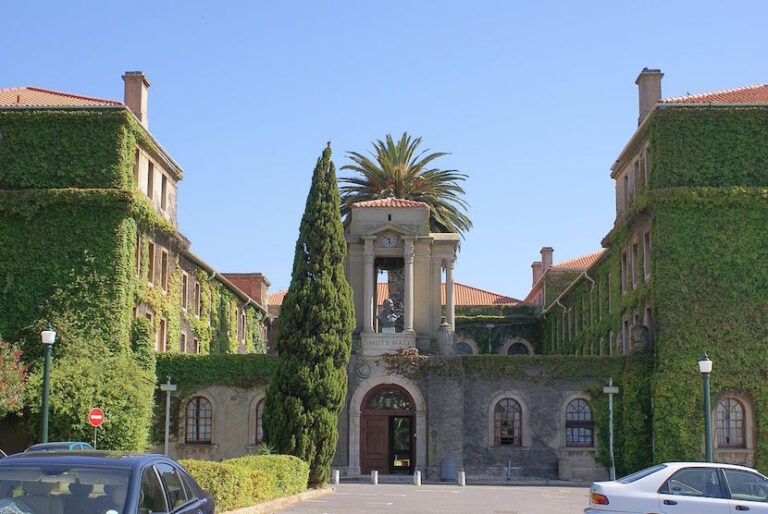
Opinion| University of Cape Town’s extreme reversal of historic racial preferences – John Kane-Berman

JOHN KANE-BERMAN|

IN today’s climate, it takes courage for an academic to speak out publicly against his university’s racial preferencing policies. That, however, is what David Benatar has done in The Fall of the University of Cape Town – Africa’s leading university in decline.

Last week this column highlighted what Professor Benatar described in his book, published last year, as the manufacture of the “narrative” of UCT as an anti-black “racist university”. In reality, he argued, there was much more evidence of anti-white than of anti-black hostility.

The claims by those seeking “transformation” and “decolonisation” that UCT is “anti-black” are deeply ironic, for this institution practises affirmative action on an “extreme” scale. Professor Benatar describes and critiques this.

Racial preferences in favour of blacks apply to admissions, appointments, mentoring, and funding. UCT already has more black than white students, while most of the senior administrative staff, including executives and deans, are black. Whereas 7.75% of the academic staff at UCT were black in the broad sense in 1994, that proportion in 2019 was 31%.

Further, he says, if black students continue to be “shortchanged” in schools, failing either to matriculate or to obtain a university pass, “we cannot expect things to change dramatically for many decades to come”.

The pool of suitably qualified applicants for academic staff is even more limited than the pool of qualified students. It bears “very little resemblance to the national demographics”. It is further limited by the fact that suitably qualified blacks are more likely to be recruited by other public organisations and the private market, where strong racial preferences are also operative. Moreover, given that people considered for academic positions are people with degrees, they are among the least disadvantaged of blacks.

One way in which racial preferencing has been practised “in many instances” in academic appointments is by shortlisting candidates on separate lists. White candidates, “no matter how superb”, are not included on the A list. If no suitable candidate is found on this list, candidates on the B list are not considered. Instead, the position is re-advertised.

“Under this modus operandi,” says the book, “no white candidate can be appointed, no matter good he or she may be, and irrespective of whether there is any appointable black South African candidate.”   

Also, says Professor Benatar, on “many other occasions a white applicant is passed over in favour of a much weaker applicant from a ‘designated’ [that is, black] group”. Although many “excellent” black candidates are appointed, the racial preferencing system means that many of those appointed from favoured demographics are going to be “much weaker than those who could have been appointed”.

The book describes in detail one case where the appointment of a faculty dean was delayed for a couple of years because a suitable and available black candidate could not easily be found. At the time of writing, half of UCT’s eight faculty deans were not yet full professors. This was not because of a dearth of full professors, but because most were from the “wrong demographic”.

Professor Benatar adds that the response to the extreme racial preferences practised at UCT is a “conspiracy of silence”. Most academics will not speak out against “rigged hiring practices”, even when significantly inferior candidates are appointed, “as is often the case”. Anyone who does not participate in the pretence that they are not inferior “is quickly condemned as hostile to transformation”.

One of the issues the book tackles is that of “diversity”. As the term is now widely used in South Africa, this does not mean diversity of opinion, which is “arguably” one of the most important kinds of diversity for a university to have. Both in South Africa and elsewhere, however, those demanding diversity are in practice seeking that proportions of staff and students reflect working-age national demographics.

Professor Benatar concedes that racial diversity can undermine racial stereotypes, but he argues that “strong” racial preferences are more likely to reinforce them. “The stronger the preference required to appoint a particular candidate, the more the preference is likely to reinforce rather than undermine stereotypes. This is because those appointed as a result of such preferences are likely to be weaker on average than those appointed without racial preference.” There is good reason, he writes, to think that strong preferences are used “quite often” at UCT.

He also questions the argument that diversity produces “role models”. If strong racial preferences are used in hiring, the role models so appointed might not be the best ones to emulate.

Professor Benatar further argues that racial patronage is bad for the countries that tolerate it. This was true of South Africa in the apartheid era, and it is also true today. Much of the reason why South Africa is on a “steep descent” is its system of racial (and political) patronage. Systems can tolerate a certain degree of patronage when other parts of the system are able to compensate. But when patronage is as widespread as it is in South Africa, “systems begin to break”.

“The cumulative effects of appointing weaker academics in the humanities, for example, might be less obvious than the cumulative effects of hiring practices at Eskom, but they are no less real.”

Some weeks back, this column reported the minister of public service and administration as having told Parliament that 26% of senior managers in the public services did not have the requisite qualifications for the posts they occupied. This leaves 74% who supposedly do have the requisite qualifications.

Professor Benatar book prompts a question: “What proportion of that 74% are also in practice unqualified for their posts because of racial preferencing in their tertiary education?”

The Zondo commission has helped to highlight the problem of cadre deployment, whose purpose has always been unashamedly nothing less than state capture. But we shall probably never know how much of the destruction of the public sector is due to cadre deployment, how much the result of corruption, and how much the result of racial preferencing both in public sector appointments and in academic institutions producing the personnel for such appointments.  

But advocates of transformation want the demographics of students and staff to resemble those of the country. Professor Benatar says it is “delusional” to think this can happen without serious cost to universities.    

The university provides remedial support to students who have been “moderately disadvantaged” by poor schooling. But it cannot compensate for twelve years of “appalling primary and secondary education”, the result of which is that only a small proportion of school leavers are qualified to enter university. Pursuing demographic proportionality by admitting more students on the basis of race would mean admitting “vast numbers who are not at all qualified for university”.

Some weeks back, this column reported the minister of public service and administration as having told Parliament that 26% of senior managers in the public services did not have the requisite qualifications for the posts they occupied. This leaves 74% who supposedly do have the requisite qualifications.

Professor Benatar book prompts a question: “What proportion of that 74% are also in practice unqualified for their posts because of racial preferencing in their tertiary education?”

The Zondo commission has helped to highlight the problem of cadre deployment, whose purpose has always been unashamedly nothing less than state capture. But we shall probably never know how much of the destruction of the public sector is due to cadre deployment, how much the result of corruption, and how much the result of racial preferencing both in public sector appointments and in academic institutions producing the personnel for such appointments.  

* John Kane-Berman is a policy fellow at the IRR, a think-tank that promotes political and economic freedom

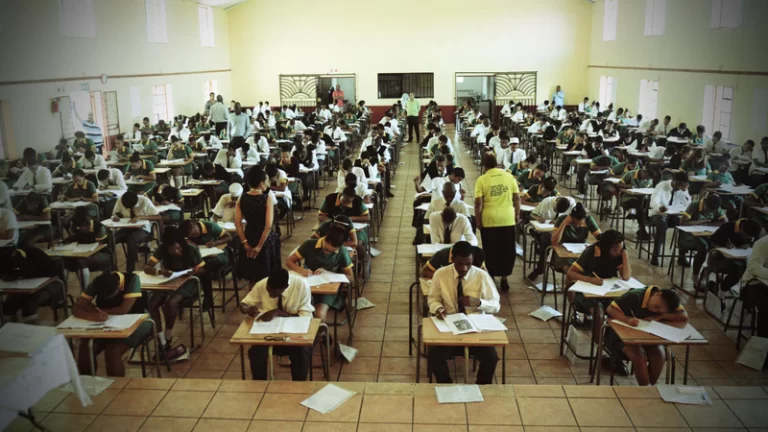
More than 290 000 ready to sit for Grade 12 re-write examinations, says Basic Education Department

WENDY MOTHATA|

THE Department of Basic Education says it is ready to administer the 2022 May/June Grade 12 examinations which started on Monday this week.

The Department also wished all candidates who will sit for the May/June 2022 examinations the best in their endeavours.

“More than 290 680 people will rewrite their NSC and Senior Certificate exams from today [Monday],” the Department of Basic Education said in a statement.

“The number of candidates for the two respective qualifications are as follows: National Senior Certificate: 165 993 and Senior Certificate: 124 689. These candidates will be sitting for the examinations at 5 236 examination centres, across the country.”

The National Senior Certificate candidates have written their exams in previous years but did not attain the full requirements of the qualification. In addition, this year’s rewrite exams were for the first time opened to candidates registered for the October/November examination, as from 2008.

The Department said those who did not succeed would be granted a second chance to attain their goal of having a matric certificate.

The Department advised the candidates to locate their examinations centres days before they’re due to write.

“Avoid frustration, don’t leave this off until the day of the exam,” the department said.

Meanwhile, the KwaZulu-Natal Department of Education head of communications Muzi Mahlambi said that a total of 36 850 learners will be rewriting the 2022 May/June Matric examination in the province.

Mahlambi said that the department was ready to conduct the exam.

He said that all learners who lost their IDs during the KZN floods including would be allowed to write the examinations. 

“As the KwaZulu-Natal Department of Education we are ready to conduct the examination despite the recent floods we have had. We have even said that learners who have lost everything in their homes including their ID’s are allowed to sit for the examinations. For we have a schedule for all registered learners and we will also be using admission letters known as timetables,” said Mahlambi.   

The KZN MEC for Education Kwazi Mshengu wished all the learners well in their exams.

“All the best, this is the license to your future qualifications after acquiring matric,” Mshengu said.

More than 630 schools were affected by the floods in KwaZulu-Natal with 101 of them being inaccessible and 124 suffering extensive damage.

In the Eastern Cape, more than 13 000 of the candidates are set to rewrite the examinations.

Outgoing Western Cape Education Minister, Debbie Schäfer, said there were 174 exam centres across the province.

Schäfer wished all the candidates well.

“I wish all candidates the very best as they tackle their exams and invest in their futures. Work hard, do your best, and know that we are here to support you to the fullest,” Schäfer said.

INSIDE EDUCATION

Mpumalanga school learners to benefit from Coding and Robotics curriculum

WENDY MOTHATA|

MORE than 400 learners from Tsiki Naledi Primary School in Hendrina, Mpumalanga will benefit from a new state of the art computer laboratory at the school. Among other things, the laboratory gives learners an opportunity to learn about coding and robotics, a curriculum that the Department of Basic Education wants to introduce in 2023.

In April, the Department of Basic Education announced implementation of Coding and Robotics for Grade R, 3 and 7.

“440 learners from Tsiki Naledi Primary School in Hendrina, Steve Tshwete Local Municipality have enormously benefited from the generosity of Software AG and E&T Minerals,” Mpumalanga Department of Education said.

The two business entities partnered to build a new state of the art computer laboratory at the school.

“This state of the art 4IR lab envisions a future of hi-tech immersive and interactive learning experience in the rural environment to propel learners into a field of technology and the future of work in the modern world,” the Department said.

The Department said that the laboratory is intended to reduce the digital divide by ensuring that the physical, curricular, and web environments are barrier-free to teaching and lifelong learning.

“The Ithemba Lethu, as the 4IR laboratory is called, will give Grades 4 to 7 learners access to the internet and electronic devices during the learning process.”

The Lab is equipped with robotics equipment, 3-D printers, drones, coding system learning kits and state-of-the-art computers to enable learners from Grade 4 to 7 to be able to use from the beginning of the 2023 academic year.

The principal of the school Menzelwa Petros Skhosana said the learners would be able to compete with the best and brightest in science, mathematics and technology across the world.

“We are grateful for the efforts by Software AG and E&T Minerals in establishing a computer lab that sets our school on a level that will allow our learners to compete with the best and brightest in the science, mathematics and technology world,” said Skhosana. 

 MEC Bonakele Majuba expressed his gratitude to the sponsors, “The CEO of E&T Minerals, Mr. Emmanuel Ngulube and Transformation Director of Software AG, Ms. Ndazi Nokoane for the patriotic gesture of transforming education through technology.”

Department of Basic Education on Technology at schools

Last month, the Department of Basic Education announced that it plans to introduce new school subjects to the curriculum.

According to the department, a full-scale implementation of coding and robotics for Grade R, 3 and 7 would be made available in the 2023 academic year.

“The coding and robotics pilot for Grades 4-6 and for Grades 8 is planned for 2022 and will be followed by a Grade 9 pilot in 2023. The full-scale implementation for Grades 4-6 and Grade 8 is planned for 2024, and Grade 9 in 2025,” says the department.

The subjects would form part of the curriculum at different school levels from Grade R to Grade 9.

The department added that the introduction of the new subjects form part of a broader push to better prepare South African students for the working world.

Coding and robotics subjects are aimed at guiding and preparing learners to solve problems, think critically, work collaboratively and creatively, and function in a digital and information-driven world.

INSIDE EDUCATION

APPRECIATION| Phindile Xaba, who died after a lengthy battle with cancer on Saturday, was a stalwart of South African journalism 

VICKY ABRAHAM pays tribute to her mentor and editor of INSIDE EDUCATION’s quarterly print publication, Phindile Xaba, who died on Saturday after a long battle with cancer.

Xaba’s long and illustrious career included being the editor of Real Magazine, under Media24 stable, which created the platform for healing of women. She was also the founding editor of the Sowetan women’s club. She also worked for the Mail and Guardian, as the editor of The Teacher. She also worked for The New Age, True Love, City Press, St. Pietersburg Times (USA), The Journalist and many others. Xaba also worked as a communications consultant in the Office of the Deputy Minister in the Department of Public Service and Administration, Dr Chana Pilane-Majake.

TRIBUTE|

On February 15, at 9:20am, my day was brightened by a WhatsApp text message from my former editor and mentor at the Sowetan newspaper, Ausi Phindile Xaba.

The message read as follows: “Good morning Vicky. It’s Phindile Xaba here. Long time, hey! I wonder if Matuma [Letsoalo- Inside Education Managing Director] spoke to you about a print version of Inside Education. I am reaching out to invite you to join the A-Team.  I would like that very much. Let’s talk later. Regards. PX”.

In response to her message, I said: “Dear Phindile, how are you, my mentor? I’m so excited to hear from you. Please let me know what time would be appropriate for us to talk. Regards, Vicky”. She responded by saying: “Now is a good time Vicky if you are available. Regards”.

The purpose of our reconnection through WhatsApp was to discuss diary for the launch edition of Inside Education Quarterly Print Publication, which would be distributed to all schools across the country, the universities and TVET colleges.

Ausi Phindi’s message came through after 20 years of having lost communication with her.

But, I must profess that it did not dawn on me that our work journey would be ephemeral. It did not occur to me that the three stories she assigned me to do for the launch edition of Inside Education Print Publication: “How Diepsloot underprivileged School Made It to the Top”, “World’s Most Dedicated Teacher”, “SA Student Makes It To Oxford”, would be the last that we would work on together. Honestly, it did not occur to me that she will be counted among the departed souls. 

I first met Ausi Phindile during my internship program at the Sowetan in 2000, which shortly turned to a contractual employment. At the time, she was heading the Sowetan’s Women’s section. Journalists who contributed for that section were often seasoned journalists. Even though I was fresh from varsity and did not have newsroom experience, she accepted my pitch about writing a feature on premenstrual syndrome. She later then granted me an opportunity to write for the Women’s section.  During the process she took me by hand and guided me on how to put together my ideas. 

Although there are numerous features that I contributed for her Women’s section, she also preferred utilising my modelling skills for the section at no cost. She would call me in for modelling photoshoots which she later used. But often, it was her guiding me on how to write compelling feature articles. 

I reminded her about these special and funny moments during our virtual diary meeting on that day, February 15.  I reminded her about the life changing role she played in my life during my tenure at the Sowetan and the love I have for her as my mentor. She however warned me, in a shy manner, that she is no longer as sweet as she was at the Sowetan. She was upfront that unlike in the past, at some stages she will not be so kind toward me. My response to her was sweet and short. 

I told her that I only know the positive about her and in the case that she loses her temper on me during our ongoing work discussions, I will constantly keep in mind her positive side that I know. Instead of losing her temper on me, on March 16, she took me to task for calling her “Phindile” instead of “Ausi Phindile”. I recall picking up her call and the first thing she said: “Vicky, kana when did I become Phindile to you and not Ausi Phindile”. Without going into too
much details, she was basically reminding me that although we have a working relationship, I should still remember that it is unacceptable in our African culture to call her Phindile instead of Ausi Phindile.

 From then, I made sure that I continuously referred to her as Ausi Phindile in our written and verbal communication. Few days later, during our work discussions, she wore her sisterly cap and counselled me on how to handle business related matters. She warned me not to sell myself short in the media industry.

She shared with me how she handles business-related matters and advised me to walk in her footsteps. 

But, I must say on March 19, she was not so kind toward me. She related her concerns that I had written features that were beyond 1200 words. She was also not happy that my sidebars were, according to her, “very long”. On the other hand, I was not happy with her about certain things that I had previously related to her.  After our discussion on March 19, I spent a day without communicating with her, simply because I was not happy. 

However, the anger was for a brief moment. A day without speaking to her felt like the 20 years that we spent without communicating. I missed her dearly, hence on Mach 21 at around 15:56, I sent her the following message, “Dear Sis Phindile, I am just checking on you today.

Hope all is well. Have a blessed day. I still love you akere. Regards”. She responded with emojis of hugs and smiles. 
My relationship with Ausi Phindile was not just a mere work relationship. She played a role of a leader, mentor and a sister to me. She knew when to wear the leader, mentor or sister’s cap when she addressed me. In all the caps she wore or roles she played during our interactions, she made sure that she made a positive impact in my life. 
I am deeply saddened that the three education features that I wrote for the launch edition of
Inside Education Quarterly Print Publication, were the last ones she would edit. 

Without knowing that she was fighting for her life, my family and I had taken it upon ourselves to include her in our daily prayers. I honestly did not know that the prayer that we prayed for her on May 7, just before her departure was the last one.  I already miss Ausi Phindile’s presence, her beautiful laughter and guidance.

Although, we had already made plans for the next Inside Education Print edition which will publish in June,
I am saddened she will not be behind the desk editing my work. But, I am very grateful to God
for the times I spent with her and the lessons that I learned from her. I pray for her family to
be strengthened. May heaven welcome her with open arms.

INSIDE EDUCATION