Home Blog Page 273

Missing Unisa student Hillary Gardee found dead outside Nelspruit – EFF

THE Economic Freedom Fighters (EFF) has confirmed the death of former Secretary-General Godrich Gardee’s daughter, Hillary Gardee.

The 28-year-old Unisa student was last seen last Friday at the local Spar Supermarket in Nelspruit wearing a black top and black trousers.

“The EFF regrets with deep sadness to inform the public on the passing of the daughter of EFF former Secretary General, Hillary Gardee,” said the EFF in a statement.

“The body of Hillary Gardee was found abandoned outside Nelspruit in Mpumalanga, after she had gone missing on the April 29, 2022 … This heart-breaking news has left the Gardee family distraught, and the collective leadership of the EFF at a loss for words.”

Hillary Indira Gardee, aged 28, was born in Lagos, Nigeria in 1994.

“She was the first-born daughter of Commissar Godrich Gardee and her loss has left immeasurable devastation, as he grapples with the pain of losing a child in such a callous, cruel and inhumane manner. Hillary was an enthusiastic, kind and loving individual, who had a passion for information technology,” the EFF said.

“She was a student at the University of South Africa, studying IT part-time while running her own IT business. Her kindness and generosity was most evident in her commitment to adopt and care for a 3-year old child, who by the grace of God was spared on the day of Hillary’s abduction. She looked after the child as if she were her own, an inspiring act for a woman of such a young age.”

“We mourn with the Gardee family, and will provide a helping hand to ensure that her memory is preserved and she goes to her final resting place with dignity. The family at this time is still reeling from the terrible news of the loss of their child, and as such is not in a position to speak to the media or the public.”

Hillary disappeared on Friday after she was last seen at a Spar Supermarket in Nelspruit.

INSIDE EDUCATION

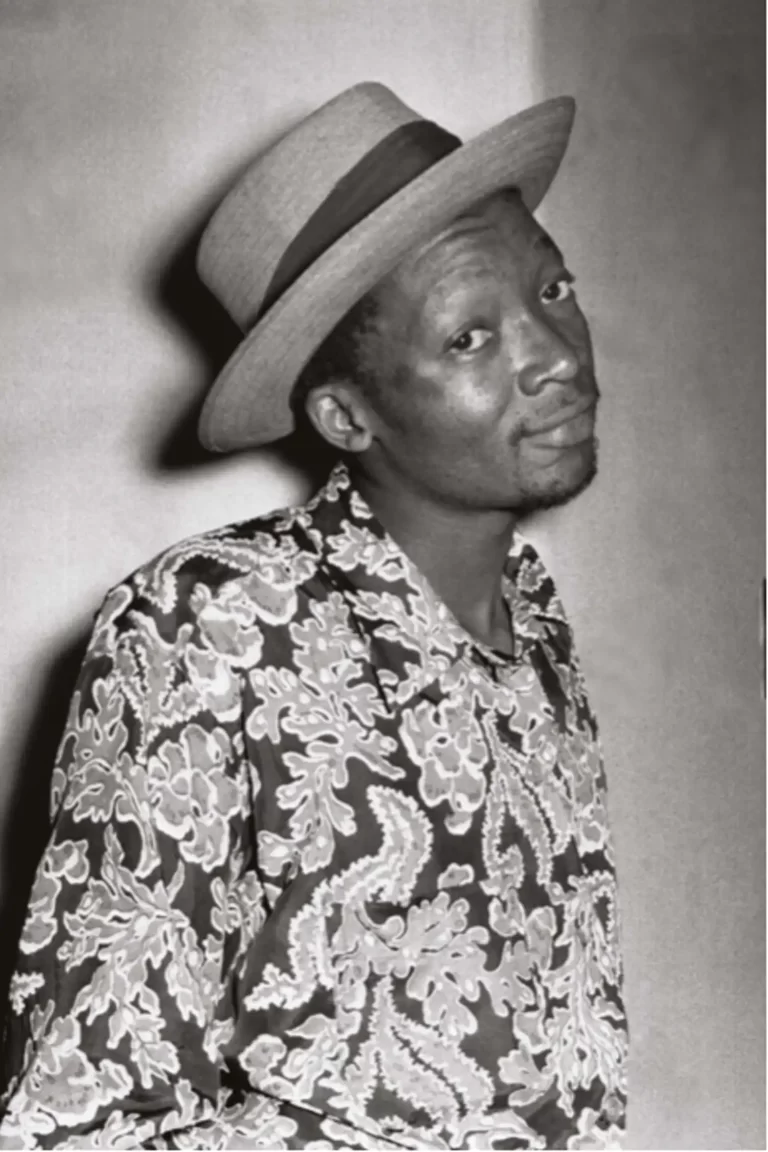
Can Themba: South Africa’s rebel journalist was a teacher at heart

Siphiwo Mahala is well known as a South African short story writer, novelist, playwright and literary organiser. He is also an academic. In fact, his most recent book is a product of his PhD thesis, titled Can Themba: The Making and Breaking of the Intellectual Tsotsi. Can Themba was a journalist and short story writer who challenged the apartheid state by foregrounding the pain and the joy of black life. We asked Mahala to tell us more.

Who was Can Themba and why does he matter?

Can Themba was part of a generation of black writers that revolutionised journalism and the South African literary landscape in the 1950s and early 1960s. This was a culturally dynamic and politically volatile period in South Africa. In 1948 apartheid was introduced by the white minority government, followed by the enactment of draconian laws in the early 1950s, which sought to separate people according to race. This prompted the black oppressed majority to intensify its resistance struggle. Artists, intellectuals and the growing cohort of black journalists were at the forefront of finding platforms to speak against these socio-political ills and challenge the regime.

Drum was the most widely distributed magazine that foregrounded the voices of urban black people at this time. Themba was associate editor and also wrote for Drum’s sister newspaper, the Golden City Post. He was central in chronicling the black condition. Themba had a penchant for ordinary stories – of the neglected, the marginalised and even the resented – and he wrote them in such a sensational way that they would attract global attention. He was a daring journalist, unafraid to put his body on the line in pursuit of a story.

The kind of stories he covered included the impact on ordinary people of the 1957 bus boycott and of pass laws. One of his most documented stories was Brothers in Christ, where he investigated if white churches would welcome black worshippers in accordance with the Christian doctrine of brotherhood. He was assaulted and charged for trespassing in churches, creating a controversy that solicited international attention.

His romantic relationship was the subject of police interrogation because he dared to love across the colour line. He was manhandled and arrested for doing journalism. He was banned under the Suppression of Communism Amendment Act and his writing could neither be published nor referenced in South Africa until 15 years after his death. Clearly the apartheid regime wished to erase him from the face of history.

He went to exile in the early 1960s, was banned shortly after and died in exile. This has made it difficult to trace his life’s journey. Although his works – especially his short story The Suit – have been celebrated for years, his personal story has been sketchy, limited to his period as a Drum journalist.

How does your study approach him?

My interest was in his construction. Tracing the factors that contributed to the making of the writer who became known as the winner of Drum’s short story competition in 1953, and the elements that contributed to his deterioration a few years later. I feel privileged to have been the first to document his life story – more than 50 years after his passing in 1967. In this book, through the voices of people who knew him personally, we get to know Can Themba as a husband, father, a drinking buddy, a teacher, a colleague. As a person and not just the public figure.

More than half the people I interviewed as part of the research have since passed away. The unique insights shared by the late Anne Themba, Nadine Gordimer, Keorapetse Kgositsile, Parks Mangena, Mbulelo Mzamane, Ahmed Kathrada and Lindiwe Mabuza cannot be replicated and could have been easily lost.

I trace him from an early age, his family background in the racially mixed community Marabastad, relocating to Atteridgeville, a township outside Pretoria. I trace his schooling as well as his years as a student at the University Fort Hare, where he studied towards a BA degree and majored in English which he passed with a distinction. Sharing the university syllabus helps us to understand the foundations of his literary apprenticeship, as it included literary criticism, the history of literature and the study of poetry. The earliest available record of Themba’s publication dates back to 1945, when he was a student at Fort Hare, and the influence of Shakespeare is palpable.

This period also gives a glimpse of what he and some of his fellow students would become. Whereas Themba and his fellow literary enthusiast Dennis Brutus contributed mainly poetry and short stories in student journals, political leader Robert Mangaliso Sobukwe was contributing articles in political pamphlets.

I hope readers will take away a more holistic view of Can Themba and understand that he was an abundantly talented individual who was as flawed as the rest of us. He died before his fullest potential could be realised.

What did you conclude about Themba?

Much has been written about the perceived lack of political commitment in his works, his romanticisation of the township and his excessive drinking. In this book, I reveal some of his sharpest political commentary. I reveal that Themba did not drink until he joined Drum. Former Drum photographer Jurgen Schadeberg states that drinking in the newsroom was encouraged. Schadeberg says Themba initially felt out of place in the newsroom, and kept wearing a tie just like the teacher he was.

Themba died in 1967, supposedly of alcohol related causes, only 14 years after he started drinking. I interrogate a number of personal, social and political factors that contributed to his early demise. As an epigraph to the book, I use a quote from his former protege, veteran journalist Harry Mashabela: Can Themba was what he was and not what he could have been because his country is what it is.

For a writer who believed in freedom of expression, living in a tyrannical society was a constant assault to his soul.

More than anything else, I realised that Can Themba was a teacher at heart. It’s common knowledge that before joining Drum in 1953, he had been working as a teacher, and that he taught at St Joseph’s Catholic School in Swaziland, where he passed away in 1967. It’s not very well known that he lived for teaching even when he was not teaching for a living.

He was a teacher in his House of Truth, which he established in his room in Sophiatown as a forum for debate. He taught in the newsroom and in the drinking dens, becoming known as the “shebeen intellectual”. And in every space where he found himself. He did guest lectures at universities. He even offered English lessons to groups and individuals. For me, his greatest legacy is his determination to nurture young minds.

Can Themba: The Making and Breaking of the Intellectual Tsotsi is available from Wits University Press.

THE CONVERSATION

UWC ranks in top 800 on Times Higher Education for 6th year in a row

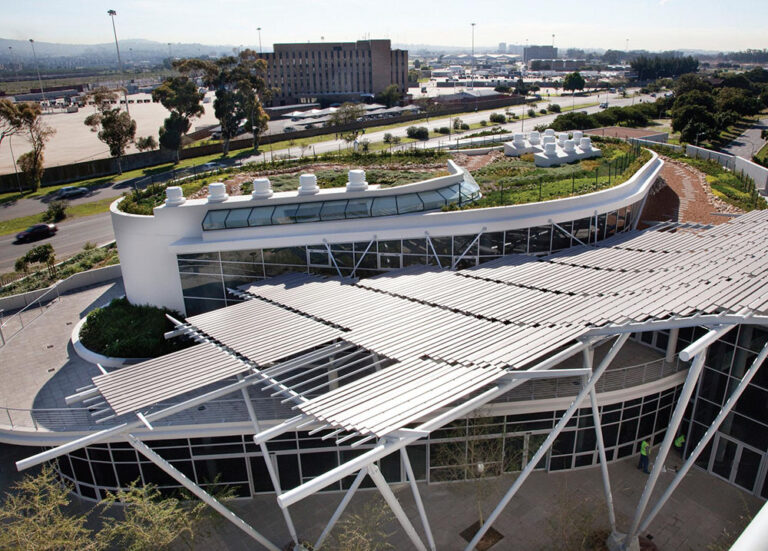
THE University of the Western Cape (UWC) has done it again. It has been ranked in the top 800 universities globally by Times Higher Education (THE) for the sixth year running. Udubs placed seventh in South Africa and 13th on the African continent.

The THE Global Impact Rankings help universities worldwide through analysis and benchmarking. THE prides itself on having the “most rigorous and trusted rankings of universities”.

These rankings are to universities what FIFA rankings are to football-mad nations. It’s due reward for hard work. According to THE, 1 662 universities from 99 countries were evaluated.

In addition to placing in the top 800, University of the Western Cape was ranked joint 107th in the Emerging Economies University rankings this year. That is UWC’s highest position since joining the rankings in 2017.

Speaking from London, Ellie Bothwell, the rankings editor at THE, explained: “In the latest 2022 edition, the university (UWC) achieved particularly high scores for citation impact and international outlook. It has lower scores in the areas of teaching environment and research environment, but its performance in those two areas is at its highest level ever.”

UWC, a vibrant intellectual space, has excelled in several of the United Nations’ Sustainable Development Goals (SDG) areas, including No Poverty and Reduced Inequalities. UWC now ranks in the top 200 globally for these goals.

“It (UWC) is ranked in all 18 of our Impact Rankings tables – in the tables for each of the 17 SDGs, as well as the overall ranking – indicating its strong commitment to helping tackle the world’s greatest challenges and achieve the Sustainable Development Goals,” said Bothwell.

UWC’s Rector and Vice-Chancellor, Professor Tyrone Pretorius, could not be prouder.

“It’s quite significant. The latest rankings speak directly to UWC’s commitment to quality education and making a meaningful difference in the world. We are already one of the finest institutions in South Africa, and to know that we are world-class is just a feather in the cap. We are well on track to meet our Sustainable Development Goals,” he said. “And it’s not just about approaching those goals on a theoretical level. We look at the challenges facing society from all angles and then put in the hard work to make a meaningful difference. It’s part of UWC’s genetic make-up. It’s what we live and breathe.”

THE use stringent metrics by which they measure universities’ performance. They use indicators to gauge a university’s strengths against its core value missions, analysing policies and initiatives. Institutions must provide evidence in support. THE then looks at examples that demonstrate best practices.

Bothwell also mentioned: “The Impact Rankings are inherently dynamic: they are growing rapidly each year as many more universities seek to demonstrate their commitment to delivering the SDGs by joining our database; and they allow institutions to demonstrate rapid improvement year-on-year by introducing clear new policies, for example, or by providing clearer and more open evidence of their progress. Therefore, we expect and welcome regular change in the ranked order of institutions (and we discourage year-on-year comparisons) as universities continue to drive this urgent agenda.”

Prof Pretorius added: “The top 800 in the world is a good place to be. It’s a genuine reflection of the work we put into achieving greatness. But we’re not resting on our laurels. There are so many more exciting programmes in the pipeline. And those will obviously match our efforts to always strive for better. We are so proud of the incredible strides we are making. The education we provide is all-encompassing. Teaching, learning, research, innovation, real solutions to real life challenges and issues. And with every graduate from our fine institution, we are staying true to our promise to change the world.”

SUPPLIED| UWC

Ramaphosa says 96% of South African children of school-going age are in school

WENDY MOTHATA|

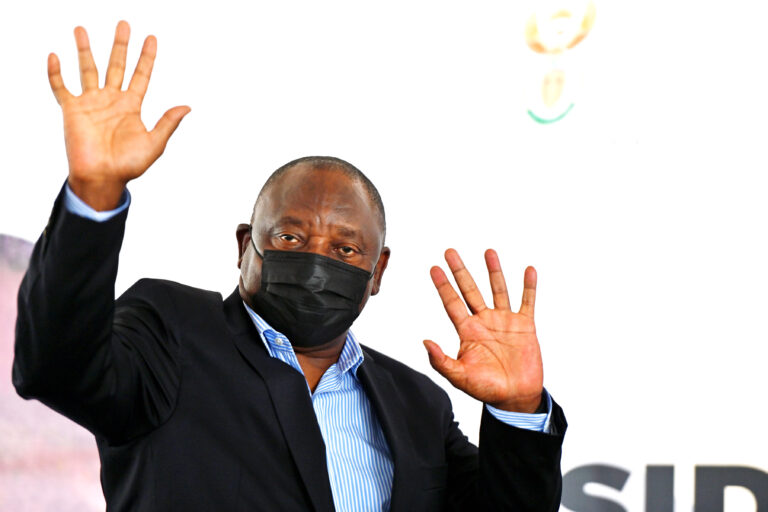
PRESIDENT Cyril Ramaphosa says that 96% of children of school-going age are in school while wo-thirds of those pupils attend schools where their parents do not have to pay school fees.

Ramaphosa was reflecting on the gains made and challenges the country has grappled with since April 27, 1994.

The president led Freedom Day celebrations at the Kees Taljaard Stadium in Middelburg, Mpumalanga.

“Ninety-six per cent of children of school-going age are in school. Two-thirds of these learners attend no-fee schools,” said Ramaphosa.

Ramaphosa, however, conceded that “”much more still needs to be done”.

He said that that free tertiary education was also being provided to young people in South Africa.

“Free tertiary education is being provided to young South Africans to study, a dream that was denied their forebears,” he said.

He further added that more than 600 000 learners in Mpumalanga received their daily meals at various schools across the province.

“Here in Mpumalanga, more than 600 000 children from poor households receive a meal at school through the National School Nutrition Programme,” Ramaphosa said.

The president added that the National School Nutrition programme currently feeds more than nine million learners every school day across the country.

“In democratic SA, 81% of people live in formal housing. Nine out of 10 South Africans have access to clean water and more than 85% have access to electricity. In democratic SA, basic education and health care is no longer the privilege of a few, but available to all,” he said.

Ramaphosa said: “In democratic South Africa, basic education and health care is no longer the privilege
of a few, but available to all.”

While the country has mixed feelings regarding the scourge of Gender Based-Violence, crime and corruption, Ramaphosa said there were laws to protect the vulnerable in the country.

“Gender-based violence, substance abuse and other societal ills have become rampant in our communities. Crime and violence is eating away at our society. We can only defeat crime if we work together, as families, as communities and community leaders, as faith communities and leaders, and as individuals,” he said.

INSIDE EDUCATION

Liberian Educator Wants Early Childhood Education Prioritized

0

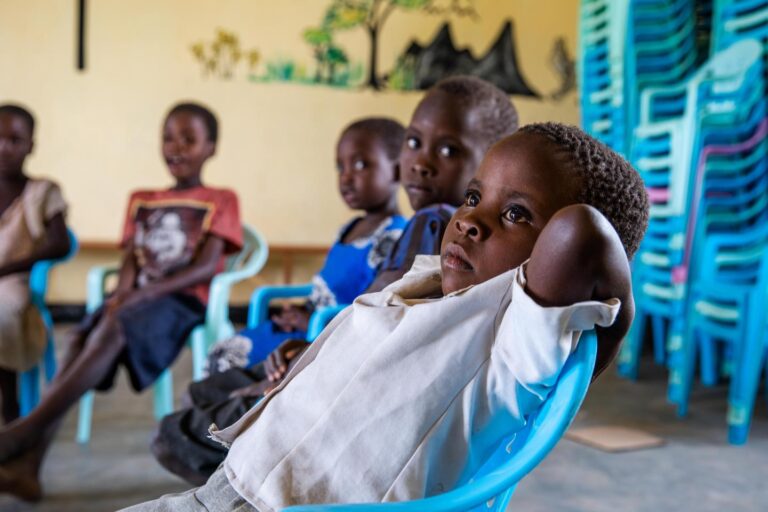
EARLY childhood education is the foundation or cornerstone of any higher education and so a Liberian education is craving the indulgence of the national government and stakeholders to place key emphasis on that area.

Mr. G. Sebastine Gaye, Director of the Trumpet of Praise (TOP) International School, asserted that in order to strengthen the educational sector of the country so that Liberia comes on par with other comity of nations, the Liberian government specifically must place serious emphasis on training for teachers in early childhood education.

Mr. Gaye, who is also one of the founders of the TOP International School, made these comments at the weekend at the occasion marking the observance of the school’s 17th anniversary.

“We want to call on the national government to place emphasis on the training of teachers for this group of people, who are the foundation for every education process – because taking care of kids is something extremely difficult,” said Mr. Gaye.

“And so we want to encourage national government to place serious emphasis on manpower development so as get our kids prepared early,” he asserted.

And as the TOP International School envisages to be a second to none institution of learning, Mr. Gaye disclosed plan for the elevation of an additional annex to bring in more facilities.

Founded in 2005, following barely nine years of the establishment of the church -Trumpet of Praise Tabernacle, the TOP International School currently operates two key branches in Fiamah in Sinkor, Monrovia and in Pipeline in Paynesville, outside Monrovia. The school operates from nursery up to 8th grade.

“At the end of the current academic year (2021/2022), we will start the elevation of another annex for additional classes, a library, a playground and a reading room for our kids,” Gaye revealed.

We will be calling on the public; national government, parents and guardians and well-wishers to come and grace the occasion marking the groundbreaking for the construction of this annex. We want to extend the school to ninth grade and in the future extend it to senior high,” the TOP International School Director, among other things, added.

FRONTPAGE

Science and Technology| South Africa looks to Silicon Valley for innovation inspiration

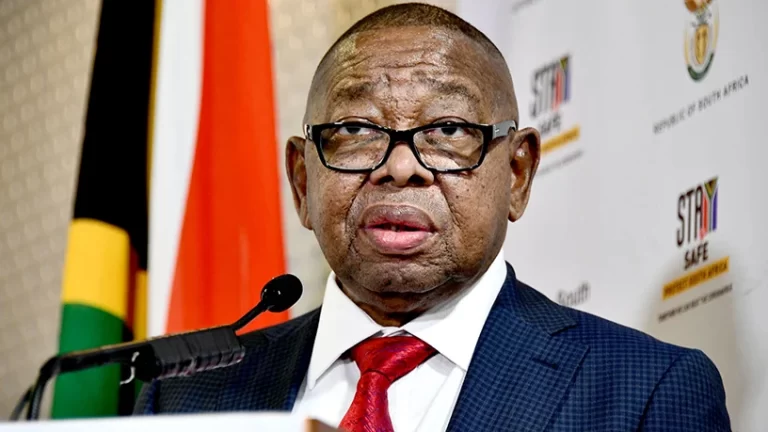
FRESH on the heels of touting innovation as a key enabler of SA’s economic prospects, minister Dr Blade Nzimande is on an official week-long visit to Silicon Valley in the US.

Nzimande is accompanied by senior officials of the higher education and training, and science and innovation departments, leaders of some of the science councils and vice-chancellors of some South African universities, reveals the Department of Science and Innovation (DSI).

In a statement, the DSI indicates the visit to Silicon Valley, which is home to global tech companies like Google, Apple and Meta, is to gain insights into policy, funding and other interventions.

This will inform the implementation of SA’s new Decadal Plan for Science, Technology and Innovation.

The minister will also identify and conclude new partnership arrangements for the South African national system of innovation, with multinational companies, universities and other global research and development leaders in Silicon Valley.

Says Nzimande: “Building capabilities through education and research, development and innovation are a prerequisite for national economic competitiveness and is viewed as critical for poverty alleviation, addressing inequalities in society, and delivering on the inclusive and equitable vision, as outlined in the National Development Plan (NDP).”

he higher education, science and innovation minister further states that rapidly-evolving technologies have the potential to spur industrial development, attract investment, as well as create the conditions for inclusive growth.

As a result, he notes it’s crucial to visit global sites that have had “remarkable success” to actively learn, consider the application possibilities for SA and identify the critical success factors.

“Silicon Valley is home to many start-up and global technology companies that could serve as important case studies for our own context. This will be an important tool for understanding how we can leverage the 4IR to revitalise the economy,” Nzimande comments.

The Cabinet-approved Decadal Plan covers the period 2022-2031 and is the implementation plan of SA’s new White Paper on Science, Technology and Innovation (STI).

This new roadmap identifies the fourth industrial revolution as a key focus, placing STI at the centre of the country’s development agenda. Furthermore, it replaces the 1996 White Paper on Science and Technology, and aligns with the objectives of government’s NDP.

The Council for Scientific and Industrial Research (CSIR), an entity of the DSI, notes that in terms of building a capable state, some of the identified goals of the decadal plan include the continuation and upscaling of several current initiatives on decision support for municipalities and government.

Other goals are programmes on innovation for service delivery through technology solutions and data, and decision support to improve access to quality basic services, it states.

Innovation intervention

South Africa has not been shy about its aspirations to be the innovation hub of the continent.

In January, president Cyril Ramaphosa lauded the opening of the NantSA vaccine manufacturing facility in Cape Town, saying it will aid SA’s quest to become a hub of scientific innovation, research and development.

The president further said government is pursuing several collaborative partnerships with the private sector and academia, to broaden the frontiers of science and innovation.

According to Nzimande, as of 2019, it was estimated there were around 440 innovation hubs and centres across the continent.

However, SA is not seeing the same impact on growth or job creation as other regions, he states, adding there are lessons here to be learnt from successful case studies.

Nzimande notes the 4IR is located at the centre of SA’s digital revolution. “In order to access a technocratic future, where AI [artificial intelligence] and neural networks play a significant role, government has to adopt an interventionist approach.”

Therefore, as part of the key engagements during his visit to Silicon Valley, the minister will visit the World Economic Forum’s Centre for the Fourth Industrial Revolution, of which SA hosts an affiliate centre at the CSIR.

The minister believes to trigger the industrial and research applications of the 4IR, there is a need to bolster investment in human capital and identify key areas of the economy which require investment.

Noting the recent declines in the performance of the South African economy, he comments: “An approach has to be adopted in order to create competitive advantages. Unemployment in the country is now classified the highest in the world and our growth rate remains too low to meaningfully create opportunities.”

ITWEB|

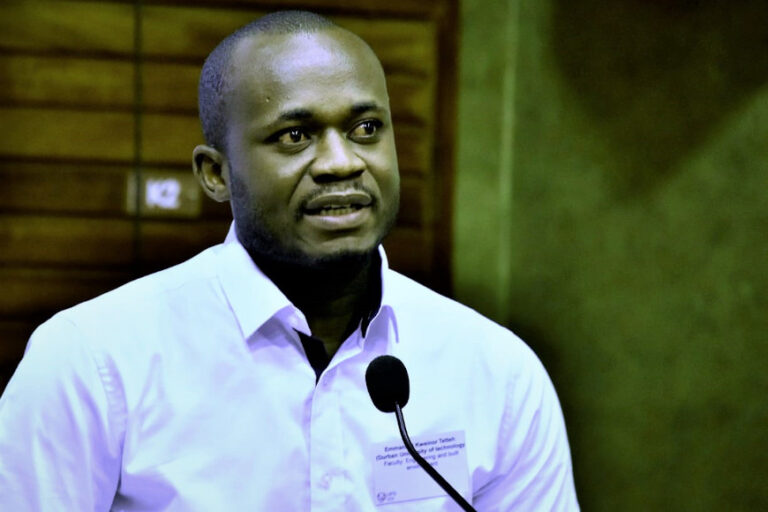
DUT green engineering researcher, Emmanuel Kweinor Tetteh, secures four nominations to make it to the science Oscars of South Africa Awards

CHEMICAL Engineering Doctorate, Emmanuel Kweinor Tetteh has made the institution extremely proud, securing four (4) nominations in the the 2021/2022 National Science and Technology Forum (NSTF) South32 Awards.

NSTF, founded in 1995, is a non-profit stakeholder body for all science, engineering, technology (SET) and innovation organisations in South Africa.

Sharing the good news with Tetteh was Ms Seipati Moleleki from NSTF’s Knowledge and Database Management Unit. Moleleki said the NSTF applauded all the nominees who are described as individuals, teams and organisations who are recognised for an outstanding contribution to science, engineering, technology and innovation in South Africa.

His nominations are in the categories: (i) Engineering Research Capacity Development Award – Sponsored by Eskom since 2003, (ii) NSTF-Water Research Commission (WRC) Award – Sponsored by the WRC since 2017, (iii) TW Kambule-NSTF Award: Emerging Researcher Prize sponsor: proSET (Professionals in SET), a sector of the NSTF representing professional bodies and learned societies and (iv) Special Annual Theme Award: Basic sciences for sustainable development.

He is eternally grateful to God and feels very encouraged by this recognition of his hard works over the years in putting DUT on the global map,” said Tetteh when speaking of his excitement upon hearing of the nominations.

He extended his sincere thanks to the Green Engineering Research Group (GERG) team members, his family, Pastor Obed Obeng-Addae (CCI, Kumasi Ghana), and all his loved ones for their continuous prayers and support. He also appreciated Prof Sudesh Rathilal, Dr Dennis Isaac Amoah and Dr Martha Noro Chollom for their key roles in his research career”.

Tetteh as a Doctoral candidate with GERG under the supervision of Prof Sudesh Rathilal (Acting Dean/Deputy Dean of Engineering and The Built Environment, has research interest in wastewater treatment and the photo-reduction of carbon dioxide using an integrated anaerobic photo-catalytic system. Since 2016, Tetteh has been coordinating with Prof Rathilal in developing doctoral research projects, mentoring seven (7) master’s researchers and co-supervision of twenty-five (25) undergraduate and honours projects.

Tetteh also wanted to thank the Deputy Vice-Chancellor (DVC) Research, Innovation and Engagement Professor Sibusiso Moyo, Director of Technology, Transfer and Innovation (TTI)-Prof Keolebogile Motaung and the Director of Research and Postgraduate Support at DUTDr Linda Linganiso, for their help and input in making his nominations possible.

Biography

Hailing from Ghana where he obtained his Higher National Diploma in Chemical Engineering from Kumasi Technical University, Tetteh won the Erasmus+ KA107 (ICM) which allowed him to spend a semester in the University of Valladolid, Spain where he worked on a nitrate recycling project to mitigate odorant emission in wastewater treatment plants under the Supervision of Prof Raul Munoz

Last year, he won the esteemed National Research Foundation (NRF Award) for the 2021 NRF Research Excellence Award for Next Generation Researchers in Engineering and Technology, also a newly approved research focus area by the DUT Senate on Green Engineering (GE).

Tetteh is the recipient of the ENI Debut 2019 award for the Young Talent Researcher from Africa in a ceremony held in Rome, Italy and was presented by the President of the Italian Republic, Sergio Mattarella.

As a young researcher, he has presented at 32 conferences for both local and international, authored over 49 peer reviewed journals papers and seven (7) book chapters all affiliated to DUT, with google scholar citations of 484 and H-index of 16.

Currently, Tetteh is the principal investigator for an ongoing water research commission (WRC) project (WRC2019/2020-00212) aimed at developing an integrated anaerobic-photocatalytic system for wastewater treatment.  He has championed the proof of concept of this project to secure extension grant (WRC2021/2022-00958) for the GERG to develop smart integrated system for the valorization of wastewater. This is to contribute towards achieving technology deployment aspirations of the National Water Research commission.

Tetteh went on further to add, he is a member of DUT team working on REFFECT Africa Project and Doctorate (in awaiting), and therefore he is open for future collaboration and a permanent position to explore his potential skills as a researcher.

SUPPLIED: DUT

Classroom Management| Let Me Tell You a Story: Enhancing Teaching and Learning through Personal Stories

GOOD teaching requires a special blend of the personal and the professional. Although there’s a fine line between revealing a piece of oneself to build rapport and sharing too much information, sharing past experiences—telling personal stories—is completely justified when it furthers learning and fosters a positive and engaging environment in the course.

Over the years of my academic career as a qualitative sociologist, I’ve integrated various forms of stories into my sociology and criminology lectures. Storytelling as a form of transferring knowledge has a long and venerable history. For centuries, the oral tradition of storytelling was the mechanism used to pass knowledge from one generation to the next. Before there were pens and paper, chalkboards and whiteboards, overhead projectors and PowerPoint presentations, ePortfolios and flipped classrooms, there were stories.

After all, who doesn’t like a good story? Although I might use movie-clips, newspaper stories, historical accounts, and passages from novels to enhance the classroom learning experience, for me, by far the most challenging and rewarding form of storytelling involves sharing stories from my own experiences.

I use personal stories in all of my classes, but I use them most often in my second-year course, Young Offenders and the Law. You see, in my younger days I was what would now be identified as an “at-risk youth.” My stories from this time range from minor social deviations, such as my first underage drinking experience at a high school dance, to more serious breaches of the law, including stealing records from music stores. I tell these stories because I can tie them directly to sociological theories of deviance (social bonds theory, differential association theory, social learning theory, etc.), and the social institutions (family, education, peers, media, religion, etc.) that students are reading about and discussing in lectures. Just like the use of movies and video clips, my personal stories serve as examples that connect course concepts and ideas to real-life experiences.

Students report that they enjoy these glimpses into my past and claim that the stories enhance their learning. Their positive reactions support my belief that what these stories bring to the student learning experience is multidimensional and corresponds with the literature on narrative theory and storytelling in classroom settings. Let me explain.

Benefits of storytelling

First, storytelling provides a change of pace. It mixes up delivery of the material, and provides a break in the lecture, seminar discussion, or group work. Stories capture students’ attention and help them focus on the lesson at hand. They may also get students thinking about the topic in a different way. As with most people, students associate stories with entertainment. You can sit back, listen, and let yourself go wherever the story takes you—the material comes alive.

Second, stories build relationships between teachers and students. Telling a personal story creates a strong connection between you and your students. This rapport makes the climate in the classroom positive. It’s hard to share your experiences without showing your passion—what’s important to you, why you care so much about the content in the course. Students genuinely enjoy catching a glimpse of the human side of their professors.

Third, storytelling encourages students, even those who normally do not participate in class, to share their personal experiences and explore how what happened to them relates to the course material. Sometimes students share their experiences in class, other times they’ll open up during an office visit, or they may share their stories with others outside of class. Sharing your personal experiences inspires reciprocity and helps create an atmosphere where students are more willing to share, not just their stories, but their opinions, insights, and questions.

Finally, and most importantly, personal storytelling facilitates learning. That’s what students regularly tell me on their course evaluations. They believe the stories made the material, especially the more abstract or theoretical material, easier to understand. Stories can be powerful in their capacity to link theory and real-life situations, making the theory recognisable. A story humanizes concepts and theories that when first encountered seem too scientific or esoteric. For example, I can define and explain hegemonic masculinity and some students will get it; but if I illustrate it with a story about my high school football days, almost all of the students will relate to the story and they’ll remember what hegemonic masculinity entails.

Neuroscience has found that images produced from a story produce a sensory experience that make the recall of information much easier. Through stories, students can take concepts, data, and facts that might seem disjointed pieces of information and tie them together in one mental image. This traces all the way back to John Dewey who equated lived experience with learning that’s meaningful and lasting. We need to think of our students’ own lived experiences as a foundation for their learning.

A word of caution

Of course, there are limitations and problems associated with storytelling. Inappropriate stories run the risk of delegitimizing the role of the professor. Personal information shapes students’ perspectives of you, not only as a professor but as person. Students often put their professors on a pedestal as exemplary human beings and some personal stories may contain information that makes it difficult for students to look up to their professors. My bad behavior as a youth happened during another time of my life. If I were still stealing records and shared that with students, chances are good, they would not hold me in high esteem.

Furthermore, too much disclosure or the over use of personal storytelling may serve to breach the necessary barrier between students and their professors. Sharing too much personal information can cause students to become too familiar with a professor. Or, the stories may make students feel uncomfortable thereby inhibiting their willingness to talk with us about content they’re having difficulty understanding. Stories should not be told without appropriate attention to the significance and importance of theory, concepts, and ideas we are using the stories to illustrate. Stories should not ever be told if they do not connect with course content. Accounts of experiences that are personally aggrandizing, ones in which the storyteller is always the one who wins, who does the right thing, will more likely impede than promote learning.

Good storytelling takes planning and practice. Instructors should carefully consider each story before integrating it into the course material. Students should be able to quickly understand the purpose of the story and be encouraged to think about how the story relates to the information being taught and to think of similar experiences in their own lives.

When used effectively, personal storytelling is a powerful pedagogical tool. Clear, succinct, well-rehearsed stories can create positive learning environments that not only foster and build teacher-student rapport, but also promote learning in dynamic and engaging ways.

SuperSport Schools celebrates one year of the best of school sports

SuperSport Schools celebrates 365 days of broadcasting the best of school and youth sports action in Southern Africa. The OTT channel has grown to become one of South Africa’s leading school and youth sport platforms; the go-to place for live and on demand content for the passionate school sports community.

Since launching in April 2021, SuperSport Schools has broadcast over 5000 live matches and 16 sporting codes to devices and screens far and wide across the globe, despite half of the year being cut short due to Covid-19.

Apart from the unparalleled coverage, some highlights include:

– The debut broadcast of the SA Schools Water Polo IPT in Cape Town with the broadcast of 369 matches across 10 pools in four days

– Easter Festivals broadcast from six venues, including 30 simultaneous live streams at the peak of the St Stithians College Easter Festiva

– Capturing 19 South African records during the broadcast of the Athletics South Africa Primary Schools, High Schools and Junior Track and Field Championships. This included 100m and 200m sensation, Vivwe Jingqi

– The roll-out of over 100 automated and artificial intelligence driven cameras across over 70 schools and clubs

– Nearly 100 000 subscribers on the App

Speaking of the achievement, SuperSport Head of Commercial, Rendani Ramovha said: “The highlight for me is seeing the vision becoming a reality. It’s very easy to ideate and to have a strategy of how to launch something, but to see how the SuperSport Schools product is gaining momentum and how the public is getting behind the product, that’s the biggest milestone.”

The operation has evolved throughout the year, adapting, and adjusting to fit the unique demands of the zealous South African sports fan. Although the popular sporting codes have captured most of the viewership, lesser-profiled codes including canoeing, padel tennis, rowing, squash, basketball, water polo and tennis have also had their time to shine.

From Johannesburg, Kimberley, Mookgophong, Nelspruit, Hilton, Matatiele, Mdantsane, Camps Bay to Windhoek; the SuperSport Schools cameras have shone the spotlight on talent from all backgrounds and walks of life.

“What is special for me is that we capture the moments that people care most about,” SuperSport Schools GM, Gerhard Steyn explained. “In athletics, it often happens on our platform that more people watch the heats than the finals, it’s different to the Olympics where everyone mostly waits for the Final. In our schools’ space, people care about the kids who participate, they care about the U14c match or the fourth team hockey. That is special, it’s an important contribution to the sports community in the country.

“The opportunities that our coverage has opened for young athletes has been inspiring,” he added. “We’ve had athletes using our footage to apply for scholarships to international universities and funding, that would have never happened in the past. If you look at the talent and achievements that have been captured in the South African school sports space, the future of South Africa sport seems to be in a good space.”

In the past six weeks, over 3000 matches have been broadcast. Put into context, if those matches were spread over six weeks, SuperSport Schools would have been able to show school sport live for 10 hours a day, on eight channels, six days a week for six consecutive weeks!

SUPERSPORT|

Over 600 schools impacted by KZN floods – Phaahla

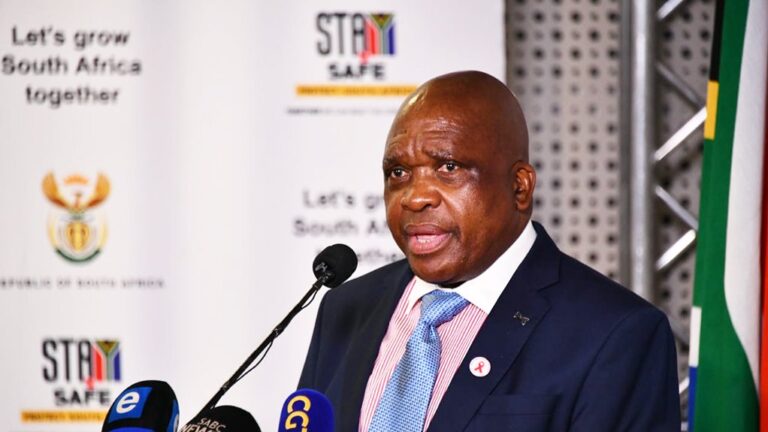
HEALTH Minister, Dr Joe Phaahla, says more than 630 schools were affected by the floods in KwaZulu-Natal with 101 of them being inaccessible and 124 suffering extensive damage.

Basic Education Minister Angie Motshekga together with KwaZulu-Natal MEC for Education Kwazi Mshengu accompanied by senior officials visited the affected schools in the various districts.

Addressing the media in Pretoria on behalf of the Social Protection, Community and Human Development Cluster, Phaahla said the basic education sector has been severely affected.

“We can confirm that 64 learners have been reported to be deceased while five are still missing. One educator and one food handler have also passed away,” Phaahla said at Thursday’s briefing.

Schooling is proceeding elsewhere in the province but that in the affected areas, attendance is uneven.

“Attendance is uneven but we remain hopeful that with all the support there will be a gradual increase to learners and teachers returning to school.We will also monitor on how youth and youth with disabilities will return to school and how this will impact on their education.

“It is in times like this that we need to collaborate, unite and focus on solutions that will provide relief to all those in need. We appreciate all the offers of assistance from partners in the private and public sectors.

“We extend our appreciation to our social partners who have initiated various interventions to assist in helping all those in distress. It will be a long road but together we can so much more to minimise the impact of the devastating floods,” Phaahla said.

Earlier this month, Cabinet declared a National State of Disaster in response to floods, which have wreaked havoc in KwaZulu-Natal and parts of the Eastern Cape.

At a briefing on Sunday, KwaZulu-Natal Premier Sihle Zikalala, said the construction of temporary residential units has started at Ilembe District, Ugu and eThekwini.

The Premier reported that, as of Sunday, 17 438 households have been affected by the disaster while 121 687 people were affected, and 435 people lost their lives.

SA NEWS