Home Blog Page 275

Opinion| Africa’s untapped youth must drive the continent’s Fourth Industrial Revolution

HELEN SWINGLER

COVID-19 can do for Africa’s information technology sector what Y2K, or the Millennium bug, did for India’s. India used the global crisis, tapping into their vast youth population to train millions of software engineers to combat the problem. Those engineers now run multinational companies around the world. And Africa can do the same in the wake of the pandemic, said Fred Swaniker, the founder and chief executive officer of the African Leadership Group (ALG).

This message underpinned Swaniker’s 13 April lecture, “The Impact of African Youth on the 4th Industrial Revolution”, the first in the University of Cape Town’s (UCT) 2022 series of Vice-Chancellor Open Lectures.

The COVID-19 pandemic rapidly scaled up the adoption of digital technologies across the globe, with far-reaching changes as connections went virtual. Zoom went from a nice-to-have to a necessity, said Swaniker.

But the move to digital technologies highlighted massive shortages of technology talent, particularly in Africa where economies and government policies were lagging.

“African governments and companies realised that they required software developers, cloud developers and other tech talent to keep their businesses running, and organisations were evolving from physical to completely remote workspaces,” he said.

By the end of the century, Africa will make up 40% of the world’s population yet it has only 2.6% of the world’s software engineers, said Swaniker. With its massive youth population, Africa has the talent to satisfy the local and global demand; but it must be developed in numbers and fast.

New leaders for Africa

One of TIME magazine’s 100 most influential people in the world in 2019, Swaniker is on a mission to develop better, skilled leadership for Africa and the world: three million young African leaders by 2035.

The conduit is the ALG, described as “an ecosystem of organisations that aims to catalyse a new era of ethical, entrepreneurial African leaders for the continent”. Over the past 15 years, Swaniker has founded and led the African Leadership Academy, the African Leadership University, the African Leadership Network and The Room. This is a community of global leaders that unlocks opportunities for “undiscovered” talent, starting in Africa.

“During the pandemic, we started training the software engineering talent, leveraging technology and doing so at a very low cost and very high speed,” he said. “Collectively, these endeavours aim to transform Africa by developing three million African leaders by 2035.”

Africa has the world’s youngest working population (an average age of 19 compared with Germany’s and Japan’s 47 and 48) and is forecast to have the largest workforce by 2035: 1.1 billion people.

“Now the world is the oyster for a young African software engineer.

You can be an engineer sitting in Ghana and working for Zara in Spain.

You can be sitting in South Africa working for Microsoft in London … You no longer have to leave your country, your home, your village … This is an incredible opportunity for us to export … talent but without the brain drain.”

For the first time in history, jobs without borders are a reality, he said. According to a recent report, about 38% of African software developers already work for companies outside the continent.

“There is a unique opportunity for African youth to power the global workforce.”

And like those Indian IT specialists who left India for jobs abroad, some landing top jobs with Microsoft and Google and other technology companies, they can bring back ideas that will grow the sector and their countries’ economies.

“It’s a very, very exciting time. And it is just waiting for African youth.”

Beyond the classroom

But this opportunity requires new ways of education. The success of ALG’s method is learning beyond the classroom, not only theory but practical skills tackling real-world projects, Swaniker noted.

“For example, the software engineers we’re training build software. They’re not just learning theory; they’re delivering projects and learning on the job. This is how talent should be developed. We have to go beyond the classroom if we’re going to unleash this potential.”

Their students undergo 70 to 100 hours a week of training for 12 months, building “real software”.

“This is very difficult, and we make it so intentionally. The world needs to know that Africans work hard; that Africans can perform at the highest level,” he added.

And then finally, students undertake a three-to-six-month specialisation in cybersecurity, product management, the Internet of Things, cloud computing, data science, autonomous driving, or blockchain or cryptocurrency.

“These technological trends are changing all the time. We need to be flexible and agile.”

While these specialisations acted like the branches of a tree, the stability came through the roots and trunk of the tree, he said, in the foundation that is laid first.

Students’ base training starts with a six-month programme of learning leadership skills, critical thinking, communication, project management, working teams and self-development.

“They learn how to lead themselves and manage their emotions. They learn how to analyse data and make decisions,” Swaniker said. “And this is very important, because we don’t want to create engineers who don’t have values or understand ethics or the societal implications of some artificial intelligence that could destroy our society in different ways.”

Connecting to networks

As networks are essential to success, this talent is connected to the world.

“You can’t realise your full potential if you don’t have access to the right networks, someone who can mentor you, who can give you a first internship and invest in you,” Swaniker said. “And, if you’re starting a venture, someone who can open doors and help you find your first customer, who can join you in your organisation as a co-founder.”

“We bring together networks from Africa from around the world. Students learn to invest in relationships, spend time getting to know their peers, and those with social capital, building those relationships, and showing that they’re doers, not just talkers, because Africa has too many talkers and we need more doers.”

Global companies also begun to set up operations in Africa, said Swaniker. For example, Microsoft has announced two development centres, one in Kenya and one in Nigeria, where they are hiring local software engineers to build software products for Microsoft globally.

“There is no other continent that has the talent potential that we do,” he said. “And we cannot lose this opportunity. We are sitting at an historic time, where the world is desperate for exceptional talent. Africa has that large pool of untapped talent. And as the Fourth Industrial Revolution takes place, this could be a moment to take to the global stage and to really create tremendous opportunities and to transform Africa in ways that have never been imagined.”

UCT NEWS

NYU Students Say School Official Threatened Their Financial Aid Over Protests

0

JAKE OFFENHARTZ

WHEN a group of New York University students began occupying the staircase of a campus building last week, they initially planned to stay indefinitely, or at least until their demand for a meeting with the school’s board of trustees was granted.

Instead, the students departed within forty hours, after the university phoned their parents, warning of a possible suspension that could lead to a loss of housing and financial aid.

The phone calls — which a memo from the Student Government Assembly described as an act of “administrative recklessness” — startled both students and parents, and have since ignited a debate about how universities should treat campus protesters.

“I don’t believe it is appropriate for NYU to use emergency contacts in this way,” Carlos Matos, a Puerto Rican student who arrived at NYU in November through the Hurricane Maria Assistance Program, tells the Voice. 

Matos says his father was visiting a relative in the hospital when he was informed by Christopher Stipeck, assistant director of residential life at NYU, that his son’s housing would be in jeopardy if he continued protesting.

“After everything that’s happened in Puerto Rico, my parents have enough on their plate already. The one thing they could trust was that I was at NYU, but now their sense of security is destabilized.”

Christiane Riederer, whose daughter Josephine is an NYU sophomore and a member of the divestment movement, says Stipeck phoned her as well, and warned that her daughter would be in danger of losing financial aid, scholarships, and her housing if she continued occupying.

“It seemed excessive, when they could have just listened to the kids instead,” says Riederer.

But according to NYU spokesperson John Beckman, the school’s reaction was “in line with our long-standing practice” for when students face a possible suspension. Beckman notes that the protesters — most of them members of the Student Labor Action Movement (SLAM), which advocates against unjust labor practices at the university, and NYU Divest, which has long called for the school to divest from fossil fuel — had attempted a round-the-clock occupation of the Kimmel Center for University Life, which closes at 11 p.m., to protest the school’s refusal to grant them a public meeting with the board of trustees.

Students who disrupt university operations to protest school governance have faced similar discipline in the past. In 2009, eighteen students were suspended by NYU for barricading themselves in a dining hall, in an attempt to force the university to share information on its operating budget, expenditures, and endowment.

In that case, “most, if not all” of the suspended students were able to keep their financial aid and housing, Beckman said.

But the school’s policy does typically prohibit suspended students from living in university housing, and federal guidelines attached to financial aid could prevent a suspended student from accessing parts of their benefits package, including the Federal Work-Study program, according to Beckman.

(He did not respond to a follow-up question about whether a student had ever lost their housing or financial aid over a suspension related to protesting.)

In last week’s phone calls to parents, Beckman added, the university did not “threaten students about their housing or other financial aid. But it is simply the case that certain possible disciplinary outcomes — such as suspension — would have an impact on those matters.”

Yet several students and parents who spoke with the Voice said that the calls they received from the university last week made clear that continuing the occupation could imperil their financial aid and housing.

In the view of those students, the tactic had the effect of targeting those who are financially dependent on the university, and could discourage them from speaking out in the future.

“It’s particularly disturbing that they would threaten those who rely on financial aid and housing, which would disproportionately affect low-income students,” says Olivia Rich, a first-year law student at NYU and member of the divestment movement. “It’s just a really extreme reaction considering we’re asking for something very small, which is just a few hours of time with the people who make decisions at the university.”

Student access to the board of trustees has become something of a flash point at NYU in recent years.

Since 2016, activist groups including SLAM, NYU Divest, the Incarceration to Education Coalition, and the NYU College Democrats have called for student representation on the board. So far, NYU president Andrew Hamilton has rejected the idea, claiming it would present a conflict of interest.

But that explanation is specious, students say, considering that the current board — which determines financial aid policies, among other issues, and has previously rejected a student government vote to divest the university from fossil fuels — already appears to be riddled with potential conflicts.

The student activists note that the current board chair, William Berkley, made some of his fortune as the director of First Marblehead Corporation, a private student loan provider that has drawn legal scrutiny for its lending practices.

Berkley is also the former owner of an oil and gas company, now owned by Anadarko — an energy company that NYU had direct holdings in until last year. Other board members include BlackRock CEO Laurence Fink, billionaire hedge fund manager and Trump advisor John Paulson, and Khaldoon Khalifa Al Mubarak, who serves on the United Arab Emirates’ Supreme Petroleum Council.

“We’ve found that accessing the decision-making body at the university is almost impossible — we don’t know where this board meets, or when, and the individuals are extremely difficult to contact,” says Sarah Singh, a senior at NYU and member of NYU Divest. “I think a lot of the shadiness here comes from the fact that [the board of trustees] might not be able to answer questions that student leaders have for them.”

Until such a meeting is arranged, leaders of both groups say they will continue to push for increased accountability and transparency from the board. For other students, however, the university’s latest reaction revealed that the cost of protesting at NYU may be too high to bear.

“By calling my parents and creating that sense of panic in them, they’re placing me in a situation where now my parents have no more peace of mind,” says Matos. “I’m pushed to stand down or silence myself because I care for them, rather than have a voice in the system.”

VILLAGE VOICE

Damage to KwaZulu-Natal schools estimated at more than R400 million

0

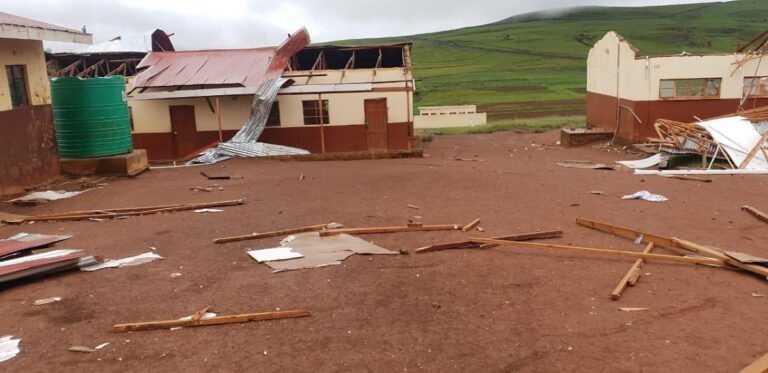
GOVERNMENT says the estimated damage to schools in KwaZulu-Natal is estimated at around R400 million – and the cost is set to increase.

At least 600 schools in KZN were damaged, affecting 320,000 pupils across the province.

Basic Education Minister Angie Motshekga announced during her vist to the province on Tuesday that most schools, affected by the floods, will reopen by Friday this week.

Motshekga said plans are now in place to repair those more severely damaged.

She said a plan is also in place to accommodate those children without schools.

Motshekga said the government is also putting together a plan to help pupils from schools damaged by floods.

Meanwhile, KwaZulu-Natal MEC for Education Kwazi Mshengu said that most schools should open this week but government is mindful of the fact that not all schools can commence with teaching and learning immediately.

“Well, the preliminary figure stands at R442 million for infrastructure, we are quantifying those damages now. Definitely the figure will go up, that is what we are expecting now. This is why we say all schools must open today so that we can start quantifying the damage, how many teachers were affected and how many learners were affected,” said Mshengu.

“That’s only related to infrastructure as you can see in this school, a lot of things have been damaged. Literally, the only things you find in schools are teachers and learners, but in terms of teacher support material and other equipment is completely gone,” he said.

Motshekga said that her department will assist with textbooks to all the affected schools in KwaZulu Natal.

“Displaced kids, kids who are orphaned who lost their parents, kids who are own their own that’s where the province has put in place psycho-social service programme which is going to be led by social development,” she said.

“The MEC has very good plan to send learners to neighbouring schools, keep them at centre’s but for now we are assessing what the damages are what is possible under circumstances and what we need to do where we are unable to really send kids back to school for a normal learning, bring whatever resources we have, books as the principal is explaining that urgently if we want them to go back to school the books have all be destroyed.”

INSIDE EDUCATION

Concern around KwaZulu-Natal matric class affected by floods

THE Select Committee on Education and Technology, Sports, Arts and Culture, has called on the Basic Education Department to attend to Grade 12 learners affected by floods in KwaZulu-Natal and to ensure that teaching and learning time is not compromised.

Committee Chairperson, Elleck Nchabeleng said that a clear provincial plan has to be drafted, adopted and approved by the Department of Basic Education so that the gross impact of floods is mitigated when it comes to the mid-year examinations.

“The Class of 2022 should be able to apply for tertiary placements and the mid-year examinations are a barometer by which many institutions based their admissions criteria.

“They have to attend to this as it threatens to have a long term impact on the future of the affected learners beyond the contact time they will miss,” Nchabeleng said in a statement.

KwaZulu-Natal has been affected by severe flooding which resulted in massive displacements, including the demolition of schools.

Nchabeleng also noted that this year’s Grade 12 class had already been severely affected by two years of inconsistent contact teaching and learning due to the COVID-19 outbreak. He said the committee is concerned that prolonged disruption of class time posed potential learning gaps.

While acknowledging that focus is correctly placed on infrastructure damage and the immediate needs of the affected communities, Nchabeleng emphasised that it should not shade the focus on the future and educational needs of the children.

 “Virtual learning should supplement class time and if placement of the affected Grade 12 learners at other schools is necessary, that should be considered without delay.

“This disaster calls for pulling of resources even from the private sector and civil society in order to boost the initiatives of government. Every learner should be accounted for, and provided with the necessary support,” Nchabeleng said.

Meanwhile, Basic Education Minister Angie Motshekga will on Tuesday and Wednesday lead the national department to assess the damage in affected districts in KwaZulu-Natal.

Addressing the nation on government’s response to the disastrous floods on Monday, President Cyril Ramaphosa said it is estimated that over 270 000 learners have been affected and over 600 schools have been damaged.

Sixteen of the affected schools cannot be accessed due to damage to connecting roads and bridges.

It was reported that a a number of learners and at least one educator have died.

The committee has sent heartfelt condolences to all learners affected by floods.

SA NEWS

An estimated 270 000 learners affected by deadly floods in KwaZulu Natal – Ramaphosa

WENDY MOTHATA|

PRESIDENT Cyril Ramaphosa announced on Monday night that over 270 000 learners have been affected by the deadly floods in KwaZulu-Natal.

The president also confirmed that over 600 schools were also affected in record flooding ranking among one of the worst natural disasters in South African history..

Ramaphosa made the announcement during his address to the nation following a special Cabinet meeting on Sunday where government assessed the social and economic aftermath of the flooding in KwaZulu Natal.

Ramaphosa said that there had been extensive damage to public infrastructure in general, including at schools, health

facilities, police stations and local magistrates’ courts.

“It is estimated that over 270,000 learners have been affected and over 600 schools have been damaged,” Ramaphosa told the nation during a live address.

He further added that most of the affected schools cannot be accessed due to the damage to connecting national roads and bridges.

“We are saddened by the reports that a number of learners and at least one educator have died. Sixty-

six public health care facilities have been affected, although there has been minimal disruption to health

services in most affected districts,” he said.

“To ensure an effective response to these tragic events, the National Disaster Management Centre last

week declared the flooding as a provincial disaster. This was followed by the declaration of the Premier

of KwaZulu-Natal to invoke extraordinary measures to deal with the situation.”

The president said that extensive work is underway to restore basic services such as water, electricity,

sanitation and waste removal – to various areas in the province.

“The efforts are being hampered by to damage to main supply systems and the inaccessibility of some areas,” he said.

Basic Education Minister Angie Motshekga is expected to visit KwaZulu-Natal on Tuesday to assess the extent of the damage caused by the floods and to meet with the provincial education department.

Motshekga and KwaZulu-Natal Education MEC Kwazi Mshengu are set to visit affected schools in the province.

The department of basic education said the latest statistics showed that 630 schools were affected, 101 were inaccessible and 124 have suffered extensive damage.

Most of the schools which were damaged had either flooded classrooms, leaking roofs or broken windowpanes.

It has been reported 57 pupils died and five are missing.

Rescue and recovery processes are ongoing in the province.

The department confirmed one teacher and food handler was reported to have died in the floods that hammered the province last week.

The department said that the 600 schools that are damaged required urgent attention.

“We are saddened that so many lives have been lost and we would like to express our deepest condolences to all affected families and relatives. It is such a tragic loss and our prayers go out to those who have lost their family members and those who lost their belongings,” said Motshekga.

“This is a catastrophe and the damage is unprecedented. What is even more worrying is that more rain is expected in the same areas that are already affected.”

INSIDE EDUCATION

57 learners confirmed dead, five missing in the KwaZulu-Natal floods disaster

AT LEAST 57 school learners have been confirmed dead while five learners are still missing following deadly floods in KwaZulu-Natal, according to the Department of Basic Education.

“It has been reported that 57 learners have been confirmed to be deceased while 5 are still missing,” the department said.

The department added that one educator and one food handler have also been reported to have passed away.

DBE said that rescue and recovery processes were still ongoing.

Basic Education Minister of Basic Angie Motshekga is expected to visit KwaZulu-Natal Province on Tuesday to assess the situation.

Taking to Twitter, Basic Education spokesperson Elijah Mhlanga tweeted: “The impact of the KZN floods on schools is sad and a difficult situation still.”

All provincial schools affected by the floods were temporarily closed on Wednesday last week.

“The Department of Education in KwaZulu-Natal wishes to inform school communities and all education

stakeholders that it has temporarily closed all schools that have been affected by massive flooding of heavy downpours and inflows of water that has been taking place in the last few days in KwaZulu Natal,” the statement said.

President Cyril Ramaphosa has vowed to assist people who have lost their family members during the floods.

Ramaphosa visited the flood-stricken parts of KwaZulu-Natal last Wednesday.

“This is a tragic toll of the force of nature and this situation calls for an effective

response by government in partnership with communities,” said Ramaphosa.

“This situation calls on us to come together as a nation and offer assistance to those who desperately need our care and support. What is painful is that a lot of people have died. Their homes have been destroyed, streets, towns and this church has been destroyed. You are not alone. We will do everything in our power to see how we can help. Even though your

hearts are still in pain, we are here for you.”

Last week, the Provincial Education Department advised schools and parents to use their discretion on whether to send children to school or allow them to stay at home.

Department spokesperson Muzi Mahlambi, “Safety alert by the Department of Education in KwaZulu-Natal, attention to all school principals and School Governing Bodies due to inclement weather conditions the Department of Education in KwaZulu-Natal advises teachers, parents, caregivers to use their discretion whether or not to send their children to schools. The department will monitor the weather patterns and give further advise in this regard.”

INSIDE EDUCATION

Parents need to help children with homework – stakeholders

SOME parents and teachers in the South-South have justified parents’ assistance to children in doing their take-home assignments, saying it is not a transfer of responsibilities from teachers to parents.

The parents made the justification in a recent survey carried out by the News Agency of Nigeria in the region.

They observed the practice would help parents assess the teachers’ performance, as much as help boost the bond between parents and children, whilst keeping a keen eye on the children’s academic performance.

A Calabar-based teacher, Margaret Ada, said that parents assisting their children and wards do take-home assignments helped to create a bond between the pupils and their parents.

197.7K

“Teachers are not transferring their responsibilities to the parents by giving them take-home assignments as some people think.

”The practice ensures that parents get really involved in their children’s education,” Ada stated, adding that some schools had realised that some parents had no knowledge of the activities of their children in school.

She continued, “Education is a collaborative effort between teachers, parents and children. Parents just have to be involved and that is why assignments are given,” she said, but, however, noted that some parents ”felt the assignments were sometimes far above the understanding of the child”.

According to her, in such situations, parents could call the attention of the teachers, which would help boost the bond among the parties.

A parent, David Akpan, said that take-home assignments, no matter how difficult, were part of the teaching techniques to help pupils understand better.

“It is necessary for the parents to assist the children in their take-home assignments. It is only a lazy and irresponsible parent that sees it as a burden,” he noted.

In Yenagoa, a parent and teacher, Jonathan Epegu, said, ideally, such assignments were designed to ensure that children recalled what they were taught in school, and to make them execute the assignments on their own.

“Parents are supposed to supervise their children and not do the assignments. The education of children should involve parents as well as teachers,” Epegu said.

She, however, said that at times, students were given take-home assignments beyond their range of knowledge.

“I agree it happens. My children bring such assignments that are beyond their scheme of work,” she said.

According to Maduabuchi Eziukwu, some teachers usually overwhelmed children with assignments on a daily basis and thus overburdened parents who were increasingly finding it more difficult to eke out a living.

“I only assist when children have difficulties because when you do the assignments, the children do not learn anything.

Eziukwu said that parenting required a lot of commitment and advised that parents should create time and have an interest in the educational development of their children.

Some teachers in Benin told the NAN that take-home assignments were meant for students and pupils to master the topics taught in class.

Blessing Emmanuel, a teacher at a private school in the Edo state capital, opined that no teacher would give students assignments on topics not treated in class.

“I understand the fact that some parents see the assignment given to their wards as bulky whereas it is not, she said.

Treasure Emokpahe, a teacher, noted that assignments were given to students to ensure proper comprehension of the topic, disagreeing with the notion that homework was a ploy to shift responsibility away from the teachers.

In Asaba, the proprietor of African Elite International School, Ikenna Okafor, said that the academic growth of children fell on the shoulders of both teachers and parents.

Okafor said giving children assignments to do at home did not amount to transferring responsibilities to parents.

“It helps the child to play less and study at home. It also helps parents to find out if the teachers are teaching their children well.

“It helps parents find out whether their children are serious with their studies and makes the children open up to their parents about their teachers’ bad behaviours.

“When both teachers and parents join hands together to help the child, you will find out that the child is always the best,” he said.

PUNCH NEWSPAPER

Africa: T4 Education Partners With HP and Intel to Rewards African Teachers

0

T4 Education has partnered with HP and Intel to reward African Teachers in the inaugural Africa Education Medal.

The medal seeks to recognise the tireless work of those who are transforming education across the continent – to celebrate the stories of those who have lit the spark of change so others will be inspired to take up the torch.

“Quality education will help African countries grow and prosper. And it will help Africa produce the public leaders of tomorrow who will go on to grapple with the continent’s greatest challenges from inequality, to climate change, food insecurity and disease. The Africa Education Medal recognises those who are working every day to make that vision a reality,” said Vikas Pota, Founder and CEO of T4 Education.

ohn Kimotho, Senior Deputy Director at Kenya Institute of Curriculum Development, has joined the Judging Academy.

“In Kenya, and all across Africa, we need to see everyone from both the public and private sectors working together to ensure we are able to provide a quality education to every child. I urge inspirational leaders from Kenya and all over our continent to come forward and apply for the Africa Education Medal so others can learn from their shining examples,” Kimotho noted.

The Medal is open to individuals working to improve pre-kindergarten, K-12, vocational and university education as educators and school administrators, civil society leaders, public servants and government officials, political leaders as well as Technologists and innovators.

“HP has been committed to enabling better learning outcomes for 100 million people between 2015-2025. Achieving this bold goal wouldn’t be possible without empowered education leaders and trailblazers who are at the forefront of the rapidly changing education environment,” said Brad Pulford, Managing Director at HP Africa.

CAPITAL FM

MEC Panyaza Lesufi opens new classrooms at Randburg Clinic School

0

THE Gauteng MEC of Education Panyaza Lesufi opened eight newly built classrooms at the Randburg Clinic School.

The new classrooms were unveiled on April 2, simultaneously with the commemoration of World Autism Awareness Day.

“We gave money and said go and expand. We gave money like any other school that we have given money to. Within the shortest possible period, within budget, they added eight new classrooms in this particular school,” Lesufi told parents and other stakeholders at the school.

He said the completion of the project within a short period signifies leadership.

“They didn’t go and fight for tenders, they didn’t go and fight for who is my friend who can come and build here. They didn’t fight for small things, they produced classrooms.”

He assured the parents of the autistic learners who are studying at the school that although it may not be a battle, they should know that they were not alone.

“We know each and every child is different, we know each and every child is not the same. Therefore, we might struggle with our curriculum but the quality is the same and everyone must be touched with the manner and everything that we are doing in our school.”

Lesufi said they were not opening the school to ‘babysit’ or for the children to be guided just to survive – children must learn.

“We want to impart knowledge so that they can be part of the skills revolution of our country. These children under my leadership will not be confined to being switchboard operators. We will produce good people who will come out of this particular sector.”

The purpose of the commemoration was to raise awareness about autism and emphasise the need to accept individuals with autism as an integral part of society and improve their quality of life as April is Autism Awareness Month.

These are the highest- and lowest-paying STEM jobs in the U.S.

CAREERS in the STEM fields — jobs that emphasize science, technology, engineering or math — have been some of the fastest growing and best paid jobs in the U.S. for decades, and, due to the Covid-19 pandemic, that trend is likely to accelerate as more people spend more time living and working online. 

Some STEM jobs, however, offer more lucrative salaries than others, according to new research from the Bureau of Labor Statistics.

The BLS highlighted the highest and lowest-paying careers in STEM as part of its annual Occupational Employment and Wage Statistics (OEWS) report, which was released last week. 

Overall, STEM occupations saw an annual mean wage of $100,900, compared with $55,260 for non-STEM occupations. The OEWS report is based on payroll information from about 1.1 million U.S. businesses. 

Computer and information systems manager is the highest paid job on the list with an annual mean wage of $162,930, followed by architectural and engineering managers and natural science managers. 

The highest and lowest earning STEM jobs in the U.S.

The average annual wage among all STEM workers is $100,900.

“STEM occupations offer, at all levels, competitive wages and clear opportunities for career advancement,” BLS Division Chief Michael Wolf tells CNBC Make It. 

Some of these jobs, such as physicists and petroleum engineers, pay more because they employ a small number of people and require advanced technical skills, he adds. The demands of the job can be grueling, too: Petroleum engineers, for example, often work in rotations of 84 hours on and 84 hours off while at drill sites. 

Technicians make up the lower-paid jobs in STEM as most of these jobs – including the five on this list – do not require a bachelor’s degree and assist scientists, engineers and other STEM professionals on larger projects. 

Still, the number of Americans working in STEM is small: As of 2021, about 9 million Americans worked in STEM jobs, representing nearly 7% of total employment.

The six largest STEM occupations were related to computers, such as software developers and computer user support specialists. 

The ongoing pandemic has accelerated certain changes to the workforce, namely by exposing weaknesses within companies’ information technology operations in addition to accelerating the transition to remote work and e-commerce, increasing the demand for STEM jobs.

Employment in computer and IT occupations, for example, is projected to grow 13% between now and 2030, faster than the average for non-STEM occupations (7.5%). 

Software developers will play a more central role at companies, Wolf told CNBC Make It in September, as the number of software platforms and applications people have to use on a regular basis “continues to dramatically increase.”

“Companies need software engineers to develop and maintain all of that functionality,” he says. 

CNBC