Home Blog Page 276

Nine years later and Lemana College still not completed

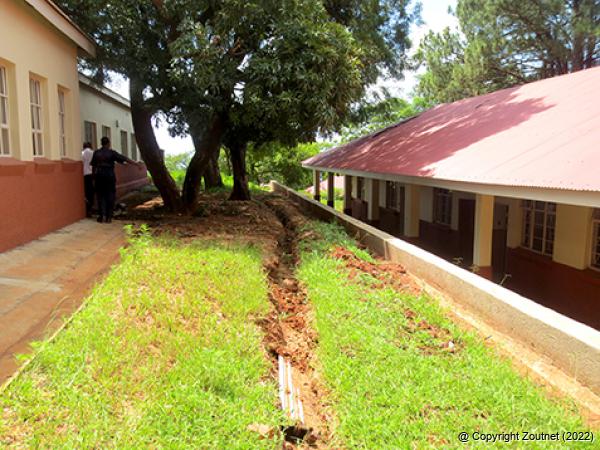
NEARLY nine years have passed, yet the long-awaited project to turn Lemana College near Elim into Lemana Secondary School is still not complete.

The Lemana Task Team and Waterval Community Development Forum members are deeply concerned about further setbacks brought on by vandalism and burglary at the site.

The Department of Public Works and Infrastructure (DPWI) started with construction for the Limpopo Department of Education’s project in 2013, but the process was delayed on several occasions.

While this development is stalling, classrooms, hostels, and halls are being vandalised and electrical appliances stolen.

The Lemana College Task Team’s Mr Sukani Makondo said the school was being neglected, and that after millions of rands had been injected into its renovation. 

“We find it very disturbing. We are now busy requesting the Department of Education to give it the status of a TVET college, but at the same time, we realise that vandalism is at its peak,” Makondo said.

He voiced his concern over the sluggishness of the project.

“You cannot have an unfinished project for more than eight years. There’s no one safeguarding this site except the security company that is here voluntarily. Even the heritage authority has deserted the place.”

The chairperson of the Waterval Youth Forum, Mr Falaza Khosa, said, “We sent several letters to the departments of Education and Public Works last year, with no response. We then phoned the project manager’s supervisor and he promised to visit the site, but until today he has not come,” he said.

The Limpopo Department of Education spokesperson Mr Tidimalo Chuene said that the first tender had been awarded to Bankuna Engineering and Construction at a cost of R36,58 million.

However, the contractor was dismissed on 15 May 2017 because of poor performance.

“Lilithalethu Trading 41 replaced the first contractor to complete the construction project for R30,13 million on 12 June 2018, but community members disrupted the project and eventually closed the site in September 2019, arguing that the previous contractor still owed the local labourers and sub-contractors payment for the 26% work that had already been done,” she said.

Mr Joel Seabi, spokesperson of the DPWI, confirmed that the department has been negotiating with a contractor to resume work once the budget has been endorsed.

“We are working with the Limpopo Department of Education to restart construction and, hopefully, in this month of April 2022, all the necessary paperwork will be done, which will allow the DPW to proceed with the work on site,” he said.

According to Seabi, the old hostels and halls that had been vandalised do not form part of the project’s scope. 

“The end user, which is the Department of Education, is responsible for security at the other sections of the facility. We discourage vandalism entirely, and instead encourage residents to care of public property.”

He said the project would be completed within 12 months from the date that the contractor resumed development.

ZOUTNET

The stage is set for the leading schools’ sports tournament- Absa Wildeklawer

0

South Africa’s top sporting schools are preparing their squads for the 2022 Absa Wildeklawer Schools Sports Tournament, taking place in Kimberley, Northern Cape, between April 24 and May 2, 2022.

Primary and high school pupils will be competing in a festival of rugby, netball, and football, with football being the new edition to this year’s tournament.

“Due to the COVID-19 pandemic and its impact on sports, players, coaches, parents and sports fans were deprived of school sports for almost two years,” said Stonie Steenkamp, managing executive: regional coverage central South Africa (TBC).

Steenkamp stated that with the national state of disaster now lifted, they are excited to bring back the Absa Wildeklawer Schools Sports Tournament.

“Through this tournament, we continue to support the development of sports in our country and remain committed to providing a platform for young sportsmen and women to showcase their talents,” Steenkamp continued.

Adding football to the tournament has increased the number of youngsters competing in the various sporting codes to 4239.

This year, Absa has also introduced several innovations that have enhanced the experience for all involved.

“As part of the 2022 tournament, we will be introducing the Absa MegaU Luxury Bus: with free Wi-Fi, VR rugby games and PlayStations. These will all be available for players and fans to entertain themselves. In addition to the bus, we have the Absa Kuierkamer, an area for invited guests to sit, relax and watch games. We also have some half-time fun activations where youngsters can win cool prizes,” Steenkamp confirmed.

Through the tournament, Absa also aims to empower local entrepreneurs and small businesses in Kimberley through collaboration and making sure that they form part of the festival.

This forms part of Absa’s #SmallBusinessFriday movement, which is aimed at helping small businesses grow, employ more, reduce unemployment and nurture the country’s entrepreneurial spirit.

Absa’s commitment to uplift communities, encourage community participation initiatives and develop sports in the country is reflected in their continued efforts in supporting tournaments and projects such as the Absa Wildeklawer Sports Tournament, Absa Run Your City, Absa Cape Epic and their sponsorship for the Qhubeka Charity where they distribute bicycles to change lives. 

“We are extremely grateful to Absa for their commitment to sports development and choosing to partner with us in bringing this tournament to life again. Absa Wildeklawer has produced 20 Springbok rugby players since 2009 and we are confident that with a partner like Absa we will produce more professional sportsmen and women. We look forward to many years of success and taking the tournament to the next level,” said Cassie Carstens, operations manager for the tournament. For more information on the Absa Wildeklawer, visit https://wildeklawer.com/absa-wildeklawer-sport-2022/

The Ukrainians teaching in a war zone: bombed-out schools, evacuations and board games

0


YULIA Kuryliuk, a teacher in a village near Lviv, woke on 24 February to find her country at war and gathered her sixth-grade class on Zoom. Two children tearfully asked when the fighting would end.

She didn’t have an answer, but she led her students through breathing exercises to manage anxiety and encouraged them to hug a relative, pet, or stuffed animal for comfort.

With Ukraine’s education system upended by the war, teachers are helping provide stability for their students, along with other forms of emergency support such as evacuation and humanitarian aid.

While the ministry of education and science declared a two-week break after Russia’s full-scale invasion began, lessons have now resumed where possible, though they are frequently interrupted by the wail of air raid sirens.

According to Ukraine’s education minister, Serhiy Shkarlet, as of 7 April, about 12,000 schools were holding classes online and 3.5 million students had returned to some form of learning.

Experts agree that education can play a positive role for children affected by war and “alleviate the psychological impact of armed conflict by offering routine and stability”, according to the intergovernmental Safe Schools Declaration.

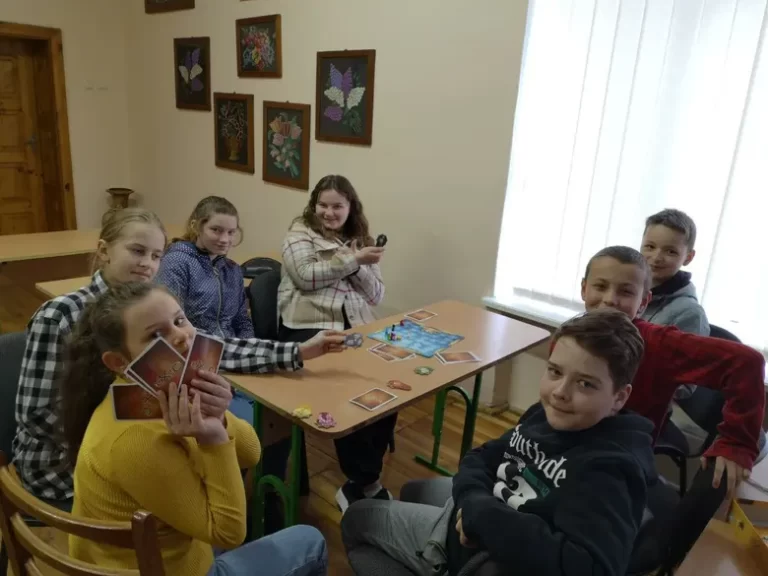
A few times a week, Kuryliuk meets her students in person at the school library, where they play board games. “It’s a safe place to be with each other and to communicate,” she said, particularly for kids who are cooped up inside with their parents.

She has also been reading to her sixth-graders over Zoom in the evenings. Some log in from Poland, Italy and Greece, where they’ve sought refuge, to connect with familiar faces from back home.

As Russian forces advanced, Anastasiia Luzhetska fled the small community near Kyiv where she was teaching art to stay with her family in the western Ukrainian city of Ternopil. She’s since marshaled a team of volunteers to organize games, arts and crafts, parties and other distractions for the many internally displaced children arriving in the area, creating spaces “where kids can feel like kids”. When it’s time to go, she said, the children and their parents “don’t want me or my volunteers to leave”.

video posted on Facebook shows Luzhetska on a recent visit to a shelter for internally displaced people in Ternopil, where she scoots across the room on her knees, flapping her arms like wings. A group of children seated on the floor lean forward, shouting guesses at what kind of bird she is mimicking. “Swan!” a boy cries, and she walks over to give him a high five.

Still, the war is never far away. “One boy, Yegor, drew a house and after that, he said, ‘Oh, I think I don’t have a house any more, because they bombed it,’” Luzhetska said. “It’s hard to hear.”

Older students also feel a deep sense of uncertainty. Before 24 February, Vova, a 17-year-old from Borodyanka, a community of 13,000 north-west of Kyiv, was planning his high school graduation party and dreamed of studying journalism at university. Now, with his home and school in ruins after over a month of Russian occupation, he has no idea what his future holds.

With their school destroyed, Tymoshenko teaches Vova and another student in a basement in the village where they are sheltering. Photograph: Courtesy Teach for Ukraine

Viktoria Tymoshenko and students before 24 February. Photograph: Courtesy Teach for Ukraine

When the attacks began, Vova, who was raised by his grandmother, sheltered with her in their basement, where they remained for a week with no electricity.

He heard constant explosions as Russian soldiers fired rockets and columns of military vehicles rolled through his neighborhood, shooting at houses. Amid the chaos, he texted with his biology teacher, Viktoria Tymoshenko, who was determined to help him evacuate and arranged a way out.

Tymoshenko “rescued me from this hell”, Vova said, speaking through an interpreter. They fled under shelling to a nearby village before moving further west, but they weren’t able to get his elderly grandmother out of the Kyiv region. In March, she was killed by a Russian missile that hit the house where she was staying.

Tymoshenko is now living in a village with Vova and another student she helped evacuate. Though it’s safer there, she is haunted by memories of their escape and worries about those who stayed behind. She messages students who have internet access to check in, but there are some she cannot reach, along with several of her colleagues.

Ukrainian forces liberated Borodyanka on 1 April, but authorities fear there may be hundreds of residents buried under bombed-out apartment buildings. Russian occupiers destroyed part of their school and then set up a base there, Tymoshenko said, ransacking the classrooms and covering the walls and chalkboards with graffiti: “Russia, our beloved country!!!”

Graffiti in a Borodyanka classroom after Russian occupation. Photograph: Courtesy Teach for Ukraine

Tymoshenko and her students go on walks in the village to try to take their minds off the war, but there is “a tension you always feel and it does not disappear”, she said through an interpreter. Vova is grateful to his teachers for providing support, and despite everything he’s been through, he is eager to return to class.

Tymoshenko, Luzhetska and Kuryliuk are fellows with Teach for Ukraine, an organization that recruits and trains Ukrainians to teach in underserved schools. It is part of the Teach for All network, which includes Teach for America and Teach First in the United Kingdom. Since Russia’s invasion began, Teach for Ukraine has held workshops with psychologists to equip its teachers with techniques to support students during the war. Most are first-time educators and have been in constant contact, supporting and inspiring one another. “We are more than just colleagues, we are a family,” said Kuryliuk. “They all remind me every minute that I just don’t have the right to give up.”

“Even under the shelling they kept thinking about school,” Anastasiia Holovatiuk, another Teach for Ukraine fellow who was serving in nearby Makariv, said through an interpreter. The town was also recently liberated from Russian occupation. Her apartment was destroyed by Russian fire, but her students, who have continued to prepare for their university entrance exams, motivate her to keep going: “Watching these kids, you understand that it is necessary to continue and to move on.”

Educators stepped up to hold the community together, Holovatiuk said, cooking food for Ukrainian soldiers, helping locate basic necessities for residents and checking in with their students. Still, she said, while Ukraine has become a global symbol of resilience, its citizens have paid a high price. When people think about the war, she wants them to know “20 students from the 11th grade from Makariv lost everything they had”.

Holovatiuk’s student Masha, 17, is one of them. After fleeing the fighting in Makariv, Masha, her parents and her brother stayed with an acquaintance near Lviv, but the small apartment was soon crammed with multiple internally displaced families and three cats. To free up space, Masha’s parents decided she would travel alone to Poland, where they had found a family willing to take her in.

Masha packed a backpack and boarded a train so crowded people were sleeping on the floor; she tried to rest in the space between wagons. “It was like in the movies about the Holodomor,” she said through an interpreter, referring to the Stalin-engineered famine that killed four million Ukrainians in the 1930s. She wasn’t afraid to go to Poland, but “you just feel as though everything around you is being destroyed”, she said. “You go away from your parents, and when other people are with their families, it is not pleasant. You sit as if you were a puppy.”

Now Masha attends classes with other Ukrainian teenagers, with a translator available to help. She’s learning basic Polish and for the moment, there are no grades and no homework. Her new school is “a nice picture”, with a swimming pool, large gym, “cool classrooms” and kind teachers, but these amenities can’t eliminate the persistent sense of uncertainty.

Masha worries about her dad, who wants to return to Makariv to fix the electricity lines, and her insulin-dependent grandmother, whom she hasn’t been able to reach for weeks. She feels guilty that she is safe in Poland, able to go outside and spend time with new friends while her family is sitting in a basement.

Holovatiuk, who arrived in Makariv in August, was just getting to know her students when she had to flee and is furious that the war disrupted her plans to teach there for two years. She is currently staying in western Ukraine with her partner’s family but plans to return to Makariv when it’s safe and believes the school will play a central role as the community rebuilds.

“Each of us has nothing left but hope,” she said. “You keep thinking that you will be back, maybe tomorrow, maybe the day after tomorrow, or in a week, but I will be back.”

With translation by Alina Opriatova and Anna Doroshenko

THE GUARDIAN

LATEST: Eighteen learners, 1 teacher confirmed dead in KwaZulu-Natal floods disaster

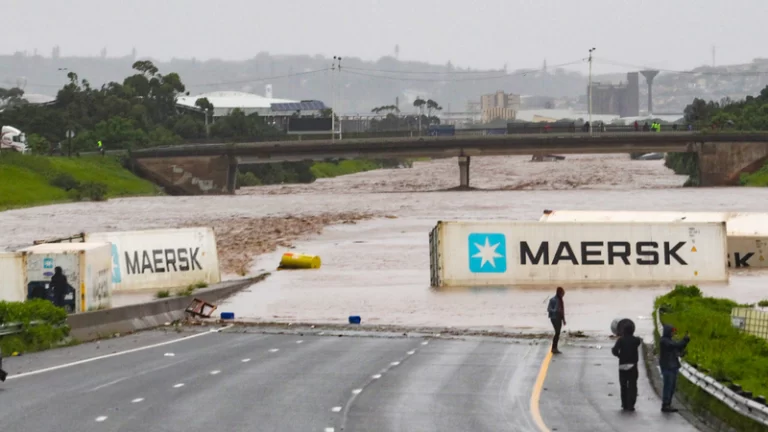
THE Department of Basic Education (DBE) has confirmed that 18 learners and one teacher died in the floods in KwaZulu-Natal, described by many as one of SA’s worst disasters.

“By Wednesday afternoon 18 learners and one educator had been reported to have perished in the disaster that occurred,” the department said in a statement issued on Thursday.

Basic Education Angie Motshekga expressed her condolences and sympathy to all the families who had lost their loved ones in the heavy rains in KwaZulu-Natal.

More than 300 people have lost their  lives during the floods, according to authorities.

“We are saddened that so many lives have been lost and we would like to express our deepest condolences to all affected families and relatives. It is such a tragic loss and our prayers go out to those who have lost their family members and those who lost their belongings,” said Motshekga.

The floods have forced the Department of Education in the province to close schools until next week as more than 120 have been reported to be damaged.

“This is a catastrophe and the damage is unprecedented. What is even more worrying is that more rain is expected in the same areas that are already affected,” Motshekga said

The province has now been declared a provincial disaster.

The Department of Basic Education has also sent a team of senior managers to support the provincial

education department in conducting an assessment of the damage caused.

The minister will also visit the province soon.

KZN Education MEC Kwazi Mshengu said that the province has now more than 500 schools that are damaged and require urgent attention.

On Wednesday, the Department of Education in KwaZulu-Natal announced that all the schools in KZN affected by floods have closed.

This move comes after the province has been experiencing floods since Sunday night.

“The Department of Education in KwaZulu-Natal wishes to inform school communities and all education stakeholders that it has temporarily closed all schools that have been affected by massive flooding of heavy downpours and inflows of water that has been taking place in the last few days in KwaZulu- Natal,” the statement said.

INSIDE EDUCATION

First-ever Fellow of STADIO awarded to veteran ANC politician, lawyer and academic, Dr Mathew Phosa

HIGHER  education provider STADIO, has honoured Dr. Mathew Phosa with their first-ever Fellow of STADIO award, during a graduation ceremony in Krugersdorp on Tuesday.

Phosa was honoured with the highest award that the JSE-listed investment company can offer, in acknowledgment of his diligent commitment to South Africa’s higher education sector.

Phosa is a prolific author and many of his poems, including the Afrikaans anthologies Deur die oog van ‘n naald, are prescribed in South Africa’s school curriculum, as part of the matric syllabus.  

The veteran ANC politician has held a 12-year tenure as Chairperson of the UNISA Council, where he successfully oversaw the merging of Unisa, Technikon SA, and VUDEC, to create the largest higher education institution in the Southern hemisphere.

“STADIO is delighted to be able to acknowledge Dr. Phosa as our first-ever Fellow of STADIO.  We strongly feel his continued contributions to ethical leadership and championing the values of constitutional democracy, good governance, and social justice in South Africa contribute to the achievement of STADIO’s vision, mission, values, and commitments. This is our way to not only appreciate his phenomenal accomplishments but also a chance for us to celebrate strong role models with our students,” says Divya Singh, Chief Academic Officer at STADIO. 

Aside from his work in education, Phosa is widely acknowledged as a trailblazer in South Africa’s political and business sphere. 

After opening the first black law practice in Nelspruit in 1981, he went on to play a central role in negotiating a peaceful transition to a fully democratic South Africa in 1994.

He was appointed the first Premier of Mpumalanga during the same year and later was elected Treasurer-General of the ANC from 2007 to 2012. 

Phosa sits on several listed company boards and well as on the boards of several unlisted entities.

He is also the Chairperson of Special Olympics South Africa, an NPO founded to provide year-round sports training and athletic competition for children and adults with intellectual disabilities. 

Addressing the graduation congregation, Phosa said his best piece of advice to his fellow graduates is to listen. 

“We must learn to talk to each other in our country, in a barefoot, calm, loving way that will restore trust between people and build bridges where it has been destroyed by ideological nonsense,” he said.

STAFF REPORTER

KwaZulu Natal education department confirms deaths of seven pupils and teacher in floods

SEVEN pupils and a teacher are reported to have drowned during the floods in KwaZulu-Natal.

Provincial education department spokesperson Sihle Mlotshwa told the Sowetan that a teacher died in the Ugu district on the south coast, while five pupils were reported to have drowned in Pinetown.

Two pupils died in the Umzinyathi district.

Mlotshwa was quoted as saying that the department was still being updated on staff and pupils who were affected by the floods and urged parents to use their discretion during the inclement weather

The education department in the province has also moved to close all schools in the province.

The temporary closure of these schools will be until 19 April 2022.

The department said, “The strong flooding has caused a huge disruption and it continues to impact negatively on teaching and learning at schools, while it remains a threat to the lives of pupils as well as teachers.”

They added, “The terrain and level of water has made it extremely difficult for teachers and pupils to reach the schools”.

It was reported that more than 140 schools were affected by flooding.

The department explained that in some areas it is extremely dangerous to access schools as pupils and teachers are forced to cross high levels of water.

KwaZulu-Natal Premier, Sihle Zikalala said that weather has affected the delivery of education as learners had to stay at home due to damage sustained by schools.

“In particular, 40 learners and 12 educators from Tholulwazi High in Molweni were trapped at school because the bridge they use to cross the river collapsed and the road was washed away by floods. The Grade 12 learners and educators teaching Grade 12 had remained behind for extra tuition on this day,” said Zikalala.

Here are the big language changes proposed for schools in South Africa

0

BASIC Education minister Angie Motshekga says her department is moving forward with plans to incorporate mother-tongue languages at the country’s schools.

Answering a recent parliamentary Q&A, Motshekga said her department values mother tongue education and thus encourages learners to learn through their Home Languages wherever it is feasible and practicable.

“This position is in alignment with the provisions of the Constitution of the Republic of South Africa. Section 6 of the Constitution of the Republic of South Africa lists the official languages as IsiZulu, IsiXhosa, IsiNdebele, Siswati, Sesotho, Setswana, Sepedi, Tshivenda, Xitsonga, English and Afrikaans.

“All these languages can be used as languages of learning and teaching or as subjects. Section 29(2) of the Bill of Rights provides that everyone has the right to receive education in the official language or languages of their choice in public educational institutions where that education is reasonably practicable.”

An increased focus on marginalised languages

In its attempts to elevate the status of the previously marginalised languages, the Department of Basic Education developed the National Curriculum Statement (NCS) Grades 1-12, which makes provision for equal use of all 11 official languages and South African Sign Language in the schooling system.

The National Curriculum Statement Grades 1-12 encourages learners to learn through their home languages, particularly, though not limited, in the foundation phase, Motshekga said.

“The policy does not restrict the use of home language instruction up to Grade 3, but emphasises the use of the home language in Grades 1-3 to reinforce the critical foundational skills of reading, writing and counting. The NCS recognises the importance for learners to learn in their home language.”

“The Language of Learning and Teaching (LoLT) can be selected from any official language. The NCS and the LiEP advocate for an additive bi/multilingualism approach that encourages learners to learn through their home language as long as it is feasible, as well as to learn other languages.”

Additive multilingualism allows maintenance of learners’ home language as they acquire additional languages as subjects or as languages of instruction, Motshekga said.

Home languages, English, and the reality

The National Development Plan (NDP) recommends that learners’ home language be used as LoLT for longer periods and English be introduced much earlier in the foundation phase, said Motshekga.

She noted that the plan emphasises the need to develop African languages or mother tongues as integral to education, science and technology, to develop and preserve these languages.

“Despite all these noble efforts, the reality on the ground reflects otherwise. The hegemony of English as a preferred medium of instruction and communication seems to prevail, which together with Afrikaans are still the dominant languages of learning and teaching in the majority of South African schools.”

The minister has previously acknowledged that there are issues with moving to a purely mother-tongue-based system, noting that it was likely impossible to have a pure class in Sotho or Xhosa in Gauteng the way similar classes have been held in the Eastern Cape.

She added that in classes teachers use multiple different languages to help children learn and get their point across. However, when it comes to assessments – which are typically done in English – they are once again forced to grapple with a language they did not understand while learning.

“They are no longer being tested on their cognitive development or understanding (of the work). You are now testing their language abilities, which is a problem.

“Government has begun the process of changing this and the next step is to assess them in the language they are taught – so that we are able to assess performance and not language proficiency.”

She added that government would have to use technology and other systems to effectively translate complicated scientific and mathematical concepts into languages that do not necessarily have the same terminology.

Pilot project and expansion 

The Eastern Cape has initiated its Mother Tongue Based Bilingual Education pilot, wherein 2,015 schools are using IsiXhosa and Sesotho as the LoLT up to Grade 9.

Learners in these schools are taught mathematics, natural science and technology in their home languages IsiXhosa and Sesotho.

This initiative was started in 72 Confimvaba schools in Grade 4 in 2012 and incrementally in subsequent grades and it is now being implemented up to Grade 9 in 2022, Motshekga said. The province is now planning to roll it out to all the schools where it is feasible.

“The DBE is currently putting a prudent plan in place to roll out African Languages Mother Tongue Based Bilingual Education to the other eight provinces,” the minister said.

BUSINESS TECH

Stellenbosch University honours top actuarial sciences student, Bradley Moorcroft

0

THE Chancellor’s Medal for 2021 was awarded to Actuarial Sciences graduate, Bradley Moorcroft.

Moorcroft was announced as last week as the official recipient of the Stellenbosch University’s coveted Chancellor’s Medal for 2021.

“The medal is awarded annually to a final-year or postgraduate student who has excelled academically, has contributed to campus life in various ways, and has worked hard at developing co-curricular attributes,” the university said in a statement.

Moorcroft was awarded bachelor of commerce (Honours) degree in Actuarial Sciences. cum laude, at the virtual graduation in December 2021 and returned to Stellenbosch this week to receive the medal in person at the April graduation ceremony of the Faculty of Economic and Management Sciences.

Over the last four years, Moorcroft passed all his subjects in his B. Com and Honours (Actuarial Sciences)

degrees with distinction, achieving 90%–99% in half of his modules. During his honour’s year, he was the

top student and achieved the highest average mark in the past five years.

Furthermore, “he reached the standard necessary to be recommended for exemptions from all the Actuarial Society of South Africa (ASSA) examinations available to date in his studies, which is a very rare achievement,” the university said.

Commenting on his award, Moorcroft said: “There are so many exceptional final-year and postgraduate students who graduated in my cohort, and it is a big surprise and huge honour to be recognised in this way. This is the cherry-on-top of a rewarding and enjoyable Stellenbosch chapter.”

“It was quite a challenge to balance my actuarial studies with other responsibilities during the COVID-19 period. So, I also view this award as recognition of the hours of commitment and hard work it took to navigate this journey,” said Moorcroft.

Moorcroft added that many people have supported him and contributed to his success. “I cannot take credit for this award alone. I am very grateful for the unfailing support and encouragement of those who have been closest to me through the ups and downs of the past four years.”

He believes embracing his studies with a team minds​​et helped him achieve his goals.

“This is an approach that I would recommend to any incoming student. I was lucky enough to form a solid group of classmates. We supported each other, learned from each other’s successes and mistakes, helped each other grasp the key concepts, and formed great friendships.”

INSIDE EDUCATION

It takes an average of eight years to produce an actuary, says Mike McDougall, CEO of ASSA

0

OF the 2.1 million people employed in South Africa’s formal finance sector in the third quarter of last year, actuaries constituted less than 0.1%. This is because there are less than 2 000 actuaries in South Africa, most of whom are members of the Actuarial Society of South Africa (ASSA).

An actuary is either an Associate Member of ASSA (AMASSA) or a Fellow of ASSA (FASSA).

Student members and technical members are not actuaries and may not use this title.

In an environment where demand for actuarial skills significantly exceeds supply, the unemployment rate for South African actuaries is zero, according to Mike McDougall, CEO of ASSA.

Compounding the shortage in South Africa is the emigration of actuaries to countries trying to meet their own growing requirements.

ASSA’s membership statistics show that last year some 25 South African actuaries took up employment opportunities outside of South Africa.

McDougall says the demand for actuaries is not unique to South Africa.

The United States Bureau of Labor Statistics, for example, predicts a 24% growth rate in the employment of actuaries in the US from 2020 to 2030, which far exceeds the growth expectations for all other professions.

South Africa nevertheless ranks among the countries with a high number of actuaries, with the United States (US) and the United Kingdom (UK) the only countries in the world with more than 10 000 actuaries.

ASSA is one of the 10 largest actuarial associations in the world and the largest on the African continent.

McDougall explains that the actuarial qualification is one of the toughest to obtain, whether in South Africa or abroad.

In 2010, ASSA introduced a homegrown actuarial qualification, which meant that actuaries no longer had to turn to the UK for their actuarial qualification.

Approved by the International Actuarial Association (IAA) as a primary qualification, the South African qualification is as difficult to obtain as those offered by professional bodies in other countries, adds McDougall.

He explains that once a student member has graduated from university with a degree in Actuarial Science, it takes a minimum of three years to complete the additional requirements to become a Fellow of the Actuarial Society of South Africa (FASSA).

However, most student members take at least eight years to pass the required 13 technical skills exams and complete the required work-based learning under the supervision of a mentor.

Transforming the profession

While a consistent focus on transforming the South African actuarial profession is showing results, the progress is painfully slow because it takes almost a decade to produce an actuary.

Actuarial Society of South Africa Membership Figures – Fellows

YearWhiteBlack AfricanColoured, Indian, AsianTotalMaleFemale
2006628282367958891
201611498215714171095322
2019122811324515861198388
20221 31514229317541289465

In 1998, a mere 2.2% of Fellows were African, Coloured and Indian. Today, 24 years later, this has increased to 25%, which means the number of African, Coloured and Indian Fellows is growing at an annual rate of 20%. By comparison the total number of Fellows is growing by an average of 6% a year. While we acknowledge that the transformation of our profession is slow, we are encouraged that the Society’s many transformation initiatives are beginning to make a difference.

Students who come from disadvantaged backgrounds and who did not grow up with English as their first language face significant hurdles on their path towards achieving Fellowship.

The journey to becoming a Fellow member of ASSA consists of several stages:

  1. Student members are expected to pass three foundation and four core technical skills exams and complete basic professionalism training in order to achieve the Technical member of ASSA (TASSA) designation.
  2. A TASSA becomes an Associate member of ASSA (AMASSA), also known as a generalist actuary, on completion of the remaining general skills exams, further professionalism and business skills training and two years of work-based experience.
  3. In order to qualify as a Fellow member of ASSA (FASSA), which is the apex qualification, members choose a primary and secondary area of specialisation. They must pass another set of technical skills exams and complete more professionalism training and a further year of work-based learning. Members who select risk management as their secondary area of specialisation also gain the Chartered Enterprise Risk Actuary (CERA) designation.

The table below provides an overview of the demographics of each of the four ASSA membership categories:

BlackIndianColouredWhiteAsian & Oriental
Student47%15%3%33%1%
Technical (TASSA)26%18%5%48%3%
Associate (AMASSA)16%17%3%60%3%
Fellow (FASSA)8%13%2%75%2%

Strong pipeline of potential actuaries

When looking at the pipeline of potential actuaries, by next year the number of black African student members and Technical members is likely to surpass the number of white members on the road to becoming actuaries.

Actuarial Society of South Africa Membership Figures – Pipeline (Associate, Technical and Student members)  

YearWhiteBlack AfricanColoured, Indian, AsianTotalMaleFemale
2013105446337118881308580
2016109097148426291802827
20191130107558927671840927
202211911056637289718551042

With the aim of helping struggling student members achieve their qualifications, the Actuarial Society Academy was established in 2016. The Academy provides working student members with educational support as well as soft skills training such as communicating in a corporate environment, balancing work and studying, and coping with the demands of the workplace.

Mike McDougall is CEO of the Actuarial Society of South Africa.

‘Rewriting our history books and curriculum is a good start’ – planned changes for schools in South Africa

0

THE Covid-19 pandemic has provided the scope for a shake-up of South Africa’s school system, says basic education minister Angie Motshekga.

Addressing an education conference on Thursday, Motshekga said that she was not advocating for ‘wholesale curriculum changes’, but noted that there was room for an overhaul of key issues.

“Based on the international practices and literature, there is a need to accurately determine the most appropriate curriculum approach given the changing topography of the sector post-Covid-19. We must envisage the development of a South African competency-based curriculum framework that addresses the unique South African context.

“As public schooling advocates, we are not the training mill for the industry; hence, we must think about how to use basic education curriculum reforms for social cohesion. Rewriting our history books and curriculum is a good start.”

Some of the key proposals highlighted by Motshekga in her address include:

Language 

“There is an urgent need to constructively address the language in education policy, which currently limits the language of learning and teaching to English and Afrikaans,” Motshekga said.

“We must strike while the iron is hot and commission a full scale extended research on the language issue and what will be the most appropriate policy relating to the language of learning and teaching.”

STEM

Motshekga said there will be no point in ‘rebooting the system’ if the country does not confront the low uptake and throughput in STEM subjects: Science, Technology, Engineering and Mathematics.

She added that learners must be able to read for meaning by their tenth birthday, while all children should be meeting all developmental milestones by the age of five.

Technology

Every school child in South Africa must be supplied with digital workbooks and textbooks on a tablet device by 2024.

Infrastructure 

The dire state of school infrastructure in townships and rural areas remains a ‘bugbear’ for the department and this urgently needs to be addressed, Motshekga said.

“We need reliable data on the current state of school infrastructure. We must eradicate infrastructure backlogs relating to inappropriate structures, sanitation and water supply. We must eradicate pit latrine toilets. We need to repair schools damaged by storms and vandals promptly.”

BUSINESS TECH