Home Blog Page 279

South African universities are training their gaze on the United States. Why it matters

Three academic institutions in Africa have established units dedicated to the study of the United States. They are University of the Witwatersrand’s African Centre for the Study of the United States, the American Language Centre in Morocco , and most recently, the University of Pretoria’s African Centre for the Study of the United States. University of Pretoria Principal Tawana Kupe and Christopher Isike, the new Centre’s Director, explain why Africans need a better understanding of America.

The rationale

Top universities around the world have research centres and think tanks dedicated to the interdisciplinary and multidisciplinary study of other countries or regions. The broad purpose is to understand the historical, social, political, economic, and cultural development of the countries and their people.

It is not only a worthwhile venture for knowledge’s sake. It’s also helpful in formulating domestic and foreign policies to further the interests of their nations. This way, the universities justify their mandates – as both citadels of learning and as influencers of global politics and international relations.

Many universities in Europe, North America and Asia have dedicated centres that study Africa. The continent has recently started returning the favour. In South Africa for example, Stellenbosch University has the Centre for Chinese Studies, and there is the University of Johannesburg Centre for China-Africa Studies.

The University of Pretoria’s humanities department has also approved the establishment of a centre for Asian Studies, which is awaiting senate approval. Relatedly, several universities in South Africa have centres that study European and Asian languages as part of the broader purpose of understanding other societies.

The establishment of an African Centre for the Study of the United States at the University of Pretoria should be seen against this background. It aims to contribute to overcoming Africa’s knowledge deficit in its relations with the US.

The new unit seeks to create knowledge and train experts that African countries need in their embassies, foreign ministries, corporates and academia to influence the formulation of domestic and foreign policies that further the interests of African states. The same applies to Africa’s media and civil society.

Importance of Africa studying the US

The US has been studying Africa for 74 years. It has over 150 degree programmes on African Studies, and about 40 centres for African studies. Africa has only three looking the other way.

This mismatch in knowledge production means the continent relates to the US from a position of disadvantage. For example, African states and the continent as a bloc do not have a defined policy towards the US. On the other hand, US policy towards Africa is shaped by knowledge from its several research think tanks on Africa.

Without a clear African policy towards the US that is based on evidence, the continent is unable to leverage opportunities from bilateral and multilateral relations with the superpower. The Africa Growth and Opportunity Act is a good example.

So, what other factors account for why it is important for Africans to study the US nation and society?

Africa needs to understand the US to inform its thinking, actions and interactions with the global superpower. This includes political relations to economic and trade relations, cultural intersections and exchanges.

Given its superpower status and its economic and military interests in Africa, the US has been an important actor in Africa’s present and future. It also has important cultural connections to the continent through the African diaspora, and its African-American population.

In general, the African diaspora remains largely untapped by the continent in its quest for global influence and agency. That’s because it has not studied its diaspora in the US and elsewhere as much as it should.

The Biden Administration’s policy is to engage African countries as equal partners. This represents a shift in US policy towards Africa, which was mainly driven by Cold War imperatives and competition with China, to mutually a beneficial partnership.

The US ranks second after China in terms of job creation in Africa.

At $50 billion, the US was the third largest investor in Africa after France ($64 billion) and the Netherlands ($63 billion), in 2017. The UK and China trailed behind the US. Each invested $43 billion in 2017.

Besides trade and investments, the US also has a huge technological and cultural impact in Africa. It also has more military bases in Africa than any other nation.

In terms of political systems, there are more liberal democracies than autocracies on the continent. This makes the US an interesting case study on democracy for Africa. This is especially so with the US predicted to become a right-wing dictatorship in 2030.

In addition, American health system benefits from one of Africa’s most underrated exports annually – brain power. A whopping 23% of its physicians were trained in Africa. Between 2004 and 2013 there was a 40% increase in the migration of African physicians to the US.

Conclusion

Africa, thherefore, needs more institutions that cast a penetrative gaze on the US. These should create the relevant knowledge for formulating evidence-based domestic and foreign policies that serve it best interests in engagements with the global superpower.

Obtaining a critical analytical understanding of the US – and other nations – is vital for developing pan-Africanist agency, and common positions in its dealings with the rest of the world.

  • The Conversation

Classroom Management| New Report By CTE Solutions Examines The Use And Impact Of Computer Technology In Education

COMPUTERS play an integral part in nearly every aspect of our lives, including a vital role in education.

Almost every aspect of our lives is impacted by computer innovation. It is a necessary part of everyone’s school curriculum in today’s society.

According to CTE Solutions, the report was produced after in-depth research by their experts. The report’s primary focus is on how computers help in the education process. The new article further sheds light on the benefits of computer education. The experts in the report explained the role of computer technology in changing and advancing education. The report was published as part of their regular research on computer technology. For more information on computer technology and its advancement, readers can visit their page: https://www.ctesolutions.com/how-fast-is-computer-technology-advancing/.

“Computers have revolutionized the way of study, making education more efficient. Through it, we can access different sources that offer different perspectives on a particular topic. The way computers have transformed how we work & learn has no doubt helped the education world. This publication analyzes how computers can help students and teachers learn new skills & abilities in education. It helps to provide a better understanding of how technology can benefit the educational sector,” said Lester Brock, editor-in-chief of CTE Solutions’ website.

Since the company’s launch, CTE Solutions has provided an extensive library of online resources on technological advancements. The site aims to help people understand and integrate these technologies into their lives by delivering information, advice, research, reviews, comparisons, analyses, and practical tips on technological innovations, their use, features, pros, and cons. It also features tech companies, from news and reviews to industry insights. Readers can learn more about information technology in society by visiting their page: https://www.ctesolutions.com/information-technology-in-society/.

Brock said, “Our mission is to provide the best resources to help anyone advance themselves in the tech world.” According to CTE Solutions, readers need to be informed on tech advancements to keep up with the fast-paced, high-tech world.

  • Digital Journal

Gambia: CREDD Embarks On Manual Development Process for Comprehensive Health Education (CHE)

0

THE Curriculum Research Evaluation and Development Directorate (CREDD) under the Ministry of Basic Senior Education (MoBSE) last Wednesday commenced a ten-day Comprehensive Health Education (CHE) manual development process for the school curriculum.

The manual development taking place at Educational Regional Directorate, Region 1 brought together competent curriculum developers from relevant institutions.

Speaking at the opening, Momodou Jeng, director of Curriculum Research, Evaluation and Development Directorate (CREDD) at Ministry of Basic and Senior Education (MoBSE) said research on Strengthening Access to Quality Comprehensive Health Education in The Gambia was conducted and the findings shared with important stakeholders.

“The findings are important for us as a sector and directorate because we have attempted to incorporate comprehensive health education in the curriculum through the use of several means such as career subjects,” he stated.

“About two, three weeks ago we convened to audit those materials (auditing of Curricula Framework exercise for the inclusion of Comprehensive Health Education topics in some of the career subjects) and the auditing exercise was very useful,” he disclosed.

He added further that the auditing exercise helped greatly as regarding how the career subjects such as Biology , Home Science, English language, Mathematics; Social Studies; and others can contain some of the important messages.

“Among important areas looked at included issues of sexuality; reproductive health and drug abuse,” he also said.

Phebian Ina Grant-Sagnia, principal investigator for Strengthening Access to Quality Comprehensive Health Education for in-and-out of School Adolescents in The Gambia acknowledged the efforts of CREDD at the Ministry of Basic and Secondary Education.

She said that Comprehensive Health Education (CHE) under the project – Strengthening Access to Quality Comprehensive Health Education in The Gambia is an implementation research project by the Ministry of Basic and Secondary Education (MoBSE) with funding from International Development Research Center (IDRC).

She added that it is meant to enlighten and educate in and out-of-school students on Adolescent Sexual and Reproductive Health (ASRH).

  • The Point

Department of Basic Education publishes new revised calendar for inland and coastal schools in South Africa

0

THE Department of Basic Education has gazetted the 2023 school calendar for inland and coastal students.

After two years of Covid-19 lockdowns which significantly impacted teaching time, the 2023 calendar will see a return to some normality with the return of ‘staggered’ open dates for both inland and coastal provinces.

This staggered date has historically accommodated people who were travelling from holidays – another part of South African life that has been significantly disrupted by the Covid-19 pandemic.

In 2023, inland schools will open from 11 January, while coastal schools are set to open from 18 January. The closing date for both inland and coastal schools is 13 December.

This equates to 199 actual school days for students and 203 school days for teachers who are expected to arrive slightly earlier and leave slightly later than their pupils.

Inland cluster 2023 school calendar

The inland cluster includes the Free State, Gauteng, Mpumalanga and North West provinces.

Coastal cluster 2023 school calendar

The coastal cluster includes the Eastern Cape, KwaZulu-Nata, Northern Cape and Western Cape provinces.

Since its outbreak two years ago, the Covid-19 pandemic has disrupted education systems globally, affecting the most vulnerable learners the hardest, the department said in its annual performance plan tabled this week.

“Enrolment in the first quarter of 2021 was around 50,000 (0.4%) lower than expected. The problem concentrated in lower grades. 54% of contact time was lost in 2020 due to closures and rotations. In the second half of 2021, 22% of contact time lost due to rotations and regular absenteeism.”

However, these averages hide huge inequalities across grades and schools, it said.

“In historically disadvantaged schools, around 70% of a year’s worth of learning was lost in 2020. For every day of schooling lost, around 1.3 days of learning are lost.

“The heavy lifting in ensuring the success of the development program to improve the situation of the youngest children in our communities which will focus on better decisions, improved systems, improved capacity, effectiveness and performance so as to improve their learning outcomes.”

  • Business Tech

UCT commits to divest from fossil fuels, including fossil fuel industry endowment

0

THE University of Cape Town (UCT) Council has agreed, in principle, to divestment from fossil fuels, including divesting its endowment formally from the fossil fuel industry.

This approach will put back into society, the environment and the global economy more than is being taken out, the council says.

This decision will be executed in a responsible, transitional manner. Firstly, through the immediate divestment from internationally exposed fossil fuel investments and immediate investment in renewable energy and/or green economy instead of new investments in fossil fuels

Secondly, in the local economy, UCT will work towards achieving a goal of being net-positive by 2030.

By divesting from fossil fuels, the university is further amplifying its position and signalling to policy makers the need to act now on climate change.

“This decision by the council exemplifies the university’s deep commitment to promoting the development and use of clean, sustainable and renewable energy. It is also part of how we make long-term investment decisions that support our teaching and research mandate as a university, says UCT finance executive director Vincent Motholo.

“We do not believe investments in fossil fuel are prudent. With the growing threat of climate change to the environment, drastic actions are needed and UCT needs to be part of the climate crisis solution.”

The decision by the university is a commitment to long-term sustainability, and part of its Vision 2030. It is part of a bigger vision, process and journey to look at how UCT can be more sustainable.

The university is joining many organisations in looking at its investments carefully and how it can continue the commitment to social justice, responsible investing and environmental sustainability.

  • Engineering News

TVET qualification no golden highway to a job, students say

0

A study among 113 South African engineering students from the technical and vocational education and training (TVET) college sector has revealed that the majority (79) believe that their qualification is “undervalued and does not guarantee employment”. However, 34 participants maintained that it is in demand in the labour market.

The study was conducted by Anthony Tolika Sibiya of the University of the Witwatersrand in Johannesburg, and Nceba Nyembezi and David Bogopa of Nelson Mandela University in Gqeberha (Port Elizabeth).

An article titled ‘TVET engineering students’ perceptions of the value of their qualification and the prospects of employment’, based on the study was published in the Journal of Vocational, Adult and Continuing Education and Training in 2021.

TVET colleges in South Africa are viewed as the Cinderella of the post-school education and training sector with reports of poor infrastructure, high failure rates and incoherence in the qualifications of lecturers plaguing them. Furthermore, there is a stigma of low standards attached to these colleges with calls for the recapitalisation of the sector.

The study explored how selected TVET engineering students from two colleges in South Africa’s Eastern Cape province viewed their qualifications and employment prospects in the light of youth unemployment in general and among TVET graduates.

“While the unemployment rate among South Africans with a tertiary qualification stood at 7%, it appeared to be a staggering 33% among TVET graduates in 2017,” the authors wrote.

The main findings are:

• 34 students perceived there is a high demand for a TVET engineering qualification;

• The perception of most of the students (79) is that a TVET qualification does not guarantee employment;

• A qualification counts for more than experience; and

• Job scarcity is more of a problem than a lack of skills.

Students lack experience, training

The authors refer to an article by Loni Prinsloo (2011) in Engineering News and one by Bongani Nkosi in Times Live (2017), who assert that, while thousands of young South African graduates face the challenge of unemployment, “TVET graduates may feel particular disappointment since successive governments have placed hope in the role of TVET in developing skills for employment.”

They refer to Prinsloo (2011) who argued that, although engineering and science graduates, especially those from TVET institutions, are given knowledge and some practical training, “the majority of these students lack the necessary experience and training, ultimately leaving them unemployable and unemployed”.

Referring to the work of other scholars, Sibiya, Nyembezi and Bogopa indicate “there is a suggestion that TVET colleges have limited equipment for practical training and a shortage of workshops for practical or technical skills training for students”.

From this, students lack the technical expertise and industrial experience needed to meet industry expectations. Graduates need additional mentoring and supervision once they are employed.

The aim of the study was to understand TVET engineering students’ perceptions of the value of their qualifications and their prospects of employment.

“Soliciting their views is critical, given that the frequent narratives or reports and the literature in general on unemployment and its causes tend to ignore the voices and perceptions of students about their qualifications,” the authors wrote.

The findings showed that 34 participants perceived a TVET engineering qualification to be in high demand in South Africa. “Whereas these participants acknowledged the prevalence of youth unemployment, especially among graduates, they were confident that, with their TVET engineering qualification, they would be employed.”

One of the participants, a 21-year-old third-year female renewable engineering student at one of the TVET colleges, said: “There is a high demand for renewable courses in the mainstream economy and labour market, therefore getting a job will be easy. I am confident because our supply of electricity is under a lot of pressure; I think my skills will be in demand because there are not many electricians around, more especially in the Eastern Cape province.”

Qualifications no job guarantee

On the other side of the spectrum, 79 participants perceived that TVET qualifications, in general, do not guarantee immediate or direct employment after graduation.

“For these participants, the high level of unemployment in South Africa is a consequence of an economy that is not growing and, therefore, unable to generate more jobs, especially for the number of skilled people available,” according to the researchers.

A 22-year-old participant said: ”Renewable energy qualification has just been introduced in South Africa, so it will take a while for the job market to grow, and [it] will not be easy to get [a] job … Besides, finding a job in South Africa is difficult, I have seen it before; some people just do piece jobs, and they do not get [permanent, full-time] jobs … they have graduated for, even with their engineering qualification.”

Furthermore, some students in the engineering stream reported that a qualification is not enough. There is a process that a jobseeker must undergo to be trade-tested.

Sibiya, Nyembezi and Bogopa indicate that there is a view that job advertisements in newspapers hardly ever stipulate a TVET qualification as a requirement, “which, in itself, casts doubt on its value”.

The authors assert that this is backed up by the fact that a growing number of graduates – even those with a university qualification – lack employment opportunities. Consequently, the participants viewed their TVET qualification to be lacking in value.

Internships should be a must

Some participants reported that the requirement that graduates should have work experience is an unfair practice as a qualification is more crucial than experience. Requiring experience of graduates is an unfair barrier to employment and should be done away with.

The majority suggested that voluntary service without payment or a stipend should be compulsory for all graduates, to give them the opportunity to gain practical training and exposure. Small and medium enterprises and cooperatives should be established to contribute to the economy and should be supported by the state to enable them to thrive.

Participants also recommended that students should study further to arm themselves with research expertise and skills, while the state should fund these postgraduate studies, according to the study.

The authors assert that re-examining and revising the core design of curricula and developing it in partnership with business could resolve some challenges.

They suggest that this approach “may serve to resolve some of the problems and barriers entry graduates face when they attempt to enter the formal economy, especially as newly qualified engineers”.

Realign education with the job market

Furthermore, the risk of unemployment appears to be minimal when there are strong links between educational outcomes and occupational positions – “which, in the case of the South African TVET system, appears not to be the case. Based on the experience of many TVET graduates, quite the contrary appears to be the reality”.

The researchers recommend that educational paths should be realigned with employment opportunities in the workplace.

“Despite graduates from the TVET education sector finding it difficult to secure employment, TVET remains important to the economy of South Africa, not only for enabling young people to find employment but also for making it possible for them to create employment for themselves and others.”

Government should continue to place emphasis on TVET qualifications but should consider restructuring them in line with infrastructure development. The TVET sector should collaborate with industry to create more opportunities by training young people interested in becoming artisans, the authors wrote.

Linkages between colleges and industries are imperative to reduce unemployment. “This may require rethinking the centralisation of TVET curriculum development and provision and affording companies the opportunity to contribute to curriculum development for TVET programmes,” Sibiya, Nyembezi and Bogopa argue.

The alignment between education and industry is likely to lead to the work readiness required of TVET graduates and to closing the skills gap, they suggest.

  • University World News

Teaching About the War in the Ukraine

0

THE morning after Russian president Vladimir Putin put his nuclear forces into “combat readiness,” students at Magnolia Middle School in Maryland crowded around social studies teacher Dustin Rhodes to ask him about it.

“As soon as they got off the bus kids rushed over to me to ask if Russia would ‘nuke’ Ukraine,” he says.

“There was some anxiety mixed into the question, and they were using adult terminology they didn’t fully understand, but it was a hot topic for all our students.”

Anxiety and fear are common reactions to the events in Ukraine, but students also want more knowledge and understanding, especially as the situation worsens.

The war in Ukraine is providing an array of the “teachable moments” educators constantly seek – even the most hard to reach students are paying attention and have questions – but teachers are treading carefully.

War is grisly, and the images of Ukraine’s bombardment are grim. After two years of pandemic, it’s important to keep in mind the social and emotional wellbeing of students while offering lessons from Ukraine.

TARGET INSTRUCTION APPROPRIATELY

Current events offer instant engagement, Rhodes says, and since the beginning of the Russian invasion of Ukraine, the war was the only subject his students wanted to talk about in class.

Most students are understandably alarmed by what they’re hearing; like all of us, they’re troubled by the possibility of another world war. The job of their teachers is to help them understand and process the news at an age-appropriate level while giving them opportunities to dig more deeply into the events, make connections to the history of the region and to other global crises, current and past.

“We talk about current events all the time, and the ultimate goal is to teach our students how to apply what they’re learning to real world scenarios,” Rhodes says. “But it’s important to target the information to the age and comfort level of your students.”

Finding the right way to engage all students begins with building relationships and really getting to know them, says Rhodes, whose school in Harford County is in the greater Baltimore region and home to the U.S. Army’s Aberdeen Proving Ground.

“You have to know where they’re coming from. For example, we have a lot military families and some kids have family or friends of family who’ve been deployed to eastern Europe,” he says. “They’ve asked, are we going to war?”

There are no easy answers as the situation escalates and unfolds, but that’s exactly why it provides so many critical lessons.

Rhodes has reassured students that President Biden has said he won’t send ground troops and, despite rumors they’ve heard on social media, there could not be a draft without an act of Congress, and even in that unlikely event, the sixth graders are far too young to be called.

But while offering reassurances, he also asks students to explore complicated issues world leaders are grappling with. Should the U.S. become more directly involved? Are the current sanctions effective on the Russian government? What about the people of Russia? What effects do they have on the rest of the world?

“One student raised the excellent point about how reckless it is for Russia to start a war during a global pandemic when economies are still struggling to recover,” Rhodes says. “This is a sixth grader!”

The class also discusses the human rights abuses happening in Ukraine, which are disturbing but impossible to miss, even for younger students, like the bombing of a maternity hospital and its link to genocide.

“We have examined human rights abuses and genocide in history, including genocide in Darfur and Rwanda, for example,” Rhodes says. “My students, many of whom are African American, raised the point that, while what is happening to the people of Ukraine right now is horrific, it was also horrific in Africa but the refugees there didn’t get the same attention. Another important observation of these impressive sixth graders.

HISTORY LESSONS PLAYING OUT IN REAL TIME

About 200 teachers in western New York logged onto a webinar last week about the invasion of Ukraine. The webinar, hosted by the Academy of Human Rights, an organization founded by teachers from the Buffalo area to help train educators on addressing human rights issues, provided a deeper understanding into the humanitarian aspects of Putin’s invasion and the best ways educators can not only talk about it with students but take actions to help.

“It was a huge turnout, which shows people are concerned. People are paying attention,” says Tim Redmond, the Director of Teacher Trainings at the Academy of Human Rights and a social studies teacher at Williamsville East High School in East Amherst, New York. “Part of our role as educators is to help make sense of the world for kids, especially when something in the world is happening right now and needs to be addressed.”

Redmond and his colleagues believe, as history and social studies teachers, they shouldn’t just teach about the past, but teach about the present and how the past has influenced what is happening in the world today.

“I’ve been teaching about World War I, Hitler’s reaction to that loss, and what that did to his sense of nationalism,” Redmond says. “We see echoes of that in Putin’s reaction to the collapse of the Soviet Union. This is stuff that happens again and again and again.”

The challenge in teaching history is making it feel relevant to students, Redmond says. “The proverbial question from students is, why do I need to know this? How does it affect me? The war in Ukraine shows them. History is always with us.”

Redmond also helps his students make connections to the future. He’s asked them if we reacted more strongly as a global community to Russia’s annexation of Crimea in 2014, would we be here now?

“These are thought exercises that help students understand the importance of learning the lessons of history so we’re better able to prevent the same things from happening in the future,” he says.

Redmond says teachers are lifelong learners and the fact that so many tuned into the webinar shows how much they want to know about what’s going on in Ukraine and how they can share that with their students. They heard from experts in international law who prosecute war criminals, experts in human rights, as well as from a former Ukrainian teacher who is now the Special Language Advisor for Ukrainian language and culture at Alberta Education in Canada.

One of the many questions the educators had was the best way to help the people of Ukraine.

Nataliya Nayavko, the teacher from Ukraine, said donations to major humanitarian organizations like the Red Cross, UNICEF, and UNHCR are most effective, but she said the best thing everyone can do is to keep paying attention and offering support for the longterm. The war is not going to end soon, she said, but will drag on for months if not longer.

“Please,” she urged the attendees. “Don’t forget about us.”

Court orders Eastern Cape Basic Education Department to deliver books to all public school by end of March

THE Makhanda High Court in the Eastern Cape has ordered the Eastern Cape Basic Education Department to deliver textbooks and stationery to all public schools in the province by March 31.

On Tuesday, Judge Murray Lowe handed down the matter.

This comes after the court rules in favour of the Non-Profit Organisation, Khula Development, in an urgent application to force the Department to provide textbooks and stationery to schools before the end of this month.

The Department said that the delay was caused by late payment to suppliers.

The department wanted to be given till the end of April for the delivery of textbooks to schools.

Attorney, Cecile van Schalkwyk from the Legal Resource Centre was heading the matter and representing Khula Development Forum.

The judge further added that the provincial department of education must submit affidavit before 30 September 2022 to show progress in planning to make sure that learners have textbooks in 2023.

“Every learner at every school in the Eastern Cape must be provided with the full complement of stationery and textbooks prior to the commencement of the 2023 schooling year,” the judge said.

The department indicated that they will only be able to deliver textbooks by end of April 2022.  LSR Senior Council Advocate Ngcukaitobi SC argued that this is not good enough, learners need textbooks immediately.

-Inside Education

Unisa postpones graduation ceremonies following protest disruptions

WENDY MOTHATA

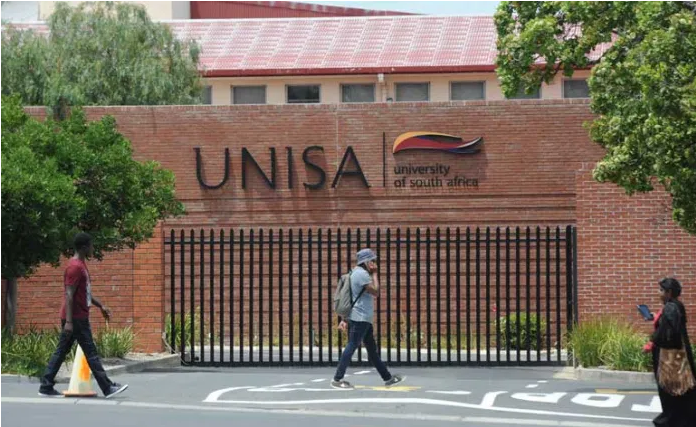
THE University of South Africa (Unisa) has postponed graduation ceremonies that were scheduled on Tuesday afternoon and Wednesday.

This is after lectures and a graduation ceremony were disrupted by protesting members of the National Education, Health and Allied Workers’ Union (NEHAWU).

“The graduation ceremonies scheduled this afternoon (15 March 2022) at 18:00 as well as tomorrow at 10:00 and 18:00 respectively have been postponed until further notice.” The university will communicate more information about the outstanding graduation ceremonies in due course,” Unisa said.

The university has apologized to graduates.

“The University of South Africa (Unisa) would like to extend its sincerest apologies to the graduates and guests who were inconvenienced by the disruption of the graduation ceremony by protesting members of NEHAWU scheduled for this morning,” the university said.

Unisa added that the management is in talks with NEHAWU about the issues that led to the disruption.

“University Management is currently in conversation with NEHAWU about the issues in dispute that led to the disruption, as well as the rules of engagement when employees exercise their right to protest” said the university.     

The university said it will make alternative arrangements for the graduates who have been inconvenienced by the disruption and will, in due course, communicate the details of such arrangements directly to the affected graduates.

Unisa student, Tawanda Shoniwa, scheduled to graduate on Wednesday said that he is very disappointed by the cancellation of graduation ceremonies.

Shoniwa is from United Arab Emirates (UAE).

He said, “I flew from across the world for this ceremony and booked in hotels. Now you say this.”

When asked if he is going wait for further announcements or return back he said “I can’t wait for further announcements. My supervisor is expecting me back to work on Friday morning. Wish they could give me my certificate. Now after buying a gown for R6600, travelling and accommodation expenses I am going back empty handed.”

-Inside Education

MEC Panyaza Lesufi says Independent law firm will investigate the death of Tsakane Secondary School learner

STAFF REPORTER |

In a bid to give answers to the family of a Grade 10 learner who died at Tsakane Secondary School in the East Rand, the Gauteng Education MEC Panyaza Lesufi says an independent investigative law firm will be appointed to investigate circumstances surrounding the incident.

The move is also to help the family to find closure to the unforseen death of their child.

It is alleged that the deceased was assaulted by a teacher and a General Assistance at the school last week, and subsequently passed away.

Prior to his death, the learner had allegedly gone to school to collect his bag and cellphone which were confiscated last Thursday.

Subsequently, he was removed from the school premises by police and taken home after being involved in a scuffle with an educator and a General Assistant at the school.

Accordingly, his family later drove him to Pholosong Hospital where he was certified dead.

Lesufi said he wants to prioritise the family because they want answers concerning the death of their child. Thus, an independent law firm will be will appointed to investigate the matter.

“The appointment of the independent law firm will give us a preliminary report to share with the family and the school. I want to prioritise the family because they want answers,” said MEC Lesufi.