Home Blog Page 28

WATCH: Dashcam footage of Vanderbijlpark scholar crash

0

Staff Reporter

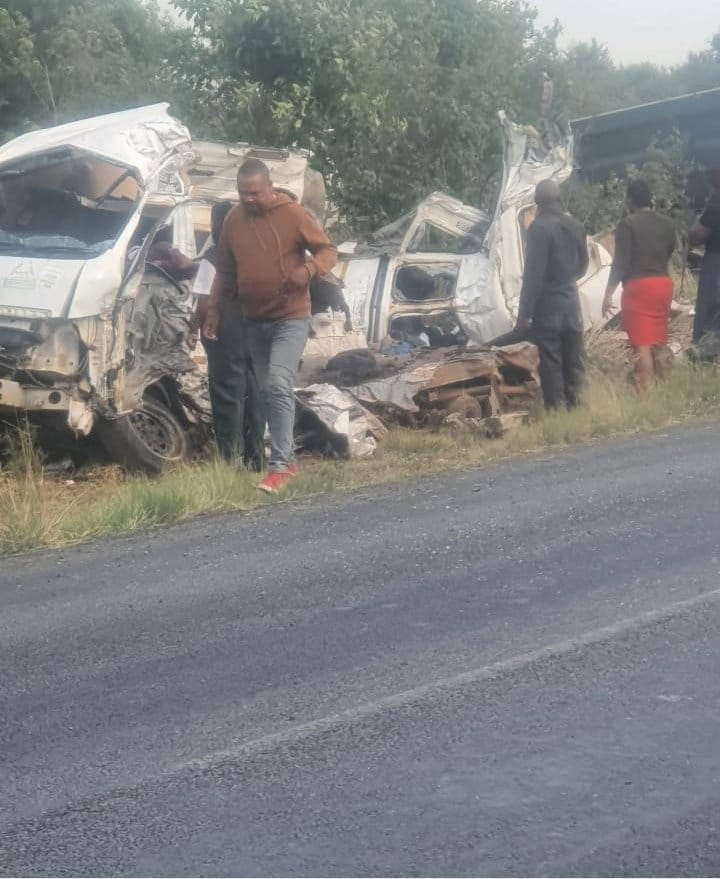
A chilling clip, now circulating widely online, shows what many social media users are calling clear negligence and reckless driving by the minibus taxi driver involved in a crash that killed a dozen schoolchildren near Vanderbijlpark, south of Johannesburg.

The release of this footage comes a day before the driver is expected to face the court on Thursday.

The driver of the scholar transport minibus involved in the crash is expected to appear in court on Thursday, according to police.  

The 22-year-old man was arrested after being discharged from hospital and will face twelve counts of culpable homicide, as well as charges of reckless and negligent driving, Gauteng police spokesperson Lieutenant Colonel Mavela Masondo said.

ALSO READ: Milnerton assault case postponed for victim consultation

The crash occurred on Monday morning, when the privately operated minibus transporting pupils to multiple schools collided head-on with a truck on the Fred Droste Road, near the N1 highway.  

Officials initially reported varying death tolls in the immediate aftermath, with some early accounts putting the number of children killed at 11 or 13, before provincial authorities said 12 pupils died at the scene, and five were taken to hospital, one of whom was later discharged.

Gauteng Premier Panyaza Lesufi said on Tuesday that preliminary findings indicated the driver’s professional driving permit (PDP) to operate a minibus had expired. Gauteng Education MEC Matome Chiloane said the driver had previously been reprimanded for reckless driving.

INSIDE EDUCATION

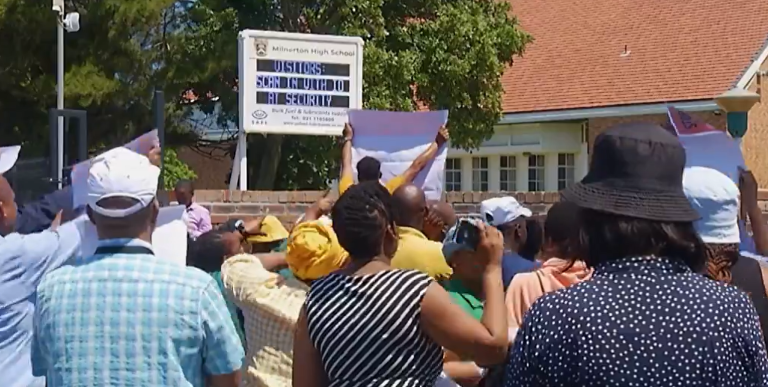
Milnerton assault case postponed for victim consultation

0

By Lebone Rodah Mosima 

The assault case against six Milnerton High School learners who are not minors was postponed to March on Tuesday to allow prosecutors to finalise outstanding investigations, the National Prosecuting Authority said.

NPA Western Cape spokesperson Eric Ntabazalila said the case against the six learners was postponed to March 11, while two other accused who are minors will be dealt with in the children’s court.

ALSO READ: Universities hold the key to early learning turnaround, Manamela tells Lekgotla

“The consultation with the victims and downloading of photographs are still outstanding. Their bail has been extended and their bail conditions remain the same,” Ntabazalila said.

The case against the minors had also been postponed, he said. One minor was expected back in court on February 6, and the other on March 11. “Both cases are postponed for further investigation,” he said.

None of the accused can be named, as per a court order.

Bail of R2000 was extended for all of the accused, who are currently being schooled online.

ALSO READ: Eleven school children killed in Vanderbijlpark crash

The case follows widespread public outrage after a video circulated on social media in October last year showing a 16-year-old Grade 10 pupil being struck with a belt, hosepipe and a stick or hockey stick while other pupils looked on and filmed the assault.

The Western Cape Education Department said at the time that the school had identified eight learners and that the School Governing Body approved their precautionary suspension pending formal disciplinary hearings.  

INSIDE EDUCATION  

Universities hold the key to early learning turnaround, Manamela tells Lekgotla

0

By Thapelo Molefe

South Africa’s early learning crisis will not be fixed in primary schools alone but in the universities that train foundation phase teachers, Higher Education and Training Minister Buti Manamela said on Tuesday, directly reinforcing concerns raised earlier by Basic Education Minister Siviwe Gwarube.

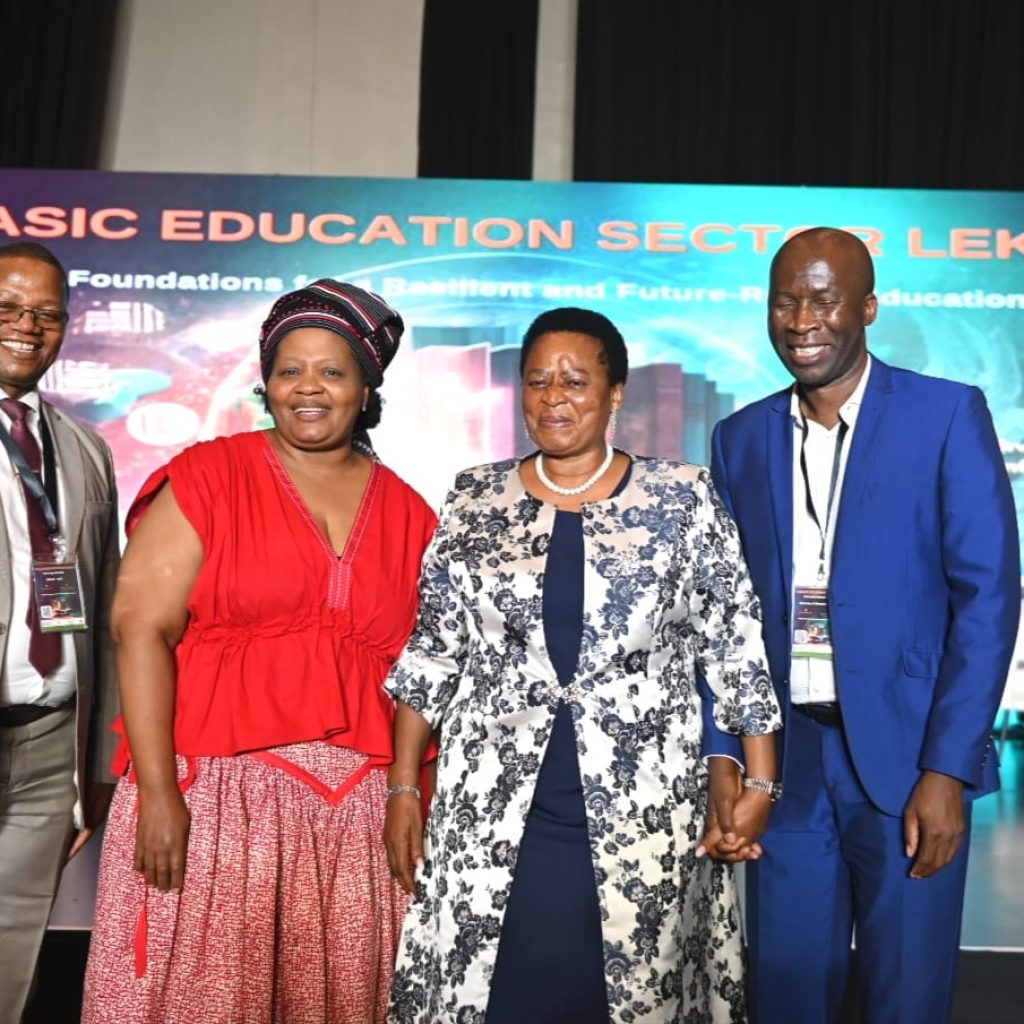
Speaking towards the close of the first day of the Basic Education Sector Lekgotla at the Birchwood Hotel and Conference Centre, Manamela said the weak literacy and numeracy outcomes identified by Gwarube were rooted in how teachers are prepared long before they enter classrooms.

“The foundation phase is the bedrock of the entire education system,” Manamela said. 

“It is here that confidence is built, attitudes towards learning are formed, and potential is either unlocked or constrained.”

ALSO READ: Hybrid learning urged as public universities hit limits on first-year intake

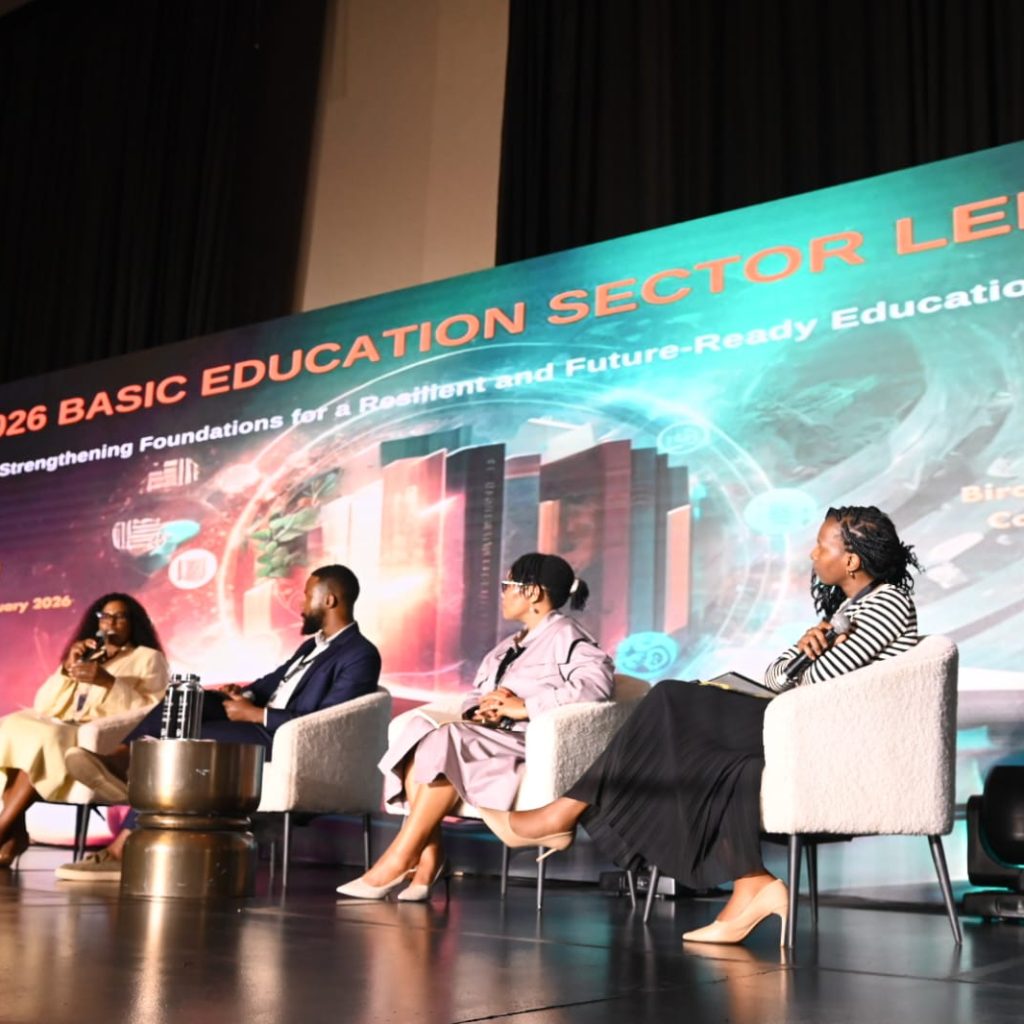
The three-day Lekgotla has brought together national and provincial education authorities, teacher unions, education bodies and development partners to assess system performance and set priorities for 2026. 

While Gwarube’s opening address framed early learning failures as a national emergency, Manamela focused on the post-school sector’s responsibility to respond decisively.

“Investment in foundation phase teachers is not optional. It is imperative,” he said.

“The quality of learning in our classrooms is inseparable from the quality of teaching and scholarship in our universities.”

Manamela paid tribute to university academics, describing them as “teachers of teachers” whose work turns education policy into lived classroom experience.

“These are professionals whose knowledge, compassion and commitment translate policy into practice and transform the promise of quality education into reality,” he said.

He pointed to tangible outcomes of recent reforms in teacher education. In the 2024/25 academic year, 20 of South Africa’s 26 universities offering Bachelor of Education degrees with foundation phase specialisation graduated 6,761 new teachers.

ALSO READ: Eleven school children killed in Vanderbijlpark crash

“This did not happen by accident,” Manamela said. 

“It reflects a deliberate, sustained and coordinated effort by the higher education sector to respond to national needs.”

The minister said government was backing this effort with significant resources, noting that more than R1 billion is invested annually through the University Capacity Development Programme to support curriculum renewal, staff development, and student success.

“Our goal is simple and unapologetic,” he said. “Every university student must be taught by a quality educator — one with strong disciplinary knowledge, sound pedagogy and a deep commitment to excellence.”

Manamela also highlighted the persistent gap between basic education outcomes and post-school opportunities, describing it as “one of the most decisive fault lines in our system”.

“There can be no quality education without a qualified, motivated and professionalised teaching workforce, especially in early childhood and foundational learning,” he said.

As the Lekgotla continues, Manamela called for sustained collaboration across departments, saying the education system must be built “deliberately, patiently and collectively” to give children a strong start and meaningful opportunities beyond school.

INSIDE EDUCATION

Getting into university is only the first hurdle for students from rural South Africa. Here’s what comes next

By Hellen Agumba

As universities in South Africa prepare to admit a new group of students, thousands of young people from rural parts of the country hope for a life-changing opportunity.

In 2023, public universities enrolled 258,778 first-time students. Demand is intense; for example, the University of Johannesburg received 358,992 applications for just 10,500 first-year spaces in 2025.

A substantial proportion of these new students come from economically disadvantaged backgrounds.

The National Student Financial Aid Scheme (NSFAS) is often the only key to unlocking post-school education. The scheme supports students from families earning less than R350,000 a year and has a target of 850,000 students. It is supposed to cover fees, accommodation, a living allowance, transport and learning materials.

Yet for many rural students, this key fails to turn the lock.

The number of students from rural areas who secure university placements cannot be determined. Neither the Council on Higher Education nor the Department of Higher Education systematically tracks students’ geographic origins. But what research does show is that students from rural areas face challenges beyond financial constraints.

My research on higher education access and learning experiences, particularly among marginalised students, has explored the reasons and consequences.

The conversation around financial aid rightly focuses on administrative crises: devastating payment delays and operational failures that erode trust. These are human catastrophes. But I’ve found that for rural students, these problems are only the tip of the iceberg. Beneath lies a deeper web of challenges.

Financial aid is crucial but it cannot compensate for systemic disadvantages that begin long before students reach campus and persist throughout their studies.

My research, involving in-depth interviews with rural students, shows the “hidden costs” they bear. Their struggle begins with limited access to information. This constrains their educational choices. Then they may not feel really comfortable to participate in the classroom and make social connections. And their financial situation influences both academic performance and social belonging.

Even when rural students graduate, many describe feeling they have survived higher education rather than thrived in it.

The experiences they shared with me reveal how these challenges interconnect throughout their university journey. Their stories also point to ways of improving rural students’ participation in higher education.

Listening to rural students

My qualitative study consisted of in-depth interviews and focus group discussions with 18 rural students (10 of them female), aged 19-25 at a university in Johannesburg.

All participants came from former homeland areas across four provinces – the Eastern Cape, KwaZulu-Natal, Limpopo and Mpumalanga – a pattern reflecting apartheid’s enduring geographic legacy. They were studying fields ranging from education to engineering; 13 of the 18 were first-generation university students, and all were Black African. Their demographic profile was typical of deeply rural students accessing higher education through programmes like NSFAS.

The deliberate selection criteria and consistency of their experiences reveals systemic patterns.

One of the participants, Philip (all names have been changed) from Limpopo, described the sheer physical distance of his home from university: “I pass Polokwane (a city 320km from Johannesburg) and go deep to the rural villages until Giyani (a small town over 150km further on) … then from Giyani I have to catch a taxi to my village … you are far away from universities.”

While urban students attend open days to learn about the courses on offer and careers, those in remote villages are left in the dark. As one participant, Terry, observed: “During open day for UJ (University of Johannesburg) … it’s mostly model C schools.“ (These are better resourced high schools which were reserved for white learners during apartheid.) I have never seen someone (there) from a rural background.”

This isolation limits career awareness to visible rural professions like teaching and nursing.

Sef’s story is telling: “I didn’t know anything about the courses offered … I only know teaching and these professions that you see in the village.”

After a costly false start, she found her path to engineering only through a chance family conversation.

In South Africa, many students scrape together a registration fee, gambling that full funding will materialise. And without guidance on accommodation deadlines, they might arrive in the city to find university residences full and be forced into expensive or unsafe private housing.

Jane explained: “We will come and look for accommodation in February … When we get there, we find that the residence is already full.”

While universities technically provide accommodation information, it is often buried in lengthy online registration documents that assume students have reliable internet access and familiarity with university processes.

The result is a financial strain from day one. For students like Kate, who was mugged commuting from distant, off-campus housing, the consequences are academic and psychological: “At the end of the year, I didn’t pass that well and as a result I lost my sponsor.”

Upon arrival, they face a second battle: cultural and geographic alienation. They enter a space privileging urban, middle-class norms. Participants spoke of being teased for their accents and dress.

As Ann from the Eastern Cape put it: “Nobody cares … you get to know people from other tribes, people from other races … some of things they do you don’t understand.”

Language becomes a profound barrier to participation. Philip shared: “I would want to participate … but eish! English … I’m not confident enough.”

The curriculum itself can feel alienating, with examples drawn from unfamiliar urban contexts. Terry, an engineering student, noted: “Sometimes they teach about some events you have never heard of … that’s where they kill us.”

It takes more than cash

This brings us back to NSFAS. Its administrative failures hit rural students hardest.

For a student who barely registered, a delayed allowance is a crisis. It means missing lectures, relying on food parcels, and impossible choices between education and supporting families.

Ann described the strain: “The funding, when it comes, doesn’t cover the true cost. It ignores higher travel costs, expensive data to compensate for remoteness, and the burden of unexpected private accommodation.”

The higher education system has focused too long on the narrow goal of access: getting students through the gate. True equity is about ensuring they can thrive as peers inside. The current student financing model is a blunt remedy: it provides cash but leaves the underlying structures of exclusion untouched.

How to change it

My research suggests some steps that could help rural students.

Fix the fundamentals with rural students in mind: Students need a competent, reliable financial aid scheme. Payment timelines must be guaranteed, with emergency support for rural students during delays.

Early outreach: Universities and government must take information to deep rural areas through mobile career services and application support long before final high school exams that determine university entrance.

Fund the full experience: Bursary calculations must be nuanced to cover the real, higher costs borne by rural students, including travel, data and safe accommodation.

Create culturally inclusive campuses: Universities must actively combat assumptions that rural students are “underprepared” or “lacking” essential skills. They can do this through staff training, peer mentorship, and curricula that value different kinds of knowledge.

The dreams of rural students are stifled by a system blind to their reality. Ensuring timely funding is the bare minimum. They need a system that doesn’t just let them in but truly welcomes them and sets them up for success.

Hellen Agumba is Senior lecturer, University of Johannesburg.

This article was first published by The Conversation.

INSIDE EDUCATION

Lesufi calls for overhaul of scholar transport system after deadly crash

By Akani Nkuna

Gauteng Premier Panyaza Lesufi has called for a review of the current scholar transport system, citing loopholes and minimal government control as dangerous, and urging stronger, centralised state intervention.

Lesufi was speaking to the media in Sedibeng following a tragic scholar transport accident in Vanderbijlpark on Monday, 19 January, which claimed the lives of 12 learners.

“There must be a mechanism not only to identify them, but to find a way of ensuring that we can account for their behaviour and control,” Lesufi said.

“You can see from this incident that society is asking government and the public sector why scholar transport has been left as a private arrangement. It is quite clear that this private arrangement does not work.”

Lesufi confirmed that the taxi driver involved in the crash, who was operating without a valid permit after his Professional Driving Permit (PDP) expired in November 2025, has been arrested and is expected to appear in court soon.

Meanwhile, the truck driver involved in the collision and his assistant have both been discharged from hospital and are expected to provide detailed statements to police. Lesufi added that only two learners remain in ICU.

Between 12 and 18 January, the provincial government conducted an intensive evaluation of scholar transport across Gauteng.

During this period, 353 handwritten notices were issued to non-compliant scholar transport vehicles in Tshwane, amounting to fines totalling R511,000.

In Johannesburg, authorities issued 432 notices to operators who failed to comply with regulations for transporting learners, with fines amounting to R696,000.

Lesufi said these proactive measures were undertaken ahead of the start of the academic calendar to ensure learner safety, resulting in notices, arrests and the discontinuation of unsafe vehicles across the province.

“We have discontinued 14 buses in Tshwane, 68 in Johannesburg and 11 in Ekurhuleni. In total, 93 buses were stopped from transporting our children using our proactive method of inspecting vehicles before the school calendar resumed,” Lesufi said.

Basic Education Minister Siviwe Gwarube echoed Lesufi’s call for reform, saying scholar transport vehicles should be clearly identifiable through stickers, branding and reporting numbers to curb reckless driving.

“It is also about how best we can incorporate those who are providing private transport services into the framework, but in a way that they can be registered and identified,” Gwarube said.

She added that government currently procures service providers on behalf of schools to oversee compliance, roadworthiness and prevent overcrowding.

“In the current fiscal reality, it is not possible to immediately say that government will own buses for all schools,” Gwarube said.

INSIDE EDUCATION

Oprah Winfrey academy delivers another 100% matric pass rate  

0

By Lebone Rodah 

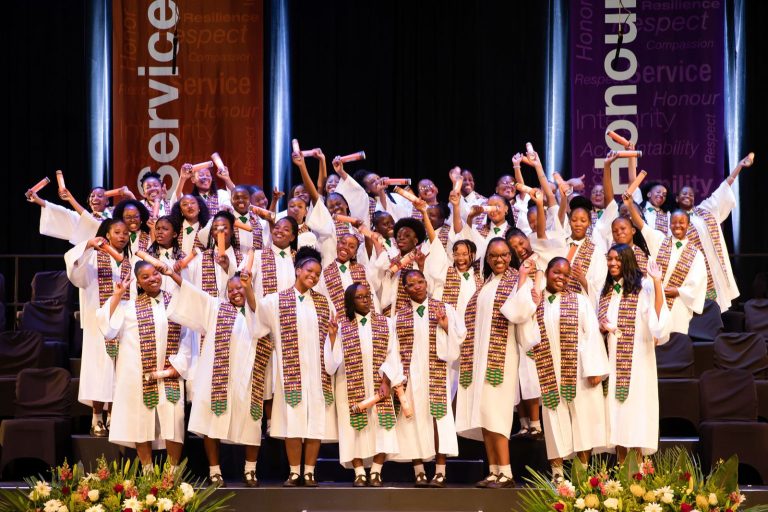
The Oprah Winfrey Leadership Academy for Girls (OWLAG) achieved a 100% pass rate in the 2025 NSC exams, extending a multi-year record of academic performance and highlighting the role of a holistic, trauma-informed education model for learners from disadvantaged backgrounds.

OWLAG is officially recognised as a trauma-informed school, a model that acknowledges the effects of abuse, poverty, abandonment and other adverse childhood experiences on learning.

In an interview with Inside Education, Executive Director Gugu Ndebele described the achievement as both emotional and affirming, given the socio-economic realities many learners face.

Ndebele said the girls often come from households earning less than R10,000 a month and arrive with schooling gaps and limited access to health and social services.

“It’s always emotional for me, because what it says to me is that our girls in particular are strong,” Ndebele said of the results.

ALSO READ: Hybrid learning urged as public universities hit limits on first-year intake

“What we need to do as schools is to build on that strength, instead of reminding them this is where they come from.”

Since its establishment, the academy has produced nearly 900 matric graduates, many of whom go on to study at universities across South Africa.

Ndebele credited the school’s outcomes to its emphasis on “the whole child” rather than academics alone.

ALSO READ: Eleven school children killed in Vanderbijlpark crash

She said a defining feature of the academy is its continued support after learners leave school.

Through a foundation linked to OWLAG, graduates receive a comprehensive “care package” when they enter university, including help with accommodation deposits, monthly stipends, medical aid, access to psychological services, and dedicated mentors at each institution.

“All of them have got mentors so that they help with the transition, and they stay with them until they finish university,” she said.

“But they have to pass, if you stumble a bit we might suspend it, but you can come back.”

The academy also maintains close contact with universities, faculties and alumni networks to help students adjust to the demands of tertiary education.

Teachers told Inside Education about the preparation behind the 2025 cohort’s results, including the discipline and commitment they said learners brought to the final stretch of matric.

“The girls were very driven. They were very keen. They showed up, which was quite exciting, just to see how differently they also just showed up for themselves,” said OWLAG Head of Mathematics, Brian Buthelezi.

ALSO READ: Vanderbijlpark scholar crash death toll rises to 14, driver previously reprimanded for reckless driving

Head of English at the academy, Radeshree Naidoo, who teaches grades 11 and 12, said she was “very proud” of the multiple distinctions obtained for the language.  

“There was lots of intensive work — even after school and after our core English lessons — during which we had to make sure that learners got that extra or additional support, so that they would be exam-ready and perform the way they performed,” Naidoo said.

English teacher Lettie Tervit said language presented an early challenge for many learners, particularly those who did not enter the academy with an English home language background.

“Many of them came from primary schools where they did not do English as a home language, so it was a major adjustment for them,” Tervit said.

“Throughout their journey, it’s been a team effort, just putting in the extra time with them, giving them grace and love and acceptance — and it works”.

Sharne Geysers, who is also an English teacher, highlighted the role of parents and the school’s approach to communication with families, particularly those from rural areas, in attaining positive, holistic outcomes.

“The social workers are basically our connection with the parents because the parents from many rural areas, for example, struggle to hear what we are saying because we don’t speak English the way they are used to hearing English,” Geysers said.

“We have a good relationship with the parents. We do communicate with them, but we also use the social workers quite a bit.”

Besides academic performance, Geysers said teachers also focused on the well-being of learners, including “their physical safety and their nutrition”.

ALSO READ: Correctional services schools average 94.4% matric pass rate

“We understand that you can’t just teach a child, because they get triggered by many things. Our teachers and all of us are trained to be able to recognise the triggers and regulate the child”.

Ndebele likened the approach to preparing fertile soil before planting a seed, saying that nutrition, safety, emotional wellbeing and stability must be established for learning to flourish.

She said the academy’s trauma-informed approach could be replicated more widely if education was treated as a central national priority, and called for stronger collaboration between government departments — including health, public works, water and sanitation, social services and youth care centres — to support schools as community hubs.

“People don’t realise that education is probably the [country’s] most important resource, and that our economy is not going to grow unless we invest in education,” she said.

Ndebele said the academy had already been sharing its trauma-informed practices through workshops with government departments and other schools, and had plans to scale the model through partnerships.

While stressing the importance of educating girls, she cautioned against sidelining boys in the process.

“If you educate a woman — it’s really not just a slogan — you educate a nation. Women, by nature, are nurturers. When you invest in them, you know you’re investing in people who are interested in the growth of the country,” she said.

“[If] you leave the boys behind, you are creating a disgruntled and disillusioned adult male. As we invest in girls, we must understand that the boy child is just as important,” she said.

INSIDE EDUCATION

BOSA seeks urgent probe of scholar transport system after horror crash

0

By Charmaine Ndlela

Build One South Africa (BOSA) on Tuesday urged the government to launch a nationwide inquiry into the country’s scholar transport system after the deaths of 14 learners in a crash near Vanderbijlpark on Monday.  

“The tragic and wholly preventable deaths of 14 young learners this week, who lost their lives while being transported to school in a scholar transport vehicle, have exposed the urgent need for stricter safety enforcement and proper oversight in the scholar transport system,” BOSA spokesperson Roger Solomons said in a statement.

ALSO READ: Vanderbijlpark scholar crash death toll rises to 14, driver previously reprimanded for reckless driving

The crash happened early on Monday morning when a privately operated scholar transport vehicle collided with a truck in the Vanderbijlpark area of Johannesburg. At least 11 children were declared dead at the scene, with reports indicating others died of their injuries later.  

Investigators are examining possible road-safety and compliance issues, including whether the vehicle was overloaded. The driver of the crash, according to Gauteng Education MEC Matome Chiloane, had previously been reprimanded for reckless driving.

Solomons said BOSA wanted Basic Education Minister Siviwe Gwarube “to at once launch a nationwide inquiry into the entire scholar transport system, covering both publicly subsidised and privately arranged scholar transport”.

ALSO READ: Hybrid learning urged as public universities hit limits on first-year intake

“The inquiry must interrogate, at minimum: The screening, training, and vetting of scholar transport drivers; the roadworthiness and maintenance of vehicles; the enforcement of consequences for reckless and negligent driving; the widespread and dangerous practice of overcrowding [and] oversight and accountability mechanisms across provinces,” he said.

Gwarube told Parliament last year that 667 000 learners make use of government-subsidised scholar transport, while a further 2.8 million learners rely on private scholar transport arranged by parents. Solomons said that at the time, Gwarube said the government wanted to move more learners to scholar transport.

“If that is indeed the goal, then government has a clear responsibility to first fix the system. Expanding a broken and unsafe system without urgent reform would be irresponsible,” he said.

ALSO READ: Eleven school children killed in Vanderbijlpark crash

He said that if the minister did not act, BOSA would pursue other accountability measures, including “a full review of the National Learner Transport Policy of 2015” and “a Parliamentary Inquiry led by the Portfolio Committee on Basic Education, in terms of section 55 of the Constitution”.  

Solomons also pointed to a South African Human Rights Commission (SAHRC) investigation into the North West province’s scholar transport programme, saying the commission found systemic failures that “amounted to serious violations of human rights, particularly affecting poor and rural children,” including situations in which learners were exposed to unsafe conditions that undermined access to education.

INSIDE EDUCATION
Early learning crisis in spotlight as Basic Education Lekgotla gets underway

0


By Thapelo Molefe

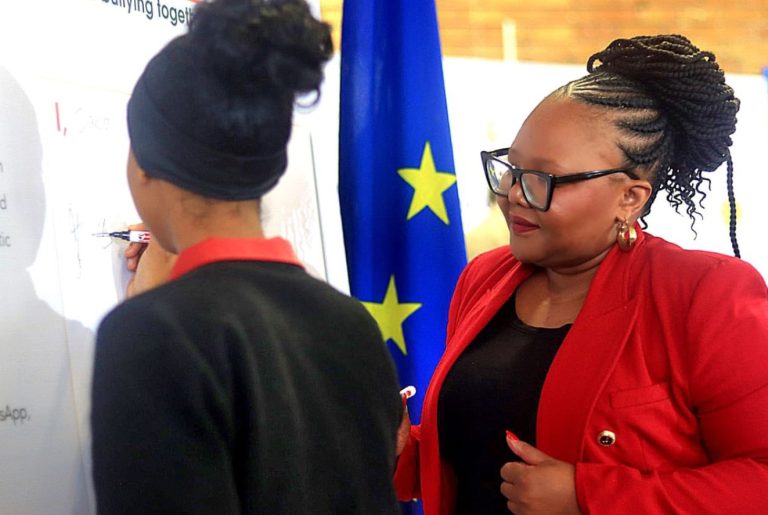
South Africa’s failure to get children reading and counting in the early years amounts to a “national emergency” that threatens the country’s future, Basic Education Minister Siviwe Gwarube warned as the 2026 Basic Education Sector Lekgotla started on Tuesday in Gauteng.

The three-day gathering has brought together national and provincial education authorities, teacher unions, education bodies and development partners to reflect on system performance and set priorities for the year ahead. 

ALSO READ: Hybrid learning urged as public universities hit limits on first-year intake

Gwarube used her opening address to shift the spotlight away from end-of-school results and to what she said was the weakest point in the education system — early learning.

She said persistent literacy and numeracy failures in the foundation phase continue to shape poor learning outcomes, learner dropout, and limited access to science, mathematics and technical subjects later in the system.

“This is not merely an education challenge. It is a national emergency that demands urgent and decisive action,” Gwarube said.

At the start of her address, the minister also paid tribute to the 14 learners who died in a road accident in Gauteng on Monday, describing the loss of young lives so early in the school year as “incredibly heart-breaking” and saying it had “shaken me to the core”.

ALSO READ: Eleven school children killed in Vanderbijlpark crash

She that improved matric results, including the strong performance of the class of 2025, should not mask deep structural problems at the start of the schooling journey. 

“You don’t create a matric pass rate in matric,” she said, adding that learning outcomes are determined “far beyond when children get to matric”.

Gwarube called for a shift that fully embeds early learning from birth to age nine within the basic education system, with particular emphasis on Grade R to Grade 3 as the foundation for reading, numeracy and critical thinking.

“If we fail our children during this critical period, we fail them throughout the education journey,” she told delegates.

She also outlined plans to strengthen inclusive education, expand mother tongue-based bilingual learning, review teacher post-provisioning norms and improve school safety and learner wellbeing.

ALSO READ: Vanderbijlpark scholar crash death toll rises to 14, driver previously reprimanded for reckless driving

“Quality early learning is not optional. It is the cornerstone of lifelong achievement,” the minister said.

The Lekgotla is expected to conclude on Thursday, with discussions aimed at translating policy commitments into practical interventions to strengthen foundational learning and stabilise the education system.

INSIDE EDUCATION

Vanderbijlpark scholar crash death toll rises to 14, driver previously reprimanded for reckless driving

By Charmaine Ndlela

The death toll from a scholar transport crash near Vanderbijlpark has risen to 14 after a learner died in hospital on Monday evening.

The crash took place early Monday morning, when a private minibus taxi collided with a truck.

Preliminary investigations indicate that the minibus taxi was transporting learners to five different schools, including both primary and high schools.

At the time of the crash, the Toyota Quantum was overloaded, carrying 17 learners instead of the certified 14 occupants, according to police.

This was not the first time the driver had driven recklessly. Gauteng Education MEC Matome Chiloane confirmed that the driver had previously been reprimanded for reckless driving.

Eleven schoolchildren died at the scene, three other learners later succumbed to their injuries in hospital.

According to an eyewitness who was overtaken by the scholar transport taxi, the driver overtook his vehicle and four other cars before colliding with the truck.

The minibus taxi driver is currently in hospital receiving medical treatment. Police have opened a case of culpable homicide.

INSIDE EDUCATION

DBE receives R95 million from European Union for school safety initiatives

By Lebone Rodah Mosima 

The European Union on Monday committed about R95.7 million toward a national programme to help prevent and respond to bullying and gender-based violence in South African schools, during the Basic Education Department’s Back-to-School Campaign at Eldorado Secondary School, Johannesburg.

EU Ambassador to South Africa, Dr Sandra Kramer, said the funding reflected the bloc’s commitment to learner safety and wellbeing and formed part of its long-standing cooperation with the country.

“We partner with the Republic of South Africa in the field of education because education matters,” she said. 

During her keynote address, Basic Education Minister Siviwe Gwarube thanked the EU for its donation and said that intimidation, violence, and abuse undermined learning outcomes and the dignity of learners. She called for consistent prevention and response measures in schools.

“We welcome this contribution and we commit to ensuring that it delivers real impact in the lives of our learners and in the lives of others around the country”, Gwarube said. 

She said international partnerships have sent a strong message that learner safety is a global priority and that “South Africa is not alone in this fight”. 

A public commitment would be signed with learners, education leaders, and partners to reinforce accountability and action in creating safer schools, she said.  

“As a government, we are clear. Schools must be places of care, discipline, and respect. Learners must feel protected by adults and that they are entrusted with their education”. 

Gwarube acknowledged that schools cannot address these challenges alone and called for collective action involving parents, communities, law enforcement, and social partners.

She encouraged learners who experience bullying to speak out, warned perpetrators that such behaviour would not be tolerated, and criticised the silence of bystanders, who enable abusers and fail to protect victims. 

“Being brave sometimes means standing up for somebody else, and gender-based violence is one of the greatest threats to the safety and well-being of our learners, particularly girls”, she said. 

The funding will strengthen prevention, education, psychosocial support, referral pathways, and school-based interventions to protect school learners. 

“The European Union stands with you in solidarity. Every child, regardless of geography, can learn in peace and dignity,” Kramer said.

INSIDE EDUCATION