Home Blog Page 280

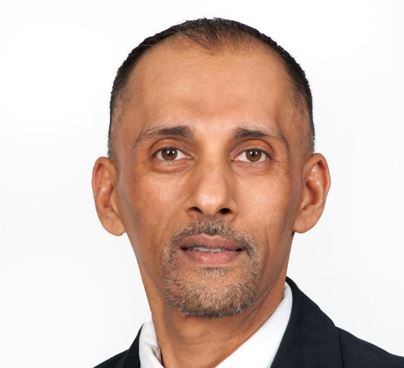
University of Limpopo mourns death of amiable Professor Mohamed Saber Tayob, gunned down while jogging

STAFF REPORTER |

THE University of Limpopo is devastated by the tragic death of Professor Mohamed Saber Tayob, who was gunned down while jogging in Polokwane, Limpopo, on Sunday.

‘’The University of Limpopo and the Faculty of Management and Law (FML) are devastated by the passing away of Prof Mohamed Saber Tayob who was gunned down while jogging in Polokwane on Sunday, 13 March 2022,’’ the university said.

The Vice-Chancellor and Principal, Professor Mahlo Mokgalong, has expressed his shock at the untimely death of Professor Tayob.

“I’m shocked and dismay at the passing of one of the University’s rising academics and
leaders,” he said. 

Executive Dean, Professor Omphemetse Sibanda, the Executive Team of the FML, staff and students extend their deepest condolences to his family and friends, wishing them strength during this difficult time.  

Professor Tayob was the Director of the School of Accountancy at the University from 01 March 2020 until his death. He joined the University of Limpopo on 01 October 2009 as a Senior Lecturer of Accounting and Auditing, earning promotion to Associate Professor on 01 July 201. He was also the Acting Programme Coordinator for the University’s Postgraduate Diploma in Accountancy (PGDA) from the beginning of 2020.

Professor Tayob was a seasoned Chartered Accountant (CA) and academic, who served the School of Accountancy with distinction, making it his purpose to help it grow as a centre of excellence in all its disciplines. To this end, he worked tirelessly for the School to gain sustainable success in its core business of teaching and learning, research and community engagement. 

“He was instrumental in ensuring that the University of Limpopo gained accreditation by the South African Institute of Chartered Accountants (SAICA) to offer the Bachelor of Accounting Science and PGDA independently in 2011 and 2017, respectively. These
milestones allowed the University to produce Chartered Accountants, quite a pivotal accomplishment,” the university said.

The police have since launched a manhunt for a gunman who killed the professor and called on the public to come fourth if there’s any information.

Limpopo police spokesperson, Brigadier Motlafela Mojapelo said: “The victim was reportedly jogging when a white VW Polo drove past him and then made a U-turn. The said vehicle stopped next to him and a passenger disembarked and shot the victim several times at point-blank. The suspects quickly drove off from the scene,” said Mojapelo.

Acting Limpopo police commissioner Major General Jan Scheepers appealed for assistance
with the investigation.

Anyone who has information has been urged to contact Warrant Officer Joseph Malebana
on 072 492 9635.

  • Inside Education

Gauteng temporary teachers now paid their salaries in full, says SAOU

VICKY ABRAHAM |

MOST of the temporary teachers in the Gauteng province who were not paid their remuneration have been paid. This is according to the Gauteng Department of Education and the trade union for teachers’, Suid-Afrikaanse Onderwysers Unie (SAOU).

Responding to Inside Education’s media enquiry, the Gauteng Department of Education’s spokesperson, Steve Mabona said, “The major delay in payments has been largely because of the deactivation of the PERSAL system (payment system) that has been interrupted by the tax recalculation period from 16 February 2022 (based on tax year closure). As a result, all payments that were scheduled for the 21st, 25th and 28th February 2022 were affected”. 

Speaking to Inside Education, the Acting Provincial Secretary of SAOU in Gauteng Liesl Rehbock said, “Most of the educators have been paid. But we are still following up with our members. I do not know about other unions. I can only speak on behalf of our members. I can’t say why they were not paid”.

In its attempt to assist the unpaid temporary educators, SAOU in Gauteng which is also known as the South African Teachers’ Union had distributed a message to schools to provide it with relevant details of the affected individuals. 

“The SAOU (Gauteng) is aware that all temporary educators have not yet received remuneration. Could you please provide us with a list of names of temporary staff in your school who have not yet received payment to enable us to refer a dispute.

To assist temporary educators please forward the relevant information to the SAOU before or on Wednesday, 23 February 2022,” said SAOU in a circulated message to different schools in Gauteng. 

Mabona, said the Department was aware of the non-payment of some of the temporary teachers in Gauteng. Mabona said the payments reflected in their bank accounts from March 7, 2022. 


– Inside Education

Black women in South African academia struggle to get ahead: what needs to change

JEAN LEE FARMER |

In South Africa, the number of black women who acquire undergraduate degrees has increased more than any other population group. Yet they remain underrepresented in senior academic and management positions in the country’s higher education institutions.

Historically, black South African pupils received separate schooling and less funding  for education from the apartheid government than white pupils. Mixed-race, Indian and Asian learners received slightly more than black learners. Separate higher education institutions were also established for the different race groups. Very few black students could apply for special permission to attend historically white institutions, and only for specific careers.

Black women have also been historically and culturally marginalised in their families and society. Despite legislation to support transformation, black women remain the most marginalised.

Under apartheid, white women received the same financial, educational and cultural favour as white men. Policies and programmes initially aimed at changing the imbalance, have a major loophole for employment equity. It places white women on par with black women and men as “previously disadvantaged” and thus equally entitled to employment opportunities.

While the responsibility for redressing the issues should not be laid solely at the feet of higher education institutions, the onus should not rest upon black women to rectify the problematic practices.

For my PhD in higher education I did an in-depth investigation of the narratives of six black women academics at four South African higher education institutions. For the investigation to be as unbiased as possible, it was important to look at the role of the institutions as well as the individual and what possible enablers and constraints could be identified in this interplay. The aim was to identify what possibly influenced the low uptake of black women in senior positions in South Africa’s higher education institutions.

It was important to investigate the history of the institutions as well as to establish their post-apartheid transformation policies. The sense of identity, familial and educational connections the women developed during their educational journeys was an important factor. Black women are often seen as a homogeneous group but the academics in my study were as diverse in personality, cultural and political backgrounds and aspirations as any other group.

The research

For the pilot study I interviewed 19 respondents once in a group setting. I reported in-depth on six participants who were asked to respond in two one-hour sessions. One session was about their educational background and the other about their current academic context. I encouraged the participants to talk freely about their experiences.

The participants came from various backgrounds ranging from urban impoverished to middle-class. The 25 participants, ranging from 37 to 45 years old, were in either senior, mid or junior positions in academia.

All said that they loved working with their students irrespective of student race. Some said they experienced disrespect from some white students but that other white students made up for it. Those at historically white institutions said that student interaction was the best part of their job.

The main concern many of the women had about historically black institutions was that students were poor and often came to class hungry. Those teaching at these institutions said they appreciated interaction with colleagues and students alike.

All participants who had experience at both historically white and black institutions said that they had been happier while working at historically black institutions. They felt respected as equals and valued, also by their white counterparts. They felt satisfied that they had progressed in their careers in accordance with their efforts. They mentioned that they often socialised with their colleagues irrespective of race.

Interviewees in historically white institutions said that they constantly felt unheard in meetings, not complimented for efforts, overlooked for mentoring in favour of less experienced white men and women and sometimes black men. One academic said:

I noticed that I was being taught while white colleagues would be mentored.

They also said they felt left out of the social “cliques” formed among white colleagues. Those at historically white institutions felt that if they wanted to progress they would have to leave their current institution. They said they would leave for an opportunity at a historically black institution, or another career, even for less money.

The analogies that emerged from what the respondents told me were of constantly shifting goalposts and marble (rather than glass) ceilings – impenetrable and nontransparent. Black women at historically white institutions said they found it difficult to highlight problematic behaviour lest they sound like the “complaining victim”. And they often felt uninformed of the standard which allowed others to advance over them.

The fear of victimisation was persistent. During my interviews every academic from historically white institutions repeatedly asked to be assured of anonymity.

The study shows there’s silence around the need for a caring environment for all academics, especially black women.

Going forward

I suggest the following steps:

  1. Institutions need ongoing investigations and open discussions about ways to attract more black women into academia.
  2. Institutional management owes it to society to investigate whether their own culture excludes black women and makes them feel like impostors.
  3. Government needs to amend legislation that views white women as disadvantaged to the same extent as black women; and white women should acknowledge the difference.
  4. A women and race studies department should be standard at all institutions. Universities need to make sure the voices of black women are heard and recognise their role in transformation.
  5. Mentoring of new black women academics should be standard practice. They should be encouraged to exercise agency and help change the culture.

Jean Lee Framer

Advisor: Higher Education Professional Development, Stellenbosch University.- The Conversation

10 South African students safely home from Ukraine, 2 more in isolation after testing positive for COVID-19

STAFF REPORTER |

WHILE 10 South African students who were forced to flee their Ukrainian universities following Russia invaded the country last month have safely returned home, two are currently in isolation at Ukraine after testing positive for COVID-19.

This is all thanks to a partnership between the Department of International Relations and Cooperation (DIRCO) and pharmaceutical company, Aspen Pharmacare, which managed to assist in returning 10 South African students from Ukraine on Thursday, last week.

DIRCO spokesperson Clayson Monyela said: “We want all South Africans to be back home, that’s our primary objective. With the students in particular, the number that we were working on was 25, that’s according to Aspen’s list. However, two has tested positive for
COVID-19 and they are in isolation and it will take 10 days.”

The students were forced to flee the Ukraine into neighbouring countries in the wake of the raging armed conflict.

The 10, who are studying across various universities in the Ukraine, arrived in the country on Thursday morning.

In a joint statement, Aspen and Dirco said that the students and other nationals crossed into neighbouring countries such as Hungary, Poland, Romania and Slovakia.

“Most did not have the means to return home.”

“After learning of the plight of these students, Aspen Pharmacare joined forces with DIRCO to expedite both the travel arrangements and funding required to assist with their safe return to South Africa.  The first group of 10 students will arrive this morning, 10 March 2022, on an Air France Flight at OR Tambo International Airport,” said Aspen and DIRCO.

Aspen Group Senior Executive for Strategic Trade, Stavros Nicolaou, said the Ukraine conflict has created a significant humanitarian crisis, from which a number of South African students studying abroad in the Ukraine have been severely impacted.

“After the weekend appeal to our government and corporate South Africa from many of these students, Aspen, which has a presence in the Ukraine and neighbouring territories decided join forces with the South African government to ensure the timeous and safe return of these students to their home country, so that they can be united with their loved ones,” said Nicolaou.

Nicolaou added that students are the future and it is important that the spirit of Ubuntu
prevailed.

“Our students are our future, and it is important that the spirit of ubuntu prevailed and that together with our government, we were able to move swiftly to ensure their safe and timely return,” said Nicolaou.

Nicolaou said he is hopeful that the students will be able to resume their studies in the not-too-distant future. 

Monyela, has thanked Aspen for the partnership.

“We would like to thank Aspen Pharmacare for heeding the call of our government to partner with us and bring our citizens back home. We also want to extend a word of gratitude to all our ambassadors, team of diplomats and South African volunteers (at home and abroad), who played a role in this project. This is the diplomacy of ubuntu in practice,” he said.

  • Inside Education

Private university group STADIO delivers maiden dividend

JSE listed private university group STADIO has reported a strong set of results for the year ended December 2021, with growth in core earnings, more student enrolments, and declaring its maiden dividend to shareholders.

STADIO provides higher education programmes through its three owned private higher education institutions – STADIO Higher Education, AFDA and Milpark – offering both undergraduate and postgraduate programmes through contact, distance and blended learning methods.

The group said that core headline earnings increased by 27% to R149 million, with a 9% growth in student numbers. Core headlines earnings per share grew by 24% from 14.2 to 17.6 cents, with revenue up by 18% to R1.1 billion.

The overall growth in Core HEPS was due to the underlying organic growth in EBITDA, the group said, as well as realising certain cost savings from altering teaching and learning practices to serve students within the constraints of the Covid-19 imposed restrictions.

EBITDA grew by more than 100% to R309 million (2020: R46 million).

“The large increase in EBITDA is primarily due to organic growth in the underlying businesses and the material impact in the prior year of the R207 million fair value adjustment in respect of the CA Connect acquisition,” it said.

Enrolments at 31 December 2021 increased by 9% to 38,262 students (2020: 35,031). Over the same period, distance learning student enrolments grew by 13% to 32 320 students (2020: 28 664), and contact learning students contracted by 7% to 5,942 students (2020: 6,367).

Distance learning students represented 84% of total students at 31 December 2021, with contact learning students representing 16%.

The group declared a maiden dividend of 4.70 cents per share – a value of just under R40 million paid out to ordinary shareholders.

STADIO Holdings CEO, Chris Vorster, said that the results are especially pleasing considering the uncertain and difficult environment in which it was achieved. “Also of note is the fact that we were in a favourable financial position to declare a maiden dividend of 4.7 cents to shareholders. This represents excess cash available following a period of significant capital investment since the listing of STADIO Holdings in 2017.

“However, this is by no means an indication that growth projects will cease as the group has a solid balance sheet with limited gearing.”

Vorster said that distance learning student numbers reflected good overall growth, with online professional qualifications showing significant growth in enrolments over the period.

“The decline in contact learning students is mainly due to students delaying or deferring studies given the uncertainties of Covid-19. We nevertheless believe that the contact learning student numbers will recover once normality and stability return to campuses.”

The STADIO Group currently has 86 programmes that are accredited, with an additional 34 programmes across both contact and distance learning modes of delivery (including programmes in Law, Engineering and Information Technology) in the process of development and/or accreditation.

At year-end, STADIO had invested R52 million into the completion of Phase 1 of the STADIO Centurion campus, which opened its doors in January 2022. A further R22 million was invested to complete Phase ll of the campus, with the development set to be completed during 2022.

STADIO also invested R71 million for the transfer of, and for development contributions related to the STADIO Durbanville land.

The transfer and development of the Krugersdorp distance learning logistics centre was subsequently postponed to the second quarter of 2022. A further R31 million was invested across the group on existing facilities, systems and moveable assets.

“We have made significant strides in positioning the group’s underlying institutions to be able to pursue its strategic objectives and ultimately achieve sustainable growth in 2021.”

“The group is well-positioned to meet the growing demands of the country’s higher education needs and we believe that higher education is a fundamental pillar of social and economic empowerment that will promote economic growth in the country,” said Vorster.

– BusinessTech

Panyaza Lesufi disappointed after parents remove 50 learners from Viljoen Hoerskool following racial clashes

STAFF REPORTER |

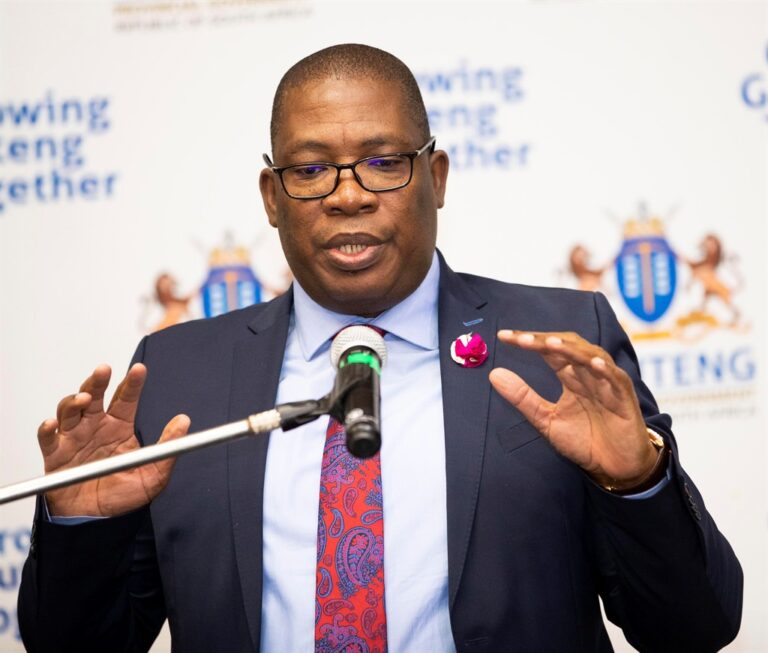
THE Gauteng MEC for Education Panyaza Lesufi visited Höerskool Jan Viljoen in Randfontein last week to check on the progress made following allegations of racism and sexual harassment that disrupted learning at the Randfontein school in February.

During the visit, Lesufi found that 50 learners were removed from the school in protest of alleged government interference.
In a Twitter post, Lesufi said that he was disappointed that 50 learners were removed from school.

“Today, I went back to Jan Viljoen Höerskool to check. I am disappointed that 50 learners were removed from the school by their parents,” said Lesufi.

The MEC said that his department will monitor the situation.

“We will continue to monitor the situation at the school,” he said.

The teacher who was implicated in the sexual harassment allegations has since been suspended by the school governing body.

In February, Lesufi informed the parents that an investigation will be conducted with the assistance of the South African Human Rights Commission(SAHRC), and further urged parents to protect their school.

The SAHRC has launched an investigation into alleged racially-motivated clashes between black and white learners at the school.

“The SAHRC will investigate everyone. There is an independent body who is going to investigate everyone and if they say act, I will act decisively, “said Lesufi.


-Inside Education

ReplyReply allForward

School children Call for Safer School Transport

ZANDILE BANGANI |

LEARNERS from the schools affected by a taxi accident in which nine children died used the funeral service to plead with the education department and parents to keep them safe.

“We want proper transport, that’s it,” said Nomzamo Simelane, 14, a grade 9 pupil from Tisiteni Combined School in Ermelo, Mpumalanga.

She addressed the issues after the funeral service of three of the nine children who died when an unroadworthy minibus taxi transporting learners capsized at the Mpuluzi bridge on 16 February.

Learners from Tisiteni, Sitanani Primary School, Nantithuba Stimulation Centre and Wesley Memorial Primary School died in the accident.

A joint funeral service was held on 24 February at Mayflower Stadium for eight-year-old Lungelo Sibisi, who was in grade 2, four-year-old Abenathi Nhlabathi in grade R and nine-year-old Mpilo Ntumba who attended Nantithuba, a school for disabled children. Other families opted for private burial ceremonies on different days. The funeral service, which was attended by the families of the nine children, was opened by the Mpuluzi Secondary School choir singing the national anthem. In front of each bereaved family, a framed picture of their child was displayed.

Among those pictures was one of 13-year-old Charmaine Sibiya, a grade 8 student who attended Tisiteni with Nomzamo, who wasn’t the only learner to use the service to call on the government and schools to supply children with adequate and safe school transport. Jabulile Nxumalo, 15, also made the call “because they are being overloaded in the transport. We would like public transport that can accommodate all the learners.

“As learners, we wish that an accident of this kind never occurs again. We would like to request the department of safety and security and also parents to make sure that we are safe, and we as learners commit ourselves to be responsible for our safety.”

Who’s next?

Njabulo Thwala, 15, and Siphesihle Madonsela, 14, also paid tribute to Charmaine. Njabulo shared a class with her and said she was kind and quiet. Jabulile said Charmaine’s death was tragic, shedding tears while talking. Nomzamo recalled a time when she was in the school choir with Charmaine, even mimicking Charmaine’s voice when she wanted to sing alto. “‘Nomzamo, let’s go and sing.’ No, Charmaine, you have a soprano voice.”

Learning about the death of Charmaine and other learners, she said, broke her heart. “They were so young. I have been asking myself who is next, me or my friend?” said a devastated Siphesihle.

The families and government officials sat under a white tent during the funeral service, while community members sat on the stands in a show of support.

Vincent Nkambule, 52, an uncle and grandfather, was at the scene of the harrowing accident just 15 minutes after the taxi capsized on the D267 road between Mayflower and Dundonald in Gert Sibande District Municipality. He rushed to the scene after receiving a call from his niece, whose child Phiwokuhle Nkosi was among those in the taxi. His niece had been alerted by the school about the accident. Five children from the Nkambule family were in the taxi.

“Mothers of the children were crying and you tried to comfort them. But on the other hand, you must look for children needing emergency help,” said Nkambule.

Another grandparent at the scene, Ndoda Nhlabathi, 60, collapsed when he saw the tiny body of his four-year-old grandchild Abenathi Nhlabathi.

“Others were dead. Others were screaming and crying for help. Then we tried to do anything to help them,” said Nkambule.

Family tragedy

Two children related to Nkambule, Charmaine Sibiya and Siphesihle Nhleko, 10, were among the nine children who died. “I realised this at the scene because they were together. When we separated them, we saw that Charmaine was still alive but Siphesihle was already dead next to the water, and others were in the water,” said Nkambule.

Three other children from the Nkambule family survived – Siphesihle Nkosi, 10, in grade 4; Thandolwethu Nkosi, six, who is in grade 1; and Phiwokuhle Nkosi, eight, who is doing grade 8. Phiwokuhle was discharged on 23 February from Kiaat Private Hospital with a leg injury. Siphesihle and Thandolwethu were transferred from the intensive care unit to a general ward for rehabilitation.

Charmaine and Siphesihle were buried on 26 February. “This memory is not right because we are devastated. It’s traumatic,” said Nkambule.

Nhlabathi heard the news while travelling on a bus. He said a young man sitting next to him received a call about an accident involving schoolchildren. “I didn’t think my grandchild was part of the accident,” he said. “Arriving at the scene, I saw my grandchild laying there. I collapsed. I was too shocked and in pain.”

Nhlabathi asked the Department of Basic Education to play a role in monitoring the private transportation of schoolchildren and to avoid overloading. Nkambule echoed Nhlabathi’s words when asking the department to collaborate with traffic officials and the South African Police Service to monitor such transportation.

Department responsibility

The taxi driver allegedly lost control of the vehicle and jumped from the moving taxi to save his own life. He was arrested and has been charged with nine counts of culpable homicide and several road traffic violations, according to Moeti Mmusi, the spokesperson for the Mpumalanga Department of Community Safety, Security and Liaison. These include operating without a valid driver’s licence, driving an unroadworthy vehicle and operating a vehicle without a valid licence disc.

Congress of South African Students secretary for Mpumalanga Brilliant Mncina said Mmusi’s department and the education department have to take accountability for the accident. “They are responsible for reliable scholar transport. They are in charge of making sure learners don’t struggle travelling to and from school.”

Mncina added that the department is also responsible for making sure every vehicle on the road is roadworthy. She said parents must monitor drivers through the school governing body and check if the private scholar transport is reliable and safe.

Bongani Goodlord Khumalo, 42, who is on the school governing board at Wesley Memorial, said seven of the learners died instantly, one on their way to the hospital and another at the hospital. Three learners from Wesley Memorial were in the taxi. Two survived and Nothando Magagula, who was in grade four, died. Khumalo said the accident left everyone traumatised.

“I don’t think we would have had this accident if we had had a scholar transport. Scholar transport is provided by the Department of Public Works and they monitor those buses.”

Advocacy group Equal Education has been campaigning for access to scholar transport for learners in Nquthu, KwaZulu-Natal, since 2014, said researcher Kimberley Khumalo. Equal Education learner members known as equalisers have testified to risking their lives on their daily commute to school, walking long distances on foot which leaves them vulnerable to theft and sexual assault.

“Through our advocacy and legal interventions with support from the Equal Education Law Centre, we secured significant victories, namely getting government-subsidised buses for three schools in Nquthu in 2015. A National Scholar Transport Policy and Implementation Plan was published in 2015. The delivery of buses to 12 schools in Nquthu in 2018. Basic Education Minister Angie Motshekga publicly committed to working with the National Treasury to explore a conditional grant to fund scholar transport in 2018. The KZN Learner Transport Policy was approved by the KZN cabinet and took effect in 2021,” she said.

Delaying the implementation of both national and provincial scholar transport policies means that many learners will still have to endure unsafe commutes to school and risk their lives to access education without any relief for a long time, said Khumalo.

And not having safe and reliable school transportation has implications for both learners and parents. “Learners could potentially spend their entire school careers walking for hours to school only to arrive tired and unable to learn effectively. Parents may have to rely on costly and unsafe private transport to transport their children to school.”

Classroom Corner | Virtual Classroom agile, innovative and modern, says Motshekga

BASIC Education Minister, Angie Motshekga, says the Vodacom Virtual Classroom innovation allows the country to have all learning resources in one fit-for-purpose portal designed by experts with the interest of learners and teachers in mind.

Motshekga was speaking at the handover ceremony of Vodacom’s Virtual Classroom Solution held in Midrand.

This forms part of the COVID-19 Disaster Regulations imposed by the Independent Communications Authority of South Africa (ICASA) to support online learning and ease congestion on the country’s telecommunication network.

The Minister said that the government and ICASA agreed that all mobile network operators must establish a Virtual Classroom solution to support virtual learning and teaching during COVID-19 induced intermittent school closures.

She said that it was pleasing to note that Vodacom has complied with the ICASA regulations without external pressure.

Motshekga has lauded the Virtual Classroom solution as agile, innovative and modern.

“This clearly indicates that Vodacom takes corporate citizenship more than seriously beyond compliance issues. The investment made by Vodacom in public schooling today has the ripple effect of benefiting the next generation of learners and teachers,” she said.

The Minister said the country must learn not to spend its children’s inheritance; but invest to benefit the next generation.

“In the main, the Virtual Classroom will make a difference to teachers and learners in selected schools by improving connectivity and making gadgets accessible, thus enhancing computing skills and appreciation of the power of ICTs,” she said.

Motshekga said that this solution in secondary schools will allow teachers to transform their pedagogical practices by providing improved educational content and more effective teaching and learning methods.

The Minister emphasized that the ICT professional development for teachers is pivotal for the success of this project.

She added that this solution will improve the learning process by providing more interactive educational materials that increase learner motivation and facilitate the easy acquisition of basic skills in various subjects.

“We are slowly beginning to narrow the great digital divide in the public schooling sector, which warms my heart,” she said.

The Minister said that the Vodacom Virtual Classroom complements the department’s first-of-its-kind online programme dubbed: The Comprehension Across the Curriculum, which was recently launched to turbocharge reading for meaning.

Minister Motshekga reported that the department has finalised a plan to deploy digital Learning and Teaching Support Materials (LTSM) through ICTs at all levels of the basic education sector since 2019.

The plan provides the Basic Education Department with a strategy to make the vision of the White Paper on e-Education a reality.

“At the heart of basic education, reforms are imperative to eliminate the digital divide by ensuring that all schools and education offices access the internet and data within six years,” she said.

The Minister said that education, skills development, and jobs are vital national imperatives to unlock economic growth and sustain livelihoods.

“We are proud that Vodacom has responded positively to the NDP’s clarion call for partnerships to improve education for all.

“Thanks to a meaningful partnership with Vodacom, we can reach needier schools in the shortest possible time,” the Minister said.

The Minister praised Vodacom for becoming an ally for the growth of public schooling.

“With the innovation and commitment to societal change by Vodacom and its stakeholders, today’s launch of the Virtual Classroom Solution is a giant leap into the digital future,” the Minister said.

– SA News

Science Corner | Malawi: MUST Appeals for Its Long Overdue High-Tech Science Lab in Order to Realise Its Full Potential

ON a visit by Parliamentary Committee on Education to appreciate academic programmes and services provided by Malawi University of Science and Technology (MUST), Vice-Chancellor Prof. Address Malawi took the opportunity to highlight that the institution’s initial plan was to be installed with a high-tech laboratory.

But since it started its operations in 2014 — after being enacted as an Act of Parliament in 2012 — this all-important lab hasn’t been provided for forcing management to improvise a science and technology lab that was created in a block of classrooms.

This improvised science and technology lab has helped MUST to engage with several of innovative minds from across the country, who are roped in to improve on their innovations and are helped to patent them as commercial owners of copyrights.

In August last year, MUST and partnered with Technical, Entrepreneurial & Vocational Education and Training Authority (TEVETA) to identify and train community innovations that can be commercialized.

This was initiated taking taking cognizance that Malawi has a high population of unemployed young people but have very innovative ideas which are being taken away from them without much benefits or the government gaining from it.

This vocational training as well as MUST’s academy for medical biology sciences that produces medical diagnosis experts and school of climate change & health sciences that trains experts into disaster, water and energy management — needs special high-tech lab.

“Our mandate is to spearhead science and technology, Prof. Malata told the Parliamentarians. “We are moving fast towards that vision through several innovative programmes we have initiated.

“Our cry is to acquire high-tech equipment for every aspect of our programmes on offer here that include our school of culture and heritage where we produce experts in brass music who are being roped in by the Malawi Defence Force and the Police.

“We also have an information technology programme which needs high-tech equipment for us to produce graduates that can make a difference in the sociology-economic development of this country.”

Prof. Malata told the Parliamentarians that management had been following up on the provision of the long overdue high-tech lab but to no avail, saying the last appeal made last year the cost was around K6 billion but at present — due to a lot of economic factors — it is close to K14 billion all because of the delays.

She added that in some of their innovations, the university can manage to sustain some of their operations through an industrial park they have managed to build that — apart from using the main science lab they are requesting — also needs high-tech equipment.

MUST produces ceramics such as floor and wall tiles as well as MUST logo-branded electronic handwashing machine; plates and cups — which are already on the market.

“We used to have some fantastic Malawian made products by Mulanje Peak — jams, tomato sauce and many others — but today we import such products yet our farmers out there produce the raw materials needed.

“There are times that vendors of tomatoes, mangoes, onions and other fresh foods are forced to sell their perishable products at lower prices. When our industrial park will become full operational, the farmers will be selling to us to process into packaged foods.”

Prof. Malata also highlighted of the challenge of inadequate students’ accommodation which they tried to address by improvising the construction site offices outside their fence which contractors left behind.

They are used us hostels in which one room houses 14 students using double-decked bunks. There is no storage facilities forcing students to keep their belongings in their suitcases and travel bags which they then place them on their bunks in the morning before their classes.

Most of the robberies at the campus targeted these hostels since their security is heavily compromised — having not been part of the campus construction plans.

Prof. Malata also disclosed, to the incredulous Parliamentarians, that all members of staff commute between Goliati and their homes in Limbe and Blantyre towns as staff houses were not constructed.

“We made arrangements to ferry most of the staff on a daily but those that have personal cars use their own resources on fuel and other needs. It takes close to two hours utmost to reach here or home during peak hours.”

She said the beautiful outlook of the campus betrays the huge challenges they face but in as far as innovations and improvements of their programmes and services, MUST is moving faster than others — though it is the youngest public university.

The Parliamentarians were taken on a tour of some of the new innovations they have established such as the industrial park as well as the health training clinic and the improvised accommodation hostels.

Speaking on behalf of the Parliamentarians, George Chaponda agreed with Prof. Malata that the provision of the high-tech lab was in the original plans of the founder and former State President, late Bingu wa Mutharika.

He said he was then serving as Minister of Education and was in agreement with Prof. Malata because this was part of the engagements he had with the funders of the MUST project — the Chinese government.

He said they had taken note of all concerns raised and will continue to make all necessary follow ups including the challenges of accommodation for both students and staff.

He said they were impressed of the programmes and services on offer, saying the innovations planned through the industrial park is also what late Bingu had in mind through the flopped One Village, One Product (OVOP).

Last week, the Ministry of Trade and Industry, signed a memorandum of understanding (MoU) with MUST as part of government’s commitment in working together with local institutions of higher learning for them not to work in isolation in advancing science, technology and innovation.

Minister Mark Katsonga Phiri had said the partnership will help to produce quality products that can improve the economy of the country, saying for a long time, learning institutions and the government have been working in isolation in industrial research and innovation.

This, Katsonga had said, resulted in challenges when it comes to developing the nation through innovative products which can be competitive on the local as well as international market.

He said it is the high time that the country’s universities and the government itself, as well as all stakeholders, worked together in developing the technologies from the universities and co-ordinate with government to be passing on innovations to the industry.

“Most of the countries in the world are doing well economically because they always work together with universities and in so doing they come up with very innovative products which are competitive on the market.

“So from this year, we want to bring all learning institutions together and make sure we are going in one direction because most students once they finish their education they don’t apply the knowledge.”

The Minister was taken on a tour of the industrial park as well as one of the Ministry’s site at Chigumula in Limbe where the government is planning to build its own industrial park aimed at enabling both local and foreign investors to acquire land and develop it.

Last month, MUST charted a new path in the history of the country’s tertiary education by launching the first of its kind academic journal, Advances in Science & Arts — set to provide high quality, reviewed, open access infrastructure for scholarly articles and other products of research and development.

At the launch, director of research, postgraduate studies and outreach, Dr. Alfred Maluwa said the Advances in Science and Arts journal was established as a response to the MUST’s vision, mission and strategic objectives — which is to be a world class center of science and technology education, research and entrepreneurship.

The Advances in Science and Arts journal complements the vision of the Directorate of Research and Outreach, “which is to become world class center of excellence in research and outreach”.

The strategies to achieve this vision include conducting high quality research by both faculty and students; translating the research results into evidence based policy and translating the research results into evidence based curricula.

The Journal is also aimed at providing a platform for networking and sharing of research results with the global scientific community and to increase MUST’s visibility, nationally, regionally and globally through e-journal infrastructure.

The journal is designed to publish in volumes, issues and sections — one volume per year with 2 issues, in July and December.

Sections will depend upon the disciplines such as science, technology, engineering, mathematics, arts, humanities and others.

It is open access for staff and its students and postgraduates, free of charge and available to everyone on the global with only high quality manuscripts shall be published.

The journal – designed internally – is owned by MUST and is exclusively open access and without transfer of copyrights.

Nyasa Times

Sports Corner | Joburg’s local club encourages cricket at a young age

IN South Africa, participation in sports has become a way of life, and for many individuals, playing sports in big stadiums is a childhood fantasy.

The Champions Drive organisation conducted their inaugural cricket launch event at The Wanderers Club on March 8.

With 32 schools on the programme coming from different districts (9,10,11 and 14), the organisation strives to teach and educate learners about cricket as well as coach them to become professionals. Teachers will also receive fundamental skills training as part of a level one cricket coaching course.

David Mashiyi, founder of NPO Champions Drive and facilitator of the programme said, “The Wanderers Cricket Club will assist in the training and mentoring of children, while the University of Johannesburg will coach the teams using their students, and they will open their facilities for matches to be played on their fields.”

Graham McMillan, a former team player of The Wanderers Premier League cricket team, held a session with children from across Joburg North, explaining what the club is all about and what they will gain from it. “We want to make sure that all the kids get a chance to polish their talents because cricket can be a career.”

Tebatso Mangena, an educator from Lyndhurst Primary School said, “I am honored to be part of such a great initiative. We appreciate a community that comes together to support and uplift our youth in all areas of their lives, especially in sport. Our expectations are that the programme to teach our kids not only the techniques of cricket but builds the confidence in pursuing sports-related careers.”

Details: The Champions Drive davidmashiyi@yahoo.com

– Sandton Chronicle