Home Blog Page 281

Here are the big language changes proposed for schools in South Africa

0

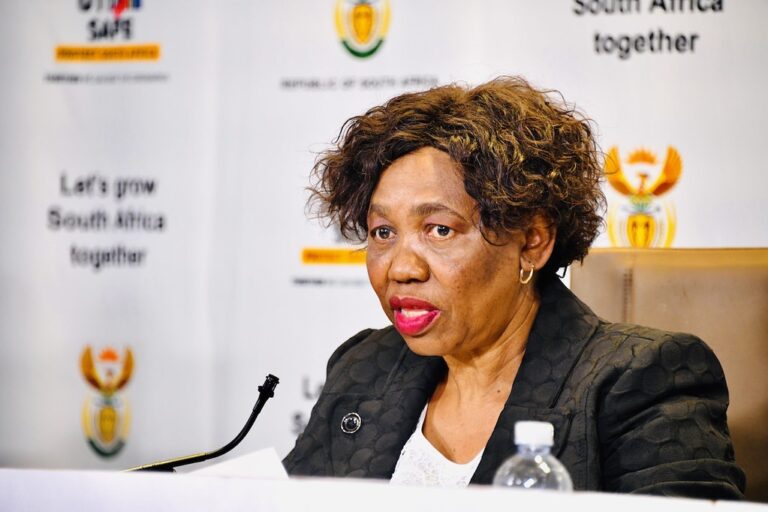
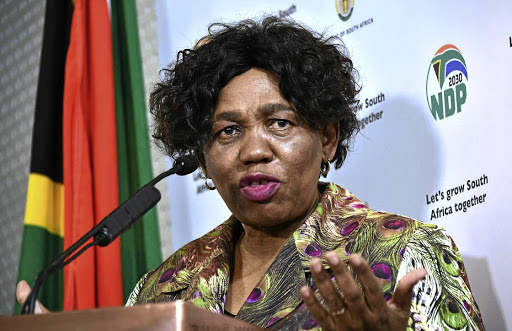
BASIC Education minister Angie Motshekga says her department is moving forward with plans to incorporate mother-tongue languages at the country’s schools.

Answering a recent parliamentary Q&A, Motshekga said her department values mother tongue education and thus encourages learners to learn through their Home Languages wherever it is feasible and practicable.

“This position is in alignment with the provisions of the Constitution of the Republic of South Africa. Section 6 of the Constitution of the Republic of South Africa lists the official languages as IsiZulu, IsiXhosa, IsiNdebele, Siswati, Sesotho, Setswana, Sepedi, Tshivenda, Xitsonga, English and Afrikaans.

“All these languages can be used as languages of learning and teaching or as subjects. Section 29(2) of the Bill of Rights provides that everyone has the right to receive education in the official language or languages of their choice in public educational institutions where that education is reasonably practicable.”

An increased focus on marginalised languages

In its attempts to elevate the status of the previously marginalised languages, the Department of Basic Education developed the National Curriculum Statement (NCS) Grades 1-12, which makes provision for equal use of all 11 official languages and South African Sign Language in the schooling system.

The National Curriculum Statement Grades 1-12 encourages learners to learn through their home languages, particularly, though not limited, in the foundation phase, Motshekga said.

“The policy does not restrict the use of home language instruction up to Grade 3, but emphasises the use of the home language in Grades 1-3 to reinforce the critical foundational skills of reading, writing and counting. The NCS recognises the importance for learners to learn in their home language.”

“The Language of Learning and Teaching (LoLT) can be selected from any official language. The NCS and the LiEP advocate for an additive bi/multilingualism approach that encourages learners to learn through their home language as long as it is feasible, as well as to learn other languages.”

Additive multilingualism allows maintenance of learners’ home language as they acquire additional languages as subjects or as languages of instruction, Motshekga said.

Home languages, English, and the reality

The National Development Plan (NDP) recommends that learners’ home language be used as LoLT for longer periods and English be introduced much earlier in the foundation phase, said Motshekga.

She noted that the plan emphasises the need to develop African languages or mother tongues as integral to education, science and technology, to develop and preserve these languages.

“Despite all these noble efforts, the reality on the ground reflects otherwise. The hegemony of English as a preferred medium of instruction and communication seems to prevail, which together with Afrikaans are still the dominant languages of learning and teaching in the majority of South African schools.”

The minister has previously acknowledged that there are issues with moving to a purely mother-tongue-based system, noting that it was likely impossible to have a pure class in Sotho or Xhosa in Gauteng the way similar classes have been held in the Eastern Cape.

She added that in classes teachers use multiple different languages to help children learn and get their point across. However, when it comes to assessments – which are typically done in English – they are once again forced to grapple with a language they did not understand while learning.

“They are no longer being tested on their cognitive development or understanding (of the work). You are now testing their language abilities, which is a problem.

“Government has begun the process of changing this and the next step is to assess them in the language they are taught – so that we are able to assess performance and not language proficiency.”

She added that government would have to use technology and other systems to effectively translate complicated scientific and mathematical concepts into languages that do not necessarily have the same terminology.

Pilot project and expansion 

The Eastern Cape has initiated its Mother Tongue Based Bilingual Education pilot, wherein 2,015 schools are using IsiXhosa and Sesotho as the LoLT up to Grade 9.

Learners in these schools are taught mathematics, natural science and technology in their home languages IsiXhosa and Sesotho.

This initiative was started in 72 Confimvaba schools in Grade 4 in 2012 and incrementally in subsequent grades and it is now being implemented up to Grade 9 in 2022, Motshekga said. The province is now planning to roll it out to all the schools where it is feasible.

“The DBE is currently putting a prudent plan in place to roll out African Languages Mother Tongue Based Bilingual Education to the other eight provinces,” the minister said.

BUSINESS TECH

Stellenbosch University honours top actuarial sciences student, Bradley Moorcroft

0

THE Chancellor’s Medal for 2021 was awarded to Actuarial Sciences graduate, Bradley Moorcroft.

Moorcroft was announced as last week as the official recipient of the Stellenbosch University’s coveted Chancellor’s Medal for 2021.

“The medal is awarded annually to a final-year or postgraduate student who has excelled academically, has contributed to campus life in various ways, and has worked hard at developing co-curricular attributes,” the university said in a statement.

Moorcroft was awarded bachelor of commerce (Honours) degree in Actuarial Sciences. cum laude, at the virtual graduation in December 2021 and returned to Stellenbosch this week to receive the medal in person at the April graduation ceremony of the Faculty of Economic and Management Sciences.

Over the last four years, Moorcroft passed all his subjects in his B. Com and Honours (Actuarial Sciences)

degrees with distinction, achieving 90%–99% in half of his modules. During his honour’s year, he was the

top student and achieved the highest average mark in the past five years.

Furthermore, “he reached the standard necessary to be recommended for exemptions from all the Actuarial Society of South Africa (ASSA) examinations available to date in his studies, which is a very rare achievement,” the university said.

Commenting on his award, Moorcroft said: “There are so many exceptional final-year and postgraduate students who graduated in my cohort, and it is a big surprise and huge honour to be recognised in this way. This is the cherry-on-top of a rewarding and enjoyable Stellenbosch chapter.”

“It was quite a challenge to balance my actuarial studies with other responsibilities during the COVID-19 period. So, I also view this award as recognition of the hours of commitment and hard work it took to navigate this journey,” said Moorcroft.

Moorcroft added that many people have supported him and contributed to his success. “I cannot take credit for this award alone. I am very grateful for the unfailing support and encouragement of those who have been closest to me through the ups and downs of the past four years.”

He believes embracing his studies with a team minds​​et helped him achieve his goals.

“This is an approach that I would recommend to any incoming student. I was lucky enough to form a solid group of classmates. We supported each other, learned from each other’s successes and mistakes, helped each other grasp the key concepts, and formed great friendships.”

INSIDE EDUCATION

It takes an average of eight years to produce an actuary, says Mike McDougall, CEO of ASSA

0

OF the 2.1 million people employed in South Africa’s formal finance sector in the third quarter of last year, actuaries constituted less than 0.1%. This is because there are less than 2 000 actuaries in South Africa, most of whom are members of the Actuarial Society of South Africa (ASSA).

An actuary is either an Associate Member of ASSA (AMASSA) or a Fellow of ASSA (FASSA).

Student members and technical members are not actuaries and may not use this title.

In an environment where demand for actuarial skills significantly exceeds supply, the unemployment rate for South African actuaries is zero, according to Mike McDougall, CEO of ASSA.

Compounding the shortage in South Africa is the emigration of actuaries to countries trying to meet their own growing requirements.

ASSA’s membership statistics show that last year some 25 South African actuaries took up employment opportunities outside of South Africa.

McDougall says the demand for actuaries is not unique to South Africa.

The United States Bureau of Labor Statistics, for example, predicts a 24% growth rate in the employment of actuaries in the US from 2020 to 2030, which far exceeds the growth expectations for all other professions.

South Africa nevertheless ranks among the countries with a high number of actuaries, with the United States (US) and the United Kingdom (UK) the only countries in the world with more than 10 000 actuaries.

ASSA is one of the 10 largest actuarial associations in the world and the largest on the African continent.

McDougall explains that the actuarial qualification is one of the toughest to obtain, whether in South Africa or abroad.

In 2010, ASSA introduced a homegrown actuarial qualification, which meant that actuaries no longer had to turn to the UK for their actuarial qualification.

Approved by the International Actuarial Association (IAA) as a primary qualification, the South African qualification is as difficult to obtain as those offered by professional bodies in other countries, adds McDougall.

He explains that once a student member has graduated from university with a degree in Actuarial Science, it takes a minimum of three years to complete the additional requirements to become a Fellow of the Actuarial Society of South Africa (FASSA).

However, most student members take at least eight years to pass the required 13 technical skills exams and complete the required work-based learning under the supervision of a mentor.

Transforming the profession

While a consistent focus on transforming the South African actuarial profession is showing results, the progress is painfully slow because it takes almost a decade to produce an actuary.

Actuarial Society of South Africa Membership Figures – Fellows

YearWhiteBlack AfricanColoured, Indian, AsianTotalMaleFemale
2006628282367958891
201611498215714171095322
2019122811324515861198388
20221 31514229317541289465

In 1998, a mere 2.2% of Fellows were African, Coloured and Indian. Today, 24 years later, this has increased to 25%, which means the number of African, Coloured and Indian Fellows is growing at an annual rate of 20%. By comparison the total number of Fellows is growing by an average of 6% a year. While we acknowledge that the transformation of our profession is slow, we are encouraged that the Society’s many transformation initiatives are beginning to make a difference.

Students who come from disadvantaged backgrounds and who did not grow up with English as their first language face significant hurdles on their path towards achieving Fellowship.

The journey to becoming a Fellow member of ASSA consists of several stages:

  1. Student members are expected to pass three foundation and four core technical skills exams and complete basic professionalism training in order to achieve the Technical member of ASSA (TASSA) designation.
  2. A TASSA becomes an Associate member of ASSA (AMASSA), also known as a generalist actuary, on completion of the remaining general skills exams, further professionalism and business skills training and two years of work-based experience.
  3. In order to qualify as a Fellow member of ASSA (FASSA), which is the apex qualification, members choose a primary and secondary area of specialisation. They must pass another set of technical skills exams and complete more professionalism training and a further year of work-based learning. Members who select risk management as their secondary area of specialisation also gain the Chartered Enterprise Risk Actuary (CERA) designation.

The table below provides an overview of the demographics of each of the four ASSA membership categories:

BlackIndianColouredWhiteAsian & Oriental
Student47%15%3%33%1%
Technical (TASSA)26%18%5%48%3%
Associate (AMASSA)16%17%3%60%3%
Fellow (FASSA)8%13%2%75%2%

Strong pipeline of potential actuaries

When looking at the pipeline of potential actuaries, by next year the number of black African student members and Technical members is likely to surpass the number of white members on the road to becoming actuaries.

Actuarial Society of South Africa Membership Figures – Pipeline (Associate, Technical and Student members)  

YearWhiteBlack AfricanColoured, Indian, AsianTotalMaleFemale
2013105446337118881308580
2016109097148426291802827
20191130107558927671840927
202211911056637289718551042

With the aim of helping struggling student members achieve their qualifications, the Actuarial Society Academy was established in 2016. The Academy provides working student members with educational support as well as soft skills training such as communicating in a corporate environment, balancing work and studying, and coping with the demands of the workplace.

Mike McDougall is CEO of the Actuarial Society of South Africa.

‘Rewriting our history books and curriculum is a good start’ – planned changes for schools in South Africa

0

THE Covid-19 pandemic has provided the scope for a shake-up of South Africa’s school system, says basic education minister Angie Motshekga.

Addressing an education conference on Thursday, Motshekga said that she was not advocating for ‘wholesale curriculum changes’, but noted that there was room for an overhaul of key issues.

“Based on the international practices and literature, there is a need to accurately determine the most appropriate curriculum approach given the changing topography of the sector post-Covid-19. We must envisage the development of a South African competency-based curriculum framework that addresses the unique South African context.

“As public schooling advocates, we are not the training mill for the industry; hence, we must think about how to use basic education curriculum reforms for social cohesion. Rewriting our history books and curriculum is a good start.”

Some of the key proposals highlighted by Motshekga in her address include:

Language 

“There is an urgent need to constructively address the language in education policy, which currently limits the language of learning and teaching to English and Afrikaans,” Motshekga said.

“We must strike while the iron is hot and commission a full scale extended research on the language issue and what will be the most appropriate policy relating to the language of learning and teaching.”

STEM

Motshekga said there will be no point in ‘rebooting the system’ if the country does not confront the low uptake and throughput in STEM subjects: Science, Technology, Engineering and Mathematics.

She added that learners must be able to read for meaning by their tenth birthday, while all children should be meeting all developmental milestones by the age of five.

Technology

Every school child in South Africa must be supplied with digital workbooks and textbooks on a tablet device by 2024.

Infrastructure 

The dire state of school infrastructure in townships and rural areas remains a ‘bugbear’ for the department and this urgently needs to be addressed, Motshekga said.

“We need reliable data on the current state of school infrastructure. We must eradicate infrastructure backlogs relating to inappropriate structures, sanitation and water supply. We must eradicate pit latrine toilets. We need to repair schools damaged by storms and vandals promptly.”

BUSINESS TECH

South Africa’s no-fee school system can’t undo inequality

A DEFINING feature of South Africa is the level of inequality in almost all spheres of society. Nowhere is this more observable than in the schooling sector.

It’s not unusual to find wealthy schools, comparable to the best anywhere in the world, within 5km of poor schools. Some blame for this inequality can be attributed to the lingering effects of racially biased funding that favoured white people during apartheid.

But it does raise the question of why, after more than two and a half decades of democracy, poor children of South Africa continue to sit in overcrowded classrooms with crumbling floors and broken windows. There are still schools in South Africa where pit latrines are in use, a fact that education authorities are well aware of.

To its credit, the state implemented a school funding policy in 2006 with the intention of achieving equity. This no-fee school policy ranks public schools according to five groups or quintiles. The poorest schools, those serving the poorest communities, fall into quintile one. The richest schools are in quintile five.

Schools in quintiles one to three cannot charge school fees. They receive a larger allocation per learner from the Department of Basic Education budget than the fee-paying schools in quintiles four and five.

But it’s clear that the school funding policy hasn’t had the equity effects that were intended.

Poor schools have lost fee-paying parents to better resourced schools. So poor schools get poorer and richer ones benefit. Not only are the allocations inadequate for no-fee schools, the categorisation of schools is sometimes incorrect. And recent budget cuts will be felt most by the poorest schools.

Our study showed what kinds of financial struggles these schools have and suggests that a better way to finance schools and reduce inequality would be to review the existing no-fee policy. We also suggest that the allocation per learner be raised to bring about some degree of equivalence across the schooling system.

Changing demographics

We interviewed principals from eight schools in the city of Durban in South Africa. The schools fell into quintiles three to five. Participants said the demographics of their schools had changed and that pupils had moved to better resourced schools.

Demographics have changed in South African cities since apartheid ended. This has also altered the racial profile of schools, especially those that serve children from new and growing informal settlements. Principals in our study complained that their schools had been incorrectly categorised or that their poverty status had changed.

Principals from quintiles four and five said that in the last decade, their schools had admitted increasing numbers of poor children but attempts to get a change in status had not been successful. Parents could not pay fees and this could make their children feel ashamed.

Our interviews with school principals, especially of poor schools that had few opportunities to raise extra funding, revealed that budget allocations were far from adequate. Often, funds were transferred to schools quite late in the school year. This made the day-to-day survival of these schools very difficult.

Richer schools can decide on their own annual school fees, benefit from donations from wealthy former learners, and use their business-networked parent body to attract donations from the corporate sector. Many such schools have professional finance teams that oversee their financial management. They can plan for and spend on building extensions and sports facilities.

Budget cuts

Principals revealed that budget cuts by provincial education departments meant they would receive a smaller allocation in 2022. The effect on richer schools is likely to be minimal, given their flexibility to raise school fees. Poor schools, faced with rising costs due to inflation, pay more each year for operational expenses such as water and electricity. They are likely to cut back on teaching and learning resources like textbooks and stationery.

Already deprived children are likely to get an even worse learning experience. Some poor communities, as reported by principals in our study, had resorted to illegal electricity connections to keep the lights on in their schools, even before these budget cuts.

The long-term effect of poor schools delivering a lower quality learning experience to their learners is already evident. Many poor parents who see education as a means of breaking the poverty cycle make huge financial sacrifices as they move their children to schools they perceive as offering a better education.

This pattern of migration to better schools began after the abolishment of the Group Areas Act, an apartheid policy which made it illegal for people to live and attend school outside their racially designated geographical areas.

The consequence for poor schools is that as they become poorer, they also become less appealing and may experience further loss of fee-paying parents.

Going forward

The no-fee school policy in South Africa, while well-intentioned, demands a serious review. As an immediate priority, the Department of Basic Education needs to allocate funds to build flushing toilets and provide safe piped water in schools that don’t have these facilities.

Poor schools do not have the capacity to raise money for basic needs. Funding for this kind of capital expenditure cannot come from the already meagre funds in the operations budget of poor schools.

Funds should be made available for infrastructure, especially in poor schools that lack basics like libraries, computer centres and sports fields, and for the refurbishment of dilapidated classrooms. Political will is required to introduce some degree of dignity to the learning experiences of poor children.

Dr Ian Africa, a economics of education researcher, contributed to this article and the research it’s based on.

THE CONVERSATION

Science Corner| First private astronauts arrive at International Space Station

THE first all-private astronaut team to fly to the International Space Station (ISS)reached the floating research site on Saturday, the US space agency NASA confirmed.

The four-person crew docked at the ISS at shortly before 1300 UTC, almost 24 hours after they’d lifted off from NASA’s Kennedy Space Center in Cape Canaveral, Florida on Friday. 

The Houston-based startup Axiom Space Inc. is sponsoring the mission, called Axiom-1, which carries three private citizens and one seasoned astronaut.

A SpaceX Crew Dragon capsule, propelled by a Falcon 9 rocket, carried the group to the ISS.

SpaceX also directed mission control for the flight from its headquarters near Los Angeles.

Axiom, SpaceX and NASA are working together to make the mission happen.

The three have said the mission is a major step in the latest expansion of commercial space ventures.

Retired NASA Spanish-American astronaut Michael Lopez-Alegria is leading the flight, along with his second in command Larry Connor, an entrepreneur and aerobatics aviator from Ohio, designated as the mission pilot.

Also on board as mission specialists are Israeli investor-philanthropist and former fighter pilot Eytan Stibbe and Canadian businessman and philanthropist Mark Pathy.

Now that they have reached the ISS, NASA is responsible for the astronauts.

The operations director said this mission would be very different to the much-publicized “space tourism” flights, lasting just a few minutes, of billionaires like Amazon’s Jeff Bezos and Virgin Group’s Richard Branson.

“The distinction is that our guys aren’t going up there and floating around for eight days taking pictures and looking out of the cupola,” Derek Hassmann, operations director of Axiom Space, told reporters at a prelaunch briefing. 

“I mean we have a very intensive and research-oriented timeline plan for them,” Hassmann said.

Axiom executives said the Axiom-1 crew members underwent rigorous astronaut training with both NASA and SpaceX to prepare them for eight days of science and biomedical research.

It includes research on brain health, cardiac stem cells, cancer and aging, as well as a technology demonstration to produce optics using the surface tension of fluids in microgravity, company executives said.

During their stay, they will share the ISS with seven regular crew members, three US astronauts, a German astronaut and three Russian cosmonauts.

AGENCIES

Zimbabwe: O-Level Results This Week

0

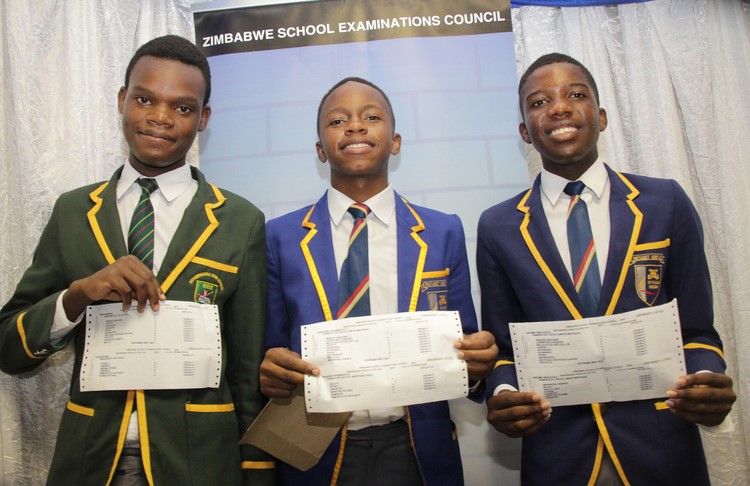
ZIMSEC O-Level results for November 2021 are expected to be out this week.

In a statement, Zimsec said it had met the time period of two months after the last examination for 2021 was written on January 31, 2022.

Last week Zimsec released November A-Level results and statistics showed a 84,67 percent pass rate compared to 80,98 of November 2020.

Zimsec attributed delays of results to Covid-19 mitigatory measures which caused schools to shut down for a long period.

“The December 2021/2022 Advanced Level examination results were released on 5 April 2022 and the Ordinary Level examination results will be released this week.

“The 2021 school calendar was disrupted as the Ministry of Primary and Secondary education had to put in place mitigatory measures to curb the upsurge and spread of the Covid-19.”

The ministry also moved the examinations to later in the year to give time to complete teaching and learning and full coverage of the syllabus.

Hence examinations supposed to run from October to the end of November were moved to start on December 1, 2021 to enable candidates and teachers to complete the learning process that had been disrupted, read the Zimsec statement.

THE HERALD

UCT sits on the throne as the top dog for Sport Science in Africa

0

SPORT Sciences in Africa have the University of Cape Town sitting on the discipline’s throne after it was announced that the university has been placed top, not just in South Africa but on the African continent, for the Global Ranking of Sport Science Schools and Departments.

The rankings were determined by Shanhai Rankings 2021 Global Ranking, and highlight the performances of over 300 universities.

Among these, 287 universities and 13 sports universities with sporting departments or units were compared and considered.

Professor Vicki Lambert, the director of UCT’s Research Centre for Health through Physical Activity, Lifestyle and Sport (HPALS) said: “We are a small group of dedicated researchers, including 12 NRF-rated scientists, enthusiastic postgraduates and a wide network of international collaborations.”

“We are committed to translation of our work, that it is inclusive and ‘difference-making’ to policy and practice and that we innovate, developing bespoke solutions relevant to the Global South,” she added.

In speaking to eNCA, Lambert noted that a key strength for the University comes from international collaborations and that the ranking, which is in the top 14% globally, is also accredited to research published in the top journals for a discipline among other indicators.

The rankings are considered by looking at different categories, from papers indexed in Web of Science, to total citations, citations per paper and papers published in the top 25% of journals, as well as those papers marking international co-authors collaborations.

The achievement follows other triumphs from UCT for 2021, including the university leading Africa in five key world university rankings. These include the U.S. News & World Report Best Global Universities Rankings, Times Higher Education (THE) World University Rankings, Quacquarelli Symonds (QS) World University Rankings, the Center for World University Rankings (CWUR) and the ShanghaiRanking’s Academic Ranking of World Universities (ARWU).

UCT NEWS

Impero Classroom to Help Teachers Keep Students on Task

0

THE aftermath of the COVID-19 pandemic has led to behavioral concerns in students, with many teachers and psychologists noting an escalation of anxiety, depression and other mental health issues in students. 

Impero Software, which creates digital tools for workplaces and schools, is the latest ed-tech company to announce a new piece of classroom management software expected to help address issues with focus and behavior in schools.

The company’s Impero Classroom tool, which launched today, offers classroom device monitoring, browser controls and the ability to share and broadcast presentations, among other things.

The company’s news release said it’s designed to give K-12 teachers a real-time window into what their students are doing and keep them focused on the task at hand, whether in the classroom or remotely as part of hybrid learning, on a multitude of web-based operating systems or applications.

“We’ve seen many schools still struggling with children in school and out of school,” Impero Software CEO Justin Reilly told Government Technology. “We wanted to challenge some of those difficulties that teachers are currently facing, and to support them with the core principles of classroom management.”


As part of the tool, teachers can prevent students from visiting certain websites, or direct students to websites to help nudge them in the right direction.

Teachers also can share the screen of a student to showcase a presentation to the class, or send each student’s browser to a particular website to speed along a lesson, the release said. The tool itself can work in a single classroom or district-wide, and can function with multiple staff members at the same time.

“Teachers can monitor all the students’ screens like a CCTV and see what’s going on, to see who’s on task,” Impero Software Vice President of Product Sam Heiney told Government Technology. “It’s really designed to allow the teacher to manage, monitor and engage their students in this new environment of using lots of different devices and operating systems.”

Kaitlin Trujillo, Impero’s key account manager, said that if Impero Classroom is implemented correctly by teachers, it has the potential to improve student focus.


“The software allows the teachers to be able to monitor and respond to student behavior,” she said. “It’s about being able to respond to off-topic behavior, and then be able to proactively manage that behavior moving forward using the software.”

Heiney said Impero Classroom can potentially add minutes of instructional time to a teacher’s day because of its efficiency, and it runs on the open source Backdrop CMS, so it can integrate with several student information systems and access a plethora of student data. He said that the tool can generate a full profile for each student, with details such as whether a student has a sibling in the school, or if there has been a recent death in the family.

“The real power of Impero Classroom is that integration, that suite of products that we bring to bear, because what Backdrop provides is a view of student profiles with information that can help a teacher guide student interactions on the devices in the most appropriate way,” he said.

“It allows teachers to create individualized learning plans, classroom environments that are truly engaging, and that modify and monitor and manage behavior, not just computer use.”

Reilly said the company wanted to focus on supporting teachers’ need to reach students in the classroom or from afar.

“The first principal piece here is learners being better learners. If you can educate children to be better learners, that really is fantastic, but to do that, you’ve got to create a really productive and safe environment,” he said.

GOVTECH

England state school pupils as happy with life as private school peers – survey

0

YOUNG adults and teenagers who went to state schools in England are as happy with their lives as their peers at private schools, according to a new study by researchers at University College London.

The research found few differences in mental health or life satisfaction between the two groups, which surprised the study’s authors because of the substantial advantages in spending on wellbeing and support enjoyed by those at private schools.

Dr Morag Henderson, of UCL’s social research institute, the paper’s lead author, said: “Although school resource is greater in private schools, the academic stress students face might be too and so we see each force cancelling the other out.”

The study – published in the Cambridge Journal of Education on Thursday – is based on responses from a national sample of more than 15,000 people born in 1989 to 1990 who attended school in England, and were surveyed as teenagers and later in their 20s.

“While these methods do not prove causality, the absence of significant positive effects implies that there is no evidence that parents who decided to pay for private schooling were gaining mental health and life satisfaction advantages for their children,” the authors stated.

The research measured participants’ mental health by asking questions such as: “Have you been able to concentrate on what you are doing?” and “Have you lost sleep over worry?” It found little difference in responses between the two groups before and after adjusting for factors such as social background and educational achievement.

Those who attended fee-paying independent schools did report higher levels of life satisfaction in their 20s. But after responses were adjusted to exclude the effects of advantages such as higher income, house ownership and better exam results, the researchers again found no substantial differences in satisfaction levels.

Girls at private schools did report better states of mental health at the age of 16 than their peers at state schools but the same gap did not appear at the age of 14 or 15.

The study concluded that “there is no additional advantage of private schooling with respect to mental health and life satisfaction” for the cohort it studied. But it cautioned that private schools have further increased their spending on wellbeing and pastoral support in the years since the sample group attended school.

Dr Henderson said it was possible that the increased pastoral support “was just starting to make a difference” for private school pupils, who she thought might have received more support during the Covid lockdowns.

“This is speculation but it might be that we see state school students fare worse in terms of mental health compared to private school students, post-lockdown. This question is ripe for future analyses,” Dr Henderson said.

Earlier research among those born in 1970 found that attending a UK private school was associated with “heightened psychological distress” among women. But since the 1980s private schools have greatly increased their spending on supporting pupils.

THE GUARDIAN