Home Blog Page 282

Varsity Cup| DUT make Varsity Shield history

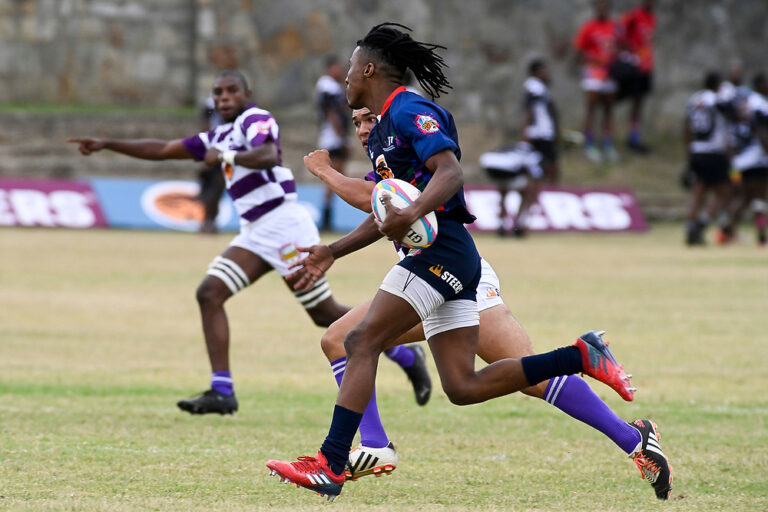
AT the end of the current season, the last-placed side on the combined 2021-22 FNB Varsity Shield log will drop out of the tournament.

While FNB DUT remain in this precarious position after Sunday’s win, they have reduced the gap between themselves and FNB Rhodes to a solitary log point.

This bottom-of-the-table game was an error-strewn affair. Both teams buzzed with attacking intent, yet their execution and discipline let them down at key moments.

Neither side managed to seize control of the game. DUT conceded a yellow card either side of half-time, as did Rhodes. The extra space on the field did little to assist either team’s attack, as they continued to spurn scoring opportunities.

DUT eventually held their shape to score through the fiercely determined flank Menzi Nxumalo in the 61st minute. Thereafter, an overly robust defensive approach resulted in two more yellow cards as well as a red for Thabani Mnisi.

Rhodes crashed over in the 69th minute to get themselves back into the contest. They had a chance to score the winning try in the final minute, but flank Bradley van Heerden dropped the ball with the line at his mercy.

DUT finished the game with 12 men on the field yet managed to hang on and claim their first victory in the Varsity Shield.

WSU ALL BLACKS CLAIM WIN OVER TUT

Earlier, the WSU All Blacks fired late to claim a 25-20 victory over the TUT Vikings.

The WSU All Blacks earned this win on the back of a determined showing in the closing stages. The Vikings, by contrast, relinquished their grip on the contest via a limp performance in the second stanza.

The TUT forwards set the platform for a dominant display in the first half. Captain Laro Delport shifted from No 8 to hooker, and the move ensured that the Vikings pack outmuscled their more fancied opponents at the scrums, lineouts, and mauls.

WSU’s discipline was poor, and scrumhalf Eric Mcaphukana was shown a yellow card for a reckless tackle after seven minutes. The WSU All Blacks managed to score a try against the run of play, and the boot of Lwandile Mapuko kept them in the game.

Delport crashed over for his second try in the dying minutes of the first half. The well-executed Vikings maul ensured that they went to the break with a handy seven-point lead.

They lost momentum, however, when lock Kazadi Mukendi was sent to the sin bin at the start of the second half.

WSU All Blacks started to make an impression via their mobile pack as the contest entered the fourth quarter. They may have taken a substantial lead if not for their poor finishing and four missed penalty attempts.

Their territorial dominance eventually told when flanker Ayabulela Zono touched down into the left-hand corner.

The Vikings won a penalty after the final whistle but proceeded to lose possession at the ensuing lineout. Ultimately, the WSU All Blacks hung on to claim their first win of the campaign.

BLUES DEFEAT UKZN IMPI

In the first match of the day, the UFH Blues scored three tries in their 30-12 win against the UKZN Impi.

Blues flyhalf Keith Chiwara missed an early sitter, but he made no mistake with his second penalty goal attempt and when No 8 Yamkela Mzozoyana crashed over from close range for a converted try they led 13-0.

Straight after the first-half strategy break, UFH outside centre Ryan Maree beat an Impi defender before bouncing off another to score their second try.

UKZN opened their account with a 24th-minute penalty try after Mziyabulela Bathu held back Impi winger Devandré Adendorf. The Blues No 14 was yellow-carded, but his team didn’t concede any points while he was off and Chiwara’s third penalty made it 23-7 at half-time.

UKZN scrumhalf and captain Johan Maritz got his side back into the game when he darted over in the 53rd minute but the Impi were unable to add to their tally.

UFH Blues wing Senanelo Ndlazi was yellow-carded with 10 minutes to go, but that didn’t prevent his team from scoring a third try through lock Ayabulela Xhosana.

VARSITY SHIELD ROUND 2 RESULTS AND SCORERS

CPUT enjoyed a bye in round two.

UFH Blues 30 (23) – Tries: Yamkela Mzozoyana, Ryan Maree, Ayabulela Xhosana. Conversions: Keith Chiwara (3). Penalties: Chiwara (3).

UKZN Impi 12 (7) – Tries: Penalty try, Johan Maritz.

FNB Player That Rocks: Keith Chiwara (UFH Blues)

TUT Vikings 20 (20) – Tries: Alwyn van Niekerk, Laro Delport (2). Conversion: Mauritz Maritz. Penalty: Maritz.

WSU All Blacks 25 (13) – Tries: Miyelani Ngobeni, Asekho Marubelela, Ayabulela Zono. Conversions: Lwandile Mapuko (2). Penalties: Mapuko (2).

FNB Player That Rocks: Miyelani Ngobeni (WSU All Blacks)

DUT 8 (3) – Try: Menzi Nxumalo. Penalty: Noah Pekeur.

Rhodes 5 (0) – Try: Uza Nyanda.

FNB Player That Rocks: Menzi Nxumalo (DUT)

VARSITY SHIELD TEAMS (Round 2)

Don’t miss the bumper Varsity Shield festival at Tuks Stadium on 18 and 20 March! All six matches will be broadcast live on SuperSport channel 207.

ROUND 3 FIXTURES (Friday, 18 March), Tuks Stadium

Rhodes v UFH Blues (15:00)
CPUT v FNB TUT Vikings (17:00)
UKZN Impi vs DUT (19:00)Bye: FNB WSU All Blacks

ROUND 4 FIXTURES (Sunday, 20 March), Tuks Stadium

DUT v CPUT (15:00)
UFH Blues v WSU All Blacks (17:00)
TUT Vikings vs UKZN Impi (19:00)
Bye: Rhodes<

–  Supersport

 Makgofe High School in Limpopo closed following ‘unusual behaviour’

STAFF REPORTER |

THE management of Makgofe High School outside Seshego, Polokwane released their learners on Thursday after many learners were found collapsing due to some unusual occurrence.

According to a learner who’s doing grade 8 at the school, she said that one of their classmate collapsed and started crying out loud.

“A we were seating in class; the teacher was busy. Suddenly there was noise at the back, when I looked back one of my classmate collapsed on the floor. She was creaming out loud and also shaking,” said the student.

She further added that the teacher requested all the learners to go outside of the class.

The school called some of the parents to come and fetch their children while some learners and teachers were told to leave the premises.

The Limpopo Department of Education said that they are looking in to the matter.

The Spokesperson for the department Tidimalo Chuene said that the school reported that 40 learners from various grades displayed “strange behaviour.”

“The school reported that the learners’ behaviour did not resemble any physical illness.  As the department, we still don’t know what caused their fainting or why they fainted. We don’t want to speculate but we are concerned,” Chuene said.

The Spokesperson said the education department will work together with psychosocial experts to assist.

“We will bring the psychosocial experts to assist with the situation, so that teaching and learning can resume,” said Chuene.

Inside Education

North West Education provides school-based training to address bullying and drug use

STAFF REPORTER |

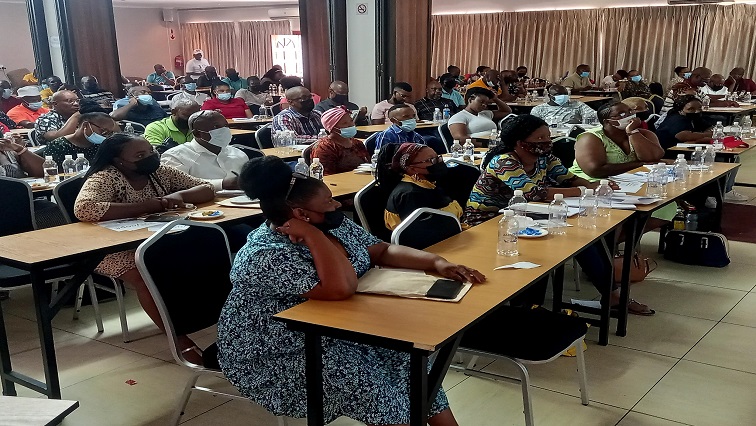
THE North West Department of Education has on Tuesday conducted training for the senior school management across the province with the aim of fighting the scourge of bullying and use of drugs in school.

The department held training with principals, deputy principals, head of Departments and school safety officers.

“In an effort to fight back the scourge of bullying and drugs in schools, the North West Department of Education has conducted an intensive training of arming the Senior School Management across the province,” said the provincial education spokesperson Elias Malindi.

Malindi said that the training covered the drug situation in the North West and the effects of drugs.

“The training covers the drug situation in the North West schools, definition of drugs, signs and symptoms of drug usage, effects of drugs in the school environment, legal aspect of drugs testing and training, drug testing practicals and stakeholder analysis,” he said.

The department said the National School Safety Framework training has been added since it is the umbrella under which all school safety programs fall.

“This tool kit covers school safety in a holistic manner and is approved by the Department of Basic Education as a guide for school safety in all South African schools,” said Malindi.

The MEC for Education in the North West province, Mmaphefo Matsemela emphasised that the school management team should be equipped to detect bullying and drugs usage in schools.

“Since bullying is a major issue in our schools, there is a need to equip schools on how to deal with the scourge. Participants were equipped on the definition of bullying, different types of bullying, how to deal with bullying, possible anti-bullying activities, bullying action plan and possible stakeholders,” said Matsemela.  

The MEC said positive discipline and classroom management was also offered in the training.

“One method of curbing violence in the schools is to deal with corporal punishment in the schools. Positive discipline and classroom management is also offered in this training as a means of replacing corporal punishment and encourages schools to take back the authority in the classroom in order to take the school a place of safety, teaching, and learning”, said MEC Matsemela.

“This training in essence covered school safety in total and there is a monitoring programme which will be adhered to by schools for implementation processes,” said Malindi.

-Inside Education

KZN school admissions for the year 2023 opens

STAFF REPORTER |

THE KwaZulu-Natal Department of Education has announced that the applications for the 2023 academic year is currently underway.

The applications opened on the 1st of Match and it will close on the 30th of September 2022.

The Education Department has urged guardians and parents to register their children on time to avoid late registration in January 2023.

“Applications for the 2023 academic year are currently underway from the 1st of March to the 30th of September 202 Apply early to ensure a smooth start to your child’s academic year,” the department said.

The department said parents and guardians must avoid late applications as it hinders the children’s learning.

The provincial MEC for Education, Kwazi Mshengu said, “as the Department of Education in KwaZulu-Natal, we urge parents to heed this call of early registration of learners.”

He further added that registering children on time will give educators ample time to sharpen the learners’ future.

“This will assist the system, especially our educators to have ample time to sharpen our learners and secure a bright future for them as well as the nation,” said Mshengu.

The department urged parents to enroll learners for entry into grades 1 to 8.

The department encouraged parents and guardians to apply for a minimum of three schools in order to make sure that they secure space for their children.

The department further encouraged guardians and parents to follow up on the progress of the applications three months after submitting.

-Inside Education

Education MEC calls for independent panel to investigate racism allegations at KZN school

KWAZULU-NATAL Education MEC Kwazi Mshengu has promised to appoint an independent panel by Friday that will help deal with racism allegations that have surfaced again at Grosvenor Girls’ High School in Durban.

Last week the classes were disrupted at the school following the alleged racism allegations.

The learners are accusing the teachers of calling them monkeys and other derogatory terms.

The MEC visited the school on Tuesday to speak with learners, the school governing body and the school management.

He has instructed the department’s head of department to appoint the panel.
In 2019 the school was also marred by the same allegations of racism and the MEC said the panel will appoint will help in resolving the issue once and for all.
He acknowledged that the department made a mistake of not appointing an independent panel when the issues of racism surfaced in 2019.

He encouraged students to give their personal accounts to the panel.

“When findings and recommendations are made before us we will act without fear. It is better to get an independent panel,” said Mshengu.

Further, the MEC explained that the department wants to deal with these issues expeditiously and added that he has advised that the panel be given clear time frames with deadlines.

Members of the Economic Freedom Fighters (EFF) tried to disrupt Tuesday’s meeting and the MEC said it was unfortunate that the party wanted to take the opportunity while the department is trying to work on the issue.

“We will deal with anyone involved in these allegations of racism and maladministration. We are not going to succumb to the pressure from the EFF and cut corners because ultimately if we do that, we will not serve justice to the learners,” he added.

The independent panel will be given 21 days to finish its investigations and the MEC pleaded with learners to allow teaching and learning to continue during that time.

“Learners must be in class so that they don’t lose time in terms of teaching and learning,” he stressed.

  • -Engineering News

Nzimande Publishes A Technical Report On the Critical Skills List of the Department of Home Affairs

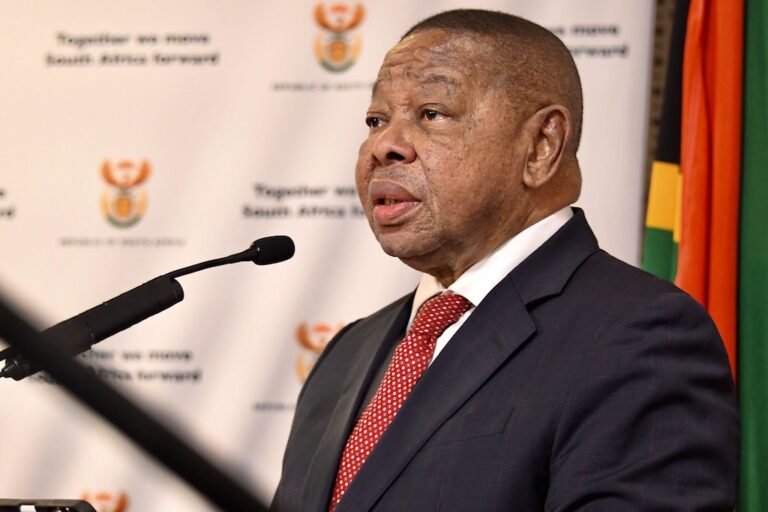
HIGHER Education, Science and Innovation Minister, Dr Blade Nzimande, has published a technical report on the Critical Skills List of the Department of Home Affairs.

Higher Education, Science and Innovation Minister, Dr Blade Nzimande, has published a technical report on the Critical Skills List of the Department of Home Affairs.

The Critical Skills List technical report provides details of all the processes undertaken in the development of the Critical Skills List, and the actual list gazetted by Home Affairs Minister, Dr Aaron Motsoaledi, on 2 February 2022.

The report follows a Memorandum of Agreement signed by the Higher Education and Training and Home Affairs Departments in January 2020 to facilitate the development of the Critical Skills List.

In terms of the MOA, the Department of Higher Education and Training was mandated to undertake research and produce the technical report which includes the methodology and consultation processes involved in the evidence-based Critical Skills List. The department handed the list to the Department of Home Affairs for consideration.

Nzimande said the Department of Higher Education and Training undertook the research and produced the technical report, titled “Finalisation of the Critical Skills List”, through a major research programme on Labour Market Intelligence.

The Minister said that South Africans live in a globalised economy, where countries often source workers from all over the world to fill gaps in their local economies, and it is therefore, “not surprising that many countries, especially Western countries, regularly compile and publish lists of occupational shortages”.

“The Migration Advisory Committee in the UK publishes a Skilled Occupation List, which is used by immigration authorities to grant special skills visas for potential immigrants. The Australian government also publishes a Skilled Occupation List regularly to draw skilled people into the country. 

“Similarly, Canada regularly publishes a list of Occupations of Demand, which it uses to apply its skilled worker visa. In South Africa, the Critical Skills List forms the basis to offer suitably skilled foreign nationals a Critical Skills visa in occupational areas where there is a dire domestic shortage,” Nzimande said.

Nzimande explained that the development of the new list required extensive collaboration between Higher Education and Training, through the Labour Market Intelligence partnership programme, Home Affairs, a host of other government departments, and representatives from business, labour, community and the broader public.

The technical report can be accessed on the department’s Labour Market Intelligence website: https://lmi-research.org.za and the Department of Higher Education and Training website: https://www.dhet.gov.za

Four teachers from Sekoko Primary School in the Free State killed in horror car crash

STAFF REPORTER |

FOUR teachers, one School Governing Body (SGB) member, one cleaner of Sekoko Primary School in Free State were killed in a tragic accident on Friday night. They were driving back home after attending a workshop in Tweeling when the accident occurred.

Free State Department of Education spokesperson, Howard Ndaba said a minibus taxi overturned on the N5 road about six kilometres from Bethlehem.

“On 25 Friday 2022 at about 21:00 a white 22 seater Mercedes Benz Sprinter minibus taxi overturned on the N5 road about six kilometres from Bethlehem. The passengers were teachers and SGB members of Sekoko Primary school in Paul Roux,” said Ndaba.

The spokesperson said five people died at the scene – four females and one male. The other one died in a hospital on Saturday.
He further added that those who sustained serious injuries were rushed to hospital.

“Seven sustained serious injuries and were transported to Dihlabeng regional hospital, Phekolong hospital and at Medi-Clinic hospital,” Ndaba said.

Free State Education Mec, Dr Tate Makgoe has expressed shock and sadness following the death of Sekoko primary school officials.

“Free State Education Mec, Dr Tate Makgoe has expressed shock and sadness after four teachers, 1 SGB member, 1 cleaner of Sekoko Primary School in Paul Roux, Thabo Mofutsanyane District were killed in a tragic accident on Friday night.”

Makgoe sent his sincere condolences to the affected families and the school.

“We wish to convey our sincere condolences to the family and the entire school population. We are with them in our prayers during this difficult period of grief,” said MEC Makgoe.

The MEC is set to visit the school and grieving families on Tuesday.

The police are investigating the cause of the accident.

Ndaba said that teachers, parents and pupils will be offered counselling.

Meanwhile, in a separate accident, 20 learners were admitted to a hospital for observation in QwaQwa
after a bus they were traveling overturned.

– Inside Education

Shock drop in school test marks in South Africa

THE Western Cape Education Department has published its latest systemic test results, showing that the COVID-19 pandemic has had a significant impact on learning and teaching in the country.

While schools have now returned to full-time attendance, the test results conducted in the Western Cape in October 2021 provide the clearest, internationally benchmarked and independent analysis of learning losses suffered by the learners in the province, said provincial minister of education Debbie Schäfer.

“While we are the only province to conduct such tests, it is an indication of what the effects of this pandemic are on learners across South Africa. Unfortunately, the results are dire.

“The 2021 results are seen in comparison to tests conducted in 2019, as testing could not take place in 2020. While we had previously made great progress with a steady increase in performance in years preceding 2020, these gains have unfortunately been reversed as a result of the pandemic.”

The results are as follows:

Grade 3 

Grade 6 

Grade 9 

Overall, learners have fallen up to 70% of a school year behind previous cohorts in language, and up to 106% of a year behind in mathematics. The greatest learning losses can be seen in the foundation phase, Schäfer said.

“We have always maintained that the loss of contact (face-to-face) teaching time would affect our youngest learners the most as they do not have the same self-discipline, maturity or structure that our older learners would have to cope with rotating timetables and learning at home.

“The WCED is studying these results and accompanying diagnostics with a focus on updating its learning recovery plans to address these losses.”

The department said it already has a number of programmes underway to improve literacy and numeracy, which we are looking at expanding.

“Most importantly, the extent of learning loss needs to be determined at the classroom level by the teacher. The diagnostics emanating from the systemic testing will be presented as a useful aid to direct the teacher in planning learning programmes for the learners in specific skills and core competencies for each of the grades and subject areas.

“Ultimately, the most important way to claw back these losses is to ensure that every child is at school every day, that teaching and learning time is maximised, and that every effort is made to promote a learning culture beyond the school. Our administrative data from Temporary Revised Education Plans (TREPs) show that between closures and rotating timetables, 155 school days were lost in 2020 and 2021 in our province.”

Schäfer further warned that further disruptions will only exacerbate the existing losses.

– BusinessTech

COVID learning losses: what South Africa’s education system must focus on to recover

VIJAY REDDY |

THE South African education system is big (13 million learners), unequal and socially graded. Although improving, the achievement outcomes are still low, fragile and susceptible to shocks.

The COVID-19 pandemic has dealt the education system a major blow, especially for poor and vulnerable learners.

In March 2020 South Africa, like most of the world, went into total lockdown, including school closures. The education system was unprepared for this. Schools, teachers and administrators were forced to build emergency remote-learning systems almost immediately. This threw the spotlight on access to digital devices, connectivity, having a quiet place to work in, and the problem of stubborn inequality.

Better resourced homes and schools were able to move to digital forms of learning and proceed with curriculum coverage. For the majority of learners, despite the best intentions, there was very little structured learning.

From June 2020, schools were reopened. Most schools followed a rotational timetable where learners attended school every second or third day. This rotational timetable continued in 2021.

Education scholars estimate that there was a loss of 60% of school contact time in 2020 and 50% in 2021. There were higher losses of school contact time in the less-resourced schools.

It’s uncertain exactly how much learning (knowledge and skills) has been lost and how wide the gaps may be for disadvantaged children. The global literature reports that:

  • learners from poorer countries and households experienced higher learning losses,
  • earlier grades were more susceptible to learning losses than secondary learners,
  • learning losses were higher for mathematics than for reading and
  • girls were more affected.

Learning losses in South Africa

For South Africa we estimated that the loss of school learning time in 2020 moved the education system backwards to the achievement levels as they were in 2015 – a regression by five years. The learning loss for learners from less resourced schools was 4.2%, higher than learners in more affluent schools at 3.4%. COVID-19 worsened already wide achievement gaps.

Studies measuring reading proficiencies in under-resourced South African primary schools in 2020 reported that grade 2 (8-year-olds) and grade 4 learners lost between 60% to 80% of a year of learning when compared to their pre-pandemic peers.

South African researchers compared pre-COVID grade 3 reading scores to grade 4 reading scores during the pandemic. They found that grade 4 home language learners were more than 1.25 years behind and English first additional language learners were half a year behind. The also found that learners were writing much less.

The World Bank cautions against underestimating the extent of the learning losses, saying that “the global education crisis is worse than we thought”.

Close the gap

Children from poorer households have missed substantially more classroom instruction time than children from higher-income households. Education researchers caution about the effectiveness of digital technology and e-learning to support learners who are out of school. The consequences of lost contact classroom will be felt for years.

In January 2022, South Africa’s Department of Basic Education gazetted that all learners would fully return to school and fully return to school and introduced measures to catch up on teaching and learning that was lost during school closures.

We don’t have a playbook of how learning recovery should happen. Drawing on past experiences and experiences in other countries, South Africa should consider implementing the following four components for education and learning recovery:

  • consolidation and trimming the content of the curriculum,
  • increasing the efficiency of instruction,
  • supporting out-of-school education programmes and
  • nurturing the well-being of all actors involved in education.

While it’s unclear whether the schooling system can recover the two years of disrupted schooling and learning time, the education system should use this moment to reduce content in the National Curriculum Statement. Countries like the Philippines, Guyana and Tanzania have revised the primary school curricula to focus on practical learning and literacy and numeracy skills.

South Africa reduced the content of the curriculum just for 2020. This reduced curriculum should form the basis of a new curriculum, especially for primary schools which should focus on building foundational knowledge and skills.

To enhance learning, younger children must be in stimulating environments which focus on first language development and reading with meaning, basic computational skills and writing simple sentences. Learners must demonstrate proficiency in reading, writing and computation before progressing to the next grades.

For most learners from vulnerable homes and who, pre-COVID, had low learning outcomes, in-person schooling is the only place for meaningful learning opportunities. To increase the efficiency of instruction, the first step is to keep schools open and try to avoid future school disruptions.

Educators and learners must be at school every day. Pre-COVID, South Africa experienced high levels of learner and educator absenteeism and late coming. No more learning time should be lost in schools and school time must be used efficiently and effectively with high quality engagements. National, provincial and district officials must monitor and mitigate the levels of absenteeism of educators and learners.

Learning recovery requires both in-school and out-of-school programmes. Small group out-of-school tutoring programmes should be expanded, especially for high school learners. Primary school learners must be supported by parents with reading activities and cognitively stimulating educational television and radio programmes.

The last two years of learning under COVID-19 conditions have placed tremendous strain on everyone in the education system  (learners, educators, administrators, departmental officials). We must recognise how tired the system is and move forward gently, avoiding too many ambitious changes to an already fragile education system.

– The Conversation

CLASSROOM CORNER| E-learning technology made available to more than 2 000 learners

A South African-developed e-learning education system has been made available to more than 2 000 pupils in the Eastern Cape, Limpopo, KwaZulu-Natal, the Free State and Gauteng – many of them underprivileged.

The system, which was developed by education technology (ed-tech) business Odin Education – a division of South African technology company Jendamark Automation – comprises a locked digital tablet that can only be used for educational purposes, curriculum-aligned content which is personalised for each user, and full-time online support.

The technology uses behavioural data to learn which educational content pupils are enjoying most and then pushes more of it to them.

The aim of the system is to supplement in-person schooling. Each device is loaded with mobile data, educational apps and learning platforms, and is tailored to each pupil’s subject choices. It then gathers information from its user’s interactions and serves them more of the academic and extramural content in which they are interested.

The e-learning system, which is being distributed privately through corporate social investment (CSI) initiatives, will next be provided to learners in the Western Cape.

The most recent recipients of the system were 215 Grade 12 pupils at Gqeberha’s Woolhope Secondary School, in the Eastern Cape, who received their digital devices towards the end of January. The donation was sponsored by couplings supplier SJM Flex, financial company DG Capital and technology developer Rockwell Automation.

“If this is used effectively, every pupil who has one will benefit,” Woolhope Secondary School principal AJ Jaram said at the handover event last month.

He said Odin Education’s ed-tech system would help equip pupils for the Fourth Industrial Revolution, which was changing the way we lived and worked.

Woolhope Secondary School student leader Beyonce Jacobs, who had the opportunity to trial the Odin Education system with fellow students last year, claimed it had helped deliver a 100% pass rate for her Grade 11 class – despite the disruptions caused by Covid-19.

“It’s quite stressful, not coming to school every day and knowing that there are trials and final exams coming up. The Odin Education system will take a bit of the pressure off because our textbooks are on it, plus it also has many more ways to explore and learn,” she explained.

Woolhope Secondary School learner Sinovuyo George added that the system represented a significant leap forward from the WhatsApp chat forums they had previously used for learning during lockdown.

“This is better, because there are videos explaining the entire lesson, among other learning resources,” she said.

SJM Flex human resources manager Rajes Padayachie – a Woolhope Secondary School alumna – said many of the company employees’ children attended the school.

“Our social responsibility initiatives are aimed at the empowerment of both our employees and the broader community. We believe that enriching the lives and minds of young people is investing in a self-reliant, dynamic and independent generation,” she said.

Padayachie said the company would explore ways to donate additional devices to learners.

For Rockwell Automation, one of the standout features of the Odin Education system was that it was designed in such a way that pupils could not use mobile data for social media or applications other than e-learning.

“Therefore, we are able to monitor the real value of the programme to learners,” said Rockwell Automation industry account manager Devendree Ankiah.

The opportunity to provide access to educational resources and being able to choose the beneficiary school for the donation of the devices were attractive aspects to the company.

“We have invested heavily in [science, technology, engineering and mathematics] education. To collaborate with a company focused on education is something that speaks to our hearts,” she said.

“Education is where our future opportunities lie, and we regard education as the backbone of any promising career. Being able to support this cause by way of technological investment is a great way for DG Capital to assist in shaping the lives of our future leaders,” added DG Capital director David Edwards.

Odin Education head Ajit Gopalakrishnan noted that CSI was key to getting more digital devices rolled out countrywide.

“It’s a [CSI] programme that has a quantifiable impact and can be tailored to any company’s regional footprint, while also delivering real-time [return on investment] impact reports and [broad-based black economic empowerment] points in return,” he concluded.

-Engineering News