Home Blog Page 282

‘Millionaire’ NSFAS student Sibongile Mani used as a scapegoat to cover tracks of actual criminals – Support Group

WENDY MOTHATA|

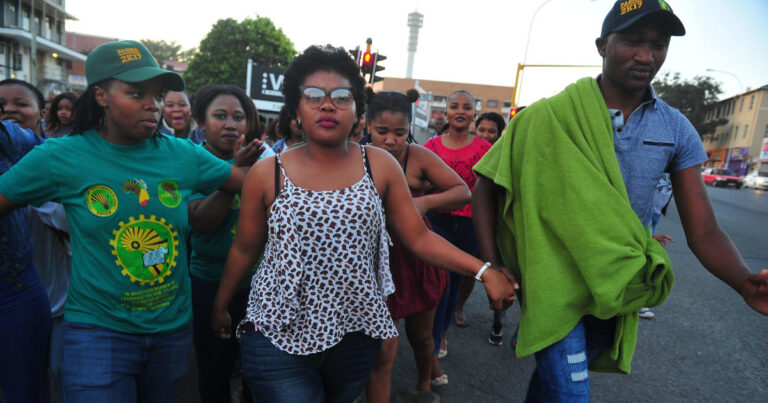
A SUPPORT group called the Justice for Sibongile Mani said that the Walter Sisulu student accused of theft of NSFAS millions was used as a scapegoat.

Briefing the media this week, the group slammed Mani’s conviction and sentencing to four years in jail.

“We believe she is not a criminal as proclaimed by some in the media. She is an innocent who is used as a scapegoat to cover tracks of actual criminals that are still out there roaming around without taking any responsibility,” the group said.

Mani is currently out on bail after she was granted leave to appeal by the East London regional court.

In a bid to keep Mani out of jail, the group announced that the president of the WSU convocation, advocate Thembeka Ngcukaithobi will help Mani’s legal team in appealing the sentence.

Mani’s matter will be heard on the 11th of April.

Businessman and “The People’s Blesser” Malcolm X has since pledged to pay R500 000 in a desperate attempt to get convicted Mani out of jail.

Mani was found guilty of theft after she allegedly splashed R800 000 of the R14-million on parties and designer clothes.

The money in question was erroneously paid to her by Intellimali, a service provider contracted by the National Student Financial Aid Scheme (NSFAS), in 2017.

Last week, the East London Regional Court’s magistrate Twanet Olivier said that a suspended sentence was not appropriate for Mani and sentenced her to five years in jail.

Olivier further said that Mani spent money not on essential items to stay alive, adding that she spent the cash on luxury items “inspired by greed and not need.”

“The court has a duty to impose a fearlessly appropriate and fair sentence even if such a

sentence would not satisfy public opinion,” Olivier said.

“The only form of sentence deemed fit by this court is that of direct imprisonment and you

are sentenced to a term of 5 years imprisonment,” said Olivier.

According to the state, between 1 June, when the money landed in her account, until 13

August, when NSFAS uncovered the error, she had spent an average of R11 000 per day.

The then accounting major student was due to receive her monthly R1 400 food allowance, but because of what was described in court as a “ridiculous and absurd technical glitch”, R14 million was credited to her bank account. 

INSIDE EDUCATION

Student arrested for fire at University of the Free State’s Qwaqwa campus

Free State (UFS) has confirmed the arrest of a student, saying they are hot on the heels of more suspects responsible for the near total destruction of two buildings amounting to millions of rand in damages.

In a statement on their website UFS spokesperson, Lacea Loader, says that the preliminary findings of an urgent investigation indicate that the buildings on campus grounds were intentionally set alight. The fire broke out at the UFS Qwaqwa campus on Monday evening.

She says that they are in the process of identifying more suspects. The institution will initiate disciplinary action against suspects who are registered as students.

Criminal charges will also be laid against perpetrators.

Loader says the two buildings, which housed a clinic and a computer laboratory, were almost completely destroyed. Damages are estimated at R35m.

The academic programme at the Qwaqwa campus continues, mostly online, for the remainder of this week.

“The campus remains open; the university’s protection services is on high alert and is monitoring the situation on campus closely,” Loader says.

It is alleged that students have recently been unhappy about payments of allowances that they are yet to receive from the National Student Financial Aid Scheme (NSFAS).

“To alleviate this, the UFS has so far this year offered students allowances for food and books amounting to more than R71 million, while they are waiting for their NSFAS subsidies to be released,” Loader says.

OFM News previously reported that two students were allegedly shot with stun grenades during a protest march at the UFS main campus in Bloemfontein on Monday.

  • Reporting by local agencies

As Yet Another Wave of COVID-19 Looms, New Yorkers Ask: Should I Worry?

0

DRIVEN by an Omicron subvariant, Covid-19 cases have been ticking up steadily across Manhattan, Staten Island and parts of Brooklyn, threatening New York City with a fifth wave of coronavirus cases just weeks after the city lifted many mask and vaccine requirements.

The city is registering about 1,500 new cases a day and a positivity rate of nearly 3 percent, both figures more than double what they were a month ago. In Manhattan, where the last wave also first emerged, the positivity rate is above 6 percent in some neighborhoods.

In another potentially worrisome indicator, the prevalence of fevers across the city — which can offer a forewarning of Covid trends — has reached levels last seen at some of the worst points of the pandemic, according to data from internet-connected thermometers.

And anecdotal signs of spreading infection are evident across the region. On Broadway, the actors Matthew Broderick and Daniel Craig have recently tested positive, as have New Jersey’s governor and at least three members of the New York City Council.“We may be done with the virus, but the virus isn’t done with us,” Brad Lander, the city’s comptroller, said after he tested positive last week. The Omicron subvariant BA.2, which the Centers for Disease Control and Prevention now estimates makes up 84 percent of cases in the New York region, is even more contagious than its predecessor.

But so far it has not shown the same explosive speed as the earlier form of Omicron, which in late December and early January propelled cases in New York City past 40,000 per day. Instead, BA.2 is causing a slowly but steadily rising tide of illness. It has yet to produce a rise in hospitalizations, and deaths remain low.

As the subvariant spreads, city health officials expect the entire city to enter the medium risk category in the next two weeks, a threshold that Manhattan has already reached, they said Wednesday at a coronavirus briefing for Mayor Eric Adams. Officials are not expressing alarm, but they are preparing to increase the number of city-run testing sites from the 130 now operating, if necessary, and to distribute some six million free at-home tests.Data shows that new infections have predominantly been among adults under 35, who are less likely to be hospitalized. If the subvariant spreads more widely among older people and in nursing homes, it could have more serious impact. Citywide, 83 percent of people 65 and older are fully vaccinated, and 56 percent have had one booster shot.

Dr. Wafaa El-Sadr, an epidemiology professor at Columbia University, predicted there would be an “uptick” in hospitalizations but not of the magnitude seen earlier this year when Omicron packed emergency rooms, stretched hospital staffs nearly to the breaking point and killed more than 4,000 people.

“I don’t think this is going to be like the prior Omicron surge,” she said.

Health experts point to several factors that make them think that there will be fewer hospitalizations this time.

For one, some 800,000 New Yorkers have received a booster shot since the Omicron wave’s peak, and more doses of antiviral pills are flowing into the city than before, though the most effective one — Paxlovid — would quickly be in short supply if cases rise precipitously.

Epidemiologists also note that in addition to high vaccination rates, millions of New Yorkers — by some estimates, over 40 percent of the city — were infected by Omicron and now are likely to have strong protection against BA.2.

The potential for a new wave, coming just as many companies are calling employees back to offices and Mayor Adams is pushing for the city to return to a prepandemic normal, has left many New Yorkers unsure if this is a moment to show extra caution or to carry on. Many, but not all, vaccinated people experience relatively mild symptoms from Omicron, including BA.2.New York City mobilized against the coronavirus as few other American cities did: from the 7 p.m. cheer of spring 2020, to widespread acceptance of indoor masking, to the most stringent vaccine requirements in the nation. But that collective effort has waned.

In interviews, New Yorkers voiced sharply varied views over how to navigate current conditions. Some questioned whether this was the right moment for the city to lower its guard. But others expressed confidence that after two years, four waves and nearly as many shots, they were sufficiently protected and ready to return to a prepandemic normal.

“It’s confusing,” Catherine Jordan, 80, said, as she waited for a bus near the Queensbridge Houses, the public housing project in Queens where she has lived for about 60 years. “You don’t know what to do.”

Until someone in her circle gets sick, she said, she planned not to worry — and to keep going to family gatherings, church and her senior center. “If I worry, I wouldn’t come out,” she said.

Tirsa Delate, a 28-year-old artist and server who lives in Bushwick, Brooklyn, described feeling “a sense of vagueness and uncertainty in terms of where we’re at collectively with Covid.” She expressed relief at not having to wear a mask at work, but added that the city should reinstate mask or vaccine requirements if cases rise to worrisome levels.

Still others said they conduct a quick risk assessment each time they step indoors — checking crowds, debating a mask, trying to recall the latest case numbers, wondering when it will ever end.“We’re not eating indoors or going to bars or a lot of stuff we’d like to do,” Jim Cashman, 47, said Friday afternoon, as he waited with his family at a Covid testing van near Washington Square Park. An actor, Mr. Cashman said he was worried that if he tested positive, it would mean canceled work, not just for himself, but for co-workers, too.

As he spoke, his 8-year-old daughter, who had been circling on her shiny blue scooter, slowed down long enough to offer a gloomy prediction. “You don’t see people wearing their masks anymore,” she said. “So many people are going to have it.”

Several people who tested positive in recent days said this was their first case of Covid-19 — a trend supported by state data. Of the 8,692 New York City residents who officially tested positive from March 21 to March 27, only 692 were known to have been previously infected, according to the state Health Department.

Until she tested positive in late March, Nina Kulkarni, a New York City public-school teacher, had managed to avoid the virus despite teaching in-person classes since the fall of 2020. She doesn’t know where she was infected, but she had begun wearing her mask a little less often after the city lifted its mask mandate for school staff and students 5 and older on March 7.

She called on the city to reinstitute the mask mandates in schools, saying she has started to see absences going up. City data shows a slow but steady rise in public school Covid cases recently, to an average of 363 cases per day from about 150 per day three weeks ago.

“I did relax the mask, and I regret having done that,” she said. “We all want them to come off. I want them to come off. I hate them. But they do keep us safe.”

Even if this subvariant causes fewer hospitalizations, some experts agree more should be done to limit transmission, particularly given the risk of long Covid.

Dr. Denis Nash, an epidemiologist at the CUNY Graduate School of Public Health and Health Policy, said that the city’s decision to lift mask and vaccine mandates while the subvariant was spreading was “cavalier.”

“Our decision makers have embraced this paradigm that the only Covid crisis at this point is when the health care system becomes overwhelmed,” he said. “And anything between where we are now and that extremely bad scenario is something we are going to accept.”

Getting an accurate measure of the outbreak is increasingly difficult, as more people now use at-home tests — which are generally not included in the city’s official case counts. That means the actual number of people testing positive is probably significantly higher than the official daily count.

Noting that cases were increasing, Mayor Adams on Monday indicated an openness to reinstating mandates if necessary. “We are going to pivot and shift as Covid is pivoting and shifting,” he said.

He decided last Friday the city would maintain a mask mandate for preschoolers that it had planned to roll back. But he has not yet said he would bring back other school mask mandates or recently abandoned vaccine requirements, such as the need to show proof of vaccination at restaurants to dine indoors.

A broad workplace mandate that requires private employers in New York City to verify that their on-site workers have been vaccinated remains in effect, as do vaccine requirements for public sector employees. However, Mayor Adams opened a loophole last month when he lifted the requirement for professional athletes and performers based here, allowing the unvaccinated Brooklyn Nets star Kyrie Irving to play home games.While the growth in cases has been most apparent in Manhattan below 96th Street, about 40 of the city’s 180 ZIP codes now have positivity rates above 5 percent, including Long Island City, Queens; Greenpoint, Brooklyn; and Pelham Bay in the Bronx.

In Manhattan’s West Village, which had among the highest test positivity rates in the city last week, Lisa Landphair, 62, a psychotherapist, was sitting on her stoop Friday afternoon, reading a newspaper. She still wears a mask in stores, she said, adding that her main worry at this point is that she might pass the virus on to her husband.

“My partner is significantly older than I am, so I’m a little more concerned for him,” she explained.

But Steven Lightkep, a 29-year-old nurse who lives in Hell’s Kitchen, said he was ready to be done with the pandemic. “You’re going to get it if you’re going to get it, and if you’re not, you’re not,” he said as he walked to a neighborhood gym late last week. “I’m not going to stop living my life over it.”

NEW YORK TIMES

NSFAS to release funds to institutions from Friday

THE National Student Financial Aid Scheme (NSFAS) will start processing payments to institutions and paying student allowances from Friday, 08 April 2022.

In a statement issued on Tuesday, NSFAS confirmed that it has received the first tranche of its budgetary allocation for the first quarter of the financial year.

“An official communication has been sent to all institutions on the allowance payment process. The institutions that have complied with the 2022 approved NSFAS Eligibility Criteria and Conditions for Financial Aid will receive payment from NSFAS.

“The communique from NSFAS further requests institutions to abide by the funding rules set out in the NSFAS Eligibility Criteria and Conditions for Financial Aid, when disbursing funding to students,” NSFAS said.

You qualify to apply for a bursary if:

  • You are a South African citizen;
  • Your combined annual household income does not exceed R350 000 per annum;
  • You are a SASSA grant recipient;
  • You are registering for the first time for an undergraduate qualification at a public university or you are registered at a TVET college for one of the National Certificate Vocational or report 191 programme;
  • You are applying to study at a public university or TVET college for a qualification;
  • You are an already registered university student with an annual household income of less than R122 000 per year;
  • You have passed Grade 9 and 10 to receive NSFAS funding to study at a TVET college;
  • You have passed Grade 12 to receive NSFAS funding to study at a university.

SA NEWS

Nigeria: 50% of Schools in Nigeria Lack Furniture, says Universal Basic Education Commission

0

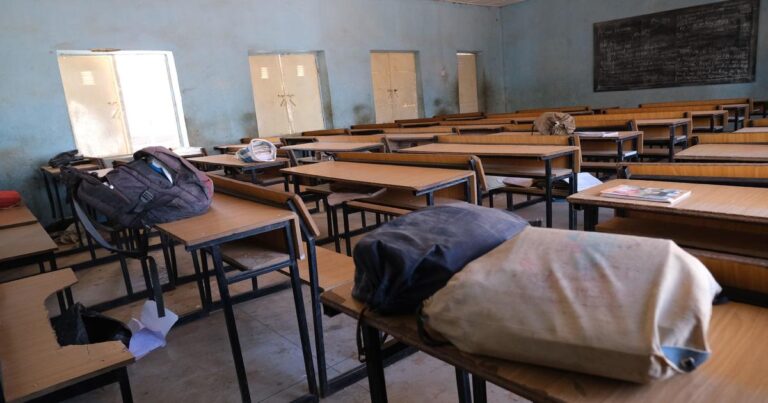
THE Universal Basic Education Commission, UBEC, has said about 50 per cent of schools in Nigeria lack basic furniture. Executive Secretary of the commission, Hamid Bobboyi, who said this in Abuja, regretted that basic education “pupils sit on the floor to take lessons.”

According to him, emerging constraints in basic education delivery in the country might necessitate an increase in the consolidated revenue funds from the current two per cent to four per cent.

He buttressed his position for an increase in funding to the security challenges bedevilling the country, insisting that the rising students population also poses the urgent need for teaching facilities.

Bobboyi said this at a one-day Civil Society Organisations CSO-Legislative Round Table Meeting where some National and State Houses of Assembly members were present.

He argued that while the children of the rich who are merely 20 per cent of the population can afford to garner resources for private schools, the less privileged constituting 80 per cent are stuck with the public institutions.

The UBEC boss equally tasked relevant civil society organisations, the media and other critical stakeholders not to shy away from rendering assistance to the government in bridging observed gaps in learning and teaching processes, especially at the basic school level.

Also speaking, the Chairman of, the Senate Committee on Basic Education, represented by Senator Frank Ibiziem, decried the failure of States’ Universal Basic Education, SUBEBs, to sustain some UBEC- initiated projects such as the building of classrooms and libraries earlier introduced by the commission in all constituencies in the country.

While commending UBEC for the construction of classrooms in schools across the country, he lamented the poor maintenance culture, noting that almost every school has a dilapidated block.

He called for a rapid response initiative to commence the repair of dilapidated schools and pledged the Senate’s support for any move by the commission towards ensuring the provision of a good learning environment for students.

A representative of the MacArthur Foundation, Mr Dayo Olaoye, called on stakeholders to review the impact of the country’s annual budget for education, stressing that it was not enough that the country is increasing its budget for the sector. “As we think about reforms, let us think beyond buildings that have been delivered, let us start thinking about how many children have been brought to school,” he said.

He emphasized the need for accountability in the educational sector, noting that in addition to vertical accountability, there was a need to entrench horizontal accountability whereby the office of the accountant general strengthens other accounting offices to ensure transparency in the sector.

VANGUARD

Diepsloot Secondary School| A beacon of hope amid squalor, gangsterism

Diepsloot Secondary School Number 2 and 3, headed by Principal Mmatebogo Makhubedu is a beacon of hope in this community, which is generally known for its high crime rate and gangsterism.

Makhubedu has proven that excellence has no special address as she has continued to produce an impressive matric pass rate since 2016.

The school saw a 100 percent pass rate from 2016 to 2020, and a 98 percent pass rate in 2021, and the school was recognised by Gauteng MEC for Education, Panyaza Lesufi at the recent matric awards ceremony.

How she does it

To ensure that learners excel in their work and are not exposed to drugs, gangsterism and street bashes, Makhubedu has introduced night and weekend study sessions for Grade 11 and 12 learners.

The learners are kept at school from 7 am to 4:30 pm.

The Grade 12 learners return for evening study sessions at 5 pm and are transported home at 10 pm.

Her strategy has yielded good results.

This has seen the school climb from a 54 percent matric pass rate in 2014.

 In 2021, out of 158 students who wrote their matric exams, 122 passed with entry to a Bachelor’s degree, 34 diploma passes and six certificates.

“Diepsloot is in the middle of poverty and no parent is paying school fees there. Education is free,” said Lesufi.

Despite the living conditions in this area, the school produced excellent results, Lesufi said.

Ills of society not a deterrent

“Gangsterism is a problem. Our children (learners) survive because they are here. We try to keep them here at

school because there’s gangsterism and drugs in the township. When it’s the weekend, these children forget

about school. They only remember school on Monday, so we try to keep them at school most of the time. I

don’t want them to spend most of their time in the township,” she said.

“Gangsters from different extensions fight against each other. They wait for each other at the gates after school. I have lost many learners, and three in Grade 12 (died). It hasn’t been easy, it has been tough. But currently, it is better because we can manage. The problem is in the township, but it affects the school.”

Not only have the learners suffered at the hands of criminals, but the school has also been affected.

The school was recently vandalised, “they even broke into the toilets and the purpose was to destroy”.

Makhubedu said: “It takes us backwards because instead of progressing, we utilise the funding that we receive to repair the damages at the school.”

But these setbacks have not deterred this leader, her team of educators and learners strive for excellence.

Turning the tide

Makhubedu, who has been heading the school since 2015, said:“Other schools close at 3 pm. So, when our children (learners) leave school at 4:30 pm everybody is gone.

They are tired, and they just want to go home.

Therefore, they do not have time to mingle with the gangs.”

Grade 12 learners said they were grateful to the school, their principal and teachers for introducing evening

and weekend study sessions to protect them from crime.

“Thank you to Mme Makhubedu we are not in gangs. When we come back from school, we are already tired

and we want to go home not to join gangs,” said the Grade 12 learners.

Makhubedu explained that while she was deputy in 2014, the school had underperformed.

“I think we got a 54 percent matric pass rate,” recalled Makhubedu. Based on her observation of the situation, she realised that although teachers were doing their work, it had emerged that the “learners were not studying”.

Out of concern and to work towards improving the matric results, she held meetings with the School

Governing Body (SGB).

“I said to the SGB, we need to change the status quo.” She requested the relevant stakeholders to permit her

“to introduce night study so that we can monitor the learners”.

Based on the outcome of the meetings, she raised her concerns with the teachers and presented ideas to

them, whilst the SGB communicated with parents.

This was propelled by the fact that although learners had alleged that they were studying, their matric results

proved otherwise.

“If they are saying they are studying but it does not translate to something tangible, then we want to see how

they are studying.”

Requesting the teachers to commit to extra work involved money to compensate them.

“I said, I do not want them to teach at that hour (evening) because they taught the learners during the day.

Therefore, the only thing that they will do is to monitor them at that time.”

Enforcing the night study strategy yielded positive results.

“From that year (2014) we moved from a 54 percent to a 94 percent pass rate in 2015. Then I thought to myself, ‘this strategy is working’. We saw ourselves increase (number of matric learners enrolled at the school) and we saw a quality improvement.”

“In 2019, we produced 60 percent Bachelor’s passes, 65 percent in 2020 and 77 percent in 2021. From 2016 to

2020 we produced a 100 percent matric pass rate and 98 percent in 2021.”

The 2 percent drop, came as a shock, but she explained that the situation was beyond their control.

“Sometimes when you do things you don’t necessarily know the outcome. You are just trying your best and

want learners to pass,” said Makhubedu.

Apart from the effort with learners’ studies, she emphasised that another contributing factor to the quality of

results stemmed from “self-discipline”.

“I believe in self-discipline and we have instilled that in our children.”

The school’s Commerce HOD, Jack Supe, said teachers would identify topics that learners were experiencing

challenges with and perfect them. A learner would then be given special attention on the topic that they do

not understand.

“Our teachers do not mind helping the learners during the week and on weekends. They would start the topic

afresh to make sure that the learners understand what they were struggling with. They do not get frustrated

from teaching and repeating the topic to accommodate the learners,” said Supe.

Supe said the secret to the school’s success was teamwork among the teachers.

“There’s unity in the school and that is one thing that she (Makhubedu) believes in.”

  • Inside Education

SA student makes it to Oxford University

VICKY ABRAHAM|

Raeesah Jadwat’s (19) dream to study Physics and Philosophy at the world’s second-oldest university has come to fruition. This young South African first set foot on Oxford University soil seven years ago while visiting her 70-year-old grandmother Zuby Jadwat in England.

At the time, the 12-year-old Jadwat envisioned herself studying at the prestigious university where there is evidence of teaching from about 1096.

“It was a dream that I voiced as we walked through the streets. I even asked if we could stay there a bit longer,
as I wanted to be immersed in the environment,” said Jadwat who hails from Sandton, Johannesburg.

Scooping up distinctions Jadwat, a top A-Level student at St John’s College in Houghton is among approximately 2,880 students from South Africa who wrote Cambridge International AS and A Level exams in November 2021. She scooped up distinctions in Mathematics, Further Mathematics, Physics, and Chemistry. She has chosen to study Physics
and Philosophy at the University of Oxford as both these fields deeply intrigue her, and their intersectionality is
the ideal overlap of her interests.


She specifically selected the University of Oxford for several reasons: “The university pioneered the field of
philosophy of science and remains the global leader in the course. I believe the tutorial system of teaching
suits my style of learning and will enable me to engage with the content of study more meaningfully,” said
Jadwat.

She added: “I recently turned 19, so my first bucket list where I wrote ‘go to Oxford’ is now seven years old,
buried somewhere in the boxes of childhood work my parents insist on keeping.”
When she learnt of her acceptance

She heard about her acceptance at the University of Oxford on January 11, 2022.

“My grandmother expressed her joy and pride in me, acknowledging that all the effort that went into reaching
this point was worth it. She added that my (late) grandfather (AK Jadwat) would have mirrored her sentiments
and revealed that his love of Oxford University is what motivated her to take me there on that first trip
without him.”

Jadwat’s parents could not be more proud.

“We were elated by the news as all the hard work and effort that
Raeesah had put in over the years had culminated in her realising her dream. It is every parent’s wish to
witness the realisation of their child’s full potential,” said Jadwat’s parents, Haseena and Ebrahim Jadwat.

Her parents will be paying for her overall fees and she will jet off to England later this year to begin her term of
study in September.
“My parents, who have contributed so heavily to making this dream a reality, will be funding my studies. I am
applying for a scholarship because applications are not yet closed. I will only receive responses later during the
year,” said Jadwat.


Reflecting on her upbringing, Jadwat said that she was raised in a loving and supportive environment, which
encompasses her parents and extended family.

“At a fairly young age, I had mapped out a significant part of the roadmap I had hoped to follow. My parents
were always there to guide and refine my efforts but never to redirect them. I owe a lot to them and my
grandparents for creating an environment that valued my educational development while prioritising my
outlook and my aspirations. I am grateful to have a family that bolstered my efforts.”

Her motivation to work hard stemmed from her enjoyment of learning, especially mathematics and science.

“In that respect, I feel very lucky that I was genuinely interested in the content I studied because the
motivation to work through it did not feel manufactured or forced. The elements of problem-solving in my
subjects attracted me to them, with a sense of satisfaction that followed in grappling with difficult questions
that finally clicked.”

Apart from “self-motivated study, I also credit my environment for being a space that supported academic
commitment”.


Asked what went through her mind when she discovered that her grades were excellent, she said: “There was
an initial shock followed by elation and an overwhelming sense of relief. While I was never resentful of the
amount of work I put in, it felt incredible to see that effort materialise in my results.”
Jadwat said she was not expecting to pass with flying colours.

“No, I was hopeful that everything would work out but not expectant of anything meaningful. Exams are an
anxiety-inducing time and my timetable meant that I wrote most papers in quick succession of one another,
with little time to process my feelings toward one paper before having to move on to the next. Almost two
months of waiting (for results) built up quite a sense of nervousness.”


She said: “There were times when the workload and a self-imposed demand for perfection took its toll. I often
find that one’s harshest critic is oneself, and sometimes that criticism feels insurmountable. What always
helped in overcoming that hopelessness was the unwavering support of those around me.”

Will she return to South Africa?

It will take her four years to complete her degree, Jadwat said. “My only set intention academically is to study
further, to obtain a doctorate in theoretical physics. To that end, I hope to complete my studies at one of the
best institutions possible.”

“A goal I hope to see come to fruition is creating access for women, especially women of colour, in Science,
Technology, Engineering, and Math (STEM). I intend to work toward developing that access specifically for
women from South Africa, and Africa more generally, who are severely locked out of academic structures in
science. I would prioritise working as an academic at an institution that would help facilitate such an aim.”

“At a fairly young age, I had mapped out a significant part of the roadmap I had hoped to follow. My parents
were always there to guide and refine my efforts but never to redirect them. I owe a lot to them and my
grandparents for creating an environment that valued my educational development while prioritising my
outlook and my aspirations. I am grateful to have a family that bolstered my efforts.”

Her motivation to work hard stemmed from her enjoyment of learning, especially mathematics and science.

“In that respect, I feel very lucky that I was genuinely interested in the content I studied because the
motivation to work through it did not feel manufactured or forced. The elements of problem-solving in my
subjects attracted me to them, with a sense of satisfaction that followed in grappling with difficult questions
that finally clicked.”
Apart from “self-motivated study, I also credit my environment for being a space that supported academic
commitment”.

When it all paid off

Asked what went through her mind when she discovered that her grades were excellent, she said: “There was
an initial shock followed by elation and an overwhelming sense of relief. While I was never resentful of the
amount of work I put in, it felt incredible to see that effort materialise in my results.”

Jadwat said she was not expecting to pass with flying colours.

“No, I was hopeful that everything would work out but not expectant of anything meaningful. Exams are an
anxiety-inducing time and my timetable meant that I wrote most papers in quick succession of one another,
with little time to process my feelings toward one paper before having to move on to the next. Almost two
months of waiting (for results) built up quite a sense of nervousness.”

She said: “There were times when the workload and a self-imposed demand for perfection took its toll. I often
find that one’s harshest critic is oneself, and sometimes that criticism feels insurmountable. What always
helped in overcoming that hopelessness was the unwavering support of those around me.”

Will she return to South Africa?

It will take her four years to complete her degree, Jadwat said. “My only set intention academically is to study
further, to obtain a doctorate in theoretical physics. To that end, I hope to complete my studies at one of the
best institutions possible.”

“A goal I hope to see come to fruition is creating access for women, especially women of colour, in Science,
Technology, Engineering, and Math (STEM). I intend to work toward developing that access specifically for
women from South Africa, and Africa more generally, who are severely locked out of academic structures in
science. I would prioritise working as an academic at an institution that would help facilitate such an aim.”

  • – Inside Education

Professionalising ECD sector

THE professionalisation of the early childhood development (ECD) sector remains a key priority for the Matthew Goniwe School of Leadership, according to the centre’s director of ECD and leadership management, Victor Ngobeni.

Ngobeni said this on the eve of the migration of ECD from the Department of Social Development (DSD) to the

Department of Basic Education (DBE). The Gauteng DBE took over all functions relating to ECD in Gauteng as of 1 April

2022.

Early childhood development important Ngobeni said that early childhood development was crucial because delays in early cognitive and overall development could have long-lasting and costly consequences for children, families and society at large.

He said the government wanted to ensure that by 2030, all children had access to quality ECD, care and pre-primary

education, ensuring they were ready for primary school education.

“We are expected to play a key role in the professionalisation of ECD and to ensure there is quality education from the

foundation phase onwards,” said Ngobeni.

“In many communities today, parents take children to ECD or daycare centres because they want to go to work. But

we want to make sure that what is learnt at these centres are standard and inclusive learning opportunities. We also

want to ensure that by the time kids arrive at school, challenges such as learning deficiencies are identified and

corrected, there and then.”

According to the 2019 South African Early Childhood Review, many caregivers have never engaged in key activities

that are likely to improve early learning outcomes, such as reading, telling stories or playing with children.

Several crèches and nursery schools across the country are established in townships and rural areas simply because

there is a great need for working caregivers, but the founders and teachers of these schools have little or no education

or training in ECD.

Ngobeni said that in future, the minimum requirements for all ECD practitioners would be raised to NQF Level 4, and

NQF Level 6, explaining that there would be no Grade R practitioner with qualifications below an NQF Level 4.

Formal training to be offered

The Matthew Goniwe School of Leadership is currently offering training to ECD practitioners in collaboration with

MacMillan and EDT Sector Education and Training Authority (SETA).

“We are also working towards developing a curriculum for managers at all ECD centres. We are looking at

professionalising the ECD sector. We are also working in partnership with UNISA and handing over ECD practitioners

with NQF Level 4 to incorporate into the Bachelor of Education programme at UNISA.”

Training in ECD will include the development of an early learning curriculum, continuity and synergy between early

learning and Grade R, integration of key health messages in the school curriculum, and training, implementation and

monitoring relating to curriculum implementation for birth to the age of four.

Latest reports by StatSA indicate that access to Early Learning Programmes (ELP) increased over the past 10 years with 69 percent of four-year-olds attending an ELP in 2018.

However, it is not known how many unregistered centres there are. This makes planning the expansion of ELPs

problematic, according to industry experts.

  • Inside Education

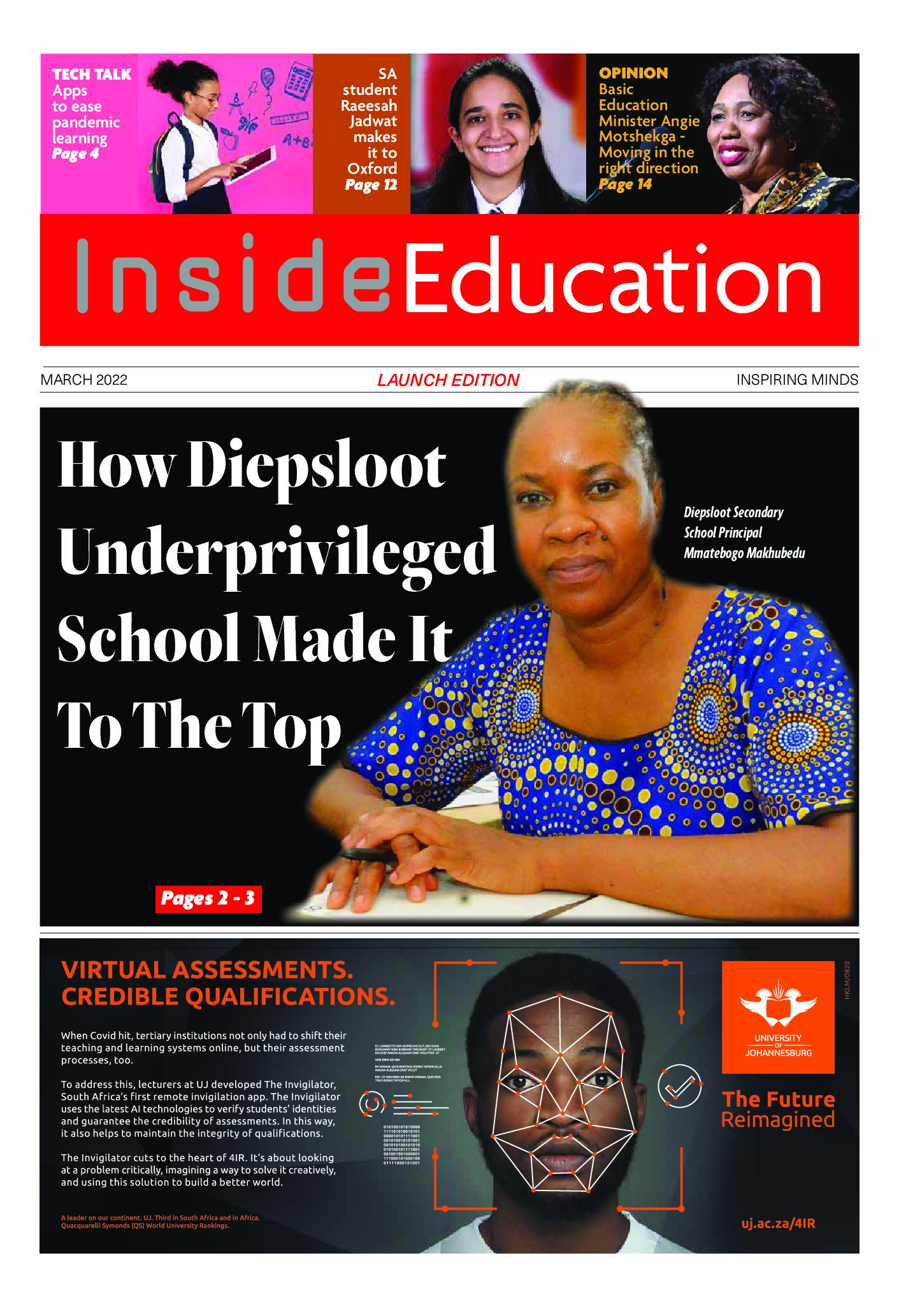
Inside Education launches quarterly print publication for educators and learners

IT’s finally here. Inside Education has launched its quarterly print publication. The publication will be distributed to all schools, universities and TVET colleges across the country.

The quarterly print publication, edited by veteran journalist Phindile Xaba, will feature regular columns such as science & technology, classroom management, financial literacy, school sports and revisions, to assist learners to prepare for their exams.

Matuma Letsoalo, Executive Chairman of K and K Media Group, which owns Inside Education, said he was excited about the launch of the new print publication.

He described the publication as a resource tool for both educators and the learners- aimed at improving the quality of education in South Africa.

“The new print publication will not only serve as a resource tool for educators and learners, but will go a long way in improving the quality of education in South Africa,” said Letsoalo.

“Our content is aimed at empowering teachers, learners and students. It is also a tool for encouraging good leadership, ethics and good governance within the education sector.”

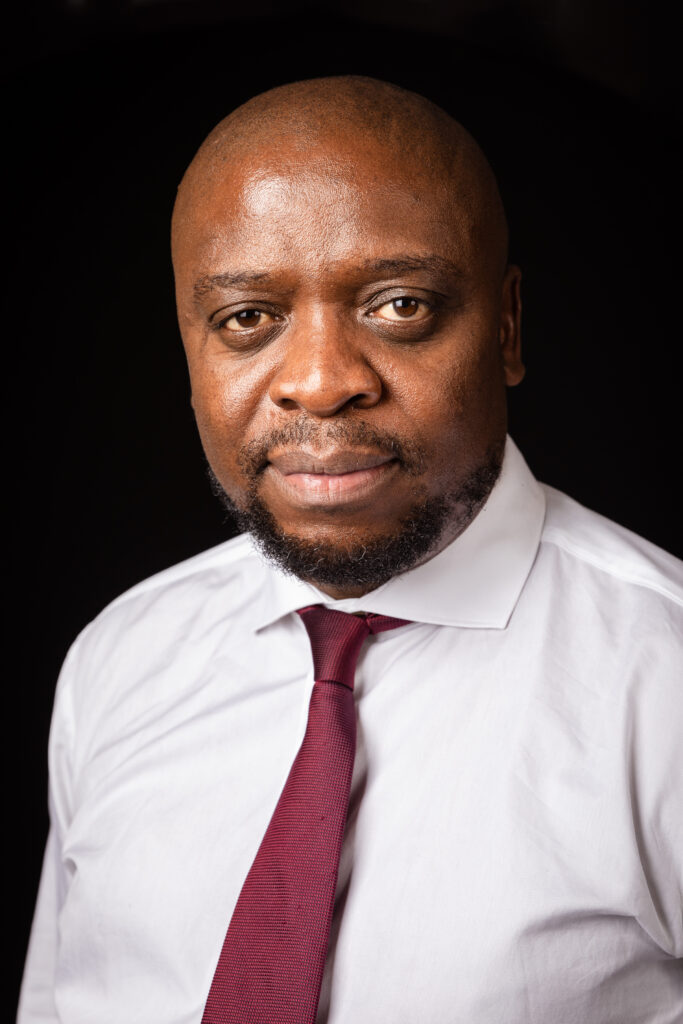
Flying high| Matuma Letsoalo, Executive Chairman of K and K Media Group, which owns Inside Education

Letsoalo said Inside Education will distribute 120 000 copies for free to all schools, universities and TVET colleges across the country.

He said the new print publication was a long time coming because when he first initiated the Online platform devoted to education and all related matters throughout the continent few years ago, he didn’t realise there was such an appetite.

“It’s unique position to close the vacuum covering the entire education process from Early Childhood Development (ECD) to Lifelong Learning saw it become one of the continent’s leading resource for educators, learners and students, a necessary tool to encourage good leadership, ethics and astute governance within the education sector,” said Letsoalo who is former Mail & Guardian Politics Editor.

“Today, our digital platforms reaches over 3,1 million audiences. It is for this reason that we are expanding to print so we can reach schools in rural, peri-urban and other peripheral areas across the nine provinces in the country.”

Xaba, who was hand picked by Letsoalo to become editor-in-chief, comes from a history of editing multiple education publications, including The Teacher, formerly owned by the Mail & Guardian newspaper.

She said she was quite delighted to work in the space at this crucial time.

“I look forward to contributing towards being part of the solution and thanks to the publisher for the opportunity. Together with the assembled team of highly professional media people, we only aim to make this a support resource for teachers, learners, ECD facilitators, tertiary institutions and all artisan training facilities.”

  • – Inside Education

Social Development Minister Lindiwe Zulu hands over Early Childhood Development function to Basic Education

THE Department of Social Development has handed over the responsibility of early childhood development to the Department of Basic Education, paving the way for earlier schooling in South Africa.

This migration will enable children to receive quality education and best support during the early stages of their lives.

Two years of early childhood development (ECD) is set to become compulsory for all children before they enter the formal school system in grade one, said social development minister Lindiwe Zulu at a handover event on Friday.

Zulu said the move is expected to improve education and jobs outcomes in the country as students spend longer in school and have more exposure to basic skills such as reading and arithmetic.

“The latest employment data is painting a picture that says unemployment has climbed to 35.3% in the fourth quarter of 2021. The migration of the ECD function from Social Development to Basic Education should serve as a means by which we definitively challenge this jobs’ market narrative,” she said.

“Resulting from this handover should be an increase of our collective investments in the foundation of the prospects of South Africa’s children. This is the opportunity to start dismantling inter-generational poverty among all our people.”

The compulsory schooling change is included in the draft Basic Education Laws Amendment (BELA) bill alongside a raft of other changes.

The draft bill states that school attendance in South Africa will be compulsory from grade R and no longer only from grade 1. Despite the age at which school attendance is compulsory, a parent may, if they so wish and subject to a few conditions, enrol a child at a school to start attending grade R at a younger age.

Some of the key proposals in the bill include:

  • Compulsory attendance: Stricter punishments will be introduced for parents who fail to ensure their children attend school, including jail time and/or a fine of up to 12 months.
  • Absenteeism: The bill states that teachers, principals and school governing bodies must take responsibility and accountability for learners that are within their school community by ascertaining the whereabouts of a learner who is absent from school for a period of more than three days without a valid reason.
  • Corporal punishment: Corporal punishment is abolished and no person may inflict or impose corporal punishment to a learner at a school, during a school activity, or in a hostel accommodating learners of a school.
  • Initiation practices: The bill prohibits initiation practices in a hostel accommodating learners, and during a school activity.
  • Governing body disclosures: Members of a school governing body, like other public officials, will be required tp disclose on an annual basis their financial interests and the financial interests of their spouse, partner and immediate family members.
  • Homeschooling: The bill introduces further clarity around home-schooling, including that South African learners may be educated at home only if they are registered for such education.
  • Business with the state: The bill will prohibit educators from conducting business with the state or from being a director of a public or private company conducting business with the state, and creates an offence should an educator contravene the abovementioned provision.

 Inside Education