Home Blog Page 284

How The Department of Basic Education Plans To Eradicate Pit Toilets

0

IN February 2020, Amnesty International said schools in South Africa were characterised by crumbling infrastructure, overcrowded classrooms and relatively poor educational outcomes.

Last week, the Department of Basic Education (DBE) said it will be intensifying its delivery and monitoring of construction projects to deliver safe and appropriate school infrastructure. This will form part of the departments’ Sanitation Appropriate for Education (SAFE) Initiative.

The primary objective of the SAFE Initiative is to replace basic pit toilets with appropriate sanitation under the Norms and Standards for school infrastructure.

Currently, 2 814 schools are part of the SAFE programme. The DBE said that the upgrading of sanitation has been completed at 1 564 schools as of 2 March 2022.

At the inception of the project, a total of 3 898 schools were identified at the time as having pit toilets. The DBE said that some schools were addressed under other programs. The rest of the schools are scheduled for completion by the end of 2022/2023.

The DBE said that it is currently engaging with provinces to establish whether there are additional schools that are dependent on pit toilets.

They added, “Early indications are that there are some additional schools in Eastern Cape, KwaZulu-Natal and Limpopo”.

The department also provided an update on the Accelerated School Infrastructure Delivery Initiative (ASIDI) programme which was introduced to tackle infrastructure backlogs.

The DBE said, “For the replacement of mud schools and those built of inappropriate structures, the current scope of work on the ASIDI programme includes 330 schools that need to be replaced. Of these, 294 have already progressed to practical completion. The remaining 36 new schools are scheduled for replacement before the end of 2022/23 financial year”.

Amnesty International says that crumbling infrastructure, overcrowded classrooms and relatively poor educational outcomes perpetuates inequality and will impact children from disadvantaged backgrounds more.

Shenilla Mohamed, Executive Director of Amnesty International South Africa said that for South Africa to comply with both its own constitutional and international human rights obligations concerning education, major change is needed urgently.

  • The Skills Portal

Human Rights Commission finds no evidence of racism at the Brackenfell High School in Cape Town

WENDY MOTHATA|

THE South African Human Rights Commission (SAHRC) said on Monday it has found evidence to back the claims of racism at the Brackenfell High School after a private party was attended by whites only in 2020.

“While the Commission found, through its investigation, that some of the School’s officials knew about the event, as details of the event were shared by parents/guardians and learners of the School on WhatsApp, Facebook and by word of mouth; and four teachers had been invited in their private capacity, the evidence before the Commission exonerates the school from the planning, funding, advertising or hosting the event,” said the commission.

The human rights commission also found that the school did not host a “whites only matric ball”.

“The Commission found that the School did not host a “whites only matric ball” and therefore did not discriminate, whether directly or indirectly, fairly or unfairly, against Grade 12 learners on the ground of race,” said the commission in a media statement.

The commission further found that the organisers of the event also did not directly or indirectly discriminate against learners on the ground of race.

The SAHRC added that those who are dissatisfied by the conclusions of the Commission’s findings in the Brackenfell High School case are entitled to take the matter to court for review.

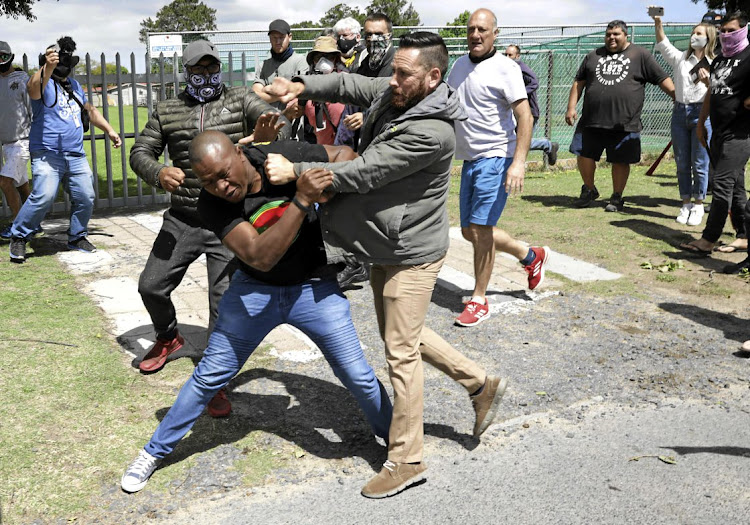
In November 2020, throngs of enraged EFF protesters descended on Brackenfell High School in protest against alleged racism at the school.

This after information about a ‘whites-only’ matric farewell leaked online and went viral, igniting a spate of violent clashes between residents and protesters in the area.

According to the City of Cape Town, the EFF submitted an application to protest in the Brackenfell area in November 2020 and thereby accepted the responsibility to comply with national legislation and ensure a peaceful protest was carried out.

Several videos surfaced on social media when the violence broke out between the EFF members and parents outside the school premises.

President Cyril Ramaphosa described the confrontation outside the school as deeply regrettable.

“At this most important and difficult time for matriculants not only at Brackenfell High School but around the country, the spectacle of parents and protestors coming to blows at the school gate is deeply unfortunate,” said Ramaphosa at the time.

  • Inside Education

Two Gauteng pupils drown at beach during Durban rugby tour

0

A Grade 10 and a Grade 12 pupil from Hoërskool Birchleigh in Gauteng have drowned during a school trip to the beach in Durban on Sunday.

According to a statement released by the Gauteng Education Department, the school was in Durban from Thursday, where pupils were participating in a rugby tournament and were scheduled to return on Thursday.

 “On Sunday morning, the learners and several teachers went swimming at Durban North Beach, where some learners were reportedly assisted to shore by lifeguards after experiencing challenges. Subsequent to a headcount, it was realized that two learners are missing,” the department said in a statement.

“The search went on until the evening with no success, after which the educators opened a missing persons case at Durban Central Police Station,” said in a statement.

The bodies of two learners were discovered on Monday.

“On Monday, 28 March 2022, the educators were informed that the bodies of two boy learners were discovered about 2km north of the beach from where they went swimming on Sunday.”

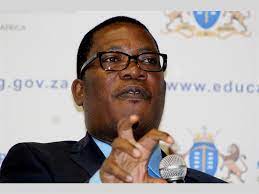
Gauteng MEC for Education Panyaza Lesufi has expressed deep sadness and said the incident was disheartening.

“It’s disheartening that a positive sporting school trip that our learners passionately participated in ended in such a tragic manner. We convey our most heartfelt condolences to the two affected families and the school community at large,” said Lesufi.

Lesufi said that counselling would be provided to the learners upon their return.

“Our Psycho-Social unit has been dispatched to counsel the school community of Hoërskool Birchleigh and this counselling will continue upon return of the learners from Durban,” said Lesufi.

  • Inside Education

Durban University of Technology shuts down four campuses following violent protests

0

THE Durban University of Technology (DUT) has temporarily closed down four of its campuses with immediate effect following violent protests last Thursday.

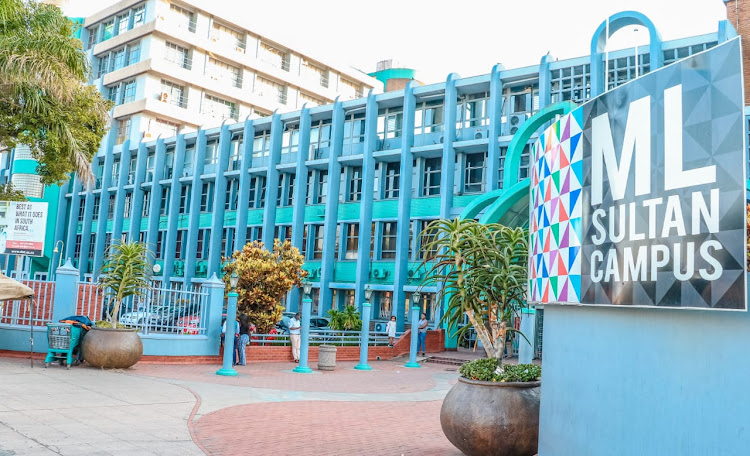
In a media statement, the university said that the Steve Biko, ML Sultan, Ritson and City campuses will be closed after a group of protesters started a violent attack on Thursday afternoon.

Staff based on the closed campuses will be working remotely.

Only essential services staff will remain on campus.

“Despite our appeals to the South African Police Service for assistance, we were unable to prevent the attacks, even though law enforcement was tipped-off yesterday about the planned protest action.”

While other campuses are temporarily closed the university said that the academic programme will continue online.

“Please note that the academic programme will continue online, so lectures are not suspended. We will closely monitor the situation and we will not hesitate to evacuate the residences should we deem it necessary, based on the potential risks on our students, staff and university property.”

The university said the protesters violated the COVID–19 protocols and damaged property.

“The protestors forced their way onto the Steve Biko Campus in Durban, violating the COVID-19 protocols, turning violent, damaging property and traumatizing staff, in a well-orchestrated attack.”

The university said that staff that are affected by the protest can visit DUT wellness office.

“We urge staff to please consult with the Employee Wellness office (ewp@dut.ac.za) at Human Capital Services, if they require professional support and assistance following the traumatic attacks today.”

The university urged the staff and students to check updates on staff email system, student email accounts and on the DUT website www.dut.ac.za.

The university has been plagued by violent protests since the beginning of the year. Students are aggrieved mainly by the online registration process and delays in National Student Financial Aid Scheme funding.

The university reopened three campuses this month after they were closed when three staff vehicles were torched at Steve Biko Campus in February, a number that has since increased to more than 10.

It was granted a court interdict against its entire Students Representative Council and EFF SC members from protesting near any if its campuses.

DUT registrar Dr Maditsane Nkonoane told the portfolio committee on higher education, science and innovation that they had spent close to R1m on security due to alleged poor police and public order police support since the beginning of the year.

  • Inside Education

UCT chemical engineering graduand Sarah Nzeka exemplifies the spirit of not giving up

 STEPHEN LANGTRY

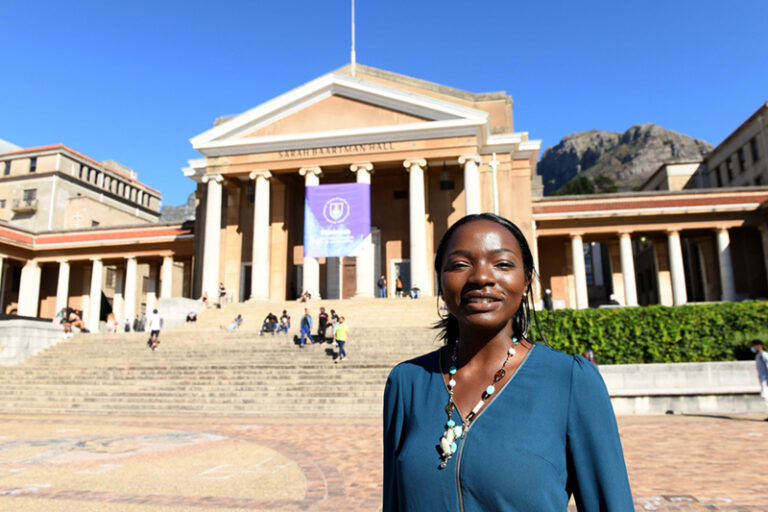
UNIVERSITY of Cape Town (UCT) student Sarah Nzeka will graduate with a Bachelor of Science (BSc) in Chemical Engineering on 29 March 2022 after registering at UCT for the first time in 2012. The journey to graduation day has not been easy.

Sarah succeeded in completing a tough academic programme. On the road to graduation, she survived isolation during the COVID-19 pandemic, financial exclusion, a violent physical attack and the death of her father. With her undergraduate studies behind her, she said, “I’m not limiting myself.”

Sarah, who is from the Democratic Republic of the Congo, first came to Cape Town in 2006. She enrolled at the Cape Peninsula University of Technology (CPUT) where she studied for three years and completed a national diploma in chemical engineering. “I was a top student in my department. That opened the door for me to get a bursary to further my studies [towards a BSc in Chemical Engineering] at UCT,” she said.

“I was excited and [looked] forward to a great journey,” Sarah said. But she found the transition to UCT challenging. The pace was different, and she also registered late and missed orientation and the first few weeks of classes.

“I didn’t know how to find resources and lecture venues. What seemed to be minor challenges ended up becoming bigger problems because I was always late. I struggled to adequately fit into the environment.”

As a result, she had poor results at the end of the first year and her scholarship was not renewed after the second year.

She then had to find part-time jobs to supplement the financial support that she received from her family in order to continue studying. But, the added burden of part-time jobs meant that she had less time to concentrate on her studies. “My focus was divided,” she said. “It was a continuous cycle. But I was determined to get my degree.”

Going back home

In 2014, Sarah was the victim of a terrible assault. She was attacked and thrown from a moving train. She sustained serious injuries, which included a fractured skull and impaired hearing. She was confined to bed for a month and continued experiencing anxiety, excruciating headaches and fatigue long after getting back on her feet.

She returned to university at the start of the next semester. In consultation with the department, her academic workload was reduced. “I wasn’t happy about that,” she said.

In 2017, she was financially excluded from UCT. “The major blow in 2017 was that in November I lost my dad [who was in the DRC],” she said. “Very quickly things spiralled downwards. Life became very gloomy for me, and I didn’t see a future for me here. At that point, I decided to go back home.”

While in the DRC, she became determined to continue working towards her dream of obtaining a degree. She returned to South Africa in 2018 but because of outstanding fee debt she could not re-register at UCT. She found part-time jobs to support herself and carried on searching for sponsorship to cover her fee debt.

During the time she lived in Cape Town, Sarah had approximately 10 different jobs. She was a  waitress, taught English online, did transcribing and translating from English to French, worked as a babysitter, and as a computer lab assistant. She also worked at a guesthouse as a night assistant manager, which meant that she often left campus to go to work.

In 2019, with the help of her family members, she was able to clear her fee debt and re-registered to continue her degree programme. In 2020, she was introduced to Professor Alphose Zingoni, the director of the Klaus-Jürgen Bathe (KJB) Leadership Programme who provided financial assistance. She received once-off support from the KJB programme, which covered her tuition fees. She still had to continue with part-time work in order to meet her other needs.

The pandemic strikes

When the COVID-19 pandemic hit South Africa and the rest of the world, Sarah struggled to adapt to online learning and her anxiety levels were heightened by the social isolation. She passed some of her courses at the end of 2020. She was grateful that UCT allowed students to register in 2021 without having to pay the full amount.

She expressed appreciation for the support that she received from her family. She had never planned with them that she would come to UCT after completing her national diploma at CPUT. Originally from Lubumbashi in the DRC, it was her mother, in particular, who encouraged her to pursue further studies. In her community, education was not seen as a priority for women and girls; however, her three older sisters all furthered their education in Namibia.

Sarah is passionate about science and was grateful for the support systems in the Faculty of Engineering & the Built Environment (EBE) and the Department of Chemical Engineering. Mary Hilton, from EBE, provided a shoulder to lean on and directed Sarah towards several options including KJB Leadership Programme.

Sarah is also grateful for Professor Harro von Blottnitz who provided practical advice in his capacity as the fourth-year student advisor, and who in conjunction with Hilton, Heydenrych and Associate Professor Dave Wright continuously offered guidance in her final year.

She acknowledged the support offered throughout her journey by many other figures at UCT, such as Bridgette Cloete, Dr Pieter Levecque, Dr Siew Tai, Gabrielle Nudelman, and her research project supervisors, Dr Mariette Smart and Associate Professor Kirsten Corin. Sarah also received a lot of assistance from UCT’s Careers Service, her tutors, and her friends at UCT. Her church community was also a great source of encouragement.

She is excited about the next chapter in her life. Sarah loves the DRC and sees the potential to apply there what she learnt in her undergraduate studies. But she is not limiting her choices.

“South Africa has become a second home for me. Opportunities may arise here or elsewhere,” she added. She expressed her passion for environmental sustainability where companies think beyond making profits and also preserve the environment. “I draw inspiration from the words of Banksy,” she said, “‘If you are tired, learn to rest – not to quit.’”


  • UCT News

School Sports| King’s College welcomes former Bafana Bafana defender as head of sport

0

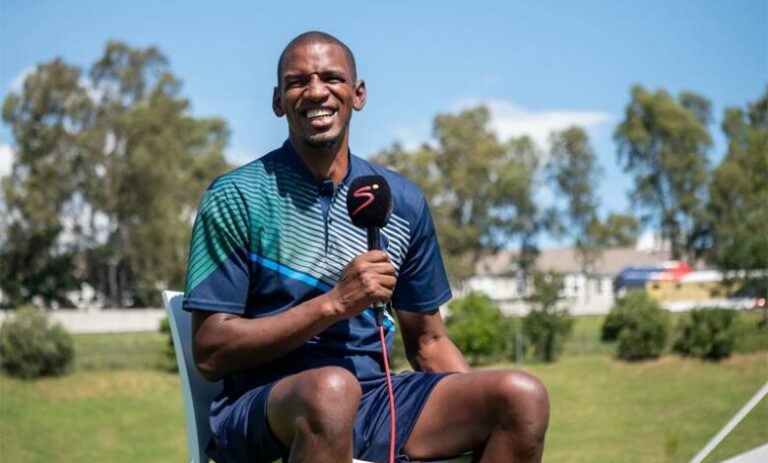
THE King’s College and Preparatory School started the year with a new executive of sports, who is also a former Bafana Bafana player.

Ricardo Katza represented South Africa from 2005 to 2010 in which he captained the side for eight matches during his tenure in the national team.


The former footballer said he was contacted by a member of the Board of Governors at The King’s College in August last year. “I last spoke to him in 2017. When he mentioned that the head of sports left the post, I was the first one who came to his mind. [It also] offered me and my family a three-in-one situation (school, sports and church) on one campus,” he said.

Katza said there are a number of goals he hopes to achieve at the school in his new position. He mentioned there have been challenges, but change is taking place on a solid foundation.


“We have decided to work on three things this year. [We want to] work with children as people and not just as athletes who do sport at the school. We want to improve and raise the standards of the nine sporting codes, to get the learners to compete and not just participate. With our coaching staff, we want to have staff with qualifications per sporting code and heading the nine different sports.”

Looking to the future, Katza is looking to obtain his Union of European Football Associations A and B football coaching licence next year in Ireland.

  • Fourways Review

Teachers need to take charge of their classrooms

PROSPECTIVE teachers learn a lot about individualized instruction in faculties of education. That’s because teachers are encouraged to personalize learning, for each student, as much as possible.

To a certain degree, this makes good sense. An inflexible cookie-cutter approach to education serves no one well.

At the same time, the pendulum has swung so far in the direction of individualization that it’s easy to lose sight of the fact that most teachers teach groups, not individuals. While classrooms are obviously made up of individual students, teachers are responsible for the entire group at the same time.

In other words, teachers need to take charge of their classrooms. Unruly classrooms are not places where quality learning takes place.

Unfortunately, most education faculties fall short in this area. When I was an education student, I learned next to nothing about effective classroom management. It was something I had to figure out on my own. Many other teachers find themselves in a similar situation.

This places an unfair burden on new teachers. Education professors fill their heads with various educational theories but do precious little to help them take charge of their classrooms. Even worse, they push the misguided notion that teachers should be “a guide on the side” rather than “a sage on the stage.”

By encouraging prospective teachers to stay off to the side rather than stand in the front of the room, education professors make it harder for new teachers to establish their authority. This puts new teachers at a disadvantage right from day one.

A far better approach would be for education professors to focus less on their pet theories and more on how to effectively run a classroom with as many as 25 or 30 students. Here are a few tips to keep in mind.

Before doing anything, teachers must disabuse themselves of the notion that they are “co-learners” together with their students. While teachers can and do learn new things while teaching, a teacher should have far more expertise in the subject being taught than any of the students. If they don’t, then the wrong person is in front of the room.

Simply put, it’s important to have clarity of roles. Teachers and students are two separate roles, and we should not blur the distinction. After all, we don’t call doctors and patients “co-healers,” nor do we think of lawyers and clients as “co-litigators.”

One of the fastest ways to erode the professional status of teachers is to demote teachers to mere facilitators of learning. Other professions would not tolerate this blurring of roles.

Teachers should also set a firm, but fair, tone on the very first day. This doesn’t mean giving a long lecture about classroom rules, but it does mean making the behavioural standards clear. It’s much easier to loosen the reins later in the year than it is to tighten them.

Finally, teachers must keep their emotions in check. Students often test a teacher’s limits, particularly when that teacher is new. When they do this, they are looking for an emotional reaction. Teachers shouldn’t give them this reaction.

Teaching is a challenging profession. We can make it a lot easier if we equip new teachers with the knowledge and skills they need to take charge of their classrooms.

— Michael Zwaagstra is a public high school teacher, a senior fellow with the Frontier Centre for Public Policy, and author of A Sage on the Stage: Common Sense Reflections on Teaching and

Learning.

Section27 takes education authorities to court following sexual assault cases of two learners

0

WENDY MOTHATA|

THE Section27 on Thursday took the Department of Basic Education to court for failing learners who survived sexual assault.

Section27 represents the Teddy Bear Clinic for Abused Children and the parents of two learners who were sexually assaulted while at school. The matter is on the unopposed roll at the High Court of South Africa North West Division, Mafikeng, North West.

One learner was allegedly raped by a school caretaker in 2015. Two years later, the same caretaker allegedly sexually assaulted that learner’s younger sibling.


Section27’s Patience Phiri said: “For years, no action was taken against the perpetrator, who continued to be employed by the School Governing Body (SGB) at the school and therefore continued to pose a risk to other learners at the school.”

“The parents of the learner reported the rape of their child to the school principal, but the alleged perpetrator was not disciplined or suspended. Because of this inaction, the same caretaker continued preying on minors and sexually assaulted their other child. The parents of the learners also tried to report this to the school, with no success,” said Phiri.

The 2019 Protocol for the Management and Reporting of Sexual Abuse and Harassment in
Schools states that school officials have a duty to report any suspected incident of sexual abuse
or harassment immediately.

However, Section27 said in a statement: “At all levels of the education system, authorities failed these
two learners. Section27 believes that the education authorities breached their constitutional
obligations to respect, protect, promote and fulfil the learners’ constitutional rights and the
obligation to act in the best interests of children.”
 
– Inside Education

2 teachers killed at Swedish high school, student arrested

0

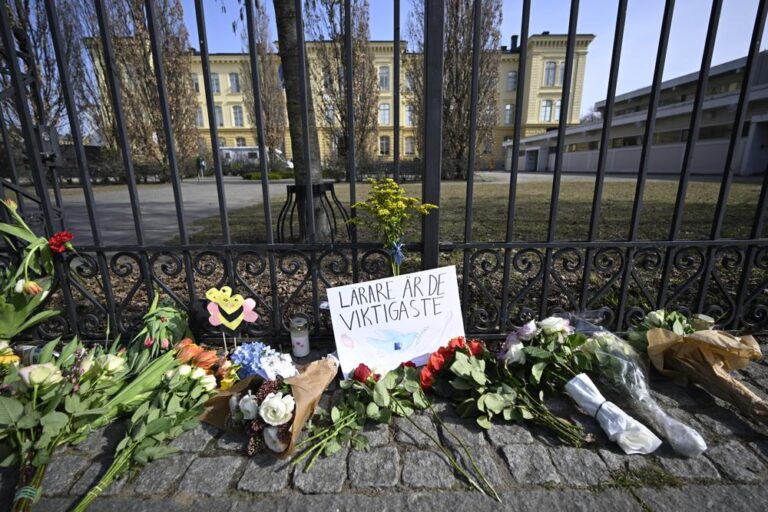
TWO teachers were killed by a student at a high school in southern Sweden, police said Tuesday.

The 18-year-old student was arrested at the scene on Monday in Malmo, Sweden’s third-largest city. The victims were two women in their 50s, police said.

The suspect wasn’t previously known to the police and had no criminal record, and police didn’t disclose how the teachers were killed. A motive hasn’t been established.

“For now it is far too early to comment on that,” Malmo Police Chief Petra Stenkula told a news conference.

She said officers arrived and found the suspect and two victims on the third floor of the downtown Malmo Latin School 10 minutes after they were alerted, adding that the situation was then “under control.”

Stenkula didn’t confirm a report by the Aftonbladet newspaper, saying the male student himself called authorities to say he had killed two people, had put down his weapons and was on the third floor.

Police made “seizures” and a forensic examination “will allow us to better understand what happened,” Stenkula said, adding authorities have no information of any further injuries.

Police said they were called at 5:12 p.m. Monday. Scores of ambulances and patrol cars rushed to the school and armed police were seen entering the building, which was cordoned off.

Students at the school, which has about 1,100 students, had gathered to work on a musical and students locked themselves inside classrooms.

Sweden’s Prime Minister Magdalena Andersson said she reacted “with sadness and dismay” to the killings, according to the Swedish news agency TT.

All classes were suspended Tuesday and the school was closed.

The killings took place in a modern annex of the school, which was founded in 1406 when the pope issued a letter of privilege allowing for its construction and operation. It was originally meant to educate local youth on Christian doctrine and the Latin language.

  • AP

Digital migration| A massive digital leap forward for South Africa, says Ramaphosa

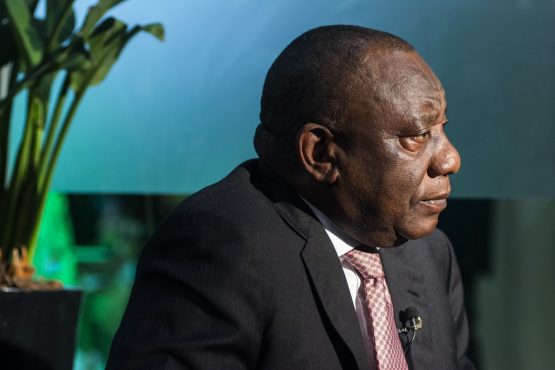
CYRIL RAMAPHOSA|

LAST week, government concluded the auction of high demand spectrum for mobile telecommunications. This is a significant milestone in our reform agenda, which will, as we have said before, drive growth and transformation in our economy. 

The licensing of spectrum is one of the major reforms that we are implementing to modernise and transform key network industries such as energy, telecommunications, transport and water provision. Already much progress has been made in creating new opportunities for investment in electricity generation, freight rail and ports, and in improving the management and quality of the country’s water resources.

The licensing of this new spectrum will be accompanied by agreed social obligations to connect public schools, health facilities and police stations over the next three years. Like the mineral wealth that lies beneath our soil, radio spectrum is a valuable national resource that needs to be used for the benefit of all South Africans.

Through its data services market inquiry in December 2019, the Competition Commission found that the cost of data in South Africa was considerably higher than in many other countries. The spectrum release is expected to reduce the cost of mobile data, expand network reach to rural and outlying areas, and improve network quality.

Every South African who uses a mobile device will feel the benefits of this reform, especially the poor and those who currently don’t access the internet due to high costs or a lack of coverage.

Expanding digital access is critical for economic growth. Cheaper data means that young people will have greater access to digital platforms to seek job opportunities online. Students will be able to access information and educational materials. Entrepreneurs will be able to start businesses and reach new markets.

Equally, the availability of this spectrum will contribute to economic transformation.

It will allow many more people, especially those from remote areas and poor communities, to access digital resources and will improve their ability to participate in economic activity. 

The use of this spectrum will also enable the rollout of 5G networks.

These 5G networks will accelerate the process towards universal connectivity – where all South Africans are connected – and the deployment of the digital technologies and services that are driving the fourth industrial revolution.

This is a crucial step to bring South Africa back to the cutting edge of digital technology and ensure that our economy remains competitive.

Over the last year, the process of switching from analogue to digital broadcasting has gathered pace and will soon be completed. Digital migration will also free up valuable radio frequency spectrum currently used by broadcasters to be used in the provision of mobile broadband services and other applications.

The switch to digital improves the TV watching experience, with many more channels and better quality picture and sound.

Digital migration will enable a massive leap forward in South Africa’s technological development. For poor households that are currently using an old analogue television, government is providing subsidised set-top boxes to help them make this switch.

The auction of spectrum is an important achievement. It was delayed for many years due to the policy drift, state incapacity and vested interests that were a feature of the era of state capture. The fact that we have now completed this process reflects the determination of this administration to undertake – and accelerate – the far-reaching reforms that our economy needs to grow and create jobs.

The auction of spectrum is one of the priority reforms included in Operation Vulindlela, which is working with government departments to accelerate the implementation of important reforms to support economic growth. By putting in place dedicated capacity to deliver on reforms, and focusing on the most important priorities, Operation Vulindlela has helped us to make real progress in a short space of time. 

We are determined that South Africa must not be left behind by the digital economy, just as we are determined that no community and no person should be left behind in experiencing the vast benefits of being digitally connected to the world.

From the desk of the President