Home Blog Page 285

Financial literacy should be a cornerstone of education at all levels, says expert

0

South Africans, especially young South Africans, are drowning in debt. According to the latest figures from the South African Reserve Bank, South Africans are spending more than 75% of their take-home income on debt.

Leana de Beer, CEO of WaFunda, a for-profit social impact enterprise focusing on financial literacy and access to education funding for youth and students, said: “Many South Africans are not making ends meet, the prevalence of illicit loans from illegal micro financiers, or abo mashonisa, is high. Local loan sharks are notorious for their exorbitant interest rates and brutally coercive extortion for repayments.”

Blackbullion South Africa is a new digital platform offering financial education for South African students.

De Beer explained that it was adapted for the local market from an award-winning international platform used by some 700 000 students and trusted by more than 40 university and college partners across the UK, Australia and New Zealand.

An important part of Blackbullion South Africa’s content development and localisation process involves discussions and focus groups with students to ensure the content is accessible and relevant for a local audience.

“Blackbullion South Africa takes the form of multimedia content streams, convenient lessons, quizzes, videos and articles, all structured into modules across personalised learning pathways,” she explained.

The platform takes a holistic approach to financial well-being without promoting any specific bank, product or service, De Beer said. “Instead it encourages the shifts in behaviour that will drive our future leaders towards financial success.”

“Through working with the private sector bursary providers, our goal is to bring long-term benefits, arming bursary beneficiaries with the latest tools and best practices for money management. Our view is that while we believe access to education should be democratised, we should also enhance access to financial literacy programmes to enable overall improved quality of life for students and youth,” she said.

Financial literacy will allow young people to assess what is important to them and help them gain the courage and confidence to attain professional fulfilment.

  • Inside Education

STEM schools play key role in accelerating national efforts in terms of investing in human capital

0

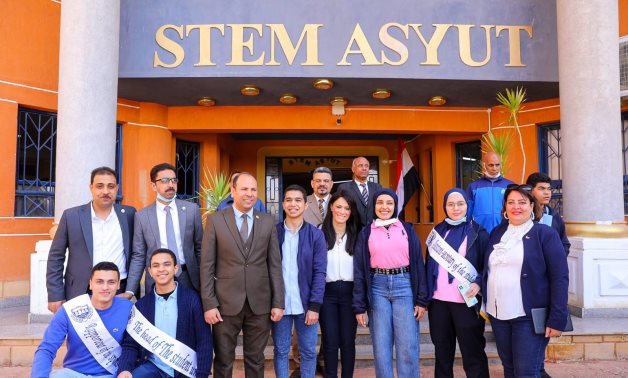
THE Minister of International Cooperation, Rania A. Al-Mashat began her visit to the Assiut Governorate by touring a Science, Technology, Engineering, and Mathematics (STEM) School, which comes within the framework of bilateral cooperation between Egypt and the United States of America.

During the visit, the Minister was accompanied by Major General Essam Saad, the Governor of Assiut.   

The school is one of the STEM schools implemented in partnership with the USAID, within the Basic Education Agreement amounting to $124 million since 2014.

This is implemented in coordination with the Ministry of Education and Technical Education, aiming to ensure educated, and skilled youth who can meet the demands of a dynamic labor market.  

Al-Mashat stressed the importance of partnerships with the USA and the USAID, to support the development efforts implemented in Egypt across sectors.

The Ministry of International Cooperation is working on establishing the new 2021 – 2025 strategy with the USAID to build on the efforts achieved in the last period in different areas including; SMEs, education, gender equality, and youth empowerment. 

The Minister added that the STEM schools project is being implemented in 11 governorates across the country, as 18 schools were implemented within the framework of cooperation between Egypt and the USA, benefiting over 5,000 students in its first phase.  

Al-Mashat explained that STEM schools play a key role in accelerating the Government of Egypt’s efforts to enhance investment in human capital in cooperation with development partners, so as to prepare the youth for the demands of a dynamic labor market. 

In 2021, Egypt concluded development financing agreements worth $2.47 billion in terms of investing in human capital in sectors such as, food security, health, basic and higher education, and SMEs.  

To ensure the sustainability of the project, and to provide qualified instructors to work in STEM schools, a one-year diploma and 4-year university program was established in 5 public universities, including Assiut University, to prepare teachers specialized in science, technology, engineering and mathematics to be able to lead the educational process in STEM schools.  

Last November, Egypt and the USAID signed 7 grant agreements worth $25 million within the framework of joint economic relations between both countries, thus enhancing development cooperation in several fields, in line with the country’s 2030 Vision.

The signed agreements allocate $17 million to the sector of basic education; $31 million to the U.S.-Egypt Higher Education Initiative (HEI); $4 million to U.S-Egyptian cooperation in the sector of science and technology; $27 million to economic governance; $5 million to agriculture and rural development; and $28 million to bolstering trade and investment in Egypt.  

It is worth noting that the current portfolio of cooperation with the USAID amounted to about $1 billion at the end of 2021, and the current portfolio of development cooperation in the education and technical education sector amounted to about $684 million.

Human Rights Day: This is what Human Rights Day means to young South Africans

0

ON this day in 1960, during a demonstration against the apartheid regime’s pass laws in Sharpeville in the Vaal Region, 69 people were murdered and 180 were injured.

This year, President Cyril Ramaphosa opened the Reagile Library in Koster in the North West, where he also delivered a keynote address.

He said over the past 28 years, the country has made significant progress in tackling poverty and deprivation. 
“We have built houses, hospitals and clinics. We have implemented universal basic education and free higher education. The vast majority of our people have access to decent water, sanitation and electricity in their homes,” said Ramaphosa.
 
“Society’s most vulnerable are supported by an extensive social welfare system.”

Ramaphosa also called for an end to hate crimes and discrimination against the LGBTQI-plus community.

Members of the community are often targets for crime, and face ridicule when going to the police.

Inside Education asked some of young people in the country about what Human Rights Day means – and if it still has relevance to them.


Dimpho Manthoadi, second year student at Varsity College in Pretoria.
“Human rights day used to be just a public holiday for me. I knew that on the 21st of March I have a day
away from school until I started reflecting on what human rights are and that opened my mind to a
world I never knew existed. From unfair treatment because of race or gender by peers, to even people
from high authority violating the rights of human beings. I do believe this day has lost its meaning because of the way the world works now versus how it used to be back then. We grew up knowing legends like Steve Biko and mama Winnie Mandela fought for our rights so that history doesn’t have to repeat itself. But it seems as though the vision our heroes had for our nation has failed because it’s not just unfair treatment towards people of colour and women but
now children are suffering there’s individuals out there that are violating their rights and they are the future of our nation but the people that are meant to protect these children aren’t. We have police officers that are meant to protect us but are violating our rights instead.”


Kutlwano Mothibedi, Grade12 learner at Sebetwane Secondary School in North West.
“Human Rights Day means every individual have rights, and rights go hand in hand with responsibilities.
These are the rights that every individual is entitled to, no matter who or what they are as long as they
live. People’s rights are still being violated, for example 1. right to health they are still denied services and
information about health. 2. The right to work, now you’re forced to vaccinate for you to be able to
work. 3. The right to life, people been killed.”

Theresa Ditlhobolo journalism graduate from Centurion.
“Human Rights for me means that I have a right to life, right to freedom. I have a right to dignity, culture
and to use my language freely. Human rights Day is a reminder to me that innocent people were killed
and wounded so I can move freely in Our Country.
No, the day has meaning and still will be, just that people shift the meaning of the day to what they
want.”

Dineo Maphoto, Grade 11 learner from Mohlapetse High School in Limpopo.
“Human Rights Day means that as a young person I have the right to education shelter, protection and to
be free in my country. However, our rights are always violated especially in schools where there’s always
racial issues. The day has lost meaning, like today I will be busy watching movies. The government does not do
enough to educate us about Human Rights Day.”

Gauteng Sports, Arts, Culture and Recreation and Gauteng Department of Education introduce schools Wednesday Integrated Programme

THE Gauteng Department of Sports, Arts, Culture and Recreation in partnership with the Gauteng Department of Education have introduced a new indicator, the schools Wednesday Integrated Programme (WIP) for Sports, Arts and Culture, affectionately referred to as the “Wednesday League”.

The Central Corridor instalment of the Schools Wednesday Integrated Programme Launch took place on Tuesday last week at the Moletsane Sports Complex in Soweto.

The programme consisted of several exciting activities and entertainment such as a live band and a special performance by Yanga Chief as well as a special guest appearance from Lebo “Shugasmakx” Mothibe, best known as the co-founder and star of iconic hip-hop brand Skwatta Kamp.

The event was also graced by some of South Africa’s renowned legends such as Kaizer Chiefs attacking mid-fielder Lebogang Manyama, Ramehlwe Mphahlela, Kaizer Chiefs Defender, Manti Moholo, former Orlando Pirates player as well as Siboniso Pa Gaxa, former Bafana Bafana and Kaizer Chiefs Defender, the presence of these amazing soccer stars served as great inspiration for the students who look up to them.

The programme kicks off with an inclusion of arts and culture activities simultaneously implemented in schools and is aimed at establishing a vibrant hype of activities in form of school leagues and festivals championed from all the no-fee-paying schools across the Gauteng province.

The programme will be implemented in 1270 no-fee paying schools in the Gauteng province during the Mid-term period.

381 schools have already benefitted in the initial stages of the programme and 410 schools will be supported in the 2022/23 financial year.

The Arts and Culture unit also has schools that are supported under this programme.

The department said it intends to host an integrated launch at a Provincial scale with subsequent Wednesday League Launch Corridor Roadshows which will kick-start the awareness for the Netball World Cup that will be hosted in South Africa in 2023.

This will also assist the department in rolling out the integrated Sport and Arts and Culture programmes in schools during the 2022/2023 FY and beyond.

  • Inside Education

Human Rights Day: It’s the duty of Government, parents to ensure all SA children are protected from harm and grow up in loving surroundings

0

THE South African Human Rights Commission (SAHRC) said that children are among society’s
most vulnerable members, therefore they require special protection.

More than 20 million of children live in the country. Children are defined as anybody under the age of 18 under the
South African Constitution.

It is the duty of parents, families, communities, and government, according to the Western Cape Department of Education, to ensure that all children are protected from harm and grow up in loving surroundings.

Children have special legal rights that are enforced by the state to guarantee this.

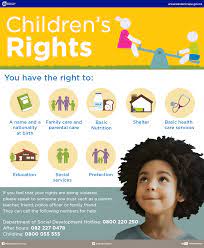
According to the Constitution of South Africa, Section 28 in the Bill of Rights children have the
following rights:

  1.  Every child has the right to:
     A name and a nationality from birth.
     Family care or parental care, or to appropriate alternative care when removed from the
    family environment.
     Basic nutrition, shelter, basic health care services and social services.
     Be protected from maltreatment, neglect, abuse or degradation.
     Be protected from exploitative labour practices.
     Not be required or permitted to perform work or provide services that are inappropriate
    for a person of that child’s age or risk the child’s well-being, education, physical or
    mental health or spiritual, moral or social development.
     Not be detained except as a measure of last resort, in which case, in addition to the
    rights a child enjoys under sections 12 and 35, the child may be detained only for the
    shortest appropriate period of time, and has the right to be kept separately from detained
    persons over the age of 18 years.
     Be treated in a manner, and kept in conditions, that take account of the child’s age and
    have a legal practitioner assigned to the child by the state, and at state expense, in civil
    proceedings affecting the child, if substantial injustice would otherwise result.
     Not be used directly in armed conflict, and to be protected in times of armed conflict.

Legislation that provides specific protection for children includes:

• The Child Care Act of 1983 that makes it a criminal offense if a person who’s responsible for caring for a child doesn’t provide the child with clothes, housing and medical care.

• The Basic Conditions of Employment Act of 1997 that makes it illegal to employ a child under the age of 15.

• The Domestic Violence Act of 1998, defines different forms of domestic violence and explains how a child can get a protection order against the abuser.

• The Films and Publications Act of 1996, protects children from exploitation in child pornography.

The interests of the children are seen as most important in deciding on custody or access to children.

One example of new legislation passed in response to a Constitutional Court ruling is the Fraser judgment – the Natural Fathers of Children Born out of Wedlock Act of 1997.

It gives natural unmarried fathers, including those whose marriages aren’t recognised by the state, for example, Muslim and Hindu marriages the statutory right to go to court to ask for access, custody or guardianship of their children.

The Children’s Bill, which went before Parliament in 2003, is meant to replace the Child Care Act of 1983 and provides a holistic approach to the rights of all children.

Help protect our children and report abuse|

  • Department of Social Development: 0800 220 250 
  • Childline helpline: 0800 055 555

South African universities are training their gaze on the United States. Why it matters

Three academic institutions in Africa have established units dedicated to the study of the United States. They are University of the Witwatersrand’s African Centre for the Study of the United States, the American Language Centre in Morocco , and most recently, the University of Pretoria’s African Centre for the Study of the United States. University of Pretoria Principal Tawana Kupe and Christopher Isike, the new Centre’s Director, explain why Africans need a better understanding of America.

The rationale

Top universities around the world have research centres and think tanks dedicated to the interdisciplinary and multidisciplinary study of other countries or regions. The broad purpose is to understand the historical, social, political, economic, and cultural development of the countries and their people.

It is not only a worthwhile venture for knowledge’s sake. It’s also helpful in formulating domestic and foreign policies to further the interests of their nations. This way, the universities justify their mandates – as both citadels of learning and as influencers of global politics and international relations.

Many universities in Europe, North America and Asia have dedicated centres that study Africa. The continent has recently started returning the favour. In South Africa for example, Stellenbosch University has the Centre for Chinese Studies, and there is the University of Johannesburg Centre for China-Africa Studies.

The University of Pretoria’s humanities department has also approved the establishment of a centre for Asian Studies, which is awaiting senate approval. Relatedly, several universities in South Africa have centres that study European and Asian languages as part of the broader purpose of understanding other societies.

The establishment of an African Centre for the Study of the United States at the University of Pretoria should be seen against this background. It aims to contribute to overcoming Africa’s knowledge deficit in its relations with the US.

The new unit seeks to create knowledge and train experts that African countries need in their embassies, foreign ministries, corporates and academia to influence the formulation of domestic and foreign policies that further the interests of African states. The same applies to Africa’s media and civil society.

Importance of Africa studying the US

The US has been studying Africa for 74 years. It has over 150 degree programmes on African Studies, and about 40 centres for African studies. Africa has only three looking the other way.

This mismatch in knowledge production means the continent relates to the US from a position of disadvantage. For example, African states and the continent as a bloc do not have a defined policy towards the US. On the other hand, US policy towards Africa is shaped by knowledge from its several research think tanks on Africa.

Without a clear African policy towards the US that is based on evidence, the continent is unable to leverage opportunities from bilateral and multilateral relations with the superpower. The Africa Growth and Opportunity Act is a good example.

So, what other factors account for why it is important for Africans to study the US nation and society?

Africa needs to understand the US to inform its thinking, actions and interactions with the global superpower. This includes political relations to economic and trade relations, cultural intersections and exchanges.

Given its superpower status and its economic and military interests in Africa, the US has been an important actor in Africa’s present and future. It also has important cultural connections to the continent through the African diaspora, and its African-American population.

In general, the African diaspora remains largely untapped by the continent in its quest for global influence and agency. That’s because it has not studied its diaspora in the US and elsewhere as much as it should.

The Biden Administration’s policy is to engage African countries as equal partners. This represents a shift in US policy towards Africa, which was mainly driven by Cold War imperatives and competition with China, to mutually a beneficial partnership.

The US ranks second after China in terms of job creation in Africa.

At $50 billion, the US was the third largest investor in Africa after France ($64 billion) and the Netherlands ($63 billion), in 2017. The UK and China trailed behind the US. Each invested $43 billion in 2017.

Besides trade and investments, the US also has a huge technological and cultural impact in Africa. It also has more military bases in Africa than any other nation.

In terms of political systems, there are more liberal democracies than autocracies on the continent. This makes the US an interesting case study on democracy for Africa. This is especially so with the US predicted to become a right-wing dictatorship in 2030.

In addition, American health system benefits from one of Africa’s most underrated exports annually – brain power. A whopping 23% of its physicians were trained in Africa. Between 2004 and 2013 there was a 40% increase in the migration of African physicians to the US.

Conclusion

Africa, thherefore, needs more institutions that cast a penetrative gaze on the US. These should create the relevant knowledge for formulating evidence-based domestic and foreign policies that serve it best interests in engagements with the global superpower.

Obtaining a critical analytical understanding of the US – and other nations – is vital for developing pan-Africanist agency, and common positions in its dealings with the rest of the world.


  • The Conversation

Classroom Management| New Report By CTE Solutions Examines The Use And Impact Of Computer Technology In Education

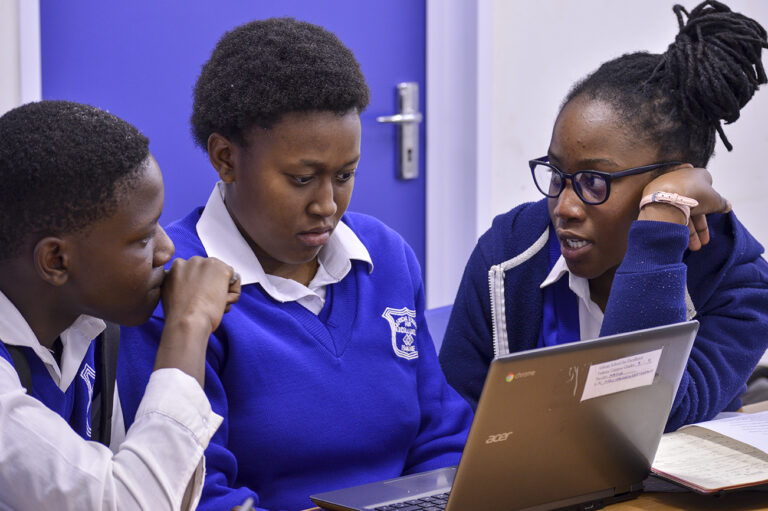
COMPUTERS play an integral part in nearly every aspect of our lives, including a vital role in education.

Almost every aspect of our lives is impacted by computer innovation. It is a necessary part of everyone’s school curriculum in today’s society.

According to CTE Solutions, the report was produced after in-depth research by their experts. The report’s primary focus is on how computers help in the education process. The new article further sheds light on the benefits of computer education. The experts in the report explained the role of computer technology in changing and advancing education. The report was published as part of their regular research on computer technology. For more information on computer technology and its advancement, readers can visit their page: https://www.ctesolutions.com/how-fast-is-computer-technology-advancing/.

“Computers have revolutionized the way of study, making education more efficient. Through it, we can access different sources that offer different perspectives on a particular topic. The way computers have transformed how we work & learn has no doubt helped the education world. This publication analyzes how computers can help students and teachers learn new skills & abilities in education. It helps to provide a better understanding of how technology can benefit the educational sector,” said Lester Brock, editor-in-chief of CTE Solutions’ website.

Since the company’s launch, CTE Solutions has provided an extensive library of online resources on technological advancements. The site aims to help people understand and integrate these technologies into their lives by delivering information, advice, research, reviews, comparisons, analyses, and practical tips on technological innovations, their use, features, pros, and cons. It also features tech companies, from news and reviews to industry insights. Readers can learn more about information technology in society by visiting their page: https://www.ctesolutions.com/information-technology-in-society/.

Brock said, “Our mission is to provide the best resources to help anyone advance themselves in the tech world.” According to CTE Solutions, readers need to be informed on tech advancements to keep up with the fast-paced, high-tech world.

  • Digital Journal

Gambia: CREDD Embarks On Manual Development Process for Comprehensive Health Education (CHE)

0

THE Curriculum Research Evaluation and Development Directorate (CREDD) under the Ministry of Basic Senior Education (MoBSE) last Wednesday commenced a ten-day Comprehensive Health Education (CHE) manual development process for the school curriculum.

The manual development taking place at Educational Regional Directorate, Region 1 brought together competent curriculum developers from relevant institutions.

Speaking at the opening, Momodou Jeng, director of Curriculum Research, Evaluation and Development Directorate (CREDD) at Ministry of Basic and Senior Education (MoBSE) said research on Strengthening Access to Quality Comprehensive Health Education in The Gambia was conducted and the findings shared with important stakeholders.

“The findings are important for us as a sector and directorate because we have attempted to incorporate comprehensive health education in the curriculum through the use of several means such as career subjects,” he stated.

“About two, three weeks ago we convened to audit those materials (auditing of Curricula Framework exercise for the inclusion of Comprehensive Health Education topics in some of the career subjects) and the auditing exercise was very useful,” he disclosed.

He added further that the auditing exercise helped greatly as regarding how the career subjects such as Biology , Home Science, English language, Mathematics; Social Studies; and others can contain some of the important messages.

“Among important areas looked at included issues of sexuality; reproductive health and drug abuse,” he also said.

Phebian Ina Grant-Sagnia, principal investigator for Strengthening Access to Quality Comprehensive Health Education for in-and-out of School Adolescents in The Gambia acknowledged the efforts of CREDD at the Ministry of Basic and Secondary Education.

She said that Comprehensive Health Education (CHE) under the project – Strengthening Access to Quality Comprehensive Health Education in The Gambia is an implementation research project by the Ministry of Basic and Secondary Education (MoBSE) with funding from International Development Research Center (IDRC).

She added that it is meant to enlighten and educate in and out-of-school students on Adolescent Sexual and Reproductive Health (ASRH).

  • The Point

Department of Basic Education publishes new revised calendar for inland and coastal schools in South Africa

0

THE Department of Basic Education has gazetted the 2023 school calendar for inland and coastal students.

After two years of Covid-19 lockdowns which significantly impacted teaching time, the 2023 calendar will see a return to some normality with the return of ‘staggered’ open dates for both inland and coastal provinces.

This staggered date has historically accommodated people who were travelling from holidays – another part of South African life that has been significantly disrupted by the Covid-19 pandemic.

In 2023, inland schools will open from 11 January, while coastal schools are set to open from 18 January. The closing date for both inland and coastal schools is 13 December.

This equates to 199 actual school days for students and 203 school days for teachers who are expected to arrive slightly earlier and leave slightly later than their pupils.

Inland cluster 2023 school calendar

The inland cluster includes the Free State, Gauteng, Mpumalanga and North West provinces.

Coastal cluster 2023 school calendar

The coastal cluster includes the Eastern Cape, KwaZulu-Nata, Northern Cape and Western Cape provinces.

Since its outbreak two years ago, the Covid-19 pandemic has disrupted education systems globally, affecting the most vulnerable learners the hardest, the department said in its annual performance plan tabled this week.

“Enrolment in the first quarter of 2021 was around 50,000 (0.4%) lower than expected. The problem concentrated in lower grades. 54% of contact time was lost in 2020 due to closures and rotations. In the second half of 2021, 22% of contact time lost due to rotations and regular absenteeism.”

However, these averages hide huge inequalities across grades and schools, it said.

“In historically disadvantaged schools, around 70% of a year’s worth of learning was lost in 2020. For every day of schooling lost, around 1.3 days of learning are lost.

“The heavy lifting in ensuring the success of the development program to improve the situation of the youngest children in our communities which will focus on better decisions, improved systems, improved capacity, effectiveness and performance so as to improve their learning outcomes.”

  • Business Tech

UCT commits to divest from fossil fuels, including fossil fuel industry endowment

0

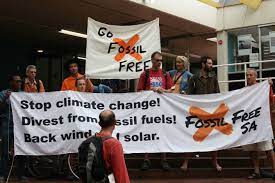
THE University of Cape Town (UCT) Council has agreed, in principle, to divestment from fossil fuels, including divesting its endowment formally from the fossil fuel industry.

This approach will put back into society, the environment and the global economy more than is being taken out, the council says.

This decision will be executed in a responsible, transitional manner. Firstly, through the immediate divestment from internationally exposed fossil fuel investments and immediate investment in renewable energy and/or green economy instead of new investments in fossil fuels

Secondly, in the local economy, UCT will work towards achieving a goal of being net-positive by 2030.

By divesting from fossil fuels, the university is further amplifying its position and signalling to policy makers the need to act now on climate change.

“This decision by the council exemplifies the university’s deep commitment to promoting the development and use of clean, sustainable and renewable energy. It is also part of how we make long-term investment decisions that support our teaching and research mandate as a university, says UCT finance executive director Vincent Motholo.

“We do not believe investments in fossil fuel are prudent. With the growing threat of climate change to the environment, drastic actions are needed and UCT needs to be part of the climate crisis solution.”

The decision by the university is a commitment to long-term sustainability, and part of its Vision 2030. It is part of a bigger vision, process and journey to look at how UCT can be more sustainable.

The university is joining many organisations in looking at its investments carefully and how it can continue the commitment to social justice, responsible investing and environmental sustainability.

  • Engineering News