Home Blog Page 286

TVET qualification no golden highway to a job, students say

0

A study among 113 South African engineering students from the technical and vocational education and training (TVET) college sector has revealed that the majority (79) believe that their qualification is “undervalued and does not guarantee employment”. However, 34 participants maintained that it is in demand in the labour market.

The study was conducted by Anthony Tolika Sibiya of the University of the Witwatersrand in Johannesburg, and Nceba Nyembezi and David Bogopa of Nelson Mandela University in Gqeberha (Port Elizabeth).

An article titled ‘TVET engineering students’ perceptions of the value of their qualification and the prospects of employment’, based on the study was published in the Journal of Vocational, Adult and Continuing Education and Training in 2021.

TVET colleges in South Africa are viewed as the Cinderella of the post-school education and training sector with reports of poor infrastructure, high failure rates and incoherence in the qualifications of lecturers plaguing them. Furthermore, there is a stigma of low standards attached to these colleges with calls for the recapitalisation of the sector.

The study explored how selected TVET engineering students from two colleges in South Africa’s Eastern Cape province viewed their qualifications and employment prospects in the light of youth unemployment in general and among TVET graduates.

“While the unemployment rate among South Africans with a tertiary qualification stood at 7%, it appeared to be a staggering 33% among TVET graduates in 2017,” the authors wrote.

The main findings are:

• 34 students perceived there is a high demand for a TVET engineering qualification;

• The perception of most of the students (79) is that a TVET qualification does not guarantee employment;

• A qualification counts for more than experience; and

• Job scarcity is more of a problem than a lack of skills.

Students lack experience, training

The authors refer to an article by Loni Prinsloo (2011) in Engineering News and one by Bongani Nkosi in Times Live (2017), who assert that, while thousands of young South African graduates face the challenge of unemployment, “TVET graduates may feel particular disappointment since successive governments have placed hope in the role of TVET in developing skills for employment.”

They refer to Prinsloo (2011) who argued that, although engineering and science graduates, especially those from TVET institutions, are given knowledge and some practical training, “the majority of these students lack the necessary experience and training, ultimately leaving them unemployable and unemployed”.

Referring to the work of other scholars, Sibiya, Nyembezi and Bogopa indicate “there is a suggestion that TVET colleges have limited equipment for practical training and a shortage of workshops for practical or technical skills training for students”.

From this, students lack the technical expertise and industrial experience needed to meet industry expectations. Graduates need additional mentoring and supervision once they are employed.

The aim of the study was to understand TVET engineering students’ perceptions of the value of their qualifications and their prospects of employment.

“Soliciting their views is critical, given that the frequent narratives or reports and the literature in general on unemployment and its causes tend to ignore the voices and perceptions of students about their qualifications,” the authors wrote.

The findings showed that 34 participants perceived a TVET engineering qualification to be in high demand in South Africa. “Whereas these participants acknowledged the prevalence of youth unemployment, especially among graduates, they were confident that, with their TVET engineering qualification, they would be employed.”

One of the participants, a 21-year-old third-year female renewable engineering student at one of the TVET colleges, said: “There is a high demand for renewable courses in the mainstream economy and labour market, therefore getting a job will be easy. I am confident because our supply of electricity is under a lot of pressure; I think my skills will be in demand because there are not many electricians around, more especially in the Eastern Cape province.”

Qualifications no job guarantee

On the other side of the spectrum, 79 participants perceived that TVET qualifications, in general, do not guarantee immediate or direct employment after graduation.

“For these participants, the high level of unemployment in South Africa is a consequence of an economy that is not growing and, therefore, unable to generate more jobs, especially for the number of skilled people available,” according to the researchers.

A 22-year-old participant said: ”Renewable energy qualification has just been introduced in South Africa, so it will take a while for the job market to grow, and [it] will not be easy to get [a] job … Besides, finding a job in South Africa is difficult, I have seen it before; some people just do piece jobs, and they do not get [permanent, full-time] jobs … they have graduated for, even with their engineering qualification.”

Furthermore, some students in the engineering stream reported that a qualification is not enough. There is a process that a jobseeker must undergo to be trade-tested.

Sibiya, Nyembezi and Bogopa indicate that there is a view that job advertisements in newspapers hardly ever stipulate a TVET qualification as a requirement, “which, in itself, casts doubt on its value”.

The authors assert that this is backed up by the fact that a growing number of graduates – even those with a university qualification – lack employment opportunities. Consequently, the participants viewed their TVET qualification to be lacking in value.

Internships should be a must

Some participants reported that the requirement that graduates should have work experience is an unfair practice as a qualification is more crucial than experience. Requiring experience of graduates is an unfair barrier to employment and should be done away with.

The majority suggested that voluntary service without payment or a stipend should be compulsory for all graduates, to give them the opportunity to gain practical training and exposure. Small and medium enterprises and cooperatives should be established to contribute to the economy and should be supported by the state to enable them to thrive.

Participants also recommended that students should study further to arm themselves with research expertise and skills, while the state should fund these postgraduate studies, according to the study.

The authors assert that re-examining and revising the core design of curricula and developing it in partnership with business could resolve some challenges.

They suggest that this approach “may serve to resolve some of the problems and barriers entry graduates face when they attempt to enter the formal economy, especially as newly qualified engineers”.

Realign education with the job market

Furthermore, the risk of unemployment appears to be minimal when there are strong links between educational outcomes and occupational positions – “which, in the case of the South African TVET system, appears not to be the case. Based on the experience of many TVET graduates, quite the contrary appears to be the reality”.

The researchers recommend that educational paths should be realigned with employment opportunities in the workplace.

“Despite graduates from the TVET education sector finding it difficult to secure employment, TVET remains important to the economy of South Africa, not only for enabling young people to find employment but also for making it possible for them to create employment for themselves and others.”

Government should continue to place emphasis on TVET qualifications but should consider restructuring them in line with infrastructure development. The TVET sector should collaborate with industry to create more opportunities by training young people interested in becoming artisans, the authors wrote.

Linkages between colleges and industries are imperative to reduce unemployment. “This may require rethinking the centralisation of TVET curriculum development and provision and affording companies the opportunity to contribute to curriculum development for TVET programmes,” Sibiya, Nyembezi and Bogopa argue.

The alignment between education and industry is likely to lead to the work readiness required of TVET graduates and to closing the skills gap, they suggest.

  • University World News

Teaching About the War in the Ukraine

0

THE morning after Russian president Vladimir Putin put his nuclear forces into “combat readiness,” students at Magnolia Middle School in Maryland crowded around social studies teacher Dustin Rhodes to ask him about it.

“As soon as they got off the bus kids rushed over to me to ask if Russia would ‘nuke’ Ukraine,” he says.

“There was some anxiety mixed into the question, and they were using adult terminology they didn’t fully understand, but it was a hot topic for all our students.”

Anxiety and fear are common reactions to the events in Ukraine, but students also want more knowledge and understanding, especially as the situation worsens.

The war in Ukraine is providing an array of the “teachable moments” educators constantly seek – even the most hard to reach students are paying attention and have questions – but teachers are treading carefully.

War is grisly, and the images of Ukraine’s bombardment are grim. After two years of pandemic, it’s important to keep in mind the social and emotional wellbeing of students while offering lessons from Ukraine.

TARGET INSTRUCTION APPROPRIATELY

Current events offer instant engagement, Rhodes says, and since the beginning of the Russian invasion of Ukraine, the war was the only subject his students wanted to talk about in class.

Most students are understandably alarmed by what they’re hearing; like all of us, they’re troubled by the possibility of another world war. The job of their teachers is to help them understand and process the news at an age-appropriate level while giving them opportunities to dig more deeply into the events, make connections to the history of the region and to other global crises, current and past.

“We talk about current events all the time, and the ultimate goal is to teach our students how to apply what they’re learning to real world scenarios,” Rhodes says. “But it’s important to target the information to the age and comfort level of your students.”

Finding the right way to engage all students begins with building relationships and really getting to know them, says Rhodes, whose school in Harford County is in the greater Baltimore region and home to the U.S. Army’s Aberdeen Proving Ground.

“You have to know where they’re coming from. For example, we have a lot military families and some kids have family or friends of family who’ve been deployed to eastern Europe,” he says. “They’ve asked, are we going to war?”

There are no easy answers as the situation escalates and unfolds, but that’s exactly why it provides so many critical lessons.

Rhodes has reassured students that President Biden has said he won’t send ground troops and, despite rumors they’ve heard on social media, there could not be a draft without an act of Congress, and even in that unlikely event, the sixth graders are far too young to be called.

But while offering reassurances, he also asks students to explore complicated issues world leaders are grappling with. Should the U.S. become more directly involved? Are the current sanctions effective on the Russian government? What about the people of Russia? What effects do they have on the rest of the world?

“One student raised the excellent point about how reckless it is for Russia to start a war during a global pandemic when economies are still struggling to recover,” Rhodes says. “This is a sixth grader!”

The class also discusses the human rights abuses happening in Ukraine, which are disturbing but impossible to miss, even for younger students, like the bombing of a maternity hospital and its link to genocide.

“We have examined human rights abuses and genocide in history, including genocide in Darfur and Rwanda, for example,” Rhodes says. “My students, many of whom are African American, raised the point that, while what is happening to the people of Ukraine right now is horrific, it was also horrific in Africa but the refugees there didn’t get the same attention. Another important observation of these impressive sixth graders.

HISTORY LESSONS PLAYING OUT IN REAL TIME

About 200 teachers in western New York logged onto a webinar last week about the invasion of Ukraine. The webinar, hosted by the Academy of Human Rights, an organization founded by teachers from the Buffalo area to help train educators on addressing human rights issues, provided a deeper understanding into the humanitarian aspects of Putin’s invasion and the best ways educators can not only talk about it with students but take actions to help.

“It was a huge turnout, which shows people are concerned. People are paying attention,” says Tim Redmond, the Director of Teacher Trainings at the Academy of Human Rights and a social studies teacher at Williamsville East High School in East Amherst, New York. “Part of our role as educators is to help make sense of the world for kids, especially when something in the world is happening right now and needs to be addressed.”

Redmond and his colleagues believe, as history and social studies teachers, they shouldn’t just teach about the past, but teach about the present and how the past has influenced what is happening in the world today.

“I’ve been teaching about World War I, Hitler’s reaction to that loss, and what that did to his sense of nationalism,” Redmond says. “We see echoes of that in Putin’s reaction to the collapse of the Soviet Union. This is stuff that happens again and again and again.”

The challenge in teaching history is making it feel relevant to students, Redmond says. “The proverbial question from students is, why do I need to know this? How does it affect me? The war in Ukraine shows them. History is always with us.”

Redmond also helps his students make connections to the future. He’s asked them if we reacted more strongly as a global community to Russia’s annexation of Crimea in 2014, would we be here now?

“These are thought exercises that help students understand the importance of learning the lessons of history so we’re better able to prevent the same things from happening in the future,” he says.

Redmond says teachers are lifelong learners and the fact that so many tuned into the webinar shows how much they want to know about what’s going on in Ukraine and how they can share that with their students. They heard from experts in international law who prosecute war criminals, experts in human rights, as well as from a former Ukrainian teacher who is now the Special Language Advisor for Ukrainian language and culture at Alberta Education in Canada.

One of the many questions the educators had was the best way to help the people of Ukraine.

Nataliya Nayavko, the teacher from Ukraine, said donations to major humanitarian organizations like the Red Cross, UNICEF, and UNHCR are most effective, but she said the best thing everyone can do is to keep paying attention and offering support for the longterm. The war is not going to end soon, she said, but will drag on for months if not longer.

“Please,” she urged the attendees. “Don’t forget about us.”

Court orders Eastern Cape Basic Education Department to deliver books to all public school by end of March

THE Makhanda High Court in the Eastern Cape has ordered the Eastern Cape Basic Education Department to deliver textbooks and stationery to all public schools in the province by March 31.

On Tuesday, Judge Murray Lowe handed down the matter.

This comes after the court rules in favour of the Non-Profit Organisation, Khula Development, in an urgent application to force the Department to provide textbooks and stationery to schools before the end of this month.

The Department said that the delay was caused by late payment to suppliers.

The department wanted to be given till the end of April for the delivery of textbooks to schools.

Attorney, Cecile van Schalkwyk from the Legal Resource Centre was heading the matter and representing Khula Development Forum.

The judge further added that the provincial department of education must submit affidavit before 30 September 2022 to show progress in planning to make sure that learners have textbooks in 2023.

“Every learner at every school in the Eastern Cape must be provided with the full complement of stationery and textbooks prior to the commencement of the 2023 schooling year,” the judge said.

The department indicated that they will only be able to deliver textbooks by end of April 2022.  LSR Senior Council Advocate Ngcukaitobi SC argued that this is not good enough, learners need textbooks immediately.

-Inside Education

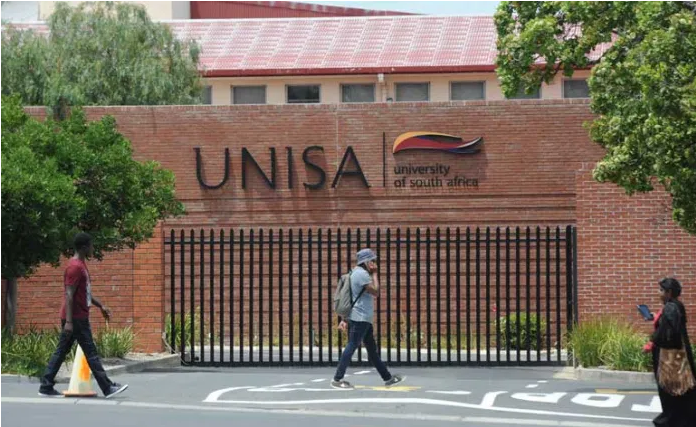
Unisa postpones graduation ceremonies following protest disruptions

WENDY MOTHATA

THE University of South Africa (Unisa) has postponed graduation ceremonies that were scheduled on Tuesday afternoon and Wednesday.

This is after lectures and a graduation ceremony were disrupted by protesting members of the National Education, Health and Allied Workers’ Union (NEHAWU).

“The graduation ceremonies scheduled this afternoon (15 March 2022) at 18:00 as well as tomorrow at 10:00 and 18:00 respectively have been postponed until further notice.” The university will communicate more information about the outstanding graduation ceremonies in due course,” Unisa said.

The university has apologized to graduates.

“The University of South Africa (Unisa) would like to extend its sincerest apologies to the graduates and guests who were inconvenienced by the disruption of the graduation ceremony by protesting members of NEHAWU scheduled for this morning,” the university said.

Unisa added that the management is in talks with NEHAWU about the issues that led to the disruption.

“University Management is currently in conversation with NEHAWU about the issues in dispute that led to the disruption, as well as the rules of engagement when employees exercise their right to protest” said the university.     

The university said it will make alternative arrangements for the graduates who have been inconvenienced by the disruption and will, in due course, communicate the details of such arrangements directly to the affected graduates.

Unisa student, Tawanda Shoniwa, scheduled to graduate on Wednesday said that he is very disappointed by the cancellation of graduation ceremonies.

Shoniwa is from United Arab Emirates (UAE).

He said, “I flew from across the world for this ceremony and booked in hotels. Now you say this.”

When asked if he is going wait for further announcements or return back he said “I can’t wait for further announcements. My supervisor is expecting me back to work on Friday morning. Wish they could give me my certificate. Now after buying a gown for R6600, travelling and accommodation expenses I am going back empty handed.”

-Inside Education

MEC Panyaza Lesufi says Independent law firm will investigate the death of Tsakane Secondary School learner

STAFF REPORTER |

In a bid to give answers to the family of a Grade 10 learner who died at Tsakane Secondary School in the East Rand, the Gauteng Education MEC Panyaza Lesufi says an independent investigative law firm will be appointed to investigate circumstances surrounding the incident.

The move is also to help the family to find closure to the unforseen death of their child.

It is alleged that the deceased was assaulted by a teacher and a General Assistance at the school last week, and subsequently passed away.

Prior to his death, the learner had allegedly gone to school to collect his bag and cellphone which were confiscated last Thursday.

Subsequently, he was removed from the school premises by police and taken home after being involved in a scuffle with an educator and a General Assistant at the school.

Accordingly, his family later drove him to Pholosong Hospital where he was certified dead.

Lesufi said he wants to prioritise the family because they want answers concerning the death of their child. Thus, an independent law firm will be will appointed to investigate the matter.

“The appointment of the independent law firm will give us a preliminary report to share with the family and the school. I want to prioritise the family because they want answers,” said MEC Lesufi.

University of Limpopo mourns death of amiable Professor Mohamed Saber Tayob, gunned down while jogging

STAFF REPORTER |

THE University of Limpopo is devastated by the tragic death of Professor Mohamed Saber Tayob, who was gunned down while jogging in Polokwane, Limpopo, on Sunday.

‘’The University of Limpopo and the Faculty of Management and Law (FML) are devastated by the passing away of Prof Mohamed Saber Tayob who was gunned down while jogging in Polokwane on Sunday, 13 March 2022,’’ the university said.

The Vice-Chancellor and Principal, Professor Mahlo Mokgalong, has expressed his shock at the untimely death of Professor Tayob.

“I’m shocked and dismay at the passing of one of the University’s rising academics and
leaders,” he said. 

Executive Dean, Professor Omphemetse Sibanda, the Executive Team of the FML, staff and students extend their deepest condolences to his family and friends, wishing them strength during this difficult time.  

Professor Tayob was the Director of the School of Accountancy at the University from 01 March 2020 until his death. He joined the University of Limpopo on 01 October 2009 as a Senior Lecturer of Accounting and Auditing, earning promotion to Associate Professor on 01 July 201. He was also the Acting Programme Coordinator for the University’s Postgraduate Diploma in Accountancy (PGDA) from the beginning of 2020.

Professor Tayob was a seasoned Chartered Accountant (CA) and academic, who served the School of Accountancy with distinction, making it his purpose to help it grow as a centre of excellence in all its disciplines. To this end, he worked tirelessly for the School to gain sustainable success in its core business of teaching and learning, research and community engagement. 

“He was instrumental in ensuring that the University of Limpopo gained accreditation by the South African Institute of Chartered Accountants (SAICA) to offer the Bachelor of Accounting Science and PGDA independently in 2011 and 2017, respectively. These
milestones allowed the University to produce Chartered Accountants, quite a pivotal accomplishment,” the university said.

The police have since launched a manhunt for a gunman who killed the professor and called on the public to come fourth if there’s any information.

Limpopo police spokesperson, Brigadier Motlafela Mojapelo said: “The victim was reportedly jogging when a white VW Polo drove past him and then made a U-turn. The said vehicle stopped next to him and a passenger disembarked and shot the victim several times at point-blank. The suspects quickly drove off from the scene,” said Mojapelo.

Acting Limpopo police commissioner Major General Jan Scheepers appealed for assistance
with the investigation.

Anyone who has information has been urged to contact Warrant Officer Joseph Malebana
on 072 492 9635.

  • Inside Education

Gauteng temporary teachers now paid their salaries in full, says SAOU

VICKY ABRAHAM |

MOST of the temporary teachers in the Gauteng province who were not paid their remuneration have been paid. This is according to the Gauteng Department of Education and the trade union for teachers’, Suid-Afrikaanse Onderwysers Unie (SAOU).

Responding to Inside Education’s media enquiry, the Gauteng Department of Education’s spokesperson, Steve Mabona said, “The major delay in payments has been largely because of the deactivation of the PERSAL system (payment system) that has been interrupted by the tax recalculation period from 16 February 2022 (based on tax year closure). As a result, all payments that were scheduled for the 21st, 25th and 28th February 2022 were affected”. 

Speaking to Inside Education, the Acting Provincial Secretary of SAOU in Gauteng Liesl Rehbock said, “Most of the educators have been paid. But we are still following up with our members. I do not know about other unions. I can only speak on behalf of our members. I can’t say why they were not paid”.

In its attempt to assist the unpaid temporary educators, SAOU in Gauteng which is also known as the South African Teachers’ Union had distributed a message to schools to provide it with relevant details of the affected individuals. 

“The SAOU (Gauteng) is aware that all temporary educators have not yet received remuneration. Could you please provide us with a list of names of temporary staff in your school who have not yet received payment to enable us to refer a dispute.

To assist temporary educators please forward the relevant information to the SAOU before or on Wednesday, 23 February 2022,” said SAOU in a circulated message to different schools in Gauteng. 

Mabona, said the Department was aware of the non-payment of some of the temporary teachers in Gauteng. Mabona said the payments reflected in their bank accounts from March 7, 2022. 


– Inside Education

Black women in South African academia struggle to get ahead: what needs to change

JEAN LEE FARMER |

In South Africa, the number of black women who acquire undergraduate degrees has increased more than any other population group. Yet they remain underrepresented in senior academic and management positions in the country’s higher education institutions.

Historically, black South African pupils received separate schooling and less funding  for education from the apartheid government than white pupils. Mixed-race, Indian and Asian learners received slightly more than black learners. Separate higher education institutions were also established for the different race groups. Very few black students could apply for special permission to attend historically white institutions, and only for specific careers.

Black women have also been historically and culturally marginalised in their families and society. Despite legislation to support transformation, black women remain the most marginalised.

Under apartheid, white women received the same financial, educational and cultural favour as white men. Policies and programmes initially aimed at changing the imbalance, have a major loophole for employment equity. It places white women on par with black women and men as “previously disadvantaged” and thus equally entitled to employment opportunities.

While the responsibility for redressing the issues should not be laid solely at the feet of higher education institutions, the onus should not rest upon black women to rectify the problematic practices.

For my PhD in higher education I did an in-depth investigation of the narratives of six black women academics at four South African higher education institutions. For the investigation to be as unbiased as possible, it was important to look at the role of the institutions as well as the individual and what possible enablers and constraints could be identified in this interplay. The aim was to identify what possibly influenced the low uptake of black women in senior positions in South Africa’s higher education institutions.

It was important to investigate the history of the institutions as well as to establish their post-apartheid transformation policies. The sense of identity, familial and educational connections the women developed during their educational journeys was an important factor. Black women are often seen as a homogeneous group but the academics in my study were as diverse in personality, cultural and political backgrounds and aspirations as any other group.

The research

For the pilot study I interviewed 19 respondents once in a group setting. I reported in-depth on six participants who were asked to respond in two one-hour sessions. One session was about their educational background and the other about their current academic context. I encouraged the participants to talk freely about their experiences.

The participants came from various backgrounds ranging from urban impoverished to middle-class. The 25 participants, ranging from 37 to 45 years old, were in either senior, mid or junior positions in academia.

All said that they loved working with their students irrespective of student race. Some said they experienced disrespect from some white students but that other white students made up for it. Those at historically white institutions said that student interaction was the best part of their job.

The main concern many of the women had about historically black institutions was that students were poor and often came to class hungry. Those teaching at these institutions said they appreciated interaction with colleagues and students alike.

All participants who had experience at both historically white and black institutions said that they had been happier while working at historically black institutions. They felt respected as equals and valued, also by their white counterparts. They felt satisfied that they had progressed in their careers in accordance with their efforts. They mentioned that they often socialised with their colleagues irrespective of race.

Interviewees in historically white institutions said that they constantly felt unheard in meetings, not complimented for efforts, overlooked for mentoring in favour of less experienced white men and women and sometimes black men. One academic said:

I noticed that I was being taught while white colleagues would be mentored.

They also said they felt left out of the social “cliques” formed among white colleagues. Those at historically white institutions felt that if they wanted to progress they would have to leave their current institution. They said they would leave for an opportunity at a historically black institution, or another career, even for less money.

The analogies that emerged from what the respondents told me were of constantly shifting goalposts and marble (rather than glass) ceilings – impenetrable and nontransparent. Black women at historically white institutions said they found it difficult to highlight problematic behaviour lest they sound like the “complaining victim”. And they often felt uninformed of the standard which allowed others to advance over them.

The fear of victimisation was persistent. During my interviews every academic from historically white institutions repeatedly asked to be assured of anonymity.

The study shows there’s silence around the need for a caring environment for all academics, especially black women.

Going forward

I suggest the following steps:

  1. Institutions need ongoing investigations and open discussions about ways to attract more black women into academia.
  2. Institutional management owes it to society to investigate whether their own culture excludes black women and makes them feel like impostors.
  3. Government needs to amend legislation that views white women as disadvantaged to the same extent as black women; and white women should acknowledge the difference.
  4. A women and race studies department should be standard at all institutions. Universities need to make sure the voices of black women are heard and recognise their role in transformation.
  5. Mentoring of new black women academics should be standard practice. They should be encouraged to exercise agency and help change the culture.

Jean Lee Framer

Advisor: Higher Education Professional Development, Stellenbosch University.- The Conversation

10 South African students safely home from Ukraine, 2 more in isolation after testing positive for COVID-19

STAFF REPORTER |

WHILE 10 South African students who were forced to flee their Ukrainian universities following Russia invaded the country last month have safely returned home, two are currently in isolation at Ukraine after testing positive for COVID-19.

This is all thanks to a partnership between the Department of International Relations and Cooperation (DIRCO) and pharmaceutical company, Aspen Pharmacare, which managed to assist in returning 10 South African students from Ukraine on Thursday, last week.

DIRCO spokesperson Clayson Monyela said: “We want all South Africans to be back home, that’s our primary objective. With the students in particular, the number that we were working on was 25, that’s according to Aspen’s list. However, two has tested positive for
COVID-19 and they are in isolation and it will take 10 days.”

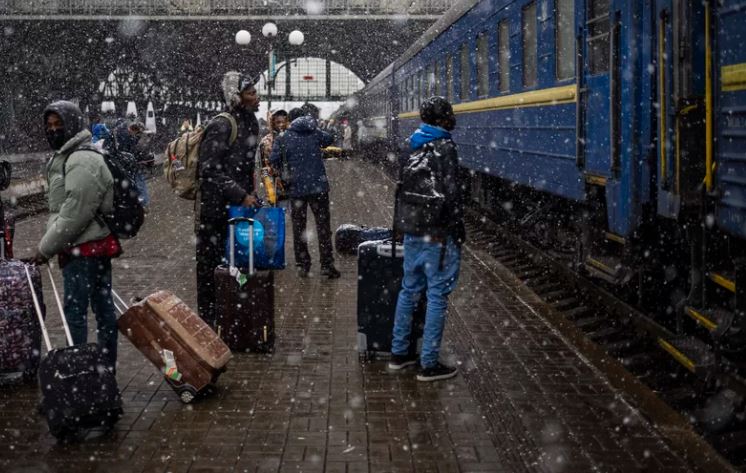
The students were forced to flee the Ukraine into neighbouring countries in the wake of the raging armed conflict.

The 10, who are studying across various universities in the Ukraine, arrived in the country on Thursday morning.

In a joint statement, Aspen and Dirco said that the students and other nationals crossed into neighbouring countries such as Hungary, Poland, Romania and Slovakia.

“Most did not have the means to return home.”

“After learning of the plight of these students, Aspen Pharmacare joined forces with DIRCO to expedite both the travel arrangements and funding required to assist with their safe return to South Africa.  The first group of 10 students will arrive this morning, 10 March 2022, on an Air France Flight at OR Tambo International Airport,” said Aspen and DIRCO.

Aspen Group Senior Executive for Strategic Trade, Stavros Nicolaou, said the Ukraine conflict has created a significant humanitarian crisis, from which a number of South African students studying abroad in the Ukraine have been severely impacted.

“After the weekend appeal to our government and corporate South Africa from many of these students, Aspen, which has a presence in the Ukraine and neighbouring territories decided join forces with the South African government to ensure the timeous and safe return of these students to their home country, so that they can be united with their loved ones,” said Nicolaou.

Nicolaou added that students are the future and it is important that the spirit of Ubuntu
prevailed.

“Our students are our future, and it is important that the spirit of ubuntu prevailed and that together with our government, we were able to move swiftly to ensure their safe and timely return,” said Nicolaou.

Nicolaou said he is hopeful that the students will be able to resume their studies in the not-too-distant future. 

Monyela, has thanked Aspen for the partnership.

“We would like to thank Aspen Pharmacare for heeding the call of our government to partner with us and bring our citizens back home. We also want to extend a word of gratitude to all our ambassadors, team of diplomats and South African volunteers (at home and abroad), who played a role in this project. This is the diplomacy of ubuntu in practice,” he said.

  • Inside Education

Private university group STADIO delivers maiden dividend

JSE listed private university group STADIO has reported a strong set of results for the year ended December 2021, with growth in core earnings, more student enrolments, and declaring its maiden dividend to shareholders.

STADIO provides higher education programmes through its three owned private higher education institutions – STADIO Higher Education, AFDA and Milpark – offering both undergraduate and postgraduate programmes through contact, distance and blended learning methods.

The group said that core headline earnings increased by 27% to R149 million, with a 9% growth in student numbers. Core headlines earnings per share grew by 24% from 14.2 to 17.6 cents, with revenue up by 18% to R1.1 billion.

The overall growth in Core HEPS was due to the underlying organic growth in EBITDA, the group said, as well as realising certain cost savings from altering teaching and learning practices to serve students within the constraints of the Covid-19 imposed restrictions.

EBITDA grew by more than 100% to R309 million (2020: R46 million).

“The large increase in EBITDA is primarily due to organic growth in the underlying businesses and the material impact in the prior year of the R207 million fair value adjustment in respect of the CA Connect acquisition,” it said.

Enrolments at 31 December 2021 increased by 9% to 38,262 students (2020: 35,031). Over the same period, distance learning student enrolments grew by 13% to 32 320 students (2020: 28 664), and contact learning students contracted by 7% to 5,942 students (2020: 6,367).

Distance learning students represented 84% of total students at 31 December 2021, with contact learning students representing 16%.

The group declared a maiden dividend of 4.70 cents per share – a value of just under R40 million paid out to ordinary shareholders.

STADIO Holdings CEO, Chris Vorster, said that the results are especially pleasing considering the uncertain and difficult environment in which it was achieved. “Also of note is the fact that we were in a favourable financial position to declare a maiden dividend of 4.7 cents to shareholders. This represents excess cash available following a period of significant capital investment since the listing of STADIO Holdings in 2017.

“However, this is by no means an indication that growth projects will cease as the group has a solid balance sheet with limited gearing.”

Vorster said that distance learning student numbers reflected good overall growth, with online professional qualifications showing significant growth in enrolments over the period.

“The decline in contact learning students is mainly due to students delaying or deferring studies given the uncertainties of Covid-19. We nevertheless believe that the contact learning student numbers will recover once normality and stability return to campuses.”

The STADIO Group currently has 86 programmes that are accredited, with an additional 34 programmes across both contact and distance learning modes of delivery (including programmes in Law, Engineering and Information Technology) in the process of development and/or accreditation.

At year-end, STADIO had invested R52 million into the completion of Phase 1 of the STADIO Centurion campus, which opened its doors in January 2022. A further R22 million was invested to complete Phase ll of the campus, with the development set to be completed during 2022.

STADIO also invested R71 million for the transfer of, and for development contributions related to the STADIO Durbanville land.

The transfer and development of the Krugersdorp distance learning logistics centre was subsequently postponed to the second quarter of 2022. A further R31 million was invested across the group on existing facilities, systems and moveable assets.

“We have made significant strides in positioning the group’s underlying institutions to be able to pursue its strategic objectives and ultimately achieve sustainable growth in 2021.”

“The group is well-positioned to meet the growing demands of the country’s higher education needs and we believe that higher education is a fundamental pillar of social and economic empowerment that will promote economic growth in the country,” said Vorster.

– BusinessTech