Home Blog Page 291

Ugandan children back to school after nearly 2-year Covid closure

0

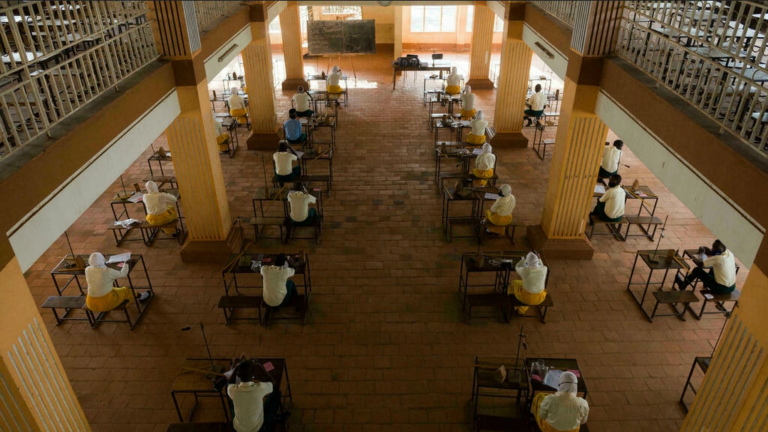
UGANDA ended the world’s longest school closure on Monday, ordering millions of students back to the classroom nearly two years after learning was suspended because of the coronavirus pandemic.

Some 15 million pupils have not attended school in Uganda since March 2020 when classrooms were shuttered as Covid-19 swept the world.

Education Minister John Muyingo said all students would automatically resume classes a year above where they left off.

“All schools have implemented guidelines and standard operating procedures to ensure the safe return of children to schools, and measures have been put in place to ensure those who don’t comply do so,” he told AFP.

Muyingo said any private schools demanding fees above pre-pandemic rates would be sanctioned.

The rush to return children to school clogged traffic in the capital Kampala.

Child rights groups had criticised Uganda’s decision to keep schools fully or partially shuttered for 83 weeks, longer than anywhere else in the world.

“We can’t let this happen again. We must keep schools open for every child, everywhere,” the UN child rights group UNICEF said on Twitter.

The charity Save the Children said students would struggle to adapt after falling so far behind, and warned there could be high dropout rates in coming weeks without urgent intervention to support learners.

Uganda has recorded 153,762 cases of Covid-19 and 3,339 deaths, according to the latest government figures issued on January 7.

  • * AFP

Encouraging girls in STEM in the Ivory Coast

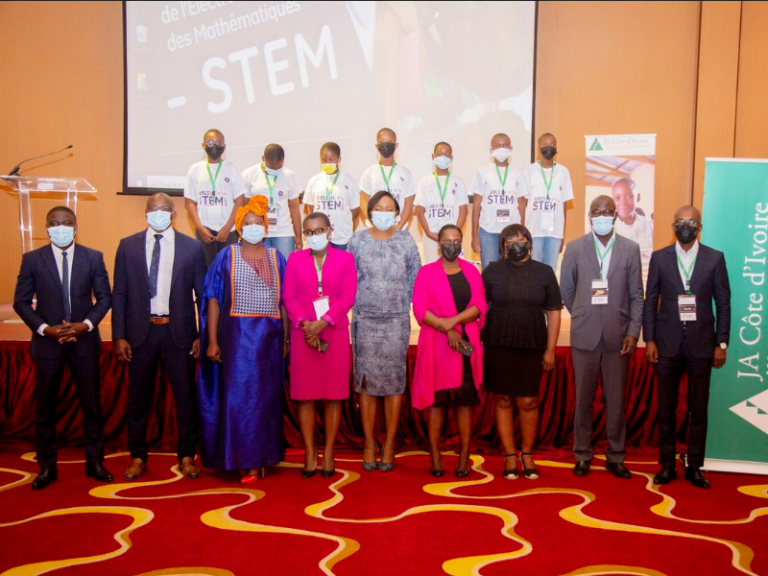
GE and Junior Achievement Ivory Coast hosted a “Girls in STEM” event for 100 secondary school girls to build foundational science, technology, engineering, and mathematics (STEM) knowledge.

The programme was organised as part of GE Gas Power’s commitment to inclusion and diversity, to inspire the next generation of women engineers and innovators. The aim of the programme is to help shape the perception of STEM careers and shift the gender gap in these key fields.

The programme featured leadership and educational panel discussions, mentoring and career insights sessions from renowned STEM leaders in the region as well as visits to STEM related sites including the Azito power plant in Yopougon, GE’s simulation centre in Bingerville and the CIPREL power plant in Vridi.

The site visits were aimed at creating an immersive experience into potential careers that can be explored in STEM.

According to the World Bank and the 2020 Global Gender Gap Index by the World Economic Forum (WEF), there are fewer women than men who are STEM graduates in most economies and although progress is being made to increase women’s participation in many fields, they still make up a minority of the world’s STEM workforce which experts say is impeding progress in solving Africa’s complex development problems.

Women’s workforce participation has been demonstrated to be a potent driver of the economic growth and development of a country with research showing a significant association between a country’s GDP and female labour force participation.

“To improve economic inclusion and narrow the gender gap, companies, schools, relevant government agencies and institutions need to launch new programmes and expand existing efforts to attract more female talent into STEM fields. These efforts must start early, such as encouraging more girls to pursue STEM subjects in school and consider STEM fields as they move through their education cycle. Our goal is to enable and encourage the next generation of women engineers and innovators that will transform Africa,” said Elisee Sezan, CEO for GE’s Gas Power business in sub-Saharan Africa.

Muriel Banny M’Bow, the Board’s Chair from Junior Achievement in Ivory Coast said: “We are pleased to collaborate with GE Gas Power for today’s Girls in STEM event as it aligns with our overall mission to significantly contribute to a better workforce of tomorrow by preparing students for jobs of the future. Tackling the gender imbalance within STEM careers through enabling more girls and women is important for innovation.”


Save the Date: Cape Town Youth Cup for Football and Netball in 2022

THE Cape Town Youth Cup is an inaugural multi-sport tournament consisting of Football and Netball u/19 sports codes to be hosted by Pure Travel. Football will feature both boys’ and girls’ categories.

The tournament will take place over three days from 31 March to 2 April 2022 at Reddam Constantia School.

The stadium will host 3 football fields and 4 netball courts.

The current number of teams in each division is 12, but our goal is to increase it each year moving forward.

We will be partnering with SA Schools Netball and South African Football Association Western Cape to ensure a prestigious event.

Secure your spot now – youth@pure-travel.co.za

Class of 2021 Disadvantaged By Reduced Teaching Time in Grade 11, Says Department Of Basic Education DG Mathanzima Mweli

THE matric class of 2021 was disrupted in their schooling over the last two years, and the impact of the loss of more than 50% of their Grade 11 year presented serious consequences for the class.

Speaking at the Umalusi standardisation meeting held on Thursday in Pretoria, the Department of Basic Education Director-General, Mathanzima Mweli, said the important foundation that Grade 11 work builds in preparation for Grade 12 was weakened.

“We will therefore see the deleterious effect of lost teaching time, in particular on those subjects that are time intensive such as the languages, and subjects that are heavily dependent on language for utility, such as Mathematical Literacy,” he said.

The Director-General said the standardisation of the 2021 NSC examinations is a special meeting that deserves distinctive attention for a number of reasons.

“These learners not only had to deal with a reduced exposure to face-to-face teaching and learning but they also had to contend with the anxieties and trauma of COVID-19. Countless families have been pushed to the limits of financial endurance from lost jobs and income.

“Not only this but also many families have lost family members and friends due to the pandemic,” Mweli said.

He said when looking at the principles of the science of how pupils learn, the cohort of 2021 was heavily impacted during their Grade 11 year due to reduced teaching time.

Mweli emphasised that learning is strengthened through the retrieval practice, which must be done multiple times and over time, including revisiting subject content across multiple sessions with good, specific and focused feedback from teachers and others, such as peers.

“The class of 2021 was deprived of this advantage. The unique learning context necessitated a robust, targeted and differentiated learner support programme for this cohort. The sector increased not only the learner beneficiaries and scope of the interventions but also the number and type of interventions offered to this class,” he said.

Mweli said the class of 2021 is also the first class to be presented with amendments to Section 4 of the Curriculum Assessment Policy Statements (CAPS), which impacted on 20 of the 67 subjects of this class.

“A further unanticipated hurdle that confronted this class was the load shedding that would have adversely affected their final preparations for the examinations.

“A total of 733 746 full-time candidates registered to write the 2021 NSC examination — the largest full time cohort over the last few years. A total of 123 487 more full-time candidates and 46 942 more part-time candidates registered to write the examination,” he said.

The Director-General said of the 733 746 candidates that registered for the examination, 700 604 candidates wrote the examination, which reflects the lowest percentage of “no shows” (4.5%) over the last few years.

“The increase in the number of full-time candidates can be attributed to a number of factors and one of the key factors is the change in the assessment regime, in Grade 10 and 11, which was prompted by the need to create maximum time for teaching and learning,” he said.

He added that the school based assessment in Grade 11 was increased from 25% to 60% and examinations were replaced by controlled tests.

“Hence, the change in assessment practices resulted in a different outcome. These learners would therefore have written their first fully-fledged examination in their Grade 12 year, which was part of the preparatory examination,” Mweli said.

Mweli said one of the purposes of standardisation is to ensure fairness from year to year and the disadvantages suffered by the class of 2021 cannot be ignored, as part of “our social justice obligations”.

Meanwhile, Basic Education Minister Angie Motshekga is expected to announce the outcome of the results of the 2021 NSC examinations on 20 January 2022.

  • * SA News

NSFAS Extends Student Funding Deadline for 2022

THE National Student Financial Aid Scheme (NSFAS) has extended its deadline for student financial aid to 21 January 2022.

The NSFAS was established to provide financial aid to eligible students from poor and working-class families. It provides fully-subsidised funding for poor and working-class students at public universities.

The bursary covers the full cost of study, including tuition, registration, learning materials, meal allowance, accommodation/travel allowance, and personal care allowance.

The application process for 2022 opened on 2 November 2021 and to date, more than 600,000 applications have been received from applicants who intend to further their post-school education at any of the 50 TVET colleges and 26 public universities. At least 505,820 are first-time applicants, the fund said.

Potential applicants are urged to make use of the opportunity as there will be no further extension on the application deadline, the fund said.

To qualify for NSFAS funding you must be:

  • A South African citizen;
  • SASSA grant recipients (the SASSA Covid-19 grant does not count);
  • Persons whose combined household income is not more than R350,000 per year;
  • Persons living with disabilities with a combined household income not more than R600,000 per annum.
  • A permanent resident – An individual who is in possession of a valid Permanent Residency Permit issued by the Department of Home Affairs.

Supporting documents required include:

  • All applicants must provide a copy of their ID document. Smart ID cards: a copy with both sides of the smart ID must be provided;
  • A temporary ID issued by the Department of Home Affairs
  • Non-SASSA applicants must provide ID copies of parent/s, legal guardian/guardian or spouse;
  • Proof of income: applicant and/or parents/legal guardian/spouse (where applicable (non-SASSA) should provide latest payslip not older than three months, UIF letter, appointment letter, retrenchment letter (applicant and/or parent(s), legal guardian/spouse).

How can students apply?

  • NSFAS applications are submitted online through the myNSFAS portal (www.nsfas.org.za), where students can submit their applications using their smartphones or computer.
  • To apply you must create a myNSFAS account online, then proceed to the application tab where you will fill in your personal details.
  • Applicants must ensure that they receive a reference number when they have submitted their application, as proof that their applications have been successfully submitted.
  •  If you do not have a digital device or access to the internet, you can visit your nearest National Youth Development Agency (NYDA) or Thusong Centre to apply following the same steps.

Open education resources offer many benefits: how to remove obstacles

VOLLAN OKOTH OCHIENG and RAZAK M. GYASI

NEARLY 1.6 billion learners globally have been experiencing various forms of disruption in learning due to COVID-19. School closures, as a means to reduce the spread of the virus, set the stage for the adoption of online learning solutions.

Several governments in sub-Saharan Africa, as in other parts of the world, adopted distance learning approaches to allow education to go on during the pandemic.

Distance learning approaches use various technologies to share educational material. They include YouTube, Zoom, Google Classroom, Teams, Internet educational websites, television, radio, tablets, computers and smartphones.

Distance learning also relies a lot on open education resources. These are educational and research resources in any format in the public space that can be accessed freely. They’re made available to promote access to and use of quality educational material without geographical barriers. Users can also share such content with no restrictions.

We wanted to know more about the impact of these resources on research productivity in higher education. Our paper reviewed existing literature and found that open education resources propel research productivity in higher education institutions.

For example, these resources offered free access to a wide range of educational and research materials to students. But we also found systemic failures as a key challenge for universal adoption of open education resources, particularly in developing countries.

The main challenges are the economic, technical, legal, social, and infrastructural requirements needed to make open education resources available.

Benefits and limitations

Open education resource platforms improve access to education. They allow users to access, store, redevelop, and redistribute resources freely to wider networks for greater coverage. As a result, these resources and related platforms are globalising education on a scale never seen before.

There are many examples and we have listed some in our paper. One of them is African Virtual University. It has ten physical centres in five African countries – Zambia, Zimbabwe, Kenya, Ethiopia, and Senegal. Another is Commonwealth of Learning. This is a platform set up in tertiary institutions in Malawi, Tanzania and Nigeria.

Open resources allow academics to offer constructive criticism, add to a body of knowledge, or build on a principle or concept. Access to these resources can generate ideas, materials, and technologies with a wider user base and application.

The resources help link scholars working on similar fields or projects in different geographical spaces. They offer a platform for collaboration in research and related publications.

The productivity of an institution can be measured in terms of its research output. The number of research publications produced by academics and students determines the ability of an institution to inform and build new knowledge. Open education resources have boosted research productivity by removing cost-related barriers to doing this.

In addition to research, the resources have benefits for learning. Materials used in world class universities are now available to universities in developing countries.

Open resources have the added potential benefit of enabling people to take active roles in shaping their own learning.

Our review identified the benefits of open educational resources as:

  • promoting the use of novel methods of learning,
  • regulating educational costs,
  • regular refinement of quality of educational materials,
  • wider dissemination of good quality educational material and
  • creating opportunities for learning.

While open education resources have these benefits, they also have some downsides. These are diverse and vary between and within countries.

  • Sustainability issues: creators don’t receive payment for materials shared online, so they may have little incentive to continue with this work.
  • Quality concerns: users might be able to post material that hasn’t been checked for accuracy.
  • Missing human interaction and feedback between students and teachers.
  • Intellectual property and copyright concerns: all materials shared online must be checked to ensure that they don’t violate copyright laws.

There are also challenges of infrastructure, technical skills and costs. Some educators may be reluctant to share intellectual property or to use resources developed by others. Some may lack awareness of copyright issues and restrictive licences that prohibit changes to material. The fact that most resources are in English is another limitation.

Why open education resources matter

Our study showed that open education resources have had a positive impact on the demand for learning, and on knowledge and skills for jobs. These educational resources have transformed the research and learning landscape.

For optimal adoption of open education resources, there’s a need for investment in infrastructure. Easing of restrictive legal provisions would also help. Adoption will also depend on a change of attitude among stakeholders in education.

Open education resources are crucial during the COVID-19 crisis. They will also enhance the future of education beyond COVID-19 and will be central in achieving the sustainable development goal of quality education in sub-Saharan Africa.

  • The Conversation

Abducted Gauteng learner returns home safely – Lesufi

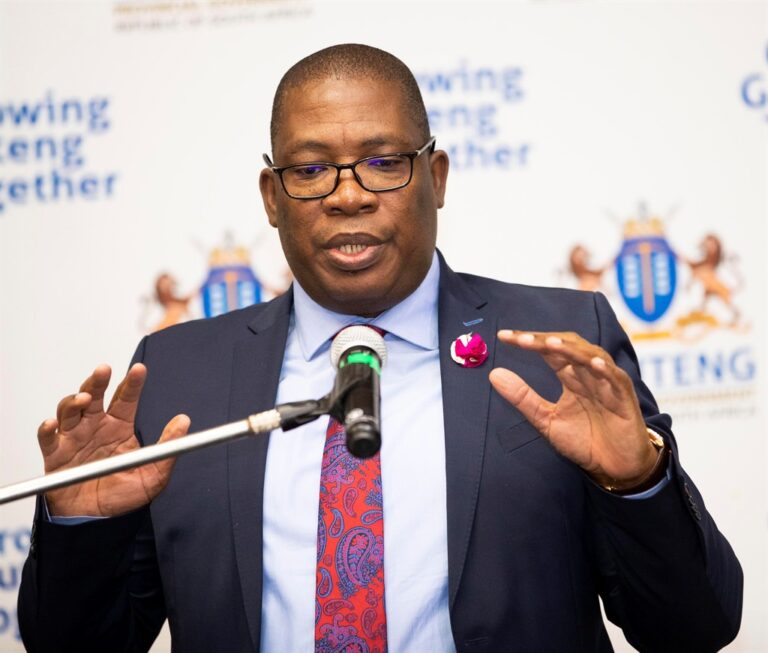
GAUTENG Education MEC Panyaza Lesufi says he is delighted that an 11-year-old girl learner, who was kidnapped last year, has returned home safely.

In a statement on Wednesday, the Gauteng Department of Education said the grade 5 learner’s mother received a call from the police this morning informing her to fetch the child at the police station.

The learner from E. P. Baumann Primary School in Mayfair was kidnapped at gunpoint by three males in a Toyota Yaris with the registration number JS 62 CS GP on the morning of 17 November 2021.

The incident took place outside the school gate while she was waiting in line to be sanitized and screened.

Lesufi said he was delighted to receive the good news of the safe return of the learner.

“We will avail our Psycho-Social Unit to provide additional counselling to her, given the trauma she has faced during this unfortunate incident,” Lesufi said.

Africa gets biggest slice from World Bank’s tertiary investment

A SNAPSHOT of the World Bank’s current portfolio in tertiary education shows that Africa has been receiving the biggest slice, US$3.8 billion, of a total of about US$9.8 billion that is being invested in the sector globally.

This figure is expected to grow, said Dr Roberta Bassett, the World Bank’s global lead for tertiary education.

Her presentation, ‘Tertiary education in Sub-Saharan Africa in the time of COVID-19’ was part of the African Network for Internationalization of Education’s conference on 25 November. The event focused on regional and global cooperation in higher education and adaptive strategies for the future of Africa’s higher education post-COVID.

The World Bank invested about US$3.8 billion in Africa, followed by US$2.341 million in South Asia, US$1.604 billion in Latin America and the Caribbean, US$894 million in East Asia, US$855 million in Europe and Central Asia and US$199 million in the Middle East and North Africa respectively, making Africa the biggest beneficiary. The total operational financing available to tertiary education during 2015-20 was approximately US$9.8 billion.

Despite the investments by the World Bank, other funders and governments that are spending, on average, about 21% of their budgets on tertiary education (compared to 43% on primary and 27% on secondary education) the current gross tertiary enrolment ratio in Sub-Saharan Africa stands at 9.4%, the lowest in the world.

“Even though Sub-Saharan Africa has been doubling its enrolment every 20 years, [during] the past 45 years, the gap has been growing, something [that is] of significant concern for those of us who support investment in tertiary education,” Bassett said.

In the context of COVID-19 and returning to normalcy and adaptability to learning, Bassett noted that African tertiary institutions have quickly returned to operations in comparison with other parts of the world.

Said Bassett: “We put out lots of money to support COVID-19 responses across all levels of education, supporting remote learning, building capacity in institutions to accelerate training, especially for the medical technicians, that were [involved] in cross-border interventions at the World Bank level.

“We are moving into the resilient phase, supporting countries to help students return to universities physically, and we connected students more, thinking about labour market outcomes, because we know there are financial shortcomings to support the social protection element of students’ experience,” she added.

Her presentation highlighted that, during COVID’s remote learning phase, only 0.44% of the population in Sub-Saharan Africa had access to fixed broadband and 25% to the internet. However, 97% of tertiary students have access to mobile phones, suggesting they could be harnessed more to expand learning platforms and apps.

She said that the pandemic crisis highlighted opportunities for higher learning, for instance, re-thinking internationalisation to expand awareness and opportunities beyond study and academic exchanges abroad through cross-border online delivery, learning from and partnering with peer nations, recognising regional students and exchanges as international and bringing international concepts and perspectives into local curricula.

She added that embedding international and regional ideas into the curricula, even if the mobility is not in place, is important to enhance internationalisation.

Transformation and internationalisation

On transformation and the future of internationalisation of higher education in Africa, Professor Olusola Oyewole, the secretary general of the Association of African Universities, emphasised the smart university concept, saying that change is imperative, hence the need for new thinking on how universities operate.

“The smart university concept involves technological advances for the effective management, administration and delivery of the main functions and services of the university. The concept of the smart university is an emerging and fast-evolving area that represents the creative integration of innovative concepts using smart software and hardware systems,” he said.

Components of smart universities, he added, include university stakeholders, curricula, pedagogy, software and hardware, technologies, resources, libraries, security and infrastructure.

Oyewole added that African universities ought to embrace the smart university concept as it has various benefits, including enhanced student learning experiences and campus safety, reduction in operation costs, support in data-based decisions, promotion of efficiency, flexibility for learners, advances for university reputation, and it helps with the promotion of internationalisation and knowledge mobility.

Smart universities can, therefore, advance internationalisation, which help to create world-class institutions that attract foreign students and staff into higher education systems for cross-cultural education.

Developments that would foster internationalisation are virtual learning across borders, which could be enhanced by the smart university concept, but also through universities with common values, diaspora involvement, and virtual supervision.

To foster internationalisation in the pandemic period, African universities need to install programmes like instant student exchanges abroad and also embrace staff mobility programmes for lecturers through partnerships and networks, both virtual and institutional, he suggested.

Teacher, trade unionist and Emalahleni mayor Linah Malatjie and husband killed in car crash

THE South African Local Government Association has sent its condolences following the death of Emalahleni Local Municipality Mayor, Linah Malatjie.

The mayor and her husband passed away in hospital following a head-on collision. The accident happened along the R544 road between Gemsbokspruit and Verena in Mpumalanga.

A teacher by profession, Malatjie cut her political teeth in the SA Democratic Teachers’ Union and Congress of SA Trade Unions, and the ANC.

“The South African Local Government Association (SALGA) expresses its sorrow and condolences for the death of Emalahleni Local Municipality Mayor, Councillor Linah Malatjie and her husband, Esau Malatjie, who passed away in a car crash on Monday morning, 3 January 2022,” it said in a statement.

SALGA said the mayor, who was re-elected as the Mayor of Emalahleni Municipality in Mpumalanga following the 1 November 2021 local government elections, made an indelible contribution not only to the communities she served in the municipality but also to the local government sector at large. 

“Serving as a member of the SALGA Mpumalanga provincial executive committee (PEC), Mayor Malatjie was an amazing and inspirational leader. Thanks to her rigour, professionalism and immense body of knowledge about local government affairs, which she generously shared, the organisation, municipality and the broader municipal government sector benefited considerably from this, and her passing is a profound loss.”

Malatjie, said the association, will be remembered as a strong and committed leader with a clear vision for Emalahleni, who always kept her door open to her colleagues and local government stakeholders. 

Transport Minister Fikile Mbalula earlier conveyed his condolences  saying he had learnt of her passing with sadness.

“This is yet another tragic passing of South Africans on our roads since the start of the festive season,” he said.

England Reintroduces Face Masks In Schools

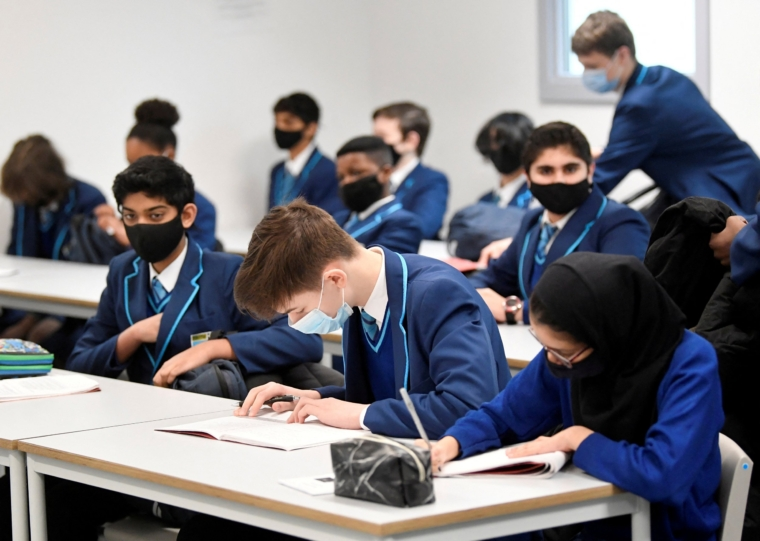
SCHOOLS in England returning this week after the Christmas holidays will see students wearing face masks until the end of the month, it was announced on Sunday.

The department for education said the advice was “short-term only to support pupils and teachers as they return to schools this term” and would remain in place until 26 January.

Rules for Scotland, Wales and Northern Ireland are set by the devolved governments.

The government is also drawing up contingency plans over fears a quarter of public sector workers could be absent due to the Omicron wave.

Masks will “maximise the number of children in school” for the “maximum amount of time”, said the government, stressing the “temporary” guidance for schools and colleges will be reviewed on 26 January when Plan B regulations are scheduled to expire.

However, senior figures in the education sector are warning that classes and year groups may again have to learn from home due to issues with staffing levels caused by the pandemic.

The government has said an additional 7,000 air cleaning units are going to be provided to schools, colleges and early years settings ahead of young people returning from the Christmas holidays.

But the NEU teaching union has criticised the number of units as “completely inadequate”.

Paul Whiteman, the head of school leaders’ union NAHT, welcomed the moves over masks and air filtration systems, and said “the best place for children to learn is in school”.

“We need to do everything possible to ensure face-to-face teaching continues, despite increasing infection rates due to the new variant,” he said.

Face coverings are already encouraged for secondary school and older students in communal areas and corridors, but the existing guidance does not advise to wear them in classrooms.

Shadow health secretary Wes Streeting said: “If the choice is between having masks at schools or children missing schools in huge numbers, of course we want to keep pupils learning. That’s got to be the priority.

“Pupils should be testing twice a week. There’s lots of evidence to suggest that hasn’t been happening properly. So the message for Government is get the tests in place, make sure pupils are able to test twice a week.”

Robert Halfon, conservative MP and chairman of the House of Commons Education Select Committee said: “What I’d like the Government to do is set out why they’re doing this, set out the evidence in the House of Commons… I do worry masks in schools will have a negative impact.”

Geoff Barton, the head of the Association of School and College Leaders, also supported the latest moves.

He said: “While there are obvious drawbacks to the use of face coverings in classrooms, it is clear that the Omicron variant poses a very significant additional risk to education with the potential for further widespread disruption of schools, colleges, and young people.”

And he warned that as staffing levels were disrupted by the surge in cases, some classes and year groups could be forced to learn from home again.

“All of this is a recognition by the government that the spring term will be extremely challenging for schools and colleges,” he added.

What is Plan B?

https://interactive.news.sky.com/2020/covid-19-coronavirus/uk-cases-avg/index.html The government said that on top of a break from Ofsted inspections in the first week of term – which had already been announced – schools are being encouraged to ask for a deferral if they are “significantly impacted by COVID-related staff absence”.

It comes as six trade unions for education workers have urged the government to offer improved financial support for schools and colleges to help cover the costs of supply staff.

Also, there has been a nationwide shortage of lateral flow and PCR tests in the UK over recent weeks and schools are being asked to test pupils when they return after the Christmas break.

But a spokesperson for the Department for Education told Sky News that the shortage in lateral flow tests for delivery on the government’s portal will not impact tests being provided to schools.

“Schools and colleges use a different priority supply route to get their lateral flow tests,” they explained.

“Most test kits have already been received for the start of the new term and we have arrangements in place to make sure every school has the testing it needs.”