Home Blog Page 293

Science & Technology | Promoting mathematics to girls in Ghana

VOICES FROM AFRICA Angela Tabiri, who researches quantum algebra at the African Institute for Mathematical Sciences (AIMS) in Accra, was a PhD student at the University of Glasgow, UK, when she launched Femafricmaths in 2018.

The network shares the stories of African female mathematicians through video interviews posted on social media. The vision is to help young girls become confident in pursuing careers in mathematics and related fields. Tabiri’s profile is the third of eight in which African women share their science-career stories with Nature.

I graduated from the University of Ghana in Accra with a combined degree in economics and mathematics. One of my mentors told me about the opportunity to study for a master’s degree at AIMS, a network of centres of excellence across Africa, which had just opened a site in Accra.

That was a turning point for me. It was like being immersed in a 24-hour learning environment. They bring in renowned lecturers from around the world to live there and teach three-week intensive courses. It was tough, with assignments due every Saturday at midnight. But I liked doing the challenging bits. That training also helped me to acquire digital and presentation skills.

I decided to apply to the University of Glasgow for a PhD. But that meant that I needed funding. I applied for and won a Faculty for the Future fellowship from the Schlumberger Foundation, which provides funding for women in science, technology, engineering and mathematics (STEM) from low-income countries to study at leading universities around the world. The foundation is looking for female leaders — you have to have academic excellence, but also show a commitment to promoting women in STEM in your home country.

In Glasgow, I really grew in terms of my skills and abilities. I also realized the power of social media to showcase and promote my research online. There is an audience out there looking for something beyond the ‘maths is difficult’ narrative.

I started the Femafricmaths initiative because I didn’t see many mathematicians that were people of colour, and particularly women — it’s not a narrative for most girls in Africa. Femafricmaths is a network of African female mathematicians who highlight their different career paths through social media and promote the study of maths at schools.

I returned to Ghana in 2019 and started a postdoctoral position at AIMS. Often, in the field of maths, you might be the only female in a workplace team and that means that you have to be a bit tough. When I was teaching, instead of ‘Doctor’ the students called me ‘Madame’. Colleagues made comments about me starting a family and said that I might never get married. There’s a cultural pressure of ‘What are you doing competing in the space of men? You should be in the kitchen.’

Women should find their voice. People will always find ways to bully you or look down on you. Whatever environment I’m in, I need to find my voice and speak up.

Once you know what you want to do, carve your own niche. I’m good at algebra, but I’m also good at science communication and helping girls to follow STEM studies. So I developed myself in those areas — there are so many things I bring to the table. Find your voice, develop your skills and then when people downplay your abilities on the basis of gender, let all your success speak for you.

One challenge in abstract maths research is staying motivated. I tell myself that my research will enable technology to be built 100 years from now. So I had better make sure my work is true and accurate, so that it can be picked up when needed. I also teach pure maths to people who want to become engineers and computer scientists. They need to be taught well.

Maths research is hard — you have to be patient and determined to keep coming back to the same problem and trying it in different ways. The answer might not come to you for years. But, when you finally have a discovery and something eventually works — I don’t even know how to describe that feeling.

  • -Nature.com

Classroom Corner | Crisis in the classroom: Where are Black teachers?

IN a place where books are paramount, children don’t always find relatable characters.

Malachi Eddie, 12, has never had a Black teacher. He said he’s only seen one Black woman lead a classroom, and it wasn’t his. He told News 8 he believes it would be beneficial to have a Black teacher because it would give him someone to identify with.

“I would be able to relate to that teacher a lot more,” said Malachi Eddie, a student at City High Middle School. “They may even teach me stuff that might be more helpful than if other teachers taught me stuff, and that would be really cool.”

Data from the National Bureau of Economic Research shows Black students who have at least one Black teacher by third grade are 13% more likely to graduate from high school and 19% more likely to enroll in college than their Black peers who don’t have any Black teachers.

“It socializes children to an extent they don’t even realize,” said Eddie’s mom, Anissa.

She added that diversity in the classroom would benefit white students too.

“To have that in a teacher can disrupt stereotypes, can dispel myths and can really help them to have a personal reference point when they think about a whole cultural group,” said Anissa Eddie.

About 32% of students enrolled in Grand Rapids Public Schools are Black. Of the 1,022 teachers who work in the district, 6% are Black. Most of them work with elementary students.

Superintendent Leadriane Roby said she is working to recruit and retain more Black teachers, but it’s an uphill climb. 

A spokesperson for the district said that work is a part of the district’s Strategic Theme No. 5 of the new GRPS Strategic Plan, which focuses on talent retention and recruitment.

“From a societal standpoint, we have beat up on teachers, both literally and culturally, where it doesn’t always feel appealing,” said Roby. “We have some work to do in GRPS.”

Roby said low pay, a lack of respect and unpleasant memories as Black, grade-school students also discourage Black people from becoming educators.

“Black and brown students are more likely to be identified for special education or remedial supports, ” said Roby. “That sends a message, too, again, that’s not for me.”

Research shows one of the best ways to encourage and inspire Black children is to hire more Black male teachers. There are only 14 of them teaching in GRPS, compared to 49 Black women teaching in the district.

“When you have a male teacher of color, it’s like a unicorn,” said Roby.

Imagine if that character existed in Malachi Eddie’s story and how empowered he would feel seeing himself in his teacher.

“If they can do it, I can do it,” said Malachi Eddie.

Perhaps it could motivate him to become an educator, making grade school one of the best chapters of his life.

“I just think that would be really cool and really amazing to have a Black teacher,” said Malachi Eddie.

  • -WOODTV.com

Mozambique: Education Ministry Warns Schools Against Unlawful Moves

THE Mozambican Ministry of Education on Monday threatened to hold criminally accountable any public school managers who prevent children from attending classes, because their parents have not yet paid the supplementary fees some schools charge to pay for security guards.

Addressing a Maputo press conference, the ministry’s spokesperson, Gina Guibunda, said there is nothing illegal about schools collecting money from parents to pay for security guards.

But such payments are entirely voluntary, and under no circumstances should they prevent children from attending classes.

“We want to make it clear that this attitude is totally reprehensible and has not been ordered by the ministry”, declared Guibunda. “This is the reason why we want to reaffirm that any school leader who prevents children from attending class due to lack of payment, will be punished for breaking the law,” .

The issue of parents’ financial support for schools, Guibunda added, has been enshrined in the law since a ministerial diploma of 2004.

The amount raised from parents should be used to improve school conditions and parents cannot be forced to pay it.

She said that schools should only start collecting the voluntary fees from March, after the School Councils, which are liaison bodies between school managments and parents to address matters of common concern, have been renewed or set up.

Guibunda also admitted the recently reported corruption scandal at the Education Service in the southern province of Inhambane, where episodes such as the sale of false certificates, the rigging of examination marks, and charging as much as 50,000 meticais (about 780 US dollars, at the current exchange rate) for entry into the Teachers Training Centre (IFP) are commonplace.

The spokesperson told reporters that investigations are under way to find the truth, but the ministry is aware of the fraud and as soon as the probe is completed those involved will be dealt with accordingly.

  • -Allafrica.com

Updated lockdown rules for schools in South Africa – including in-school vaccinations

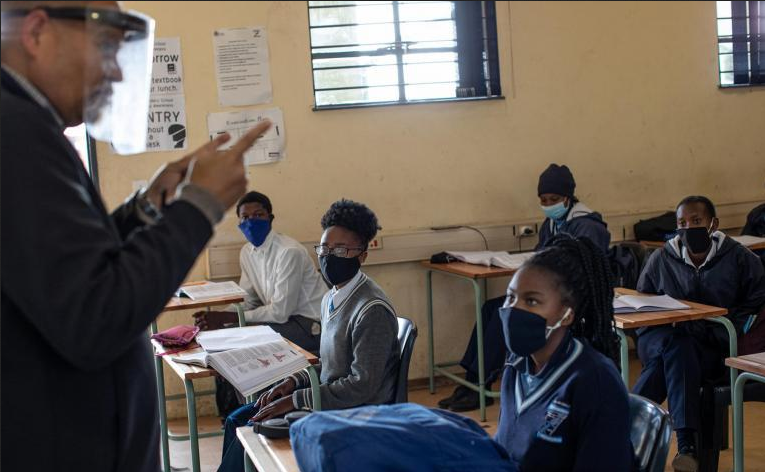
THE Department of Basic Education has gazetted updated lockdown restrictions for schools in South Africa following the government’s decision to end rotational timetables.

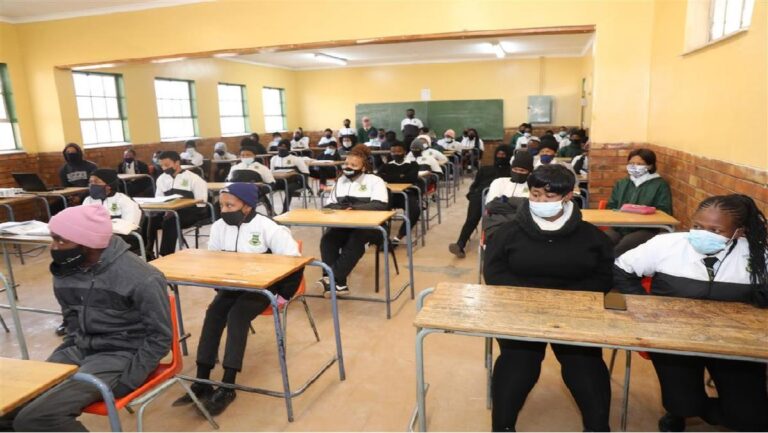
Under the regulations, all primary, secondary and special schools from both public and independent schools are to resume full-time attendance on Monday (7 February).
In addition, all teachers, non-teaching school staff, all learners, as well as all officials, should return to school and offices from this date.

Covid-19 rules
Taking into account the resumption of full-time schooling, the regulatory provision for one-meter social distancing in schools has been removed with immediate effect.
However, the following non-pharmaceutical measures should be maintained and adhered to by schools and education offices:
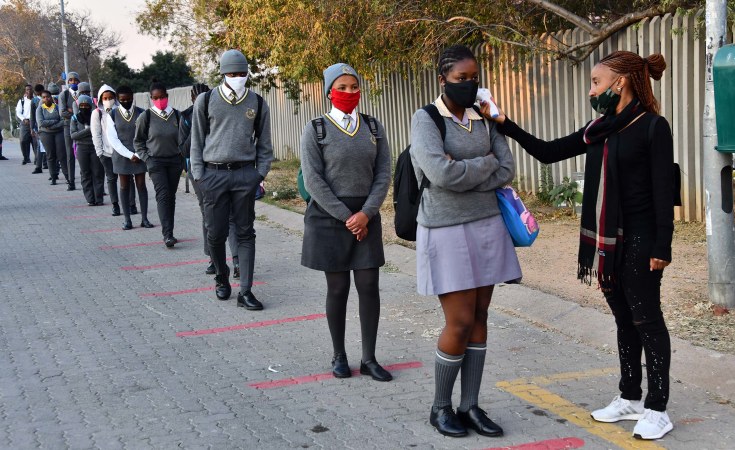
• Wearing of non-surgical face masks by all learners, teachers, non-teaching staff and visitors.
• Face mask breaks for learners (5 – 15 minutes for every 2 hours during the school day) where they can safely remove their masks in an outdoor area.
• Washing of hands frequently with soap and water for at least 20 seconds, or using hand sanitisers.
• Placing 70% alcohol-based hand sanitisers in each classroom, at entrances and exits, and near lunchrooms as well as halls so that sanitising of hands should be done when entering and leaving these venues.
• Maintaining good ventilation by opening doors, windows and/or using fans for air circulation.
• School buildings and equipment must be cleaned thoroughly and regularly by following the environmental health cleaning and disinfection protocols. Household bleach is recommended for this purpose. No fogging and spraying of buildings as part of environment cleaning should be done. Instead, surfaces should be wiped with a wet cloth.

Isolating
Individuals who have tested positive for Covid-19 and their contacts are no longer required to isolate.
Only people who have symptoms or are advised by a health care worker should isolate for not more than seven days after which the learner, teacher, school support staff or official should return to school/office.

Sports and other activities
The following activities may resume with spectators, subject to compliance with the hygiene and safety measures on Covid-19:
• All contact sport and non-contact sport, including training, intra-school and interschool games.
• All arts and culture intra-school and inter-school activities.
• All co-curricular and enrichment programmes.

Vaccinations
All teachers, non-teaching school staff and officials who were vaccinated using the Johnson & Johnson vaccine in June/July 2021, are now eligible for a booster vaccination and are encouraged to visit their nearest health facility, pharmacy or vaccination site for this purpose.
Those who received the Pfizer double dose vaccine will qualify for the booster dose 6 months after the second dose.
All learners aged 12 – 17 years and older are also encouraged to vaccinate at their nearest vaccination sites. Parents are urged to take their children for vaccination or use the opportunity of vaccinating their children in schools when the opportunity to do so arises, the department said.
“The Department of Basic Education (DBE) is working with the Department of Health (DoH) to introduce an in-school vaccination programme, and an official announcement in this regard will be made in due course.

“Provinces are however allowed to introduce in-school vaccination in collaboration with their provincial departments of health. In-school vaccination will require parental consent in line with the procedures of the integrated school health policy,” it said.

  • -BusinessTech

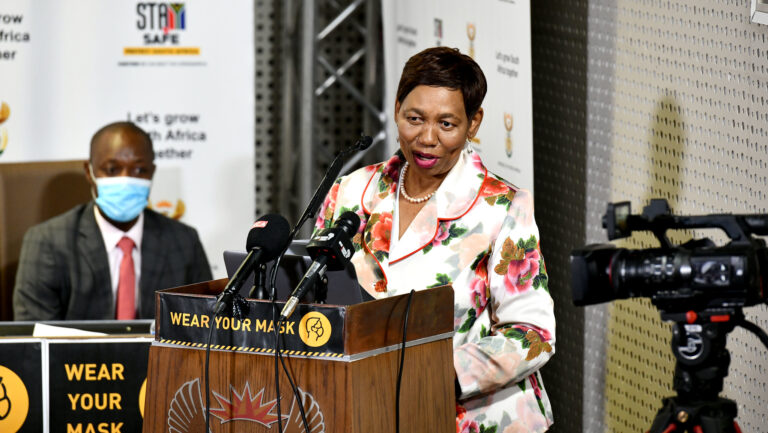
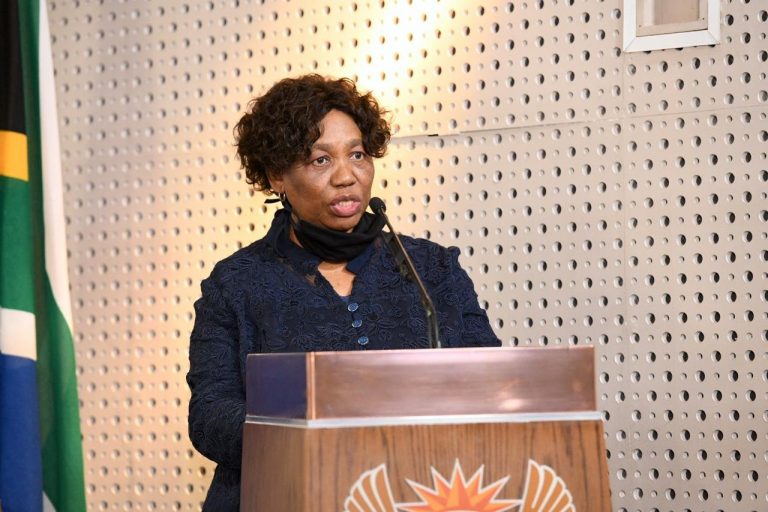
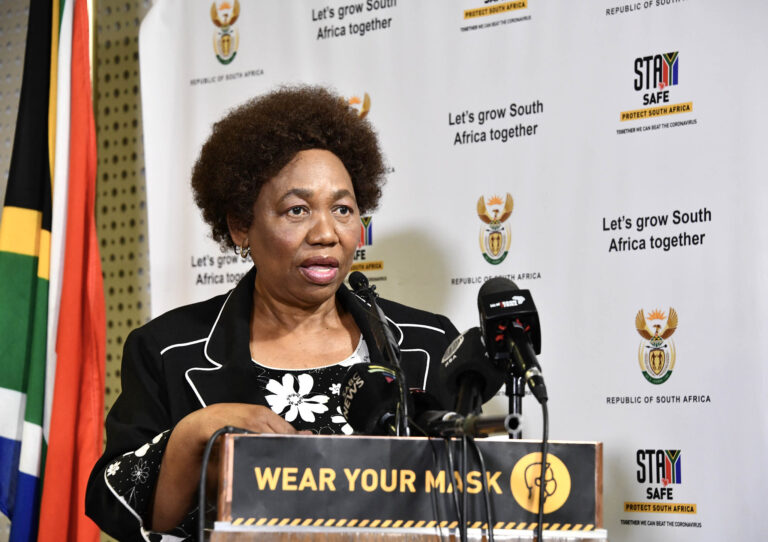
Basic Education Minister Angie Motshekga confident schools are ready for full-time attendance

WENDY MOTHATA |

THE minister of Basic Education said on Sunday that she is confident the schools are ready for learners to
return to full-time learning from Monday.

Mosthekga was briefing the media on the state of readiness for the reopening of schools.
This is after the Cabinet approved changes to the Adjusted Alert Level 1 COVID-19 regulations last week.
The cabinet decided to end rotational learning and remove social distancing measures.

Motshekga said that pupils at primary, secondary and special schools would commence full-time
attendance. She added that the rotational timetable which was implemented due to the COVID-19
pandemic is coming to an end.

“In all our engagements, there has been overwhelming support for the full return of learners. We are
confident that schools are ready for the new norm,” Motshekga said.

The minister said that on Sunday a Gazette would be published which will usher the new environment as
per the cabinet’s decision.

“We have today published a Gazette, which officially ushers in the new environment as per the cabinet
decision. The Council of Education Ministers (CEM) met twice this week, and agreed that full-time
attendance starts tomorrow,” she said.

Motshekga said that the return to daily attendance will assist the sector to intensify its implementation
of the curriculum recovery plan.

“The return to normal timetabling will assist the sector to intensify its implementation of the curriculum
recovery plan. The learning losses incurred in the past two years are indisputably devastating.”
She further added that the first step towards addressing the crisis of lost learning is to prevent further
disruptions.

“The first step towards addressing the crisis of lost learning is to prevent further disruptions to school
time, and prevent other learning losses while ensuring the health and safety of our school communities.
The second step is to introduce measures to catch up on the time, as well as the teaching and learning
that was lost through the COVID-19 pandemic.”

The minister further encouraged people to vaccinate.

“We do want everyone in the sector to vaccinate, so we are encouraging our teachers to go for a
booster which is available at different health sites. We also discussed the need to make sure that we
encourage our young people to vaccinate,” Motshekga said.

The minister further addressed the issue of late delivery of stationary and overcrowding in some of the
schools.

“The matter of late delivery of stationery and textbooks in the Eastern Cape, in particular, was raised
sharply in the meetings with stakeholders. Overcrowding was also a common concern, identified as one
needing special attention.”

-Inside Education

Democratic Alliance to assess Willowmoore High School’s readiness for the 2022 academic year

WENDY MOTHATA |

THE Democratic Alliance (DA) will on Thursday conduct an oversight inspection at Willowmoore High School in Benoni, Ekurhuleni.

The DA said that, Willowmoore High School is one of many schools across the province that are facing a serious challenge of a shortage of teachers.

“Willowmoore High School is one of many schools across the province that are facing a serious challenge of a shortage of teachers. A severe shortage of teachers in this school has resulted in a drastic drop in performance and matric pass rate”

The DA is set to engage with the School Governing Body (SGB).

“The DA is set to engage with the School Governing Body (SGB) to ascertain why there is a high rate of teacher vacancies and when these posts will be filled.”

The DA will further assess the state of the infrastructure and check whether there is sufficient learning equipment and materials at the school.

Inside Education

Minister Angie Motshekga to brief the media on Sunday as schools prepare to return to daily attendance

WENDY MOTHATA |

THE Minister of Basic Education Angie Motshekga will on Sunday morning brief the media on the state of
readiness as schools prepare to welcome their full complement of learners.

“Basic Education Minister, Mrs Angie Motshekga will tomorrow, Sunday 06 February, host a media
briefing to provide an update on the state of readiness as schools prepare to welcome their full
complement of learners.

This is after the Cabinet approved changes to the Adjusted Alert Level 1 COVID-19 regulations last week.
“Primary, secondary and special schools will return to daily attendance. The regulatory provision for the
social distancing of one metre for learners in schools has also been removed. The Ministers of Health
and Basic Education will in the coming days’ issue directives reflecting on this new approach,” the
Cabinet statement said.

The Department of Basic Education has welcomed the decision by Cabinet to allow schools to return to
full-time learning in all schools.

“The Department of Basic Education welcomes the decision by Cabinet to allow schools to return to full-
time learning in all schools,” said department spokesperson Elijah Mhlanga.

Mhlanga said that the Council of Education Ministers (CEM) agreed that schools would return to normal
timetable from Monday 7 February 2022.

-Inside Education

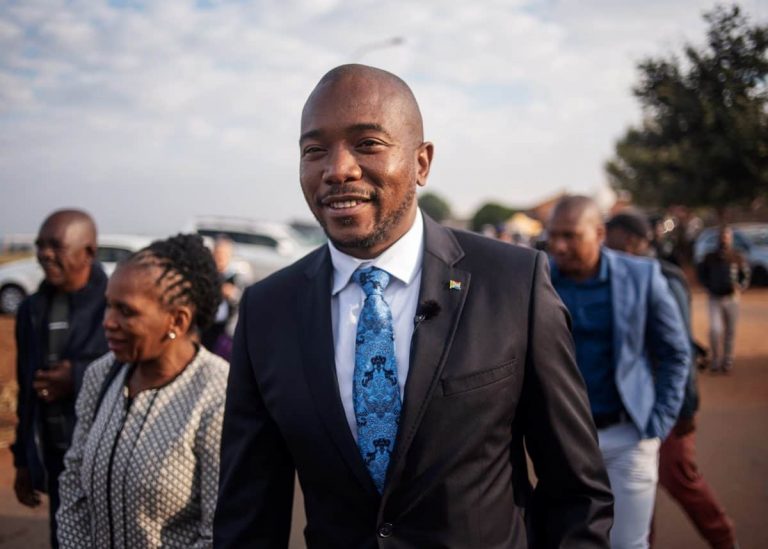
Maimane and One South Africa Movement members delivers memorandum to Minister Angie Motshekga

WENDY MOTHATA |

ONE SA (OSA) leader Mmusi Maimane and the members of the party have handed over a memorandum to the Basic Education Minister Angie Motshekga.

The memorandum detail OSA’s plan to “rescue” the basic education department.

“This document outlines a rescue plan that will ensure that our young people have access to upwards economic mobility, in which they can become the future industrialists that Africa needs and future scientists who discover the cures for diseases of the present and future,” OSA said.

“Our nation’s toughest challenges of unemployment, poverty and inequality cannot be addressed without dealing with the elephant in the room — the dismal state of our education system. We are failing to educate our young people and we need to do better.”

Recently, Maimane questioned the quality of education being offered in South Africa and called for an end to the 30% pass mark.

“A 30% pass mark undermines the intellect of SA’s youth and allows for obfuscation of the basic education crisis, education leaders to escape accountabilities and the entrenchment of mediocrity and low expectations,” Maimane said.

Last month, quality assurance council, Umalusi, reiterated that no learner in South Africa will be able to pass their matric by obtaining 30% in all subjects.

“Pass rates at this level are as old as the matric certificate itself, which is more than 100 years old. If learners were to obtain 30% in all subjects, they would fail. We have to remind each other what the purpose of the National Senior Certificate is. The National Senior Certificate gives learners access to a number of post-school opportunities,” said Umalusi CEO Mafu Rakometsi.

Furthermore, Minister of Basic Education Angie Motshekga said the debate and claims made about the 30% pass mark demonstrated a lack of understanding about the NSC pass requirements.

The requirements are split into three categories which qualify pupils either for bachelor’s degree or diploma studies and the higher certificate pass.

  1. To obtain a bachelor pass, explained the minister, pupils are required to get a minimum of 40% for their home language, 50% in four other subjects and at least 30% for the language of learning. 
  2. For a diploma pass, pupils must obtain 40% for their home language, at least 40% in three other subjects and a minimum of 30% in the language of learning. 
  3. For a higher certificate pass, the home language pass mark remains 40%, at least 30% in the language of learning and at least 40% in two subjects and a minimum of 30% in other subjects 

OSA proposes 10 interventions that would provide a stable foundation for progressive development in the department in the coming years.

  1. Drop the 30% pass mark for subjects
  2. Introduce an independent education ombudsman     
  3. Raise salaries for educators and curtail union power
  4. Replace life orientation with mandatory skills subjects
  5. Incentivise pupils during the academic year
  6. Prioritise the primary phase of education
  7. Implement tighter security at all schools 
  8. Expand extended programmes for underperforming pupils
  9. Reprioritise the budget for digital learning and infrastructure
  10. Conduct a nationwide teacher skills audit
  • – Inside Education

Here is what you need to know about the 2022 NSC June supplementary exams

WENDY MOTHATA |

THE Department of Basic Education (DBE) has announced that learners who have written their National Senior Certificate exams in November 2021 and are not satisfied with the results or have missed some of the exam sessions due to other circumstances are urged to register and re-write their National Senior Certificate (NSC) exam.

“For those that would like to re-write their NSC exam, you are given the chance the to do so,” the statement said.

The Ma your June registration closes 11 February 2022.

November registrations close 18 February 2022.

Conditions for entry

Candidates who were absent with a valid reason (medically unfit, death in the immediate family or other special reasons)

Candidates who want to improve their overall achievement status, or only want to improve the achievement of a subject.

In the case where a candidate was absent for one or more papers in the November exam with a valid reason, the candidate has to write all the papers for the registered subject(s).

In the case where an irregular is being investigated – A provisional enrolment of NSC June examination may be granted to the candidate concerned, pending the outcome of the investigation.

Candidates who were unable to write or complete one or more of the NSC November examination question papers for reasons other than illness, injury or death in the family, may apply to write the NSC June examination, provided that a written report s submitted by the principal of the school to the Head of the assessment body.

The DBE said the candidates can only register for subjects which they were registered for in any November examination.

– Inside Education

Schools to return to full-time learning from Monday

WENDY MOTHATA |

The Department of Basic Education (DBE) has on Tuesday announced that schools will return to full-time learning from Monday, February 7, 2022.

This is after the Cabinet approved changes to the Adjusted Alert Level 1 COVID-19 regulations on Monday.

 “Primary, secondary and special schools will return to daily attendance. The regulatory provision for the social distancing of one metre for learners in schools has also been removed. The Ministers of Health and Basic Education will in the coming days issue directives reflecting on this new approach,” the Cabinet statement said.

The Department of Basic Education has welcomed the decision by Cabinet to allow schools to return to full-time learning in all schools.

“The Department of Basic Education welcomes the decision by Cabinet to allow schools to return to full-time learning in all schools,” said department spokesperson Elijah Mhlanga.

Mhlanga said that the Council of Education Ministers (CEM) met on Tuesday morning to process the decision.

“CEM agreed that schools would return to normal time-tabling as from Monday 7 February 2022,” he said.

He further said that a series of meetings have been scheduled with stakeholders to inform them of the decision, “in the meantime, the sector would prepare for the full return of learners.”

Mhlanga said, “the Minister will gazette new directions in the coming days to reflect the Cabinet decision and to also provide guidance ahead of the resumption of traditional time-tabling.”

The Department said the CEM will meet again on Friday.