THE Nelson Mandela University has officially launched its medical school, a move the Department of Higher Education, Science and Innovation has described as the realisation of a long-held dream.
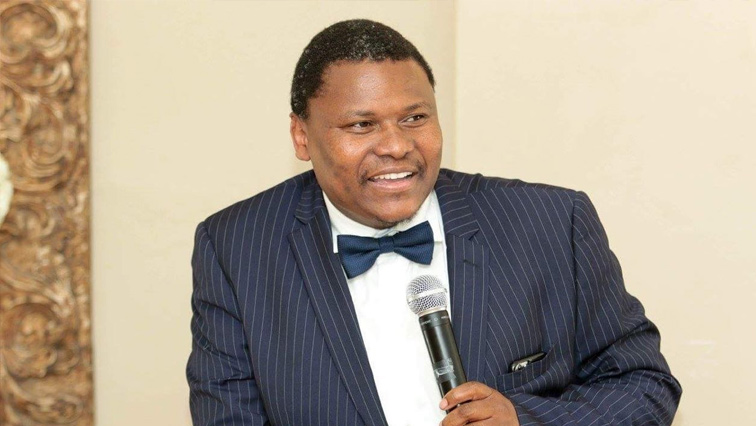
To mark the occasion on Tuesday, Higher Education, Science and Innovation Minister, Dr Blade Nzimande, extended his congratulations to the university for this landmark achievement of becoming the tenth medical school in the country.
“I would like to commend the university for the continued role that it plays in this region, through its excellent teaching and learning, research and community engagement programmes,” said Nzimande.
According to Nzimande, the establishment will promote local economic development within the Nelson Mandela Bay Metro, South Africa’s fifth-largest municipality.
He told the delegates that the country should be proud of the excellent teaching and learning facility dedicated to the training of future health professionals.
Nzimande also took the time to pay tribute to the late Professor Lungile Pepeta who died of COVID-19 last year for his enormous contribution in laying a strong foundation for this medical school.
“I hear you may name this after Prof Pepeta. I certainly think it would be highly appreciated.”
Although the school was launched today, Nzimande said the first cohort of students is nearing the end of their first year of study.
According to the Minister, the NMU Medical School, located at the Missionvale campus, aims to position health education to be more responsive to South Africa’s health needs by widening access to healthcare programmes.
“The school will generally add to the much-needed health professionals that our country so needs to improve our health system as a country.”
He said the establishment of the school has been long coming, dating back to 2013 when a business plan was first developed. The National Skills Fund subsequently pumped R73 million into it with the backing from the department.
“I am pleased that this new medical degree focuses on comprehensive primary health care from the first year of study.”
Nzimande said he was pleased that the school is planning to use global technological innovations to support interactive education.
“I also fully subscribe to the ethos of this medical school, which are firmly based on community and primary health care provision by developing health care professionals who are committed to providing accessible and affordable healthcare services.”
In addition, he announced that in the current financial year, the department has allocated R644.7 million for the clinical training of health professionals in the sector, of which R19 million will go to NMU.
“As you are aware, the country’s public hospitals are overstretched due to the scarcity of health professionals.”
In addressing these shortages, the department has been working closely with the Department of Health to equip the universities and clinical training platforms.
“We are committed to continuing with this important work to strengthen our health training and education in South Africa.”
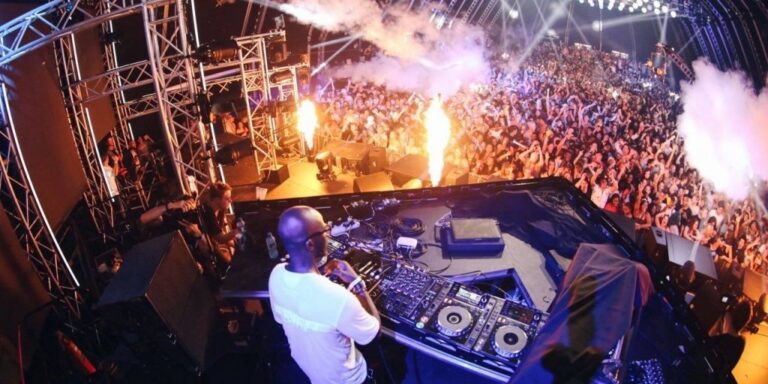
THE annual post-matric Ballito Rage festival has been cancelled after 36 people tested positive for Covid-19.
“We take the safety of all our customers, staff and suppliers extremely seriously. It is for this reason that the event organisers have taken the decision to cancel the remainder of Ballito Rage,” organisers said in a statement on Wednesday.
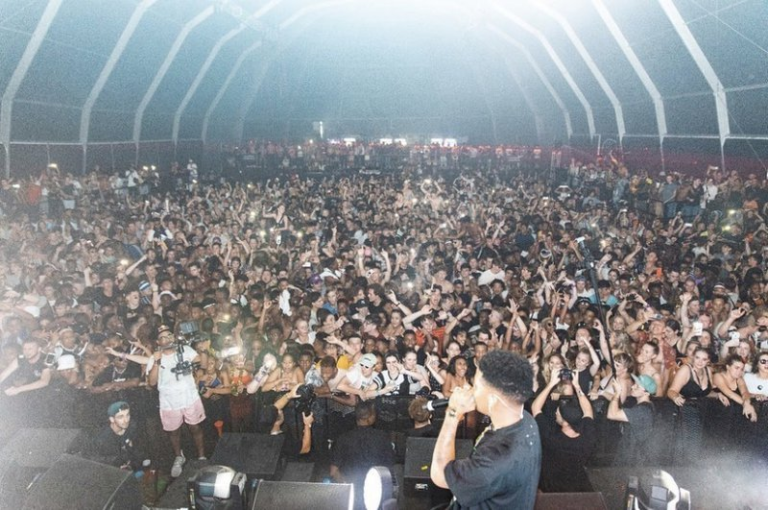
Thousands of young people, many being matrics, attend this event annually to celebrate the end of their high school careers.
The post-matric festival opened on Tuesday with several Covid-19 protocols in place. However, after testing more than 1000 people, 32 cases were identified in guests and four in staff members.
Last year’s event has been widely considered as a super-spreader, after more than 800 people were infected with Covid-19.
Organisers said on Tuesday that all remaining staff and all guests underwent Covid-19 tests at the testing centre near the event site before entering the event.
“Between 2pm and 10pm, 940 guests and staff were tested and 32 guests and four staff presented positive results. The Department of Health was on site and worked together with our team to conduct contact tracing and ensure isolation of positive individuals and staff as per government protocols.”
GAUTENG is planning to undertake Covid-19 vaccination campaigns at schools in the wake of the new highly transmissible B.1.1.529 coronavirus variant and increasing infections in the province.
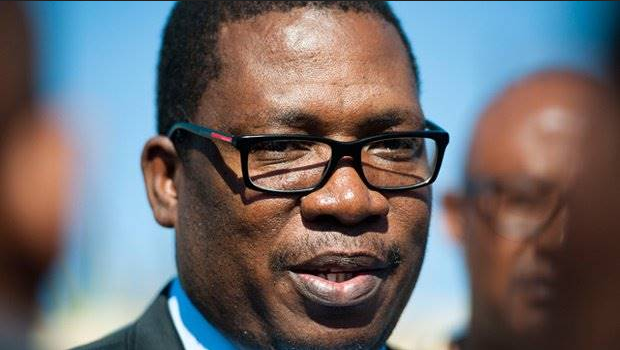
With the advent of matric dance events, Education MEC Panyaza Lesufi said increasing infections were raising concerns over pupils’ safety.
“We encourage all those who are eligible to use this opportunity, and vaccinate as part of the drive to manage and mitigate the impact of Covid-19. In collaboration with the Gauteng Department of Health, we will be administering a vaccination drive in schools and communities targeted at learners aged 12-17 years old. We call upon all eligible learners to grab this opportunity and take the jab,” Lesufi said in a statement.
The SA Health Products Regulatory Authority (Sahpra) announced two months ago that children aged 12 and older were now eligible for the Pfizer jab.
The approval came after the launch of South Africa’s vaccine trial on children.
According to the Gauteng health department, a total of 6 838 663 Covid-19 jabs had been administered as of Friday.
At least 3 617 545 people in the province had been fully vaccinated, with most of them in the Johannesburg region.
“Indeed, the possibility of a fourth wave is becoming more and more inevitable. Therefore, the safety of our learners and employees is paramount as they complete this academic year. We plead with everyone in the education sector to observe all health protocols and vaccinate to ensure a safe and prosperous end to the year,” said Lesufi.
Twenty-two positive cases of the variant B.1.1.529 have been recorded in the country following genomic sequencing collaborations between the National Institute for Communicable Diseases (NICD) and private laboratories. In addition, other NGS-SA laboratories are confirming more cases as sequencing results come out.
“It is not surprising that a new variant has been detected in South Africa,” comments Prof Adrian Puren, NICD Acting Executive Director.
He adds that, “Although the data are limited, our experts are working overtime with all the established surveillance systems to understand the new variant and what the potential implications could be. Developments are occurring at a rapid pace and the public has our assurance that we will keep them up to date.”
Detected cases and percent testing positive are both increasing quickly, particularly in Gauteng, North West and Limpopo. Dr Michelle Groome, Head of the Division of Public Health Surveillance and Response at the NICD says that provincial health authorities remain on high alert and are prioritising the sequencing of COVID-19 positive samples.
She stressed that regardless of the emergence of new COVID-19 variants, the importance of non-pharmaceutical interventions remains unchanged and the public are urged to be responsible.
“This means that individuals should get vaccinated, wear masks, practice healthy hand hygiene, maintain social distancing, and gather in well ventilated spaces.”
THE Ballito Rage will still go on despite the discovery of a new Covid-19 variant which is believed to be the driving force behind a spike in cases in Gauteng.
The annual Ballito Rage is expected to take place between November 30 to December 5.
Last year the NICD declared a cluster outbreak among young people who reportedly attended this event.
This year, there are strict protocols in place for matrics who want to attend they need to be fully vaccinated, shows a negative test result prior to arrival and agree to be tested twice during their stay.
There are widespread concerns about the new b.1.1529 variant detected in South Africa – with several countries like the UK and Germany banning flights.
The Health Department is concerned about an uptick in the COVID-19 infection rate largely among young people in Gauteng.
Organisers said they are relying on information, guidelines and mandates from the government and the national and local departments of health relating to Covid-19. Any changes that may be communicated or required will be effected as needed.
“Ballito Rage reiterates that is has all available Covid-19 safety precautions in place, well beyond those mandated by government and advised by our highly skilled Covid-19 team,” organisers said.
During his address to the nation on Sunday, President Cyril Ramaphosa said mass gatherings such as major conferences and meetings, especially those that require a large number of people to be in close contact over extended periods, should be changed to virtual formats.
“End-of-year parties and matric year-end raves as well as other celebrations should ideally be postponed, and every person should think twice before attending or organising a gathering,” said Ramaphosa.
“Where gatherings do take place, all the necessary COVID protocols must be closely observed. Every additional contact we have increases our risk of becoming infected or infecting someone else.”
AS policy-makers gear up for a summit on 17-18 February 2022 where a new multi-year strategic agreement (2021-27) between the African Union (AU) and the European Union (EU) will be introduced, research universities sent a clear message that enhanced African-European university collaboration should be a key component of the agreement.
This message was highlighted at a virtual conference themed “Strengthening the African knowledge society: Towards more sustainable African-European university partnerships” on 22 November.
Participants included AU and EU policy-makers, as well as university leaders and scientists from both continents.
The keynote speakers and panel members contributing to the conference addressed several questions, including how public research universities can contribute more effectively to the emerging African knowledge society and what the need for more equitable African-European partnerships means for universities.
Embedded in these were also discussions about the growing commitment of the EU to fund African-European research and innovation collaboration and the need for African countries to increase their investments in research and development.
The conference was organised by the African Research Universities Alliance (ARUA), a network of 16 research universities, and the Guild of European Research-Intensive Universities (the Guild), which has 21 members.
ARUA and the Guild have developed a joint initiative over the last four years aimed at influencing the policy-makers involved in the AU-EU negotiations.
Jan Palmowski, the secretary general of the Guild, said in his opening remarks: “As the AU and EU prepare for a joint innovation agenda to be introduced at the summit [in February], foreign ministers explicitly acknowledged the key role of education, skills development as well as research, technology and innovation in the green and digital transitions [as priority areas].”
“So, there is a huge momentum now developing to ensure that universities, and the research, education and innovation they foster, are integral to the AU-EU partnership vision of the future – both from the sector, but also coming from the policy-makers.”
The five key ideas and recommendations the participants at the conference put forward were to:
• Significantly strengthen intra-African research collaboration through major investments in clusters of excellence at African universities.
• Create synergies in research funding, which include: introducing the principle of matching national government funds to EU investments in research; stimulating effective couplings of EU funding instruments, especially Global Europe, Horizon Europe, and Erasmus+; and realising integral investments in research infrastructure.
• Support the development of strong continental research policy and funding institutions and agencies in Africa.
• Develop a valid continental science data base.
• Use and protect the open science principle in African-European research collaboration.
Paradigm shift
Nico Cloete of the Centre for Research on Evaluation, Science and Technology (CREST), Stellenbosch University, South Africa, and Peter Maassen, faculty of educational sciences, University of Oslo, Norway, in their keynote address entitled “Africa’s Research Capacity: Performance and potential”, argued that historically the focus of development aid to Africa changed from institutional development (colonial period) to individual development (African students and scholars studying and working outside the continent).
The new Africa strategy of the EU, however, is driving development through equal partnerships – in other words, it marks a fundamental shift from aid to strategic collaboration.
Cloete argued that in this new approach both the EU and AU are realising that development is not ‘bottom up’ or driven by individuals but depends on collaboration between excellent science, politics, and socio-economic actors (public and private), and that collaboration must connect to both institutional and individual development.
This approach raises the question of the extent to which Africa is producing new knowledge to participate in ‘strategic partnerships’.
Graph 1 below shows that from 2000 to 2020 there has been a steady increase in Africa’s share of scientific publication output in the world. This increase is significant because it is realised despite the dramatic increase in publication output in the rest of the world, particularly East Asia.
Another paradigm shift discussed by Cloete is that there is an emergent interest in the development of clusters of excellence, connecting pockets of excellence in science with other pockets of excellence, either within individual universities or, for example in the case of ARUA, between universities.
Table 2 shows that a number of centres of excellence have been established in Africa. Some concentrate on producing more masters and doctoral graduates, while others do both graduate training and new knowledge production.
As indicated by Cloete, work done by CREST has also shown that research at these African centres or clusters of excellence is aligning with AU-EU priorities. Graph 3 shows that this alignment is especially realised in the areas of green transformation and public health.
Addressing contextual challenges
Maassen, in turn, highlighted that a key condition for enhanced African-European university collaborations is the strengthening of research capacity at African universities.
However, for investments in African research capacity to lead to the expected outcomes, a number of contextual challenges had to be addressed, including the low level of public spending by African governments on research and development, and the low number of researchers in Africa.
“I want to emphasise the importance of the [research output] data and the positive picture that they show… The data generated by CREST … are of importance because they debunk some of the myths about science in Africa like the continuous myth that African science does not contribute more than 1 % to 1.5% of global science output,” Maassen said.
Another challenge is the continuous low level of research output produced through intra-African collaboration.
“A large part of the increase in research productivity in Africa is a consequence of relations with scholars elsewhere – in the US, EU, but also in China, Australia and Japan. Enhanced intra-African research collaboration is hugely important for responding more effectively to African challenges and issues.
“The idea that we have come up with, investments in inter-university clusters of excellence, can be a key component in strengthening cross-boundary research collaboration in Africa,” Maassen said.
Another challenge that needs to be addressed, according to Maassen, is the lack of a valid continental science database. As the data from the UNESCO Institute for Statistics shows, for instance, even such basic statistics as national research and development investments (as a percentage of gross domestic product or GDP) and researchers per million of population are available for only a few African countries.
“In order to make valid decisions on further investments in science, and to get a better understanding of the science and policy interface and the interface of science and society for stimulating the innovative and entrepreneurial capacity of universities, it is extremely important to develop an African science database.
“A database where key indicators and statistics show how science is developing in Africa [and] where there is great potential [and] … where investment makes sense. As long as such a database is not available, it will be very difficult to make valid decisions on the further development of science.
“The data that we produce at Stellenbosch are data produced through projects. What is needed in Africa is that countries agree on the key indicators with respect to science, and make sure they report on it and contribute with valid data. In that way a continental database can be developed,” Maassen said.
The other points he made about investment in research and development and linking policy and science through institutions such as the African Academy of Sciences (AAS) were reiterated by Professor Catherine Ngila, the acting executive director of the AAS.
She pointed out that Africa spends about 0.45% of its GDP on research and development – significantly less than the global average of 1.7% and the AU target of 1% – and also that Africa has fewer than 100 researchers per million people, 10 times less than the global average of 1100 per million.
The underinvestment in supporting African researchers and institutions, said Ngila, had to be addressed to make a science career in Africa more attractive, which could increase the number of scholars working in Africa, and would enhance the quality of research.
“Empowered researchers will be able to implement the AU agenda,” she said. The EU-funded African Research Initiative for Scientific Excellence (ARISE) Pilot Programme – which has launched its call for proposals for summer 2021 – is an excellent example of how career paths for young African scholars can be built, how African research talents can be recognised, and how research capacity at African universities can be strengthened.
But the discussion on building a knowledge society in Africa, and the way to do it, did return to the financial means to make it happen.
Strengthening research capacity in Africa depends on sustainable funding, through national governments significantly increasing their investments in research and development especially at their countries’ research universities, through new investments of philanthropic organisations and the private sector, but also through strategic collaborative agreements with key partners such as the EU.
Growing commitment and engagement
Carla Montesi, director for the Green Deal and director at the Directorate General for International Partnerships at the European Commission, refuted the suggestion that the EU’s engagement with Africa was slowing down because of the COVID-19 pandemic.
Instead, said Montesi, the EU was engaged to further strengthen its relationship with African partners. She referred to “a lot of new initiatives to deepen” the pre-existing AU-EU engagement.
According to her, the funding trajectory was going up. More specifically, she pointed to the budget for Africa in the Erasmus+ programme (2021-27), which has tripled in comparison with the previous budget period to €570 million (US$643 million) for Sub-Saharan Africa (6% in 2014-22 to 26% in 2021-27); the new Intra-Africa Academic Mobility Scheme for cooperation between African higher institutions (which will include 105,000 African students’ and researchers’ mobility by 2027); and the plans of the Directorate General for International Partnerships to increase support to the ARISE Pilot Programme.
Similarly, Cristina Russo, the director for global approach and international co-operation in the Directorate General for Research and Innovation at the European Commission, also confirmed that European cooperation with Africa did not slow down, but was rather “beefed up”.
The EU’s intentions to increase its financial support for African-European research collaboration were, for example, presented at the first ever high-level policy summit involving research and innovation ministers from both continents in July 2020. This summit has paved the way forward in terms of joint African-European research and development actions.
Russo referred to the Africa Initiative of the EU’s Horizon Europe programme, which will cover 37 topics with an initial budget (2021-22) of €350 million (US$395 million) on priorities agreed upon at the ministerial meeting aimed at contributing to finding solutions to problems in Africa.
“COVID did not stop or slow us down. We upgraded our support to the AU,” said Russo.
The programming for another initiative, the Neighbourhood, Development and International Cooperation Instrument, will be finalised in the next few months.
It has a total budget of €79.5 billion (about US$90 billion), of which €29.2 billion has been allocated to Sub-Saharan Africa. Thematic areas include health and human development, climate change and digitalisation and technology.
Although the details about the new EU-AU partnership and where universities fit into the agreement – and what it means in terms of resources – still may have to be mapped out, the conference yielded positive outcomes in terms of confirming the joint AU-EU commitment to tackling obstacles that are preventing African universities from playing a stronger role in the new partnership.
Ernest Aryeetey, secretary general of ARUA, said the conference was positive. According to him, the case was clearly made for “the need to scale up investments in African higher education, research and innovation”.
In addition, university leaders who participated in the conference showed what they could do based on their experiences while very experienced researchers with significant partnerships behind them shared with us what works best in getting good results for Africa, he said.
He believed that support for the inter-university clusters of excellence proposal, as put forward by ARUA and the Guild, was forthcoming.
“I see significant expansion and some new initiatives from the EU side in supporting public universities in Africa. The challenge remains how to give the African side a greater voice in the new efforts at co-creation of programmes, as they work with European universities,” said Aryeetey.
He also believed that ARUA has increasingly been acknowledged as an alliance that can contribute significantly to the development and implementation of the AU’s strategies for realising the African knowledge society.
Matthew Goniwe was so popular among learners in Cradock that when they learnt of the government’s plan to bar him from returning to his teaching post, they went on an indefinite strike demanding his return.
Goniwe had been teaching in Graaff-Reinet, about 150km from his hometown and wanted to return to Cradock to be with his family. The authorities would not allow it and gave him an ultimatum to either return to his post in Graaff-Reinet or consider himself fired.
He defied the ultimatum and was dismissed. The learners joined the respected Science and Mathematics teacher’s battle against the Apartheid authorities by staying away from school. But Goniwe, who always had the best interest of the community and students at heart, tried to persuade the striking learners to return to class. They refused.
Standing for the activist
Goniwe’s former colleague and long-time friend Sizakele John, who was at the centre of the storm, recalled those difficult days. As an inspector at the Department of Education and Training, John trod a fine line when he persuaded his employers to hire the activist who had served a five-year prison term for political activities.
Goniwe was arrested in July 1976 while teaching in the Transkei and was sentenced to four years in prison after being convicted of violating the Suppression of Communism Act. He used his time in jail to study and obtained a BA degree through UNISA, majoring in political science and education.
John says on his release, schools in the Eastern Cape were reticent to employ Goniwe out of fear that they would be harassed by the Apartheid government’s Special Branch. But having grown up with him and knowing his prowess as a teacher, John persuaded the Department of Education and Training to give him a six-month trial.
His work was so impressive that even the authorities who frowned upon anyone involved in anti-Apartheid politics recommended that he be appointed principal before the probation period expired. Goniwe did not take up this position.
“He was a great disciplinarian among children and staff. If a member of staff stepped out of line, he would say that this was not what was expected of teachers, we have to be exemplary. And he was the same with the children, he would use corporal punishment if they stepped out of line, but they respected him,” recalls John.
Supervising Goniwe
After completing his teacher training in the late 1960s, Goniwe arrived to teach at a school where John was employed as a Maths and Science teacher. John handed over the teaching of the two subjects to Goniwe on the principal’s condition that John, an experienced teacher, would supervise Goniwe’s work.
“As his supervisor, I must be honest, I found him to be very capable, very, very industrious, very serious in his work,” John recalls.
The duo’s friendship transcended beyond the classroom. Goniwe was a popular amateur boxer and political activist while John was an educator and an active leader in the Anglican Church.
A friend in need is a friend indeed
When Goniwe’s political activism got him into trouble with the Special Branch, he counted on the welfare of friends like John to provide him with refuge, but John modestly downplays his role. He says although he assisted Goniwe in those difficult times, it was obvious to everyone looking for Goniwe that they keep an eye on John as they were known to be close.
“I used to help him, to save him from the claws of the police and that type of thing. Although it was worth the trouble, everyone could see through me because we were so close. And that is one of the things that made me unpopular in the department,” he says.
Left shattered
John has the utmost respect for Goniwe. They grew up together on the streets of Cradock’s Lingelihle township. Goniwe’s death in June 1985 left John shattered.
“It really upset me in a way that I cannot describe, I had lost a friend because we were very close to each other, and this was known to his family,” he says.
John says one key lesson today’s generation can take from Goniwe’s life, is a commitment to steer the course.
“What Matthew taught us, is that if you do something for the nation in the interest of the community, you should apply yourself and apply your mind, fully. The lesson that we should take from Matthew is that if you make a decision, or promise to take a job, you must use all your energy, and use every atom in your body to do it to the satisfaction of any reasonable person,” John says.
PROFESSOR Mbulelo Terrence Goniwe, younger brother to slain political activist Matthew Goniwe, says his sibling came from a generation of educators who were dedicated, committed and intentional about teaching.
”He emerges from the crop of teachers who taught during normal working hours and ran extra classes in the evenings, he got involved in the coaching of sport – boxing and rugby – without thinking about being paid for those activities. You seem to have a feeling that teachers of today want to be paid for whatever they do, but with my brother going the extra mile, teaching was more of calling than a job.”
Mbulelo who happens to be an ordained Bishop, said that he too was a beneficiary of Matthew’s intentional teaching. When he was in Standard 7 (Grade 9) at Holomisa Senior Primary in Mqanduli in the Eastern Cape, his elder brother was his Maths and Science teacher.
“I was fortunate to be in his class because he truly loved teaching, we all looked forward to Science and Maths classes,” he said.
Mbulelo said that although there was a substantial age gap between them, they were close enough for him to observe and experience Matthew’s love for the subjects he taught.
“I could see how he lit up when he managed to make someone understand the content of his teaching. He had a manner of presentation that would make the learner comprehend the subject matter.”
He believes that Matthew’s educational leaning towards Maths and Science was influenced by the high-level discussions they used to have with Bishop Canon James Calata, who understood what an African child needed to create a country of substance. James Calata was grandfather to Fort Calata, another one of the Cradock Four.
What would he have done?
Mbulelo says his brother would have marvelled at the progress made by South Africa on the education front as his drive for equality was based on the poverty he saw.
“Government interventions such as school nutrition programmes, scholar transportation, technological advancements where learners have tablets, plus the abolishment of corporal punishment and the kind of free atmosphere where there is reciprocated teaching and learning, would have pleased Matthew.”
He said the content of the curriculum was far more need-based than it was in the past. However, the liberation struggle icon would have been concerned to know that 30 years into our democracy, we have not finetuned the continuity of education from primary school to university level.
“He would not have taken kindly to National Student Financial Aid Scheme (NFSAS) blunders and all the inefficiencies that impede the progress of education. He would have also taken a bold stance against what has emerged and been paraded in our media quite frequently – bullying and gangsterism in our schools. South Africa has made recognisable progress. Children of today are far wiser than their counterparts of past generations, they are smart. This is thanks to the enabling educational environment which is what Matthew was fighting for, he would have marvelled at the progress.”
Preserving his legacy
Mbulelo believes that the strides the Gauteng Department of Education has made concerning preserving and advancing the legacy of Matthew Goniwe are highly commendable.
“In advancing his legacy, it can never be in isolation from other heroines and heroes of the liberation struggle of the country, although he was picked up as an individual, that gesture in itself protects the collective of prestigious sons and daughters who, at the peak of their lives could see the glimmer of light beyond the darkness that was Apartheid.”
Mbulelo said that celebrating even one icon allows the nation to begin writing its own story, not letting another tell the story. He said that in this regard, the sincerity and the accuracy of the story and its content became genuine and not misleading.
He said the Goniwe family – siblings, the community of Craddock, Inxuba Yethemba Local Municipality and the Eastern Cape – was highly appreciative of what the Gauteng Department of Education was doing.
“We have been part of this journey since its inception with MEC Ignatius Jacobs, we have seen it grow from strength to strength in front of our eyes. The appointment of MEC Panyaza Lesufi has added a great impetus to the contribution and organisation of the Matthew Goniwe memorial lecture, which is a central point in terms of preserving and advancing the legacy that we are all so proud of. The Matthew Goniwe School of Leadership and Governance has always been an anchor that shall outlive all of us,” he concluded.
THE DA has called on all teachers found guilty of sexual misconduct to be placed on the National Register for Sex Offenders as well as the Child Protection Register.
This follows the revelation by the South African Council of Educators (SACE) in Parliament that 11 educators had been sacked due to misconduct allegations, including sexual offences against learners.
SACE CEO, Ella Mokgalane, gave a breakdown of cases of alleged teacher misconduct received by the Council for the 2020/21 financial year and revealed that the Council had received 443 cases.
“While the DA welcomes the 11 teachers’ dismissals as a positive step towards accountability, more needs to be done to ensure that those teachers accused of sexual misconduct and abuse are prevented from harming children again,” said Desiree van der Walt, DA Shadow Deputy Minister of Basic Education.
“It is for this reason that the DA calls for teachers who have been found guilty of sexual offences to be placed on the NRSO and CPR to prevent them from working with children in the future.”
Van der Walt also reiterated the party’s calls for sexual offenses committed in schools to be included as a reporting category in the annual and quarterly crime statistics.
In August, she wrote to the Police to advocate for the inclusion of the following categories in his crime statistics reports:
A breakdown of sexual offences/abuse of learners on school property;
Reported cases of underage pregnancies;
Current open dockets of statutory rape, and statutory rape cases that have led to convictions; and
A breakdown per province of all above mention statistics.
“As the country observes the start of the 16 Days of Activism of no violence against women and children campaign today, there will be a lot of discussion and promises from the national government about efforts to address the scourge of gender-based violence, as has been the case in previous years,” said Van der Walt.
“The time for talk shops and planning has passed; now is the time for swift and decisive action. This is why the DA proposes that those disgraceful teachers who commit sexual crimes against our children be added to the NRSO and CPR, and that sexual offenses committed in schools be included in annual crime statistics.”
PRESIDENT Cyril Ramaphosa’s cabinet has approved the Basic Education Laws Amendment Bill and the Electoral Amendment Bill for submission to parliament.
At a media briefing on Thursday, the minister in the presidency Mondli Gungubele said that the Electoral Amendment Bill would amend the Electoral Act of 1998 to make provisions for the election of independent candidates to the national assembly and provincial legislatures.
In a June 2020 judgement, South Africa’s Constitutional Court has ruled that the country’s Electoral Act is unconstitutional. It does not provide for adult citizens to be elected to the National and Provincial Legislatures as independent candidates.
The Electoral Act 73 of 1998 currently only allows political parties to contest in the country’s national and provincial elections.
“A conscious choice not to form or join a political party is as much of a political choice as is the choice to form or join a political party, and must equally be deserving of Constitutional protection,” Constitutional Justice Mbuyiseli Madlanga said in his ruling.
“Once an adult citizen is forced to exercise the S19 (3) (b) right to stand for public office through a political party, that diverts her or him of the very choice guaranteed to him not to join or form a political party. That cannot be.”
The court has suspended the judgement for 24 months to give the parliament time to make the necessary amendments.
Schools
Gungubele said that the Basic Education Laws Amendment Bill would amend the South African Schools Act of 1996 and the Employment of Educators Act of 1998 as part of a broad push to make schools more accessible in South Africa.
“The amendments, among others, give effect to universal access to two years of early childhood development, it also enforces accountability in school governing bodies and clarifies admission, language, and code of conduct policies,” he said.
Basic Education deputy minister Reginah Mhaule has previously indicated that the bill could introduce additional measures to hold principals, parents and governing bodies accountable for non-attendance. The bill, which will specifically focus on compulsory schooling between Grades 1 – 9, is also expected to hold parents more accountable than under current laws.
A 2017 version of the Basic Education Laws Amendment Bill proposed increasing the penalty provision from six months to as much as six years where the parent of a learner, or any other person, prevents a learner who is subject to compulsory school attendance from attending school.
The 2017 bill also proposes making it an offence for any person to interrupt or disrupt any school activity willfully or wilfully hinder or obstruct any school in the performance of the school’s activities.
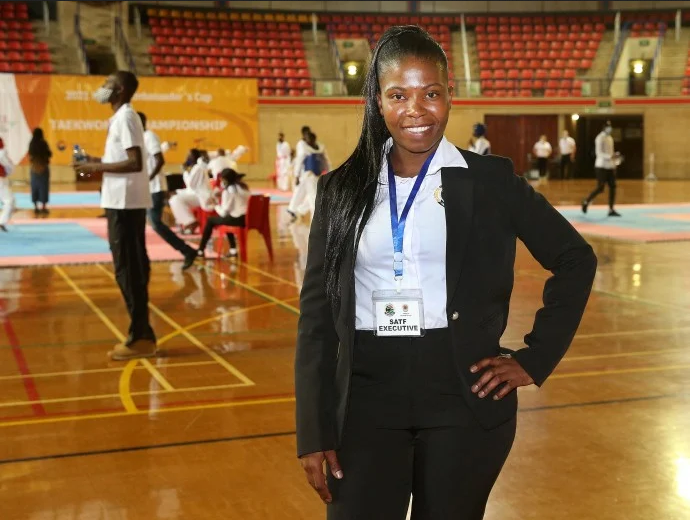
IT is often said that sports change people’s lives. In the case of Abueng Sekgwelea, it is true.
The day, she entered a taekwondo dojang as a 12-year-old for the first time, she started a process of inner healing. Within weeks she had regained her self-worth.
What she started doing in anger became a passion. Sekgwelea is now the Secretary-General of the South African Taekwondo Federation. If she can have her way, every young girl should consider taking up the sport. Sekgwelea takes up her story herself.
“I grew up in rural Northwest. My mom suffered a lot of physical abuse. At the age of 12, I was raped. Shortly afterwards, I heard about a sport called taekwondo. Because it was a fighting sport, I was immediately interested.”
“I needed to learn how to defend myself. There was no money for me to officially join up. It meant that I had to resort to lying to be allowed to train.
“As I was not sure as to how long I was going to get away with it, I promised myself that I was going to make the most of every moment on the taekwondo mats. I wanted to learn as much as possible. I would never allow any man to take advantage of me ever again.
“Little did I know that entering a dojang is not about beating up people. The sport is about respect. I am now at a point where I made peace with what happened. Now it is about passion for the sport. I ‘breathe, walk and sleep taekwondo'”.
Sekgwelea passion did not go unnoticed.
She got a bursary from the Embassy of the Republic of Korea in South Africa to complete her schooling at TuksSport High School.
She did so in 2009.
Nowadays, she has her own dojang in Randburg.
She also coaches at private schools.
If she can have one dream come true, it is to help a South African taekwondo athlete compete at the Olympic Games.
“It was my dream to win a medal for South Africa at the Olympics. I represented South Africa internationally, but things did not quite work out as I had hoped. The challenge now is to get someone else to win that medal for South Africa. Would that not be great?”
Last month, TuksSport alongside the TuksTaekwondo, hosted the Korea Ambassadors Cup tournament and up to 250 taekwondo players were expected to compete. Sekgwelea was present on the day, next to the mats cheering on the youngsters.