Home Blog Page 296

South Africa’s ‘real’ matric pass rate is far lower than government’s figures: DA

THE DA says the country’s 2021 matric results are not a true reflection of the number of students who are failed by the country’s education system.

On Thursday, Basic Education minister Angie Motshekga announced the pass rate for the 2021 cohort was 76.4%. This is an increase of 0.2 percentage points compared to the 2020 matric pass rate (76.2%).

However, the DA said the ‘real’ matric pass rate is 51.4%, as the official results do not take into consideration the high dropout rate. This year, the dropout rate of learners between grade 10 to 12 is 32.7% (341,403 learners), the party said.

Calculations excluding IEB matrics in the grade 10 cohort put the ‘real’ pass rate slightly higher at 53%.

The two provinces with the lowest dropout rates are Mpumalanga, with a dropout rate of 25.5% and the Western Cape, with a dropout rate of 29.7%. The province with the highest learner dropouts is the Northern Cape with 44.7% of learners that were enrolled in grade 10 in 2019 (10 297 learners).

“We know that 897,163 learners wrote the examination, but the grade 10 enrolment in 2019 was 1,045,424. This means that at least 148,261 learners dropped out of the system and did not complete matric. The actual figure is much higher if we consider the students who wrote the examination but failed.

“The DA believes this is due to stringent lockdown regulations implemented by the Department. For these reasons, the DA is compiling court papers to bring an urgent interdict to direct schools to open fully. This policy is irrational and unjustifiable.”

The DA said South Africa’s education system is facing a crisis when considering the learner dropout rates in the statistics.

  • * Inside Education

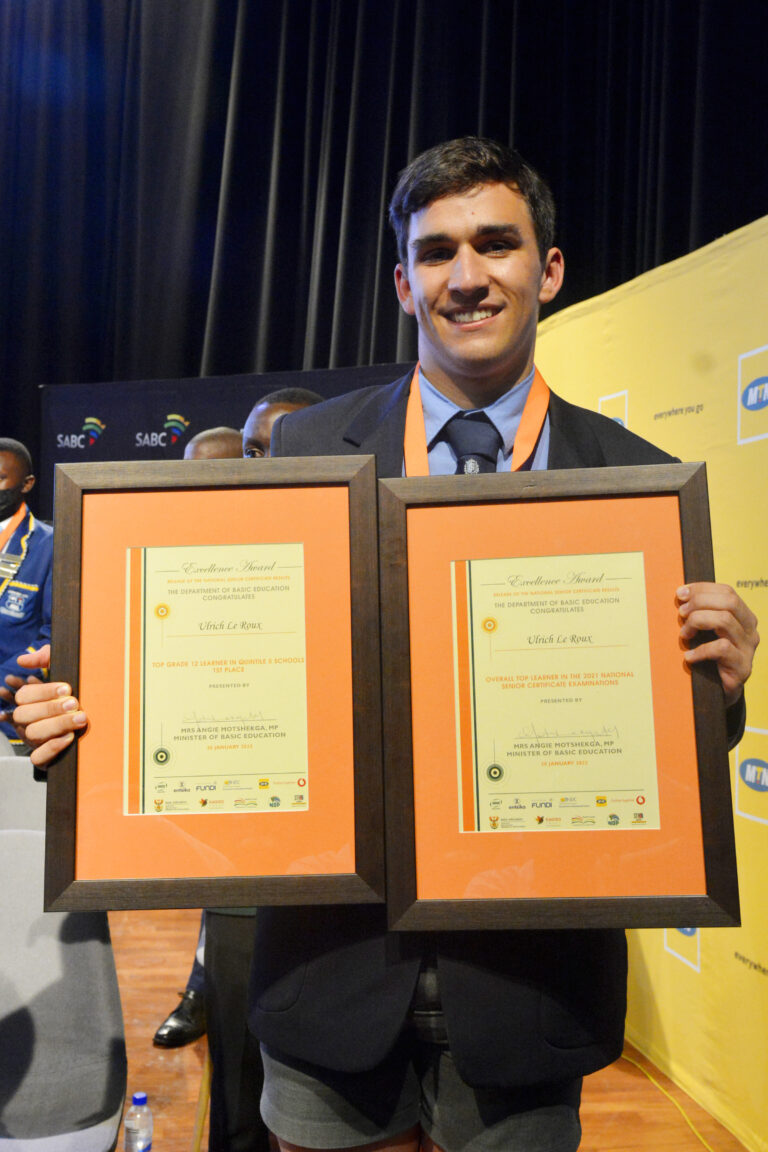
Paarl Boys’ High School learner Ulrich le Roux says being overall National Senior Certificate top achiever was a pleasant surprise, ‘unexpected’

WENDY MOTHATA|

THE overall top National Senior Certificate (NSC) learner for matric class 2021, Ulrich le Roux from Paarl Boys’ High School in said that he is happy with the results he achieved.

This comes after a year of learning under difficult COVID-19 circumstances.

Le Roux, who plans to study actuarial sciences at Stellenbosch University, said that being an overall top achiever was unexpected.

However, he said he is excited and looking forward to this year’s studies.

“I must say, it was quite unexpected, but I’m very happy with what I achieved and I’m looking forward to this year’s studies and years to come,” he said.

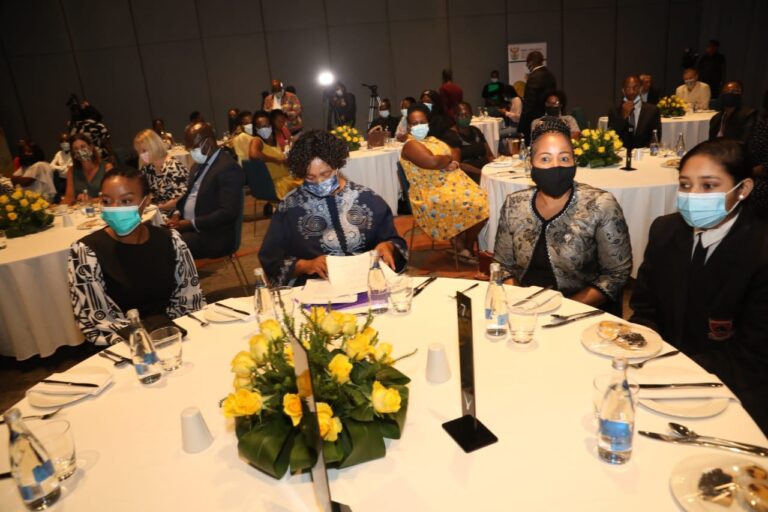
On Thursday, le Roux was one of the learners who were attending a breakfast session with Basic Education Minister Angie Motshekga at Houghton Hotel in Johannesburg.

Later that evening, le Roux was honoured with a standing ovation from his fellow peers and some of the dignitaries that attended the announcing of the matric results.

On Thursday, Motshekga announced the pass rate for the 2021 cohort was 76.4%. This is an increase of 0.2 percentage points compared to the 2020 matric pass rate (76.2%).

The total number of candidates, who registered for the 2021 NSC exams was 897 163.

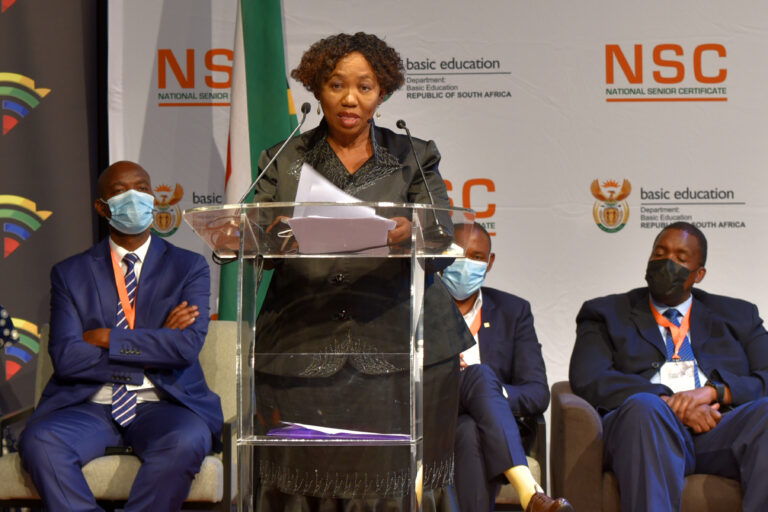
In her speech, Motshekga said, “You are top pupils produced by the class of 2021. You are the epitome of success. Don’t forget that you are the best of the best that the country has produced.”

The minister further said that the class of 2021was the most affected by the COVID-19.

 “The Class of 2021 was the most affected by the Covid-19 pandemic because they had to endure two consecutive years of harsh exposure to the unrelenting Covid-19 pandemic,” said Motshekga.

  • * Inside Education

Matric results| 2021 matric pass rate improves to 76.4%, up 0.2% from 2020

WENDY MOTHATA|

THE Department of Basic Education (DBE) has announced the matric results for the 2021 cohort, with the group achieving a pass rate of 76.4%. 

According to Minister of Basic Education, Angie Motshekga, this is a slight increase of 0.2% compared to the 2020 matric pass rate.

In 2020, the matric class of 2020 achieved a 76.2% pass rate.

The total number of candidates, who registered for the 2021 NSC exams was 897 163.

A total number of 733 198 were registered full-time and 163 965 candidates registered part-time.

Announcing the results, the minister said she is pleased with the results despite all the challenges the learners faced.

“The NSC pass rates have consistently been going up from 60% in 2009, to above 70% in recent years.

The Class of 2021 must be commended for maintaining this trend, despite the astronomical challenges they faced,” she said.

The pass rate represents a record of 537 687 candidates, who passed the 2021 NSC examinations, an improvement of 21.9% passes from 2020.

The number of candidates qualifying for admission to Bachelor studies at universities is 256 031, an improvement of 21.4% from 2020. 

The number of candidates, who passed with a Diploma is 177 572 an improvement of 17.8% from 2020.

The number of candidates, who passed with Higher Certificates is 103 122.

Motshekga said that the 2021 academic year, will be remembered as the year that, not only presented major health challenges but as the second year in which the entire world was held to ransom by the novel COVID-19 pandemic.

 “As at this stage, the Class of 2021, was the most affected by the CVOD-19 pandemic, as they had to endure two consecutive years of harsh exposure to the unrelenting COVID-19 pandemic.  Government, with its Basic Education Departments and its strategic partners, worked tirelessly to strike a balance between saving lives and saving the 2021 academic year,” she said.

The Free State is the leading province at 85.7%, an improvement of 0.6% from 2020.

Gauteng achieved at 82.8%, a 1.0% decline from 2020. Western Cape achieved 81.2%, an improvement of 1.3% from 2020.

The worst performing province is Limpopo, which achieved 66.7%, a 1.5% decline from 2020.

Motshekga further thanked the parents and the teachers for the work that they do.

“In celebrating the great achievements of the Class of 2021, we must thank the principals, teachers, support staff, and parents for the work they continue to do.  Schools are at the coalface of Basic Education delivery.  What you do at the school level, is what matters the most.  The future of our learners, and the prosperity of our nation, is in your hands.  We applaud you for the great work you continue to do daily,” she added.

The minister said that those who wish to improve their results should enroll for the Second Chance Matric Programme. 

Registration into the Programme, is already open, and will close on 15 February 2022. 

  • * Inside Education

2021 Matric Results| Learners share their excitement, and how they prepared their exams under Covid-19 pandemic

WENDY MOTHATA|

SOME of the matric Class of 2021 say they feel honoured to be among the Top 10 achievers of the country. This is after Minister of Basic Education Angie Motshekga hosted a breakfast session to honour them.

Motshekga has commended the matric class of 2021 for their hard work amid COVID-19 challenges.

More than 800 000 learners wrote the 2021 National Senior Certificate examinations in 2021.

One of the Top 10 Achievers from Matric class 2021, Simone Wessels from Stellenberg High School told Inside Education on Thursday that she used past exam papers to prepare for the examinations.

 “I mostly used past papers from the previous years and I made sure that I understood the concept before answering questions. For all my subjects I used different study methods because they require different skills,” said Wessels.

Wessels encouraged the matric class 2022 to follow their dreams and work for hand in hand with teachers.

Iman Khan from Port Shepstone Secondary School said she is humbled to be part of one of the Top 10 achievers in the country. However, she said she is nervous about the results on Friday.

“For me preparing in advanced was key, remaining stress-free, calm and being consistent was a vital role,” said Khan.

Khan is intending to study medicine at the University of Cape Town.

Top achievers Lunga Dube, Raymond Mamabolo and Delicious Dhavana.
Photo: Eddie Mtsweni

Caleb Bessit from St Barnabas School of Specialisation said he is overjoyed by being one of the Top 10 learners.

He urged the class of 2022 to set their goals and work hard on them.

The 17-year-old Dichochi Ramotlou from Noorderland High School in Limpopo said that it took resilience and hard work.

Ramotlou emphasized that he took care of his mental health during the preparation.

“The preparation was intense and every day I studied like I’m writing exams tomorrow. And I think that is the recipe for success,” Ramotlou said.

Ramotlou thanked his parents and teachers: “The support from teachers not only from my school but teachers around the community. My parents were very supportive, psychologically, socially and economically. I’m grateful to have such parents.”

The minister is expected to announce the results of the matric class of 2021 this evening.

  • * Inside Education

Motshekga Hounours Top Achievers At Breakfast

WENDY MOTHATA|

THE Minister of Basic Education Angie Motshekga has commended the matric class of 2021 for their hard work amid COVID-19 challenges.

Motshekga was speaking at the breakfast session held at the Houghton Hotel in Johannesburg on Thursday.

The purpose of the breakfast session was to honour the 2021 matric top achievers from public schools.

More than 800 000 learners wrote the 2021 National Senior Certificate examinations in 2021.

Motshekga and the Deputy Minister Reginah Mhaule congratulated each top learner for their commendable performance in the exams.

The minister said that it’s not easy to be a top leaner in the largest public examinations in the region

This day provides us with an opportunity to celebrate excellence

“The class of 2021 is literally and figuratively a class of its own. It is the only class so far that has studied for two consecutive years under the state of disaster to mitigate COVID-19. And you have made it, you survived and now you are amongst the top learners in the country,” she said.

Motshekga used the opportunity to thank teachers and principals of schools for their support. 

Motshekga further urged learners to continue working hard and move South Africa forward.

“You couldn’t be here if you were an ordinary child. You carry the future of this country, you carry the hopes and aspirations of this country. You have really done well for yourselves,” she said.

She further said that the class of 2021 is the epitome that success comes at a price.

The minister is expected to announce the results of the matric class 2021 this evening.

  • * Inside Education

Matric Results| IEB pass rate increases slightly to 98.39%

WENDY MOTHATA|

THE Independent Examinations Board (IEB) matric class of 2021 has achieved a 98.39% pass rate, slightly higher than last year’s pass rate of 98.06%.

According to the IEB, which released the National Senior Certificate (NSC) results on Wednesday, all candidates who passed achieved a pass that is good enough to enter the tertiary study.

89.2% of the cohort achieved entry to degree study.

7.82% qualified for entry to diploma study.

1.37% achieved entry for study at the Higher Certificate level,

According to a media statement, 12 857 full-time and 968 part-time candidates from 238 examination centres writing in 267 venues across Southern Africa wrote IEB NSC examinations in 2021.

The IEB said that there has been an increase in the number of matric learners who sat down for the exams.

“This is an increase from 2020 when there were 12 024 full-time candidates and 1139 part-time candidates, and from 2019 when there were 11 818 full-time candidates and 779 part-time candidates.”

CEO of IEB Anne Oberholzer has commanded the matric class 2021 for their outstanding results.

She said the learners were ‘true victims’ of COVID-19.

“As with an iceberg, the achievement we see in the class of 2021 hides the depth of the struggle and effort that underpins this success. These Grade 12 learners were the true victims of COVID-19,” she said.

The Class of 2021 has had to dig deep mentally and emotionally to find the strength to face the tremendous challenges of the radically changed teaching and learning environment of the last two years. They truly deserve the accolades they receive.”

Outlining the impact of the COVID-19 pandemic on the NSC learners of 2021, Oberholzer said grade 11 is spent primarily on ensuring that learners have a firm grasp and full understanding of key concepts and content in their respective subjects of study.

 She said that the first term of Grade 12 is usually spent on completion of the curriculum and for the rest of the year, learners are exposed to applications of the concepts and content.

“A significant amount of time is spent on perfection of examination techniques, like judgement of time, or what to do should you come across a question that you don’t know how to answer. Finally, there is substantial revision to provide students with sufficient exposure to a variety of assessment approaches and hence opportunities to prepare for the final examinations,” she added.

Oberholzer further said that the journey for Grade 12 candidates of 2021 was different.

“The journey for Grade 12 candidates of 2021 was somewhat different with school closures from as early as March 2020 and then sporadically throughout the year, continuing right through their Grade 12 year. They experienced disruptive change of an unprecedented nature within a relatively short space of time,” she said.

Leaners who want to apply for remarking can do so before 28 January 2022 and the results from re-marking will be released on 15 March 2022.

Meanwhile, the closing date for learners who qualify to enroll for the May/June examination is 30 March 2022.

  • * Inside Education

DBE, Umalusi reiterates that no matric learner can pass with a 30% overall rate

QUALITY assurance council, Umalusi, on Tuesday reiterated that no learner in South Africa will be able to pass their matric by obtaining 30% in all subjects.

This after One SA Movement leader Mmusi Maimane recently questioned the quality of education being offered in South Africa and called for an end to the 30% pass mark.

“A 30% pass mark undermines the intellect of SA’s youth and allows for obfuscation of the basic education crisis, education leaders to escape accountabilities and the entrenchment of mediocrity and low expectations,” Maimane said.

The Department of Basic Education and Umalusi said this week that this was not true.

“Pass rates at this level are as old as the matric certificate itself, which is more than 100 years old. If learners were to obtain 30% in all subjects, they would fail. We have to remind each other what the purpose of the National Senior Certificate is. The National Senior Certificate gives learners access to a number of post-school opportunities,” said Umalusi CEO Mafu Rakometsi.

Basic education minister Angie Motshekga has responded to the ongoing public debate on the matric pass mark, dismissing claims it is 30%.

The minister said the debate and claims made about the pass mark demonstrated a lack of understanding about the NSC pass requirements.

The requirements are split into three categories which qualify pupils either for bachelor’s degree or diploma studies and the higher certificate pass.

  • To obtain a bachelor pass, explained the minister, pupils are required to get a minimum of 40% for their home language, 50% in four other subjects and at least 30% for the language of learning. 
  • For a diploma pass, pupils must obtain 40% for their home language, at least 40% in three other subjects and a minimum of 30% in the language of learning. 
  • For a higher certificate pass, the home language pass mark remains 40%, at least 30% in the language of learning and at least 40% in two subjects and a minimum of 30% in other subjects 

All pupils are required to pass six of the seven subjects regardless of whether they obtain a bachelor, diploma or a higher certificate pass.  

The minister reiterated that 30% is a minimum requirement for a single subject and not an aggregate pass mark for all grade 12 subjects. 

Umalusi approves the release of 2021 national examination results

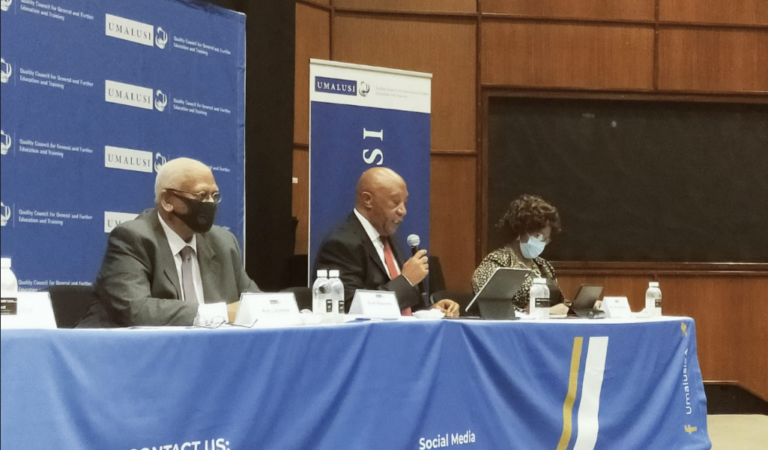
UMALUSI, the Quality Council in General and Further Education and Training, has approved the release of the 2021 national examination results, but has requested the Department of Basic Education (DBE) to block the results of candidates implicated in irregularities pending investigation.

Those included in irregularities are candidates involved in group copying and those who had early access to question papers.

During a media briefing on Tuesday, the Quality assurer said it has picked up a new trend in a few sectors in KwaZulu-Natal and Gauteng where learners were given early access to question papers a few hours before they write.

Professor John Volmink, Chair of the Umalusi Council, said that the executive committee of Umalusi noted that apart from some examination irregularities identified during the writing and marking of the examinations, there were no systemic irregularities reported that might have compromised the credibility and integrity of the November 2021 National Senior Certificate (NSC) examinations administered by the DBE.

“The Executive Committee of Council approves the release of the DBE November 2021 NSC examination results based on available evidence that the examinations were administered largely in accordance with the examination policies and regulations,” Volmink said.

“In respect of identified irregularities, the DBE is required to block the results of candidates implicated in irregularities, including the candidates involved in group copying, pending the outcomes of further DBE investigations and Umalusi verification. In the cases where candidates had unauthorised access to question papers, the results of the implicated candidates should be blocked pending further DBE investigations and Umalusi verification,” he said.

Pay attention to matters of non-compliance

Umalusi has required the DBE to address the directives for compliance and improvement highlighted in the Quality Assurance of Assessment report. The department has until 15 March 2022 to develop and submit an improvement plan to Umalusi.

“Particular attention should be paid to recurring matters of non-compliance. The Executive Committee of Council commends the DBE for conducting a successful examination despite the challenges presented by COVID-19,” the Umalusi Chair said.

Umalusi noted incidents of unauthorised and early access to question papers detected at some of the examination centres in KwaZulu-Natal and Gauteng.

“Specifically, Life Sciences and Agricultural Sciences papers were the affected subjects in those centres. This practice can potentially compromise the integrity of examinations if it is not addressed decisively,” the Umalusi Chair said.

Once again, Umalusi has appealed to all stakeholders involved in the examination process to refrain from engaging in such unscrupulous acts of dishonesty.

“In the meantime, the results of implicated learners will be blocked, pending further investigations by the DBE and verification by Umalusi. It is also worth noting that there are severe consequences for those found guilty of such criminal activities, regardless of whether they are learners, teachers or officials.

“Similarly, isolated incidents of group copying continue to plague the national examination system. These malpractices do not augur well for our examination system and the education system in general,” Volmink said.

  • * SA News

Gauteng High Court rules that South Africa’s matric results should be published publicly

THE North Gauteng High Court has ruled that the Department of Basic Education should continue to publish the matric results publicly on media platforms and newspapers.

The ruling comes after the Department of Basic Education said in an 11 January statement that matric exam results will no longer be published on media platforms, in line with the recently introduced Protection of Personal Information Act (POPIA).

“In order to comply with the provisions of the POPIA, the usual practice of publishing the National Senior Certificate (NSC) results on public platforms (media platforms) will not occur for 2021,” it said.

“As was also the practice in previous years, all learners will be required to obtain their statement of results from the schools they attended. In this way, every learner’s personal information with regards to the outcome of their National Senior Certificate exam will be protected.”

The decision was challenged by civil society group AfriForum, Maroela Media and Anlé Spies (a 2021 matriculant) who argued that matric students who do not live close to their respective schools would be prejudiced by the decision.

Spies, who sat her exams in Pretoria but lives in Gqeberha, argued that it is critically important that she receive her results as quickly as possible so that she can prepare for the start of her university career. She said that there are several learners who moved or relocated to addresses far away from the schools where they sat their matric exams.

On Tuesday, Basic education department said it has noted the Pretoria High Court ruling and will abide by the ruling.

“This means that the Department will make available the results to stakeholders who requested access. The conditions of the court ruling must be taken into account in line with the provisions of the Protection of Personal Information Act 4 of 2013,” the department said.

“In addition to accessing results from media platforms, the Department also urges candidates to register on the website to view the results when they become available. Candidates will have to go through a two-step verification process before receiving confirmation of their registration.”

A 13-digit ID number and Exam Number will be required for registration.

The DBE website is zero-rated, which means it can be accessed whether you have data or not.

Registration is now open! By lunch time more than 10,000 people had successfully registered.

  • * Inside Education

Department of Basic Education to Abide By Court Decision Regarding Publishing of NSC Results

THE case against the publication of South Africa’s matric marks is expected to be heard in court this week after the Department of Basic Education announced the marks will not be made publically available due to regulatory concerns.

The urgent application will be heard in the North Gauteng High Court in Pretoria on 18 January before the matric results are made available on 20 January 2022.

The department has said that it will not oppose the urgent application and will abide by the decision of the court.

In a statement on Tuesday, the Department of Basic Education said that matric exam results will no longer be published on media platforms, in line with the recently introduced Protection of Personal Information Act (POPIA).

The department said that publishing personal information online would be a contravention of the Act. It confirmed that matric results are still scheduled to release on 21 January 2022 and that results would still be available from schools. Historically, the matric results have been made widely available with students identified through their ID numbers or exam numbers.

“In order to comply with the provisions of the POPIA, the usual practice of publishing the National Senior Certificate (NSC) results on public platforms (media platforms) will not occur for 2021,” it said.

“As was also the practice in previous years, all learners will be required to obtain their statement of results from the schools they attended. In this way, every learner’s personal information with regards to the outcome of their National Senior Certificate exam will be protected.”

Civil society group AfriForum, Maroela Media and Anlé Spies (a 2021 matriculant) served court papers on Friday to oppose the Department of Basic Education’s sudden decision not to publish the 2021 matric results in the media on an urgent basis in court.

Spies, who sat her exams in Pretoria but lives in Gqeberha, is arguing that it is critically important that she receive her results as quickly as possible so that she can prepare for the start of her university career. She argues that there are several learners who moved or relocated to addresses far away from the schools where they sat their matric exams.

The department has communicated its position to stakeholders it has engaged including SANEF and other parties.

“Meanwhile the Department urges candidates to register on the DBE website to view their results when they become available. Candidates will have to go through a two-step verification process before receiving confirmation of their registration. A 13-digit ID number and the examination number will be required for registration,” the department said.

The DBE website is zero-rated, which means learners can access it whether they have data or not.

The department said that more than 10 000 people had successfully registered by noon on Sunday.

Matric results are expected to be released on 21 January.

  • Inside Education