Home Blog Page 3

OPINION| Fuel shock exposes cost of logistics delays

0

By Dave Logan

The South African Freight and Logistics Association (SAFLA) notes the Department of Mineral and Petroleum Resources’ confirmation of significant fuel price increases effective 1 April 2026, alongside short-term tax relief measures, announced with National Treasury.

On 31 March 2026, the Department confirmed sharp April fuel hikes driven by a surge in global oil prices and a weaker rand. The average Brent crude price rose from $69.08 to $93.67 over the review period, while the rand depreciated from R16.00 to R16.64 per US dollar.

ALSO READ: Easter safety plans underway, guns, cars and patrols beefed up

In response, government introduced a temporary R3.00/litre reduction in the general fuel levy from 1 April to 5 May 2026 as part of a joint relief package.

Even with this intervention, the April adjustments remain substantial: petrol increased by R3.06/litre, diesel (0.05%) by R7.37/litre, and diesel (0.005%) by R7.51/litre, with additional zone-level variation possible due to transport tariffs and octane differentials.

Using department-published March wholesale pricing as a baseline, inland (Gauteng, Zone 9C) diesel 0.005% stood at R18.6023/litre as of 4 March 2026. Applying the national increase for scenario modelling suggests an implied April inland wholesale price of approximately R26.11/litre.

These fuel movements are a loud and immediate reminder: when our corridors stall, the cost doesn’t just show up in delayed containers — it shows up in litres burned, in higher transport inflation, and in reduced competitiveness for South African trade.

SAFLA reiterates its operator-led mandate to focus on measurable improvements at the coalface of trade: border delays, permit duplication and valuation disputes, with direct engagement planned with SARS, Transnet, the Border Management Authority and other controlling authorities impacting freight movement.

ALSO READ: Lesufi reshuffles cabinet as Maile moves to Education, EFF takes Finance

SAFLA calls for accelerated, data-driven interventions at key corridors and ports to reduce dwell times and improve predictability — steps that can lower fuel burn and stabilise the cost of moving goods.

Dave Logan

Dave Logan is CEO of the South African Freight and Logistics Association

INSIDE EDUCATION

Kaizer Chiefs launch women’s team

0

By Levy Masiteng 

Kaizer Chiefs Football Club has announced the launch of Kaizer Chiefs Ladies in Daveyton, formally establishing a women’s team that the club said will compete in the Gauteng Sasol League in 2026.

The newly established team will be based in Johannesburg and will play its home matches at the Kaizer Chiefs Village and Kwa Thema Stadium in Springs, according to the club.

Among the notable players are former Banyana Banyana midfielder Mamello Makhabane, as well as junior internationals Zanele Kunyamane and Katlego Mohale.

The squad is further strengthened by players with experience in the Hollywoodbets Super League, the club said.

Leading the team will be head coach Unathi Mabena, assisted by Justice Khunou, both bringing valuable expertise and a deep understanding of the local football landscape, according to the club.

The formation of Kaizer Chiefs Ladies follows a partnership with Springs Home Sweepers, which began with initial discussions in 2023 and was formalised in 2025.

The collaboration enabled the club to build capacity within the women’s game, ultimately leading to the acquisition of Gauteng Sasol League status for the 2026 season.

The club also acknowledged the support of the South African Football Association in integrating the team into official football structures.

“Further strengthening the project is the backing of Brima Logistics, the official partner of Kaizer Chiefs Ladies, whose investment reflects growing corporate confidence in women’s football,” the club said.

Club chairman Kaizer Motaung described the launch as a significant milestone.

“This is a proud moment for Kaizer Chiefs. As a club, we understand the responsibility we carry within South African football, and this step reflects our commitment to growing the game in a meaningful way. Women’s football is an important part of the future, and we are committed to being part of that journey.”

“This is about building real pathways for women in the game. The women’s game is growing rapidly across the world, and South Africa is part of that upward trajectory. We want female soccer players to see this team and understand that there is a place for them within Kaizer Chiefs and within the global game,” said Kaizer Chiefs Marketing and Commercial Director, Jessica Motaung.

The club also extended its appreciation to former Kaizer Chiefs player and coach Joseph Mkhonza for his contribution to women’s football development, which it said helped lay the foundation for the team.

“When you build something of this nature, you must think beyond the present moment. You must consider the generations that will follow and the responsibility that comes with that,” Motaung said.

INSIDE EDUCATION

DHET eyes clearer guidelines on menstrual support

0

By Lebone Rodah Mosima 

The Department of Higher Education and Training (DHET) is working towards clearer guidelines on sanitary dignity across universities and colleges, Deputy Minister Nomusa Dube-Ncube said on Wednesday.

She made the remarks in a prepared speech for a portfolio committee colloquium on the provision of sanitary dignity products for post-school education and training students.

ALSO READ: Sea Rescue Institute issues spring tide warning ahead of Easter rush

“Menstrual health is not a luxury. It is not a peripheral concern. It is a basic human right and a critical enabler of educational access and retention,” she said.

She said the lack of access to products continued to affect students across universities, TVET colleges and community education and training colleges.

“For many young women and people who menstruate within our universities and TVET and CET colleges, the lack of access to affordable and appropriate sanitary products continues to be a silent barrier to learning,” she said.

Government’s Sanitary Dignity Framework defines sanitary dignity as including menstrual knowledge, affordable products, clean water, private and safe toilets, and hygienic disposal. It also recognises that period poverty is driven by poverty itself and can force girls and women to choose between food and sanitary products.

In the school system, the state runs a targeted sanitary dignity programme. In higher education, support is more commonly channelled through existing student funding, including NSFAS living and personal care allowances, rather than through a separate sanitary products grant.

ALSO READ: GDE says schools got funds to pay power bills

Dube-Ncube said the department recognised the effect this was having on academic participation.

“We know the reality: students missing classes, avoiding participation, or even dropping out. Not because of academic inability, but because of a natural biological process compounded by economic hardship,” she said.

At the same time, she said that students receiving financial support were expected, in large part, to cover such costs through existing allowances.

“[I]t is reasonable to position sanitary products as part of personal living expenses that financially supported students can manage through NSFAS by giving them, additional to accommodation, transport and living allowances, also personal care allowances, for both males and females to support their basic necessities such as toiletries and sanitary products,” she said.

She said the department had already made “important strides”, including “the distribution of sanitary products in selected institutions”, partnerships to improve supply chains, and “institutional-level interventions to ensure that products are accessible, discreet, and free from stigma”.

But she acknowledged that provision remained uneven.

“The current provision remains uneven across institutions, and funding constraints continue to limit the scale and sustainability of interventions,” she said.

Dube-Ncube said the department was now focusing on policy alignment and standardisation, sustainable funding models and dignity-centred implementation.

“In addition to our policies for social inclusion and equity, we are working towards establishing clear guidelines that will ensure a consistent approach to sanitary dignity across all PSET institutions, while still allowing for contextual flexibility,” she said.

She said officials were considering “innovative funding mechanisms, including public-private partnerships, to ensure that provision is not dependent on ad hoc arrangements but becomes an embedded component of student supply”.

Dube-Ncube said sanitary dignity was “not a ‘women’s issue’. It is a national development issue”.

“When students are supported in their understanding of each other, and their basic needs, they are better able to succeed academically, contribute meaningfully to society, and participate fully in the economy,” she said.

She urged policymakers to treat menstruation as a practical student support issue rather than a source of shame.

“Together, we can ensure that no student is left behind because of something as natural, and as manageable as menstruation,” she said.

INSIDE EDUCATION

Sea Rescue Institute issues spring tide warning ahead of Easter rush

0

By Levy Masiteng 

The National Sea Rescue Institute (NSRI) has issued a coastal safety warning for a full moon spring tide peaking on Thursday (today), saying that hazardous tidal conditions are expected to persist in the days following the Easter holiday weekend.

The advisory comes as thousands of holidaymakers are expected to remain along South Africa’s coastlines after Easter.

“This full moon spring tide will result in dramatically increased tidal ranges, creating potentially dangerous conditions for beachgoers, anglers and coastal hikers,” the NSRI said in a statement.

ALSO READ: Joburg beefs up Easter safety plans

Among the key risks are powerful rip currents, stronger than usual tidal flows and rapidly rising water levels that could catch bathers off guard. 

Beaches are expected to experience higher high tides that push water further inland, while lower low tides will expose more seabed than usual.

The NSRI warned that rip currents — one of the leading causes of drowning — are likely to intensify, particularly during outgoing tides in the late afternoon and early evening. 

The organisation said beachgoers should be aware of narrow inlets and coastal passages because they could see the formation of rip tides.

“Spring tides can significantly increase the strength of currents, making swimming conditions far more hazardous, especially for those unfamiliar with the ocean,” the NSRI said.

Hikers have also been urged to be vigilant on coastal routes and walking paths, as the routes may also become unsafe or completely inaccessible during high tide, particularly later in the day. 

The NSRI said fishing from rocks or cliffs is dangerous as shoreline anglers face additional danger from unexpected waves surging beyond normal safe zones.

The organisation offered several safety measures.

ALSO READ: PSC warns unpaid state invoices crippling small businesses, deepening governance crisis

Beachgoers are urged to swim only at lifeguard-protected beaches and to stay between the flags, while carrying communication devices and keeping them fully charged. 

Visitors are encouraged to check daily weather forecasts from the South African Weather Service (SAWS) and consult tide tables before heading out.

“Always be aware of your surroundings and avoid taking unnecessary risks. The ocean can change very quickly during spring tides,” the NSRI said.

It said that people should avoid drinking alcohol before swimming, closely supervise children, and remaining cautious around inland water bodies such as rivers and dams, particularly after heavy rains.

It encouraged the public to use its SafeTRX mobile app to log trips and enable quick emergency response if needed.

“The effects of spring tides can last several days. By taking simple precautions and staying informed, we can all enjoy the coastline safely,” the NSRI said.

INSIDE EDUCATION

GDE says schools got funds to pay power bills

0

By Levy Masiteng 

The Gauteng Department of Education (GDE) says schools were allocated funds in November 2025 specifically to settle their municipal obligations, including electricity accounts, amid ongoing concerns over unpaid bills and possible service interruptions.

This followed allegations that the department had shifted the burden of arrear municipal accounts onto schools, a claim it has strongly denied, insisting that the main issue is not a lack of funding, but rather non-payment by some schools despite receiving allocations.

ALSO READ: Draft BELA rules aim to keep pregnant learners in school

In a statement issued this week, the department said several schools in Eldorado Park were among those that received funding for municipal services.

These included Kliptown Primary, which received R233 167, Heerengracht Primary, which received R358 739, Eldorado Park Secondary, which received R523 503, and Eldomaine High School, which received R512 306.

The department said it had also previously communicated with School Governing Bodies about the decentralisation of municipal payments, placing responsibility on schools to manage and settle their own accounts once allocations had been made.

Under the South African Schools Act, schools granted the relevant Section 21 functions may pay for services to the school.

“It is therefore quite concerning that some schools are not paying their municipal accounts despite having received the necessary allocations and being aware of their responsibilities to pay their accounts,” the department said.

ALSO READ: UFH vice-chancellor Sakhela Buhlungu placed on suspension following forensic report

“We wish to reiterate that we are engaging with all municipalities as this challenge is notably experienced across the province. These engagements will assist schools in ensuring they consistently pay their accounts and that their payments and accounts remain accurate at all times.

“Going forward, schools must also ensure that they use the allocations they receive strictly for its intended purposes,” Gauteng Education MEC Matome Chiloane said.

The department has urged affected schools to engage municipalities to negotiate payment arrangements while it facilitates the disbursement of the 2026/27 financial year allocations, which schools are expected to receive on or before 15 May.

In March, it was reported that at least 36 schools across Gauteng experienced electricity disconnections and more than 100 others had received notices warning of possible cuts, particularly in Ekurhuleni and Tshwane.

But GDE spokesperson Steve Mabona disputed those reports, saying schools had mainly received warning correspondence.  

“There is no school that was cut off. The only thing that occurred was that correspondence was circulated to schools that are lagging behind in terms of their municipal services accounts,” Mabona said.

ALSO READ: LaLiga, Royal Bafokeng launch elite youth football academy

He said the responsibility for paying municipal services lies with schools and their SGBs, where the relevant functions have been decentralised.

“In the meantime, the Gauteng Department of Education will continue to engage municipalities not to cut their services, particularly as the interruption of electricity supply may negatively affect teaching and learning,” Mabona said.

INSIDE EDUCATION

Draft BELA rules aim to keep pregnant learners in school

0

By Levy Masiteng 

Draft regulations gazetted last week will require schools to support pregnant learners to stay in class and return after childbirth, while requiring pregnancies involving learners under 16 to be reported to social workers and police.

The draft regulations, issued under the South African Schools Act as amended by the BELA Act, require schools to provide a supportive and non-discriminatory environment for pregnant learners.

ALSO READ: UFH vice-chancellor Sakhela Buhlungu placed on suspension following forensic report

In partnership with the Department of Health and the Department of Social Development, schools will need to facilitate access to essential ante natal, post-natal and psychosocial support services for the pregnant learners.

An important provision in the draft regulations is the introduction of mandatory reporting in certain cases. Where a learner under the age of 16 falls pregnant, the school must report the matter to the Department of Social Development and to the South African Police Service.

Department of Basic Education (DBE) minister Siviwe Gwarube said the regulations build on progress already made in addressing learner pregnancy in schools.

ALSO READ: LaLiga, Royal Bafokeng launch elite youth football academy

“We have moved away from a painful past where young girls were expelled or forced out of school due to pregnancy, these practices contributed to alarmingly high dropout rates. These regulations build on that progress and reaffirm our commitment to dignity, inclusion, and equal opportunity,” she said.

Members of the public must submit written comments within 30 days from the date of publication on 25 March 2026, to LearnerPrengancyRegz@dbe.gov.za.

INSIDE EDUCATION

UFH vice-chancellor Sakhela Buhlungu placed on suspension following forensic report

By Johnathan Paoli

The University of Fort Hare council has placed its vice-chancellor, Sakhela Buhlungu, on precautionary suspension with full pay, pending the outcome of disciplinary proceedings linked to findings from a forensic investigation into senior executive appointments.

‎According to media platform EdNews, a letter on Tuesday signed by council chairperson Siyanda Makaula stated that the decision followed consideration of Buhlungu’s written representations, the forensic report and all relevant circumstances.

‎The suspension centres on irregularities in the appointment processes of two executive directors, where council approval was not obtained as required under the institution’s statutes.

According to the council, these failures constituted serious breaches implicating senior management decision-making and oversight structures.

The council maintained  that the VC’s continued presence in office could reasonably give rise to risks of interference with potential witnesses or institutional records.

The suspension takes immediate effect and will remain in force until the conclusion of disciplinary proceedings, unless lifted earlier.

The council stressed that the measure does not constitute a disciplinary sanction.

‎Buhlungu has been instructed not to enter university premises without prior written approval and to refrain from contacting staff, students, service providers or other stakeholders on matters related to the investigation.

He is also required to make available any university property or documentation needed for the process and to attend a disciplinary hearing once formally convened.

His employment contract remains in force.

The decision follows a special council meeting held earlier in the month, after the conclusion of a forensic investigation into alleged irregularities in the appointment of the executive director for infrastructure and technology, and the executive director for people management and engagement.

In a statement issued on 20 March, the council said the investigation found that four senior management employees “failed to comply with the requirements of Section 19.1 of the university statute, in that council approval was not obtained” for the appointments.

‎The council confirmed that appropriate disciplinary action has since been imposed on the implicated employees.

The university cited Section 10.1 of its employee relations and procedures, which provides that “where the policies, norms, values, standards and principles of the University of Fort Hare have been violated, the university has the right, through the disciplinary procedure, to apply appropriate corrective action in a fair manner”.

However, the decision to suspend Buhlungu has raised concerns with reports indicating that the vice-chancellor himself flagged the irregularities and attempted to correct them once they came to light, but was ignored.

According to the EdNews, a subsequent forensic investigation did not find wrongdoing on Buhlungu’s part and that tensions between the vice-chancellor and elements within the university leadership have been escalating, particularly following a series of investigations into governance and corruption at the institution.

It has been reported that this move follows a sense of revenge against Buhlungu following his cooperation with probes by the SIU into alleged maladministration at the university.

Buhlungu has been at the forefront of efforts to stabilise the institution, which has in recent years been rocked by governance challenges, including high-profile investigations into procurement and security contracts.

Despite the controversy, the council maintains that due process will be followed.

Formal notice of the disciplinary hearing, including specific charges and logistical details, is expected to be issued in due course in line with university policy.

The unfolding developments place renewed scrutiny on governance processes at the University of Fort Hare, as well as on the balance between accountability and institutional stability at one of South Africa’s historic higher education institutions.

INSIDE EDUCATION

DHET, Google sign AI skills deal with 10,000 scholarships

0

By Lebone RodahMosima 

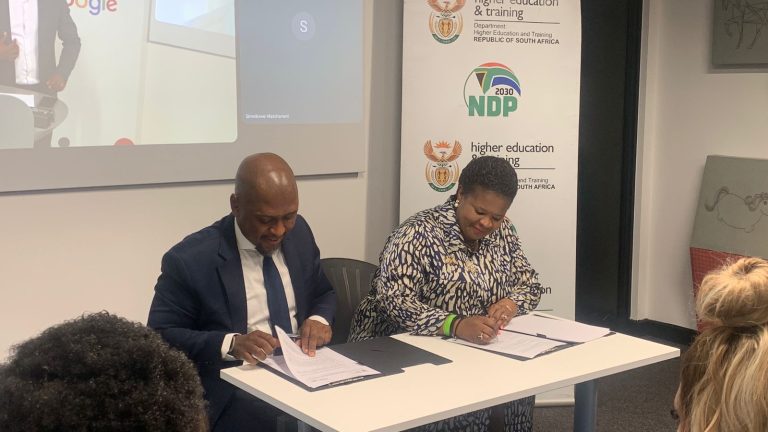
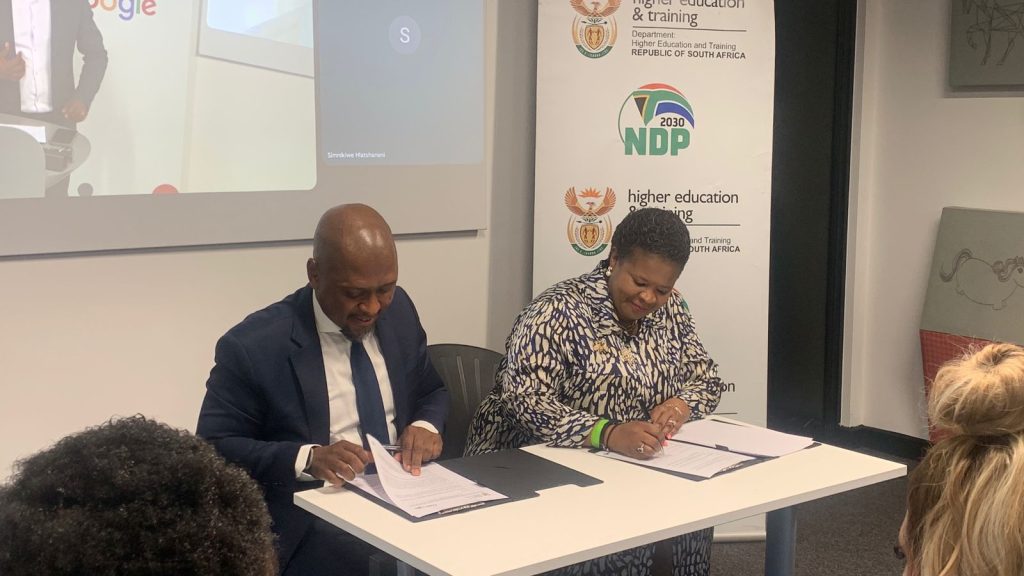
The Department of Higher Education and Training (DHET) and Google South Africa signed a two-year agreement in Johannesburg on Monday, which will roll out an initial 10,000 scholarships as part of a national AI and digital skills initiative.

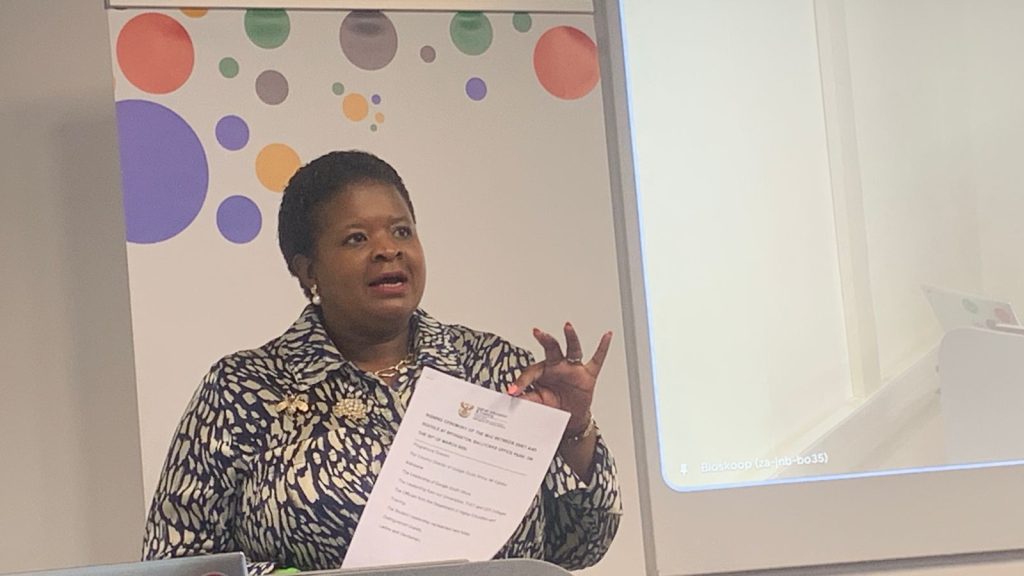
The memorandum of understanding, signed by DHET deputy minister Dr Mimmy Gondwe and Google South Africa Country Director Kabelo Makwane, is the DHET’s fourth public-private partnership focused on student and youth skills development.

“I’m very excited to see this MoU with Google come to fruition,” said Gondwe.

ALSO READ: Manamela: Access alone won’t transform African universities

She said the agreement would boost digital skills development across universities, TVETs and CET colleges through Google Career Certificates, Generative AI for Educators, a train-the-trainer model and other AI programmes, with a focus on employability, self-employment and entrepreneurship.

Said Makwane: “AI has moved from theory to everyday reality.”

He said digital technology was already a major catalyst for South Africa, and that Google tools contributed R118 billion to the economy in 2023, while AI was set to add another R172 billion by creating new skills and unlocking growth opportunities.

ALSO READ: Chiloane orders probe into fatal Daveyton school wall collapse

The agreement will also cover curriculum and product support, device support through ChromeOS Flex, and collaboration on AI policy and governance in public institutions. The MoU will run for two years.

INSIDE EDUCATION

LaLiga, Royal Bafokeng launch elite youth football academy

By Johnathan Paoli

Spanish football league LaLiga and Royal Bafokeng Sports (RBS) have officially launched a new elite youth football academy in South Africa.

Speaking at the launch event, LaLiga Africa Managing Director Trésor Penku said the partnership reflects a shared commitment to the long-term development of youth football on the continent.

“This launch reflects a shared commitment between LaLiga and the Royal Bafokeng Nation to the responsible and sustainable development of youth football in Africa,” Penku said.

“By combining our methodology with RBS’s infrastructure and long-term vision, we are creating a high-performance environment that will nurture talent and contribute meaningfully to the South African football ecosystem.”

The Royal Bafokeng Sports LaLiga Academy will be based at the Royal Marang Hotel Sports Campus in Phokeng, North West province.

The high-performance facility features six natural grass pitches, two artificial turf pitches, a 7-a-side 7 pitch, and a fully equipped High Performance Centre designed to meet international training standards.

Penku said the initiative brings together LaLiga’s globally recognised youth development methodology and the long-term development strategy of the Royal Bafokeng Nation, which has positioned sport as a key driver of community development under its Vision 2035 framework.

The academy is expected to accommodate approximately 100 players across multiple age groups, including U14, U15, U17, U19 and a senior SARL team.

He said it aims to provide a structured pathway that integrates high-performance training, competitive match exposure and academic support, with players set to compete in community, regional and elite competitions.

Oversight of the programme will be led by a UEFA Pro Licence coach serving as Technical Director, supported by local coaching staff and operating under the direct supervision of LaLiga’s technical team in Spain.

The model is designed to facilitate knowledge transfer while building local coaching capacity and embedding international best practice within the South African football ecosystem.

Royal Bafokeng Sports leadership described the academy as a milestone in expanding access to world-class training opportunities for young athletes in the region.

Acting RBS Managing Director Emile Smith welcomed the partnership with LaLiga as a major milestone in the nation’s journey to develop young football talent.

“Together, we are creating opportunities for aspiring athletes through world-class coaching, mentorship, and access to exceptional facilities. This academy will not only elevate player development but also inspire a deeper passion for football within our communities,” Smith said.

The collaboration forms part of LaLiga’s broader global footprint, which has seen the Spanish league deliver more than 900 international sports projects across over 60 countries in the past decade.

LaLiga Head of Football Projects Juan Florit said the partnership would enable the adaptation of Spanish football expertise to local conditions while strengthening grassroots systems.

“Through collaborations such as this, we are able to share the knowledge and expertise of Spanish football while adapting it to local contexts. Together with the Royal Bafokeng Nation, we aim to identify and develop regional talent and create long-term value for the game,” Florit said.

He said LaLiga’s youth development model has become a benchmark globally, with academy-trained players accounting for 19.8% of total playing minutes in the 2024/25 season and reaching a combined market value of €1.477 billion.

INSIDE EDUCATION

Chiloane orders probe into fatal Daveyton school wall collapse

Staff Reporter

The Gauteng education department will appoint a law firm to investigate the collapse of a school wall that killed an 8-year-old learner at Lerutle Primary School in Daveyton, it said on Monday.

Gauteng MEC for Education Matome Chiloane announced the investigation during a visit to the family of Grade 3 learner Lwazi Motuse in Daveyton, Ekurhuleni.

The department said the independent probe would seek to establish the full circumstances surrounding the collapse, in which five other learners were injured.

“We convey our sincerest condolences to the bereaved family. We remain committed to supporting the family and the entire Lerutle Primary School community during this deeply difficult time,” Chiloane said.

The department said it continued to provide psycho-social support to affected learners, teachers and the bereaved family. It confirmed that all other learners injured in the incident had since been discharged from hospital.

The wall collapse is the second fatal school incident this year to trigger an external investigation by Chiloane.

On 18 March, the MEC formally introduced a law firm to investigate the death of 10-year-old Milton Neo Mokgoatsane, a Grade 5 learner at Reagile Primary School in Winnie Mandela, Tembisa, after a goal post fell on him during break time in February.

INSIDE EDUCATION