Home Blog Page 30

Mpumalanga’s top achiever Luyanda Ndlozi sets sights on mechatronics at UCT

0

By Thapelo Molefe

Luyanda Ndlozi of Elangwane Secondary School in Volksrust, Mpumalanga, has made her mark as one of the country’s top matric achievers in 2025, topping quintile 1 schools nationally. 

Achieving seven distinctions, including 99% in Mathematics and Accounting and 97% in Physical Sciences, Luyanda’s exceptional results earned her national recognition, and a suite of prizes to match. 

The Mpumalanga provincial education department awarded her a new car, R66,000 in cash, and a full bursary covering tuition, accommodation, and study materials, while corporate sponsors gifted her a laptop, smartwatch, power bank, bar fridge, and microwave.

For Luyanda, reaching the top was the result of relentless dedication and discipline. 

“I studied every day, even when I was tired,” she says. “Some days it was exhausting, but I knew I had to push through to reach my goals.” 

Long school days, heavy bags, and late-night study sessions were part of her daily routine, and she credits her mother and her school for giving her the support she needed to stay focused.

ALSO READ: A dream come true: York High learner Abigail Kok tops 2025 NSC

Her teachers and school principal, Mr. Ngwenya, went above and beyond, sacrificing personal time to ensure learners could excel. 

“They believed in me even when I doubted myself,” Luyanda says. 

She also benefited from supplementary programs like the Kutlwanong Pro-MathS Centre and two SAICA camps, which strengthened her understanding of Mathematics and Physical Sciences and built her confidence to tackle difficult questions.

Now, Luyanda is looking ahead to Mechatronics Engineering at the University of Cape Town, a field that combines robotics, automation, and smart systems.

“I want to help advance technology in South Africa,” she explains. “I hope to develop innovations in healthcare, automation, and other sectors to bring our country closer to the technological standards of the world.”

Luyanda encourages learners entering Grade 12 to embrace discipline, time management, and consistent effort. 

ALSO READ: Over 300,000 applications chase just 9,124 first-year places at UKZN

“It won’t be easy, and there will be times when you feel like giving up,” she says. “But if you push yourself, stay organised, and make the most of every day, you can achieve more than you ever imagined.”

Luyanda Ndlozi’s story is a testament to perseverance, vision, and community support, a reminder that even learners from rural schools can reach national excellence with dedication and determination.

INSIDE EDUCATION

From no data to 100% test scores: How Thabo Seota beat the odds to triumph in NSC exams  

0

By Akani Nkuna

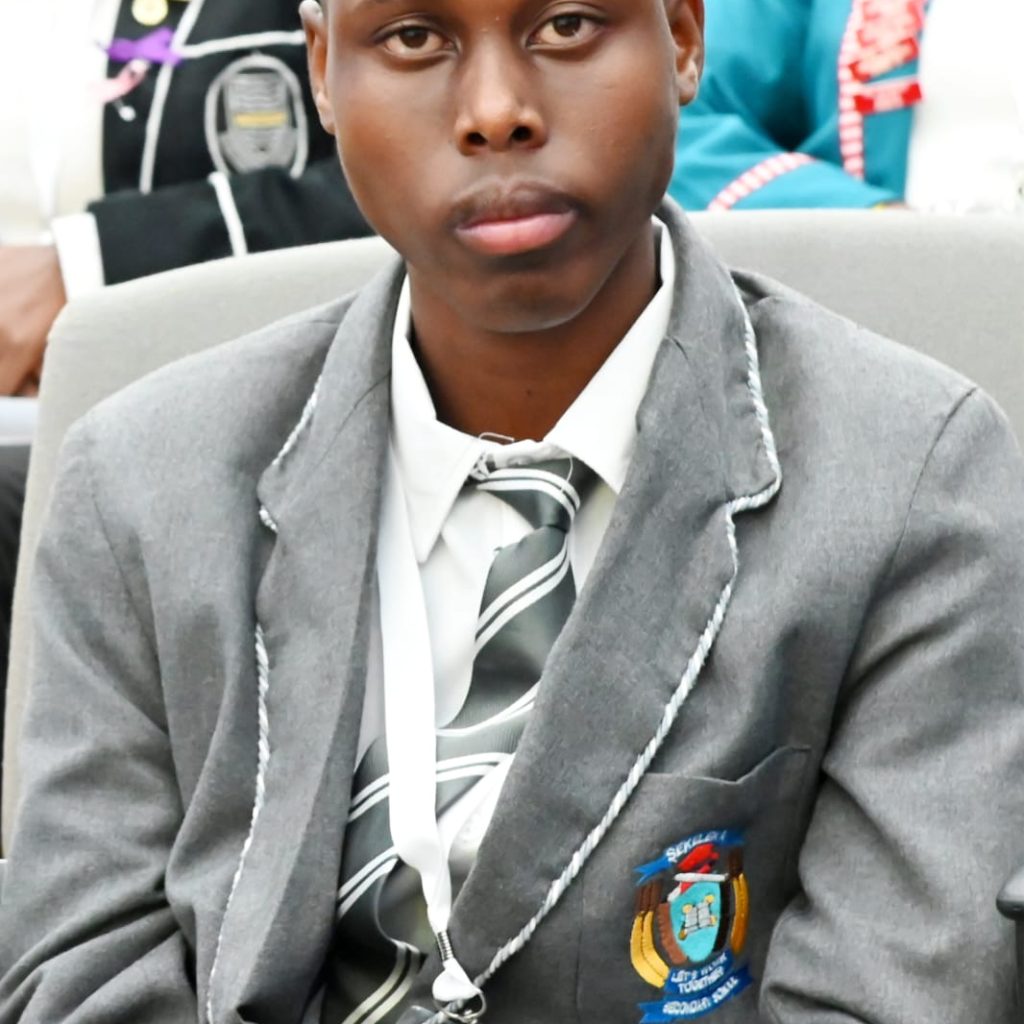
Thabo Seota, a top matric achiever from Sekeleka Senior Secondary School in Limpopo, has credited resilience, discipline and teacher support for his success after overcoming financial hardship at home to place among the country’s best performers.

Seota told Inside Education that growing up in a single-mother-led household meant money was tight and even basics like data for schoolwork were not guaranteed. He said teachers stepped in after recognising his commitment and potential.

“It was kind of hard, but I got help from some of my teachers because they could see potential in me and said ‘we do not want to let it to go to waste’”.

ALSO READ: Limpopo Education tells flood-hit Vhembe, Mopani schools to delay reopening

Seota secured third position for top achievers in Quintile 2 schools, achieving 100% for both Accounting and Business Studies.

He got distinctions in all seven subjects, including 93% for Economics, 95% for Mathematics Literacy, 91% for English FAL, 85% for Sepedi HL and 91% in Life Orientation.

Seota said he wants to follow in his later father’s footsteps and pursue a career in law.  

He said he had chosen law to “do good and bring an end to the injustices” facing ordinary South African citizens.

He urged matric learners to take control early, saying his own path could have ended very differently after he spent the first two terms relaxed and earning low marks.

ALSO READ: St John’s College top achiever Siza Gule set for Harvard

Seota said the reality of his background only fully sank in after term three, pushing him to apply himself with urgency when he realised he could change his family’s fortunes.

“Matric is not something you can underestimate, it requires a lot of effort from you as a learner. It needs dedication. My journey, I am not going to lie, was tough,” Seota added.

He highlighted the importance of proper planning and self-management to get good results, including a structured study timetable and revision schedule.

Despite the school not having a Mathematics Literacy teacher for almost the whole academic year — a Physical Science teacher voluntarily filled in — Seota also credited extra classes for helping him reach his goals.

INSIDE EDUCATION

Limpopo Education tells flood-hit Vhembe, Mopani schools to delay reopening

0

By Akani Nkuna

Limpopo’s department of education has told parents, teachers and schools in the flood-hit Vhembe and Mopani districts not to reopen schools on Wednesday, warning that heavy rains have created dangerous conditions and disrupted key services, including school meals and scholar transport.

The department said the rains and flooding had affected the delivery of food to schools and added that scholar transport vehicles could also face difficulties.

ALSO READ: WATCH: How floods, a cash crunch and staff shortages couldn’t stop KZN from topping 2025 NSC results

“The Department wishes to inform parents, guardians and teachers in the affected two districts to take caution and not reopen schools [on Wednesday]. This is to ensure the safety of learners and educators within the affected areas,” the department said.

“The department will advise when it is suitable for schooling to resume in the affected areas.”

The warning came after heavy rains caused major disruptions across the two districts, with videos shared on social media showing water flowing above bridges and the destruction of gravel roads, leaving villagers stranded and unable to travel to the nearest towns.

The South African Weather Service has issued a level 9 warning for Wednesday, which the department said meant heavy rains were expected to persist into the weekend.

Citing heightened risks to younger children, especially those in the early grades, the department said it would closely monitor the situation and dispatch a disaster management team.

A concerned parent, Nsovo Ndlovu from Ngove outside Giyani, told Inside Education she was worried about the continuing downpours, saying they had dampened her young boy’s excitement about returning to school.

 He could not travel because of damaged roads and flooding, said Ndlovu.

ALSO READ: St John’s College top achiever Siza Gule set for Harvard

Working in Giyani town as a hairdresser, Ndlovu said she had suffered significant income losses because she was unable to travel to work, and feared the ongoing rainfall would leave her financially stretched for the rest of January.

“It is quite sad, the timing of this rain is off. This week with many people going back to work and students back to school, hairdressers stood to make a substantial income, but we have missed on all that because of this rain,” she said.

“A lot of preparations had gone into making sure that the reopening of schools was special for my son, with a new uniform for a new grade. He was going to rekindle with friends he last saw last year, but now he has to wait a much longer. He is also disappointed. But hopefully this rain stops soon and our lives back to normal.”

INSIDE EDUCATION

How Maria Freercks became the Eastern Cape’s top matriculant

0

By Lebone Rodah Mosima 

Maria Freercks, 18, a pupil at Collegiate Girls’ High School in Gqeberha, has been named among South Africa’s top 40 achievers in the 2025 National Senior Certificate (NSC) exams, and is now setting her sights on a future in medicine.

She placed second nationally in Quintile 5 and was recognised as the Eastern Cape’s top learner.

Her parents, Lisa and Robert Freercks, told Inside Education they were proud of her achievement and the work that went into earning a place in the Top 40.

ALSO READ: WATCH: How floods, a cash crunch and staff shortages couldn’t stop KZN from topping 2025 NSC results

The Freercks family said Maria’s success was not only academic, but also rooted in faith.

“Just following the Lord’s path for her. The Lord’s given her amazing gifts and she embraced them, and we’re just excited to see where she takes that path,” Mrs Freercks said.

They said her commitment to excellence had been clear throughout her schooling.

“She continues to give her best in all things, which is what she’s done today,” the couple agreed.

Freercks, from Collegiate Girls’ High School in the Nelson Mandela Bay district, achieved seven distinctions, including 99.3% for Mathematics and 98% for Music.

She said her results reflected a year of steady effort and disciplined study.

“I studied hard. But I think consistency is key and I think starting from term one [helped]. In every little step of the way, study hard and try your best at everything that you can,” Freercks said.

Her subject choices included English Home Language, Afrikaans First Additional Language, Pure Mathematics, Physical Sciences, Life Sciences, Life Orientation and Music.

She said she prepared by working consistently throughout the year, rather than relying on last-minute studying.

One of her biggest challenges was time management, as she balanced academics with sport, cultural activities, and leadership roles at school.

Despite the pressure, she said she relied on past exam papers, school resources, and support from teachers.

“Collegiate was brilliant with its teachers, and you could always go to them for help. So the resources provided by the school really helped,” she said.

ALSO READ: St John’s College top achiever Siza Gule set for Harvard

Freercks also praised her parents’ support, describing them as “positive and encouraging” throughout her matric year.

Looking ahead, she hopes to study at the University of Cape Town (UCT). She encouraged current matric pupils to work hard while maintaining balance.

“Don’t focus solely on academics, but involve yourself in other aspects of the school, such as sports and culture,” she said.

INSIDE EDUCATION

WATCH: How floods, a cash crunch and staff shortages couldn’t stop KZN from topping 2025 NSC results

0

By Thapelo Molefe

KwaZulu-Natal overcame years of financial pressure, damaging floods, and persistent staffing shortages to finish as South Africa’s top-performing province in the 2025 National Senior Certificate results with a 90.6% pass rate – up from 89.52% in 2024.

It overtook the Free State for first place and also delivered six of the country’s top 10 districts, including uMkhanyakude, one of South Africa’s most rural areas.

ALSO READ: Basic Education assures placement for all learners as schools open

Last year was a turbulent year for education in the province.

Severe floods damaged school infrastructure in several areas, compounding long-standing budget pressures that have limited the department’s ability to appoint teachers, repair facilities and procure learning and teaching support materials.

By March 2025, the KZN Department of Education had already overspent its budget, triggering partial administration and urgent interventions by the national government.

The province’s leadership credits its performance to a deliberate focus on disadvantaged schools and sustained commitment from educators, learners, and parents across socio-economic divides.

“We have a plan, which we call the academic improvement plan, with six pillars,” according to KZN Department of Education head Dr Nkosinathi Ngcobo.

“It’s a simple plan that is followed by all our schools, which gives strategic guidance on what needs to be done.”

“We are focusing on rural and township schools unapologetically, in terms of assisting them with resources and support,” he said.

The strategy, he said, was beginning to yield visible results across the province. 

“Our rural districts are performing even better than some of the districts which are in urban areas across the country,” Ngcobo said.

“uMkhanyakude District is in the deepest rural areas, but it’s in the top two in the country. It’s the fruit of our focus on previously disadvantaged schools.”

ALSO READ: A dream come true: York High learner Abigail Kok tops 2025 NSC

He said the department’s emphasis on no-fee schools was informed by where the bulk of learners are located. 

“We realised that this is where the majority of learners are – the Quintile 1, 2 and 3 schools – and that is where support must be directed,” Ngcobo said.

Ngcobo acknowledged that financial pressures remained the department’s most persistent obstacle, with far-reaching consequences across the system.

“When you have financial challenges, you can’t appoint staff, you can’t repair infrastructure on time, and even your audit outcomes are affected because you don’t have managers in place,” he said.

“When you separate them, it looks like many challenges, but in fact it’s one challenge with many facets.”

Despite these constraints, Ngcobo said the province had leaned heavily on its human capital. 

“In spite of the limited resources that we have, the main resource we have is our teachers,” he said. “No one would expect that we would be number one in the country under these conditions, but it’s focus, focus, focus.”

He added that criticism of the department had been used as motivation rather than distraction. 

“We shut out the noise, but we listen to our critics and we improve. In fact, they are the fuel that fuels our passion and our resolve to turn around the narrative that achievement is the preserve of the privileged.”

Private-sector and civil society partnerships also played a role in supporting schools. Ngcobo cited organisations such as the National Education Collaboration Trust (NECT) and VVOB among several partners working with the department. 

“There are many partners from the private sector who have taken an interest in the KZN Department of Education, and we share this success with them. They have contributed to where we are today,” he said.

KwaZulu-Natal MEC for Education Siphosihle Hlomuka echoed this view, attributing the results to collective effort rather than isolated pockets of excellence.

“The main reason is the commitment from our educators, the officials at district and head office level, our learners and their parents,” Hlomuka said.

“Education is a social challenge. It needs everyone to work together.”

He said the fact that six KZN districts ranked in the national top 10 showed that improvement was spread across the province.

“It’s not about one district. It’s about education across KwaZulu-Natal,” he said.

ALSO READ: Over 300,000 applications chase just 9,124 first-year places at UKZN

The national NSC pass rate was 88%. Basic Education Minister Siviwe Gwarube said this was evidence that “excellence” was becoming entrenched in township and rural schools. She noted that more than 66% of bachelor passes were achieved by learners from no-fee schools, including districts such as uMkhanyakude and Umlazi. 

“Poverty is not destiny,” Gwarube said, adding that strong districts and sustained support were key to narrowing historical performance gaps.

INSIDE EDUCATION

Basic Education assures placement for all learners as schools open

0

By Simon Nare

The Department of Basic Education has assured parents and the nation that all unplaced learners will be allocated schools when learning begins on Wednesday.

Minister Siviwe Gwarube’s spokesperson, Luvuyo Vangqa, told Inside Politics that provinces are making steady progress in clearing placement backlogs.

He said learner placement figures change daily and provinces have committed to accommodating all learners as schools reopen for the 2026 academic year.

“It might not always be the parent’s school of choice due to extremely high demand in certain areas. However, we are encouraged by the progress shown by provinces as they address the backlog,” Vangqa said.

As of Tuesday, January 6, Gauteng’s online admissions system recorded 4,858 unplaced Grade 1 and Grade 8 learners — comprising 1,381 Grade 1 and 3,477 Grade 8 learners.

Gauteng Education MEC Matome Chiloane said the figures reflected sustained progress in learner placement for the 2026 academic year.

“This represents approximately 1.5% of the total 358,574 complete applications received for 2026, which include 175,792 Grade 1 and 182,782 Grade 8 applicants,” Chiloane said.

He added that placement and transfer offers are being released daily, supported by targeted interventions in high-pressure districts.

“The department continues to work to ensure that all remaining learners are placed as efficiently and fairly as possible, in line with regulated admissions criteria and available school capacity,” he said.

Chiloane noted that most unplaced learners are concentrated in urban areas, where population growth and infrastructure constraints continue to strain school capacity.

Ekurhuleni currently has the highest number of unplaced learners, followed by Johannesburg, Tshwane, Sedibeng and the West Rand. Ekurhuleni and Johannesburg remain priority districts for placement.

During the late application period, which opened on December 17, 2025, a total of 11,183 applications were received and processed.

Meanwhile, the Western Cape reported about 7,200 unplaced learners, while Mpumalanga said more than 9,800 learners still require placement.

INSIDE EDUCATION

Lesufi slams Gauteng’s slip to third in 2025 NSC rankings

0

By Akani Nkuna

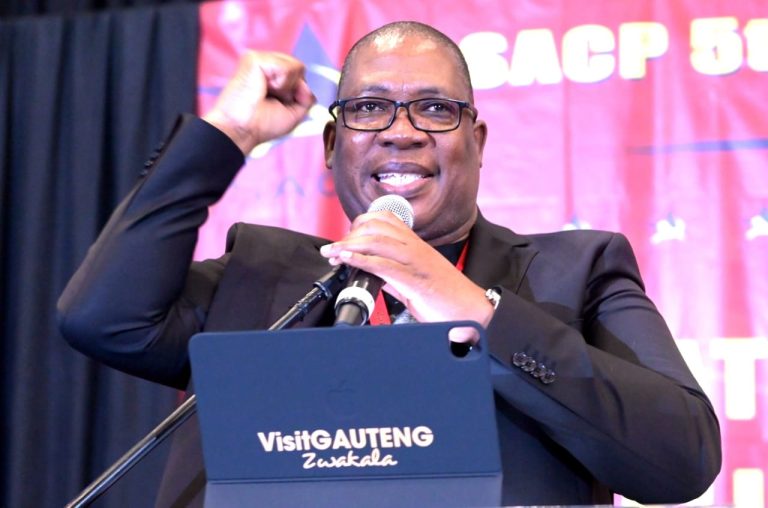
Gauteng Premier Panyaza Lesufi has lambasted the province’s 2025 matric performance, describing its drop from second to third place nationally as unacceptable and calling for urgent intervention.

Speaking at the provincial matric results awards ceremony in Centurion on Tuesday, Lesufi warned that without swift corrective measures, Gauteng risks reversing gains made in recent years.

“This is not the standard for Gauteng. This is not where we should be, considering the resources we invest in education. There is no way we can be happy with position three,” Lesufi said.

“This kind of performance is not ideal and is not acceptable. We need to find a way forward. If we do not change the system, we risk falling even further. We must rework and reengineer it.”

Gauteng was overtaken by the Free State despite achieving its highest-ever matric pass rate, improving from 88.4% in 2024 to 89.06% in 2025.

While the province recorded an increase, it lagged behind others in terms of growth, particularly when compared with provinces it is traditionally grouped alongside.

Lesufi called for the reprioritisation of the education budget and renewed focus on school infrastructure, warning that shortcomings in these areas had contributed to Gauteng losing its second-place national ranking.

However, he welcomed the narrowing gap between fee-paying and no-fee schools, many of which are located in townships, noting that these schools had delivered strong results.

Lesufi also praised the provincial department’s recruitment strategy, which places some of Gauteng’s best teachers in township schools to ensure equitable access to quality education.

“We are ready to have one equal education system in our country. It should not matter where you study — you can obtain a Bachelor pass in a township school just as you can in a suburban school,” he said.

Addressing the media after the ceremony, Gauteng Education MEC Matome Chiloane echoed the call for a shift in strategy, attributing the slower growth to the province’s inclusive approach towards progressed learners.

Chiloane said the department remains committed to ensuring access to education, even for learners who are not academically inclined — a stance that has affected overall performance.

“Our strategies must change. While our results show an upward trajectory, this year we accommodated a larger number of progressed learners compared to other provinces,” he said.

“We had about 10,000 progressed learners, of whom 55% passed. This shows that we are a system that supports learners to complete their schooling. Our goal is to prevent learners from remaining stuck in the system.”

INSIDE EDUCATION

SA’s dropout crisis a persistent concern despite record matric gains

0

By Johnathan Paoli

Over the past three academic years and into the 2025 National Senior Certificate (NSC) examinations, South Africa’s schooling system has continued to display a troubling contradiction: steadily improving matric pass rates alongside persistently high learner dropout across earlier grades.

While the release of the results marked another record year for pass rates, the data still points to significant attrition long before learners reach Grade 12.

During the release of the 2025 NSC results, Basic Education Minister Siviwe Gwarube provided new insight into the scale and location of learner attrition.

She noted that in 2014, approximately 1.2 million children entered Grade 1, and by the time that cohort reached Grade 10 in 2023, enrolment had declined by only about 4%.

This, she said, demonstrated relatively strong retention through the early and middle years of schooling.

However, the pressure intensifies sharply in the final grades.

“Between Grades 10 and 12, a large number of learners begin to repeat, others even leave the school system,” Gwarube said.

The full-time Grade 12 class of 2025 comprised around 778,000 learners, underscoring the scale of attrition in the final phase.

Nationally, only about 84% of learners progress from Grade 10 to Grade 11, and approximately 78% from Grade 11 to Grade 12.

“These figures tell us something important. The largest dropout pressure is not across the whole system; it intensifies late, as learners move into Grades 11 and 12,” she said.

She cautioned that strong final pass rates cannot, on their own, be treated as evidence of system-wide quality.

“If learners exit the system before Grade 12, the system is not yet delivering quality at scale, regardless of how strong the final pass rate is,” Gwarube said.

In 2023, the education sector was emerging from the prolonged disruption caused by the COVID-19 pandemic.

Although overall learner attendance and enrolment stabilised, dropout pressures remained concentrated among older learners.

Many adolescents exited the system between Grades 10 and 12, often after repeating grades or falling behind academically.

A growing proportion of learners in the Further Education and Training phase were older than the typical age for their grade, reflecting delayed progression and heightened dropout risk.

The 2024 academic year illustrated that while the national matric pass rate climbed to around 87.3%, throughput rates, tracking progression from Grade 10 to Grade 12, regressed slightly compared with 2023.

Civil society research during the same period estimated that roughly one-third of South African children do not ultimately complete school, with many lost years before matric due to poverty, pregnancy, academic struggle, mental health challenges and caregiving responsibilities.

The 2025 results extended the trend of improved terminal outcomes.

The Class of 2025 achieved an official matric pass rate of approximately 88%, the highest in the country’s history.

Of those who wrote, 88% passed under Umalusi, while the Independent Examinations Board recorded a 98.3% pass rate.

There were also encouraging indicators of improved system stability.

Gwarube noted that the largest share of candidates were 18 years old, pointing to better on-time progression, while the proportion of learners unable to sit for any exam papers declined from around 17% in 2017 to about 2% in 2025.

Part-time repeat candidate numbers have also fallen, reflecting fewer learners needing to rewrite Grade 12.

“These trends matter because they point to a more stable system, and stability is the platform on which quality must now rise,” the minister said.

Yet concerns remain.

Advocacy organisations such as the Zero Dropout Campaign warn that around four in ten learners who start Grade 1 still fail to obtain a matric or equivalent qualification.

They argue that dropout is driven by cumulative socioeconomic stress rather than sudden academic failure, and that psychosocial support is critical to improving retention.

Gwarube stressed the need for honest engagement with the data, warning against practices that improve performance statistics at the expense of access.

“Where we see lower learner retention alongside higher performance, we must question that pattern carefully and fairly,” she said.

She called for stronger learner tracking and early warning systems to ensure intervention long before Grade 12.

The minister highlighted a growing gender imbalance, with girls now comprising 56% of matric candidates.

While this reflects stronger protections for the girl child, including the removal of pregnancy as a barrier to education, she warned that boys are increasingly being left behind and require urgent, targeted support.

As South Africa celebrates record matric outcomes in 2025, many agree that the true test of system health lies not only in pass rates, but in whether learners are supported to stay the course from the early grades through to completion.

INSIDE EDUCATION

NW records steady improvement in NSC results as province targets top three finish

0

By Johnathan Paoli

The North West Province has continued its upward trajectory in National Senior Certificate (NSC) performance, achieving an overall pass rate of 88.49% for the Class of 2025, marking a 0.9 percentage point improvement from the previous year.

The results were officially released on Tuesday at Rutanang Primary School in Rustenburg, Bojanala District, during a ceremony attended by Premier Lazarus Mokgosi, Education MEC Viola Motsumi, senior government officials, educators, learners and parents.

Formally declaring the results released, MEC Motsumi confirmed that Umalusi had approved the NSC outcomes on 7 January as credible and fair, describing the results as further proof that the provincial education system is “destined to rise to greater heights”, likening its recovery to a phoenix rising from the ashes.

“While our goal remains to be among the top three provinces nationally, these results show that with the commitment of teachers, principals and school governing bodies, steady improvement is possible, even in a predominantly rural province like ours,” Motsumi said.

Motsumi traced the province’s performance over the past six years, noting a steady climb from 76.0% in 2020 to the current 88.49%, following improvements in 2021 (78.6%), 2022 (79.8%), 2023 (81.63%) and a significant jump to 87.52% in 2024.

The North West has retained its fourth position nationally.

She attributed the 2025 performance to sustained academic support, consistent learner tracking and targeted interventions, pointing out that the Class of 2025 maintained results above 80% in quarterly assessments throughout the year.

While celebrating the improved pass rate, the MEC emphasised the importance of quality outcomes.

Bachelor’s degree passes stood at 44.4%, slightly lower than 2024, while Diploma passes increased to 29.78% and Higher Certificate passes improved to 17.42%.

The province recorded 8 050 subject distinctions, excluding Life Orientation, an increase from 7 901 the previous year.

Male learners achieved a marginally higher overall pass rate than females, although female learners continued to dominate Bachelor-level admissions.

Performance disparities between school types also narrowed.

Learners from no-fee schools achieved an 87.01% pass rate, compared to 89.53% in fee-paying schools, a trend Motsumi said demonstrated growing parity and resilience in under-resourced communities.

All four districts recorded improvements.

Bojanala retained its position as the top-performing district with a 90.82% pass rate, followed by Dr Kenneth Kaunda (87.78%), Dr Ruth Segomotsi Mompati (85.61%) and Ngaka Modiri Molema (85.71%).

At local education office level, Madibeng, Moses Kotane and Rustenburg emerged as the strongest performers, while Lekwa Teemane recorded the most significant improvement, increasing its pass rate by 10 percentage points.

The province’s top learner, Temogo Matong from Setswakgosing Secondary School, a quintile 2 school in the Dr Ruth Segomotsi Mompati District, achieved an outstanding 1 727 marks across his best six subjects.

Motsumi highlighted this achievement as evidence that excellence is possible even in under-resourced contexts.

A total of 45 schools achieved a 100% pass rate, up from 44 in 2024, with schools such as Potchefstroom Gimnasium, Rustenburg High School and Wesvalia High School featuring prominently.

Addressing underperformance, Motsumi acknowledged that the number of schools below the 70% threshold increased to 37, attributing this partly to stricter monitoring of learner retention.

She encouraged unsuccessful candidates to enrol in the Second Chance Matric Programme, with 4 708 learners eligible to rewrite in June 2026.

In an interview with Inside Education on Monday, Motsumi welcomed the improved results but admitted the province had aimed to break into the national top three.

She cited budget constraints as a key challenge, particularly the reduced ability to accommodate all learners in academic incubation camps.

To address this, she said the department would intensify engagements with the private sector, including mining companies and other businesses, to support future interventions.

Looking ahead to 2026, the MEC outlined plans to expand school nutrition programmes, particularly breakfast provision, and to refocus attention on early childhood development and the foundation phase.

“If we go back to basics and strengthen the foundation phase, we won’t need to rely so heavily on incubations later,” she said.

Mokgosi, delivering the keynote address, congratulated the Class of 2025 and described the results as a testament to deliberate policy interventions and collective effort.

He linked education outcomes to broader service delivery challenges, warning that water shortages, electricity cuts and community protests continue to disrupt teaching and learning.

Mokgosi emphasised that improving municipal performance and building safer communities were essential to sustaining educational gains.

He also highlighted government investment in education infrastructure, nutrition programmes and bursaries, noting that over 740 000 learners in the province benefit from the National School Nutrition Programme.

Concluding his address, Mokgosi called on communities to uphold the principle that “it takes a village to raise a child”, urging collective responsibility to protect and nurture the province’s learners as the foundation of its future.

INSIDE EDUCATION

WATCH: Gauteng top matric achiever Kamogelo Tshabalala eyes Actuarial Science

0

By Akani Nkuna

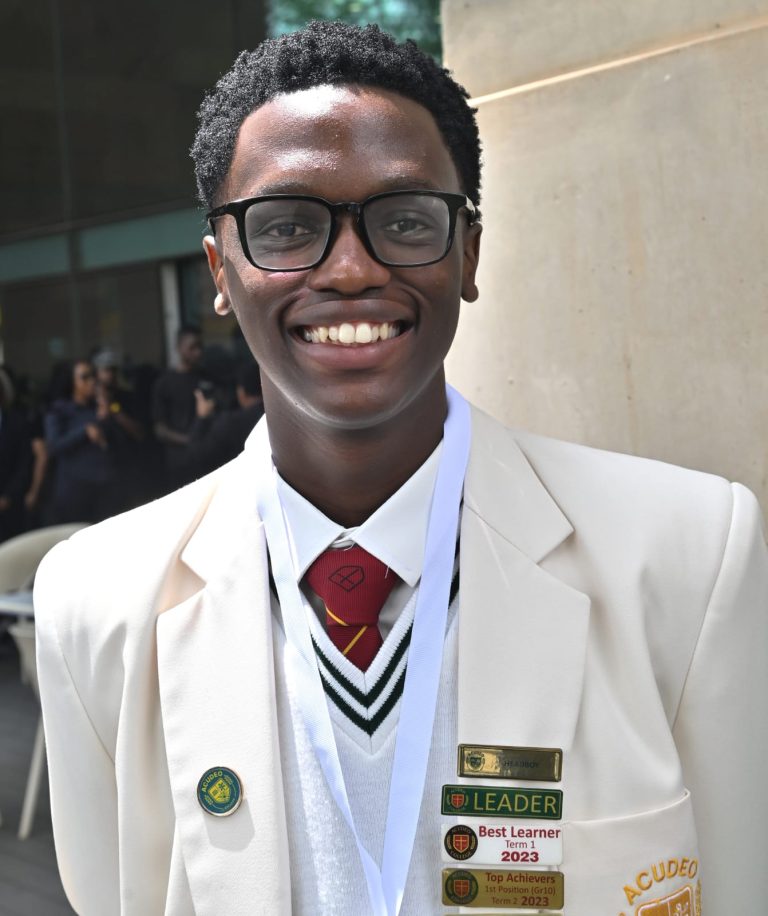
One of Gauteng’s top matric achievers, Kamogelo Tshabalala from Acudeo College Kirkney, described the matriculation journey as “easy” thanks to good preparation and a well-coordinated support structure, including peer groups and assistance from teachers.

“The journey was easy if I am being honest. It was easy because of the preparations that was done the previous year, particularly after the grade 11 examination preparation for the next year. It made the journey quite easy with the assistance of the educators and support of my classmates as well,” Tshabalala told Inside Education.

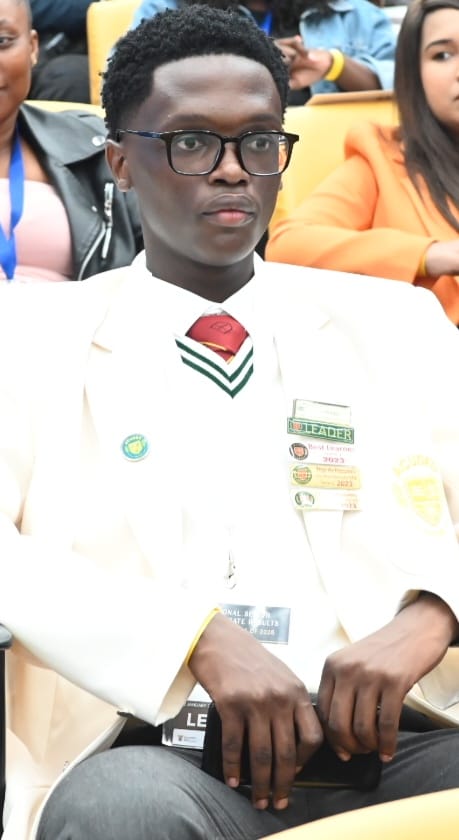
Kamogelo Tshabalala
Kamogelo Tshabalala. Photo: Eddie Mtsweni

Tshabalala has already set his sights on studying Actuarial Science at the University of Cape Town, saying it is a path where his passion for mathematics and science can be fully harnessed.

Confident and resolute about his chosen career path, Tshabalala said he is ready to take on the subject to fulfil a childhood dream born from his love of science, and to challenge perceptions that the course is too difficult.

“Actuarial Science is considered a challenging course, I am ready for the challenge and it’s even maths based,” he said.

He also expressed a desire to promote a culture of literacy, make studying fashionable, and give back to the community he comes from, ensuring that his pursuit of Actuarial Science benefits not only him but society.

Tshabalala emphasised the need to empower young people beyond education and into other fields, including sports, arts and culture, to help uncover raw talent and ensure every pupil’s prospects for success are explored.

“The infinite opportunities I will earn from this career path will in turn enable me to establish other ventures that I would like to go into which empower the youth of South Africa the same way I was empowered and given an opportunity to thrive,” Tshabalala said.

He urged pupils moving into Grade 12 to waste no time getting started with their studies, encouraging them not to wait for schools to reopen before beginning.

“You need to really try your best, understanding that it is not going to be easy at all. Give it all that you have, the time that you have, use it for your studies. Focus and ask your teachers as many questions as you can,” Tshabalala said.

“To that pupil in any grade — if you lay the foundation now, if you start collecting the bricks to build now, trust me it is highly possible that you end up here and even higher places.”

INSIDE EDUCATION