Home Blog Page 300

OPINION| Pass rates for school leavers in South Africa are failing students and universities

Dr ZAMOKUHLE MBANDLWA

SOUTH Africa’s current basic education system and the grading standard produce poor academic outcomes. Because of this, students exiting high school don’t qualify to study further at university level.

On top of this the bachelor, diploma and certificate passes at the matric level (the final year of high school) create false hopes for learners because they believe that they automatically qualify to study at any university.

I wrote a paper that looked at the mismatch between the weak education outcomes of South Africa’s basic education system – including the grading practice for students in their final year of school – and what’s required of students to transition to higher education.

I argue that the current basic education system and the grading standard produce poor quality learners who mostly do not qualify to study at a university level. In addition, the bachelor pass, diploma pass and certificate pass at matric level create false hope for learners.

My conclusion is that the current government reduced the pass mark to obtain the higher pass rate. The high school education in most countries have a 50% pass for all subjects. But in South Africa the government has successively dropped the final pass rate. For some subjects it is now as low as 30%. Last year learners were given an extra 5% allowance for up to three subjects.

My view is that the government has done this cynically to enable it to use the higher pass rates achieved as part of their campaigning to obtain more votes. This has been at the expense of younger people.

The history

The study applied desktop research methodology and the findings are based on existing literature, empirical and theoretical studies.

I present two main arguments in my paper. The first is that the basic education system produces pupils who don’t qualify to access tertiary education. And the second is that as a result of poor schooling, academically weak students are fed into the higher education sector.

During apartheid South Africa’s education system was racially separated. The Bantu Education Act 47 of 1953 allowed the apartheid government to construct racially separated educational facilities. The education system was designed to strengthen the apartheid laws of racial segregation. Black people had their schools of inferior quality while white people had good educational facilities and a good education system.

Universities were also designed to racially separate people. The apartheid government system was cruel and declared a crime against humanity by the United Nations.

One feature of the system stood out for me during my research: the way in which pass marks were managed. The system had higher, standard, and lower grades which gave learners options to choose from. Based on those options, the quality of a learner was produced.

Most matriculants with standard and lower grade symbols weren’t accepted in many universities but were eligible for employment opportunities. The system applied to black as well as white students.

The gaps

There’s a huge a gap between what the high school system produces and what the higher education system expects.

Firstly, learners in the final year of high school are allowed to pass with at least 50% in four subjects, a minimum of 40% for home language, at least 30% in the language of learning and teaching and at least 30% for one other subject.

This is a poor system because it produces students whose academic outcomes aren’t strong enough to allow them to properly transition into higher education..

Universities have foundation programmes that are designed to assist students who don’t meet entrance requirements. These programmes are also called bridging courses. If students succeed with their bridging courses they can proceed and enrol in the desired academic programme.

Another reason that the system is failing universities and students is that only one-third of students who exit high school qualify to gain entry into the higher education system. The low number of students in South Africa who do qualify to study further at university level is attributed to the weak quality of education they receive while in high school

Some studies has tried to address the issues of transition from high school to the university education. Another prominent factor that contributes to the existing problems is the inequalities in the schooling system.

A political game

Most people blame the poor quality of education on the apartheid government because the education system is still struggling to recover apartheid government’s education policies. The apartheid government might indeed still be having an impact on the current education system. But it can’t be primarily blamed for the failures of post-apartheid democratic government leaders. They have the power to change and strengthen the country’s basic education. But have failed to do so.

The pass rate is confusing and isn’t a clear reflection of high school learners’ academic capacities. South African parents need to pay attention. The 30% pass mark is a failure of the high school education system.

The Department of Basic Education is more concerned about the proportion of pupils that pass to make school-leavers and their parents happy. A lower pass rate gives them better numbers to crow about. It is doing this at the expense of the quality of education in the country.

  • The Conversation

Matric Exams: Ramaphosa Commends Class of 2021 For Persevering Through A Challenging Year Under Covid-19

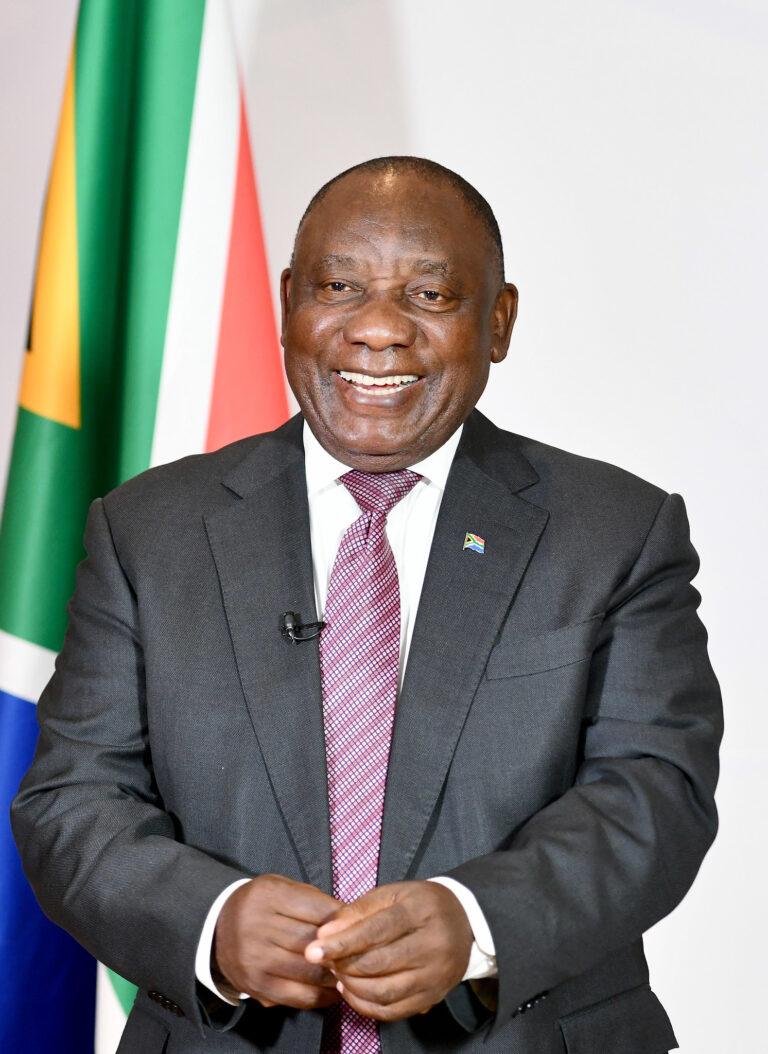
PRESIDENT Cyril Ramaphosa has offered his best wishes to the Class of 2021 ahead of the commencement of the National Senior Certificate examinations on Wednesday.

Just over 900 000 candidates have enrolled to sit for the 2021 matric exams.

In a statement issued by the Presidency on Tuesday, Ramaphosa said the nation can be proud of the determination, focus and sacrifice with which learners braved the 2021 academic year in the face of the COVID-19 pandemic and its impact on school life, home life, social interaction and society as a whole.

The president also paid tribute equally to parents and educators who were themselves affected by the COVID-19 pandemic but were resolute in helping learners cross the schooling finish line.

“We are immensely proud of the nearly 900 000 candidates who will be sitting for the National Senior Certificate examination, which is a signicant personal milestone as well as an important marker for the future of our nation,” said Ramaphosa.

“We are deeply indebted to families, educators and school governing bodies who made it possible for learners to make it to these examinations by introducing innovative means for learners to complete their curriculum.”

“The Grade 11s of 2020 persisted with their studies in a year in which COVID-19 arrived on our shores, with its devastating impact on our physical and psychological wellbeing.”

“This year we place our arms of support around the Class of 2021 who have persevered and endured in their effort to create a better future for themselves, their families and our economy.  

We wish you the best of success in your final revision and in your examinations, which will lay the foundations for your life as independent, adult members of our society.”

Ramaphosa called on learners to adhere to COVID-19 safety regulations throughout the examination period and in the celebrations beyond.

He also called on learners to present themselves for COVID-19 vaccination which is safe, quickly administered and free of charge.

“The President also urges learners who may experience anxiety at this time to reach out to parents, educators, counsellors or helplines to discuss their difficulties and find the necessary motivation to complete their school career successfully,” Presidency said in a statement.

  • Inside Education

Matric 2021: DBE Ready To Present Credible Final Exams After Tightening Screws To Prevent Leaks

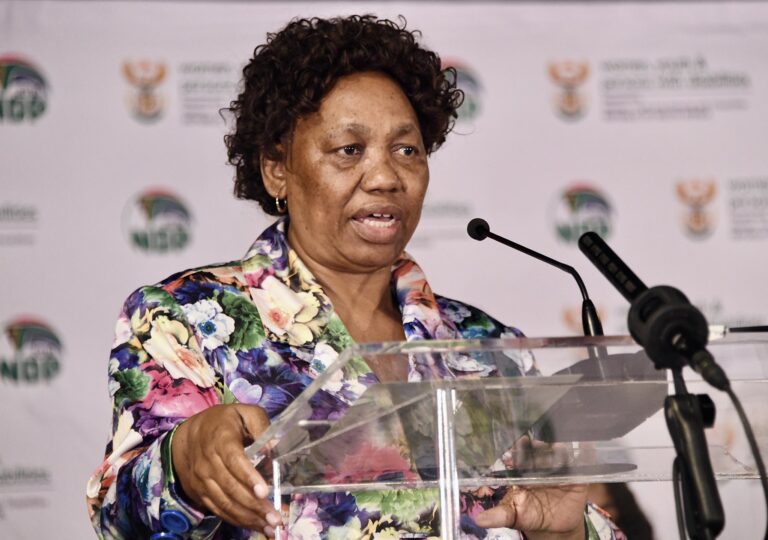
WITH less than 24 hours left before the matric class of 2021 write their final exams, Basic Education Minister Angie Motshekga said the department was ready to present a credible final exams compared to last year.

Nearly 900,000 pupils in public schools have registered to write exams at 11,000 centres across the country.

Those in private schooling started last month with more than 13,000 candidates registered.

The department said it believes that it has come a long way in dealing with setbacks presented by the pandemic and is better prepared this year.

Officials have also warned that those involved in irregular conduct will be heavily penalised.

Last year, the exams were rocked by a cheating scandal when mathematics and physical science papers were leaked.

To make sure this does not happen again, the department has introduced stricter security measures which include that pupils’ cellphone details be recorded in electronic devices registered by schools.

The department has also published a WhatsApp number where the public could confidentially report any suspected irregularities.

The education sector is one department that has had to bear the brunt of the pandemic.

Over the past 18 months, schooling methods have had to be revisited numerous times.

In the Western Cape, 73,966 candidates will participate, writing at 486 exam centres across the province.

This includes both full time and part-time candidates.

A total of 1,887 invigilators have been employed.

Spokesperson to Western Cape MEC for education, Kerry Mauchline, said invigilators were not required to be vaccinated.

“We, nonetheless, encourage all eligible residents of the Western Cape to get vaccinated, to protect themselves and others from serious illness,” said Mauchline.

Mauchline said many lessons were learned from the 2020 NSC examinations that could be applied to the 2021exam period.

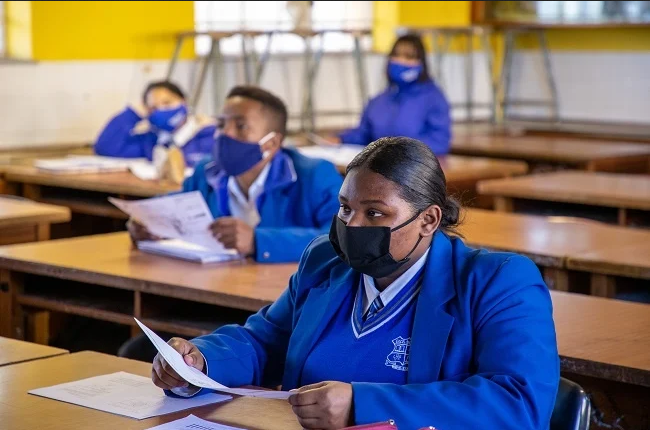
“The Department of Basic Education (DBE) has provided a detailed set of Covid-19 guidelines that must be followed at all exam venues, including physical distancing, sanitising hands and surfaces, wearing masks, and daily screening,” she said.

“It also outlines the procedures for learners with symptoms. The application of these protocols has been included in the training of the various exam officials.”

During this time, exam venues would not be used for other purposes, Mauchline said.

“Separate venues are being arranged for any learners who test positive for Covid-19 but are still well enough to write their exams and would like to do so.”

Last Friday, MEC Kwazi Mshengu visited Lamontville High School, south of Durban, where pupils signed a pledge not to participate in activities that will compromise the integrity of the matric exams.

“Apart from the work we have put in place to make sure all officials are properly trained to conduct credible examination process, I am sure you have seen our pupils signing a pledge committing themselves not to participate in activities that will compromise the integrity of the 2021 NSC exams,” said Mshengu.

“While pupils were signing the pledge at Lamontville High, similar activities were taking place, not only in KwaZulu-Natal but throughout the country.”

“We are persuaded that our officials and pupils are going to be equal to the task,” he said.

Invigilators were trained to focus on the prevention of malpractices, loss of answer scripts and accountability for question papers

The department compiled a comprehensive plan to manage “all kinds of risks” related to examinations.

“Our plan looks at measures to prevent a compromise of the printing job in case of load-shedding, looks at our working relationship with the joints operations committee, the delivery of examination material during days with inclement weather and a possible escalation of exam malpractices,” he said.

“As a department we are serious about conducting examinations that are without irregularities. You can report any suspected irregularities in the NSC examinations to the WhatsApp number 069-335-2818. We can assure you the information provided in this regard will be handled with confidentiality.”

Mshengu was pleased to report that more girls were writing the examinations than boys this year.

“This is important to us because we have always maintained that if we are to realise gender parity and win our struggle against patriarchy and unjust power relations, we need to expose our pupils to opportunities and equip them with skills that will empower them for the future.”

He said the 2021 academic year was difficult for his department and pupils.

“When we started this academic year later than normal, we already knew this year would be a year like no other, but we got our strength from the class of 2020, who being the first cohort to have an academic year marred by Covid-19, managed to weather the storms and succeed against all odds.

“The closure of schools, alternating of classes and other challenges that came as a result of Covid-19 meant that as a department we needed to do things differently and pull out all stops to ensure the class of 2021 had a fighting chance in life.

“As if the difficulties visited on us by Covid-19 were not enough, the civil unrest we experienced as a country did not help the situation. Despite all that, the KwaZulu-Natal department of education is ready for the 2021 NSC examinations.”

On Monday, DA in KZN called for an urgent oversight inspections of marking centres as in the province as matriculants began their exams.

The DA called on KZN Education portfolio committee Chairperson, Sifiso Sonjica, to ensure that oversight visits to matric examination centres are prioritised once Local Government Elections are concluded.

The party’s spokesperson on education Dr Imran Keeka said the DA believed that it is extremely important that the portfolio committee spends a few days assessing matric examination centres as part of its oversight duties.

“The functionality of centres is critical if results are to be verified by watchdog body Umalusi,” said Keeka.

“It is also critical in terms of ensuring that everything is running smoothly so that there are no unnecessary delays in the release of matric results. Furthermore, it must be assessed whether all resources are in place, in line with last weeks’ media briefing by KZN Education MEC, Kwazi Mshengu, and his Department.”

KZN’s matric class of 2021 has had more than its fair share of trials to endure.

From almost the beginning of their Grade 11 year they have had to adjust to a very different academic programme as a result of Covid-19 and the subsequent lockdowns.

  • * Inside Education

ANALYSIS| Ray Of Hope As Students Prepare To Write The Second Matric Exams Under Covid-19 Guidelines

LUCAS LEDWABA|

They say the only certainty about life is that it goes on regardless of whatever calamities may befall a community or mankind in general.

This should be one of life’s lessons the Matric Class of 2020 may have learnt after sitting for the National Senior Certificate (NSC) following a prolonged break from school due to the outbreak of Covid-19 last year.

The class of 2020, despite the challenges brought about by the outbreak of the pandemic, registered a respectable 76.2 percent pass rate.

So far the pandemic has killed more than 4 million people worldwide.

While efforts have been made to halt its devastation, including the roll-out of vaccination including for youths between the ages of 12 and 17, the corona virus remains an ever present danger as the class of 2021 sits for their final exams starting on Wednesday 27 October.

The outbreak of the pandemic on such a global scale was the first of its kind since the outbreak of the Spanish flu in 1918 and caught the entire world, including the superpowers with their superior facilities, napping.

But what lessons have been learnt from the past year and half of death, mayhem and confusion, especially on the education and schooling front besides the fact that life must, should and will go on regardless of a pandemic or not?

The Department of Basic Education (DBE) announced that the 2021 National Senior Certificate (NSC) examination will officially commence on Wednesday.

The youngsters sitting for the exams are expected to “wash their” pens on 7 December 2021 as is the tradition throughout the years after writing exams.

The Department of Basic Education says a total of 897 786 candidates will sit for the examinations, comprising 735 677 full-time candidates and 162 109 part-time candidates.

According to the department, the candidates will be sitting for the examinations at 6 326 public examination centres, 526 independent centres and 326 designated centres.

So far, all stakeholders appear to be agreeing that the environment is conducive for the commencement of the matric exams.

There hasn’t been much of the eye poking and political point-scoring that have become synonymous with this period.

It appears Covid-19 has made all stakeholders, unions and political parties to avoid using matriculants and matric exams as some sort of bargaining tool that can be used to score political points.

The Democratic Alliance (DA) had earlier expressed some discomfort with the fact that some learners who are eligible to vote would not be able to do so if the exams took place on the same day as the local government election on November 1.

It is not clear how much of a constituency the DA boasts among high school learners. But they appeared prepared to take up this matter in their usual combative style.

However, this particular hoo-hah has been easily deflated.

President Cyril Ramaphosa has declared November 1 a public holiday.

Furthermore, the Department of Basic Education has brought forward exams that were scheduled for that particular day.

The DA has no bone to chew with anyone on this now.

The country’s main opposition party has also called for all to take precautions on covid-19 prevention going into the exams.

The SA Democratic Union (SADTU), which has a history of using such moments to test its power by threatening industrial action and all manner of labour action, has also added a positive voice.

The union noted the importance of the exams in the lives of the learners and commended the 2021 class for doing their best to prepare for these exams by attending extra-classes to compensate for the time lost due to disturbances caused by COVID 19 pandemic.

Critically, the union noted that many of the learners had to work harder to cover the Grade 11 work which they could not complete in 2020 due to the academic year disrupted by covid-19.

The union has also urged learners eligible for vaccination to take up the offer.

The reality of covid-19 however remains ever present and the Department has warned that candidates that demonstrate COVID-19 symptoms as well as candidates that test positive will be allowed to write their examination at special isolation venues that have been arranged.

It appears that lessons from last year, when there was a lot of fear, uncertainty and a level of stigmatisation, have been learnt.

The department has announced that to accommodate the negative effects of Covid19, measures such as the provision of supplementary material, vacation classes, after-school programmes, teacher content training and placement of volunteer teachers were implemented this year.

It further noted that the education sector at large placed strong emphasis on the areas of psycho-social support for learners and teachers, curriculum coverage monitoring, extra school based tuition such as morning or afternoon and weekend classes, ICT utilisation in the form of television, radio, online and web-based platforms, peer-led study groups and the provision of additional LTSM.

The World Health Organisation (WHO) has advised that whether a child should go to school depends on their health condition, the current transmission of COVID-19 within their community, and the protective measures the school and community have in place to reduce the risk of COVID-19 transmission.

With some dissenting voices calling for resistance against Covid-19 vaccination, perhaps this should serve as a wakeup call that vaccination is not just an act that serves the interests of an individual, but those of society at large, including school children who are meant to sit for an exam.

After all, life, regardless of what happens, goes on.

  • * Inside Education

Gauteng Education Department Is Ready For The 2021 Matric Exams – Lesufi

GAUTENG Education MEC Panyaza Lesufi said on Sunday that the province is ready to commence with the start of matric examinations this week, having implemented strict COVID-19 protocols at all centres across the province.

Lesufi was updating the media on Sunday morning, on the state of readiness for the 2021 National Senior Certificate Examinations.

The Gauteng education department announced on Sunday that the province has enrolled 175,599 candidates to write this year’s matric exams — an increase of 17.55% on last year’s 149,385.

Apart from being ready to handle increased numbers, the department is once again set to ensure that the exam process runs smoothly from beginning to the finalisation of results.

The final exams will start on Wednesday and run until and including December 6 for public schools.

The Class of 2021 will be the eighth group to write the Curriculum and Assessment Policy Statements (CAPS) aligned NSC exams, and the second to write amid the Covid-19 pandemic.

“As such, preparations by our department for these assessments are paramount to ensure that they occur conveniently and securely for all qualifying candidates involved,” said department spokesperson Steve Mabona.

He said that of the 175,599 candidates, 132,887 are full-time and 42,712 are part-time students (those who have one or more outstanding subjects to qualify for the National Senior Certificate qualification).

 Lesufi said 1,004 examination centres have been accredited across the province where all registered qualifying candidates will write the exams.

These centres include 652 public ordinary schools, 244 independent schools, 97 adult education and training centres, 8 prisons and 3 designated centres in the province.

“The GDE has also established an extensive network of monitors across the province, having officially appointed and trained chief invigilators and monitors for all the examination centres.

“The invigilators and monitors are sourced from our head office, districts and other education stakeholders, to ensure the administration and management of the NSC examination is fair, credible and run with integrity,” said Lesufi.

He added that security arrangements to safely manage the distribution and collection of question papers and answer sheets were in place.

“We will have printed 2,171,915 question papers for the duration of the examination process. We have ensured that we increase security arrangements around the printing of question papers as a means of mitigating human error and other vulnerabilities.”

The province has selected and certified 30 approved marking venues where marking of examination scripts will take place and 12,889 markers have been appointed as well as 2,514 examination assistants who will do quality assurance of marked scripts to ensure there are no errors in the computing of pupils’ marks.

The first marking session will take place on November 15 and the second on December 7, with everything completed by December 23.

 The GDE also has a standing agreement with Child Line to assist pupils experiencing stress due to exam pressure or after receiving results.

Covid-19 protocols will also see a maximum of 30 candidates in an exam room with 1-metre distancing, mandatory masks, isolation rooms and sanitising procedures.

Lesufi said: “We would like to wish all our grade 12 pupils the best of luck and assure them that they have our full support. Learners are urged to conduct themselves with honesty during the exam.

“Cheating and other exam irregularities may result in a criminal record. Tears and sweat taste the same but will get you different results. Tears will get you sympathy, and sweat will get you change.”

Head of Department for Gauteng Education Edward Mosuwe said security around examination papers has been beefed up to ensure no cheating will take place.

“I can confirm that every time there is a just in the printing of papers, we have improved on the level of security that associated with that, both at a personal level and technology level. Both the DBE and Umalusi have actually given Gauteng approval that we can conduct examinations.”

  • * Own Correspondent

Updated Level 1 Lockdown Rules and Restrictions For Schools And Travel In South Africa

THE government has gazetted updated regulations for South Africa’s adjusted level 1 lockdown, including changes for schools and transport.

The changes include the relaxation of restrictions for air travel and updated regulations around school gatherings, sports, and extra-curricular activities.

The changes are outlined in more detail below.

Schools

The following activities may resume at schools with spectators:

  • * Contact sport, non-contact sport, including training, intra-school and inter-school matches, and all arts and culture intra-school and interschool activities;
  • * Co-curricular and enrichment programmes, such as oral history, spelling bee, moot court, speech contests, debates and school clubs, may resume activities including competitive inter-school events and engagements;
  • * Choir practice or rehearsals and choir competitions.

The following health and safety measures must be adhered to when resuming events or activities contemplated in this direction:

  • * Face masks must be worn by all persons entering the venues where the activities take place, change rooms or training areas, except when participating in training or matches accompanied by vigorous exercise;
  • * There must be sufficient quantities of hand sanitisers, with at least 70% alcohol content, available for use by all officials, coaches, assistants, learners and participants;
  • * There must be facilities for washing of hands with soap and water;
  • * All windows and doors must remain open to ensure adequate ventilation;
  • * Subject to the requirements of any contact activity, social distancing must be maintained at all times;
  • * The sharing of drinks and drink containers is not allowed;
  • * A Covid-19 compliance officer must be appointed for each venue;
  • * All participants must undergo health and temperature screening before warm-up or an event;
  • * Any person who enters the venue must undergo health and temperature screening;
  • * Hand sanitisers must be available at the entrance gate, and every person who enters the venue must sanitise their hands;
  • * Participants and officials must sanitise their hands before and after a match or event;
  • * A person who leaves the venue temporarily and returns must undergo the process of health and temperature screening and hand sanitising;
  • * For contact tracing purposes only, a register of all officials, learners and spectators from visiting and hosting schools who are attending a school match or event must be kept by the hosting school for at least 21 days.

Domestic travel

An airline operator is allowed to provide pre-packaged catering onboard the aircraft but must take all measures Covid-19 health measures into account.

An airline operator may make complimentary magazines available, which passengers must pick up when entering the aircraft. Passengers are not allowed to share these magazines.

International travel 

A traveller must provide a valid certificate with a negative Covid-19 test outcome, recognised by the World Health Organisation or equivalent local accredited authority, obtained no more than 72 hours before the date of travel.

South African authorities reserve the right to verify the authenticity of the presented certificate.

International scheduled operations and charter flights carrying passengers are allowed at the following airports:

  • OR Tambo International Airport;
  • King Shaka International Airport;
  • Cape Town International Airport
  • Lanseria International Airport;
  • Kruger Mpumalanga International Airport.

Long-haul flight departures and landings at the airports listed above are permitted during the hours of the curfew. However, passengers are required to present a valid boarding pass if stopped by law enforcement.

Teaching Awards| Dr Mariette Wheeler Is The Country’s Best Teacher

Dr Mariette Wheeler, a Life Sciences and Marine Sciences school teacher at the Protea Heights Academy, Brackenfell, Western Cape, was announced as the best teacher during National Teaching Awards (NTAs).

Wheeler was hailed for her work in transforming the learning experience of pupils through science-related activities, projt-based learning, debating, technology assisted learning and community projects while also ensuring teachers stay engaged during online classes.

A former marine biologist, she changed course in 2015 when she pursued a postgraduate certificate in education from the University of the Western Cape.

“I love nature. I love science and I wanted to bring that love into a classroom. I don’t believe that you can learn these subjects by simply opening a textbook,” she said.

Earlier, MEC Debbie Schäfer congratulated Western Cape winners of National Teaching Awards, including Wheeler.

“I congratulate each of them for this achievement, which is especially welcome after the tough year and a half in education. It is quite something for our province to have 9 of our 14 nominees place in the top three nationally,” said Schafer.

“All teachers, governing bodies and district officials were invited to submit nominations, based on the criteria contained in the Nomination and Information Guide. Our provincial awards ceremony was held on 3 September, and our provincial winners became our nominees for the national awards. They have all made us extremely proud, whether they won their category or not.”

“We will celebrate them, and the contribution of all the committed teachers of the Western Cape, for the entire month of October.”

She said teachers truly were the backbone of society.

“I urge all Western Cape residents to join us in our #ThankATeacher campaign, and recognise the profound impact they continue to have on our lives.”

Wheeler – regular freelancer for Antarctic Legacy of South Africa, was born and bred a proud Pretorian girl.

After completing her BSc, BSc honours and MSc in Zoology at the University of Port Elizabeth (currently Nelson Mandela University), she had the opportunity to explore beyond the horizon on Marion Island in 2004–2005 as a member of M61.

Her PhD was done through the University of Cape Town (with Prof Les Underhill and Dr Marienne de Villiers as supervisors) and University of Pretoria (with Prof Marthán Bester as supervisor).

“I investigated the effect of human disturbance on the seabirds and seals at Marion Island. My team mates of M61 called me the hybrid birder-sealer as I was fortunate to work on both. I have fond memories of working closely along with the other field workers,” she said.

  • * Own Correspondent

2021 Matric Exams Start This Week – With Strict New Rules Around WhatsApp and Messaging

South Africa’s government schools will commence with the National Senior Certificate examinations on Wednesday, with the Department of Basic Education introducing strict rules to ensure that the matric examinations are fair.

This comes after the 2020 examinations were marred by allegations of cheating when it emerged that the Mathematics Paper 2 and Physical Sciences Paper 2 exams had leaked and begun circulating on instant messaging platforms such as WhatsApp.

The department has indicated that it will be taking a zero-tolerance stance on cheating and sharing exam materials to combat this.

“In cases where a question paper, or part of a question paper, is forwarded by a candidate via email, SMS, WhatsApp or through any other electronic means, and the candidate fails to report such an incident to the school principal or the WhatsApp hotline, he or she will be deemed complicit,” it said.

“All candidates will be required to complete the Electronic Devices’ Register, which will be managed by the school. The register will require all candidates to record all details of the cellphone or any other electronic device that they will be using during the examination period.”

Any student who is alleged to have had access to a question paper before an examination will also be required to submit their device to the Department of Education for further investigation, it said.

A total of 897,786 candidates will sit for the November 2021 matric examinations, with English set to be the first examination held on Wednesday (27 October). The last examination is set to be held on 7 December.

While the examinations were initially scheduled for the start of November, the department decided to move them up by four days to accommodate the local government elections on 1 November.

The department said that the matric exams include 207 question papers written over 25 days, with no vacant spaces available in the five-week period to accommodate the new date of the elections.

Exam Preparation Tips For The Matric Class Of 2021

Dr. VERONIQUE GENNIKER|

SOUTH Africa’s National Senior Certificate exams are due to commence on Friday 22 October 2021, with the Minister of Basic Education, Angie Motshekga expressing positive sentiments in a media briefing, calling the matric class of 2021, a “resilient group,” that “would be able to surprise us with better results than last year.” Undoubtedly, the matric class of 2021 has faced unprecedented difficulties brought on by the COVID-19 pandemic and have much to do in the way of preparations for the upcoming final exams, which will set a benchmark for those continuing into tertiary education.

“We wish all South African matriculants well as they head into exam season. This year has not been easy for learners, who have needed to overcome several challenges that no one could have predicted. Despite this, we remain optimistic that they will pull through and put their best foot forward as they take a step towards the next part of their varied life journeys as tertiary students, entering the workplace, partaking in the president’s youth employment programs, or even taking up an apprenticeship. We’ve put together a list of helpful tips to help learners through this demanding time,” said Dr Veronique Genniker, Marang Education Trust Director at Pearson South Africa.

5 exam preparation tips for the matric class of 2021:

1.   Create an enabling physical environment to study

The layout, design, and lighting of the space you study in can have a profound effect on how you will think and feel about the preparations for your final exams. Some students can concentrate optimally when they are in uncluttered rooms while others can focus better when they are surrounded by familiar items they associate with feelings of comfort and safety. Some students find background music distracting, while others find that listening to music while studying allows them to concentrate better. Many students do not have the luxury of studying in their own space, so should try to study with a friend or family who can accommodate them. It is heartwarming how many teachers and community members open their homes to make sure that learners have a safe and secure place to study. If you do have the luxury of space, make sure to tap into your spatial awareness and take some time to optimize your study environment by considering aspects like how much natural light filters into the space, how comfortable your chair is, whether you prefer to see a clock while you study and even which pen colours are more stimulating when making notes and mind maps.

2.   Make sure you get enough sleep, eat healthy and focus on what makes you feel calm

Getting 6-8 hours of sleep is important to refresh and energize your body and mind. Breathing is something we all do naturally and without any real effort. However, focusing on the inhalation and exhalation of breath can help to ease the mind and promote a state of relaxation, especially when under pressure. Conscious breathing exercises do not have to take up a lot of time and can be done anywhere. Google “breathing techniques for stress relief,” and try a few of the exercises. You can tailor your exercise to how much time you have. It is recommended that you take a break to breathe consciously for 3-5 minutes at least once every hour, just to oxygenate the body and calm the mind. Eating balanced meals and snacking on fruit with water daily is important to maintain your energy levels.

3.   Set goals for your individual and study buddy sessions

The sheer amount of reading that needs to be done and concepts that need to be grasped ahead of the exam period can be quite overwhelming. Having a timetable for each subject as well as measurable goals for each study session can help to lower stress levels and divide your study sessions into manageable parts. To create a timetable, make a list of all the content that needs to be studied for each subject, then work backwards from the exam date and make sure that during each study session, a piece of that content is covered. Then, dedicate your study sessions to only the parts you have identified for that day and take a break or reward yourself when you achieve those goals. It is important to have individual and study buddy sessions to enable you to discuss content you are struggling with. Find a study buddy who is great with content you are struggling with and who can explain it to you, so that you better understand it.

4.   Use visualisation techniques

Often, the very thought of sitting in an examination hall with other learners in complete silence to sit for a final exam can be very overwhelming and can cause stress and panic. You can reduce some of this stress before you sit the exam, by using visualization (imagining) as a preparation tool. To do this, close your eyes and picture yourself sitting in the exam hall, try to imagine what you will be experiencing on a sensory level – what you see, what you hear, what you smell, etc. Then, wherever you are sitting, do some hand and leg stretches and take a few deep breaths. Picture yourself being calm, feeling confident and accepting that your best is always good enough. Do this at least once a day while you are preparing so that your mind and body are ready for the big day. If possible, ask for permission to go and sit in the examination hall/room before the examination.

5.   Find your ideal learning technique

One school of thought proposes that people learn best through varying stimuli – some people are visual learners, while others are auditory or kinesthetic learners. To find out what your best learning technique is, try a few methods and test what works best for you. If you learn by hearing, then record yourself reading your study notes and play them back to yourself. If you are a visual learner, create colorful mind maps, flowcharts, bullet-point lists and put them up in the room where you study. And if you are a kinesthetic learner, try taking a walk or doing gentle movements while you talk yourself through your content. You know yourself best, so study where, when, and how it works best for you. This is your exam so do whatever works best for you and know that your best will always be good enough.

  • Dr. Veronique Genniker is the Director of Pearson Marang Education Trust (PMET). She holds a PhD. in Education Psychology, Master’s in Science Education, Postgraduate in Leadership, and a Higher Teaching Diploma. PMET is the flagship Social Impact Programme of Pearson South Africa.

Sports Corner| Spectators Are Now Allowed To Attend School Sports Events

0

NEW government regulations have been gazetted to allow spectators to attend school sports events.

From Friday this week, spectators were allowed to attend all school and interschool sports matches, training sessions and events. 

School sports events – without spectators – were allowed since August after they were suspended in May amid the third Covid-19 wave.

In addition, all arts and culture intra-school and interschool activities can now allow audiences, including choir rehearsals and competitions, spelling bees, speech contests and debates.

However, stringent rules apply.

Face masks must be worn, including in change rooms and training areas, except by those doing vigorous exercise.

The sharing of drinks is not allowed, a Covid-19 compliance officer must be appointed for each venue and a register of all officials, pupils and spectators must be kept by a hosting school for at least 21 days.

Up to 2 000 people are allowed at outdoor venues and 750 or fewer at indoor venues.

But if the venue is too small to hold the prescribed number of people while ensuring distances of at least one and a half metres between people, then not more than 50% of the capacity of the venue may be used.

The regulations state that the principal of a school or an organiser of a venue who fails to comply with the regulations commits an offence and may face a fine or imprisonment.